
It took immigration attorney Mohammad Saleem more than two years to shut down a scam TikTok account impersonating his legal practice — one that swindled immigrant clients into paying thousands of dollars in fake legal fees through CashApp and Zelle.
“They would steal your photo and then they would steal your address information,” Saleem told Documented. “And they got people who [eventually] became my clients to pay hundreds of hundreds of dollars.”
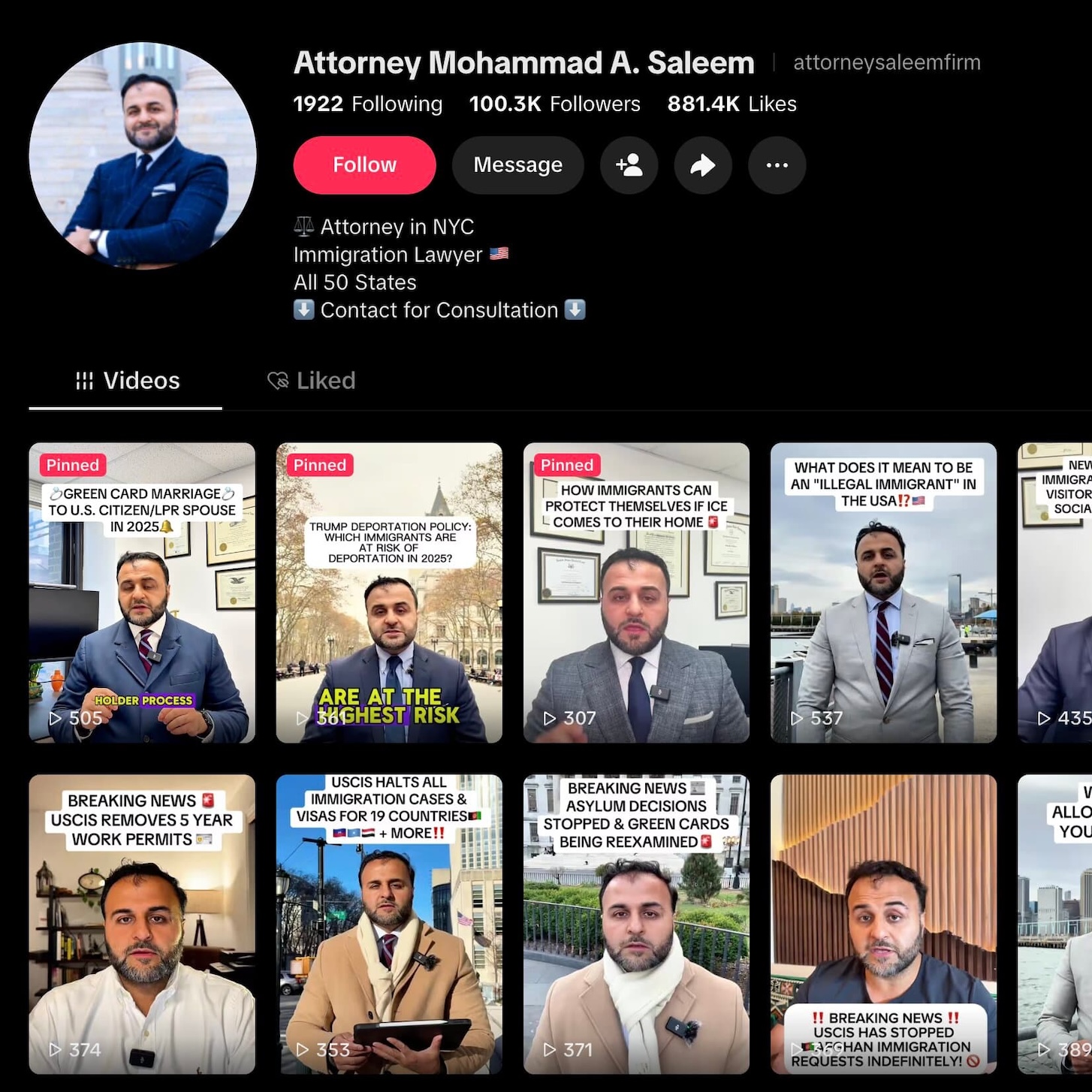
The scam account, @attorneysaleemlawfirm, a rip-off of Saleem’s official @attorneysaleem profile on TikTok, peaked at over 90,000 followers in May of 2025, rivaling Saleem’s 160,000 followers at the time. Saleem says he started reporting the account to TikTok as early as August 2024, yet nearly two years later, in April 2026, the account was still active.
Another scam account, @attorneymohammad, posted an AI-generated video using Saleem’s likeness. If you came across this video, you would have seen what appears to be Saleem speaking right to camera, urging potential clients to “Please contact me via WhatsApp.” The number listed, however, had no actual ties to Saleem.
Meanwhile, a third account impersonating Saleem’s practice, @attorneysaleemfirm, passed off over 100 of Saleem’s videos as its own and accrued more than 100,000 followers. When a Documented reporter reached out to request a phone call, the account asked for a $300 “consultation fee” to be sent to a Zelle account associated with a Gmail address that had no ties to Saleem’s practice, and listed the name “Terry Bradshaw” — the name of a famous former NFL quarterback and current football commentator.
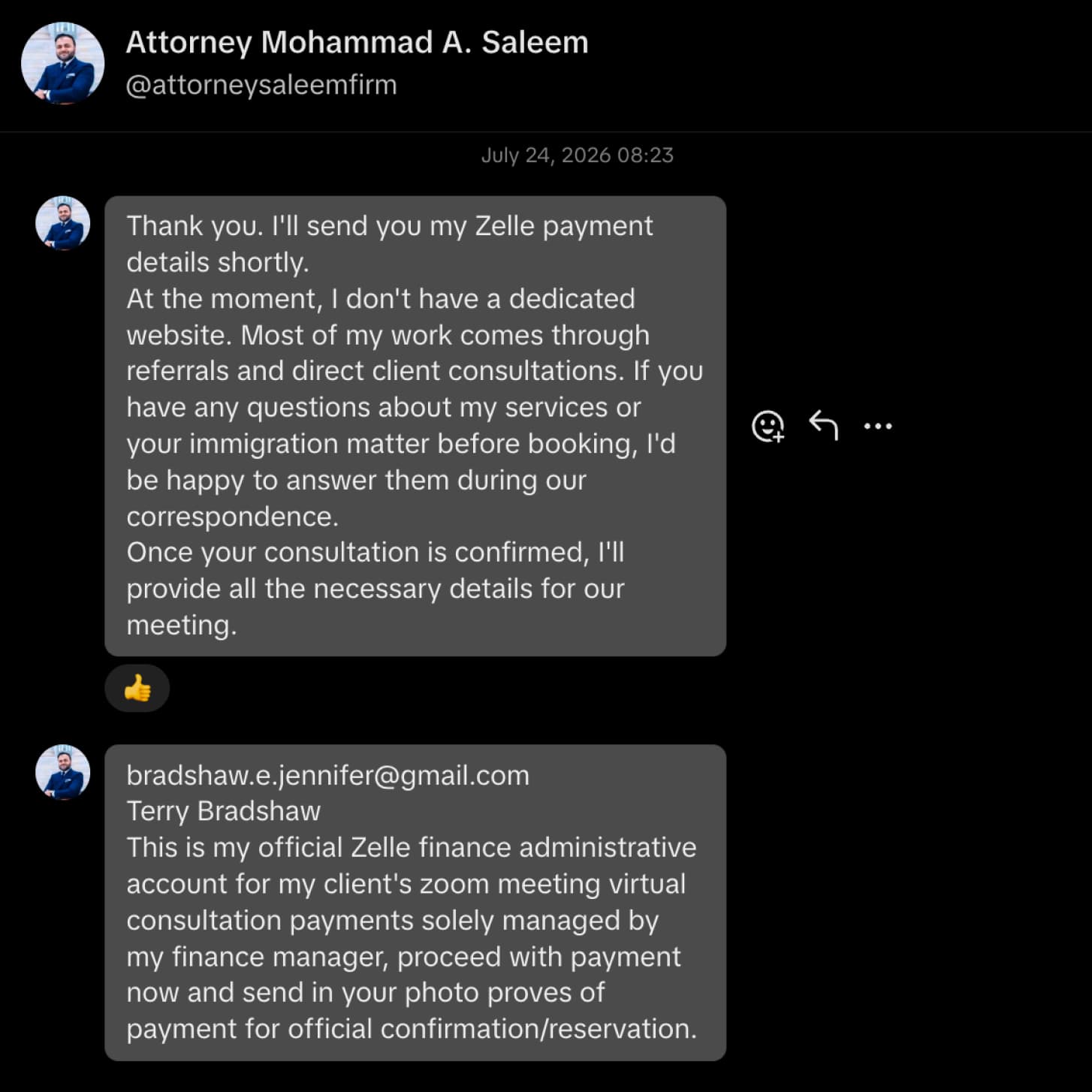
TikTok finally deactivated the account around September 15, in direct response to Documented’s press inquiry.
“TikTok takes a comprehensive approach to tackling scams on our platform,” a TikTok spokesperson told Documented. “We don’t allow accounts that mislead or try to manipulate our platform, including through impersonation or spam. We also don't allow any attempts to scam, trick or defraud people on TikTok.”
To date, Documented has found 21 accounts that use Saleem's name, likeness or videos to build a viewership, 16 of which are still active.
While these copycat accounts and the way they present online may come off as a bit absurd, the consequences of these scam accounts are very real — and Saleem’s experience is not a singular one.
Like Saleem, attorneys LaToya McBean Pompy and Marina Shepelsky command large followings on TikTok. Their content — often short-form explainers about asylum policy, deportation orders and general immigrant rights — enjoys far reach, with individual posts sometimes bringing in over 8 million views. And while the rise of these so-called “attorney influencers” predate Donald Trump’s second presidency, they have become ever more important as ICE arrests and immigration crackdowns escalate and as policy or procedural changes around things like Temporary Protected Status, deportation orders, or green card holders’ ability to travel grow increasingly volatile.
Studies show, too, that complaints of immigration scams have doubled since Trump’s reelection. In just one example, Victor Hernandez, a Bronx resident from the Dominican Republic, lost nearly $5,000 this year to a fake attorney that used AI-generated social media posts to impersonate a real lawyer from Florida, as reported by ABC.
Over the past few years, the Manhattan District Attorney’s Office has received several reports of fake attorney accounts on social media scamming New Yorkers into paying for supposed immigration legal assistance. This led District Attorney Alvin Bragg to pen a letter directly to Meta CEO Mark Zuckerberg in April 2026 pleading for stronger protections against these kinds of scams on the company’s platforms.
“We are definitely seeing many scams where immigrants are targeted,” Bragg told Documented. “Scammers look for opportunities to prey on vulnerable communities.”
Facebook responded to the letter with a pledge to remove the imposter accounts in question.
TikTok has become such a source of scams in part because it has remained a constant and trusted source of news and information for New York’s immigrant communities. In the early 2020s, asylum seekers who started showing up to New York City described how videos they were watching on the platform gave them unrealistic expectations of what America would offer them. On their journeys north, they used the platform to navigate the Darien Gap and other treacherous situations. Newly arrived migrants relied on the platform to navigate daily life, but it also fed them dangerous misinformation about the immigration system.
Documented conducted a months-long data investigation to better understand what TikTok videos immigrants are currently watching, and to identify what potential risks lie in the ways that content is being created, copy-catted, shared and consumed.
To study this, Documented worked with the NYU Center for Social Media, AI and Politics (CSMAP) to access an exclusive collection of tens of millions of TikTok video URLs from a large-scale representative sample of TikTok posts published since October 2024. With access to this database, Documented was able to extract videos from a 20-month period — from November 2024 to July 2026 — and build a sample of roughly 10,000 of the most-watched videos related to immigrant issues in New York City. This sample totaled over 12,400 minutes, the equivalent of about nine straight days of nonstop TikTok video content, which together amassed 1.6 billion views.
The analysis uncovered a loose but highly active ecosystem of content creators that consistently present themselves as authoritative. They frame videos as “breaking news,” “alerts,” “warnings,” or “legal guidance,” even when sourcing and verification are unclear, and bots and copycat accounts are eager to repost this content and benefit from its perceived authority to gain users’ trust and game the algorithm.
Our Feeds in the Time of TikTok
TikTok’s environment allows impersonators and scammers to thrive.
For one, TikTok pays accounts with large enough followings on a per-view basis. That means that anyone who is creating content there, including real attorneys and their copycats, is incentivized to make videos that media strategists might call “sticky.” Those posts will nab your attention, retain it and rack up views. Some reports estimate that the median creator earns approximately $200 monthly through a “Creator Rewards Program” that monetizes views. For attorneys on the platform, more visibility on their page can lead to more client intake calls, which can translate to more business for their practice.
What is unique about TikTok, however, is its “For You Page” (FYP) algorithm. Before TikTok’s introduction to the U.S. market, major social media platforms like Facebook and Instagram relied heavily on interpersonal networks to determine content relevance. Users were more likely to see posts and videos from accounts they chose to follow. TikTok, on the other hand, broke the social media mold by making some of those decisions for you — bringing new videos to your FYP based on an internal calculation of your interests and curiosities.
“[TikTok’s] recommendation system became good enough to replace human networks as the core mechanism that distributes information,” Ben Guinaudeau, a faculty research affiliate at New York University’s Center for Social Media, AI, and Politics. “With the right content, any new account with no followers and no history can quickly reach a very large audience. This creates opportunities for cheap disposable accounts and makes it easier for scam operations to run at scale.”
Within this system, the algorithm rewards videos that catch people's attention over videos from trusted sources. It also allows content to be reposted and reframed at a rigorous rate — even if the information being shared might be out of date or unreliable. That means that once-unimpeachable legal analysis, originally posted by a vetted attorney, can, over time, get distorted like a game of telephone. And as the competition for views grows ever more intense, sensationalized, alarmist, misleading or outright false immigration advice can rise to the top. It gets elevated in the algorithm and is placed in front of more people.
“Content that is viral and immediately appealing, which is often how low-quality information is produced, is amplified by the algorithm. Producers, meanwhile, are less sanctioned by their own audience for publishing low-quality material, because their future performance depends less on that audience returning,” Guinaudeau said. “[The algorithm] concentrates power in the hands of the organization that develops the algorithm, with no accountability mechanism allowing users to shape the algorithm.”
Meanwhile, immigrants are left to sort it all out for themselves — while battling stress, language barriers and dwindling finances — as they fight to keep themselves and their families informed and safe during one of the most dangerous and volatile political climates experienced in decades.
Copycat Accounts Find Their Niche
TikTok remains one of the most popular social media platforms in the U.S., despite the company’s less-than-pristine track record around privacy. Data shows that millions of users consistently seek out immigration-related legal advice through the platform, with attorney profiles like McBean Immigration Law and Attorney Mohammad Saleem ranking as some of the top performers within Documented’s sample.
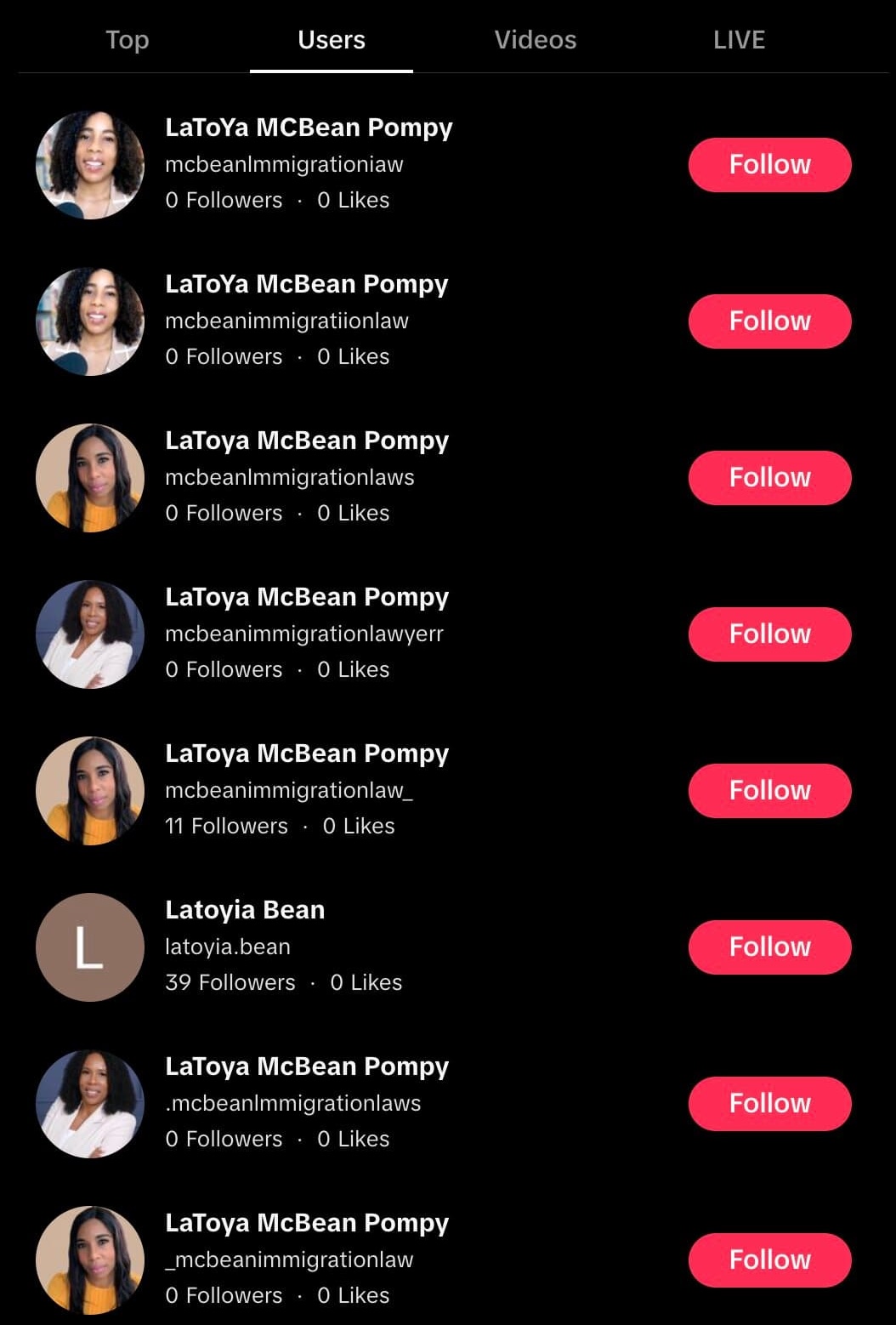
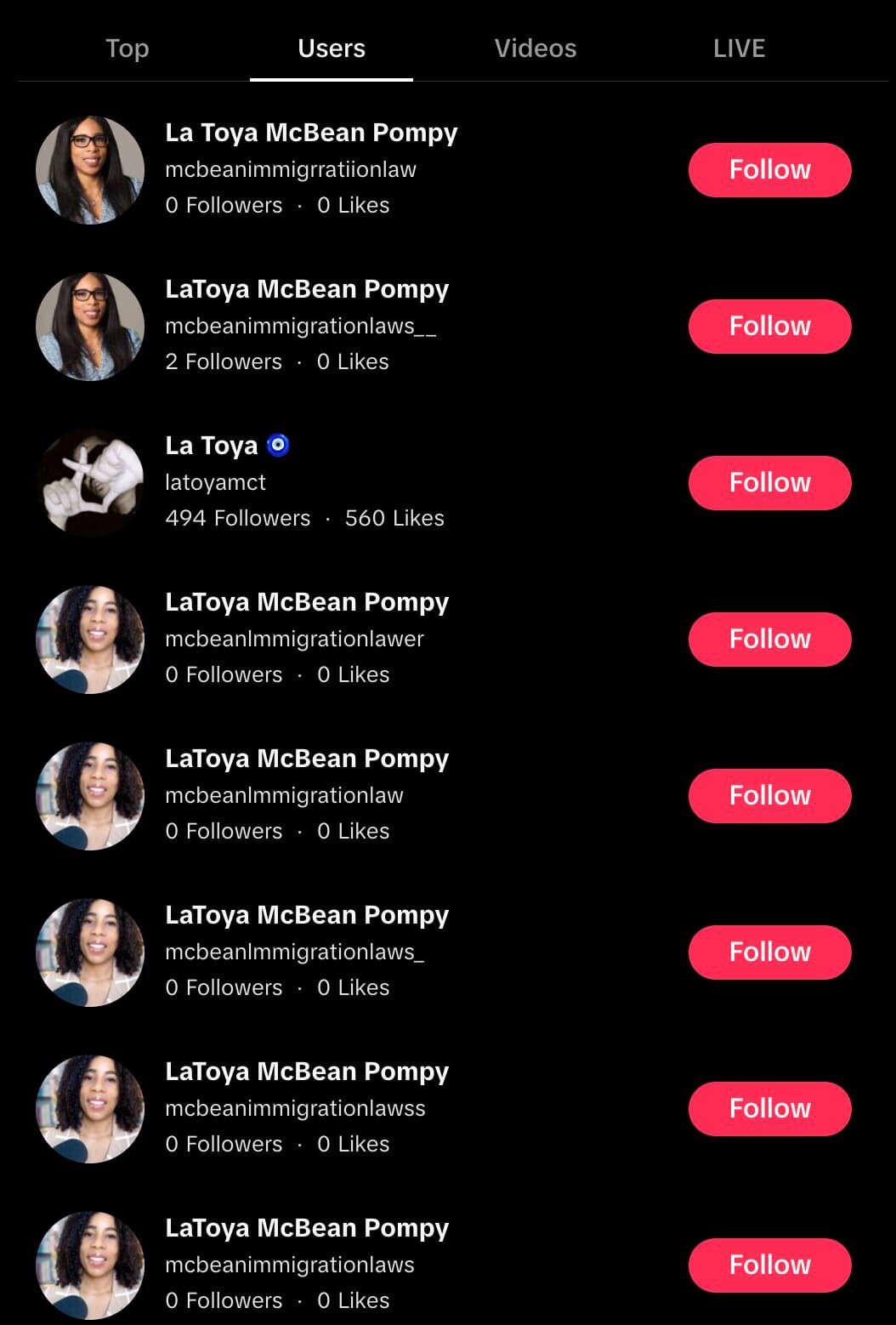
Scattered among popular attorney profiles are accounts that have copied a lawyer’s entire persona and content feed with no link back to the original source. Often, they just republish the same videos with different treatments or watermarks months after the original account posted them. According to Documented’s analysis, many of these copycat accounts have garnered just as much engagement as the real attorney profiles, and in some cases, even more.
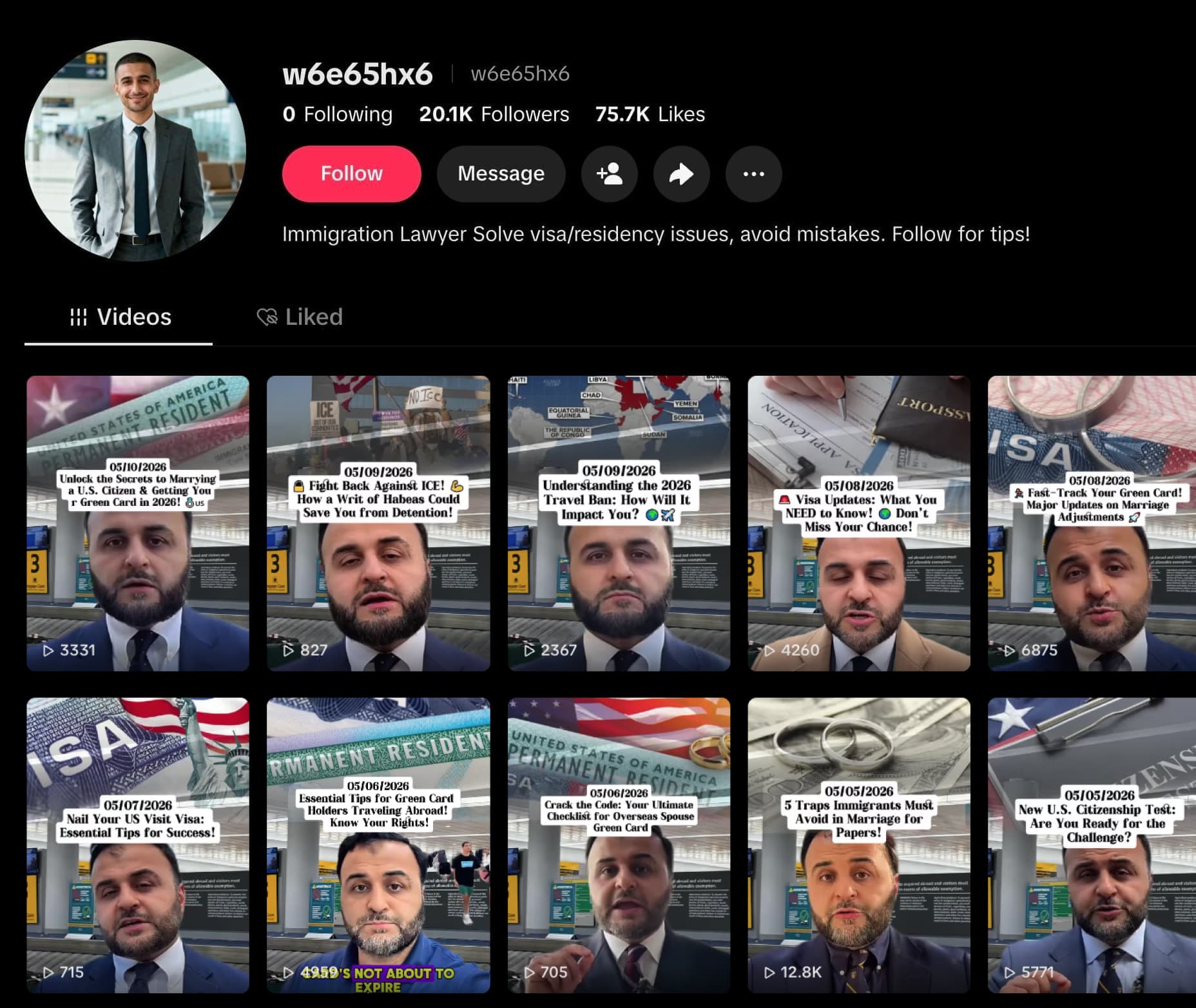
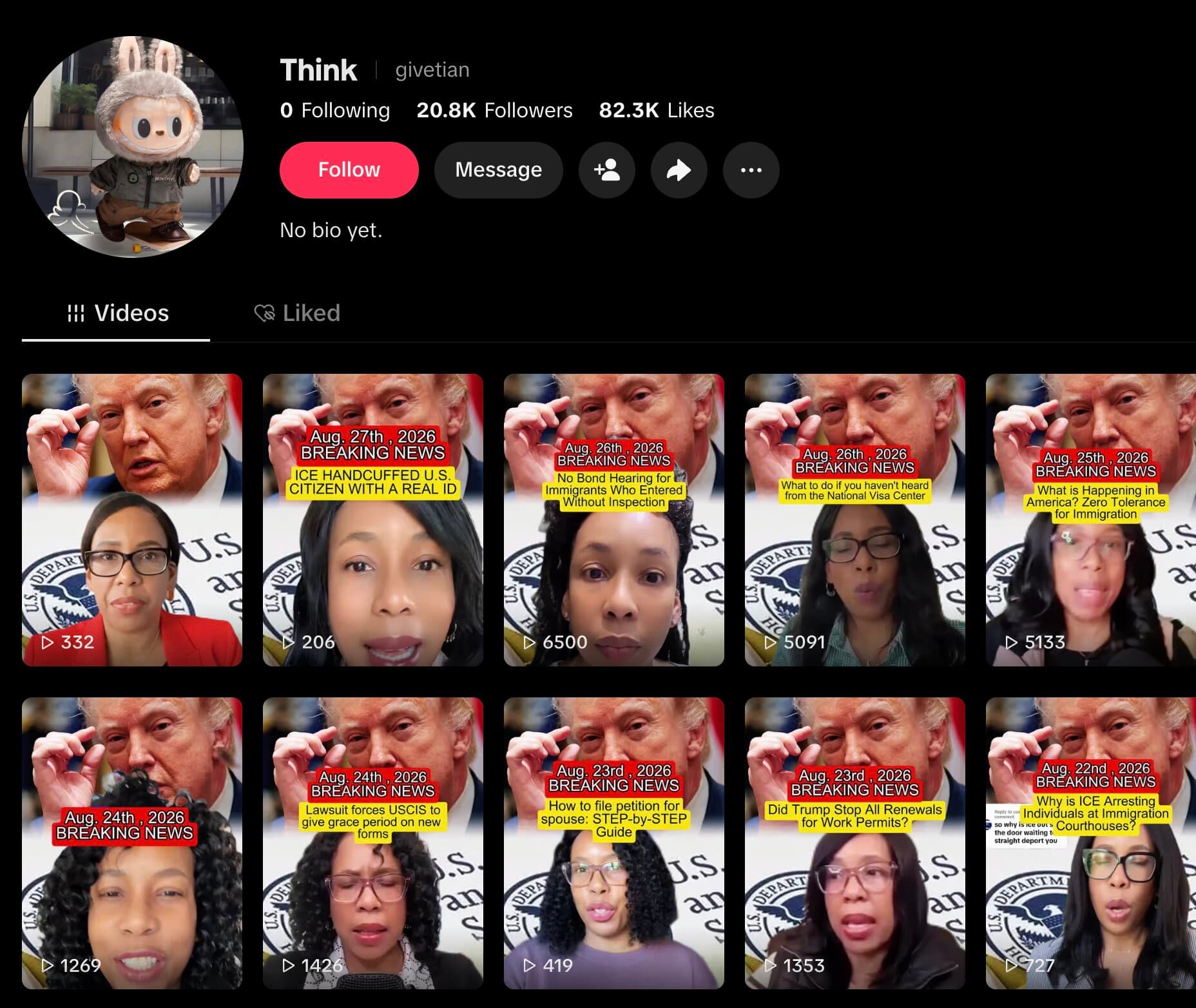
The account @w6e65hx6 has a profile picture of what appears to be an AI-generated photo of a South Asian man in a suit and a bio that reads, “Immigration Lawyer Solve visa/residency issues, avoid mistakes. Follow for tips!” It posted roughly six hundred of Saleem’s videos from September 2025 until May 2026, when it shifted to copying other content, most recently fan theories about the Hunger Games series. Documented’s sample of the most watched immigration-related TikToks included 76 videos from this account, while only 31 videos from Saleem’s official account made it into the top-viewed sample. McBean has her own copycats as well; @givetian, for example, systematically reposts two to three of McBean’s videos every single day. Despite the fact that the account’s profile picture is a grey Labubu riding a skateboard, 37 of those videos appeared in Documented’s top-watched sample.
Documented’s analysis found 39 copycat accounts for McBean and 21 for Saleem, all showing similar systematic posting patterns.
Ginny Nuñez, an immigration attorney based in Manhattan, who also uses TikTok as an extension of her practice, says that immigrants are already highly vulnerable when they come to TikTok looking for help. They are often facing threat of deportation, lost amid a sea of misinformation, navigating language barriers, and they may or may not have the funds to hire an attorney. This vulnerability can make them more prone to act quickly in response to TikTok videos branded as urgent.
“In this administration where things are changing every single day, one of the biggest harms I could see about videos coming out of their actual timeline is that [their analysis] may just not be true anymore,” said Nuñez.
Nuñez remains particularly concerned about cases when videos, posted out of order, can present flawed counsel, such as encouraging someone to move forward with their immigration case at a time when it was no longer advisable to do so.
For example, McBean posted a video in August 2025 alerting her followers that the U.S. government was about to process asylum applications filed from 2015-2017: “They are working on your case right now … so if you filed an asylum case during one of those years, begin preparing for your interview.” The account @t75qos2x reposted the video five months later, after USCIS had placed an adjudicative hold on all pending asylum applications. If immigrants took the reposted video’s advice, they would start preparing for a case that was actually suspended, or otherwise be tempted to interact with administrative offices during a time when ICE was particularly targeting those areas for arrests.
“What's true today is not true next week in immigration law,” Nuñez said. “And it's the first time, at least in my 10 years of experience, that it's been so tumultuous.”
Asking the void for help
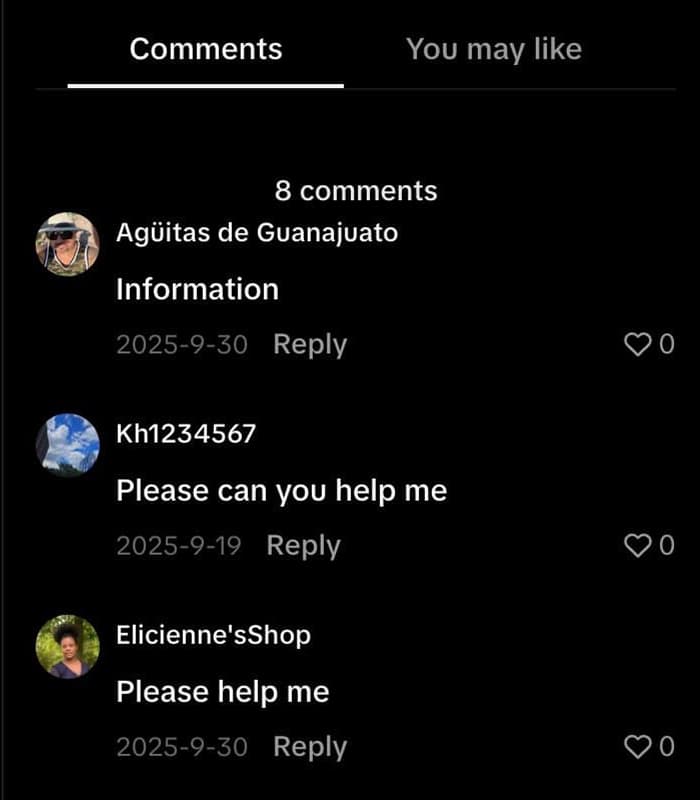
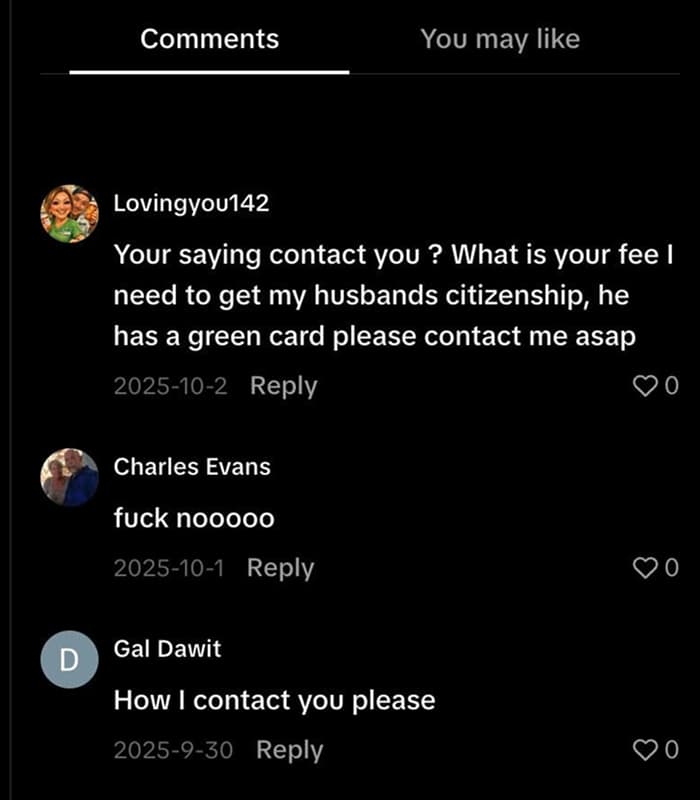
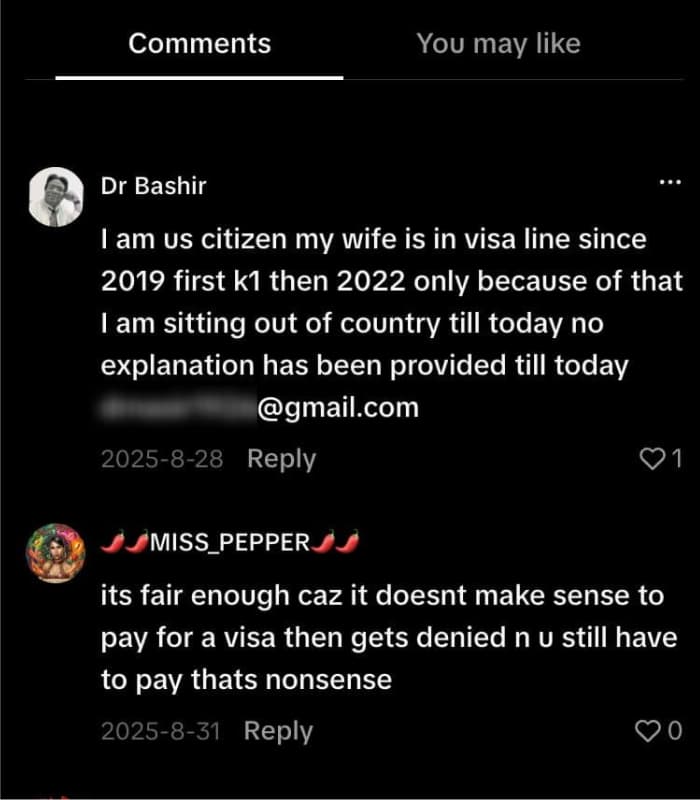
Within the comments of these reposts, you can see TikTok users begging for help, asking for contact information for the attorney shown in the video, and even sometimes referencing specific details of their asylum cases in hopes that the attorney’s office will take notice of them and their case.
“Immigrants are really vulnerable and they put a lot of trust into a lawyer,” Nuñez said. “These bot accounts can be confused as being the real source…all of a sudden you've created a relationship with someone that you think is an attorney that you think you can trust. You can be fed misinformation, be scammed out of money.”
Online attorney scammers target immigrants across this spectrum of vulnerability — even those within ICE detention centers. J.R., a 45-year-old man from Mexico, who spent three months in ICE custody earlier this year and said he met detainees whose family members had hired fake immigration lawyers on their behalf via social media. “I saw that they had downloaded fake immigration documents saying ‘the immigration court had ordered bond to be paid … and once the amount was paid, the father would be free,’” J.R. told Documented. “He paid $5,000 for the supposed bond, made all the deposits and such. The [scammers] stole around $11,000.”
In 2024, a few TikTokers impersonated Nuñez’s TikTok account and ultimately defrauded some of her own potential clients. Nuñez told Documented that she only found out about the scams after her office started receiving angry phone calls demanding refunds for legal fees paid to the scammers.
“These accounts used a username very similar to mine, off by just a letter or an underscore. They would rip my actual videos and alter the text on screen to display their own contact information instead of mine,” Nuñez said. “[They stole] a few thousand dollars. The victims who contacted me were located in Mexico, so the fraudulent fees seemed to be kept within amounts they could reasonably afford … typically extracted incrementally at each ‘step’ of the fraudulent case.”
Since then, Nuñez has started adding an animation of her phone number bouncing around the screen, something she hopes would be difficult for scammers to systematically remove. Nevertheless, scammers continue to find elaborate ways to trick immigrant clients into trusting them.
“Scammers set up Zoom calls for fake court hearings using a DHS logo in the background, claimed to take fingerprints via the phone camera, and sent fraudulent notices through email and WhatsApp,” Nuñez said. “In another instance, scammers set up fake asylum hearings at the border for victims in Mexico. This is particularly concerning because victims could show up at a port of entry believing they have a legitimate appointment, only to be accused of attempting to enter the U.S. unlawfully.”
Nuñez said she’s noticed that potential clients are feeling increasingly paralyzed by their inability to tell what’s real online and what’s not. While COVID-19 normalized online appointments for Nuñez, some people have now started to request in-person consultations with her to establish trust, even at a time when increased ICE activity makes it especially dangerous for an immigrant to leave their home.
“Not only are people getting lost and not really sure how to navigate these waters, but I would say that people are also a lot more jaded and distrustful,“ she said. “Me as a human, I get annoyed sometimes because it feels like I have to prove myself in every call.”
TikTok Vs. AI
While these immigration scams are a problem, it’s unclear whether or how TikTok itself should carry any culpability.
TikTok offers a service called the TikTok Creator Rewards Program that pays creators around $0.40 to $1.00 per 1000 views on eligible videos. It also requires creators to achieve a certain follower count and standard view count per month across all content.
Without massive followings or commercial brand partnerships, where the real money is made, copycat accounts may be unlikely to accrue a sizable profit on their own. But if computer-generated accounts are managed en masse through automation, the profit from several copycat accounts could add up.
“Social media platforms have APIs that allow people to automate interactions with the platform,” said Fil Menczer, director of the Observatory on Social Media at Indiana University. “I can have an army of bots, hundreds of thousands of bots that create chatter, create buzz and give the appearance that something is trending … people pay attention to things they perceive as being popular.”
TikTok does enforce certain protocols to limit computer-generated profiles, including requiring a name and birthday authentication to create new accounts and earn rewards — which could limit someone’s ability to build an online army of thousands of autonomous profiles. However, Menczer points out that there are online marketplaces where even people with no coding skills can buy and manage fake accounts, adding that generative AI systems make it “easier and cheaper to do this at scale in ways that are harder to be detected.”
“AI models can create accounts that are much richer,” Menczer said. “They have images that we can't recognize as fake images. They can create an entire persona with profile descriptions, location, [and] lots of posts that look real because they match some kind of profile.”
Menczer reports that these new AI-assisted accounts, which can autonomously interact with users through comments and DMs, can even trick the complex algorithms that his own research center has developed to detect fake social media profiles.
“They can have individualized conversations with lots of real humans, and through that, these bots can build a lot of followers and once they have a large following, they can start influencing them,” he said.
If AI-assisted accounts can trick algorithms that are built to detect fake profiles, Menczer added, that makes immigrant communities particularly ripe targets for manipulation.
“Our research demonstrates that infiltrating a community is the most effective tactic to manipulate it,” Menczer said. “Vulnerable communities online tend to be easy to affect in some sense. If you want to target a certain topic, let's say immigration, you're going to find people who are talking about it…you can create a bunch of fake accounts, and you can make them look like the people that the community wants to interact with.”
Platforms like TikTok are notoriously bad at fighting computer-driven misinformation, even as AI makes it easier than ever to produce it, Menczer argued. A recent study from consumer groups found that TikTok actually lagged behind Meta and Google in its ability to stop scam ads on the platform, calling into question the platform’s work to combat fraudulent and computer-generated content as a whole.
“People with a minimum of familiarity with coding or with the help of AI can write their own scripts to programmatically create and/or manage fake accounts. [But] in recent years, social media platforms have downsized or eliminated their trust-and-safety operations that used to fight against such abuse,“ Menczer said.
A problem for lawyers to solve?
As the rise of AI tools makes it increasingly easy for copycat accounts and scammers to assume false identities, real attorneys have to contend with the rapid erosion of users’ trust online.
Several of Mohammad Saleem’s current clients lost thousands of dollars to scam accounts pretending to be him.
Documented obtained a fraudulent invoice that one of Saleem’s clients received from the scam account @attorneysaleemlawfirm, dated Jan. 27, 2026. The invoice included Saleem’s office’s official logo and business address, but it also included several atypical typos — an error common with AI-generated text — such as spelling Ikhlas & Saleem as “[khlas & Saleem”, and Brooklyn as “Broeklyn.” The invoice also included a line item for “Visa Expedite Service” charging a $1,100 flat fee.
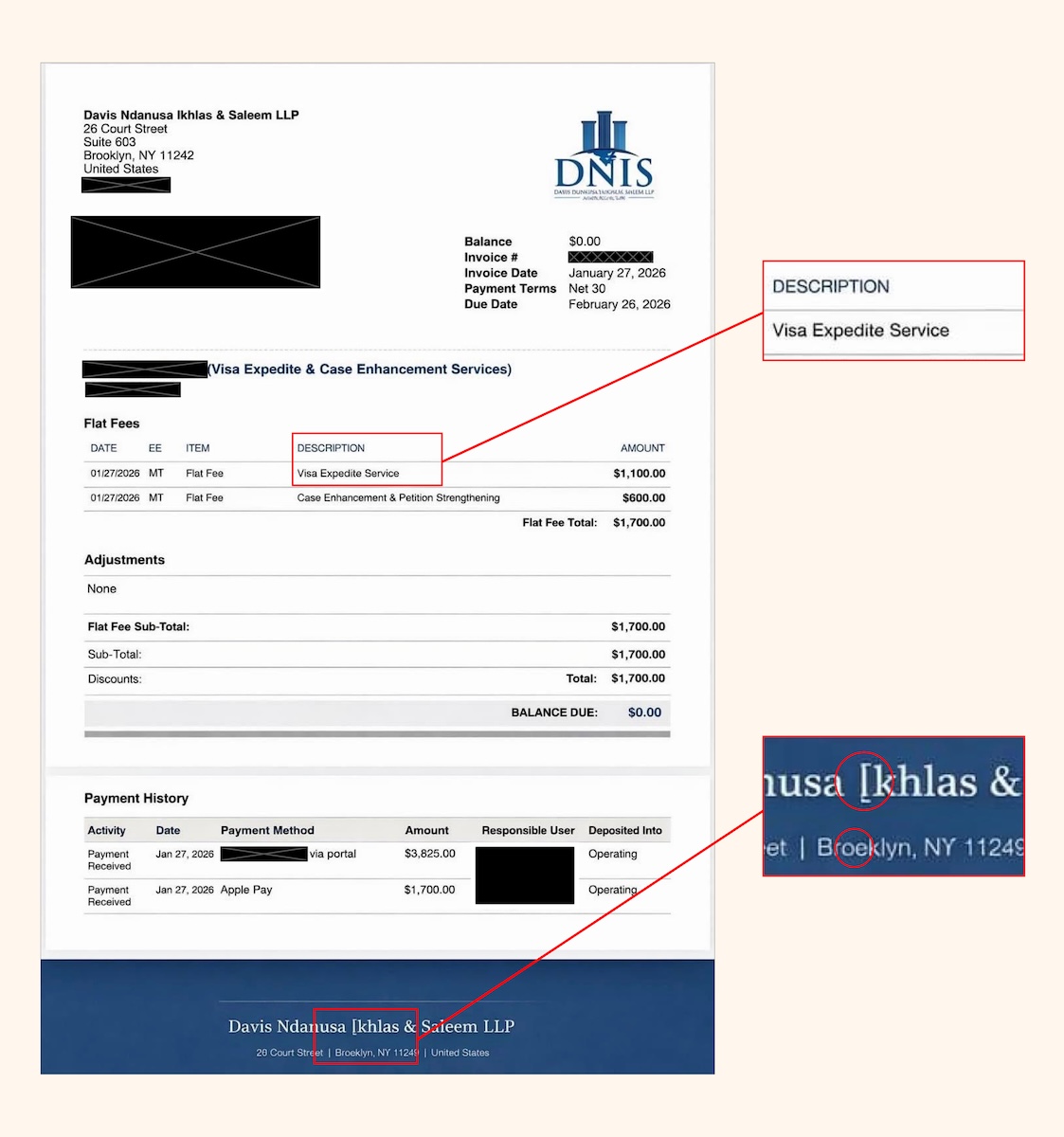
“This client was in a particularly stressful and desperate situation, which is the kind of client we consistently see falling for scams (people with detained family members, family members with medical issues, long waits, etc),” Saleem’s office told Documented in an email. “Anyone promising a faster green card, visa or status is probably a scammer, because a licensed attorney would not ethically be allowed to guarantee this.”
Saleem said that other scam accounts impersonating him promised the same expedited visa service to trick people into paying them attorney fees up front. “I was on the phone with a woman whose husband is in the Dominican Republic. The scammer got a thousand dollars out of her because he guaranteed expediting her case so her husband would get a visa to come from Santo Domingo,” Saleem said. “It's been a lot of distress.”
Saleem has been battling these types of fraudulent accounts for almost three years. After first discovering them, Saleem posted a warning video in February 2024 urging clients to contact his office directly through its main office phone number and direct email instead of using apps like Telegram or WhatsApp.
But in early 2026, another account with the handle @attorneymohammad posted an AI-generated video of Saleem that was quite similar to his warning video from 2024. The AI rendering of Saleem says to the camera: “I want to let you know that this is my second and only other official account. For any legal inquiries or consultations, please contact me exclusively via WhatsApp. Please be aware of scams. My official communications are always secure.”
In an archived copy of the video, Documented found over 30 comments from different user profiles, all posted on the same day. The comments, which were simply structured and equally saccharine in tone, seemed to try and affirm the authenticity of the video in question.
As of September 2026, both the @attorneysaleemlawfirm and @attorneymohammad scam accounts have been banned from TikTok. The account @attorneysaleemfirm, which Saleem claims has no affiliation to his practice, reposted Saleem’s videos to its base of over 100,000 followers throughout the summer — and requested hundred-dollar payments — before TikTok deactivated the account on Sept. 15 in direct response to Documented’s request for comment.
“It has almost all my videos and somehow got a lot of followers,” Saleem said in August. “I've blocked it and reported it and still it takes my videos and follow[s] my followers and messages them on WhatsApp.”
Some attorneys say they’re contemplating stepping back from social media as a way to boost their practice. “We’re slowly going back to being analog,” Nuñez said. “People will even want in-person appointments versus virtual because they want to know that I’m real.”
For Saleem, however, stepping away from TikTok is out of the question, at least for the foreseeable future. “Right now, at least 60% of my calls are coming from inquiries from TikTok,” Saleem said. “One of my paralegals, I was able to hire her solely because of all of the new leads and clients I was getting off TikTok.”
As his battle to shut down scam accounts has worn on, Saleem has grown increasingly concerned about his own legal liability in cases where accounts using his likeness mislead and defraud people. That concern was largely resolved when, two years ago, he submitted a formal inquiry to the New York State Bar Association. This inquiry led the Bar Association to publish an official opinion (Ethics Opinion 1276), setting a clear precedent across the state that lawyers who encounter fake social media profiles attempting to defraud the public have “no duty under the Rules of Professional Conduct to take any action to combat the fake accounts.”
TikTok itself maintains protections from a 30-year-old law called Section 230, which enshrines that, unlike print and broadcast media, social media platforms like TikTok are not liable for the third-party content posted on them, even when the content is fraudulent or defamatory.
With no clear lines of accountability, and with these scams on the rise, attorneys like Nuñez are demanding more regulation of these online systems to protect their clients and their practices.
"People are getting lost … and then that creates a distrust between us," she said. "Soon enough, we won't be able to determine what's real."