

Before anyone walks in, they ring the bell.
Two men reach up at the entrance of the mandir with their hands stacked on the same chain, a woman standing between them. As they pull the chain down together in one smooth motion, a deep metallic, melodic chime fills the temple. The chime is their way of telling Goddess Durga they have arrived.
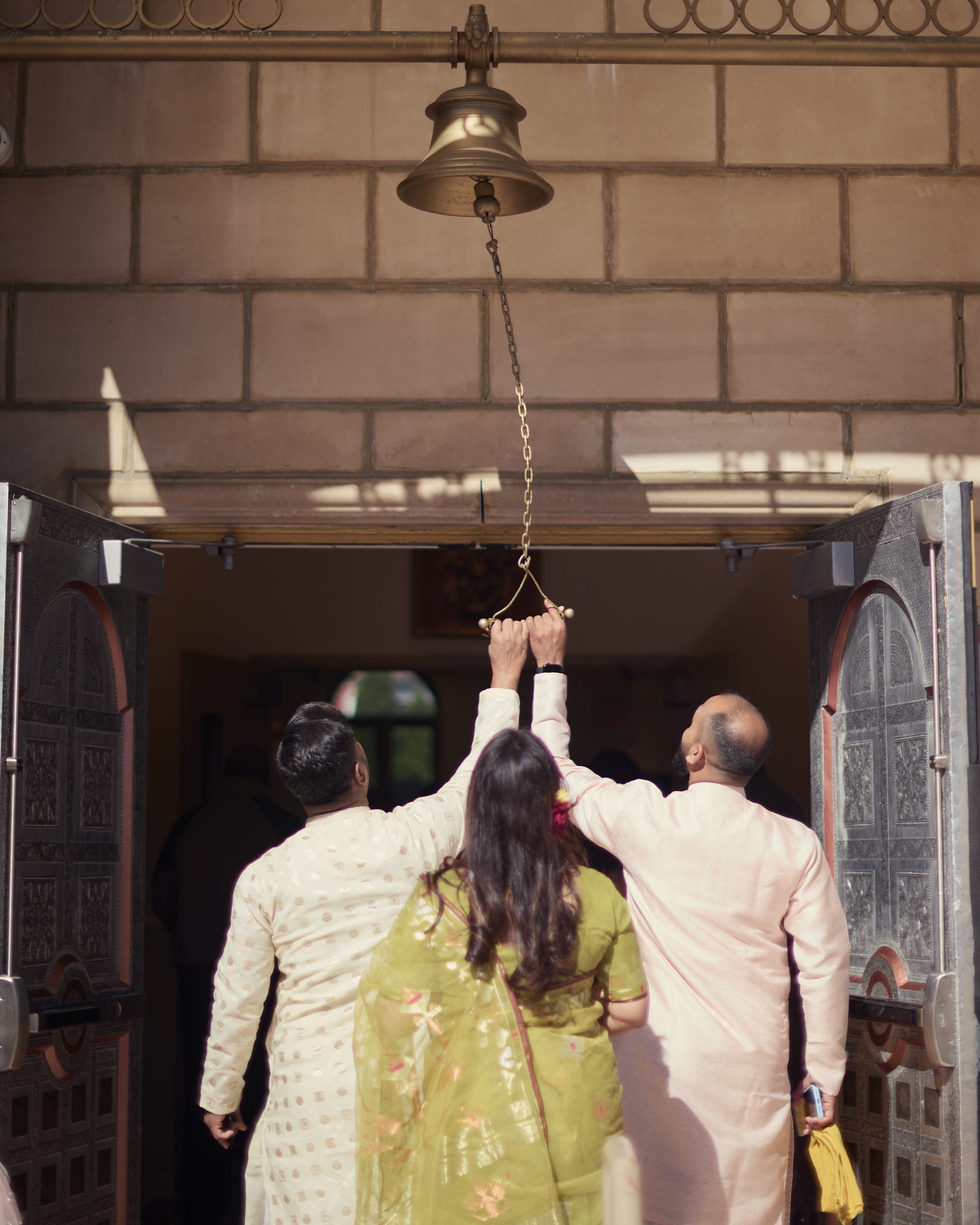
From the mandirs of Queens to thousands of miles away in Kolkata, the festival begins the same way for Bengali-Hindus. Worshippers ring the bell at the entrance of the mandir to tell the goddess they have arrived, then step in. She is Maa, Ma or Devi to the observers who greet her. Over ten days, hundreds did exactly that, in small halls, in ornate temples, and in one of the loudest corners in the world in Times Square.

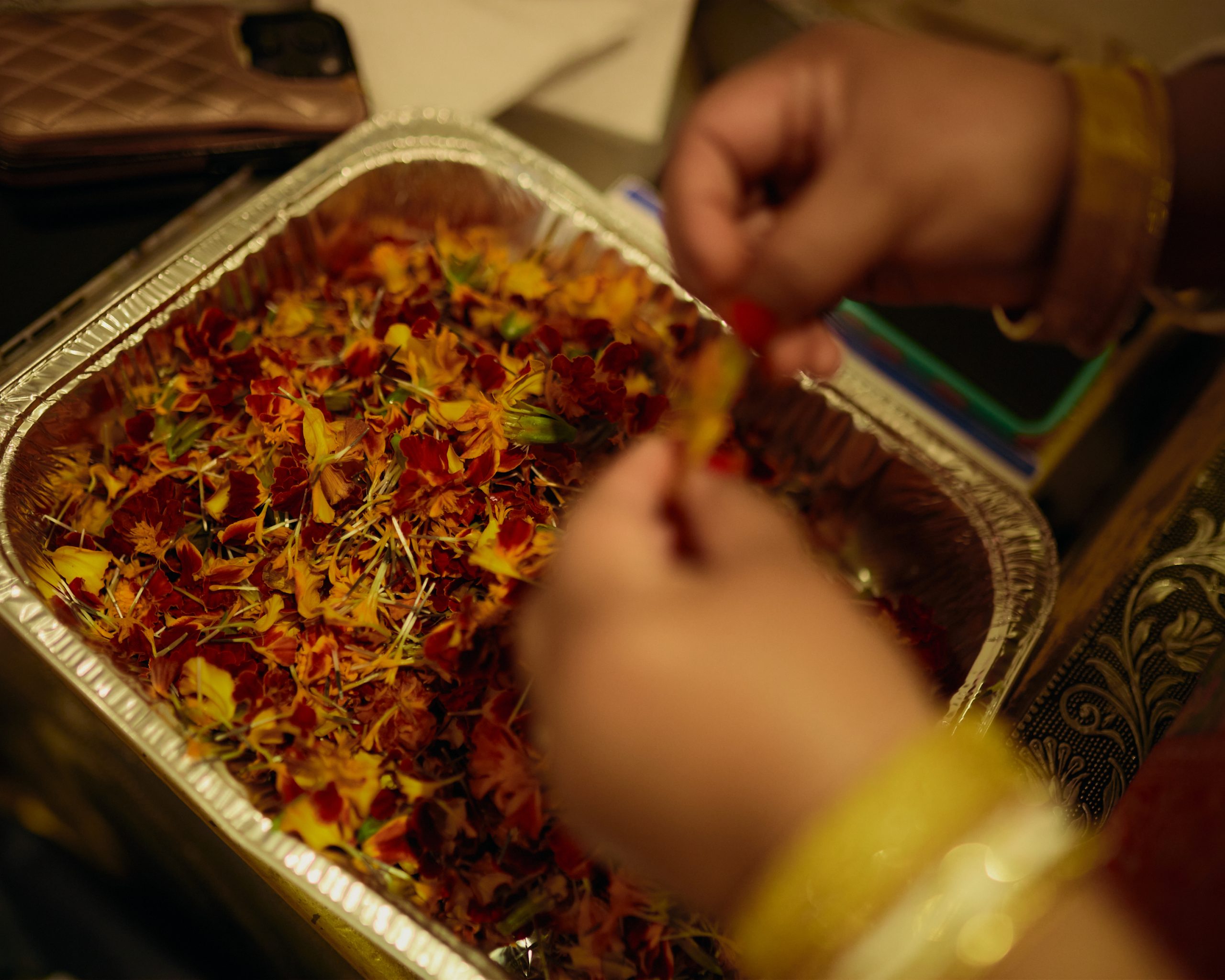
The annual festival takes place during the Hindu calendar month of Ashvin, which typically corresponds to the autumn season. As the story goes, the holiday celebrates the goddess Durga and her victory over the buffalo demon Mahishasura. Broadly, the holiday symbolizes the triumph of good over evil. At its most distilled interpretation, the holiday is about a battle, but its observance is about being gentle.
Ask the people who celebrate, and they almost never start with the story of Durga’s victorious defeat over Mahishasura.
“It celebrates women and Devi’s strength and power.”
—Debrup Laha, of Rahway, New Jersey
“Durga Puja is nostalgia,” said Oli Paul, 38, from the Bronx. “A time to enjoy Maa’s blessings, good time with friends and family. Celebrating Maa’s homecoming.”
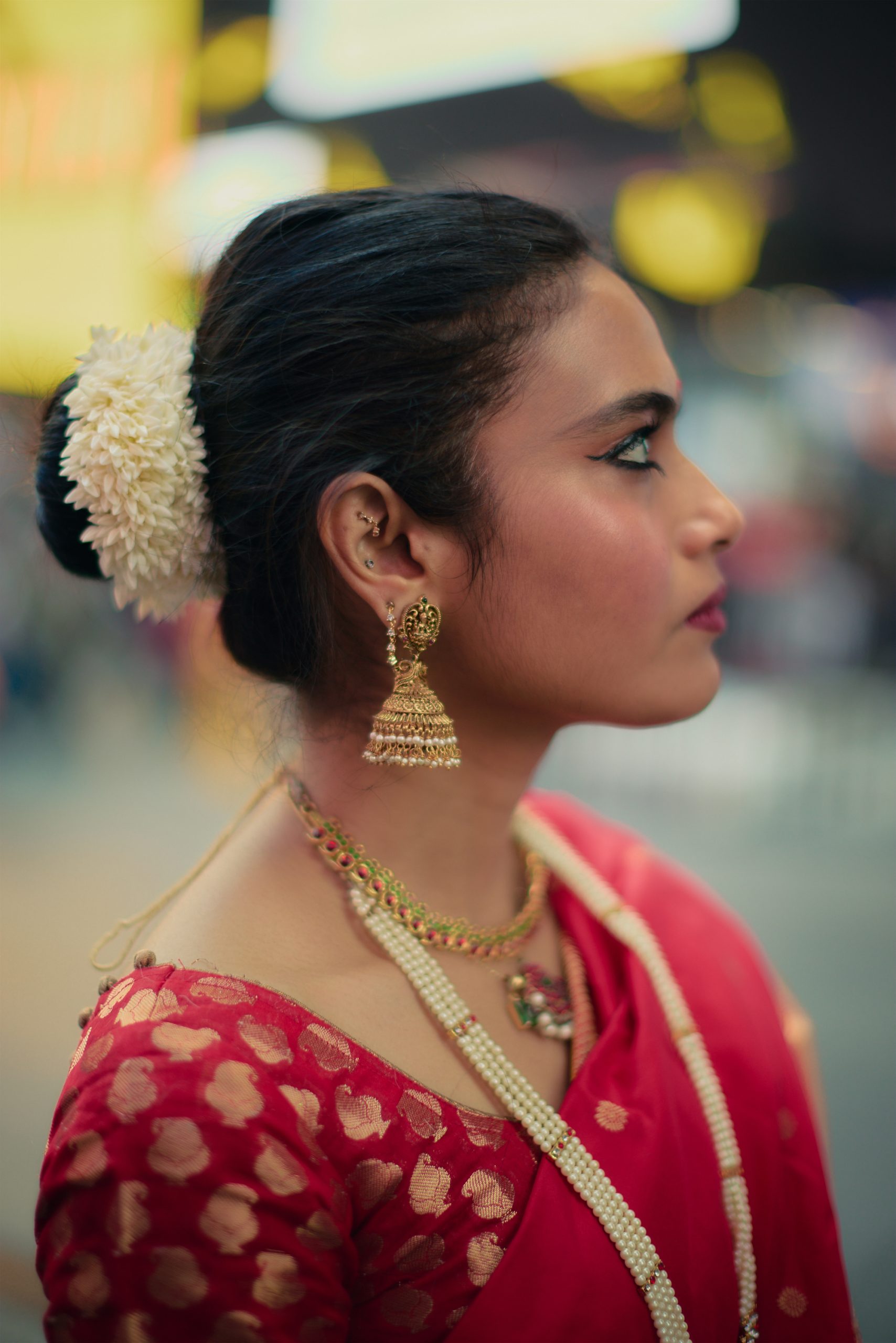
When Titash Mandal, who lives in New Jersey, thinks of Durga Puja, she fondly remembers the holiday as the time her family would take a week off.
“Growing up, Durga Puja meant a break from school, a time for the whole family to come together,” she said. “The welcoming of Maa Durga with the sound of dhak, shankha and ulu is something we waited for the entire year.” Dhak is the drum, shankha the conch, ulu (or ululation), a trilled vocal call.
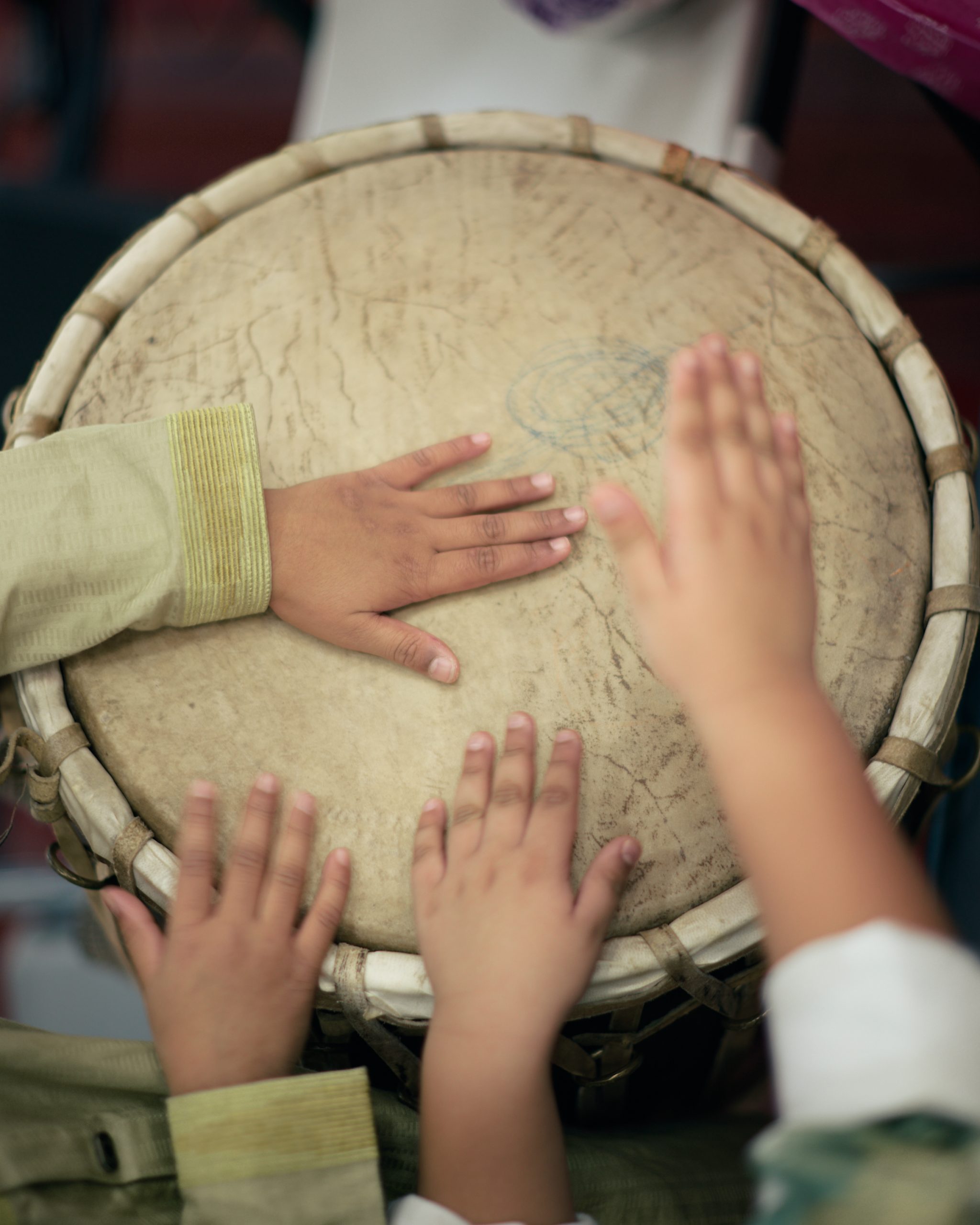
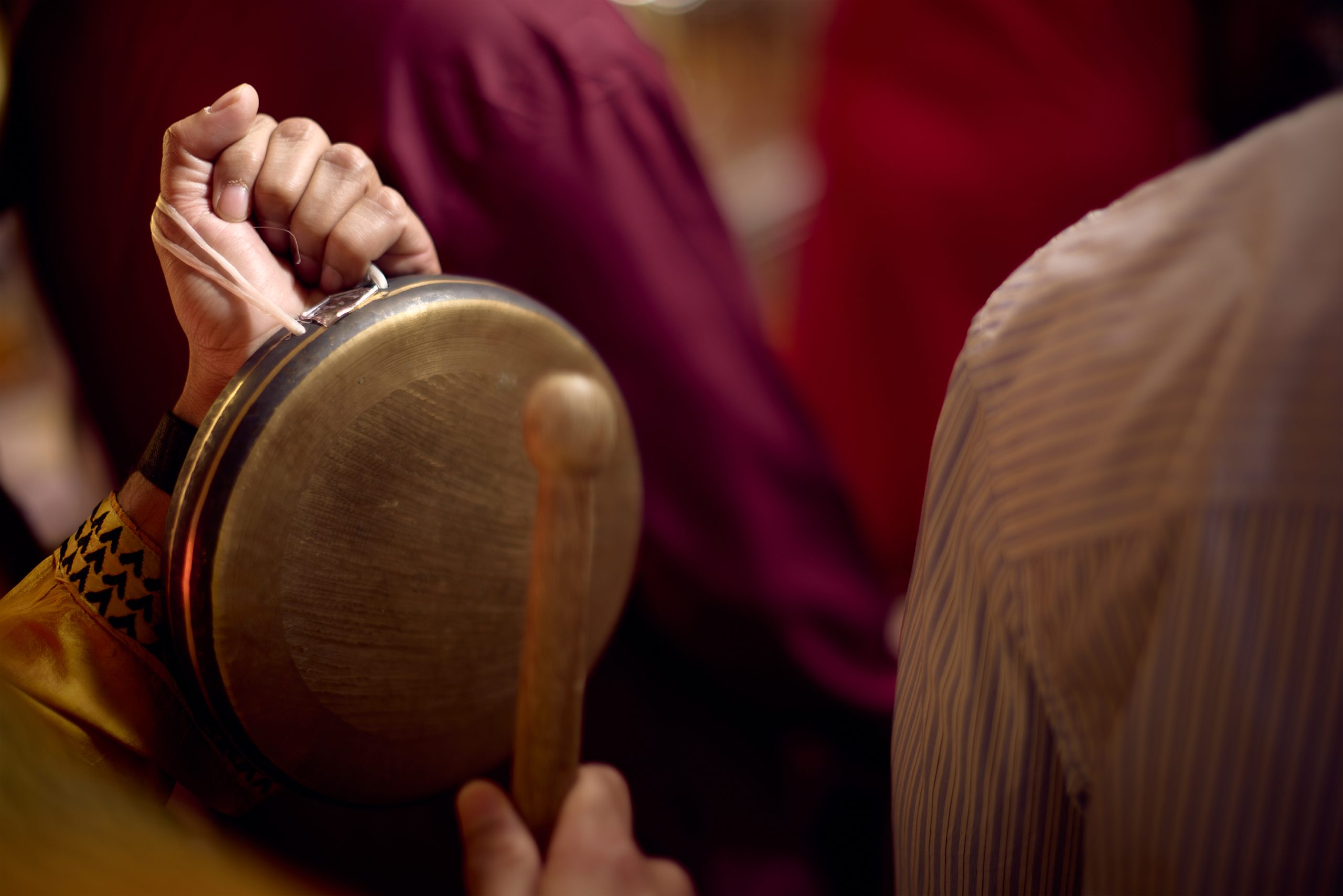
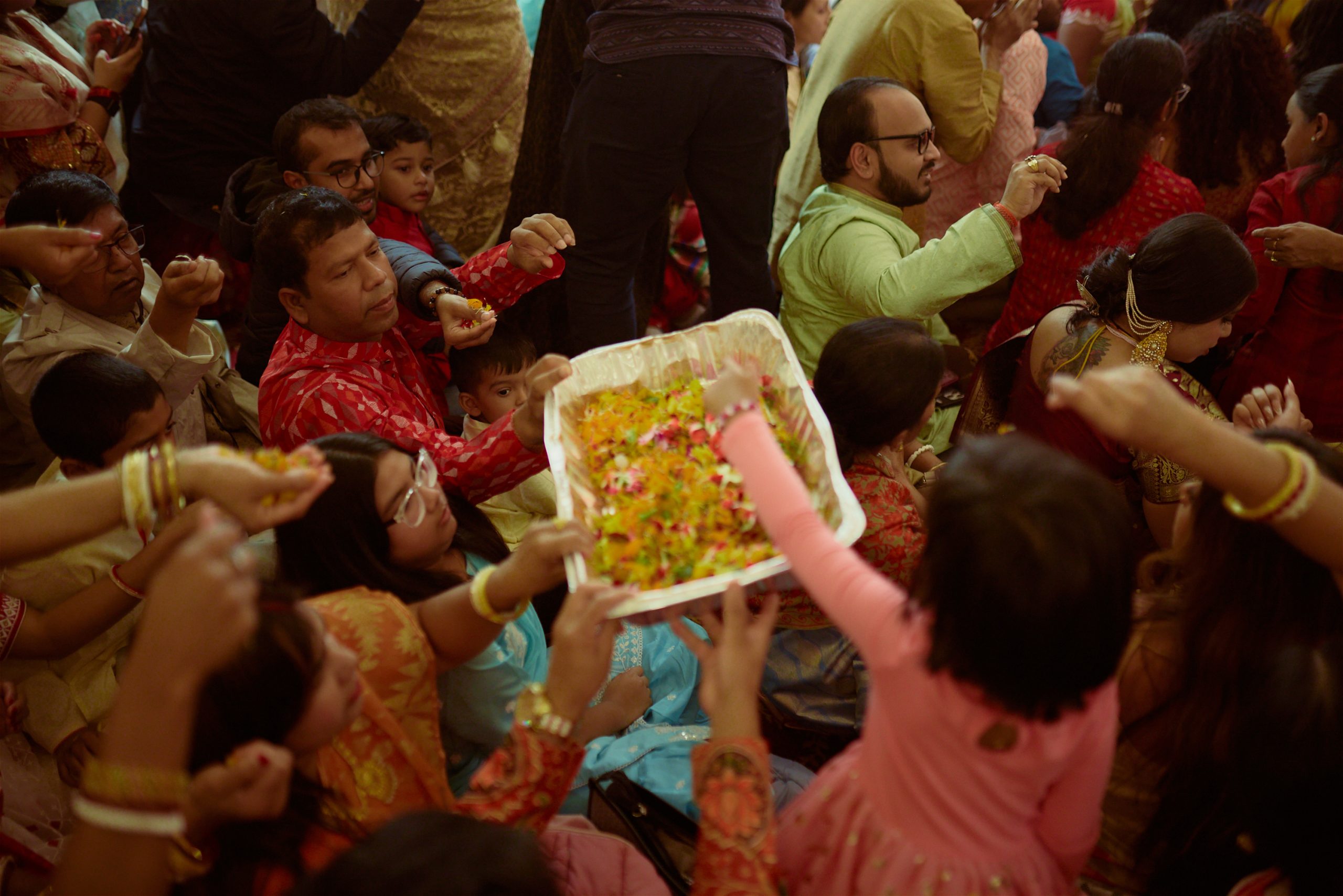
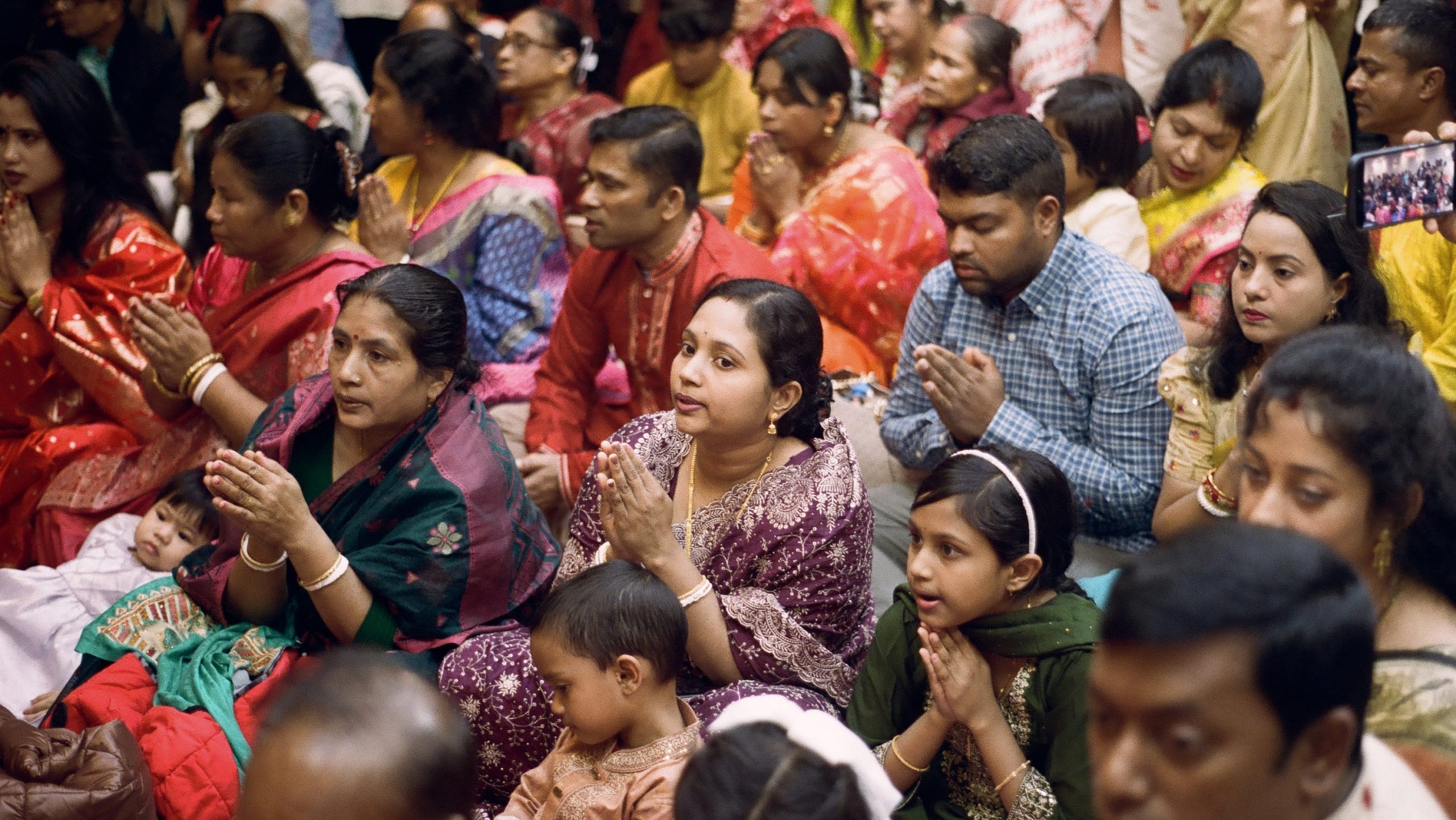
Inside the Bangladesh Hindu Mandir in Elmhurst, the room was full before the prayers began. Elders sat on the floor. Children climbed over their parents’ laps. Pandits moved along the idol with a red basket, setting flowers at her feet. A girl in a yellow sari pressed her palms together.
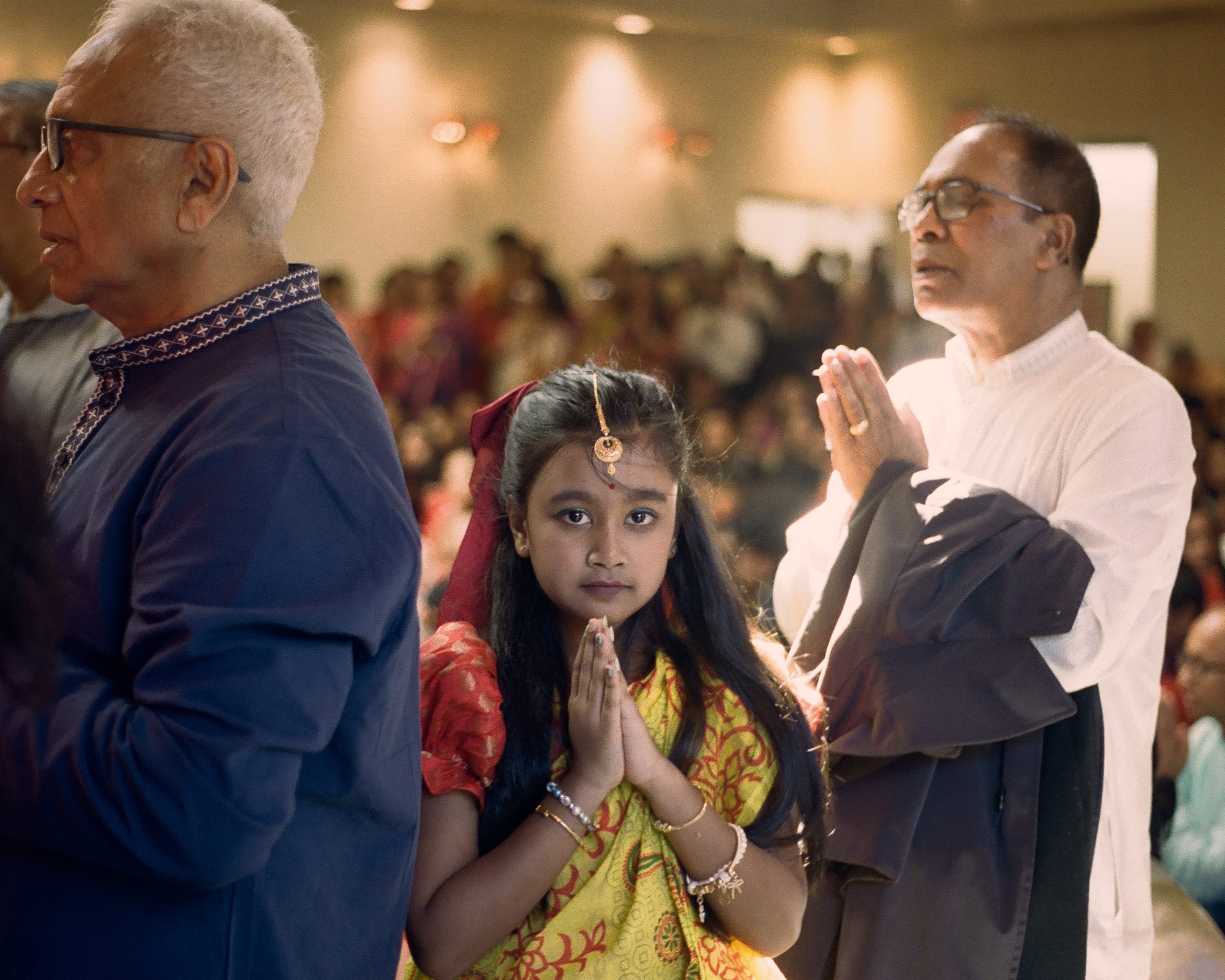
“Durga Puja is nostalgia.”
—Oli Paul, 38, resident of The Bronx
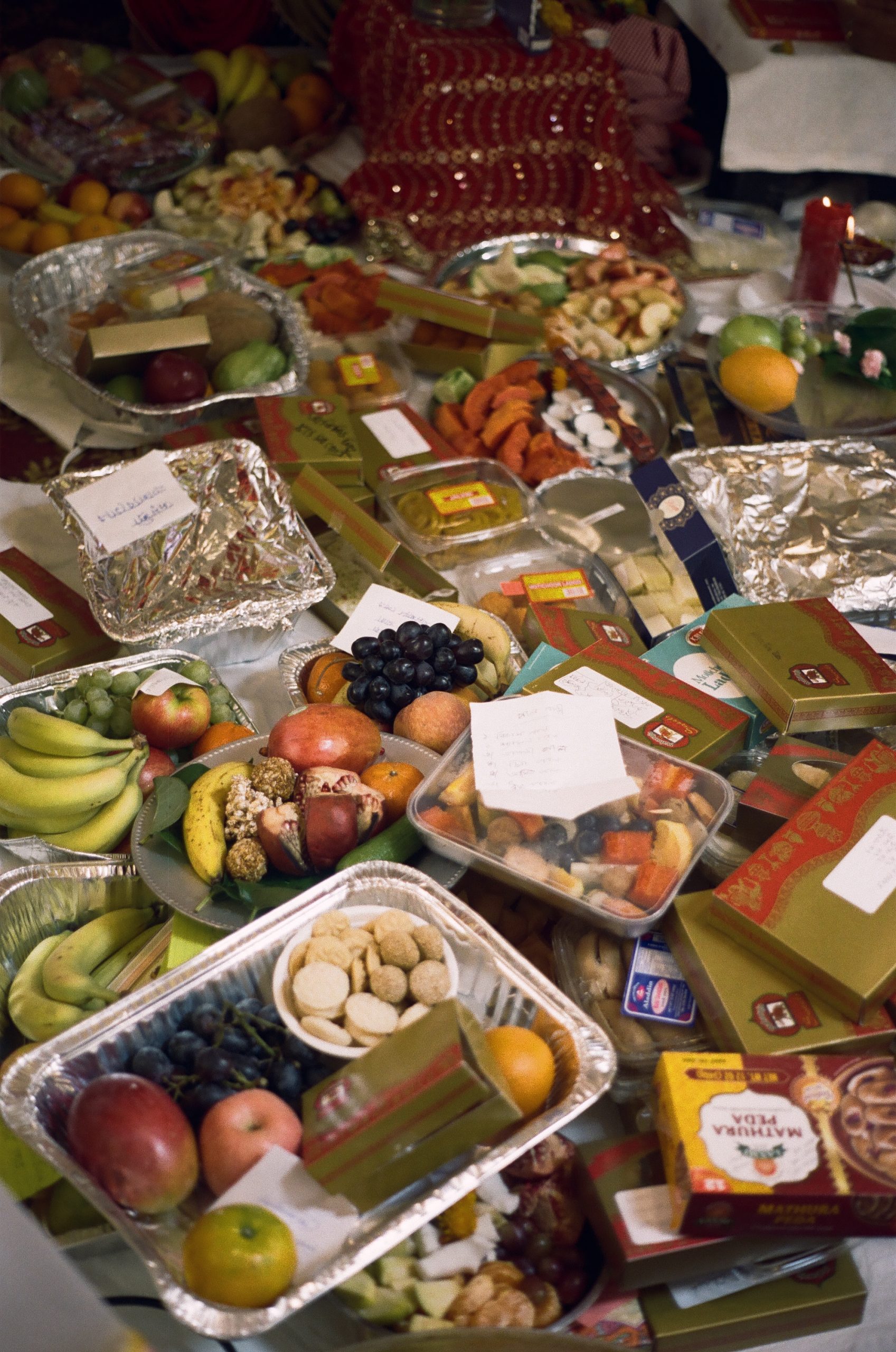
On a long table, the offerings to the Goddess Durga piled up: bananas, grapes, pomegranate, boxes of sweets, some with a handwritten note.
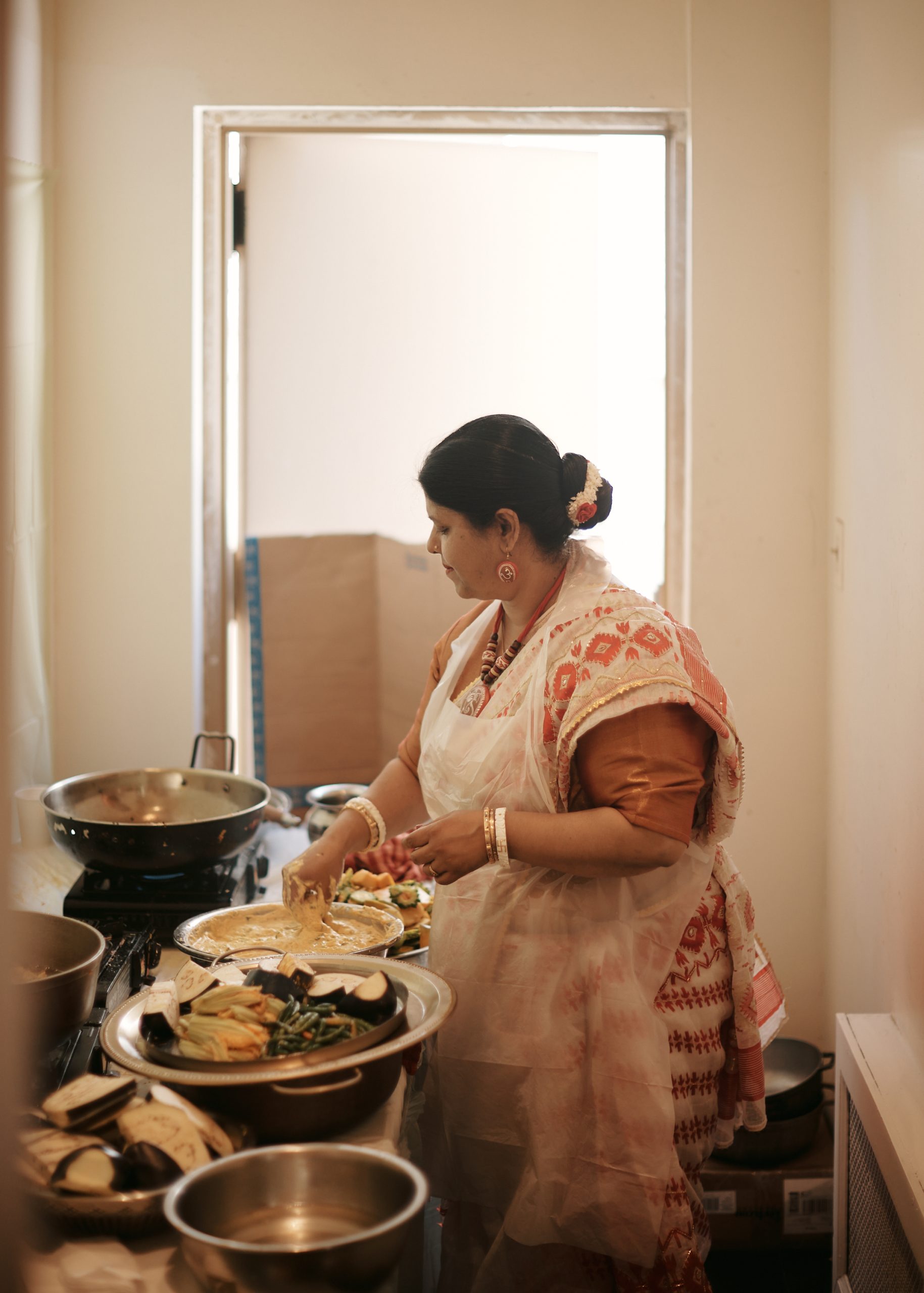
In a small back room, a woman wearing an apron over her sari dipped eggplant into batter with her bare hands. She was preparing prasadam, a Sanskrit word meaning “gracious gift” which refers to a meal first offered to a deity during worship, and then, perhaps more practically, shared with devotees and anyone who walks in, even those who do not observe.
Though the kitchen may be overlooked by most worshippers, the warmth and love that it provides makes the kitchen somewhat of a festival in itself.
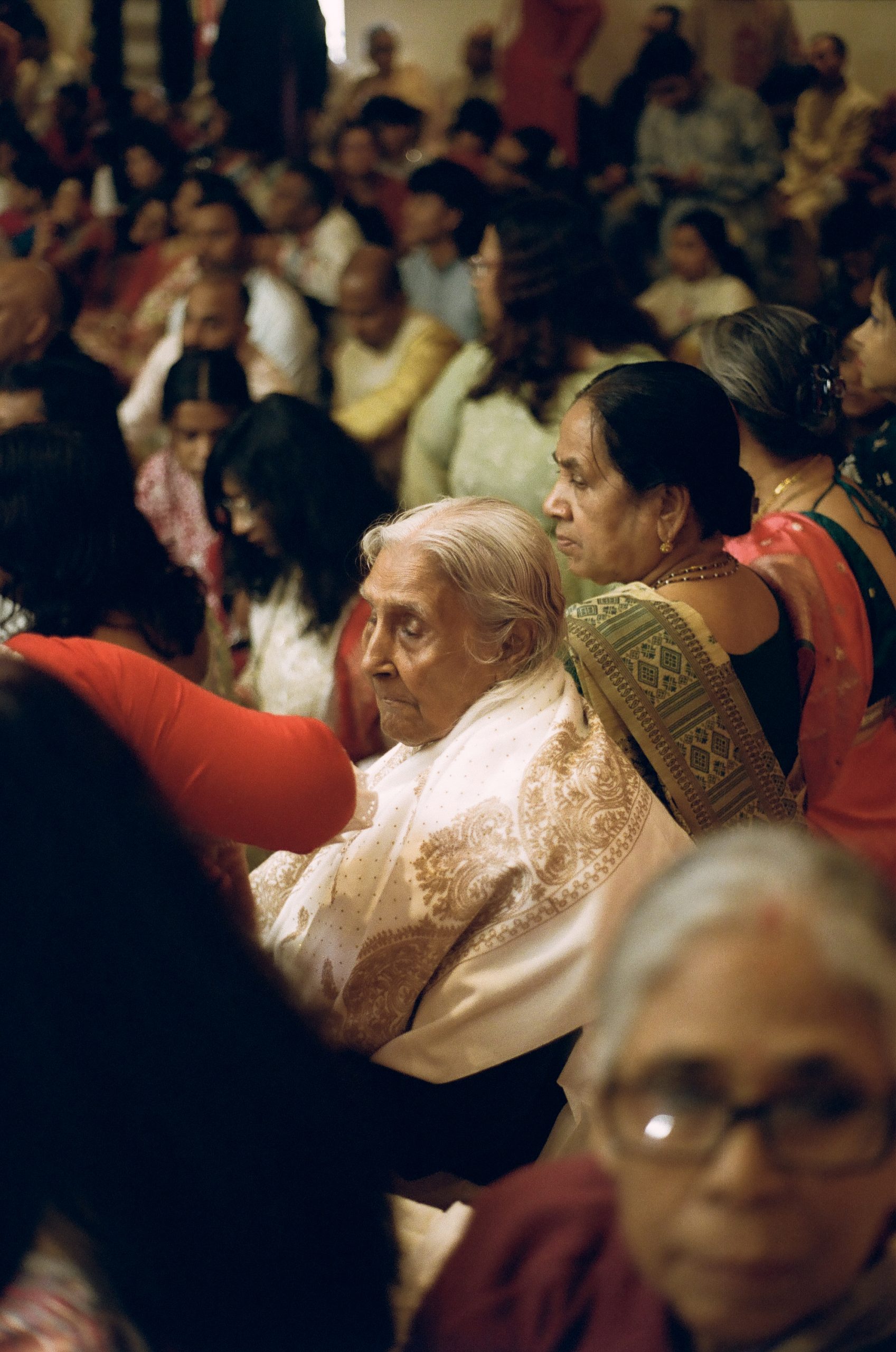
In the crowd, an older woman sat through the prayers with her eyes half closed and the room moving around her.
In Times Square, Durga Puja celebrations take on a different energy. Dinesh Mojumder, founder and president of the Times Square Durga Puja, put it simply, “Times Square is a meeting point for the world.”
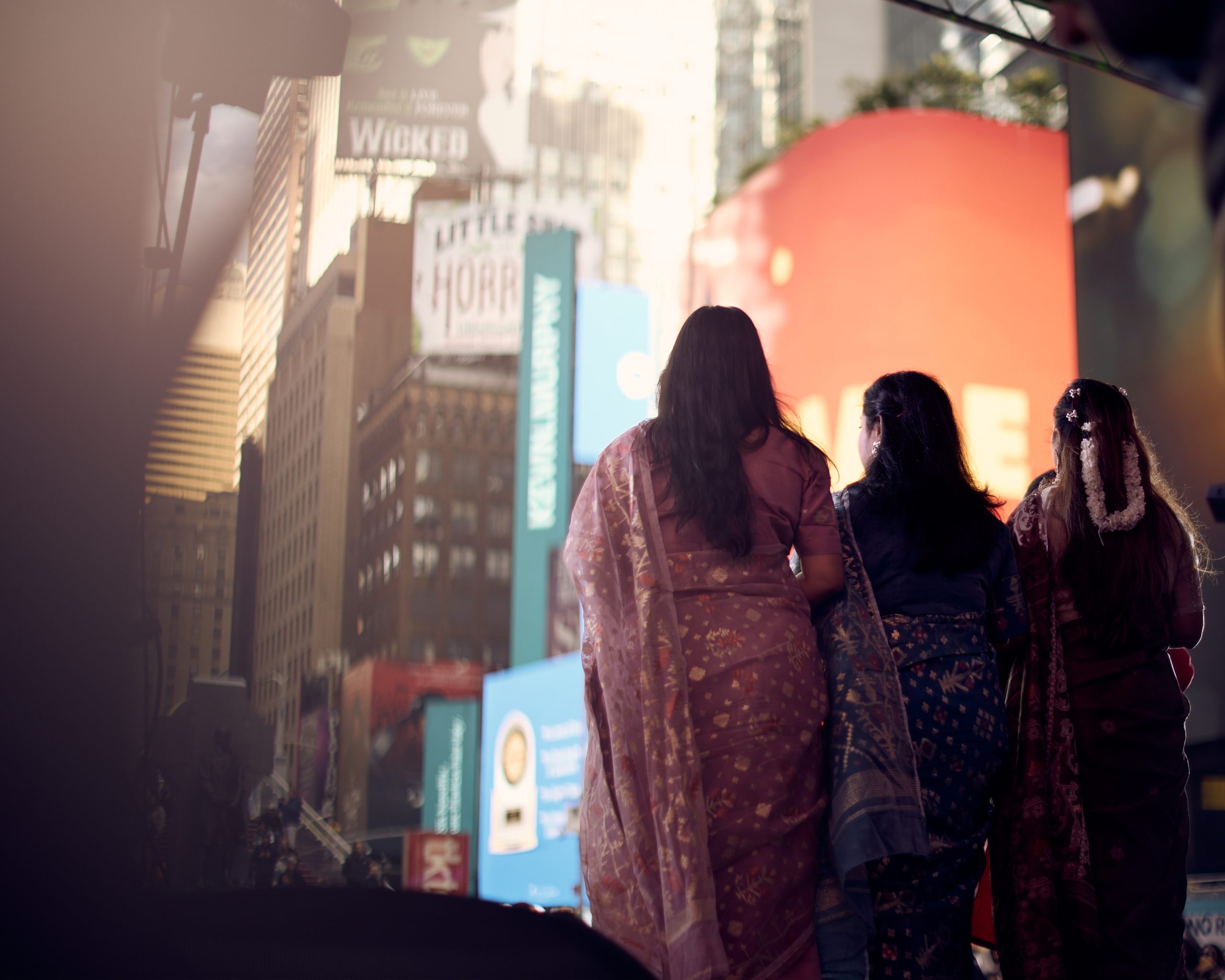
Organized by Bengali Club USA, the event is now in its third year. When Mojumder first started sketching plans for the first event in 2022, he says he focused on one driving question: Why should a tradition this big stay indoors?
On stage, Ranjabali Dey Banerjee, 32, from Kolkata and now living in Brooklyn, danced a semi-classical piece about Adi Shakti, the Divine Mother in Hinduism and the primal force behind Durga.
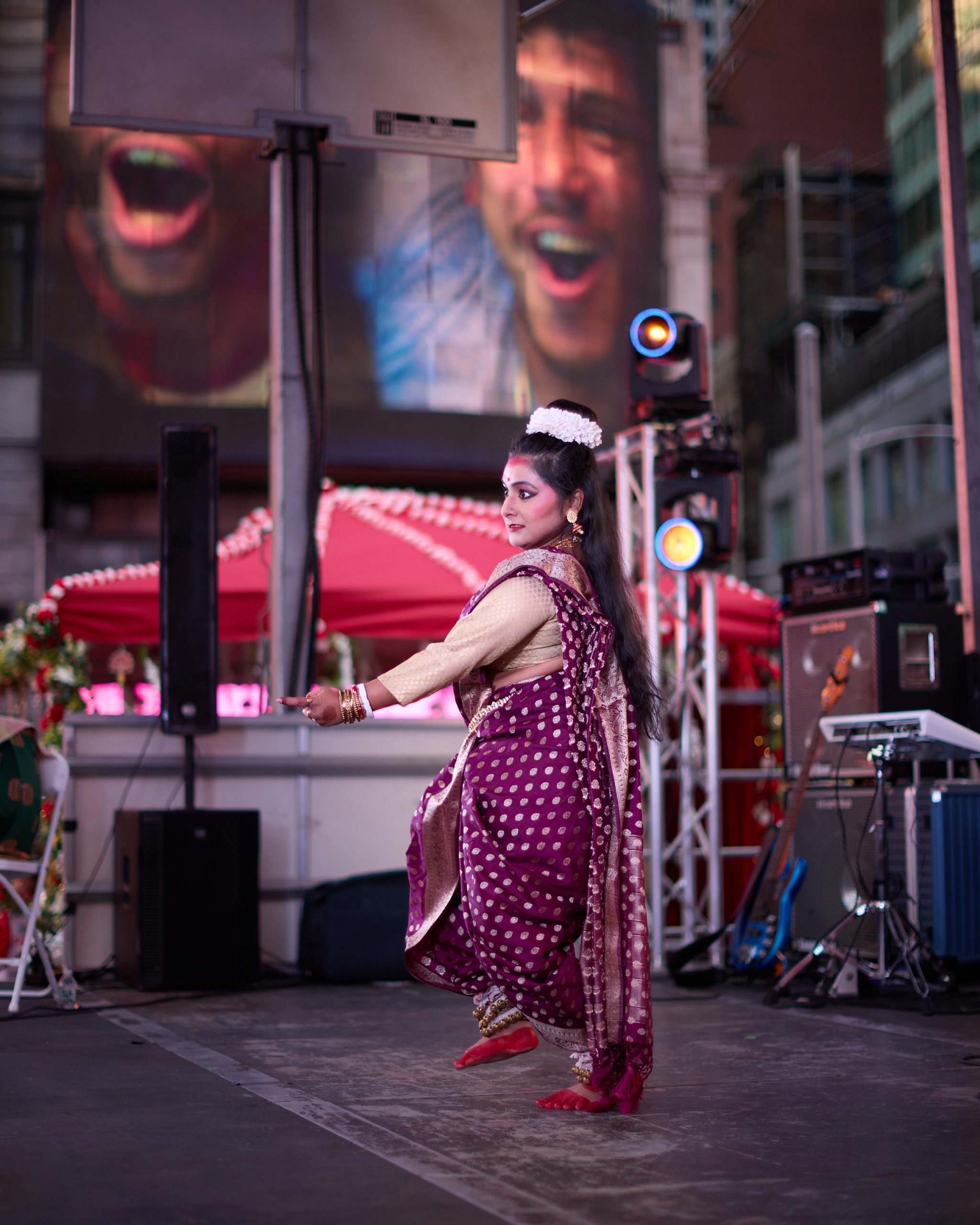
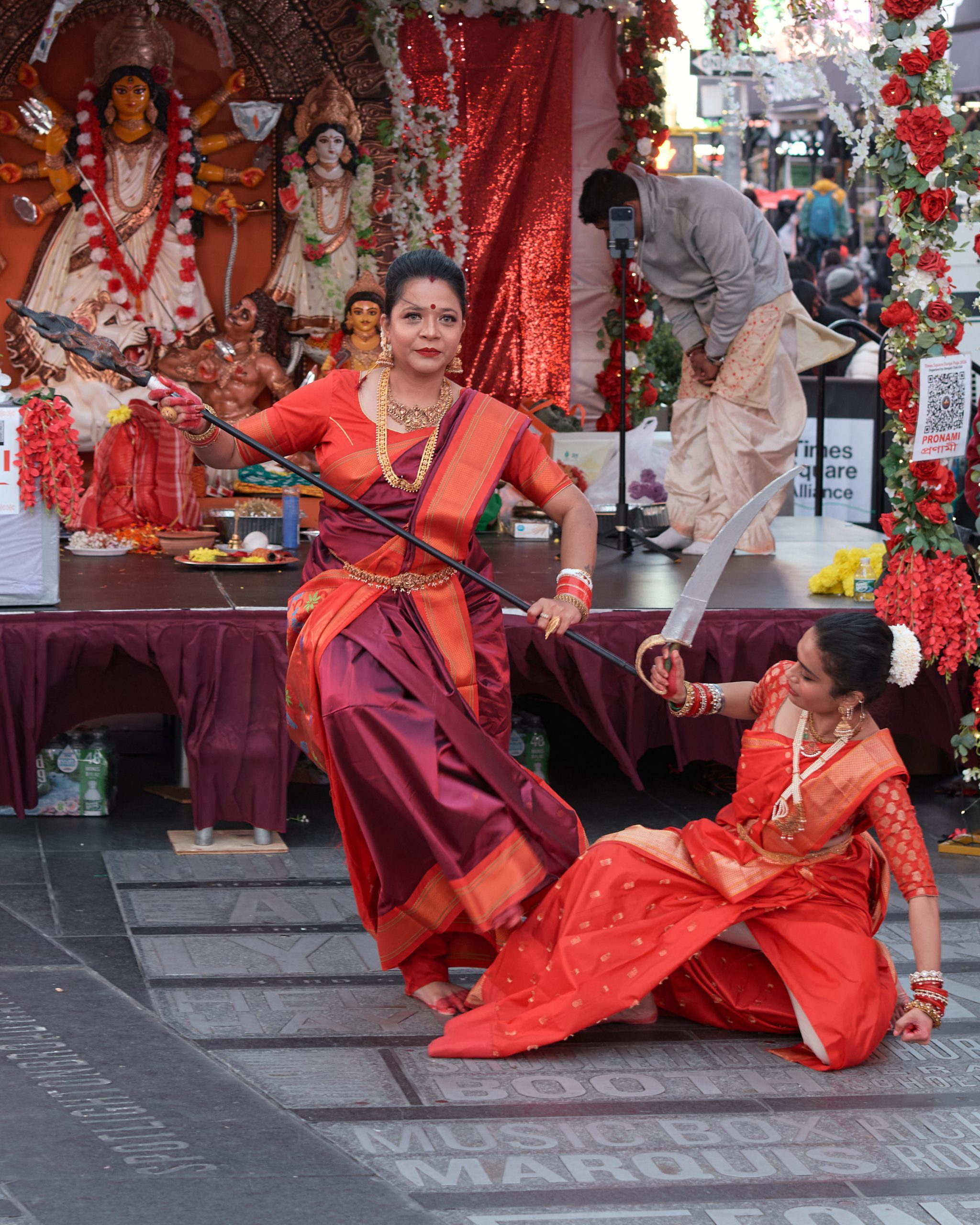
The dance, which combines technical foundations and expressive storytelling, opens with a description of Maha Durga, then moves through her power and the destruction of evil. Two other dancers staged the fight itself: a spear raises over a woman on her knees, the idol watching from behind them.
Another troupe mixed semi-classical with dhunuchi and bangla pujo folk contemporary, a style in which dancers hold smoking incense with one or both hands as they perform.
Tuli Biswas, an assistant teacher with the NYC Department of Education by day, sang on stage in Times Square, with her choir.
“Honestly, for me, Durga Puja is all about both faith and culture. You really can’t separate the two.”
—Tuli Biswas
“Honestly, for me, Durga Puja is all about both faith and culture. You really can’t separate the two,” she said. “Whether I’m bowing my head in prayer or sharing the artistic side of the festival with people around me, it’s all one and the same to me.”
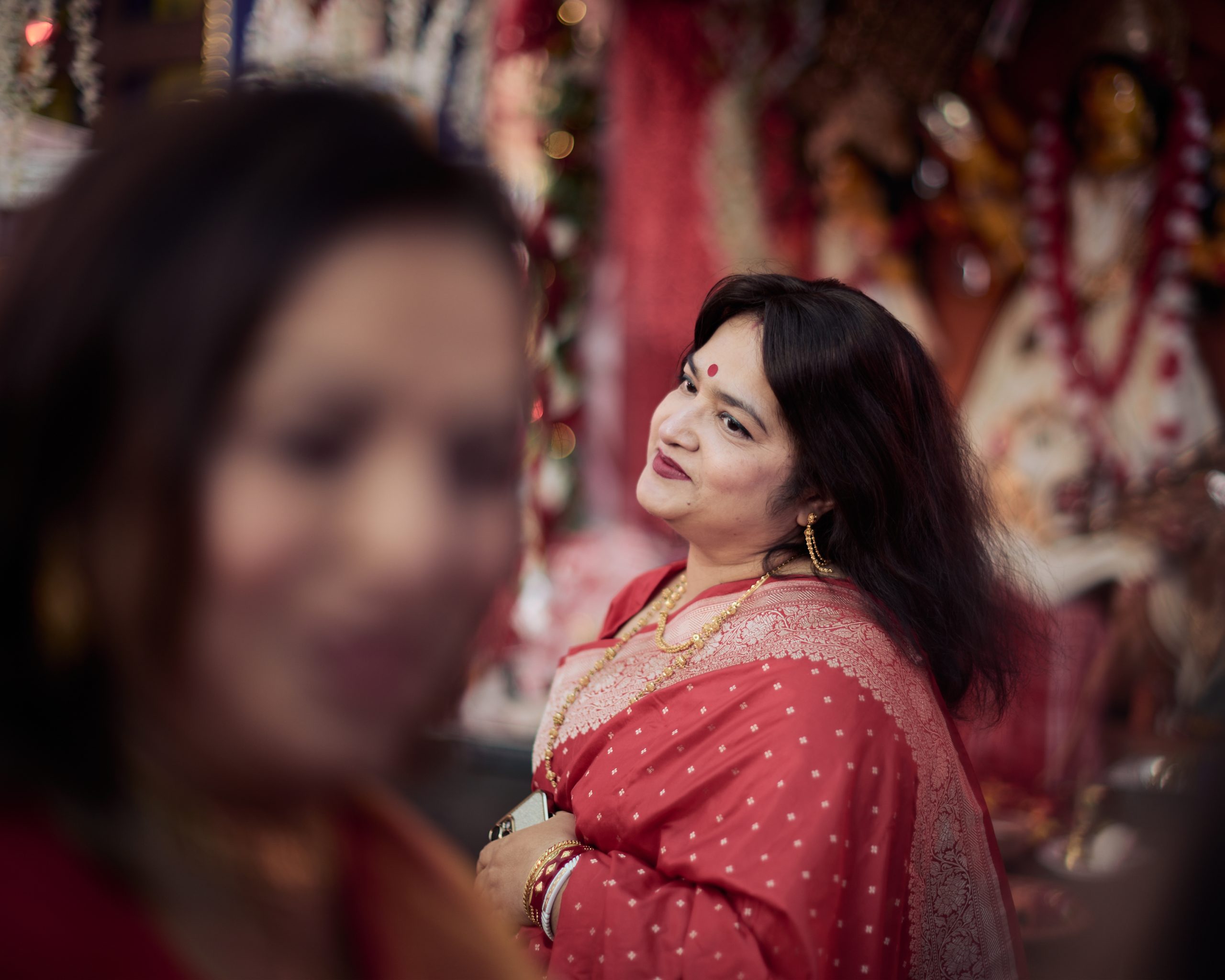
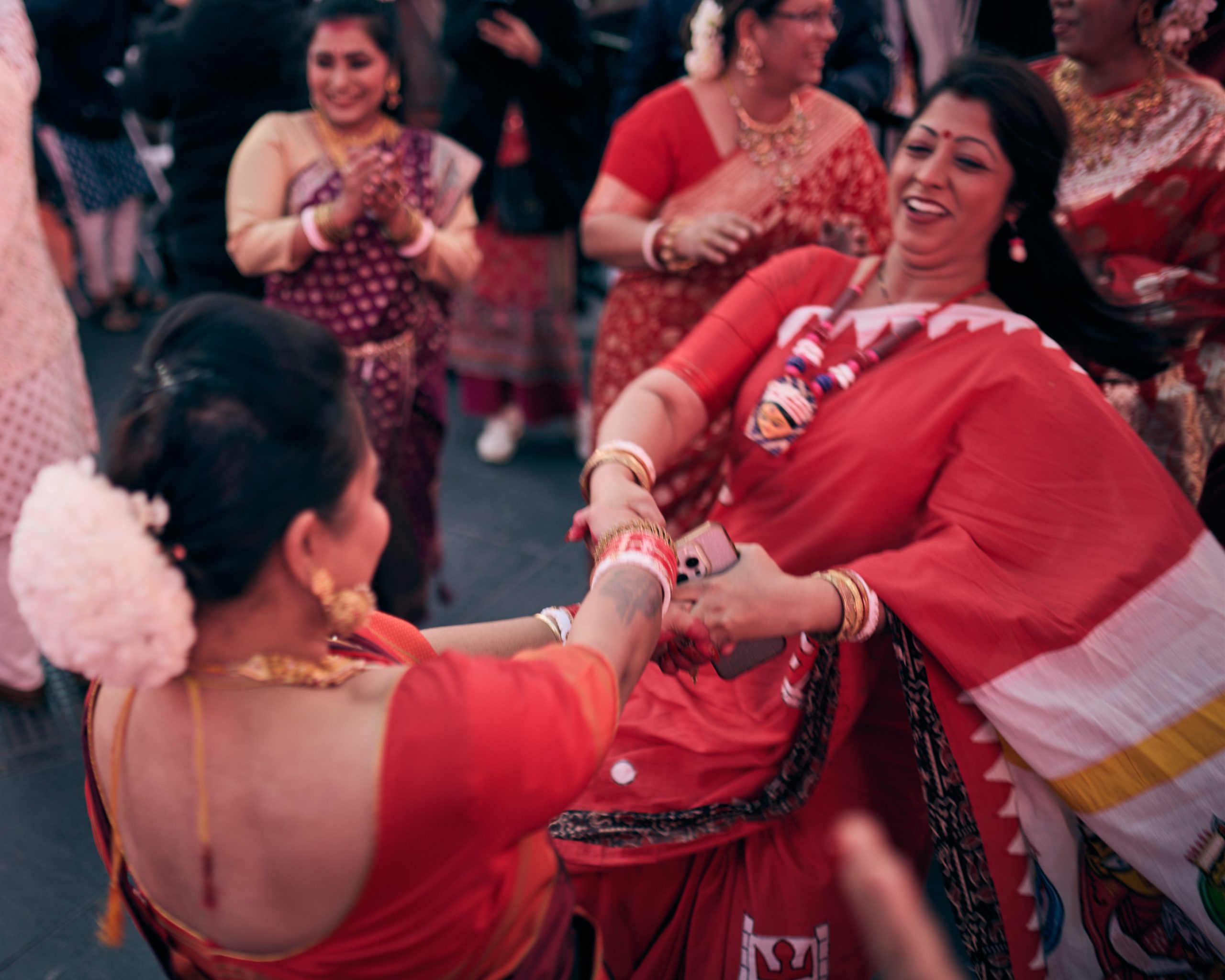
Off to the side of the stage, women in red and white saris held hands and spun, laughing, phones still in their grip. They were celebrating. The chill of late October didn’t seem to phase them — most wore nothing over their saris, yet they danced anyway.
“Being able to reconnect with my culture at a place thousands of miles away from home really means a lot to me.”
—Titash Mandal, New Jersey resident
“Being able to reconnect with my culture at a place thousands of miles away from home really means a lot to me,” said Mandal. “When we pray together, dress up in our traditional attire and seek blessings from God, the world seems like a much more beautiful place.”
Maa comes home once a year. And in New York, Hindu Bengali’s made sure she had somewhere to land.