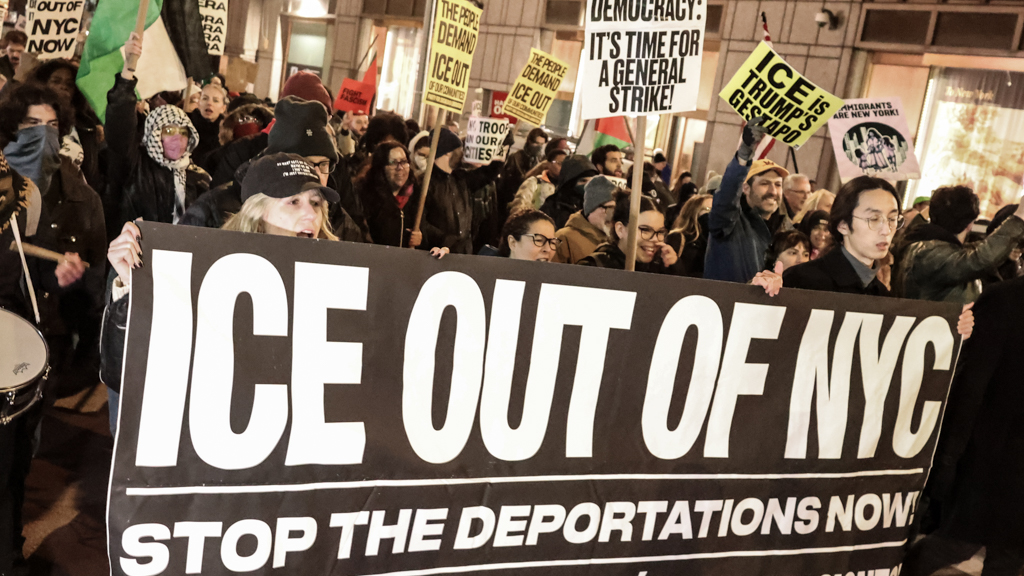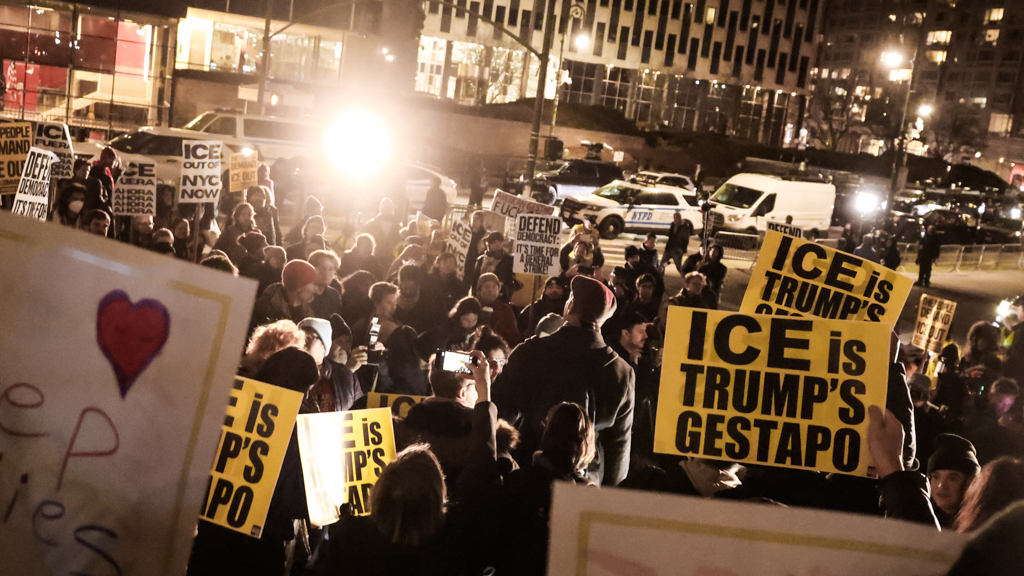


News reports and activist networks are sounding the alarm that there may be an influx of ICE agents in New York City — though there has been no official confirmation of broader operations in the five boroughs.
These warnings have heightened the sense of fear in the city’s immigrant communities, especially following border czar Tom Homan’s earlier threats of an impending surge in New York, as well as the recent end of immigration protections for over 5,000 Haitian and Syrian New Yorkers. Videos of recent ICE arrests and confrontations spreading across social media have only compounded these concerns.
While multiple sources agree there has been an increase in ICE sightings — much else remains unclear. Here’s what we can confirm is happening across the city.

Voices on the ground
A report by NewsNation last week, republished in The Hill, cited unnamed sources who told the outlet that a new surge of ICE agents was underway in New York City, starting in Queens.
Since then, major ICE watch groups, such as Hands Off NYC, have taken to social media to claim a doubling of sightings of immigration officers. They noted that East Elmhurst was particularly hard hit, though they did not, however, cite a sharp rise in arrests.
One organizing collective in Queens, which facilitates a rapid response and detention support network in the borough, told Documented that since July they have seen a “sharp uptick” in ICE sightings — roughly 20 — which is on par with the increase in ICE sightings from November, though with fewer reported arrests.
In July, ICE seemed to be targeting specific areas around Corona and Elmhurst, and increasing activity in Flushing and College Point, said Z.M., a member of the Queens collective. Z.M. asked to withhold their full name for fear of retribution.
This past week, that number jumped yet again.
“It’s definitely intensified since last Monday,” said Z.M., adding that while in previous weeks their group observed a couple of sightings a week, “starting 7/27, we’ve had 3-4 confirmed sightings a day.”
Still, a lack of official data from the federal government has left the public largely in the dark about the true breadth of recent ICE activity and arrests.
What the data says
The latest federal data available on local ICE arrests, obtained via open records requests by the Deportation Data Project, is available only through March.
In the absence of official federal data, reports from local rapid response networks and habeas filings can help fill some gaps.
NYC IceBreaker, a volunteer group that collects and visualizes ICE sightings by rapid response networks across the city, also reported an uptick citywide since July, though their numbers are not as high as in previous periods — such as last fall.
Because ICE watcher data comes from a patchwork of self-reported information, it typically is considered incomplete evidence of the presence of federal agents’ in neighborhoods. Many other factors, like the number and availability of active ICE watchers in a given neighborhood, can also skew the numbers.
Another way to assess enforcement without the help of federal data, is through immigrants’ court filings requesting their freedom from a federal judge.
Documented reviewed the last six months of these petitions, called writs of habeas corpus, that have been filed in New York City and New Jersey. Our analysis, charted below, shows a meaningful increase in filings in July, and an additional increase in the final week of the month.
Since last Monday, federal court filings have detailed the stories of many arrests: An Ecuadorian man with severe Type 2 diabetes arrested at Bellevue Hospital; a Staten Islander arrested while walking on the sidewalk outside a Mexican grocery store; a Corona father from Venezuela who supported his wife, two daughters and a son; a construction worker detained while on the job in Jamaica, Queens.
However, the number of habeas petitions filed during a given time frame does not necessarily mean a rise in arrests during that same period. While it is often important to file habeas petitions within 24 hours of arrest, petitions can be filed weeks, months and even years after the detention of an individual. Filings must also take place in the location a person is detained, not arrested, meaning that not all of the petitions filed in New York represent New Yorkers.
A Department of Homeland Security spokesperson would not confirm NewsNation’s reporting or other community and court data cited by Documented in this story, but attacked state and city sanctuary laws.
“For operational security reasons, we would not confirm future removal operations,” said the unnamed spokesperson.
The city’s response
City officials did not confirm to Documented if there has been an increase in ICE activity in the past week either, but they did direct New Yorkers to know their rights and stay informed.
“The Mayor’s Office of Immigrant Affairs is closely monitoring reports of ICE activity in our city. Aggressive enforcement sows chaos and fear in our communities, undermining public safety, eroding public trust, and making it harder for New Yorkers to feel safe seeking the services and support they need,” Benjamin Fang-Estrada, director of communications at the Mayor’s Office of Immigrant Affairs (MOIA), told Documented.
He directed New Yorkers with questions and concerns, including individuals in detention, to MOIA’s free and confidential Immigration Legal Support Hotline at 800-354-0365.
Meanwhile, Public Advocate Jumaane Williams told Documented that while it’s a “scary time,” New Yorkers have tools and resources they can rely upon to protect themselves, including their own communities. His office recently shared a list of resources for immigrants, after an ICE agent pepper-sprayed Inwood resident Linda Wolff, who was recording their activity.
“The most encouraging thing that I heard from that, was that woman saying that she was going to continue to record ICE,” Williams said. “I’m proud of New Yorkers because they continue to step up. We are doing the best we can to equip folks with accurate information, facts, their rights, and ways they can respond … and just make sure folks don’t feel powerless in the moment when they feel fearful.”
Resources and rights
For immigrant New Yorkers concerned about safety and preparedness amidst a rise of immigration officers on the streets, here are some guides Documented has created to help navigate these difficult times:
- How to Protect Yourself and Your Neighbors: Resources for Immigrant New Yorkers
- Family Planning for Parents at Risk of Deportation
- What Is Habeas Corpus, and how can I fill out a petition?
- How “Next Friend” Habeas Petitions Work for Immigrants in ICE Custody
For allies of immigrant New Yorkers:
- Three Strategies to Help Neighbors at Risk of Being Arrested by ICE
- 5 Steps to Take if a Family Member is Detained by ICE
And for any New Yorker, here is a list of organizations serving immigrants in the city.