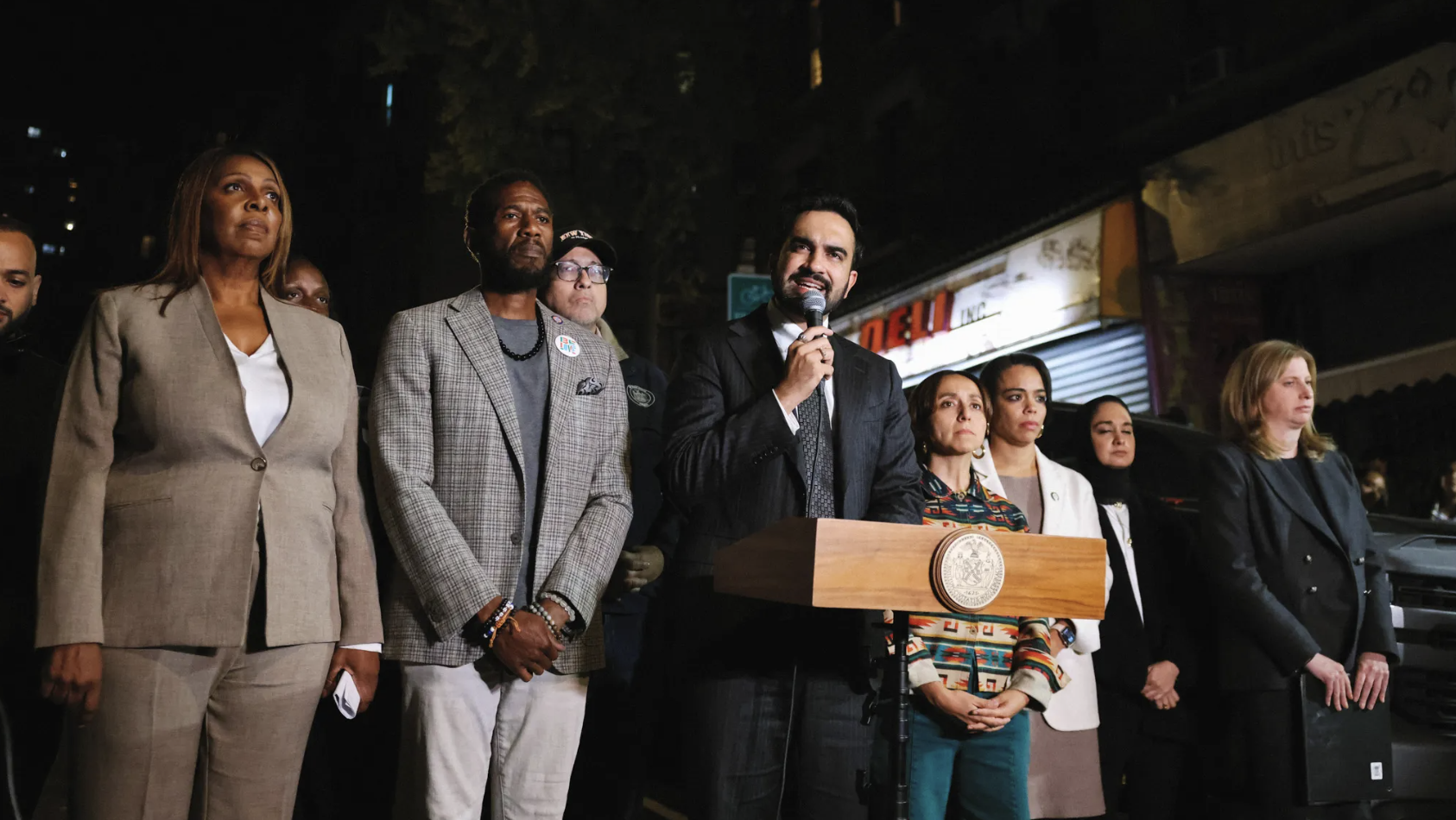


New York City Mayor Zohran Mamdani fired a warning shot at federal immigration authorities on Monday: Stop parking in city parking lots or risk a lawsuit.
In a new letter, addressed to U.S. Department of Homeland Security Secretary Markwayne Mullin, ICE Acting Director David Venturella and ICE’s New York Field Director Kenneth Genalo, Mamdani took issue with multiple reports of ICE agents parking in city-owned lots, specifically mentioning those in Van Cortlandt Park in the Bronx and parking lots along 111th street next to Flushing Meadows Corona Park in Queens.
“ICE has not secured any authorization from the City to use these lots for immigration enforcement,” the letter said, adding: “If your agents continue any unauthorized use of these lots, New York City will take legal action to prevent this unlawful commandeering of City property.”
Federal immigration agents are not allowed to meet on city property without a warrant or permission, according to an executive order issued by the Mamdani administration in February. Alongside the letter, the mayor’s office also released updated guidance for parks employees if they face attempts by federal law enforcement to use parks property.

The letter is the Mamdani administration’s latest escalation against Trump’s deportation push following a spike in immigration detentions and after an unnamed ICE agent shot a man in Marble Hill.
“ICE has no right to use our property as a base for tearing families apart. That goes for every park and every lot this City owns. This unauthorized use of City property must end now,” said Mayor Mamdani in a written statement to the press. “Today, I’m telling DHS to order its agents off our lots. If they keep coming back, we will see them in court.”
“ICE has no right to use our property as a base for tearing families apart. That goes for every park and every lot this City owns.”
—Mayor Zohran Mamdani
While the mayor’s executive order bars ICE’s use of city parking lots, owners of the city’s thousands of private parking lots have been called upon to bar any federal immigration agent’s use of their property.
In a separate letter written by Mamdani to business owners on Oct. 16 and signed by over 100 public servants, the administration pushed private lot owners to reject any attempt by ICE agents to use their property. The letter cited Documented’s reporting on local protests erupting in Jackson Heights in response to staging by ICE agents in TD Bank parking lots along Northern Boulevard in Queens.
This year, community members have consistently spotted immigration agents in city-owned parking lots and, most recently, Queens locals erupted in frustration at a local Community Education Council meeting after community members alleged sightings of agents in a leased school parking lot in October.
Federal agents have been sighted at least five times at Flushing Meadows Corona Park since Aug. 21, and as recently as Oct. 16, according to information shared with Documented by Hands Off NYC, a city-wide ICE watch organization.
“We have been trying to best understand and identify, and to the best of our ability, validate reports, right, that have been coming to us, and make sure we have a good sense of like what is actually happening,” said Bitta Mostofi, special advisor to the First Deputy Mayor and former commissioner of the Mayor’s Office of Immigrant Affairs. Both parks that were mentioned in the letter received multiple verifiable reports from community members and electeds alike, she said.
Mostofi told Documented that the letter and updated guidance for the parks department is part of the Mamdani administration’s efforts to strengthen broader citywide guidance as it relates to access to city property by any non-local law enforcement agencies.
“People aren’t really sure what’s happening — and who these individuals are in some instances, has caused some fear,” she said. “We’ve heard from elected officials who’ve been engaged with folks at the school who’ve expressed concerns.”
The legal reality
While the Mamdani administration has threatened legal action if the parking lot rules are violated, the legal reality of enforcing such a rule may be more murky, explained Aaron Saiger, the director of the Fordham Urban Law Center, which studies legal regulation of urban spaces. Some parking lots are city property which curiously lie in between what might be considered a strictly private space — such as the Mayor’s own office — and a public one like a sidewalk.
“Just to be clear, the city can always sue,” said Saiger. “The question is just, will the suit go anywhere?”
According to Saiger, while the city can legally limit access to parking lots which are used by only New York City staff, city lots that are used by the public as well are more complicated spaces to restrict access, raising questions about whether, for instance, only non-local law enforcement would be excluded, or the broader public would have to be as well.
For Mostofi, though, the issue is clear.
“At the end of the day, this is city property. It’s where we have full operational control, and we have pretty explicit laws,” Mostofi told Documented, noting that without permission from the city or a judicial warrant, Mamadani’s executive order forbade non-local law enforcement from accessing city parking lots.
“From our perspective, we have both the authority and the right to regulate the use of our property in the interest and public interest of New Yorkers, and that’s what we’re doing here,” she said.