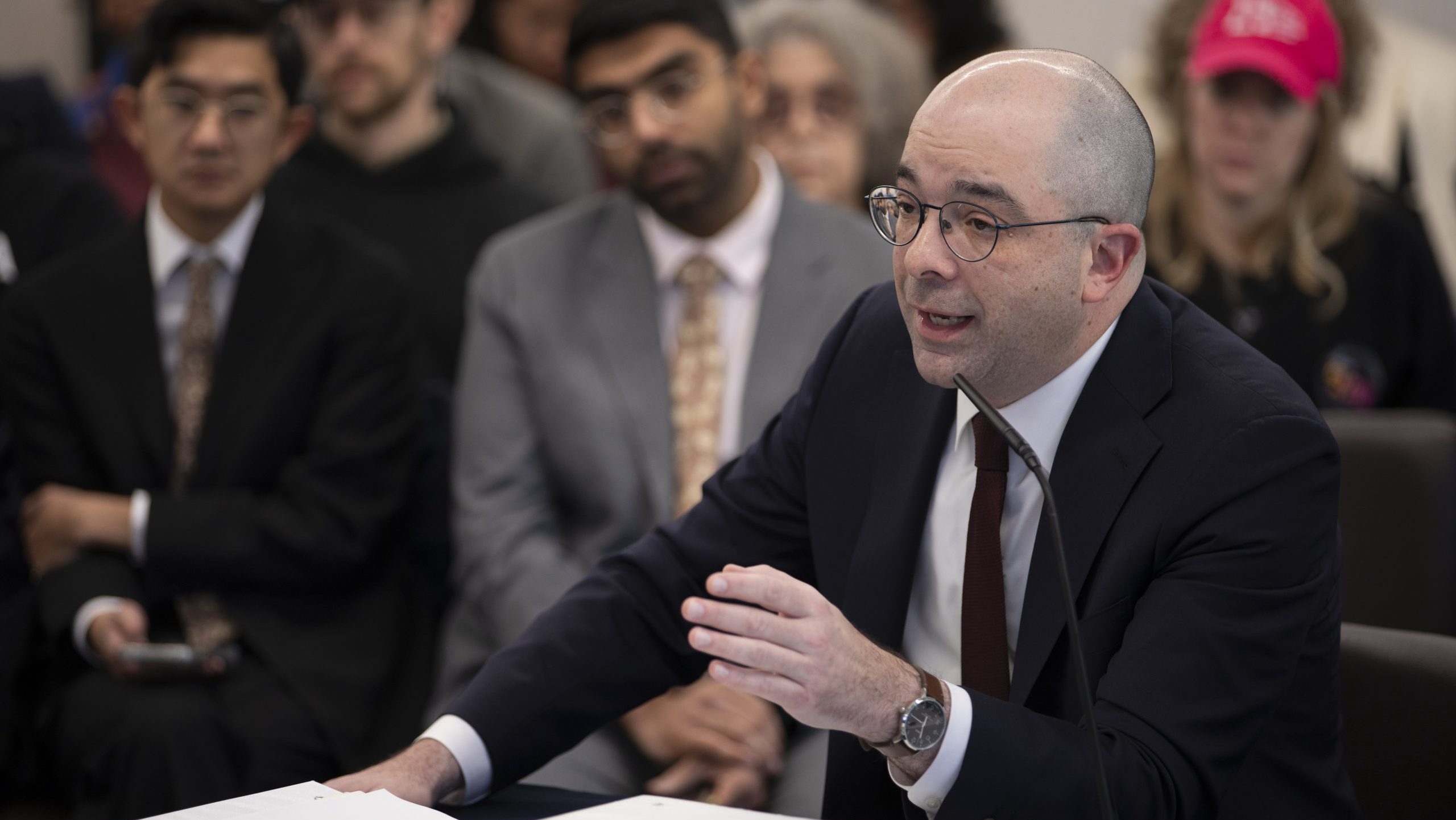


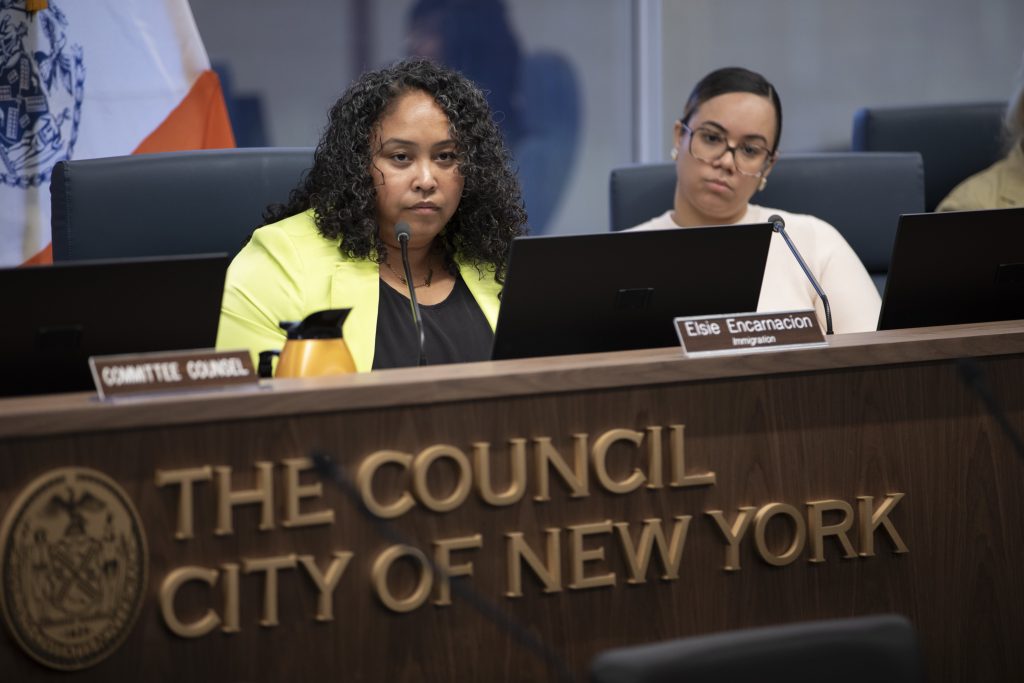
At a Friday oversight hearing on the state of immigration enforcement in New York City, council members grilled the Mamdani administration and sparred with the New York Police Department. Meanwhile, the Department of Correction — the subject of one of the three bills placed before the committee that day — was notably absent.
The DOC did not immediately respond to a request for comment on why they did not attend Friday’s hearing.
The hearing took place two months after ICE agents shot a Dominican New Yorker who his lawyers say was driving his 5-year-old home from McDonald’s, and as ICE enforcement in the city has reached fever pitch. During multiple hours of testimony, advocates and lawmakers fiercely questioned city officials on the state of ICE enforcement in New York City with a group of proposals meant to close the gaps in sanctuary protections.

Two years into Donald Trump’s campaign of mass deportation, New York City has seen a rise of ICE arrests and attacks by the Trump administration on sanctuary policy, with agents using both private and public city properties to stage their arrests. The neighborhoods of Jackson Heights, Corona and Elmhurst, Queens have been particularly hard-hit.
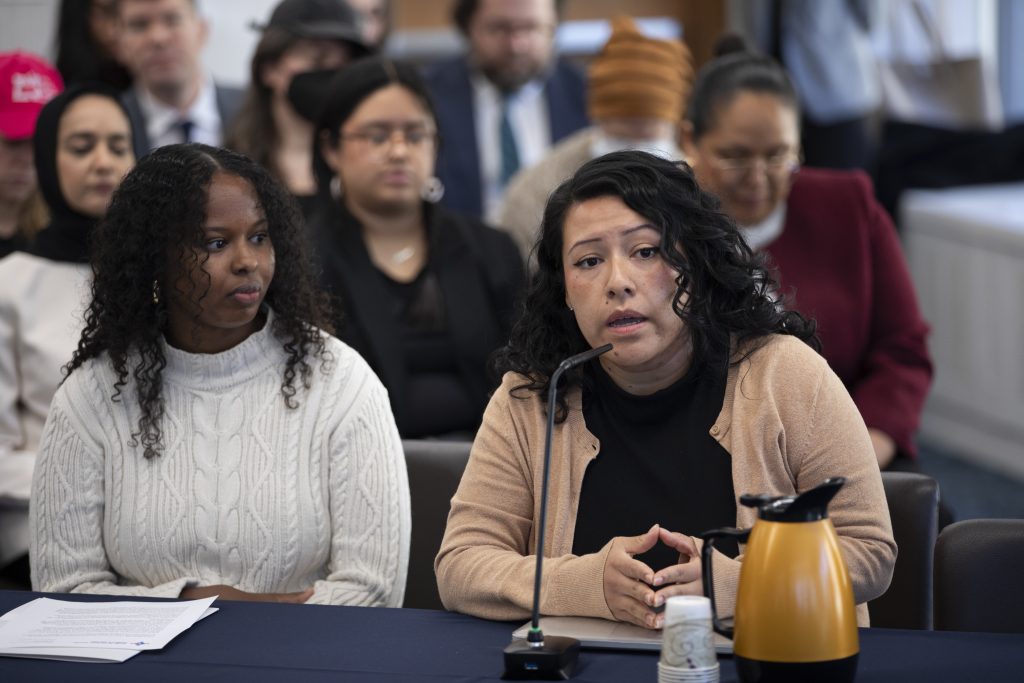
“The violence and trauma we are experiencing at the hands of ICE is unlike anything I’ve experienced in my entire life,” said Josselyn Atahualpa, of Queens Neighborhoods United, in the opening panel. “ICE is ravaging our communities, upending our lives, all within just a 20-block radius, and it feels like no one in the city cares. Canal Street happens, Marble Hill happens, and then everyone forgets. Almost everyone in our part of Queens has either been directly impacted by ICE or know someone who has.”
Such voices are part of a growing chorus of community members demanding the end of collusion by city employees with ICE, or just for any kind of help — from mutual aid to lawyers and housing for those left behind following a deportation — fueled by a surge of violent detentions across New York City neighborhoods.
The three bills up for discussion Friday looked to cement the training of city employees on sanctuary law; prohibiting city police from holding New Yorkers for ICE without a warrant; and stopped the correction officers from similarly holding New Yorkers in custody in order to allow for ICE officers to take them into custody.
A separate resolution by the City Public Advocate Jumaane D. Williams, citing Documented’s reporting, was also discussed, which urged support for state bills that would increase funding for immigration attorneys, including in juvenile immigration court.
While Michael Gerber, NYPD Deputy Commissioner of Legal Matters, said he supported the bill prohibiting police from holding New Yorkers for ICE, he said the department has not accepted a detainer request from ICE in ten years.
Faiza Ali, the commissioner of immigrant affairs, said the administration supported the “spirit of the bills,” but was still reviewing them with the city law department.
This also comes amid other changes from the city to enforce New York’s executive order 13, which seeks to stop any loopholes or leaks which may have allowed city workers to share information with federal immigration authorities.
Last Friday, the NYPD updated its patrol guide with some distinct changes requiring officers to turn on their body cameras when they encounter a federal agent, and to radio for a superior officer whenever a federal agent is present.
While the NYPD denied any collusion, it noted that in a recent audit of task for member emails — officers who consistently work with federal authorities on criminal cases — “there were a number of cases or instances that we were that we referred to [internal affairs],” some of which were found to be substantiated, said Gerber.
However, even the appearances of collusion can impact community trust in law enforcement, multiple council members urged. Members described incidents like how, in the wake of the shooting of Oscar Belgal, NYPD officers pushed New Yorkers back with metal barriers to make room for hospital vehicles and also made way for ICE vehicles to leave the hospital undeterred.
In some cases, the question is whether NYPD creating a perimeter around an ICE operation can also be considered a form of collaboration. At the hearing Friday, Gerber said the police department moved people out of the way to preserve human life.
“What I would say to individuals who believe we shouldn’t have done that, my question would be, if we’re not doing, if we just walk away, how does that story end? We’ve seen what happens in other cities,” Gerber told the City Council, referring to other immigration enforcement operations including those in Minneapolis that saw two U.S. citizens killed by ICE agents.
City Council member Carmen de la Rosa, whose district extends into Marble Hill, was visibly angry and contested the NYPD’s version of events.
“I just want to say to you that, in my opinion, although you all were trying to protect public safety, that is not what comes across,” de la Rosa said. “And I implore you to find a way to communicate clearly to New Yorkers what NYPD’s role is when these incidents are happening, not just at the end of the night when the police commissioner comes down to read people’s rap sheets.”
How We Got Here
The hearing Friday attempted to address what advocates say are outstanding gaps in sanctuary law which have plagued the city since the Eric Adams administration.
“Please do not make us come back here to testify about these laws again. We have been here for five years telling the same stories,” Rosa Cohen-Cruz, director of immigration policy at Bronx Defenders, said during her testimony on Friday. “My clients, many of them who came before this council and told their stories or shared through us, some of them have been deported. They have been harmed immensely. We have made a record time and time again about how harmful this collusion has been, and it is time for this council to take action.”
Under the Adams administration, concerns regarding city collaboration were rampant as the City Council scrambled to hold the mayor’s inclination to support some Trump policies in check — such as his plans to set up an ICE office on Riker’s Island.
Such concern turned to outrage amongst community advocates as proof surfaced of multiple cases of direct collaboration with ICE between city staff. NYPD and ICE stormed a Bronx apartment together, and Department of Corrections employees coordinated with ICE, using the hashtag #teamsendthemback on the email, are some such examples.
After coming to power on the back of a virulently anti-Trump and pro-immigrant campaign, one of Mamdani’s first executive orders was to launch a massive audit effort which investigated six city agencies’ alignment with sanctuary policy and put in place a plan to both desmystify and enforce such statues.
The results of the audits showed strong sanctuary protections in some places, but also exposed loopholes in others. Among the most concerning for advocates was the continued direct collaboration of the Department of Correction with ICE agents. Officers had been sharing daily reports with ICE of noncitizens with “violent or serious convictions,” according to the report. An NYPD officer also had been found to have wrongfully shared information with immigration authorities as well.
“We should not, as a city, feel okay about funneling anybody into their clutches when we know that they leave people to die in the freezing cold. They shoot people in broad daylight. People die in their jails and prisons all the time,” Cohen-Cruz said of federal immigration agents. “We have to say no, that is not part of I think a system that we want New Yorkers to be funneled into.”
On Oct. 8, when ICE officers swarmed and shot Dominican New Yorker Oscar Belgal in Marble Hill — outrage swirled about NYPD’s crowd control strategy outside the hospital in which he was receiving treatment. lFollowing the shooting, legislators were urged to take action.
“[Mamdani’s] administration deserves a lot of credit for taking those important first steps, and now they need to finish the job,” Cohen-Cruz told Documented.
In 2025, the Department of Correction told lawmakers in written testimony that it was concerned about bills limiting its coordination with federal agencies. The DOC has reported that in the last fiscal year, they transferred 24 people into ICE custody, according to the mayor’s office audit.
A department audit of emails, required under the mayor’s executive order, “is supposed to be completed by the end of the year,” said MOIA commissioner Ali.
“Any interactions with federal authorities are in compliance with local laws and department policy,” a Department of Correction spokesperson, who did not provide their name, told Documented on Thursday.
The Trump administration has continued to test the limits of New York City’s sanctuary policies. ICE has parked its vehicles in TD Bank parking lots and other private businesses. The agency has also issued a subpoena for information on individuals living in the city’s last immigrant shelter in the Bronx. On Thursday, Gothamist reported that the city would close that shelter in order to not provide information to ICE.
Yasmine Farhang, the Immigrant Defense Project executive director, cited the package of bills being discussed Friday as one way to nip collaboration between city agencies and federal immigration enforcement.
“Our detainer laws, the ways in which NYPD and DOC still collude with ICE, is in part because we have really convoluted laws with confusing exceptions that are ripe for being violated, which we have consistently documented,” Farhang told Documented. “There simply should be a straightforward policy of non-collusion, where there’s no judicial warrant.”