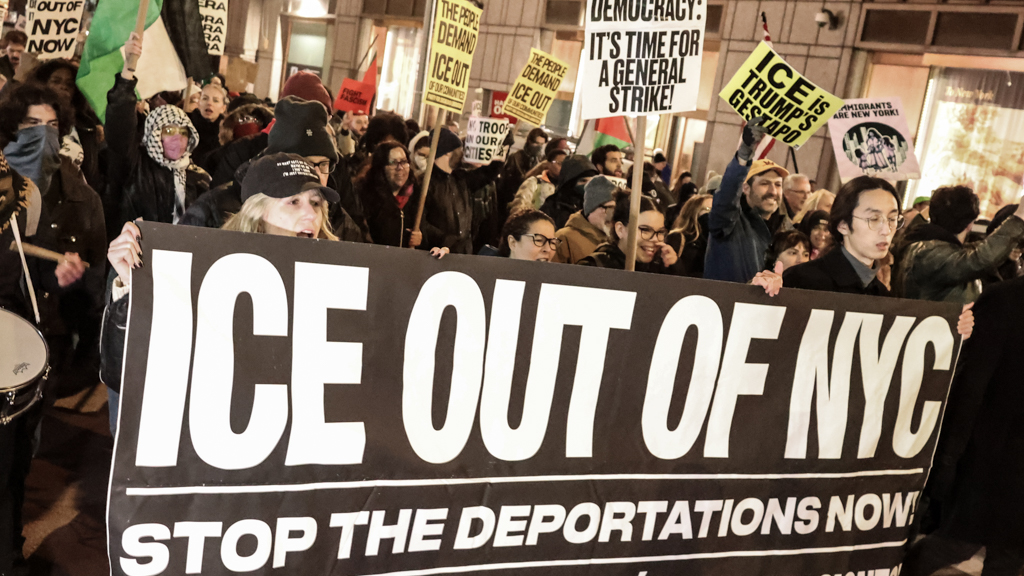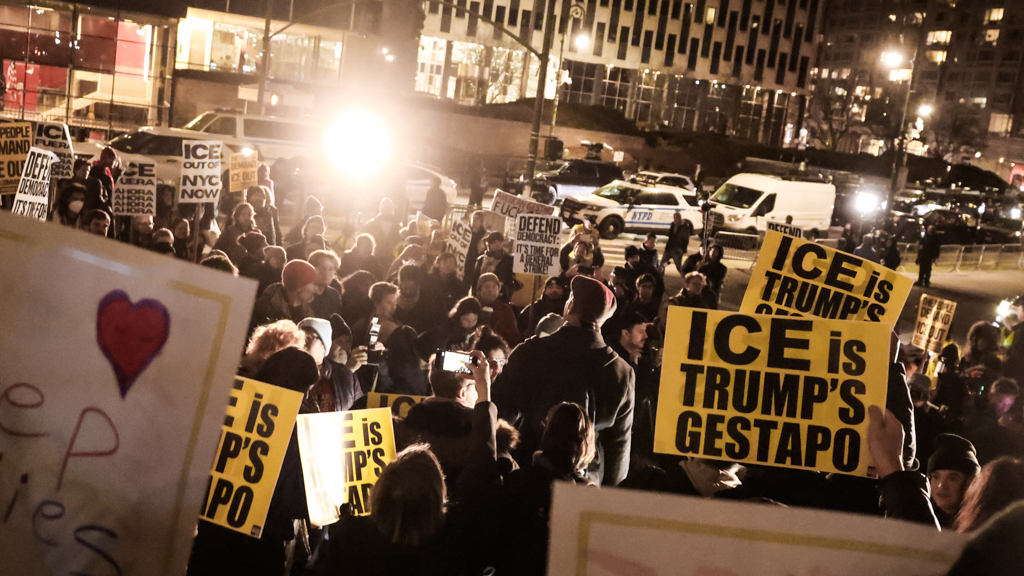


Two bank parking lots along Northern Boulevard in immigrant-dense Queens have become staging points for Immigration and Customs Enforcement (ICE) operations, prompting protests and vocal pushback from local community members.
As ICE seeks new permanent parking spots to house its fleet of cars in New York City, residents and elected officials in Queens have initiated a pressure campaign to shut down its less-formal use of two TD Bank parking lots. The push has been a combined effort of public protest, email campaigns and calls to bank managers encouraging them to take a stand for their customers.
According to community reports and elected officials, the two bank branches currently being used by agents — largely during early morning hours — are located at the TD Banks on Northern Boulevard at Junction Boulevard and 70th Street, at the borders of Jackson Heights, East Elmhurst and Corona, Queens.

Those neighborhoods are some of the most immigrant-dense in the country, with over 300 languages spoken along Roosevelt Avenue alone. The area has been particularly hard-hit by a shadow surge of federal immigration enforcement, as the mass-deportation agenda of Donald Trump’s second presidency has unfolded.
“This is a bank used by many community members that are being targeted,” State Assemblymember Jessica González-Rojas told Documented. “It sends a chilling effect and to prevent people from banking and giving them money and operating in our economy.”
When contacted by Documented for comment on the use of the two branches’ lots, TD Bank’s spokesperson said he would reach out to the local branches for an answer but then declined to provide further comment. He did confirm the bank was not being paid for the use of its lots.
In a statement, the bank said their parking lots are open during regular business hours and remain open after hours for ATM usage.
“TD receives no prior knowledge of law enforcement activity around TD property,” the spokesperson said. “Any law enforcement activity, whether that’s … the FBI or DHS or whatever law enforcement it is, we don’t have any prior knowledge of activity on TD parking lots.”
In an emailed statement, ICE would not comment or confirm its use of the lots for security reasons, noting that there has been what they said is an 8,000% increase in death threats against agents.
Reporting by Mother Jones has shown that none of ICE’s agents have ever been killed by an immigrant in the agency’s more than two-decade history. Moreover, the most recent non-cancer or COVID-19-related death of an ICE officer was in 2021 when the officer’s weapon was accidentally discharged.
The controversy is the latest public pushback against ICE vehicles staging in neighborhoods across the city.
Parking lot protest
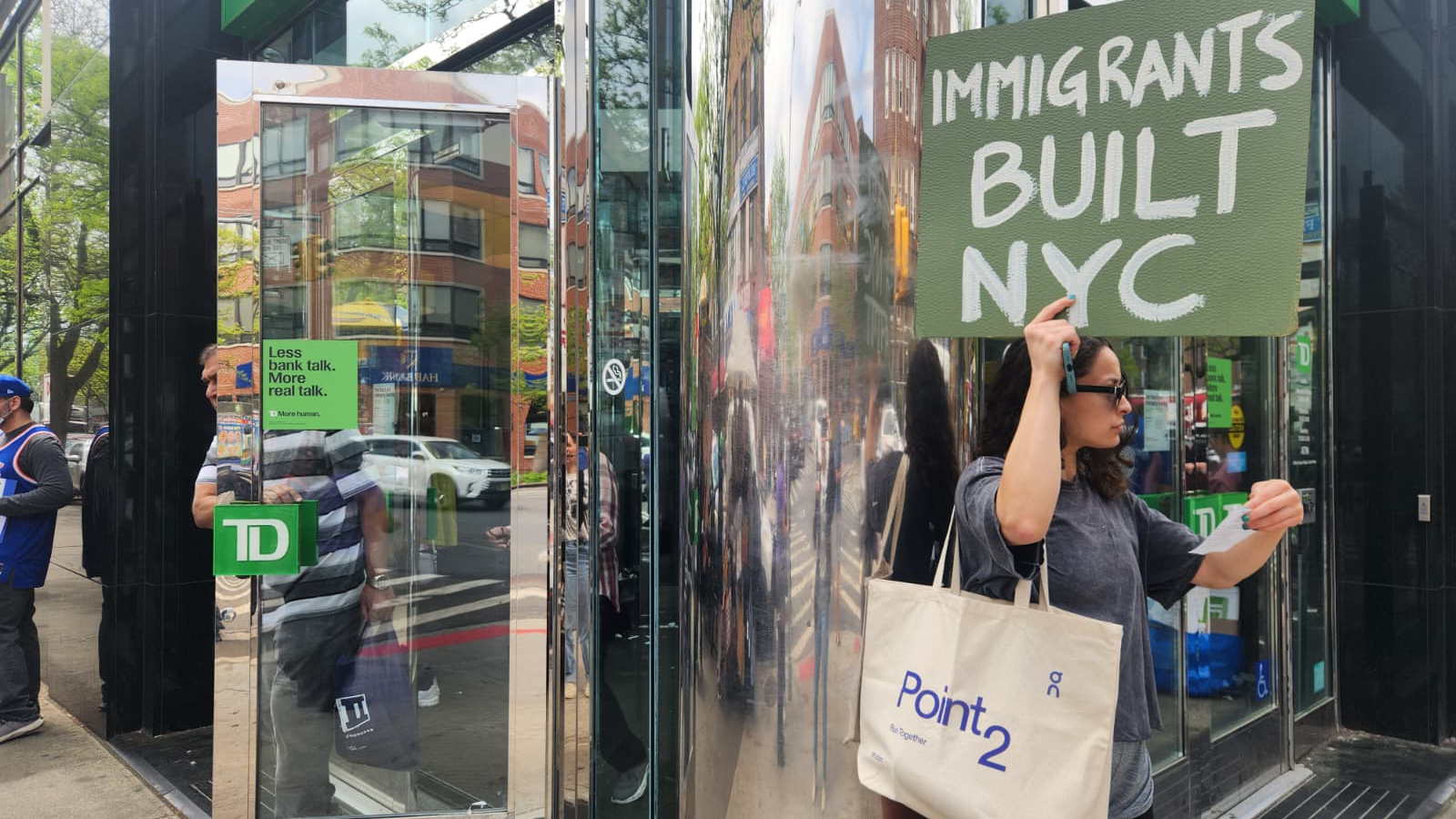
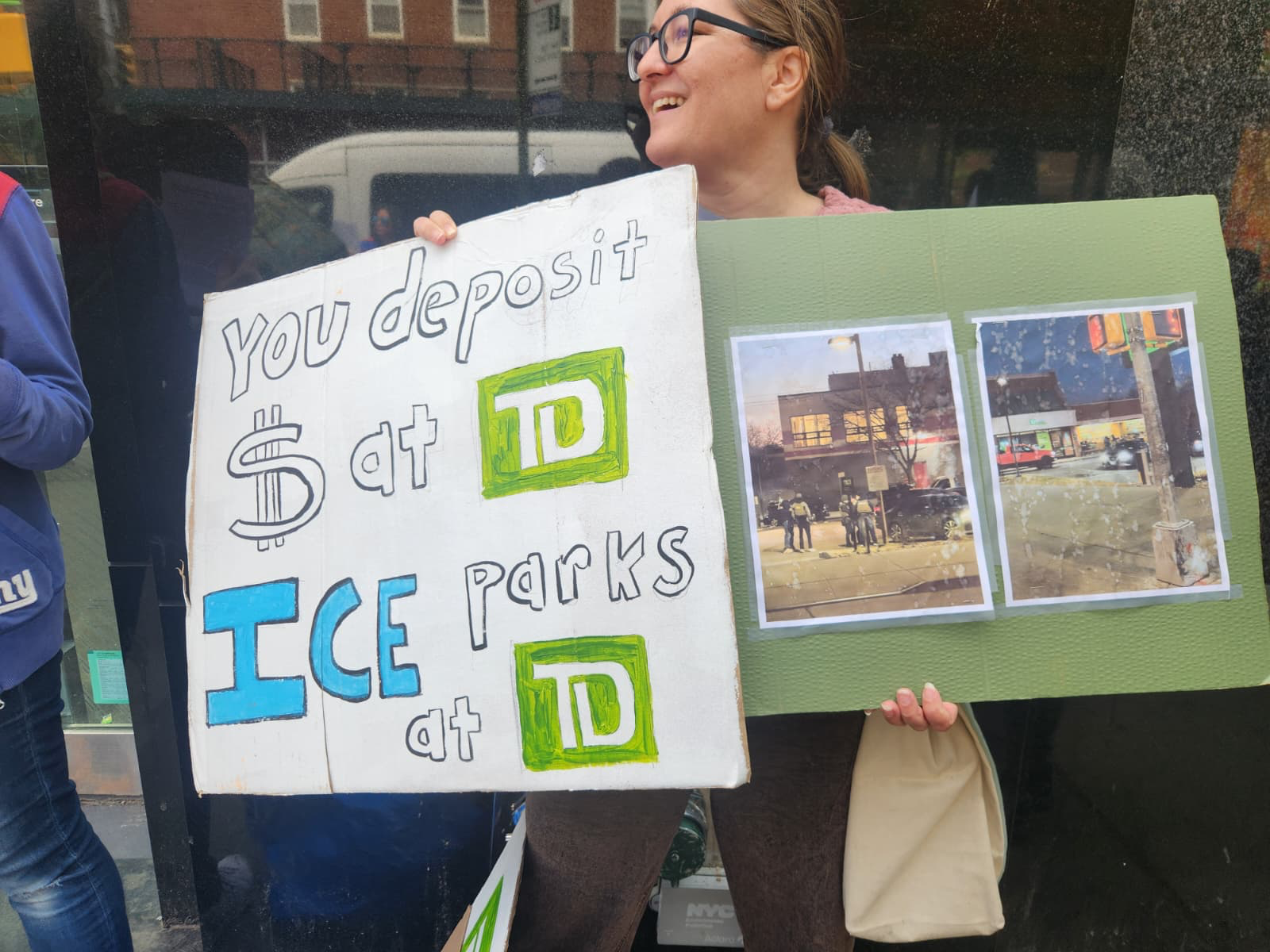
Last Saturday, a group of seven protesters gathered at a nearby TD Bank branch to hand out flyers to passers by. Their worn protest signs included photos of agents gathering in the Northern Boulevard TD Bank parking lots.
The demonstrators said they chose the bustling location on 37th Avenue because of the high foot traffic, hoping to inform community members and bankers about what was happening only a few blocks north.
Speaking Bengali, English and Spanish, the activists — from a campaign circulated through Hands Off NYC — urged customers to hold the bank accountable and bring up the issue with their own branch manager.
Drew Ribadeneyra held a green sign with white paint that read “Immigrants Built NYC.” She said she had only recently heard about ICE’s use of the lots, adding that she has tried to push herself to become more politically active amid ICE’s immigration crackdown. Her father, she said, arrived in Astoria from Ecuador as a two-year-old.
“I used to be one of those people who was not involved in politics, and I firmly regret that,” she said. “But I think I’m trying to … get involved, get informed so I can also tell other people about what’s going on, because I think a lot of people are just trying to survive.”
Local leaders step in
New York State Assemblymember Jessica González-Rojas learned of the parking lot issue in October of last year, when community members and rapid response groups shared photos of the agents in the neighborhood.
Some organizations, such as Jackson Heights Indivisible, began organizing a petition, she said. And she, along with other elected officials, started reaching out to bank managers.
However, despite their efforts, the problem has not gone away, said González-Rojas, adding that her outreach to higher-ups at the bank has not appeared to have an impact.
“They basically said there’s not much they can do because the parking lot is not fenced in,” she told Documented, adding that she also suggested that the bank try calling tow trucks — to which she received no response.
González-Rojas said that it’s been particularly frustrating because the bank had been so friendly to the immigrant community in Queens. She also deemed their apparent apathy to ICE’s presence as “unsatisfactory” — something that could “damage their reputation” and something that is already an economic issue.
“I know if I am undocumented or even a legal permanent resident, and my money’s in a bank where I’m hearing ICE is hanging out, I would not go to the bank,” she said.