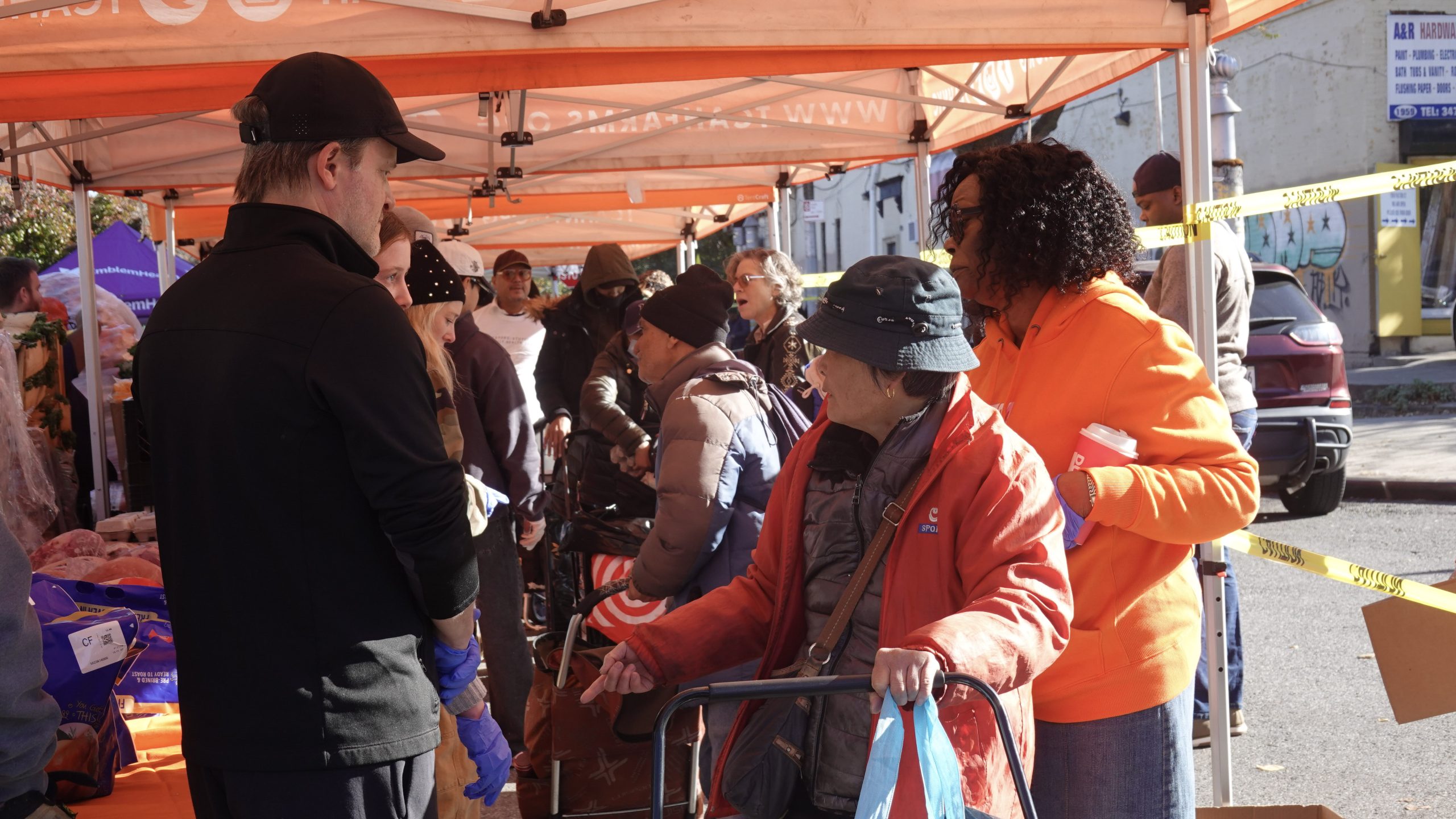


At 6 a.m. sharp, Magdalene Terris stood ready with her shopping cart at the corner of Hull Street and Saratoga Avenue in Bedford-Stuyvesant in Brooklyn. She was first to arrive for The Campaign Against Hunger’s Thanksgiving food distribution on Nov. 19, hours before it was set to begin, and determined to secure enough food to feed her family of five for the holiday.
Terris, 66, had gotten up early and taken a 15-minute bus ride to get there. Within an hour, the line behind her had stretched around the block, as more New Yorkers arrived in hopes of bringing groceries home for the holiday.
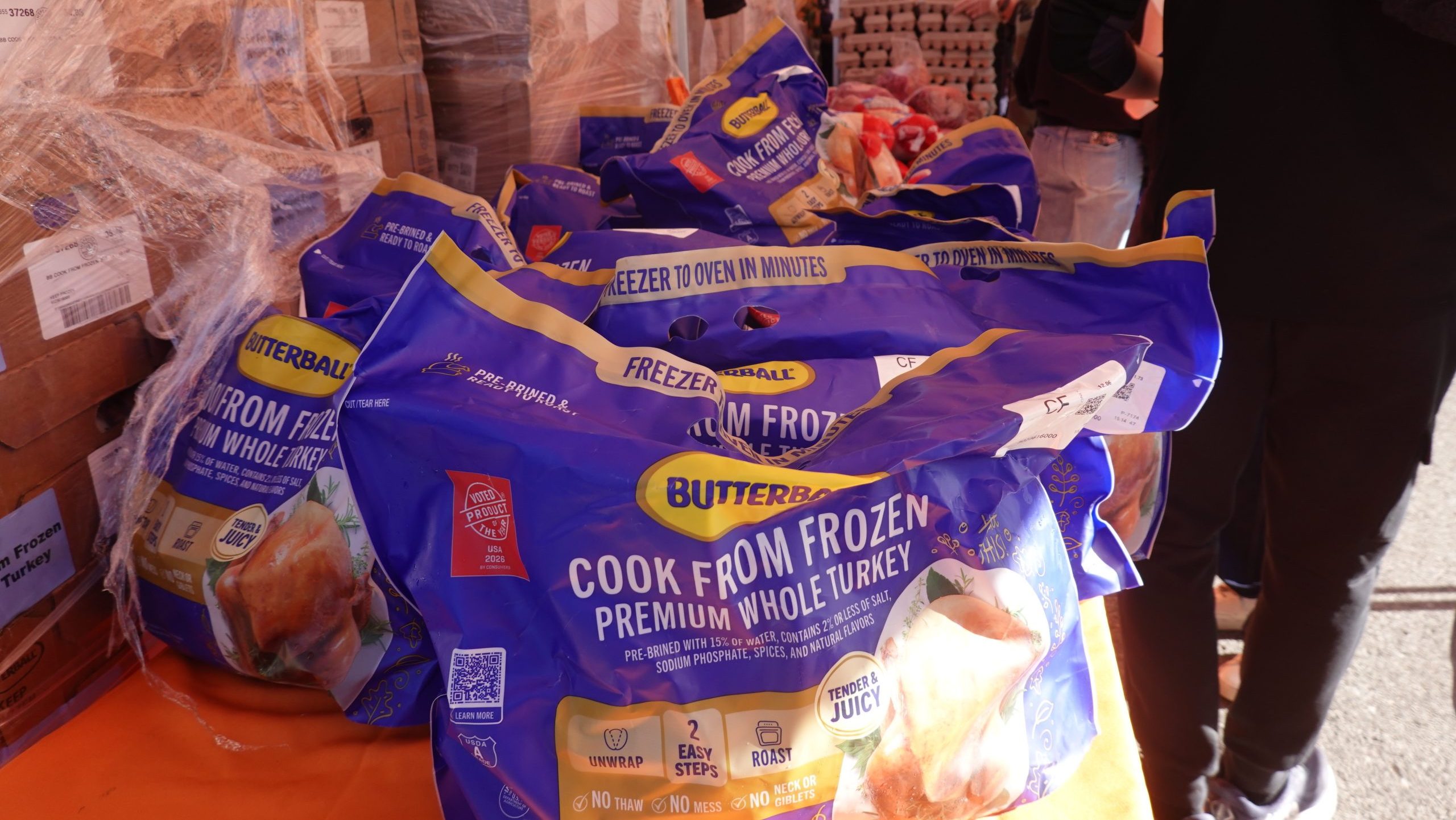
After waiting for nearly four hours, Terris finally began making her way through a row of orange tents at around 10 a.m. Volunteers handed her pork shoulder, cheese, onions, potatoes, collard greens and shampoo, which she carefully loaded into her shopping cart.

She was already thinking about what she would cook.
“I will make some mac and cheese, rice and peas. We like our ground provisions,” Terris said with a smile. Terris, who immigrated to the U.S. from St. Lucia more than 30 years ago, told Documented that the groceries would not only allow her to prepare her grandchildren’s favorite homemade dishes, but also give her enough to invite a few friends over to celebrate the holidays.
Across New York City, many families like Terris’, particularly those in immigrant communities, are navigating mounting financial pressures amid the affordability crisis and SNAP benefits cut. Nearly two-thirds of New Yorkers struggle to make ends meet, according to a 2025 report.
Since President Trump enacted cuts to SNAP in his tax law last summer, nearly 6 million people have lost access to food stamps, including 2 million children. New proposed changes would cut benefits for an additional 6.3 million people.
An analysis from the New York poverty-focused nonprofit Robin Hood projects that federal SNAP cuts will reduce benefits in New York by at least $13 billion over 10 years and could push more than 100,000 New Yorkers into poverty annually from 2028 through 2034. The number is projected to peak at more than 120,000 in 2032. Meanwhile, food prices have risen 33% since 2019, according to the U.S. Bureau of Labor Statistics.
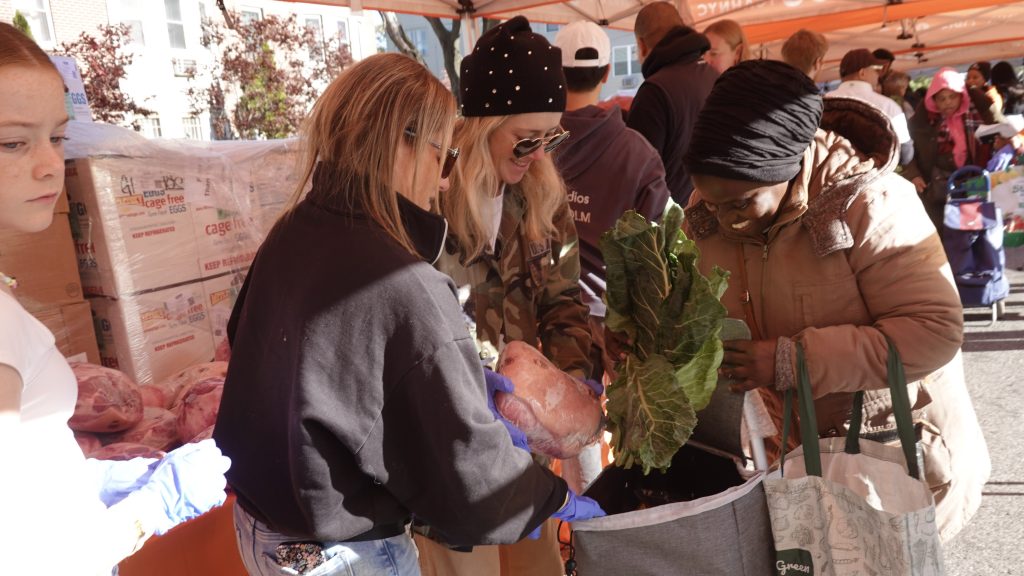
For Terris, getting food from The Campaign Against Hunger’s food distribution event was about more than just a bag of groceries. It offered some breathing room when the cost of putting food on the table continues to weigh on household budgets.
Terris said she receives $306 in SNAP benefits each month, but said it’s still not enough to cover her family’s grocery expenses.
“The cost of living is high because everything is expensive — chicken, meat, eggs, all these things,” she said. “Everybody is saying [the budget] seems tight. If the food stamps were enough, I wouldn’t have to come to a pantry and get up so early in the morning.”
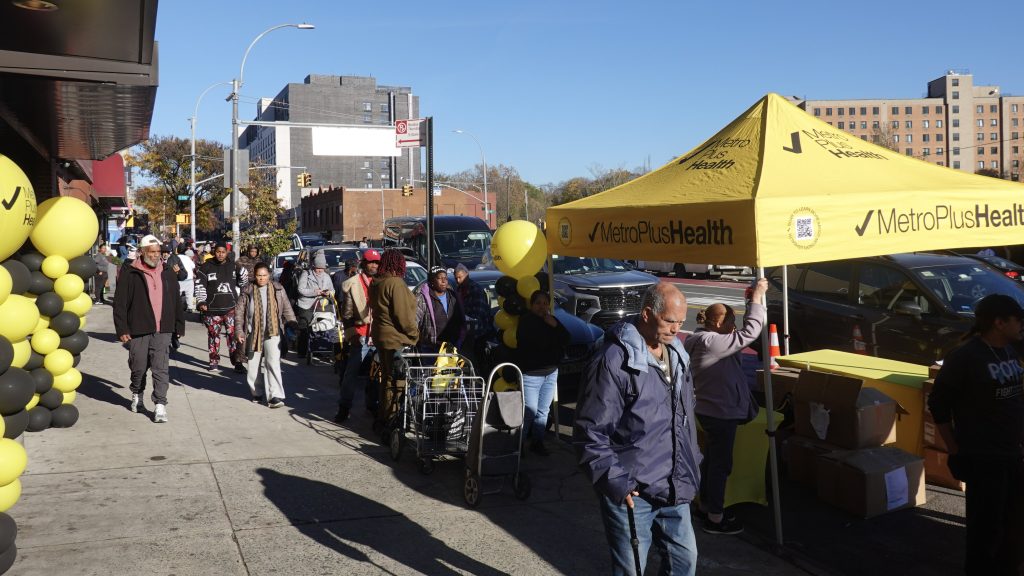
On Wednesday in the Bronx, Ada Gu, 64, stood in line with dozens of local residents waiting to pick up lunch and Thanksgiving groceries at a food distribution co-hosted by MetroPlusHealth, New York City’s affordable health plan, and City Harvest, New York City’s largest food rescue organization, in partnership with community organizations.
To save the $3 bus fare, Gu walked half an hour to Part of the Solution, the nonprofit that partnered with MetroPlusHealth and City Harvest to host the food distribution. As a Chinese immigrant who moved to the United States in 2010, Gu worked 12-hour days as a home care worker to support her family.
She now shares a one-bedroom apartment in the Bronx with her husband and her 86-year-old mother. Recently, her husband was diagnosed with two types of cancer, adding to the family’s financial strain.
“I have to budget carefully and save wherever I can,” Gu told Documented in Mandarin. Gu said her family does not qualify for benefits such as SNAP or Medicare because of income limits and immigration-related eligibility restrictions. Even as she approaches retirement age, she cannot afford to stop working.
“If I stop working, it would mean losing a major source of income for the family,” she said. “Right now, as long as we have enough to eat, that’s what matters. I can’t worry about whether the food tastes good or not,” she said, adding that she was very grateful for the food from the event.
The Campaign Against Hunger said it serves immigrant communities from a wide range of backgrounds, including Latino, Black, and Asian communities. Based on data from its food distribution programs, the organization expects to serve more than 23,000 families during Thanksgiving, with an estimated 94% coming from immigrant households. Black and Latino families account for approximately 82% of the people it serves, according to the organization.
As the holiday season approaches, community organizations across New York City are stepping in to help families like Terris and Gu put food on their Thanksgiving tables.
At a press conference ahead of Wednesday’s Thanksgiving food distribution, MetroPlusHealth also announced a $2 million commitment to City Harvest to expand access to food and health resources.
According to MetroPlusHealth, the event marked the beginning of a year-long partnership with City Harvest and other community partners that will bring free, nutritious food and health resources to neighborhoods across all five boroughs, with additional distributions planned in Brooklyn, Manhattan, Queens and Staten Island. The partnership aims to distribute 26 million pounds of food to more than 75,000 New Yorkers in 10 underserved neighborhoods, including Brownsville and East New York in Brooklyn, the South Bronx, and Chinatown.
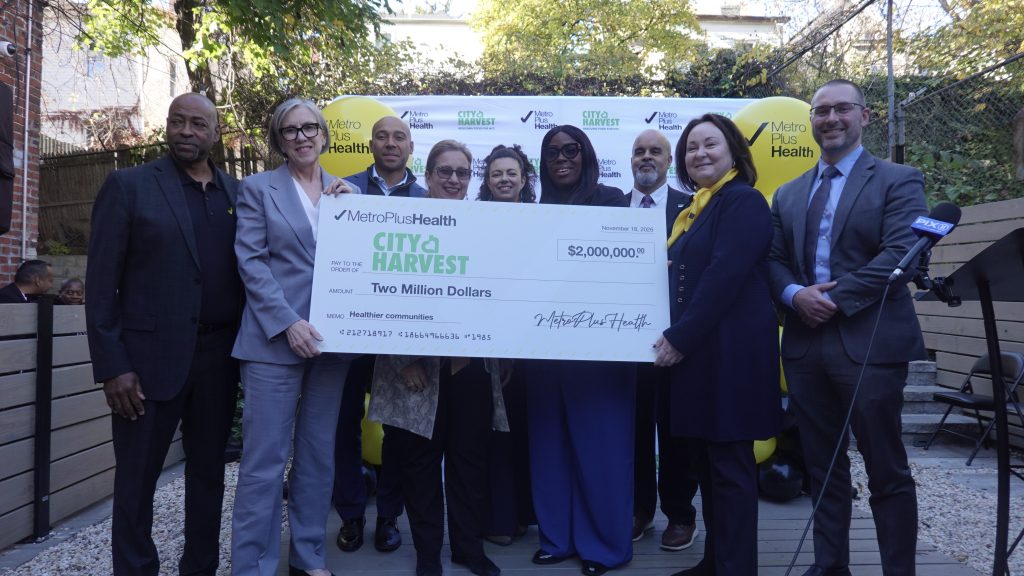
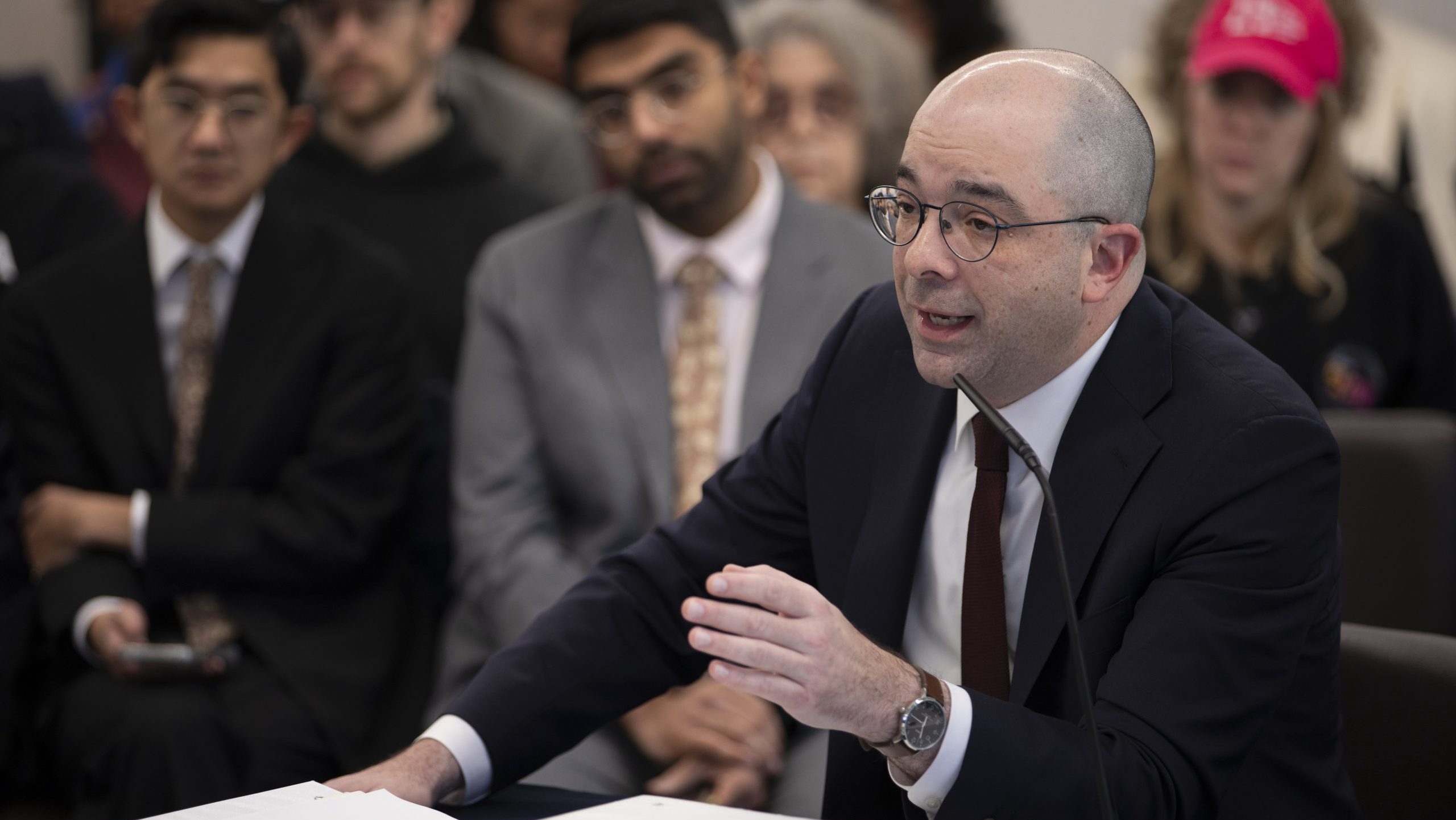
“Access to nutritious food is fundamental to good health,” said Dr. Talya Schwartz, president and CEO of MetroPlusHealth, at Wednesday’s press conference. “For too many New Yorkers, putting healthy food on the table is a daily challenge, and the impact goes far beyond hunger.”
The need for food assistance has grown sharply in recent years, said Jilly Stephens, CEO of City Harvest. Last year, food pantries across the five boroughs recorded 45 million visits, a 73% increase from the 26 million visits recorded in 2019, she said.
“Today, roughly one in five New Yorkers is experiencing food insecurity, and one in four children does not know where their next meal is going to come from,” Stephens said on Wednesday. “At the same time, layer on top of that historic cuts to federal nutrition programs that are making life even more challenging for so many of our neighbors. And we’ve really only just begun to see the impact of those cuts.”
For immigrant families, seeking food assistance can bring another layer of anxiety. Dr. Melony Samuels, founder and CEO of The Campaign Against Hunger, said some immigrants who arrived in the U.S. during the Biden administration remain afraid of deportation and are hesitant to leave their homes to seek help.
“They would rather come on a line,” Samuels said, adding that some immigrants prefer to wait in person for food rather than risk other forms of assistance.
The organization also operates mobile food pantries across the city, where people can pick up groceries without being asked questions about their immigration status, Samuels said.
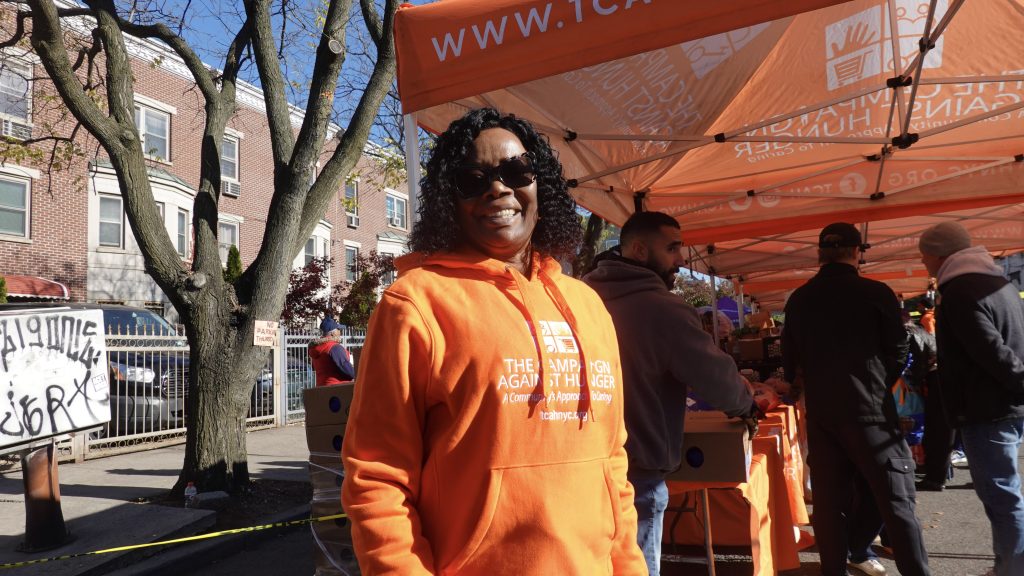
For some immigrants who attended the food distributions last week, the groceries offered much-needed temporary relief. But they also expressed concern for fellow immigrants facing even greater hardships and struggling to make ends meet.
Zeferino Aguilar, 58, a Mexican immigrant, said the food distribution at The Campaign Against Hunger on Thursday came at a particularly difficult time. After being injured in a hit-and-run crash earlier in the week, he was unable to work and was drawing down his savings to cover expenses.
“I cannot work now. I have difficulty accessing food because I don’t have food stamps. I’m not a citizen,” said Aguilar, who has spent much of his working life in restaurant jobs.
He said he was grateful to have obtained legal status and to be able to receive support from the community. “I didn’t have papers in the past. Now I have them. Thank God,” he said.
But he worries about immigrants who remain undocumented and may have even fewer options when they need help. “People don’t give respect to people who don’t have papers. It’s hard sometimes,” Aguilar said.
At Wednesday’s press conference, deputy mayor Dr. Helen Arteaga emphasized the importance of collaboration and solidarity during difficult times when an individual can feel alone. “We are standing here together, the city, CBOs, and different agencies, and saying no, we will be there for the community.”