

Marc Rosenblum, the former top statistician at the Department of Homeland Security, quit his job in July after spending more than a decade at the agency. At the time of his departure, the agency had already started slowing its release of immigration data, sparking speculation about marching orders within DHS to withhold information from the public.
Documented recently spoke to Rosenblum about his experience heading up the Office of Homeland Security Statistics under both Trump administrations. We wanted to get an inside look at what has changed at the agency since January 2025 — and what drove his decision to leave.
Rosenblum described an agency that was handed down orders directly from Stephen Miller, the Trump adviser turned chief of staff, and rearranged its priorities to align with the administration’s agenda. The result: rollbacks in public data reporting and data governance.

Rosenblum, now a Visiting Senior Fellow at Migration Policy Institute (MPI) and Senior Fellow at More in Common, shared his thoughts on what immigration data he believes is still reliable at this time, and what Congress can do next year to increase oversight and compel consistent data reporting.
The conversation below has been edited for length and clarity.
Julia Malleck: Could you tell us a bit about yourself and your background at DHS?
Marc Rosenblum: Until about three months ago, I ran the Office of Homeland Security Statistics at the Department of Homeland Security. Before that, I was there for about 10 and a half years. I spent the previous 10 years or so working at the Migration Policy Institute and the Congressional Research Service, on the Senate Judiciary Committee.
Why did you decide to leave your position at DHS earlier this year?
In my previous job, I had four main responsibilities. One was public reporting. One was supporting data governance for the department, which means supporting statistical consistency across the different offices that work with statistical data. The third thing was doing internal reports for situational awareness, to help leadership at the White House and at DHS know what’s going on. And then the fourth thing was working with the Office of General Counsel to support litigation and rulemaking, and working with the Office of Policy, doing analysis to support policy development.
The two big reasons I left: One was that the department wasn’t really allowing me to do those first two things. They had greatly reduced our public reporting, and they had also scaled back my role in statistical data governance.
Reporting was not considered an administration priority as defined by Trump’s executive orders. With respect to data governance, there’s a long-standing back and forth between DHS headquarters and component leadership. This administration was more deferential to letting components be in charge of the data rather than exercising headquarters authority to drive more consistent reporting and analysis.
And the second reason was that I was still doing those other two things — I was still helping with decision support and situational awareness reporting within the department, and I really believe in the career civil service, and that elections have consequences, and people in my former role should support elected political leaders — but this administration’s agenda just was so far outside my values that I didn’t feel like I could be in that role.
Has anything specifically changed at DHS under the second Trump administration? Any differences from the first administration?
One difference between the first and the second was that I continued to do public reporting in the first administration, and not in the second administration. So that was a big difference. And then the first administration, there was some balance in how the administration approached immigration enforcement and immigration benefits. So on the enforcement side, for example, during the family separation episode, that was a fairly tortured decision. People really struggled with that. There was a lot of debate about it. Ultimately, they made what I thought was the wrong decision. But when there was pushback, they quickly reversed course.
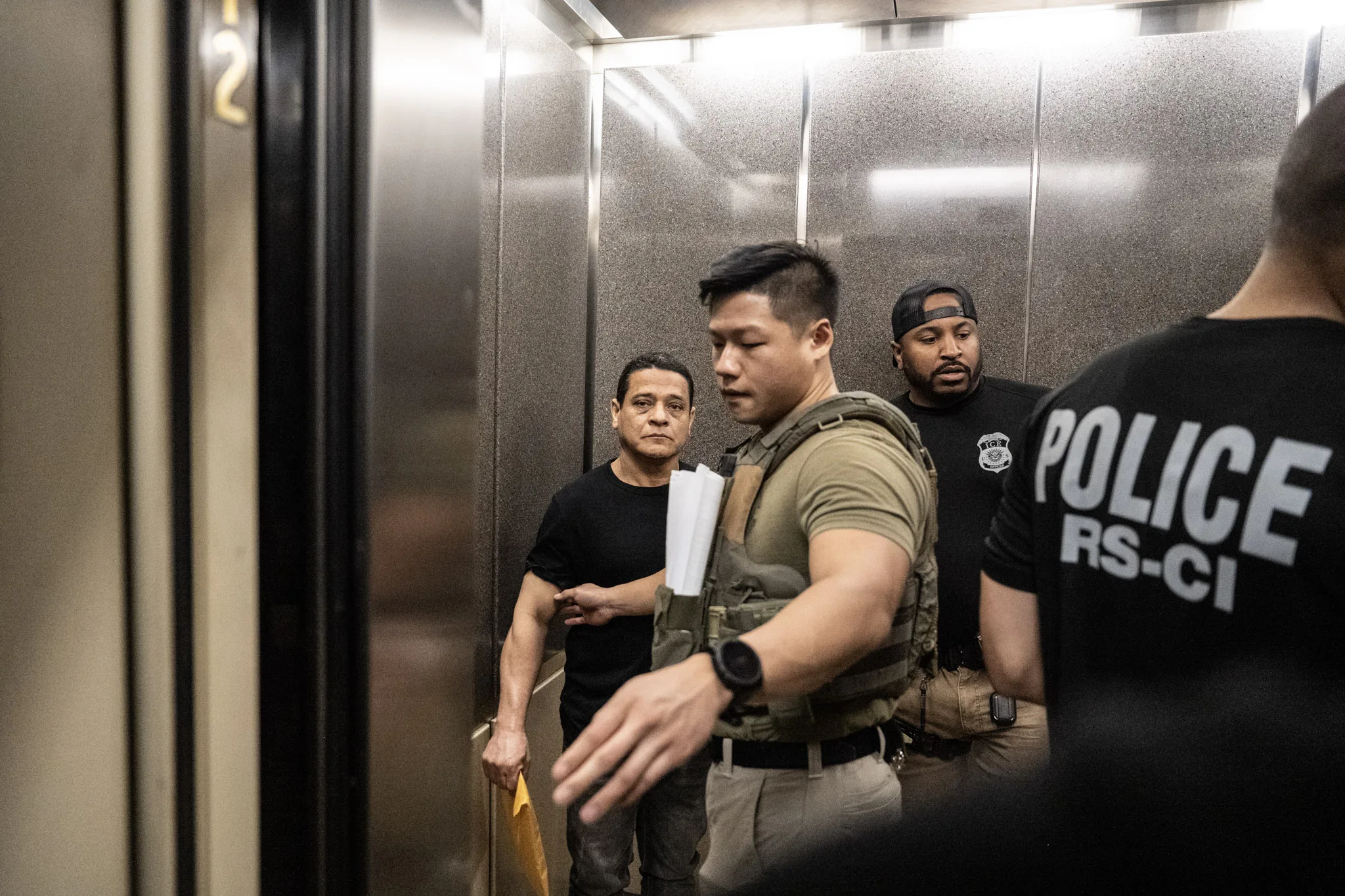
My impression of this administration is that there is really no voice of moderation, and every conversation about enforcement is strictly focused on how can we increase the number of deportations. without regard to really any other considerations. And likewise, there is such a systematic effort to reduce lawful immigration across the board that it’s much less balanced than what you saw in the first administration.
You left your job at DHS in July. How has your perspective changed since then?
One thing I’ll say, which also sort of gets to why I left — it’s an extraordinarily hard job. I think most senior civil servants work very long hours, under very stressful circumstances. There’s a lot of quick turnaround, high stakes requests. I was on-call most weekends. I worked long weeks, and it really wore me down. I think I didn’t appreciate just how taxing it was until I left. That’s something that I have realized over time.
In terms of the department and what it’s doing, I don’t know. I’m not sure that my views of their approach to immigration have really changed very much since I left. I mean, I don’t have the same close-up view as I did before. But everything that I’m able to track from outside, including the president’s promotion of Stephen Miller, I think that the ideological rigor remains in place.
Speaking of Stephen Miller — did you have any experience working or interacting with him in the past? As the architect of Trump’s immigration crackdown, did you get the sense that he was behind the direction of DHS while you were there?
I did not work with him at all directly. My strong impression was that he was calling the shots at DHS.
What gave you that impression?
His name came up all the time in conversations with senior leaders. He had a daily meeting that the senior leaders attended, at which they received direction from him, and then came back and pushed that down the line. It was just clear to people inside that Stephen Miller was driving the agenda for people at DHS.
I had a few questions about how statistics have changed under the second Trump administration. To what extent are the numbers being reported right now from DHS reliable? What’s no longer being reported?
Most things aren’t being reported, I don’t think. Things that are reported in press releases from the Secretary or the White House, I would not assume are correct.
But anything that comes from one of the reporting offices, especially the Office of Homeland Security Statistics (OHSS). ICE’s reporting office is called the Law Enforcement Statistical Analysis Unit; they have a team called the Statistical Tracking Unit within the Law Enforcement Statistical Analysis section. So, official reports that come out from ICE and official reports that come out from CDP, from their stat office, I think all of those are generally reliable. Particularly something that comes out from OHSS.
So really, the issue is that there are many fewer reports being issued. Like ICE still hasn’t released its FY25 year-end report, and we’re now in FY27. And OHSS has stopped releasing its monthly immigration enforcement report in January 2025, and hasn’t released a single one since then.
Is there anything the Democratic-controlled Congress can do to compel the release of data next year?
There are already statutorily directed reports, reports that by law are supposed to be released, that are not being released. And the current Congress has not taken any steps to hold the administration accountable or even to complain about it.
So I think that, at a minimum, a Democratic Congress can highlight the missing reports. They can also use the appropriations process to withhold funding if reports aren’t made available. That is at risk of being vetoed, but I think that certainly they should have language in funding bills that requires public reporting and withholds money from things that the administration cares about, if the reports aren’t released. Then through the oversight process, they can subpoena data. They can call witnesses and ask them data questions. The administration may not comply with those subpoenas and may or may not provide the witnesses that are called, but there are steps Congress can take. Their ability to implement those steps is more difficult if the administration flouts congressional authorities, which they’ve done at times in the past.
One last last question. What missing data do you think would be most useful right now to better understand the current immigration system and scope of the crackdown?
I think the kind of data that I released with MPI on details about who’s being deported, and there could be important, further details about what kind of due process was made available to them and how long they were detained prior to being deported. More detailed information about the criminality of people being arrested and deported would be important.
It’s hard to do reporting on the collateral damage of enforcement, like people who are arrested and not booked into custody. ICE doesn’t do a good job of counting those or reporting on them. So that’s something that Congressional oversight should try to get better information on. And then I think another thing that oversight will focus on is some of the spending decisions, the contracting that’s gone on under this administration. There’s been so much money put towards immigration enforcement, and there’s not great transparency about how it’s being spent.
Great, thank you for sharing your time and insights with us today.
Thank you.