


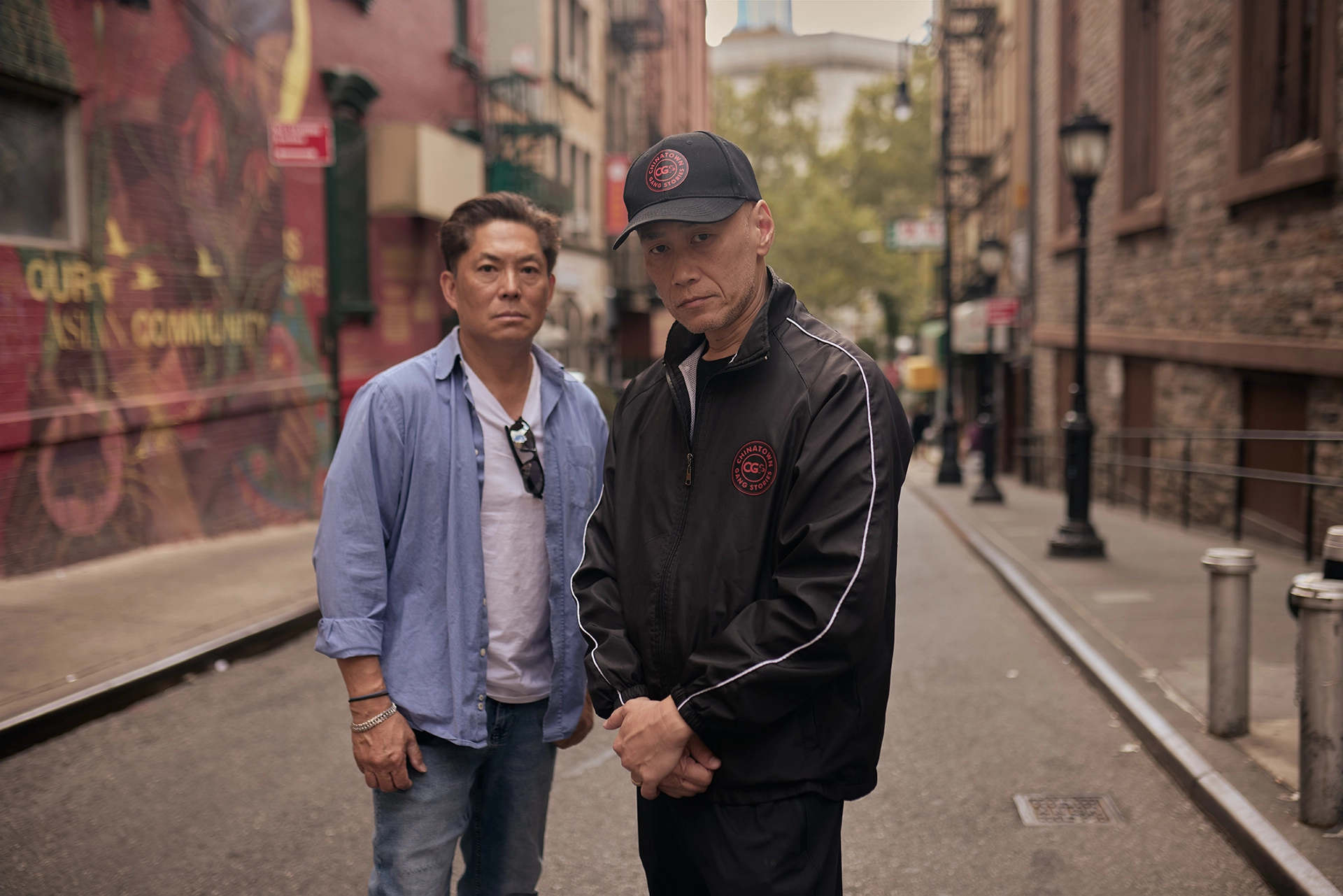


“I am very nervous,” Peter Chin, squirming on a chair in front of a standing microphone, told a rapt audience at the Chatham Square Library in Chinatown. “You give me a mic, I don’t know what to do. You give me a gun, I know what to do.”
He was only half joking.
Chin was invited to the library’s “Asian American Authors in Conversation” event to discuss his memoir: “In the Ghost Shadows: The Untold Story of Chinatown’s Most Powerful Crime Boss,” published in January.

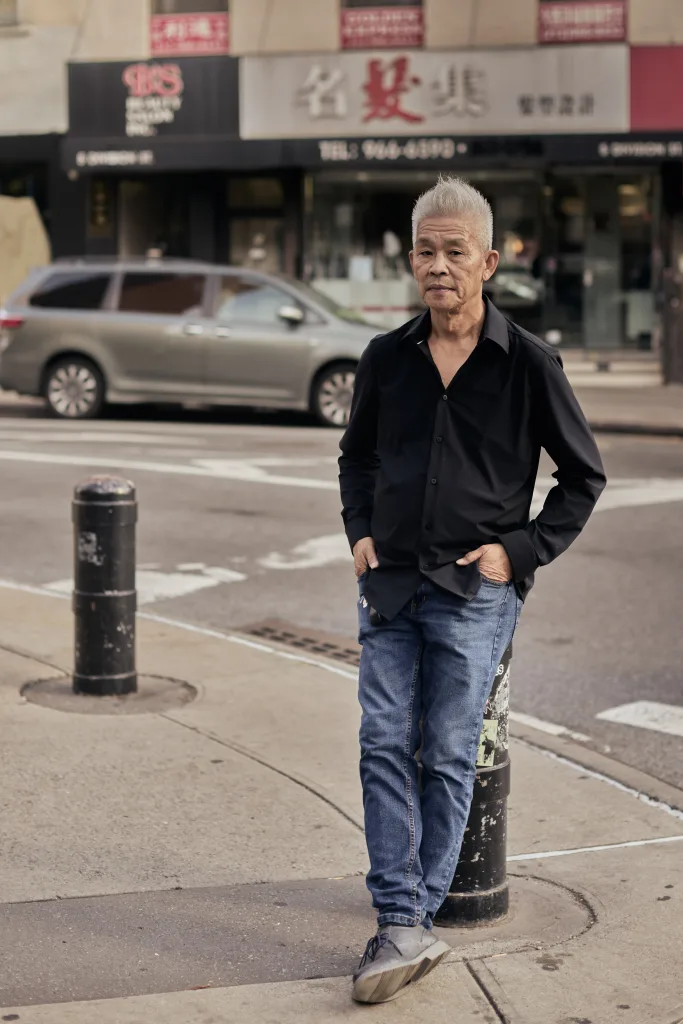
Dressed in a striped shirt and blue jeans with stand up gray hair, Chin, 65, looked more like a writer than a gang leader. But his experience in the Ghost Shadows cemented his status as the “dai lo” — the Big Boss — of one of the fiercest gangs in Chinatown in the ‘70s and ‘80s. He joined the gang when he was 13-years-old, rising to the top, until eventually he was charged by a federal grand jury with 13 counts of murder on behalf of members of the Ghost Shadows, among other offences. When he was 26, he was sent to prison and would stay there for more than 20 years.
Sitting beside Chin and smiling was Mike Moy. His own memoir “Bad to Blue: The True Story of a Chinatown Gangster Turned NYPD Detective,” which followed his journey from being affiliated with the Fuk Ching gang to becoming a police officer, had just been published in July. Dressed in a black short-sleeved shirt, black pants and black flat cap, Moy appeared reserved and even a little mystic. But he was keen to head off one potential critique of his story. “Possibly people say ‘Oh you are glamorizing it.’ ” Moy, 55, told the audience. “I cannot see how I am glamorizing ‘cause life is nothing glamorous.”
Chin and Moy are not the only former Chinese gang members who have taken up writing recently. It seems the Chinatown gang world is coming back, at least for now, on paper.

Jimmy Tsui, a member of Chinatown’s Tung On gang from 1979 to 1992, known better by his street name Big Head, is scheduled to finish his memoir next summer. Michael Lau, a retired NYPD officer who arrested scores of young Asian gang members in his career, has also been writing his accounts in short stories, a play and a novel over the past two years.
These ruminations to a long gone era are not a coincidence. Stories about Chinese immigrants have largely been told only by those in “mainstream society.” At the same time, Chinatown is rapidly changing. Every day, there are fewer Chinese residents and more shops are struggling. This has added urgency for residents to preserve its history; reflections about law and order, fairness and equality in the promised land of the U.S.
Chin came to the U.S. from Hong Kong in 1967 when he was 8 years old. Moy was born in the U.S. in 1969 to a couple from Taishan, China. When 16-year-old Moy joined the Fuk Ching gang in 1986, Chin had just started serving his sentence in prison. But their childhoods had important similarities. Both lived in tenement buildings on East Broadway. Both had parents working long hours in garment factories, restaurants or laundromats, almost the only jobs available to blue collar Chinese immigrants back then. Both also witnessed gang violence in Chinatown at early ages and were driven to the gangs, at least partly because of bullying.
When Chin enrolled in school in New York in the late 1960s, public schools had few resources to help new immigrant students like him who couldn’t understand English. Off campus, gang members roamed around to look for targets to rob or recruit. In 1972, the fifth precinct, which covers Chinatown had a homicide rate of 0.53 per 1,000 residents, ranking 12th among the 71 police precincts in the city then. There were 27 homicide cases that year. In 2024, there were three.
When he was 12, Chin recalled being badly mugged by two teenagers after discovering he only had two quarters in his pocket. The violence followed him back home as he endured living with an abusive father. One day, when his father began attacking Chin’s mother and sisters, Chin decided to run away, having only $5 in his pocket. He didn’t return home until 30 years later when both his parents had passed away.
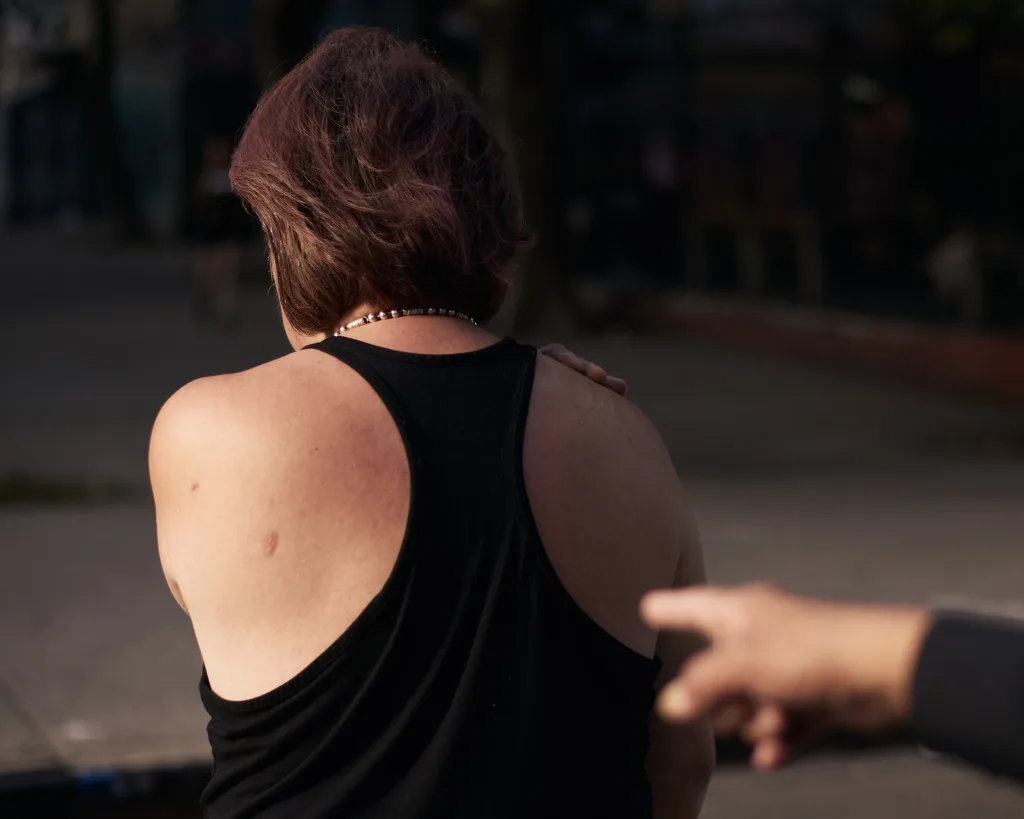
An acquaintance of his sister brought him into the Ghost Shadows which offered an apartment where members could stay. In 1973, 13-year-old Chin became the youngest member of the gang, and was called “Kid Jai,” a street name that emphasized his youthfulness in both English and Cantonese.
The 13 years Chin spent with Ghost Shadows brought him power and wealth. According to his memoir, at 15-years-old, he participated in a robbery of a gambling house for the first time. Not long after that, he became one of the leaders of the gang and began making $5,500 a week from the 11 gambling houses on Mott Street at the center of Chinatown, which paid for protection. In comparison, the average annual income for Americans at the time was $11,000.
But his life was precarious. He was arrested for the first time at 15-years-old for carrying a pistol to a public place. Then he almost died in 1980 when a rival gang member shot him in the head and the back. Chin was not surprised when eventually a federal judge sentenced him to 35 years imprisonment in 1985 as the “dai lo” – the big boss – of Ghost Shadows. “When I was 13 years old, and I had to go this way for survival, I already knew what I was facing,” Chin told Documented. “I might die on the street or I go to prison for a long time.”
“My gang family made me feel safe.”
As a kid, Moy survived a gang shooting at Chinatown’s long gone Pagoda Theater. One of the two of his childhood best friends was killed in another gang shooting and the other went to prison.
His parents’ efforts to pull him away from the violence in Chinatown by moving to Brooklyn backfired. As one of the few Asian kids at school, Moy became an easy target. Teachers ignored the issue. “Looking back, I suspect some school officials tolerated bullying due to their own racism,” Moy writes in his book.
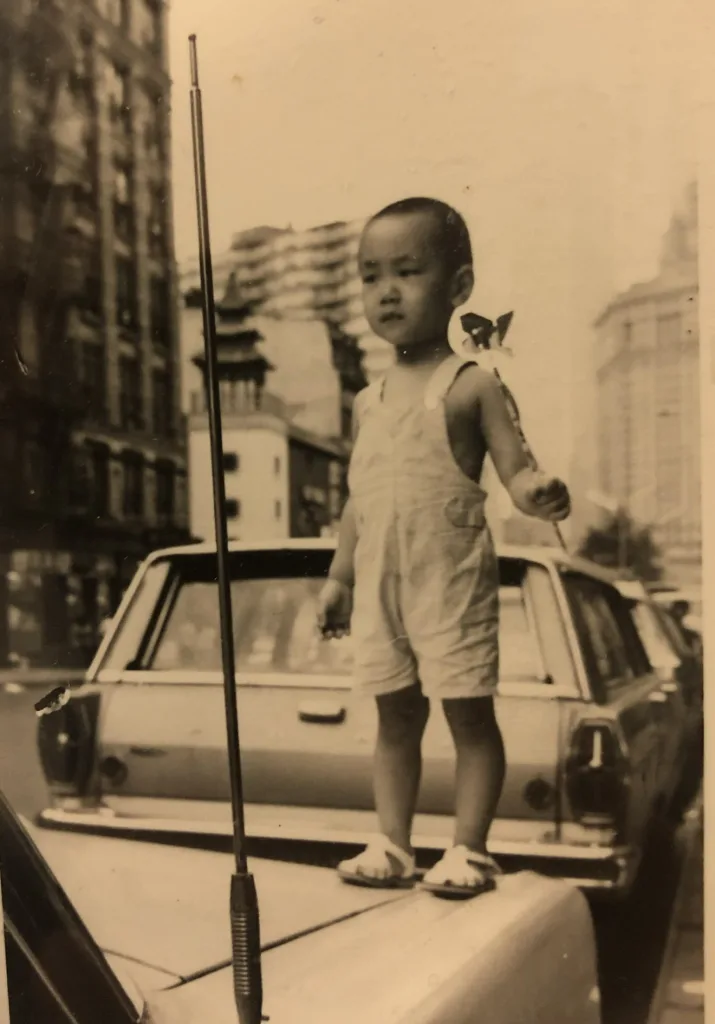
In seventh grade, after he was beaten up by another student, Moy started plotting revenge. A gang member named Cambodian Peter, who Moy befriended at a billiards hall, took Moy under his wing. In 1986, the 16-year-old Moy became a member of the nascent Brooklyn faction of the growing Fuk Ching gang, and he started telling the bullies “mess with me again, my boys will murder you.” The bullying stopped immediately.
“I extorted money from business owners, ran illegal gambling dens, and committed assaults and robberies,” Moy writes in the book. “My gang family made me feel safe.”
During their heyday, the gangs would mainly shoot at one another, but it was the unintended killings of bystanders that caught the attention from the broader world. In one instance in 1982, a few masked gunmen who opened fire to kill an enemy at the Golden Star restaurant in Chinatown, caused three deaths and wounded another eight. In another case in 1991, a Filipino tourist was shot dead in her car on the street in Chinatown in the middle of a gang fight.
Toward the end of the 1980s, law enforcement was tightening its grip on Asian gangs. Some close friends of Moy were arrested. One teenager he knew, was tried as an adult for a murder he committed before turning 16, which he claimed self defense, and was sentenced to 15 years in prison.
By then, the stress of street life began wearing Moy down, and the arrests of his gang brothers kept reminding him of a dreadful future he was facing. The year he joined Fuk Ching, police officer Steven McDonald was shot by a teenager in Central Park. He was paralyzed but he later said he had forgiven the boy who was “just a product of his environment.” The story was resurfacing more often in Moy’s mind and prompted him to think about the possibility of a different life. In 1991, he passed the New York Police Department test, and joined the force in 1995.
It was around that time that law enforcement were arresting dozens of Chinatown gang members in federal operations. Then, in July 1994, Kai Sui Ong, a.k.a. Uncle Benny, the godfather of Chinatown who ran the Hip Sing Tong, a community organization that backed up gang activities, died from natural causes.
The curtain dropped on the era of gang wars in Chinatown.
“I don’t do illegal things anymore”
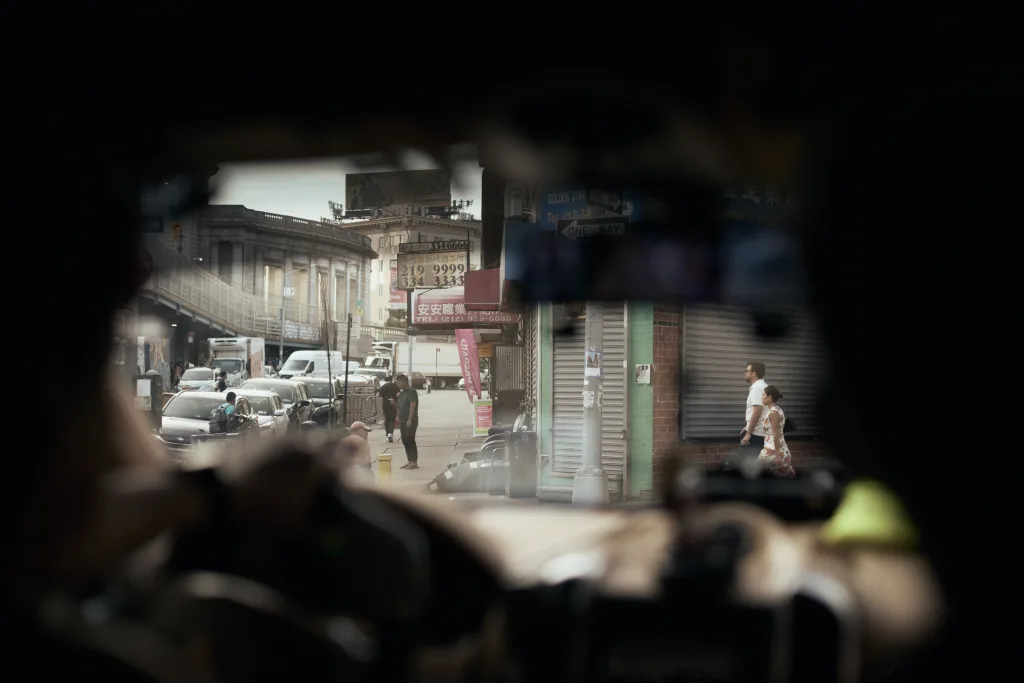
Chin, the former boss of the Ghost Shadows, made his decision to not go back to his old life. He started learning English and got to know who Shakespeare was in prison.
Two years ago, Moy approached Chin via a former gang member they both know. Initially Chin didn’t want to meet him. “I don’t do illegal things anymore, why do I want to meet a cop?” said Chin, who began working in the hotel supplies business.
Moy retired from the NYPD in 2021 after serving 26 years and has been spending his time preserving that dark period of history of Chinatown. He interviewed former gang members for his YouTube channel Chinatown Gang Stories, in which the interviewees shared their memories. It has gathered more than 54,000 subscribers since it began in 2022.
Eventually, Chin agreed to give Moy five minutes of his time.
The two met at a parking lot in Queens. Chin had turned down book proposals several times before because his memories are “too painful.” But when the five minutes were up, he changed his mind. “The last thing he said to me, that’s what caught my heart,” said Chin. “ ‘If your story can help one person not to go the same road we went, won’t that be worth it?’ ” Moy recalled.
Moy said he launched his project because of the absence of voices of Chinese gangs in the public record, and the caricatures of them in artistic works. “Every time there is a movie portraying the Chinese gangs, it portrays us in a very negative way,” Moy told Documented. “They don’t show the struggles of the first or second generation of the Chinese people coming into America who were really, really poor.”
Now, rapper and television producer 50 Cent, who reached out to the book agent that Chin and Moy shared, has been talking with the two to bring the underworld of Chinatown into Power Universe, the TV series franchise the rapper co-produces. Moy might have finally found an opportunity to project his stories and views about them onto the screen. He said he’d push Richie Ng, a former gang member turned actor, to play a major role in the show. “Movies have a lot to do with a young person’s mind,” said Moy, a fan of gangster movies. “I think they should move it into a different direction to show why this happened instead of showing the actions only.”
Despite the significant role the environment may play in shaping one’s life, it is not the complete answer for the question of “why.” Michael Lau, the retired cop, emigrated to the U.S. from Hong Kong in 1971 when he was five and grew up in Rutgers Houses, a public housing project on the edge of Chinatown. Lau was not insulated from gang violence.
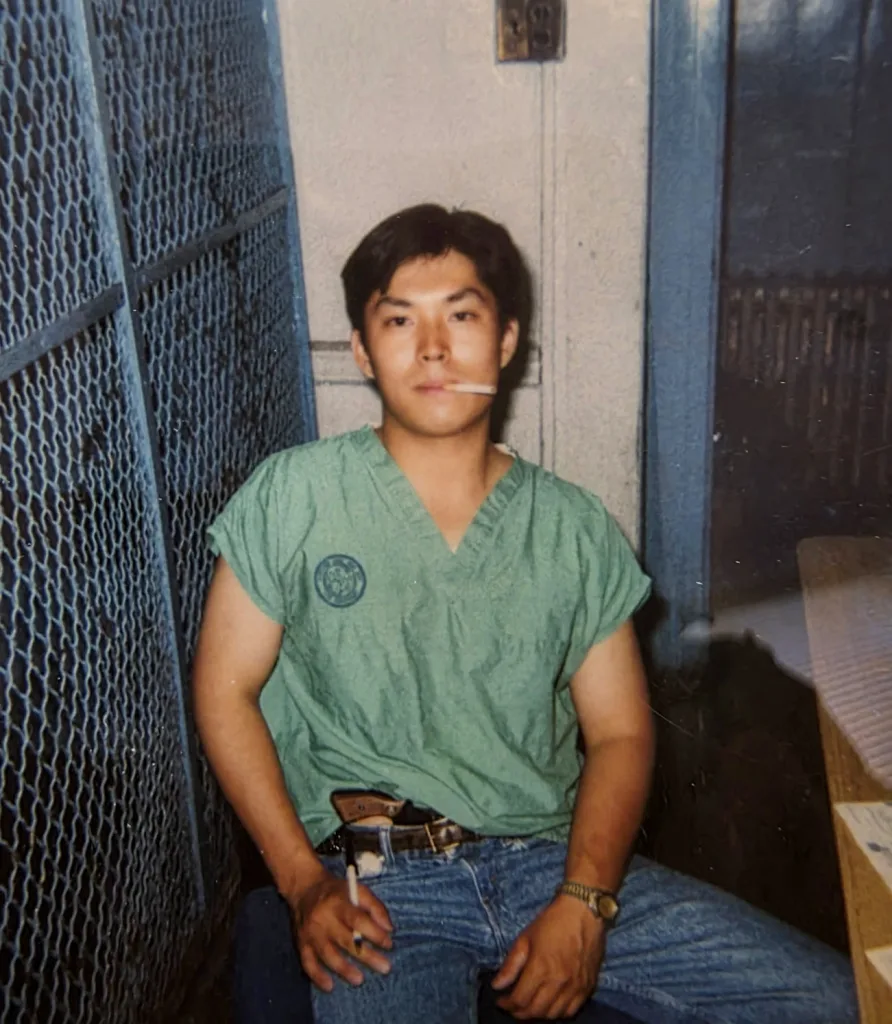
As a teenager working after school at ice cream shops in Chinatown, Lau had to duck down to avoid bullets during a gang battle, and he was threatened by gangsters who demanded bigger scoops of ice cream. He decided to become a police officer after witnessing his mom being robbed when he was a child. He went to New York University for college and then, in July 1986, Lau joined the NYPD. “Some people use it (the environment) to justify,” Lau told Documented. “But there are choices.”
When Lau worked at the 5th precinct in Chinatown (he later became commander there), he would drive a decoy yellow taxi in plain clothes to follow the gang members for hours and arrest them when they committed crimes.
When he was invited to talk on Moy’s YouTube channel, Lau pointed to a story another guest told in a nonchalant tone about one man losing his entire life possessions overnight in a gambling den and another hanging himself over gambling debt. “That bothered me. Behind that guy is his family and his kids,” he told Moy. “When his family sees that video, (they’d say) that’s my dad you were talking about.”
But remorse may hit different people in different ways. Chin cried uncontrollably on Moy’s channel when he talked about his past. And Moy, despite his efforts in preserving history, admits that he would have to take some stories from his past to the grave. “I’m not the type of person who likes what I did back then, I already knew it was wrong.”
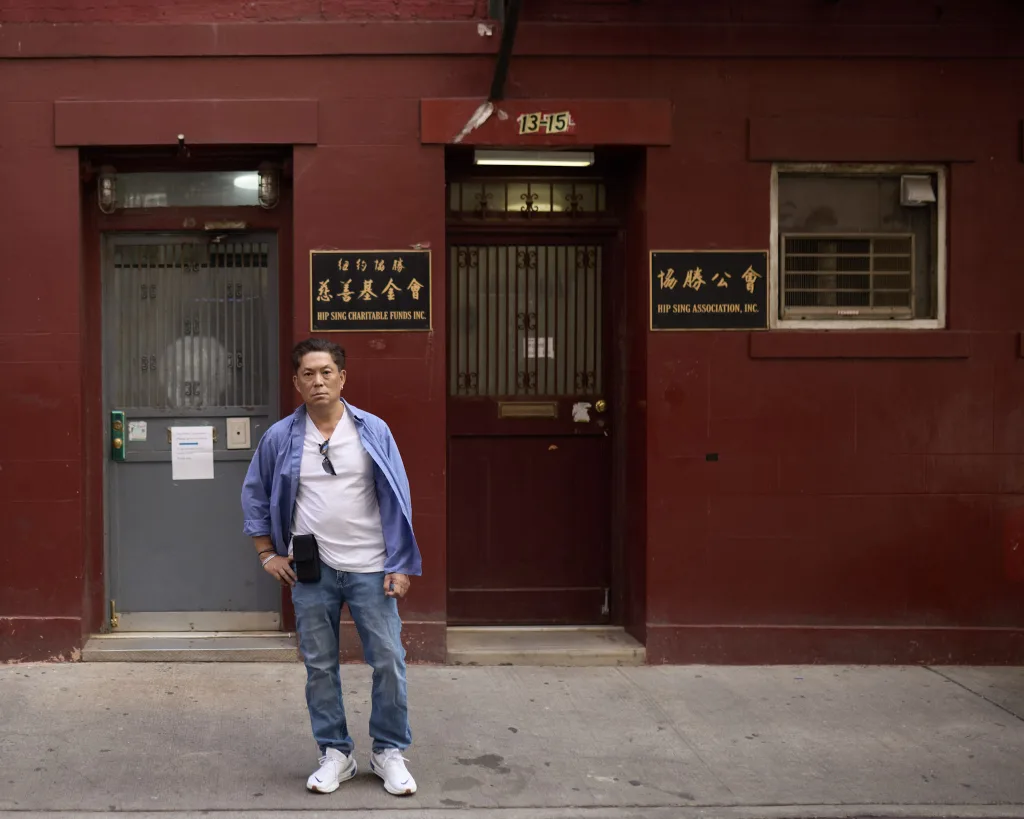
But when it comes to Chinatown, it is not hard to detect a trace of pride in the grey haired former gangsters’ nostalgia. In their memories, Chinatown’s economy was thriving, restaurants remained open through the wee hours of the morning, partly bolstered by the gambling money.
Now, with the gangs long gone, residents and shop owners’ worries about safety issues are as grave as before. The latest statistics of the NYPD shows that last week almost all major crimes went up in Chinatown compared to 2010, although most were still lower than 1993. Most restaurants close before 9 p.m. Skyrocketing rents are pushing many people out. And gentrification gnaws the shrinking neighborhood rampantly. “Chinatown, in another ten years when the old people living there pass away, that’s it,” said Chin.
Roger Lee, a TV producer who grew up during Chinatown’s gang war era and still lives there, launched a Chinatown underworld tour featuring some of the dark stories earlier this year to lure more tourists to spend in the neighborhood. Lee underscores Chin’s concern. “Monday to Thursday by 9:00 p.m. at night Chinatown is dead,” said Lee. “I have heard people say that they kind of long for the old days. At least with the gangsters you knew what to expect, and you’re not worried about these homeless people coming in and just punching some old lady because they feel like it.”
To Lau, Chinatown’s decline can be attributed to various reasons from the long lasting impact of 9/11 to the fresh wounds of the pandemic, but the prosperity in the past “wasn’t because the gangs were protecting Chinatown. I am a thousand percent sure,” said Lau.
Lau’s uncle used to own a barber’s shop on Doyer Street in the heart of Chinatown, and he was forced to buy a certificate with the “godfather” Uncle Benny’s picture for $500 as a “protection,” and offer free haircuts to the gang members. “My uncle charged three dollars for a haircut,” Lau said. “Even if he could afford that, why should he give the money to you? Is that fair?”
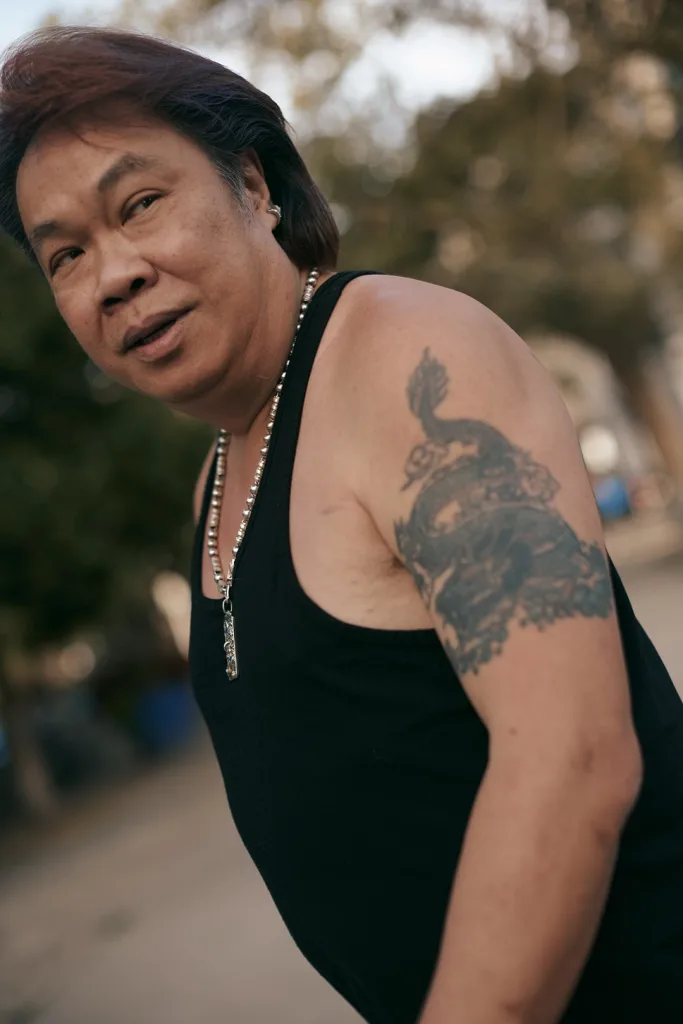
Chinatown is, after all, a different world now. The former headquarters of the gangs have become gift shops, and the streets where people were shot dead teeming with oblivious tourists.
Racism, one of the reasons that prompted Chinese immigrants to form gangs in the first place, is persistent. But the victims react in different ways now. During the pandemic, Jimmy Tsui, who runs his own YouTube channel “Bighead Chinatown Gang Stories” in Cantonese, launched a volunteer patrol with his friends in Flushing to guard against anti-Asian hate. Several members have gun permits but they don’t carry guns while patrolling. “When you pull out a gun, there will always be trouble,” said Tsui, who was shot eight times in the old days.
Moy, who said he had suffered racism at his precinct in Brooklyn where he was mocked with a YouTube video of a comedian mimicking Chinese accent and a cartoon drawing calling his Bruce Lee by other officers, filed a lawsuit against the NYPD two years before he retired in 2021. It was settled last month in his favor. “The civilized way is the best way,” said Moy. “It takes a long time, but nobody died, nobody got hurt.”
For immigrant children who are bullied today, none of the former gang members who talked to Documented would recommend taking things into their own hands. There are plenty of social services these days that can help these children, they said. “Don’t point kids to the direction we went through,” said Chin. “Get education. Holding a pen is better than holding a gun.”
Lau has never regretted his life choice, although sometimes former criminals he arrested would recognize him on the street and glare at him. “My parents still live in the same building,” said Lau. “Every bad guy I arrest is one less guy who’s going to rob or assault my family.”
In a nonfiction short story entitled “Eyes and Lies,“ about his failed effort to rescue a 23-year-old gangster he once arrested after the young man was shot by a teenager, Lau allows his empathy to pour out. “We were all too young,” Lau wrote. “Too young to discover that we are not invincible.”
Correction: This article was updated to add extra context around Michael Lau’s education and New York City crime data.