

It was around noon on a Sunday, and J.Y. was hurriedly finishing his lunch. By 12:30, he began calling his friend, eagerly waiting for him to pick up. He had little time to spare.
The NFL games were kicking off at 1 p.m., and he needed to check on his fantasy football team. Like millions of fantasy football players, J.Y. had to keep track of injuries, player availability and team matchups to decide who on his fantasy team — a virtual roster of real NFL players whose on-field performances earn points for the person who selects them — should start each week as the season began.
J.Y. heard the phone click. His friend picked up.

For a moment, J.Y. felt he was back to his spacious, two-story townhouse, where he could lean back on a large, soft gray couch, watch the game on TV while chatting with his old friend. But the noise around him, and the constant awareness of correctional officers watching him from behind pulled him back to reality. He wasn’t at home. He was at Farmville Detention Center in Virginia, where over 700 immigrants are detained in nine crowded dormitories as they await immigration judges delivering decisions.
It’s a harsh situation waiting in detention, but on Sunday afternoons, with a wall-mounted phone in his hand and his fantasy football team to manage, J.Y. still finds a brief escape from the reality of his detainment.
As of this October, J.Y., a Chinese immigrant and a green card holder who has lived in the U.S. since 1998, has spent more than 450 days in the detention center. For privacy reasons, he asked to be identified only by his initials.
J.Y. got straight to the point.
“Hey, is anybody on my team hurt? Is the lineup good? Are there any adjustments I need to make?”
On the other end of the line was Patrick Beverly, J.Y. ‘s longtime friend and commissioner of the fantasy football league.
“First things first, we got an issue,” Beverly said. “Josh Jacobs is out this week.”
J.Y. listened intently as Beverly ran through the latest updates and stats now that Jacobs, a Green Bay Packers running back, was out. The connection was poor, but Beverly’s voice carried enough energy to draw J.Y. into the familiar rhythm of their weekly ritual.
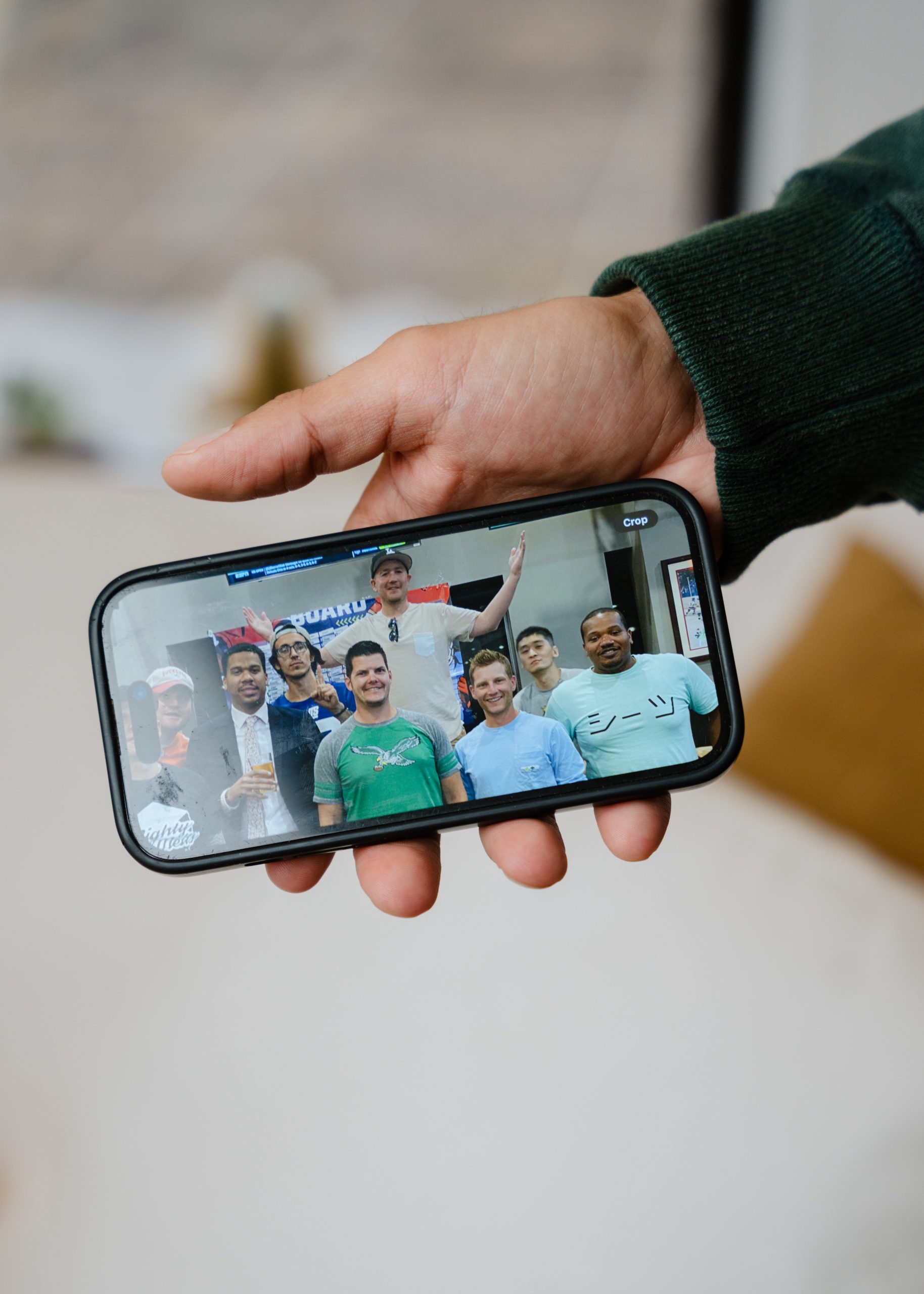
Beverly and J.Y. met in 2015 while working at the same sushi restaurant in Richmond, Virginia. It was there that J.Y. introduced Beverly to fantasy football.
‘We Can Do This’
After moving to New York City in 2016, Beverly, a restaurant waiter and YouTuber, returned to Richmond every Labor Day, which was right around the start of fantasy football season. He would spend a day or two at J.Y.’s home, catching up with his friend and talking through their teams. It was an annual tradition the two friends had kept for nearly a decade.
To Beverly, J.Y. was quiet but dependable. No matter how early or late Beverly arrived in Richmond, he could count on J.Y. waiting for him at the bus station in his black Toyota Corolla, his familiar smirk intact. “I usually gave him a hug … and I forced him to give me a hug,” Beverly recalled with a laugh.
Last year, in the weeks leading up to Labor Day weekend, Beverly reached out to tell J.Y. he was coming to visit, as he did every year. But this time, J.Y. didn’t respond. Beverly began asking around, trying to find out what happened.
Eventually, he learned that ICE had detained his friend a month earlier.
“It was heartbreaking,” Beverly said. “It was all of the negative emotions that you can feel. It was annoying. I didn’t know how to get in contact with him.”
Not knowing what else to do, Beverly searched online for information about Farmville Detention Center and called the facility. He quickly learned that people on the outside cannot simply call detainees; the calls had to come from inside the detention center.
The next day, Beverly mailed J.Y. a letter with his phone number. Ten days later, he received a call. It was J.Y.
“It was heartbreaking. It was all of the negative emotions that you can feel. It was annoying. I didn’t know how to get in contact with him.”
—Patrick Beverly, J.Y.’s friend and a fellow fantasy footballer
After a brief exchange of pleasantries, the conversation naturally turned to fantasy football. Beverly said it seemed that neither of them wanted to dwell on the difficult reality of J.Y’s detention. He hoped they could talk about something lighter, something that would bring his friend some relief.
“He told me that he had gotten sad because he knew the date of our football league was coming up, and he didn’t know how to get a hold of me, because he didn’t have my phone number or my address,” Beverly said. “Luckily, it worked out where I was able to contact him before the football started, so we could involve him.”
As of 2022, 29.2 million players in the United States participate in fantasy football, making it the most-played fantasy sport in the country. However, it’s hardly an ordinary pastime for those in immigration detention, where activities, resources and access to the outside world are scarce.
Without a personal cellphone or internet access, and with just four televisions shared among dozens of detainees, J.Y.’s access to many of the tools he once relied upon to manage his team have vanished.
“It’s strictly off the grid,” J.Y. said.
When he was first detained, J.Y. assumed his fantasy football tradition with his friends would have to end.
“It’s too bothersome,” he told Documented. “But Patrick actually came over from New York to visit me. He talked with me and said, ‘We can do this. You are still in the league. Everybody wants you to be still in the league.’ ”
Without help from his friends on the outside, J.Y. said, staying in the game would have been nearly impossible.
Keeping the Tradition Alive
It’s one thing to say that Beverly wouldn’t let J.Y.’s situation get in the way of their fantasy league — it’s quite another to follow through and actually make it happen.
Before the draft, Beverly mailed J.Y. more than 10 pages of painstakingly-handwritten notes, compiling player rankings and key football news, being sure to allow enough time for the letter to arrive before the draft began. Once it did, Beverly guided J.Y. through the draft over the phone.
Over the course of the season, the two coordinated their calls around game days. At the dorm where J.Y. stayed, 88 detainees shared nine phones. During designated waking hours, they sometimes had to wait in line or coordinate with one another to use the phones. Each call was limited to less than an hour.
J.Y. usually calls Beverly around noon on Sundays, ahead of the 1 p.m. kickoff, to check which players were injured or available and whether he needed to adjust his lineup. He then calls again on Tuesdays to find out how his team performed and discuss changes he wants to make for the following week.
For both friends, the effort has been worthwhile.
“It keeps me thinking about something else other than whatever’s going on here,” J.Y. said. “It makes me feel grateful that I have real friends to rely on, because there are some people in here that have nobody, like by themselves. They don’t have anybody to talk to.”
“It makes me feel grateful that I have real friends to rely on, because there are some people in here that have nobody, like by themselves. They don’t have anybody to talk to.”
—J.Y.
For Beverly, keeping the tradition — and their friendship — alive has also been meaningful. For four months out of the year, the group of friends come together to compete, catch up and talk about what was happening in their lives. J.Y. had always been part of that ritual.
“I couldn’t do football without J.Y. It was very abnormal,” Beverly said. “It just was like football and J.Y. It just always went together.”
More Than 450 Days in Detention
Getting through that first fantasy season was a logistical miracle — and a testament to the J.Y. and Beverly’s friendship. But what they hoped would only be a temporary roadblock has now stretched on far longer than either man expected.
In July, after spending a year fighting his immigration case and losing, J.Y. began preparing to be deported to China.
J.Y., who immigrated from Shanghai, came to the U.S. legally with his parents in 1998, when he was 11 years old. For years, the family bounced around in different states before eventually settling in Richmond, Virginia, in 2003.
For J.Y., the past 28 years in the U.S. has not always been easy. In his early 20s, a young immigrant searching for friendship and a sense of belonging, J.Y. made some bad choices that ultimately resulted in criminal convictions, he said. But he served his time and worked hard to move forward and build a different life for himself.
He became a sushi chef at a restaurant in Richmond while studying computer science at the same time, until he eventually earned a degree and transitioned into a career as a computer engineer. Over time, his life steadied. His work earned the respect of his supervisors, his salary gradually increased, and he even bought a home of his own. He was living the American dream.
Then, a one-week trip to visit family in China upended the life he spent years building.
In 2023, J.Y., a green card holder, was traveling with his father to visit an aunt who had cancer. It was his first trip back to China in nearly three decades. But when he returned to the U.S., he encountered trouble at the Washington Dulles International Airport. Customs officials told him that his criminal past had triggered removal proceedings. The officers confiscated his green card before releasing him while the immigration investigation continued.
Last July, ICE agents detained him outside his home in Richmond, Virginia, pointing to his criminal past. He has remained in detention ever since.
The first few months in detention were filled with frustration over the loss of his freedom, his anxiety about the possibility of having to leave behind everything he had built in the country he had called home for nearly three decades, and of being sent to a country he barely knew and whose language he struggled to speak.
“Obviously, I don’t want to leave the country. I have friends here. I have a life here. I’m comfortable here,” J.Y. said.
He also knew little about contemporary China. The country he left with his parents in 1998 has changed dramatically since his childhood.
Life inside the detention center offered little relief from the fear and uncertainty he felt about his future. Days dragged on, marked by limited activities, few food options and cramped living conditions. In the dormitory where J.Y. 88 men sleep in 44 bunk beds in a poorly ventilated room. They share showers and toilets.
Meanwhile, fighting his immigration case brought its own strain.
“The biggest challenge for everybody is just to stay mentally undisturbed,” J.Y. recalled. “There’s just a lot of stress, especially when going through your case, because you don’t know what’s going to happen. You don’t know if you’re getting deported or you’re gonna stay, and every day you’re just kind of thinking about it.”
When he ultimately lost his case this July, J.Y. began to accept that he would return to China. The prospect of starting over in China brought J.Y. a sense of excitement. He began studying Chinese — he had grown rusty over the years — by reading a dictionary in the detention center’s library. His parents, both in their 70s, sold his house and closed his U.S. bank accounts as they helped him prepare for his departure.
“Now I’m at the point where I’ve been detained for so long, this place, it’s not a very good environment,” he said. “I just want to get out of here. Send me back to China.”
Then he received another setback: J.Y. said authorities told him ICE had lost his Chinese passport — a necessary document for travel. “It’s up to them to buy me a ticket to go back to China,” J.Y. said, “but [ICE] they told me, ‘You have to wait because we lost your passport. We don’t know where it is now. We have to get you travel documents.”
When Beverly learned that J.Y. would remain in detention through another fantasy football season because of the passport problem, he decided to turn to social media to bring more attention to his friend’s situation.
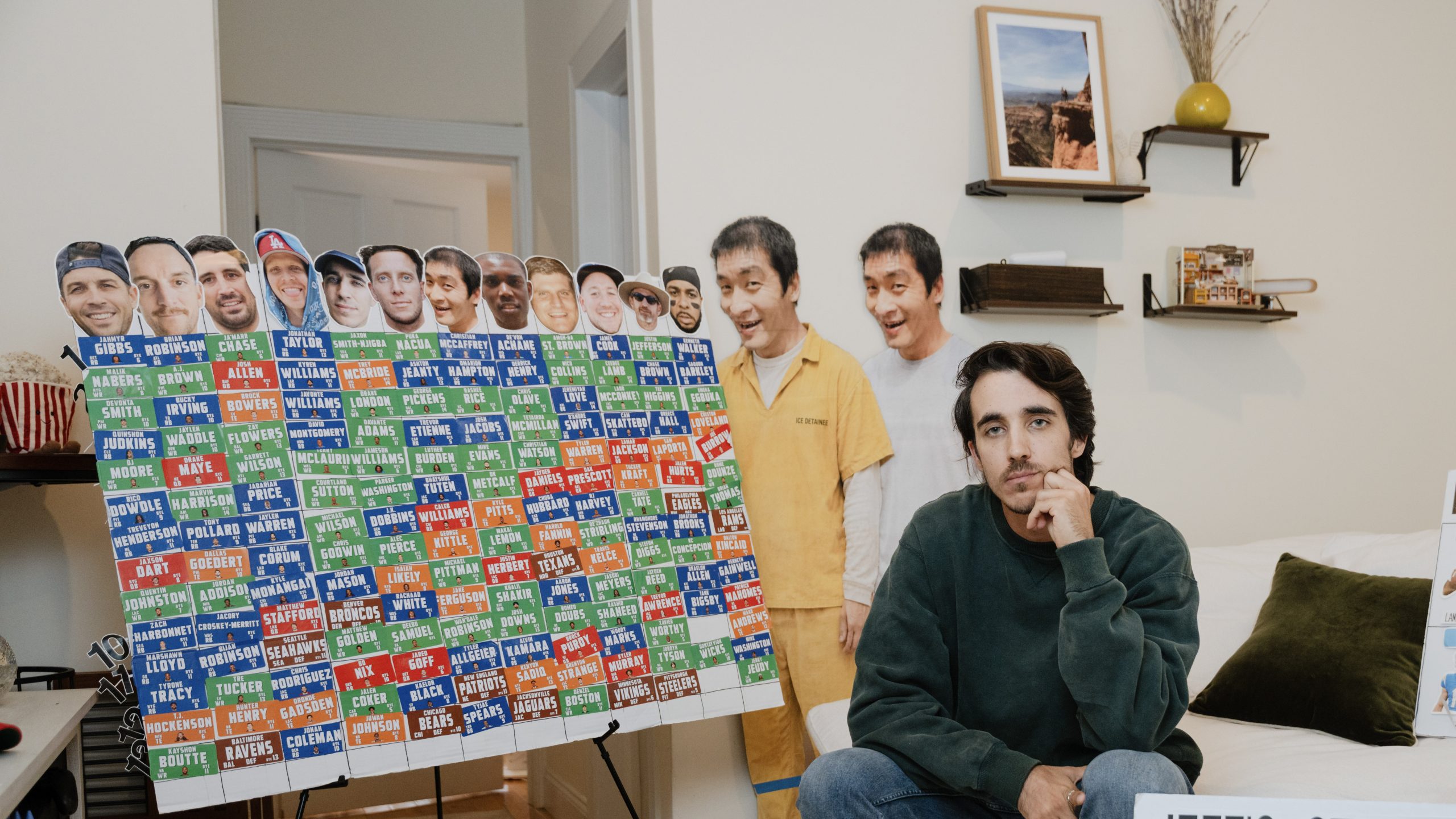
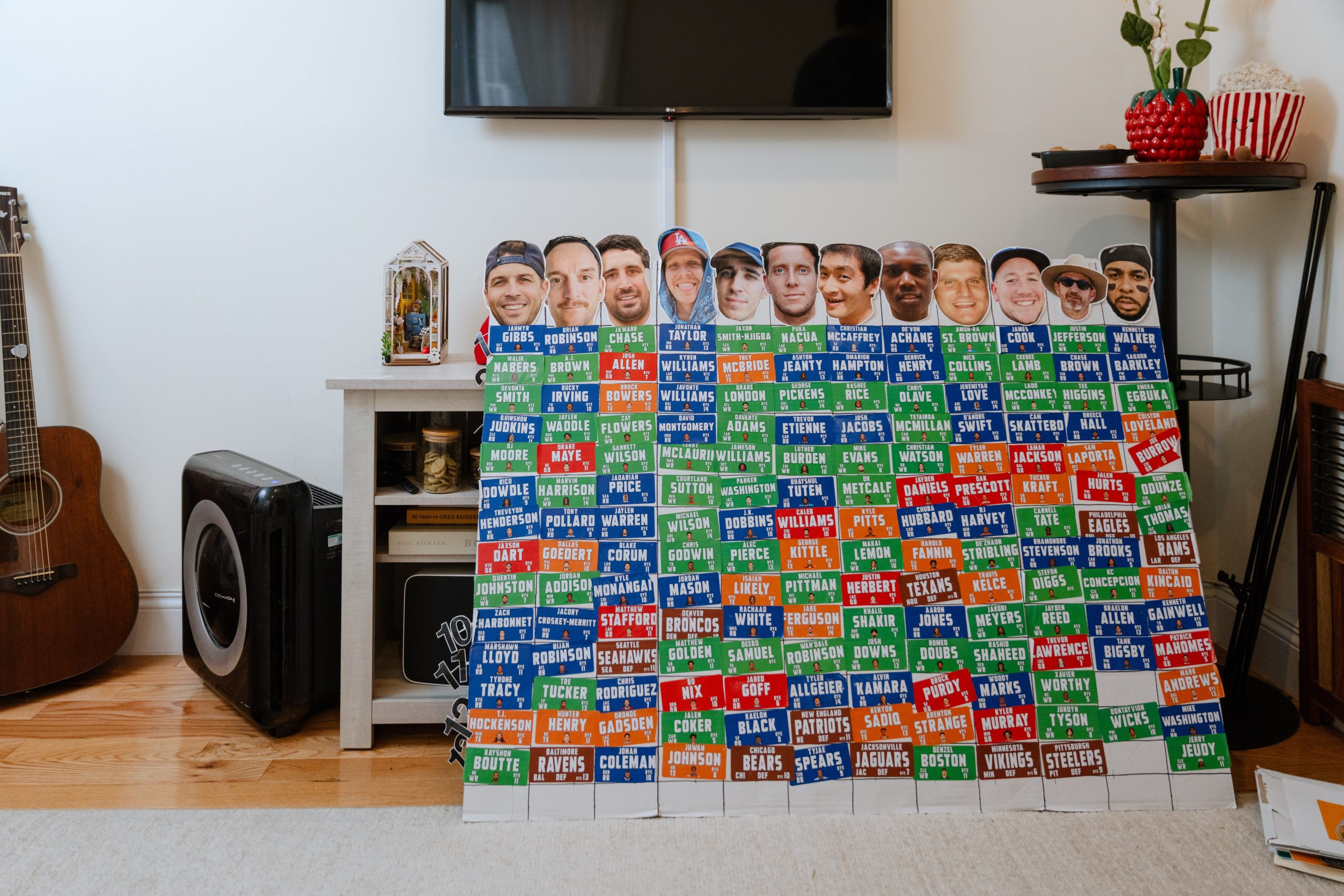
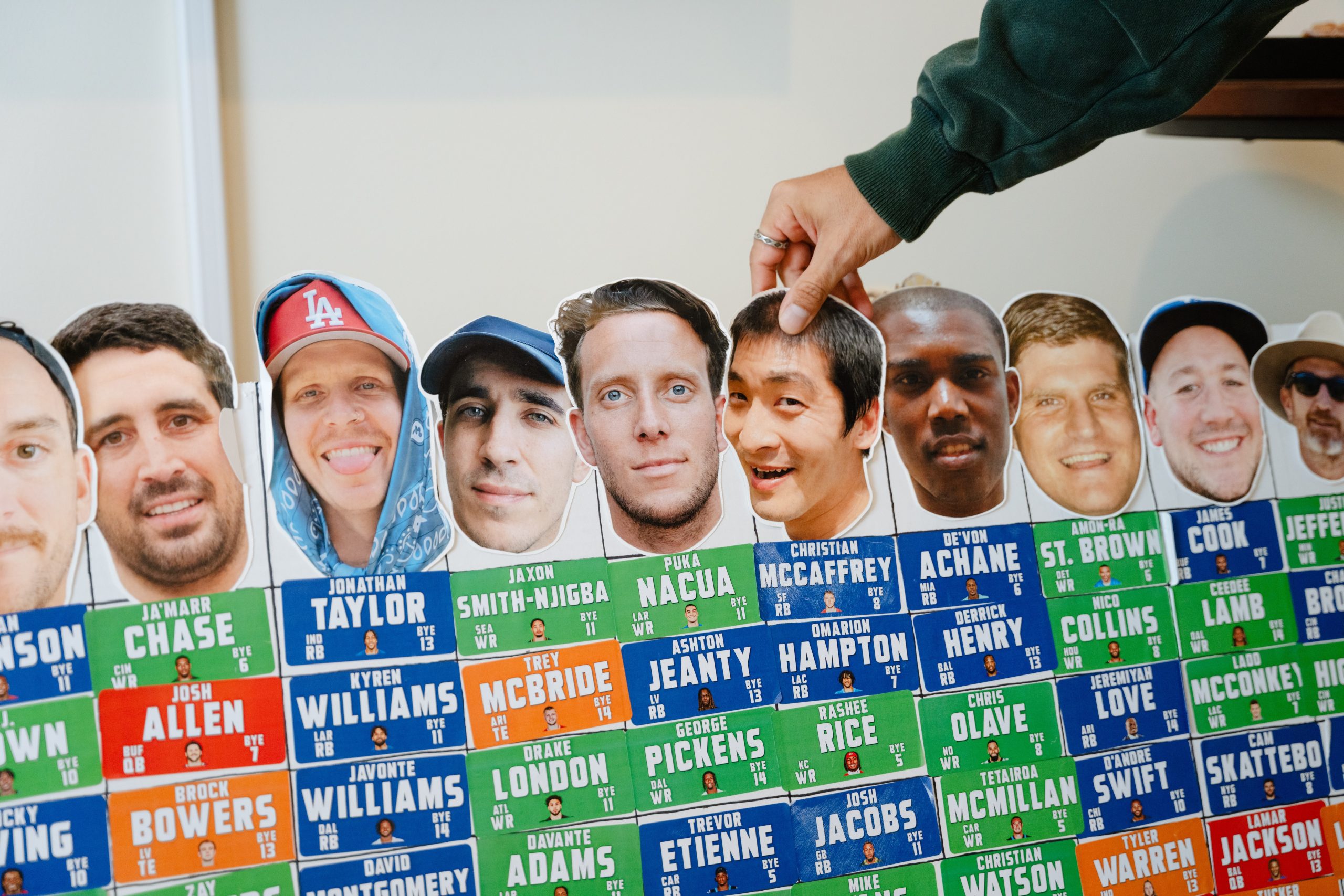
In early September, Beverly began a new series on his YouTube channel documenting how he and his friends were staying connected to J.Y. through fantasy football. Beverly even made a life-size cardboard cutout of J.Y. to up the production ante and recreate the feel of a live sports broadcast.
Beverly planned to produce 15 episodes, blending the drama of the fantasy football season with stories about the friendships behind the competition. He wanted the series to be upbeat, and not dwell on the circumstances that were keeping J.Y. behind bars.
“I know how excited he’s for the competition,” Beverly said. “J.Y., if you talk to him, he is not a sad person … It’s important to share his story. I think if I continue to make the videos and to tell his story over time, then maybe I might be able to help his situation.”
When Documented reached out to ICE about J.Y.’s passport, they did not address any of the questions about how J.Y.’s passport went missing, what alternatives were available for delays in his deportation, and how long it would take to obtain the necessary travel documents.
The agency said J.Y. was issued a final order of removal on July 1, 2026, and had received due process. It added that he would remain in ICE custody pending his removal from the United States.
Mingli Chen, managing partner of iLead Law Group, said ICE generally needs valid travel documents to deport someone to their country of citizenship. But, if a detainee’s passport is unavailable or expired, the agency may need to obtain travel documents through the country of citizenship’s consulate or embassy.
In J.Y.’s case, Chen said, until ICE has obtained the necessary documents from Chinese authorities, J.Y. will not be able to be deported to China. And so, he must wait in detention.
“Considering ICE currently has so many cases, it’s possible that they may lose detainees’ documents,” Chen said, adding that even when attorneys actively communicate with ICE and the Chinese consulate, the process can take months.
Chen once represented another Chinese client who had been detained in New Jersey for an extra six months after ICE also lost his passport. “When this happens, there is nothing more they can do other than waiting,” Chen said.
Beyond One Man’s Story
For Beverly, the prolonged process has stirred conflicting emotions. He wanted to help his friend maintain a sense of normalcy, even as J.Y.’s confinement became harder to endure.
“I have to ignore the fact that he is where he is. He’s in a place right now that I don’t believe that he should be in, and he’s somewhere that he has no control over whether or not he can leave, in order to make things as normal as possible,” Beverly said, pausing to hold back tears. “It’s difficult.”
But the YouTube videos Patrick made gave him some comfort, showing him that many people, including complete strangers, were willing to show him kindness and cared about J.Y.
The first episode drew more than 200,000 views in just one month. Many viewers left comments expressing support for J.Y. and hoping he would be released.
“I’m surprised that I’ve gotten more positive feedback than negative feedback,” Beverly said, noting that online comment sections can be particularly savage. “It’s good to see that the fantasy football community is reaching out and supporting somebody who may be in a situation that they disagree about, so that’s always nice.”
J.Y. said that leaving the United States, where he has spent nearly three decades building a life, is going to be difficult. But he is trying to keep a good thought; he has fewer family ties keeping him here in the U.S., while some of the others who he has been detained with face a much more difficult prospect: returning to a country they may barely remember, all while leaving behind spouses, and children.
“I’m not married. I’m not attached to anything other than materials like houses and stuff like that…In a way, I feel like I’m very lucky” said J.Y. “It breaks my heart because if you hear and you see these people super stressed out, crying over the phone. It’s hard times for them because they’re not bad guys, they’re not criminals. It’s just immigration problems, you have to get the paperwork correct.”
Beverly, for his part, hopes that the series he’s made comes across as more than one friend’s circumstances and the game they love.
“This isn’t just happening to J.Y. This is happening to thousands of people every single day, or throughout the years,” Beverly said. “It’s important to open people’s eyes for them to learn about the process … It’s reaffirming the idea that you can teach somebody something while showing them something else.”