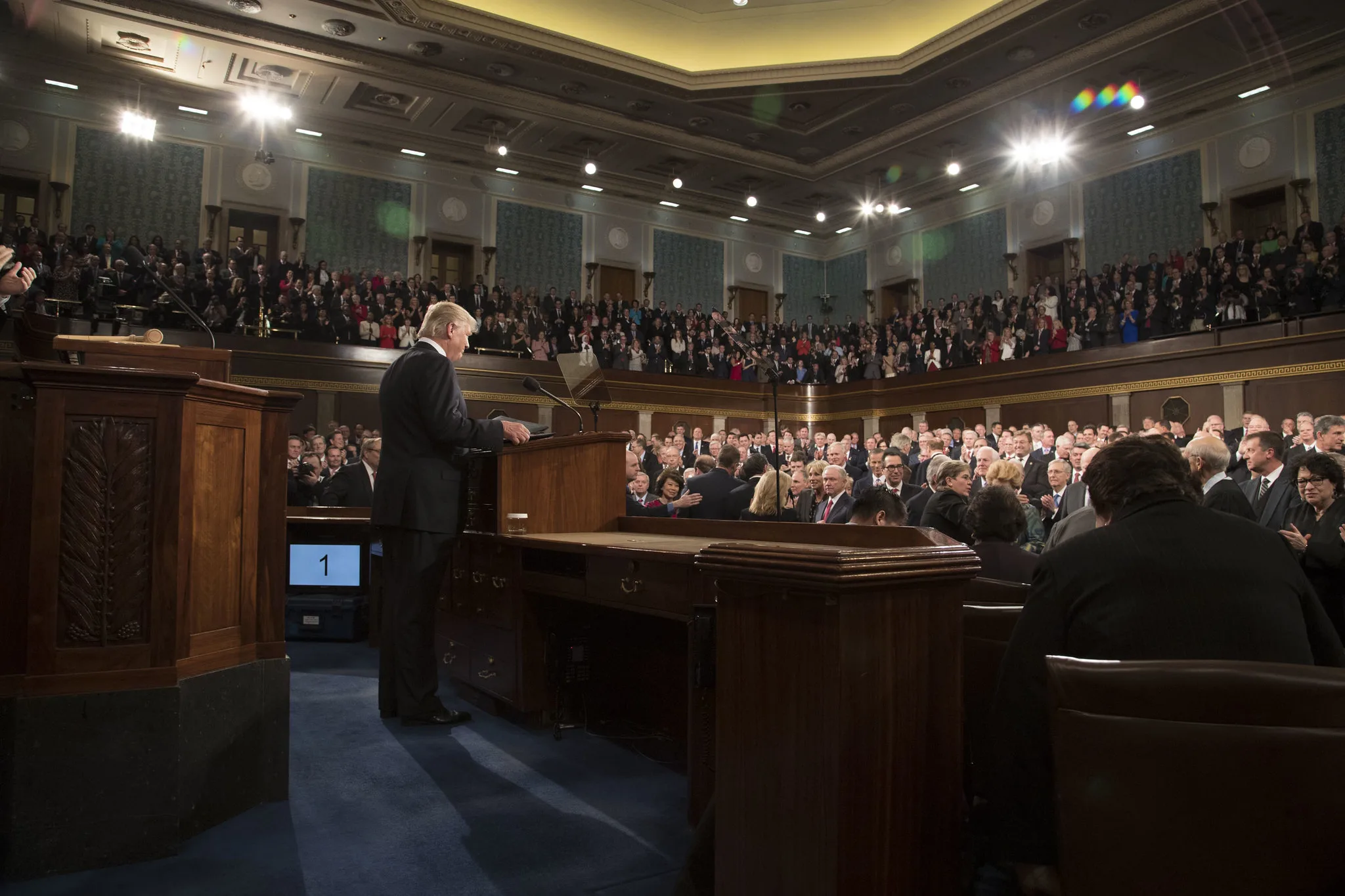


In his lengthy address to Congress on Tuesday night, Trump dedicated most of his speaking time to two key areas. One was domestic policy. The other, of course, was immigration.
While Trump has pledged mass deportations of undocumented immigrants from predominantly poor nations, on Tuesday he offered the wealthiest of immigrants a path toward citizenship. “For $5 million, we will allow the most successful, job-creating people from all over the world to buy a path to U.S. citizenship. It’s like the Green Card, but better and more sophisticated,” he said.
Critics warn that Trump’s gold card program may lead to security and corruption risks, mirroring the challenges that have troubled a similar program in the U.S. known as the EB-5 visa investor program. Similar golden visa programs in Europe have also been vulnerable to corruption.

Trump also spoke about his plans for mass deportations. “I have sent Congress a detailed funding request laying out exactly how we will eliminate these threats to protect our homeland and complete the largest deportation operation in American history,” he said.
The economic implications of mass deportations, however, have shown that the administration’s plan to deport undocumented immigrants will reduce the labor force, potentially impacting industries reliant on these workers. According to estimates from the American Immigration Council, mass deportations would lead to the loss of up to 1.5 million workers in construction, 225,000 in agriculture, 1 million in hospitality, 870,000 in manufacturing, and 461,000 in transportation and warehousing.
Trump also took pride in the turbulent early weeks of his second term, which have seen him implement executive orders that have halted immigration policies such as TPS extensions for Haitians, Venezuelans, Cubans, Nicaraguans, and Ukrainians. His administration has also suspended the operations of refugee resettlement organizations, leaving them in limbo and not reimbursed for services already conducted on behalf of the U.S. government.
“Since taking office, my administration has launched the most sweeping border and immigration crackdown in American history, and we quickly achieved the lowest numbers of illegal border crossers ever recorded.” Trump said during his speech. “The media and our friends in the Democratic Party kept saying we needed new legislation, we must have legislation to secure the border. But it turned out that all we really needed was a new president.”
While it’s true that the number of people crossing the border has dropped since the Trump administration began implementing their immigration policies, the numbers started to decrease in 2024 after the Biden administration implemented new restrictions and Mexican officials increased enforcement on their side of the border.
Trump also spoke about the death of 12-year-old Jocelyn Nungaray, and the two undocumented immigrants, Johan Jose Martinez-Rangel, 22, and Franklin Peña, 26, who were later arrested by police and have been charged with her murder. Trump announced a new executive order renaming a wildlife sanctuary named after Jocelyn Nungaray. He also used her death to underscore what he said was the importance of implementing border policies.
“Arrested and charged with this heinous crime are two illegal alien monsters from Venezuela, released into America by the last administration through their ridiculous open border,” Trump said.
His speech also laid an emphasis on what he says is the need to secure the border in order to prevent unauthorized import of fentanyl and drugs into the U.S. “We need Mexico and Canada to do much more than they’ve done. They have to stop the fentanyl and drugs pouring into the USA,” Trump said. “They’re going to stop it.”
Data as well as insights from experts at the American Immigration Council have shown that the majority of fentanyl that’s being seized is found at ports of entry, where it is primarily U.S. citizens or Mexican nationals with lawful status to enter the U.S. bringing it in. In addition, Trump overstated the volume of fentanyl entering the U.S. from Canada — it constitutes a small fraction of the total amount seized by authorities.
Separately, this week, Mayor Eric Adams was one of five Democratic mayors that appeared in Congress in front of the House Committee on Oversight and Government Reform — known for its heated debates — to defend their sanctuary city policies.
House Republicans argued that sanctuary city policies limit cooperation with federal immigration agencies and allow undocumented immigrants who commit crimes to remain in communities, potentially posing safety risks, and therefore making the five mayors complicit in protecting migrants who have committed serious offenses.
“We do not harbor criminals,” Mayor Brandon Johnson of Chicago said. “We arrest them.”
Indeed, a 2020 study shows that sanctuary policies reduce deportations of people with no criminal record. And when Mayor Michelle Wu of Boston told members of the panel to pass comprehensive immigration reform instead of probing them about sanctuary city policies, Rep. Eric Burlison (R-Mo.) said, “We don’t need to pass laws,” adding that “All we need is a new president.”
Republicans on the panel largely refrained from harshly criticizing Adams, who has publicly expressed he would cooperate with ICE. When asked constantly if he agreed to help the Trump administration in exchange for potentially dismissing his federal corruption charges, Adams responded: “My comments are not going to change. No quid pro quo, no agreement. I did nothing wrong.”