

Elmhurst, Queens.
Bamboo-lined backyard.
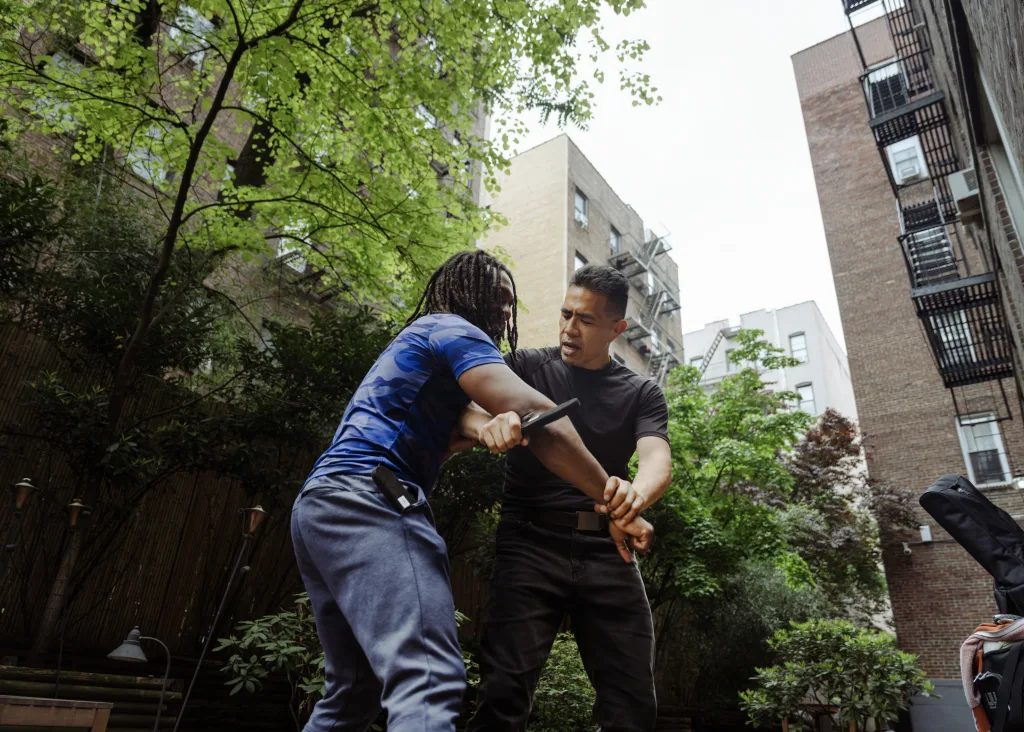
Dr. Z grapples with a man in black.

He grips his opponent’s wrists. He tries to block the incoming attacks.
A sudden twist, and the man slips free and draws a knife.
In a flash, the blade strikes Dr. Z’s neck.
Dr. Z is declared “dead.”
But then, both men erupt in laughter, clapping each other on the shoulder as they prepare for the next round of training.
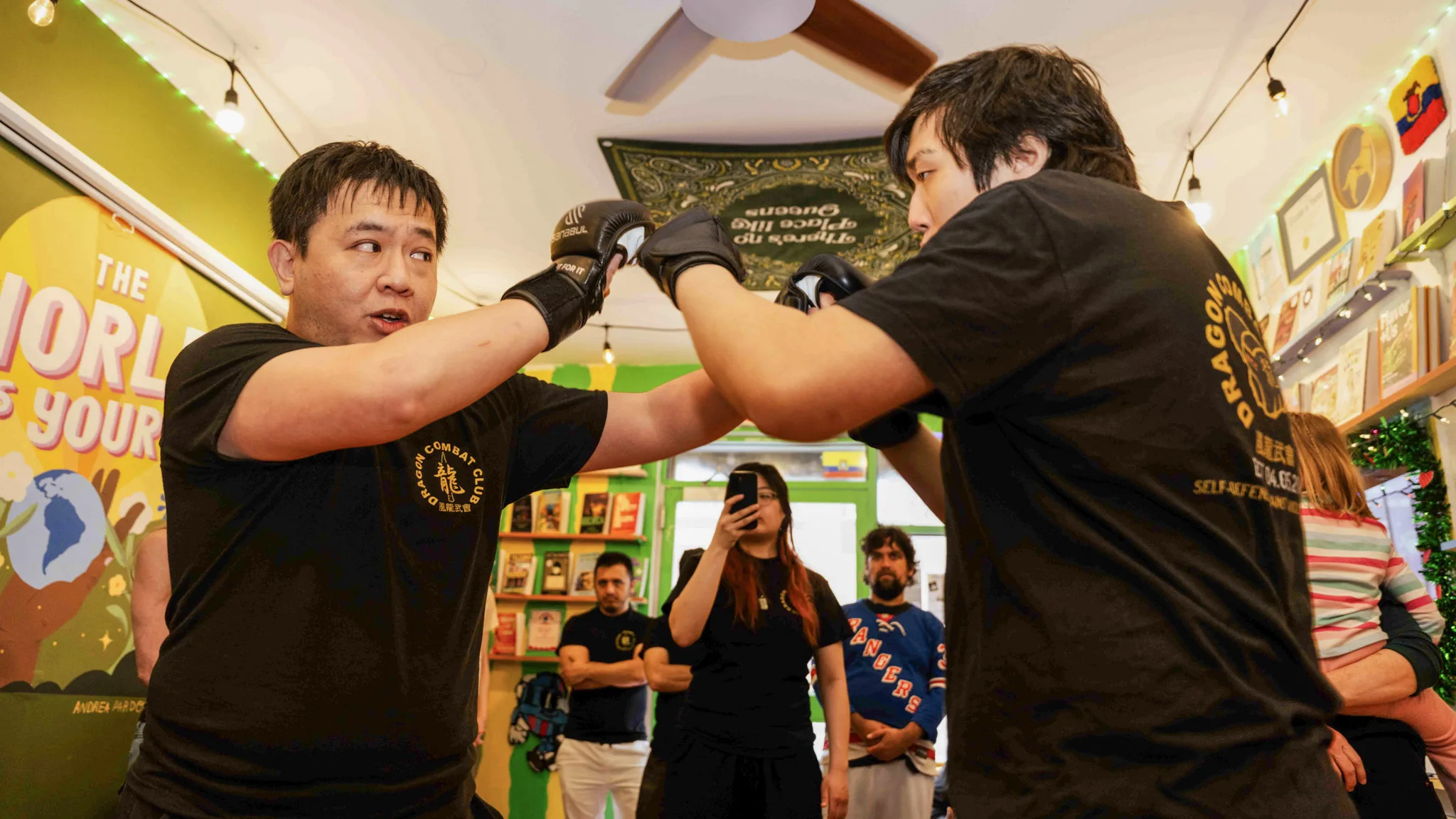
In reality, the “knife” is nothing more than a foam training prop — and the fight that unfolded was simply a routine drill for the Dragon Combat Club (DCC), a clinch and weapons sparring group founded in 2020 during the pandemic.
Henry Zhang, better known as “Dr. Z” to community members, is a school psychologist and co-founder of DCC. He said the club was formed both as a response to rising violence and as a way to reclaim power through discipline and skill amid a surge in anti-Asian hate during the pandemic.
Over the past five years, the club has borne witness to the fears, traumas, and challenges experienced by the Asian American community — as well as its resilience and strength. But with the pandemic in the rearview mirror and incidents of anti-Asian hate on the decline, the club has seen a shift in the makeup of those joining their regular training sessions. Many marginalized communities are now feeling a similar sense of unease that Asian Americans experienced during the pandemic and have expressed wanting to learn how to protect themselves and their loved ones in a proactive way.
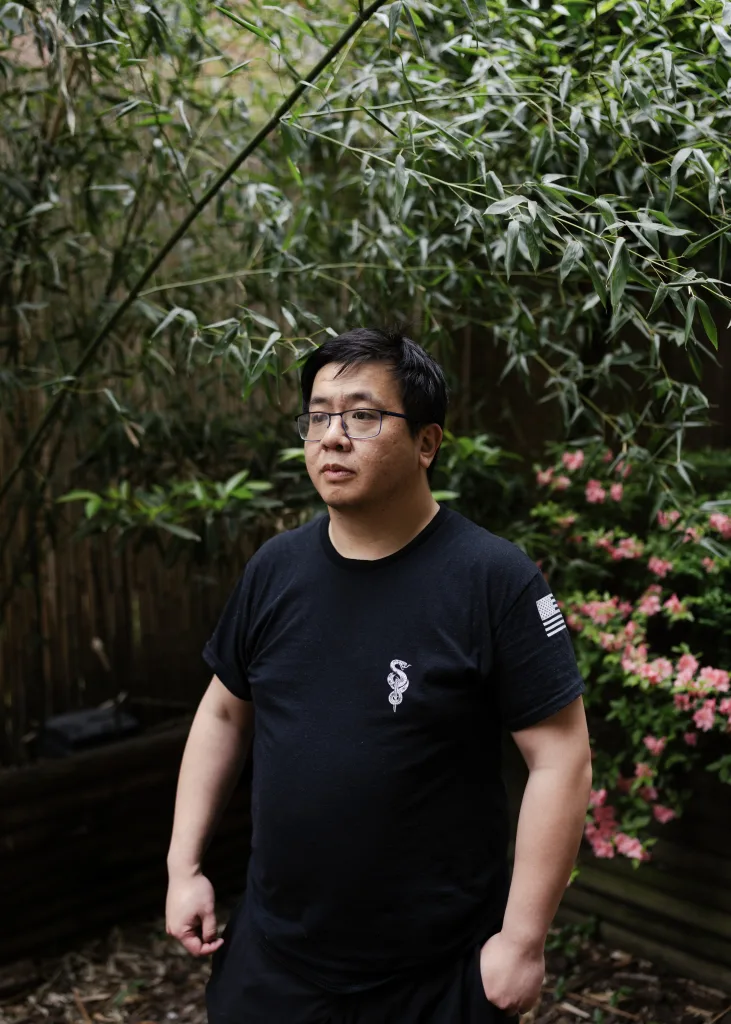
“You have an administration that is in blatant violation of such rules… People who were closeted racists are now more emboldened,” Dr. Z said. “There used to be a line, an unspoken set of rules that made you feel safe, but people are starting to see that line disappear.”
Being ‘more proactive’
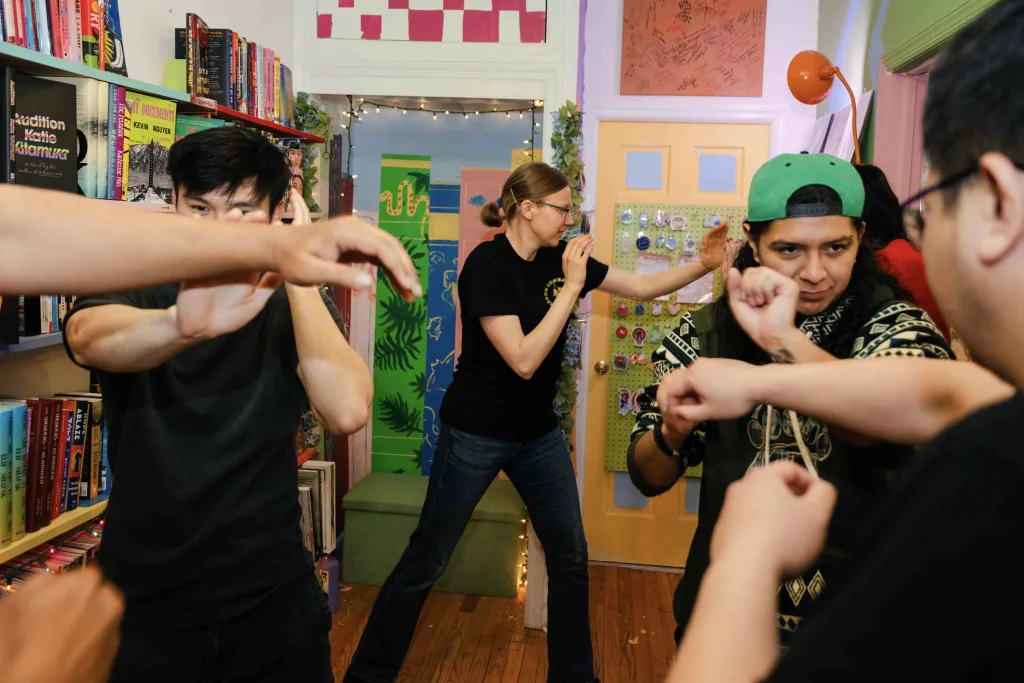
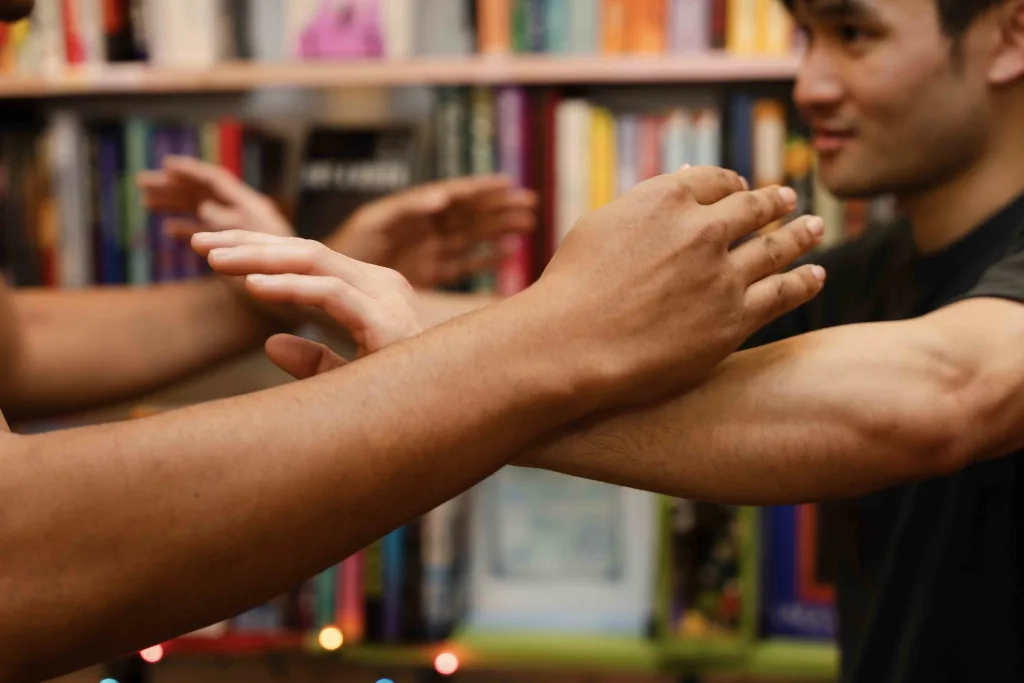
On a Saturday afternoon in April, the World’s Borough Bookshop in Jackson Heights buzzes with chatter and laughter. Around 20 participants from different communities have gathered for DCC’s entry-level self-defense workshop, which was designed for complete beginners.
Dr. Z and other instructors guide students through the basics: how to maintain balance, where to place their hands, and how to recognize visual cues. They practice games to increase hand speed and drills to improve reflexes.
Mehdi Mostafa, a Muslim community member who has attended DCC’s entry-level trainings since February, said the current political climate motivated him to learn self-defense. “I am very fortunate that I’ve never experienced a Muslim hate crime, but I know way too many peers who have,” he said. “With the recent ICE raids and everything going on, there’s definitely been heightened interest on my end to be more informed, to be more proactive.”
Also Read: Non-Major Crime at 20-Year High in Chinatown as City Sees Spike
C. Z., a trans martial artist, joined the club eight months ago out of her passion for martial arts and safety concerns and is now one of DCC’s head instructors. “DCC isn’t just for the Asian community — we have a lot of Black, brown, Muslim, and LGBTQ members,” C.Z. said.
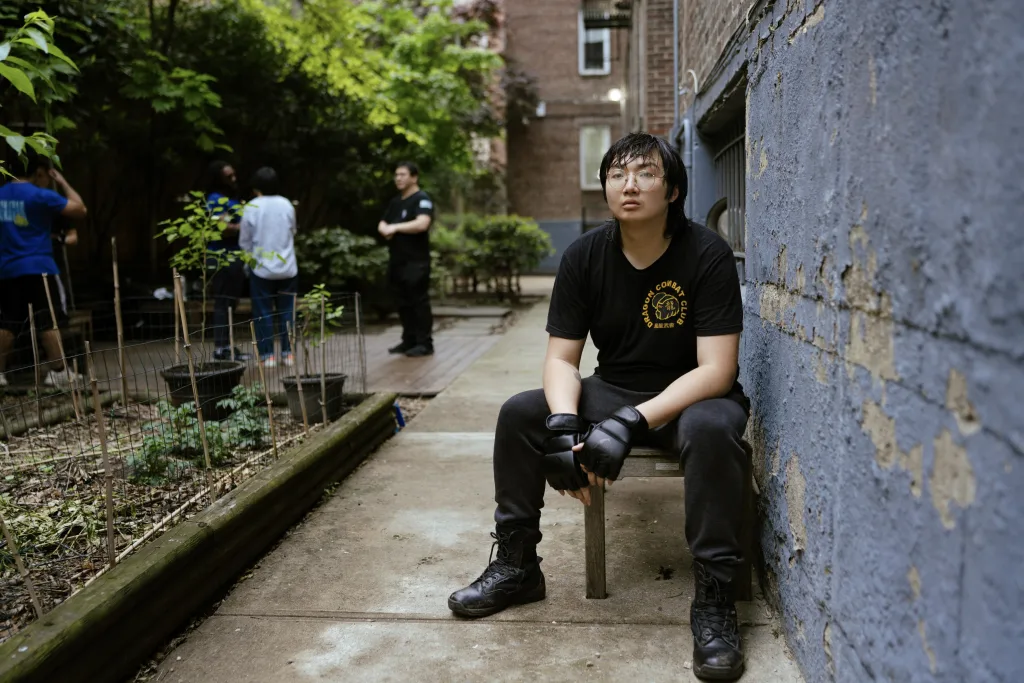
She recalled being targeted with racial slurs during the pandemic because she is Asian. She also endured discrimination for being trans. Most incidents came in the form of casual, offhand remarks about her appearance or race. Her friends were sometimes catcalled or subjected to similar behavior as well. In one incident, she witnessed someone she was with get hit in a crowd by a stranger who quickly fled — a moment that made the threat feel tangible and deeply unsettling. “So whether it’s like wanting to protect myself or the people around me, I just think it’s good skills to have,” she said.
In the fall of 2024, DCC partnered with groups like Malikah, an anti-violence nonprofit serving community members in Queens, including Muslim women and girls. Dr. Z said the partnership has helped DCC build trust within broader communities, which has led to a growing number of participants in the club’s classes as well as an overall demographic shift. With nine head instructors and over 20 assistant instructors, DCC now offers classes and training across the city.
Interacting with other organizations also led Dr. Z to reflect on the common ground and differences between communities when it comes to safety. Dr. Z said he came to appreciate the way the Muslim/Arab community members supported one another and spoke openly about the bipartisan nature of racism, recognizing that neither political party truly serves the interests of the people. “For someone like me, who saw how the East Asian community struggled to come to terms with that, it was refreshing.”
Demi Guo, a journalist who grew up in Flushing, Queens, joined DCC in early 2023 and is now one of its assistant instructors. “I’ve always been conscious of how dangerous it might be to be Asian on the street,” she said, adding that she joined the group to use her martial arts skills to support others facing similar fears in today’s political climate.
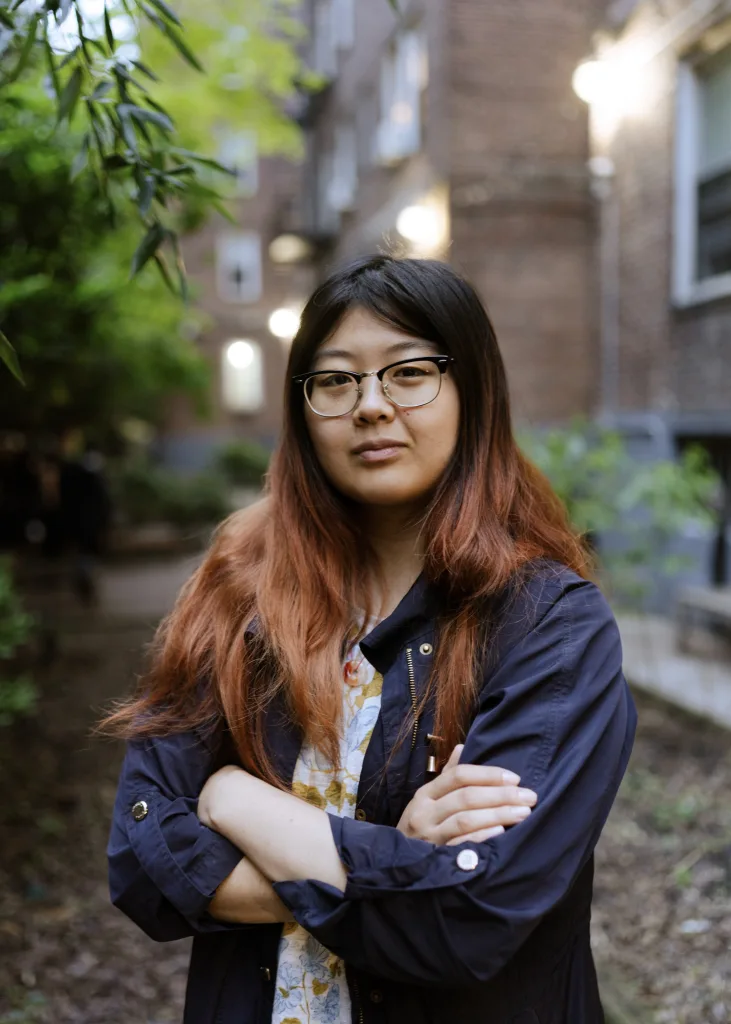
“What you’re going through, other people might be going through as well,” she said. “And when the time comes, you need to open up, which is what’s happening with Muslims now that apparently anti-Islamophobic hate is at its highest ever since post 9/11.”
Dr. Z. explained that martial arts instructors use handspeed and reflex games to simulate danger, allowing participants to “die” in practical drills and learn through failure.
“So when real situations arise, students have already experienced various scenarios and can stay calm and make informed decisions,” Dr. Z said. “To survive and be able to run away, people’s brains need to be able to perceive signals, and their bodies have to be able to respond. And that’s more important than learning any technique per se.”
Hannington Dia, a Wing Chun practitioner, joined DCC about a year ago to complement his martial arts training. “Actually, I owed Dragon Combat Club,” said Dia, who was randomly attacked while waiting for an M14 bus in the Meatpacking District in December 2024. He said the DCC training helped him stop his attacker quickly. “Honestly, Dragon Combat Club may well have saved my life that night,” Dia said. “Because I saw that move he did, I had trained that move in an actual situation.”
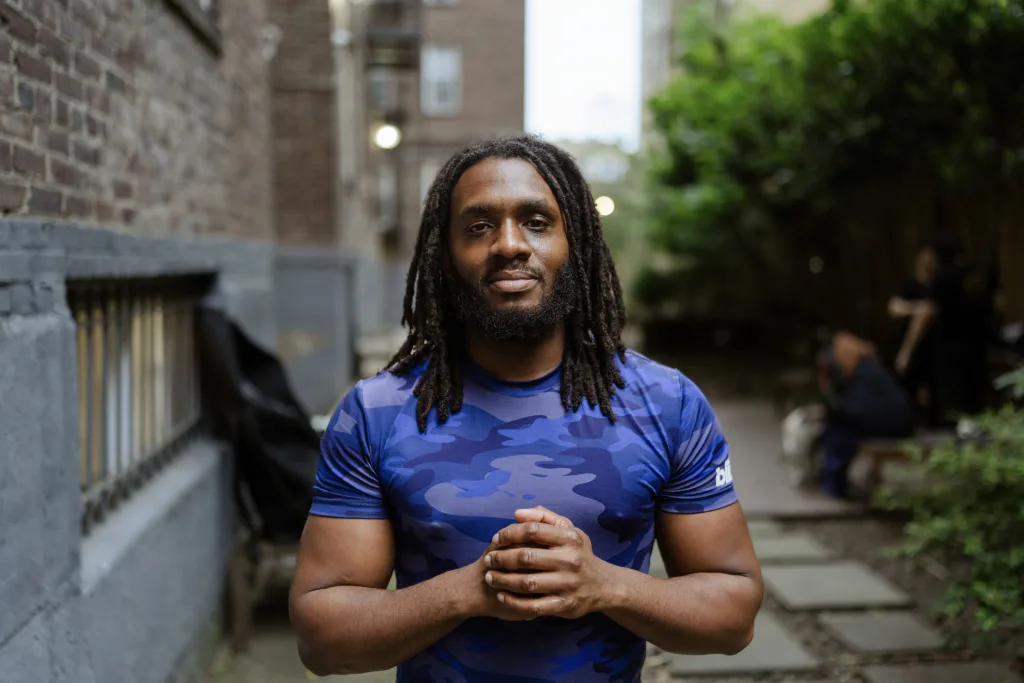
DCC’s approach to training initially caused some “culture shock” among newcomers and members of the AAPI community. Dr. Z still remembers that in early 2020, when the pandemic had just begun, few people recognized or spoke about anti-Asian hate. Yet at that time, he had already witnessed a college friend being attacked, and his then-fiancée “had to run away from five dudes calling her racial slurs.”
The following year, anti-Asian hate crimes reportedly surged by 339% nationwide, with cities like New York, San Francisco, and Los Angeles surpassing their 2020 records, according to the Center for the Study of Hate and Extremism.
“I was appalled not only by the number of attacks,” Dr. Z said, “but also by the people, including other Asian Americans, who were rationalizing them.”
Dr. Z believes class played a major role in how anti-Asian violence was discussed. “East Asian income distribution is bimodal… a lot of people are either really rich or really poor,” he explained. “If you’re poor, you live in areas where attacks happen. But if you’re affluent, you dominate the conversation. So during Covid, the people who felt most entitled to give their opinion were generally not the ones living in ground zero of these physically violent attacks…nor did they ever bother to step foot into those areas to see for themselves.”
Also Read: Hate Crimes Against Migrants Surge in Manhattan Last Year, Even as Overall Numbers Fall
He recalled how public discourse quickly shifted from questioning if anti-Asian racism was “real enough to care about” to political debates about policing or which group attacked Asians the most. “Resolving these ‘debates’ isn’t going to help the Chinese woman on the night shift or the elderly Asian who got punched on the subway,” he said. “My view was simple: regardless of how you feel about cops, given average response times, it’s mathematically a bad idea to count on them to save you.”
In response to rising anti-Asian hate, Dr. Z, who, along with being a school psychologist, is an experienced martial artist, co-founded the club that would later become known as DCC with his friend Raymond Long in April 2020. The name “Long,” which means “dragon” in Chinese, was chosen to honor Raymond, who passed away in May 2020. Their first self-defense class was a simple Zoom session with Dr. Z and three other martial artists. “Maybe someone threw a strike at the screen, and you had to react correctly and in time,” he recalled. “So the reflex training was built in from the first day.”
By 2022, DCC had evolved beyond self-defense to what Dr. Z called the “community defense” phase. As anti-Asian violence spiked again, the group expanded its efforts by offering free classes in neighborhoods like Chinatown, teaching people how to respond to real threats using tools like tactical pens and flashlights. Beyond the classroom, they also took direct action—checking in on local store owners and participating in subway support missions to help fellow community members.
“It was making sure the elderly woman was able to navigate up and down the stairs with heavy groceries despite being in danger of physical attacks,” he said. “It was making sure the store owner on Grand Street, who got attacked every day, who doesn’t know English or how to operate social media, has the physical and metaphorical tools to deter an attacker when you are not there.”
But the idea of “fighting back” didn’t always land well. Some community members and organizations pushed back or misunderstood DCC’s mission.
“It’s easy to say ‘just run’ or ‘avoid violence’ when you live in the vacuum of the internet and you have to appeal to an audience of people whose concern is whether your ideas sound kosher,” said Dr. Z. “But when you actually had to live in the communities we did, you’ll realize that we have to navigate such dilemmas that were never so clean-cut.”
Learning from these reactions, DCC changed its descriptor in 2023 from a “self-defense group” to a “clinch and weapons sparring group.”
“Some people criticize me just for using the word ‘combat,’ ” said Dr. Z. “So when you said it is a clinch and weapon sparring group, people know what to expect going in. If they’re not into that, it’s unfortunate, but at least you know they’re not into that.”
While anti-Asian attacks have declined since the pandemic, DCC continues to evolve and grow. Its focus has shifted toward community building, resilience, intellectual curiosity and reaching out to a broader audience.
Dr. Z emphasized the challenges marginalized groups face: “They see a level of violence that wouldn’t be reasonable to deal with just their bare hands, and they also know that being the ‘wrong skin color’ using some lethal force option and/or purpose-built weapon can put them on the wrong side of the law, even when use of such things are justified.”
That’s why DCC trains people to use everyday objects, like pens or flashlights, for defense and limit the risk of vulnerable populations “being seen as the aggressor when force is necessary to protect yourself and your loved ones,” he said, clarifying that DCC does not endorse knives, guns, or even pepper spray or tasers.
Looking back, Dr. Z sees DCC’s formation as a trauma response to anti-Asian violence during the pandemic but emphasizes the importance of turning pain into purpose.
“We can ignore [our scars] and let that hurt us, use it as an excuse to do harm… or we can use it to make things healthier for us and for other people,” he said. “At the end of the day, what happened, how can we use it to stop it from happening again? How can we use it to protect other people who are about to go through the same thing? Those are the questions we ask ourselves every day.”