

It’s 9:58 a.m. in Queens, New York and radio host Irwin Clare is standing, head phones on with his lips geared toward the microphone, in a green-and-white studio. In just a few minutes his daily show, “The Fact of the Matter,” will take over the airwaves of Irie Jam Radio, an online radio station primarily serving New York’s Caribbean community.
For regular listeners, the one-hour talk show is a space where issues affecting the Caribbean diaspora are discussed with guests. That day’s episode opened with Jimmy Cliff’s soulful rendition of “Many Rivers to Cross.”
“Today we turn our attention once again to an issue that has profound implications not only for the Haitian community,” Clare said in his introduction on July 30. “The rollback of Temporary Protected Status, or TPS, for hundreds of thousands of Haitians represents far more than a change in immigration policy. It is a human story. It is an economic story, and it’s a community story. It’s about our existence.”

Earlier that morning, during Irie Jam’s music show “Let the Cocks Crow,” hosts Dahved Levy, Syn and DJ MadOut welcomed Brooklyn community leader Porez Luxama to discuss the same topic.
Since the U.S. Supreme Court ruled that the Trump administration could end TPS for Haitians in June, community stations like Irie Jam Radio have been an important information lifeline for the Caribbean diaspora. As Haitian families navigate the sudden loss of their legal status, jobs, and the mounting fear of ICE arrests, many are turning to the station to find support, information and a place to be heard amid the fallout threatening businesses and local economies.
Up until July 27, about 350,000 Haitians held TPS, with many of them having lived and worked in the U.S. for decades. According to FWD.us, an immigration advocacy organization, about 200,000 Haitian TPS holders were in the U.S. workforce, including roughly 40,000 in New York State. Working across industries such as healthcare, hospitality, food service. warehousing, and retail, it’s estimated that Haitian TPS holders contributed about $6 billion each year to the U.S. economy, including $1.1 billion annually to New York’s economy. Since TPS ended, New York businesses have reported losing longtime staff and the city itself was forced to terminate dozens of jobs because work permits expired.
‘Today It’s the Haitians, Tomorrow It’s the Jamaicans’
Since President Trump began his second term last January, the administration has taken steps to end Temporary Protected Status for 13 countries, and following the Supreme Court’s ruling which narrowed judicial challenges, an estimated 1.3 million TPS recipients could be affected.
For Clare, it is an emergency. His guest on the show that day, political activist Hulbert James, a former New York resident now living in Florida, agreed.

James argued that ending TPS for Haitians is not just an immigration paperwork issue but a direct threat to the economic and social stability of South Florida, especially for the elderly residents who depend on Haitian and other Caribbean workers in healthcare, home care, and schools.
“The Florida Health Care Association reported that 35,000 Haitian workers are probably affected by TPS here in Florida,” James said, referring to recent news reports. “[For] a lot of the hospitals and healthcare industry people who take care of us at home care, there’s no replacements. This is not a job that you’re going to go out and announce and there’s going to be a flood of people to replace them.”
James also saw the TPS rollback as exposing a failure of federal preparation and a “dangerous decline in Caribbean political unity and advocacy,” compared to earlier eras when leaders consistently rallied around Haitian and broader Caribbean causes.
Clare said the Supreme Court decision should be a warning for all Caribbean nationals.
“Today it’s the Haitians, tomorrow it’s the Jamaicans,” he said.
He warned against what he called a “crab in a barrel mentality”— a tendency for people within the community, to pull one another down, rather than working together. He argued that this division has weakened the community’s political influence, particularly among Haitians and other Caribbean immigrants who, despite sharing many concerns and interests, have often struggled to organize around common goals. “We as a community can’t coalesce,” he said.
A Station Built Around Community
Irie Jam was founded in 1993 in New Rochelle, New York, by Jamaican-born entrepreneur Bobby Clarke and Caribbean cultural advocates. It was created as a platform to elevate Caribbean music, voices and community issues. Over the last 30 years, the station, which broadcasts from Queens, has grown into what is now a major Caribbean-American media institution serving New York and the tri-state area.
Clare, 66, came to the U.S. from Jamaica in 1978 through family reunification after his mother, who immigrated in 1969, sponsored him. He joined Irie Jam when it was founded in 1993 and has spent much of his career using his platform to discuss issues affecting Caribbean immigrants.
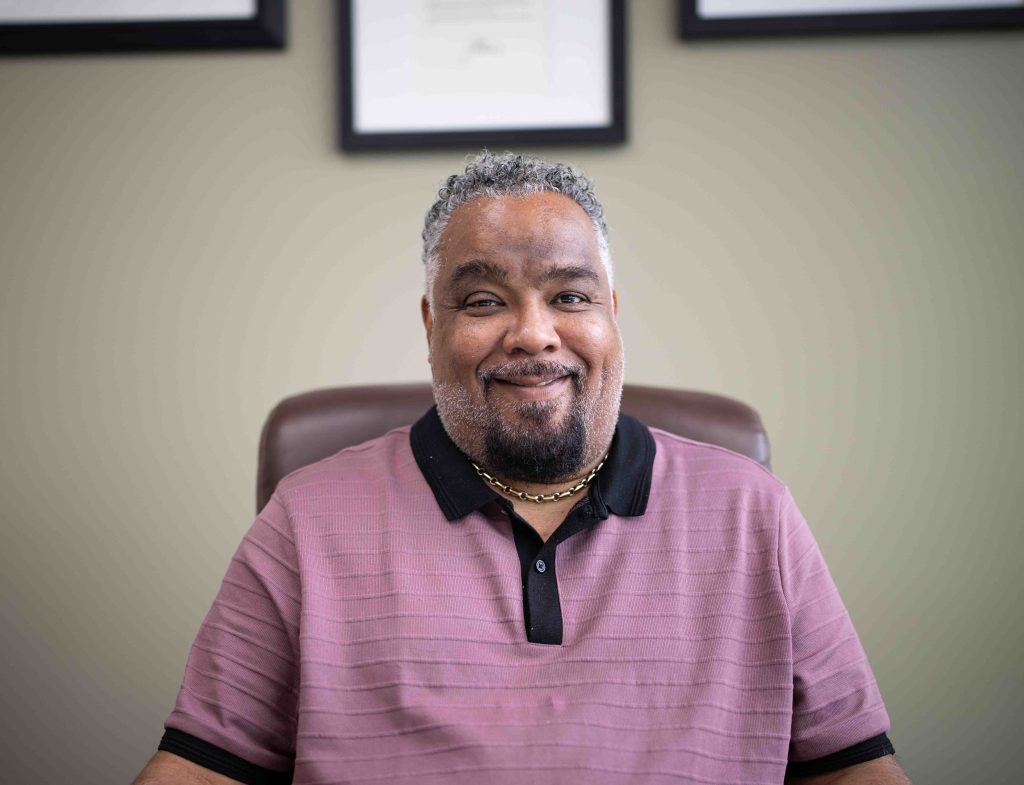
For decades, Clare has watched immigration policy reshape New York’s Caribbean communities — from the Illegal Immigration Reform and Immigrant Responsibility Act of 1996, which broadened the government’s power to deport immigrants and imposed new restrictions on immigration relief, to campaigns for the DREAM Act, which sought a path to legal status for young immigrants brought to the U.S. as children. He’s also worked along broader efforts to protect long-term Caribbean immigrants from deportation and help them obtain permanent legal status.
His show “The Fact of the Matter” has been on the air for about two decades and immigration remains one of its recurring subjects.
Before Irie Jam, Clare worked at WLIB, a longtime NYC radio station with a rich history of serving Black and immigrant communities, where he remembers immigration as “the hottest topic.”
“Immigration is always a basis because it’s a core factor to our existence,” Clare said.
The Fight for a Caribbean Response
During their conversation, Clare and James examined what they saw as a weakening of Caribbean political solidarity. The result, Clare argued, is a fragmented community at a moment when collective action matters. He questioned why U.S.-based Caribbean leaders were not responding more forcefully.
“As Haitians became more involved in the political process and elected themselves, we saw where the divide started. They championed their cause, they formed their alliances, not with Caribbean groups,” Clare said.
For Clare, the point is not simply to defend one nationality. It is to remind Caribbean immigrants that federal policy does not respect the boundaries between islands.
“The English-speaking Caribbean is largely out of that,” he said about earlier immigration debates. “But at the end of the day, it’s an immigration issue, so we would become part of it.”
That is why, after more than three decades in Caribbean media, Clare still sees radio as essential.
“Radio is critical, terrestrial radio, especially even to this day in our community,” he said.
At Irie Jam, the music still plays. But alongside the music, the station gives immigration issues a place in the conversation. When major policies affect Caribbean immigrants, community members tune in to understand what is happening to them and to their neighbors — and what might happen next.
Clare closed his show with a reminder that the policies that are debated on his program have real faces. “Behind every immigration policy are real people, real families, and real communities,” he said.
“They are part of our families. Let us understand that as a community we have always pulled together. When we pull together, we make things happen.”