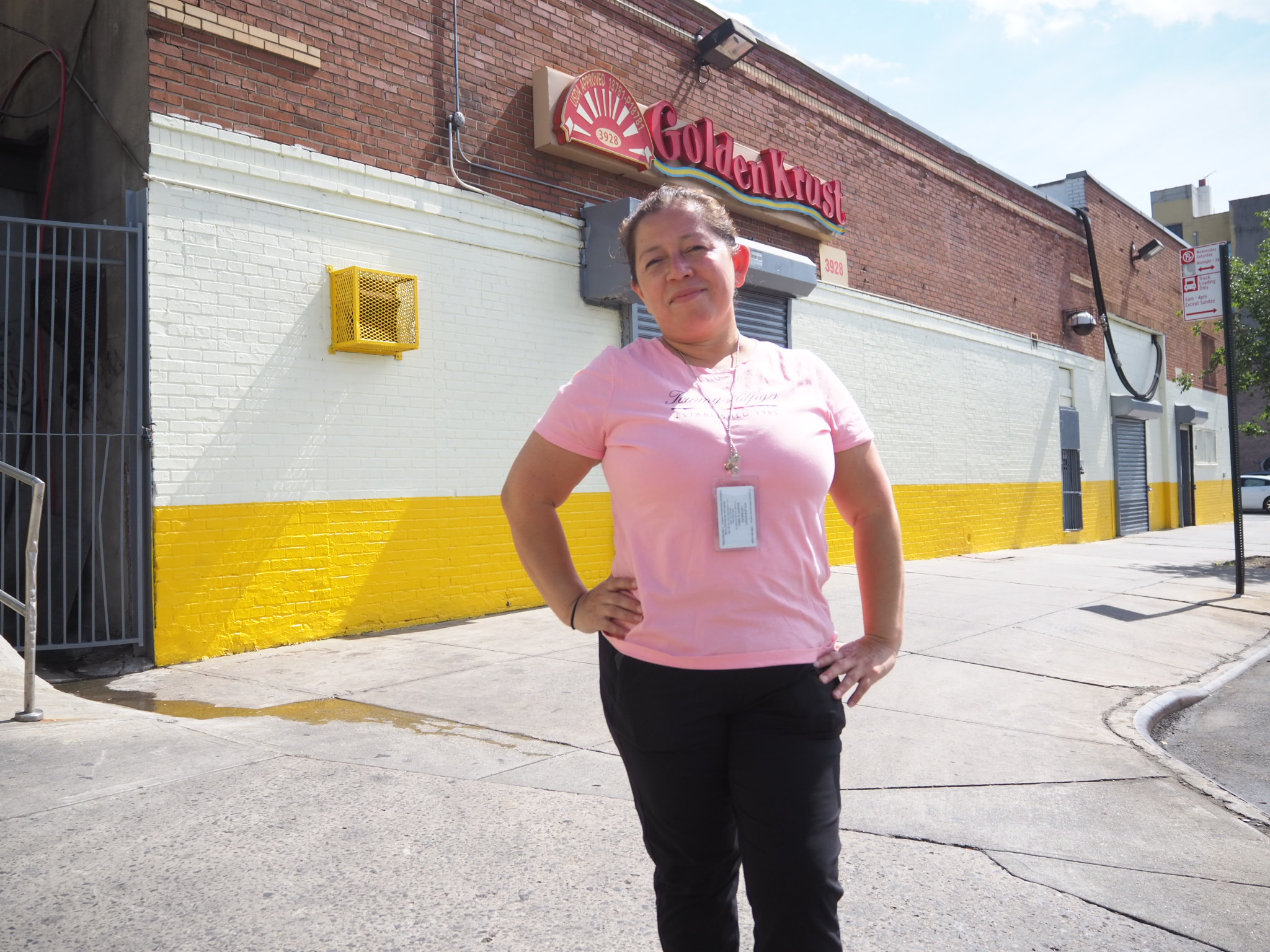


At the Center for Family Life in the Sunset Park neighborhood of Brooklyn, Maria de Jesus Juarez, 64, was attempting to renew her SNAP benefits. Juarez, who came to the United States 40 years ago from Mexico and is a U.S. citizen, said she was confused that Thursday morning she visited. She wanted to learn how the new federal work requirements could affect her, especially as she prepares to retire next year.
With help from her son and the staff at the center, Juarez, who primarily speaks Spanish and works a low-income job, was able to navigate the complex eligibility rules and complete the paperwork needed to maintain her benefits.
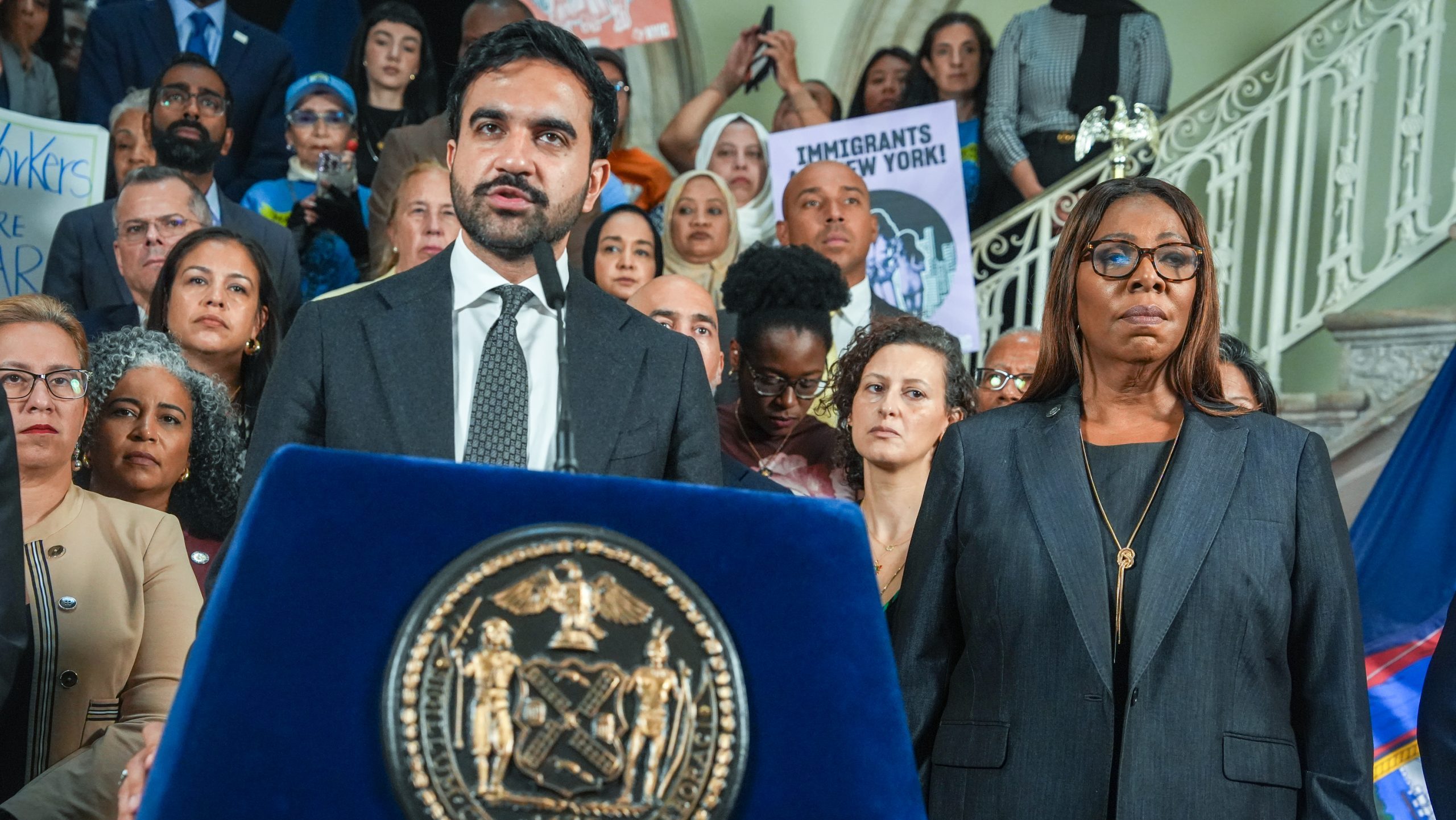
The help she received was made possible through NYCBenefits, a city program that helps low-income New Yorkers apply for and keep public benefits. The program came close to being cut during this year’s budget negotiations, but was preserved when Mayor Zohran Mamdani and the City Council reached a last-minute agreement Tuesday on a balanced $125.8 billion Fiscal Year 2027 budget that includes $11.7 million for NYCBenefits.

Launched in 2023, NYCBenefits is a partnership among the New York City Department of Social Services (DSS), 35 community-based organizations, and three technical assistance providers. It has helped tens of thousands of New Yorkers apply for and maintain food, housing, health care, and other public benefits while navigating increasingly complex eligibility rules and application requirements.
The program also expands access to public benefits for New York City’s diverse immigrant communities by providing outreach and application assistance in 54 languages, as was the case with Juarez. Organizations like the Chinese-American Planning Council and the Center for Family Life help Chinese- and Spanish-speaking residents across the five boroughs navigate their local, state, and federal benefits.
According to the program data, NYCBenefits providers have served more than 10,000 people who speak languages not available through ACCESS HRA, an online portal and mobile application managed by the New York City Human Resources Administration (HRA) that allows New York City residents to apply for, renew, and manage their public benefits. The program has also served nearly 6,800 people whose primary language is not the languages covered under New York City’s local law language access requirements.
After the finalized budget passed on Tuesday, social services providers told Documented that they welcomed the restoration of funding to NYCBenefits, saying it comes at a critical time as rising living costs and federal cuts to the social safety net make it more difficult for vulnerable New Yorkers to access assistance.
However, advocates cautioned that the adopted budget falls short of providing the long-term funding commitment needed to ensure the program’s stability, making it difficult for nonprofit providers to plan for the future.
A DSS spokesperson confirmed the funding for Fiscal Year 2027 but said the Mamdani administration would not commit to assured funding beyond Fiscal Year 2027 at this time.
“Keeping everyone eligible for public benefits has never been more important, and in a time of significant federal changes, this requires an all of government and all of community approach, which is why we are funding NYC Benefits with an allocation of $11.7 million for FY27,” the spokesperson said in a statement.
Julia Jean-Francois, executive director of Center for Family Life, one of the NYCBenefits providers, said she was excited the administration recognized the benefits of the program.
“It’s absolutely the path to fulfilling the mayor’s promise that the city would become more affordable and economically stable,” she said. “However, if there is no commitment beyond next year, then the communities will once again become incredibly vulnerable.”
Carlyn Cowen, chief policy and public affairs officer at Chinese-American Planning Council, one of the program’s providers, said NYCBenefits offers wraparound assistance that many residents cannot access elsewhere.
Cowen said NYCBenefits providers offer hands-on assistance throughout the benefits application process, helping older adults create online accounts, assisting immigrants with limited English proficiency in understanding and translating required documents, and guiding clients through each step needed to apply for and maintain their benefits.
“We’re making sure they’re checking in on all the parts of the process, and this program really understands the complexity of what it takes to help a community member get on benefits and stay on benefits,” Cowen said.
Advocates say demand for benefits navigation has grown more urgent following recent federal policy changes, including new work requirements for some SNAP recipients and Essential Plan enrollees under Trump’s “One Big Beautiful Bill Act” that passed last summer.
Recent federal rule changes have expanded federal benefit work requirements to include older adults, creating confusion over shifting age limits, reporting requirements, and medical exemptions.
As of June 1, more than 43,000 New Yorkers were at risk of losing their SNAP benefits because of the new requirements. About 450,000 New Yorkers, including immigrants and DACA recipients, lost their low-cost health insurance on July 1 because of the federal policy changes.
At the Center for Family Life, staff walked Juarez through the new rules for “Able Bodied Adults Without Dependents,” explaining how the changes apply to someone like her who is entering retirement.
Jean-Francois said NYCBenefits has become an essential resource for immigrant communities facing rapidly changing eligibility rules.
“People are confused. They don’t understand the new eligibility criteria,” she said. “And for immigrant families, it’s incredibly difficult to follow all of the regulatory changes and the legislative changes.”
NYCBenefits was initially omitted from the mayor’s Executive Budget released in May, and faced backlash and weeks of advocacy from community groups fighting for its inclusion in the final budget.
In a letter to the administration in May, more than 40 community, legal, and anti-poverty organizations urged the city to restore the program’s funding and make it permanent. They requested $9.75 million annually through fiscal year 2032 to ensure the program’s continuity, along with an additional $5 million beginning next year to expand services to more youth and families.
The coalition noted that participating providers had already served about 28,000 low-income New Yorkers during the first nine months of the fiscal year that ended June of this year.
NYCBenefits providers also completed more than 26,000 benefit applications and recertifications, including SNAP and Fair Fares applications, during Fiscal Year 2026, in addition to finding ways to help thousands of clients keep their benefits.
During a City Council budget hearing in June, DSS Commissioner Erin Dalton defended the program’s effectiveness, noting that applications submitted through NYCBenefits providers have significantly higher approval rates.
“For cash assistance, they are 26% more effective than if people do it on their own, and for SNAP, 45% more likely to be accepted,” Dalton said. “Clearly they are doing their part throughout the community and are an important part of our community-based infrastructure to help people keep their SNAP benefits.”
J.T. Falcone, a spokesperson for United Neighborhood Houses, a nonprofit that advocates for funding and policies that directly address barriers to thriving communities, noted that as of May, clients served through NYCBenefits had secured more than $20 million in annual SNAP benefits. Those dollars, he said, not only help families afford groceries but also circulate back into New York City’s economy.
“We’re really glad to see it back in the adopted budget, especially at a slightly higher amount,” Falcone said. “We’re optimistic that as they assess it, they’ll see what we see that it’s really effective, it works really well for communities, and that it’s worth keeping around.”
For Juarez, who will turn 65 next year, preserving the program is about more than her own family. Many older adults, she said, are already struggling to make ends meet as the cost of food continues to rise.
“There’s a lot of people our age who already have a difficult time sustaining themselves, and everything, and food is getting more expensive, so it’s definitely a great benefit to have,” she said in Spanish. “Shutting down [the program] would be detrimental.”
“This is a very precarious time, and we don’t know what’s coming down the road,” Jean-Francois, the Center for Family Life executive director, said. “It’s not the time to take away the kinds of safeguards and supports that allow economically vulnerable communities to get the help they need.”