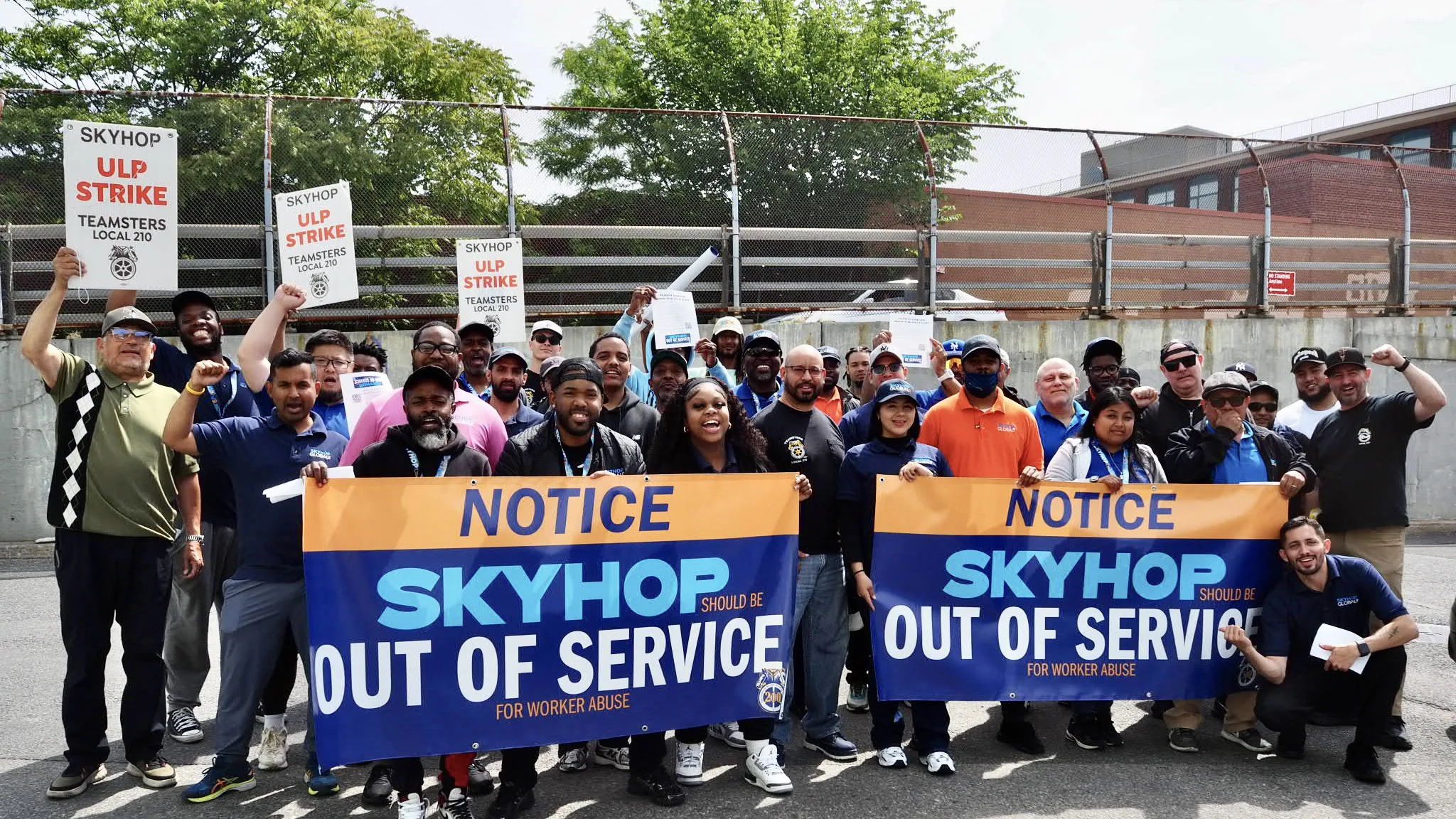


Eight long months have passed and airport transport drivers for SkyHop Global are still on strike.
The workers allege that SkyHop, an airport transportation company, is refusing to negotiate with them in good faith in their attempt to secure a union contract that guarantees a living wage and health care benefits. They also claim that the company hired anti-union consultants to dissuade workers from joining the union, and then hired replacement workers once they went on strike.
While on the picket line since last November, some of the workers’ lives have fundamentally changed. One worker celebrated the birth of a newborn, while another worker suddenly passed away. Still, all of the workers, a majority of whom are immigrants hailing from several different countries, have united through their shared struggle.

“We are many people, so I’m pretty sure we are going to win because we created a family during this strike,” said Ana Solorzano, a 24-year-old immigrant from Ecuador who worked for SkyHop for seven months before the strike. “Nosotros. It’s a fight for our future.”
Most of the workers earn about $23 an hour. With the union, they hope to be able to earn more money, get more hours, and receive quality health insurance.
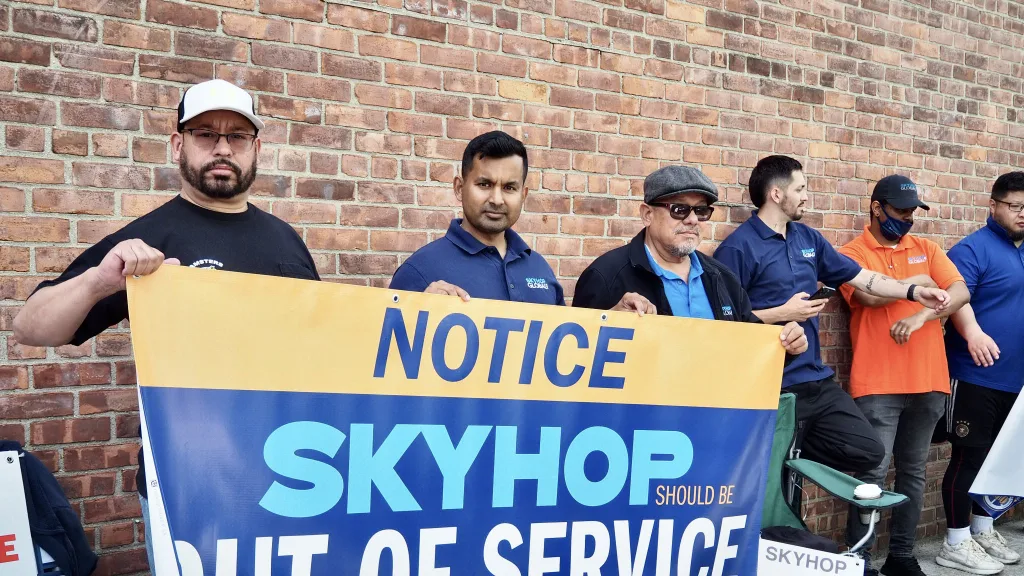
For Solorzano, the union is about securing a decent living so she can support her family.
“When I heard ‘union’, I said that I want to be part of the union for my family,” she said. “I live with my mom, so I want to do everything for her by earning a higher salary.”
Despite numerous efforts to reach SkyHop’s management and their legal team, including sending them a detailed email with a list of questions based on the accusations made against them, the company failed to respond.
First founded in 2014, SkyHop Global is a national ground transportation service that provides transportation for airline crew members between airports and hotels. The company operates 200 passenger transport vans and employs 300 drivers.
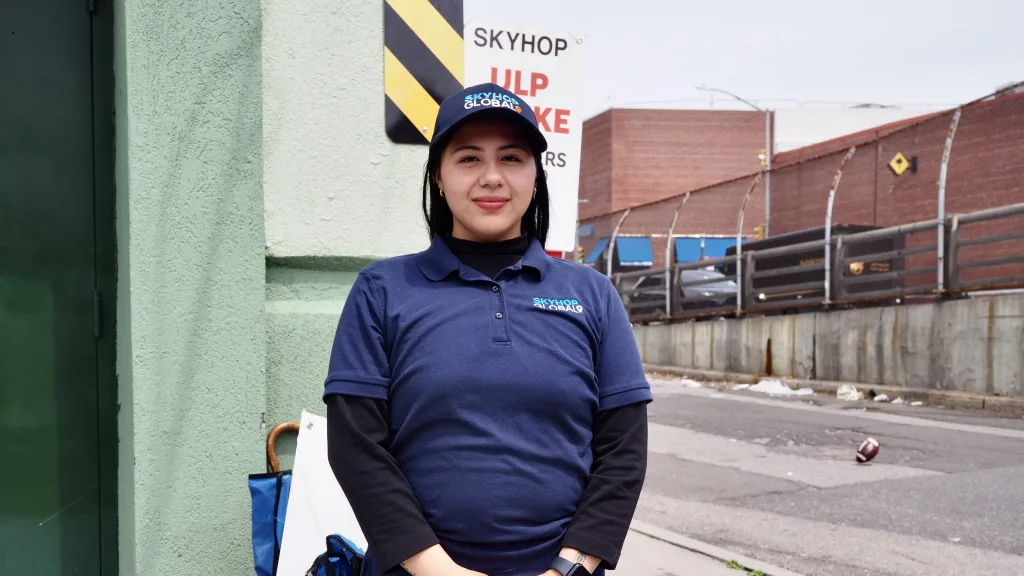
The company maintains contracts with fifteen airlines — including Delta, Southwest, United, American, and AeroMexico — at 33 airports across the country, including LaGuardia and JFK Airport. It’s estimated that SkyHop generated over $70 million in revenue between 2014 and 2022.
All Roads Lead to a Strike
Over the last ten years, SkyHop has faced at least five wage theft lawsuits in California, Florida, New York, Washington, and Minnesota. The company was accused of failing to pay overtime wages, failing to pay sick time, failing to pay the prevailing minimum wage, falsifying time records, and misclassifying employees. In the Florida case, the plaintiff dropped the claims, and in the New York case, the plaintiff won $9,000 in restitution. Skyhop settled the Washington case for $89,000.
The labor conflict in Queens first began when, on May 5, 2024, 60 SkyHop drivers who transport airline crews at New York City’s three major airports voted to join Teamsters Local 210. The vast majority of the workers are Black, Latino, and South Asian, with many being immigrants. According to the workers, in a move to thwart their unionization efforts, management hired anti-union persuaders to convince workers to vote against joining the union, to no avail.
Also Read: Airport Union Alleges Newark Cargo Contractor AGI Violating Federal Labor Law
Despite their vote in favor of joining the Teamsters being legally recognized by the National Labor Relations Board (NLRB) in May, the union claimed that SkyHop management refused to bargain in good faith by retaliating against workers. The union claims that SkyHop cut workers’ hours and fired pro-union drivers.
In response, the union filed an unfair labor practice (ULP) charge against the company with the NLRB on Nov. 22, 2024. When that failed to force SkyHop management to negotiate with the workers in good faith, the workers say they felt they had no choice but to go on strike.
Two days later, 60 SkyHop drivers walked off the job with hopes that the strike would compel SkyHop to meet them at the negotiation table. Instead, the union said that SkyHop hired replacement workers, claiming that SkyHop offered to pay replacement drivers $3 an hour more to cross the picket line.
Months later, on March 28, 2025, the union filed another charge with the NLRB against SkyHop for refusing to negotiate.
In an effort to compel SkyHop to sit at the negotiation table and exert outside pressure on the company, workers fanned out across the city, picketing outside hotels like the Grand Hyatt in Midtown, where SkyHop replacement workers pick up and drop off airline staff.
The pressure campaign was gaining ground when Southwest Airlines and Aeromexico terminated their contracts with SkyHop at all three New York City Airports.
On December 4, SkyHop sued the union, alleging that the union engaged in unlawful acts of “intimidation, harassment, and threats to the life and safety of its drivers and passengers” by physically blocking vans from operating. The union denied this.
On May 4, the court granted SkyHop’s request for a preliminary injunction against the union. The judge stated that not issuing the injunction could “implicate the safety” of the public. The injunction bars the union from picketing or congregating within 25 feet of SkyHop’s pickup/drop-off locations and its Queens office.
The union is currently appealing the decision.
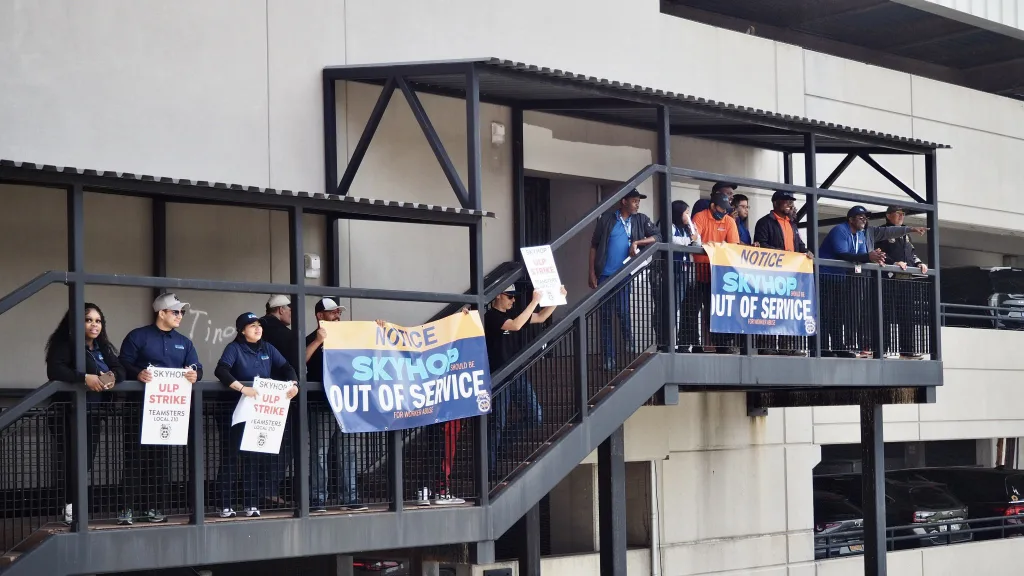
Andrew Hoffman, the union’s attorney, says that the judge’s order violates New York Labor Law Section 807, which states that judges don’t have the power to issue any restraining order or injunction in labor disputes unless it has been shown that unlawful acts have been threatened or committed.
“The judge’s decisions will be overturned,” said Hoffman. “There was really nothing there. There was almost no evidence at all that showed Local 210 had done anything improper and illegal. The judge seemed to think that because there was a possibility that it could happen, what’s the big harm in issuing a temporary restraining order?”
In court, the union made the same argument; however, the judge still concluded that the court has the authority to issue the injunction.
Enter the Anti-Union Persuader
Before the union election last May, Anowar Hossain, a 41-year-old Nepali immigrant, said management brought in anti-union consultants to persuade workers not to join the union.
“They had people come in every shift to tell us the union is bad and that it will steal our money and give us all kinds of fake promises,” he said in early June. “Those were the shenanigans they kept telling us.”
Known as “Captive Audience” meetings, the employer facing a union drive would often hold these meetings to persuade workers not to join the union. In 2024, the NLRB ruled that it was illegal for employers under the National Labor Relations Act to force workers to attend these meetings under threat of discipline or discharge. New York also made mandatory captive audience meetings illegal in 2023.
Also Read: Workers at LaGuardia Airport Demand Heat Protections Amid Rising Temps
Hossain says his job was never expressly threatened if he didn’t attend the meeting, but he felt obligated to attend. During those meetings, Hossain says that he and his co-workers would have to listen to anti-union propaganda.
“When I came back to the office after driving, they would tell me to go into a closed-door meeting,’ he said.
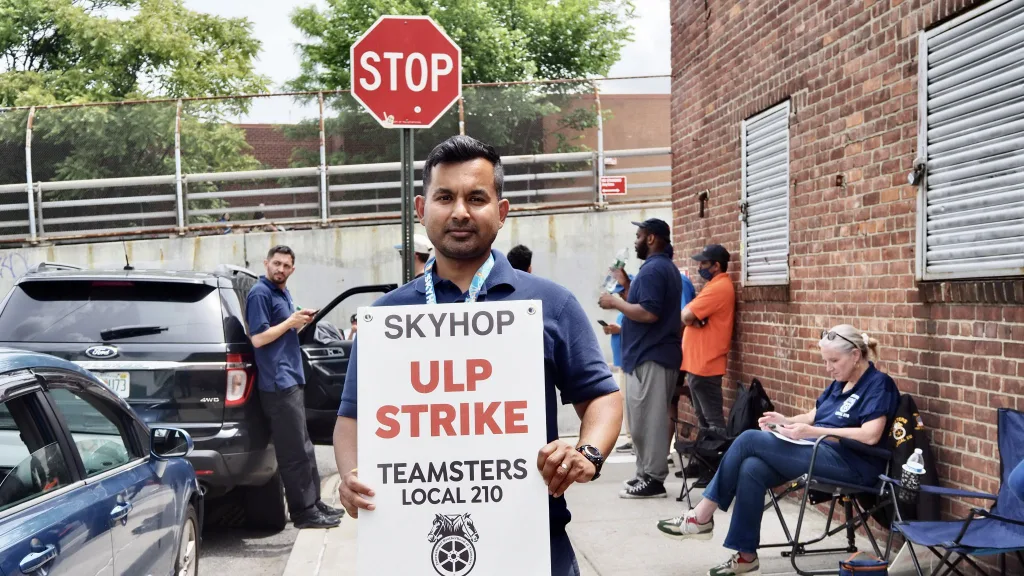
SkyHop has not been accused of violating any laws related to “captive audience” meetings. Documented could not independently verify whether workers were given a choice in attending the meetings. When asked about it, SkyHop did not respond.
One of the consultants was Cesar Alarcon, president and CEO of The International Labor Group Corp, a consulting firm that specializes in “union avoidance.” Alarcon had previously been involved in the anti-union campaign launched against immigrant laundry workers in New York during the height of the pandemic in 2021. At SkyHop, Alarcon says his role was only to be an educator.
“The purpose of the meetings was to educate workers on their rights under Section 7 of the National Labor Relations Act, which is the law,” said Alarcon in early June. “They were not coerced. They were not threatened. They were not intimidated. I don’t play like that. I make it clear when I do take a case that my whole purpose is to educate employees, and they will be allowed to make their own decision based on the information that they got.”
Before becoming part of the multimillion-dollar union avoidance industry, Alarcon himself was a union organizer with the United Food and Commercial Workers International Union, which he says gives him unique insight into how unions operate.
“Pretty much every complaint launched by the union is not going to change anything because everything comes down to negotiations,” he said. “You can come to my house, but you’re not going to rearrange my furniture”.
Although Alarcon confirmed that he was hired to persuade SkyHop workers from joining the Teamsters, neither his name nor company was listed on the Office of Labor-Management Standards (OLMS) website. According to the Labor-Management Reporting and Disclosure Act (LMRDA), labor-relations consultants are required by law to report their activities to OLMS. Alarcon says that because he was not directly brought in by SkyHop, he was exempt from filing with OLMS.
Currently, under the LMRDA, a loophole exists that exempts anti-union consultants from reporting to OLMS if they did not have direct contact with employees, only providing “advice” and materials to the employer.
Alarcon insists that he was not hired by Skyhop directly but was hired through a third party that he did not wish to name.
“When we go through a third party, we report to the third party,” he said. “Because we are a subcontractor, we are not forced to register with anybody.”
On the Picket Line
On a humid day on May 27, a few blocks from SkyHop’s office in Glendale, Queens, the workers gathered at their weekly picket.
Before they began, the workers held a brief moment of silence for their fellow co-worker Sherwin Dazzell.
Dazzell, a 31-year-old immigrant from Guyana, suddenly passed away the day before due to complications from diabetes. As one of the most vocal supporters of the union, the fight for health care was one of Dazzell’s top priorities.
Because of the court order barring them from congregating within 25 feet of SkyHop’s Queens office, the workers were picketing across the street with an elevated highway separating the workers from SkyHop’s building. Still, a SkyHop employee drove past the picket and began recording the workers. When the workers shouted at her, she hurled a barrage of curses at them before driving away.
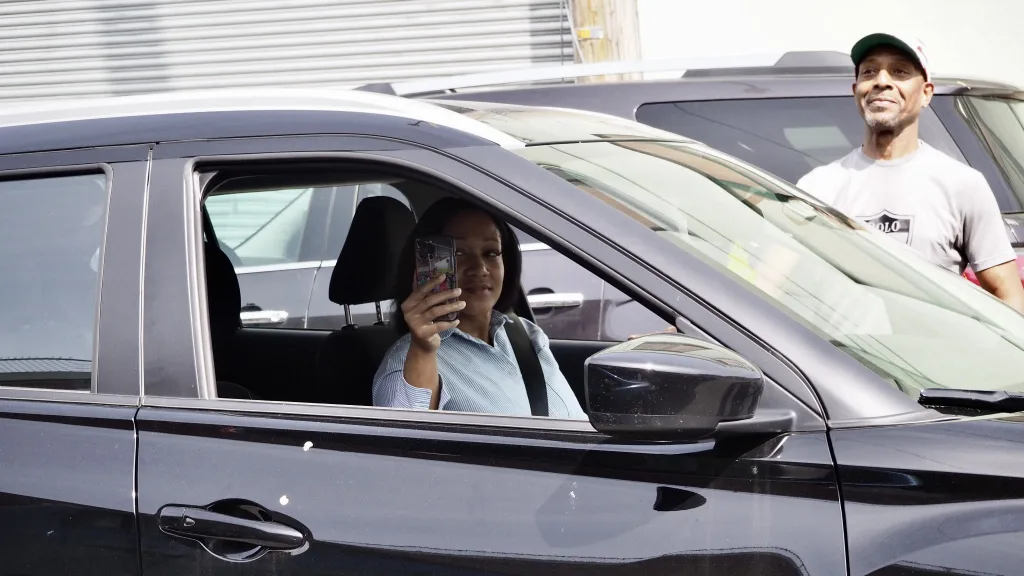
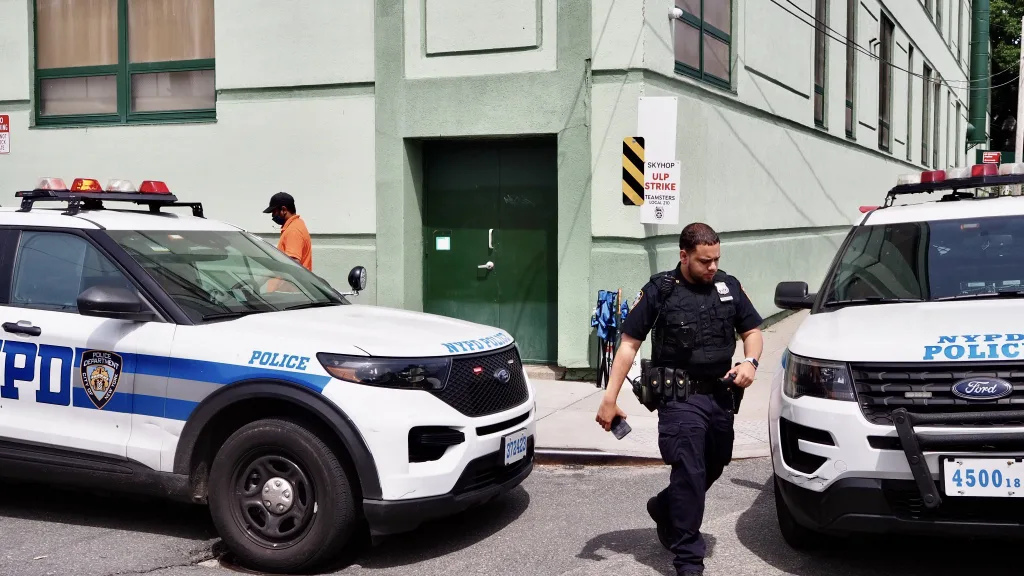
Later, the police were called to the picket. After a brief investigation, officers found that the workers were not in violation of the court order and left. Yet, the message was clear. The picket was not welcomed, no matter how far away they were.
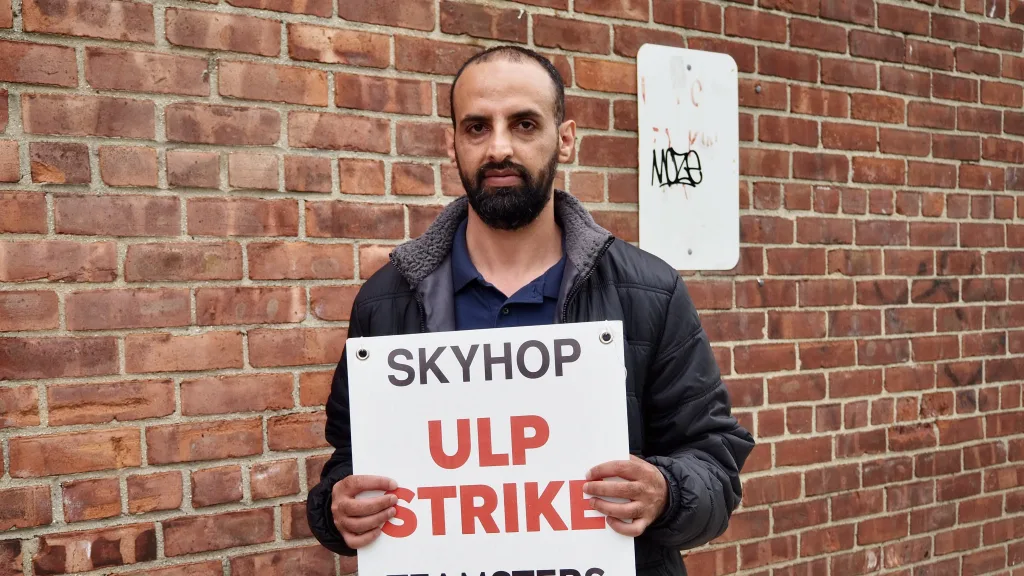
For many of the workers, the fight for a union contract at SkyHop is a fight not just for higher wages, but for respect. Ali Al Bukhaiti, a 35-year-old immigrant from Yemen, never felt that his job was secure for the three years he drove a van for SkyHop.
“Every day I’m scared that I’m fired,” he said. “If I’m fired, how can I pay my rent, support my family? I saw too many friends fired. If you do the smallest mistake, they write you up and fire you. That’s why I’m stressed every day.”
Soft spoken and shy, Bukhaiti’s sunken face, dark eyes, and beard made him look much older than 35. Spending hours sitting and driving for SkyHop, Bukhaiti said his legs and back chronically hurt, but he can’t afford medical attention.
“I can’t check the doctor, I don’t have insurance,” he said. “That’s why we’re looking for the protection of a union.”
Anowar Hossain was motivated to join the strike because he was tired of having his hours cut even though he showed up to work for scheduled time.
“Every day we would get a schedule, but sometimes the flights are delayed and they won’t let us clock in,” he said. “If a flight were delayed for two hours, you would just be sitting there for two hours without pay. It’s frustrating because you come in expecting eight hours of work and you don’t get eight hours to work. I got a wife and kids to support.”
Married with three kids, his youngest son born while he was on strike, Hossain, who earned $23 an hour, found it hard to make ends meet.
“Every day you go home sad or angry because you’re not making enough to support the family,” he said. “I had to struggle to find other jobs just to get by.”
Bukhaiti recalls the day when the strike was initially called. He was hesitant at first, fearing he would lose his job, but quickly realized that joining a union was in his best interest once he saw the power of numbers.
“I didn’t join the first time, but when I saw them go on strike, the next day I joined them,” he said. “I have to join because I need them. As an immigrant, I don’t know the country well, I feel safe with the union.”
Beyond the Picket Line
Although the strike has dragged on for months, the workers’ struggle has not been forgotten. On May 20, 2025, Congresswoman Nydia M. Velázquez penned an open letter along with 14 other members of the New York Congressional delegation, including Rep.Gregory Meeks, Rep.Grace Meng, and Rep. Alexandria Ocasio-Cortez, urging SkyHop Global to return to the negotiating table.
“It is time for meaningful negotiations to take place in order to achieve a basic agreement that guarantees every employee fair pay, job security, and union protection,” the letter stated. “As elected representatives, we have a strong interest in defending the rights of our constituents and holding employers accountable when they fail to fulfill their commitments.”
Meanwhile, in April, Las Vegas SkyHop drivers organized with Teamsters Local 210. The union alleges that when they asked company management to recognize their union voluntarily, SkyHop refused. When workers filed for an election with the NLRB on April 22, the union claimed SkyHop fired seven drivers within a week.
The union then filed ULP charges with the NLRB over the firings.