

At least seven New York City immigration judges were fired on Monday, including Assistant Chief Immigration Judge Amiena Khan, who oversaw 26 Federal Plaza.
The judges join the dozens ousted across the country without cause since President Donald Trump took office on a platform that promised the “largest deportation operation” in United States history.
“We are troubled by the recent firings of professional jurists, experienced immigration judges, [and] experienced judges with no reason given,” said Jeremiah Johnson, Vice President of the National Association of Immigration Judges (NAIJ), who was also fired in late November from his post in San Francisco. “It seems like not only a purge, but a destruction […]and attack on the courts.”

According to two sources Documented spoke to, the judges fired on Monday included Evalyn Douchy, Alice Segal, Lori Adams, Maria Lurye, Lisa Batya Schwartz Ehrens, and Theodora Kouris, all of whom served at 26 Federal Plaza.
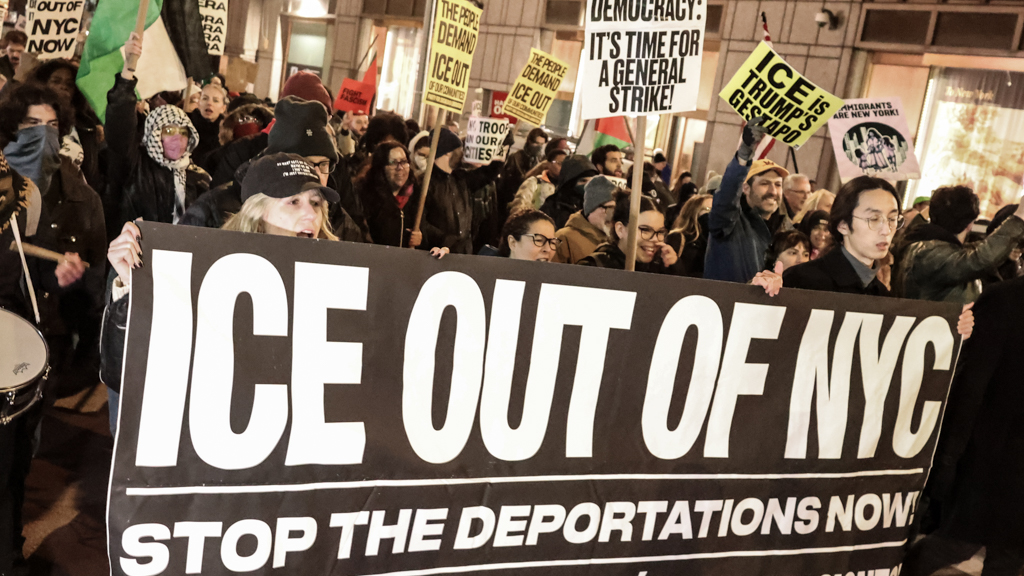
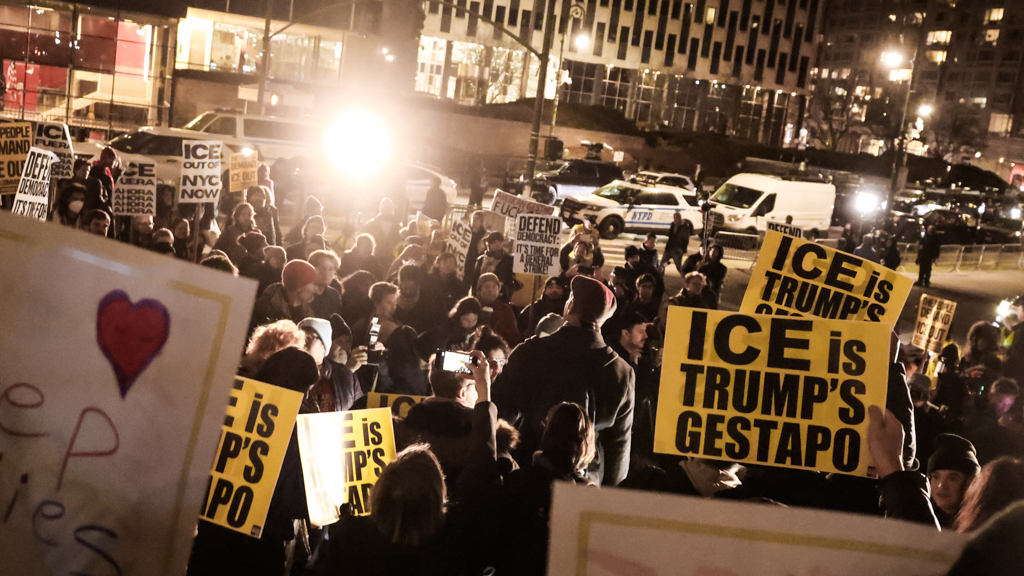
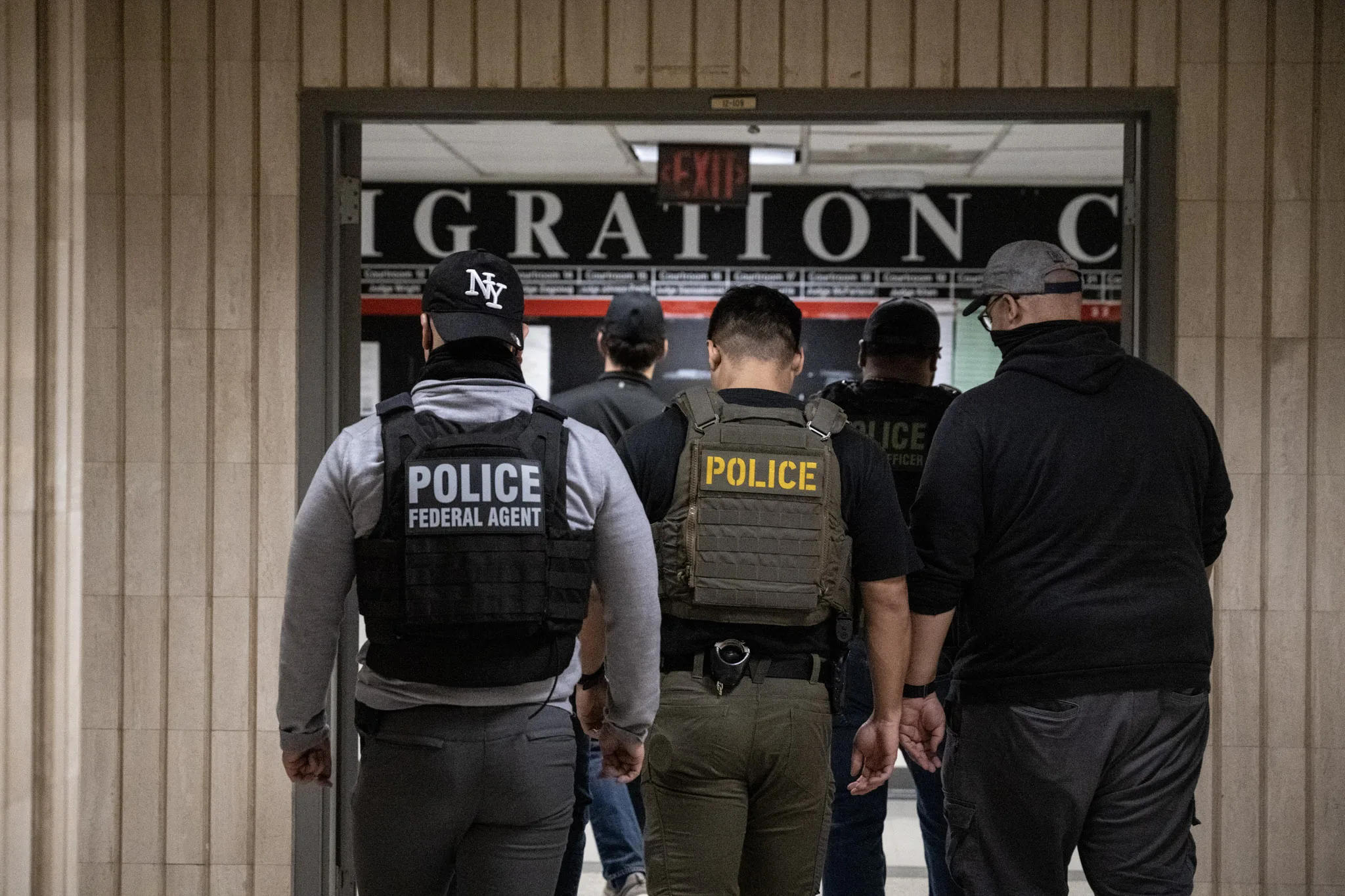
The firings follow a turbulent Thanksgiving weekend in New York City as nearly 200 protesters clashed with officers from Immigration and Customs Enforcement and the New York Police Department, apparently foiling a planned raid just blocks from immigration court at 26 Federal Plaza.
Monday’s ousters brought the total number of immigration judges fired nationwide to nearly 100, according to the NAIJ, an association of immigration judges — and former union — that confirmed the firings. Many had a background in immigrant defense, according to reporting by NPR. Judges with high rates of granting asylum have also been targeted in the purge.
“The Executive Office for Immigration Review declines to comment on personnel matters,” said Kathryn Mattingly, the spokesperson for the EOIR, which administers the nation’s immigration courts.
Assistant Chief Khan has now been wiped from the Department of Justice website naming the judges of her rank. The webpage was last updated on Dec. 2, 2025. Khan had been targeted on a conservative watchlist aiming to root out what they call “subversive” federal workers.
Khan could not be immediately reached for comment. The former Assistant Chief is not represented by NAIJ, but previously served as their vice president.
The Trump administration carried out its last culling of seven immigration judges in late November, targeting those in San Francisco, New York, and Boston. Among those fired was NAIJ Vice President Johnson, who had served as an immigration judge in San Francisco for eight years, and Judge Olivia Cassin, who presided over the juvenile docket in New York City for a decade.
“This is an attack on due process, the rule of law, human decency and judicial independence,” Cassin said in a statement to the press on Nov. 24. She is planning to take legal action to challenge her termination, according to a statement from the NAIJ.
Other fired immigration judges are also challenging the federal government in court. Tania Nemer, a judge formerly presiding in Cleveland, filed suit against Attorney General Pamela Bondi and the U.S. Department of Justice (DOJ) on Monday — charging that she was let go in violation of the Civil Rights Act. The government, in turn, argued that the president’s constitutional powers override civil rights law, according to reporting by NPR.
Amid the firing spree, the DOJ has put out a hiring call for “deportation” judges to fill the gaps. Its website advertises a 25% base pay recruitment incentive for judges in New York, San Francisco, Boston, and Santa Ana.
Meanwhile, the backlog of immigration cases across the country has continued to climb — hitting over 3.4 million pending cases as of August, according to government data analysed by the Transactional Records Access Clearinghouse.
Johnson said that his message to the city’s judges is simple: “Thank you for your service.” It was a message that was missing from his own firing letter.
“The American people should be asking [Attorney General] Pam Bondi […] why do we allocate this money for more judges, and now you’re firing all the judges?” he said to Documented.
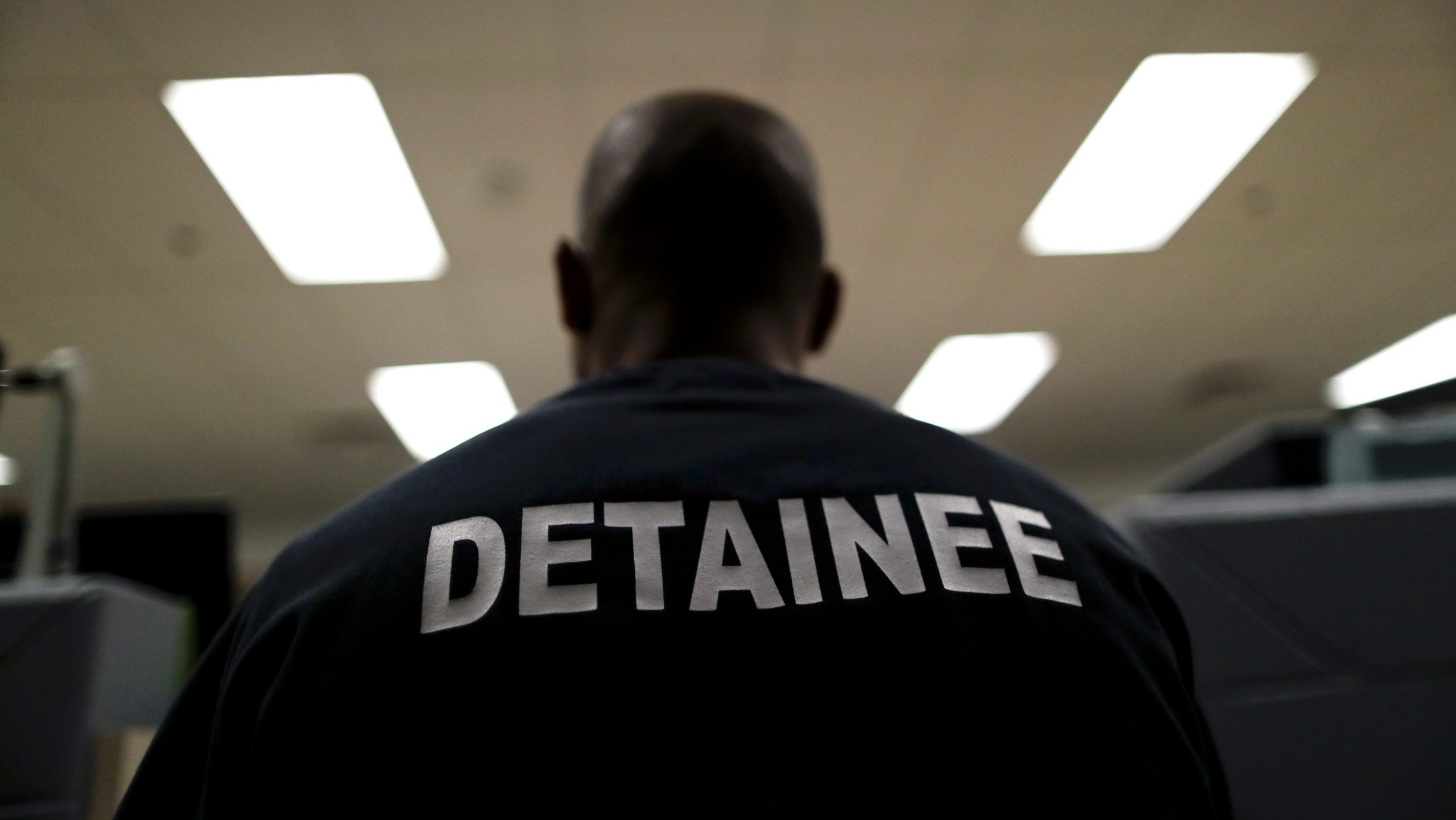
Johnson pointed out that before his firing he had taken on an extra load of cases for immigrants who are locked up in detention centers.
“What is going to happen to these cases? […] Now those cases are not going to be heard, and people are going to be detained at taxpayer expense.”
The Trump administration’s firing campaign fits within its broader strategy to reshape the U.S. legal system into a tool for mass deportation. Progressive cities with heavy caseloads, like New York City and San Francisco, have been a target — although even immigration judges in red states like Texas and Louisiana have gotten axed.
The nearly 100 judges who have been fired, to-date, played a critical role in enforcing due process, transparency, and consistency in immigration enforcement.
Johnson said that the law is clear, and that independent courts and judges work.
“That’s what this administration is shirking,” he said. “The law.”
Editor’s note: The headline was further updated for accuracy on Dec. 2 — two sources have told Documented the names of seven confirmed judges who were fired on Monday. The story was updated with those seven names.