

Over a foot of snow engulfed New York City on Jan. 25, nearly grinding the city to a halt. This past weekend, temperatures across the five boroughs once again plunged, with at least 16 people succumbing to the bitter cold.
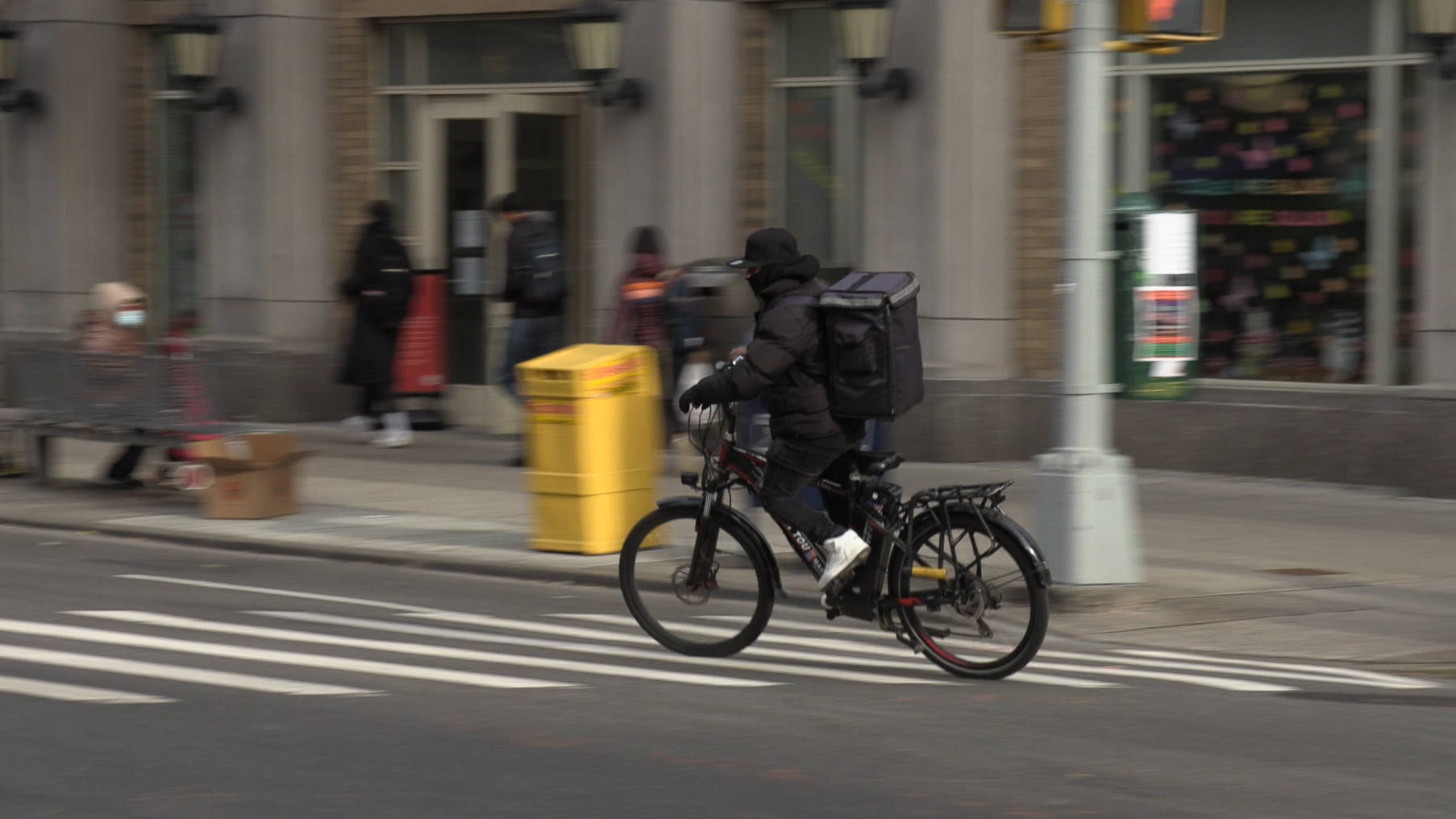
Even as the mountains of snow and ice piled up along city sidewalks and many New Yorkers sheltered indoors, food delivery workers braved the frigid weather. Their bikes, scooters, and mopeds slid across the icy streets like dogless snowsleds during the Iditarod race.

Delivery work is often dangerous, with at least 10 delivery workers killed on New York City streets in 2024 alone, according to a Documented analysis. Fear of being deactivated by apps such as Uber Eats and DoorDash for late delivery incentivizes workers to take dangerous risks on the road. Poor weather conditions only highlight those risks, yet delivery workers don’t always see an increase in their tips – or any tip at all.
“In difficult weather, New Yorkers depend on deliveristas to bring them what they need, while every delivery becomes harder and more dangerous for the workers doing the job,” Ligia Guallpa, Executive Director of Workers’ Justice Project and co-founder of Los Deliveristas Unidos, said. “Deliveristas take real risks and deserve to be compensated fairly, and that includes giving customers a clear, transparent option to show their appreciation with tips, without app companies getting in the way or using tricks to hide the tipping option.”
Bad weather only makes an already dangerous job less safe, according to delivery workers like William Medina, a 41-year-old immigrant from Colombia who has been delivering food for seven years.
“With the traffic, with the snow, when it’s raining, we’re facing a lot of fears,” Medina told Documented. “So I think this is the most dangerous job in New York City.”
Medina says he has been involved in six accidents since becoming a delivery worker. The snow makes the ground slippery, so falling is a risk.
“Also, I got into two accidents because one person was trying to leave the Uber car, they opened the door, and I got hit.”
Although the injuries weren’t severe, according to Medina, he was hesitant to seek medical attention because of the cost.
“Those companies, they don’t pay insurance, they don’t pay medical, they don’t pay for us to operate our vehicles,” he said.”So we have to pay for everything ourselves.”
The danger doesn’t end after he’s left the road. Medina says he can get hurt just by bringing the food to a customer’s door.
“We have to think about how we protect ourselves when riding our vehicle, but also when we’re picking up the order and when we deliver the food to the customer,” he said. “You have to be careful because when you’re going into the buildings, when you enter the restaurant, all the floors are slippery.”
Ki Aboubacar, a 35-year-old delivery worker from Burkina Faso, says he doesn’t even go out when it’s snowing or raining — not only because of the dangers working in bad weather poses, but also because the increased workload can affect his rating. If delivery workers’ ratings go down, it can severely affect the number of jobs they get.
“There’s too much work, there’s too many deliveries, you can’t do it all,” Aboubacar told Documented.
Because he fears receiving a low rating for delayed deliveries, Aboubacar often doesn’t work in the snow or rain.
One of Aboubacar’s frustrations with working during bad weather is the mistreatment delivery workers can face from restaurants.
“Some restaurants don’t let you go inside,’ he said. “They say you have to wait outside for the order.”
If the restaurant packs the order in a paper bag, rain can soak the order before the worker even gets a chance to deliver it.
“By the time you get the customer location, the bag will be wet,” Aboubacar said. “And when you hand it to the customer, they will give you a bad rating. If you get a bad rating, it affects your ability to work with a company.”
Medina said he worked eight hours during the last snowstorm, but because of an increase in orders, he had trouble delivering food on time.
“Delivery apps push workers to pick up as much as they can,” he said. “So sometimes the customer can say, the food is cold. Customers don’t understand how difficult it is to do this job outside.”
Slower delivery times could also result in fewer tips, a vital part of income that was already becoming increasingly rare. Last week, a DCWP investigation found that beginning in 2023, delivery apps Uber Eats and DoorDash deliberately hindered the ability for customers to tip delivery workers. Customers were only able to leave a tip after checkout, and after they initiated a complex, separate process. Collectively, DCWP found that workers lost more than $550 million in additional revenue since 2023.
DoorDash disputed the negative categorization of its tipping policy.
“What’s really happening is the DCWP wants to pressure consumers to tip even more,” said John Horton, DoorDash’s Head of North America Public Policy, in a statement to Documented. “As we’ve said, forcing people to tip may as well be a tax. It should be up to consumers, not politicians, whether they want to tip more in New York.”
New delivery worker protections that went into effect last week aim to make the lives of delivery workers a bit easier. The new regulations, Local Laws 107 and 108, now require restaurant and grocery apps to offer a transparent tipping option for customers at checkout.
With the brutal winter weather showing no signs of abating, Medina, with the new laws on his side, hopes that customers can be more appreciative of the sacrifices workers are making to deliver their food.
“Customers should have more compassion and understand that this job is difficult,” he said. “One of the ways that they can support workers is by giving us a good rating and also a good tip.”