

Mohan, a 55-year-old Nepali immigrant, woke up one morning this past December expecting a resolution to two decades of uncertainty about his life in the U.S. following an old asylum denial. He had submitted a marriage-based application for adjustment of status, and walked into immigration court for what he believed would be a routine interview.
Instead, Mohan, who requested to use only his first name for privacy concerns, left in handcuffs. A few days later, he was deported to Nepal.
Only afterwards did his family learn that a 2009 removal order had rendered him ineligible to adjust status before U.S. Citizenship and Immigration Services unless his immigration case was first reopened in immigration court, a critical step his first attorney never took. A second attorney made another mistake, filing a motion seeking a bond hearing, a legally questionable request for someone subject to a final removal order and ineligible for bond, three days after Mohan had already been deported.

“The last four months have been like a nightmare,” Mohan told Documented in a statement translated and shared through Adhikaar, a nonprofit community organization serving Nepali immigrants in New York City. “If I had just gotten good legal advice on time in both instances, I wouldn’t be separated from my family right now.”
Mohan’s case, detailed in a new report released Wednesday by the Asian American Legal Defense and Education Fund, is not an outlier. Advocates say it reflects a broader crisis: Asian immigrants in New York City are routinely shut out of meaningful access to immigration legal services, even as they make up roughly a quarter of the city’s undocumented population.
Mohan said that because there were no free or low-cost attorneys available, he turned to private lawyers who “took his money and gave him wrong information.”
Like other Asian immigrants, Mohan encountered increased hurdles in his immigration process in part because of language barriers, overstretched nonprofits, and misinformation, among other difficulties. Others have found themselves tricked into housing fraud, legally questionable work, or with poor legal guidance in part because of these obstacles.
“Despite having a pathway to adjust, I got detained due to the lawyer’s mistake,” Mohan said in the statement translated and shared through Adhikaar. “Even in the detention center, the lawyer didn’t do anything to get me out while I was being treated horribly. My family had to get another lawyer who again filed the wrong motion getting me deported in less than a week!”
Systemic barriers to access
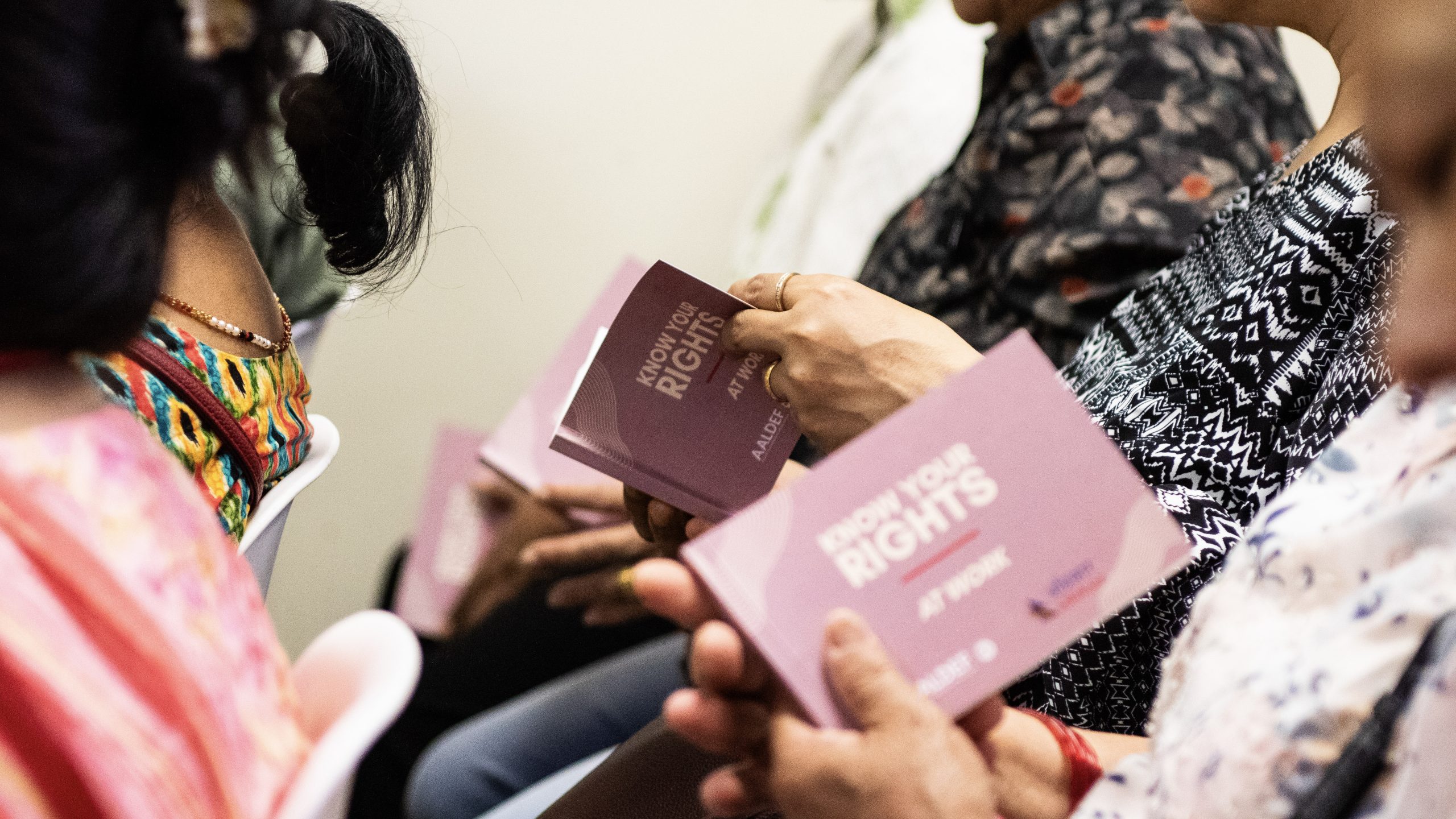
The AALDEF report, based on interviews with nine community-based organizations and 10 legal service providers, paints a stark picture of a system riddled with gaps: language barriers, limited capacity, weak partnerships, and funding structures that prioritize volume over meaningful engagement.
“One repeated issue that we have heard, not just from our own clients, but from the community-based organizations that we work with, is that they have so many issues with their members being able to access legal services nonprofits in New York City,” said Razeen Zaman, AALDEF’s Immigrant Rights Director and the report’s author.
The findings come amid growing need. Asian immigrants are among the fastest-growing populations in New York City, making up 17.3 percent of residents and more than a quarter of the city’s 3 million immigrants. Chinese immigrants alone represent the largest group of noncitizens in removal proceedings in New York.
Yet legal services have not kept pace.
Between 70 and 100 percent of clients served by community organizations require interpretation, according to the report — but only one in 10 legal service hotlines offers an Asian language option.
“Their issue [legal services organizations] is that they can’t even handle their own caseload,” Zaman told Documented. “The volume is so high for the need that they don’t have capacity to think through the solutions or how to reach communities who are underserved because they’re not even able to meet the needs of the current population they serve.”
Community groups fill the gaps
As demand grows, particularly under increased immigration enforcement, community-based organizations have become a critical lifeline.
Tsering D. Lama, senior manager of organizing and policy at Adhikaar for Human Rights and Social Justice, said immigration-related cases now make up between 30 percent and 40 percent of the organization’s workload, roughly double what it handled before Trump took office last year.
But with few Nepali-speaking attorneys available, staff are often forced to step beyond their roles, acting as interpreters and guides through a complex legal system. “They [Nepali immigrants] treat us like 311,” Lama said. “People come to us for everything because they don’t know where else to go.”
Similar challenges are playing out in New York’s Chinese community.
Tommy Lee, program supervisor at the ONA Opportunity Center at Chinese-American Planning Council’s Brooklyn Community Services, said nearly 90 percent of his clients speak Chinese dialects, while only a small fraction are fluent in English.
“Something as simple as a word in Chinese can mean completely different things in English,” Lee said. “What someone calls a ‘work card (工卡)’ could refer to a Social Security card or a work permit. Those nuances matter, especially in immigration cases.”
Lee said his program has seen nearly double the number of applications and enrollments in the past year, stretching already limited resources.
One casualty the organization has seen of this flawed system is Mr. Chen, whose family requested that he be given a pseudonym to protect their privacy.
In 2023, Chen, his wife, and their young daughter fled China and settled in New York, seeking asylum. They found work, enrolled their daughter in school, and began rebuilding their lives.
Then everything unraveled.
After missing an immigration check-in due to injuries from a car accident last September, Chen was detained by ICE when he later reported to 26 Federal Plaza. Within days, he faced possible deportation.
His wife, who does not speak English, was left to navigate the legal system alone while caring for their six-year-old daughter and managing the family’s finances.
Staff at CPC’s afterschool program helped her make dozens of calls to find legal assistance.
“When we did hear back, free and private immigration attorneys said they were already overwhelmed with cases, had expensive consultation fees, and representation could be tens of thousands of dollars,” said Jack Hsia, a senior attorney with Community Legal Services at CPC, during testimony at a New York City Council hearing last week.
Chen eventually secured legal help from another legal service group and won withholding of removal, but months later he remains detained even though he faces no criminal charges. Hsia said the legal service group said they did not have capacity to take on Chen’s habeas case and none of their pro bono counsel partners were able to do so either, so CPC stepped in to handle it.
“It has always been hard for immigrants to get legal help, but now more than ever,” he said.
The AALDEF report pointed out that the problem is not just capacity, but structure. Zaman explained that legal service providers are often funded based on how many cases they process, rather than the depth of engagement with communities. That can disadvantage immigrants who need more intensive support.
At the same time, private legal services are often prohibitively expensive, leaving many immigrants caught between inaccessible nonprofits and unaffordable attorneys.
Some fall victim to misinformation, or worse.
Mohan’s case, Zaman noted, is a stark example. “There are some attorneys, often from the communities that they serve — or often they speak the language of the clients that they have — who are very exploitative, and who tend to have a hold almost like prey upon certain communities,” Zaman said.
Calls for reform
To address these gaps, AALDEF’s report calls for expanding language access, strengthening partnerships with community organizations, and shifting funding models to prioritize outreach and trust-building.
At minimum, the report recommends adding Chinese, Hindi, and Bengali to legal services hotlines, which would cover nearly 70 percent of Asians in removal proceedings in New York.
“When Asian immigrants aren’t accessing services, it’s too easy to mistake that for a lack of need — and the gap only grows,” Zaman said. “Without deliberate intervention, this cycle just repeats, and Asian immigrants continue to face some of the highest-stakes legal proceedings of their lives on their own.”
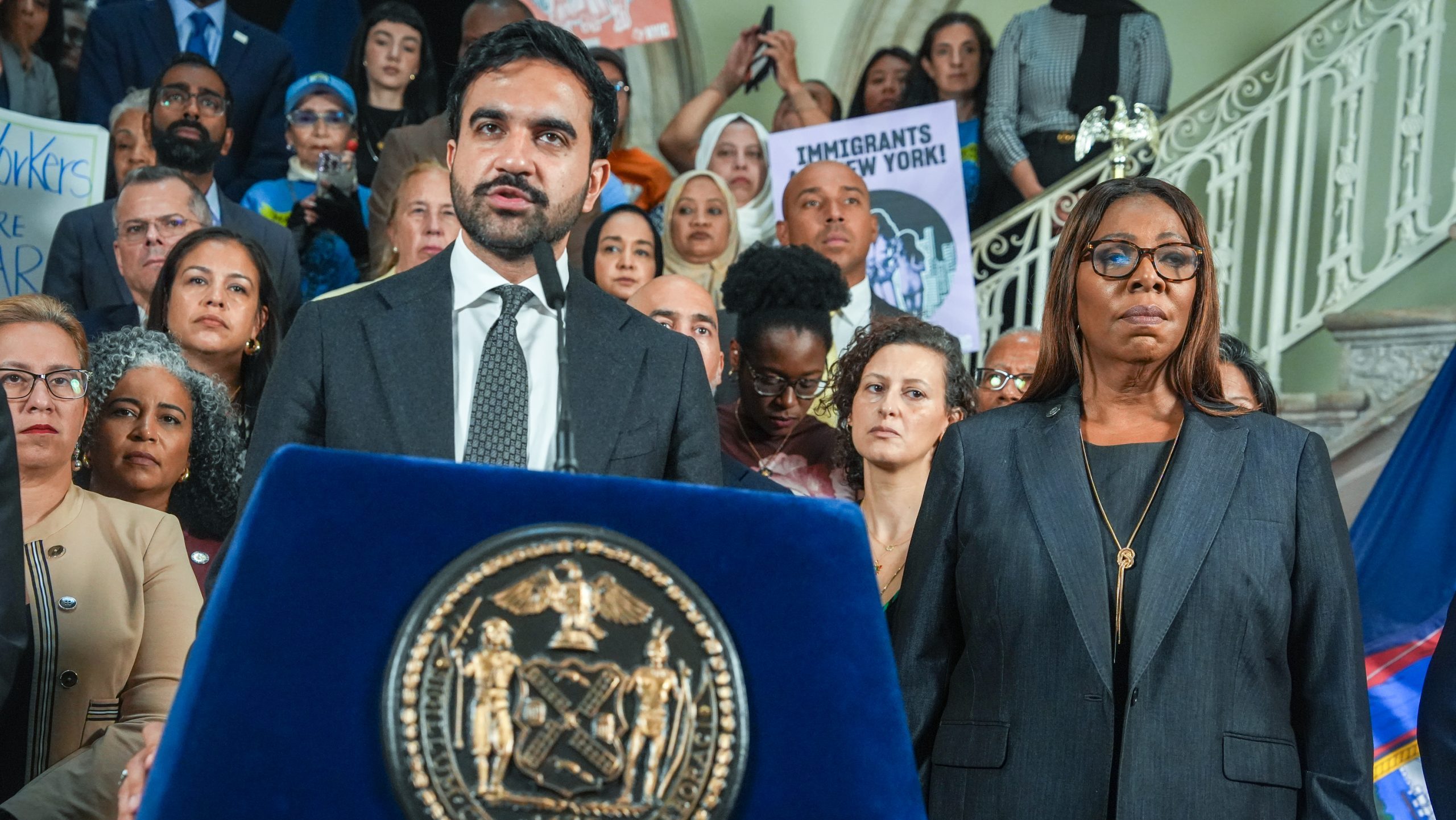
Advocates are also calling for an investment of $175 million in the fiscal year 2026–2027 state budget to support broader reforms, including the BUILD Act and the Access to Representation Act (ARA). The ARA would guarantee legal representation in immigration court for those who cannot afford it — similar to the right to counsel in criminal cases. The BUILD Act aims to address the shortage of immigration attorneys by funding the infrastructure needed for legal service providers to expand capacity, train staff, and improve retention.
For Mohan, it is deeply personal.
“I lived in the US for nearly 16 years, built my home, my family as a TPS holder and a mistake that someone else made cost me my life,” he said in the statement. “My hope is that through this report more people are able to get the immediate legal support they need and no one has to go through what I went through.”