

Inmate deaths. A hunger strike. Protests of “inhumane” conditions. A series of controversies involving an immigrant detention center in Pennsylvania have led to renewed calls for its closure.
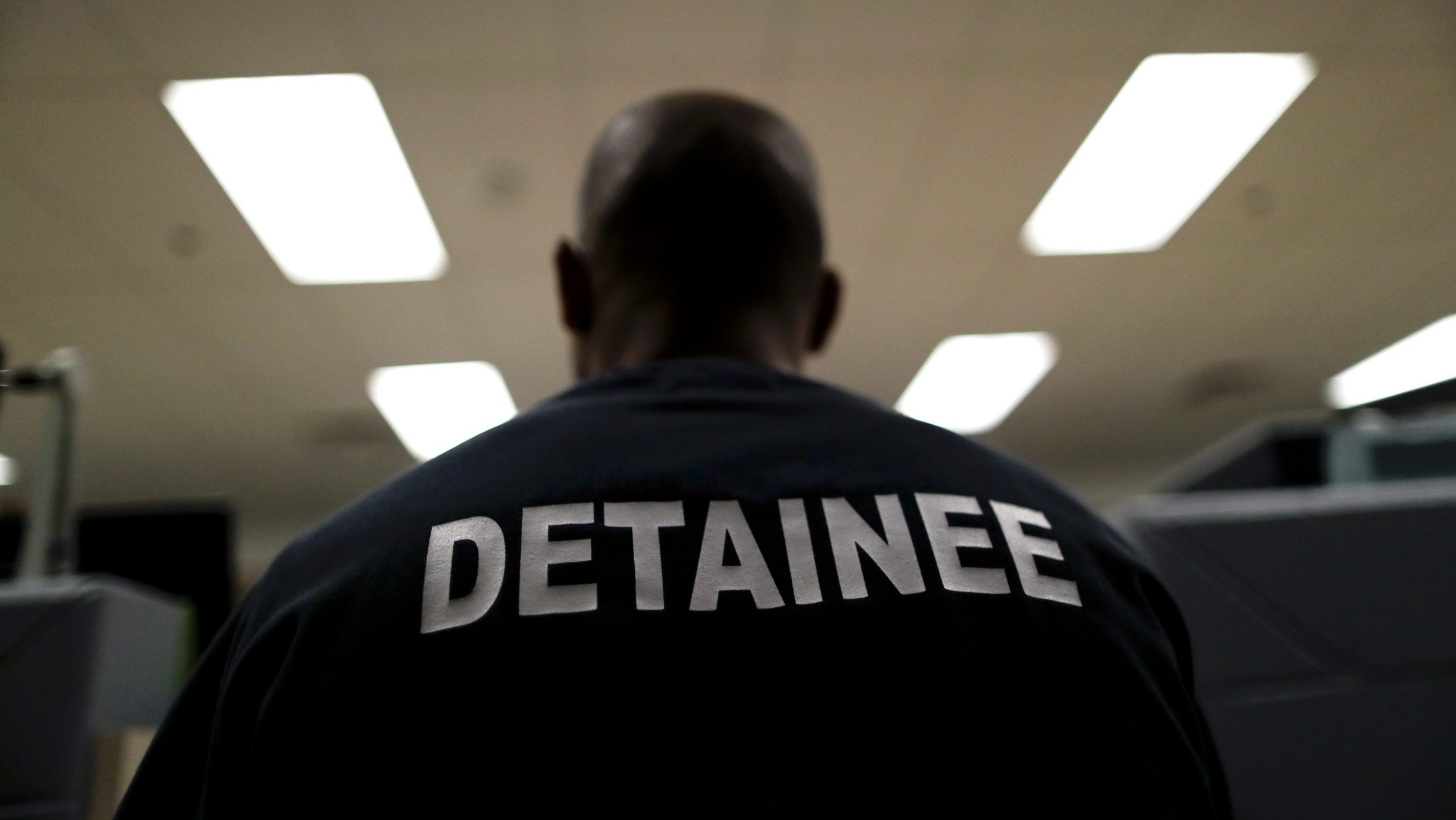
Moshannon Valley Processing Center, a privately managed immigrant detention facility in central Pennsylvania, has faced scrutiny from lawmakers and advocates about safety, largely spurred by the deaths of at least two detainees in the last year, including Chinese national Chaofeng Ge, who was found hanging in a shower stall with his hands and feet bound behind his back last August.
More recently, detainees mounted a hunger strike in protest of conditions at the facility, including food that allegedly made multiple detainees sick, according to advocates and attorneys. At least one detainee was placed in solitary confinement as a result of the hunger strike, his lawyer told Documented. Federal and county officials have denied that a hunger strike occurred.

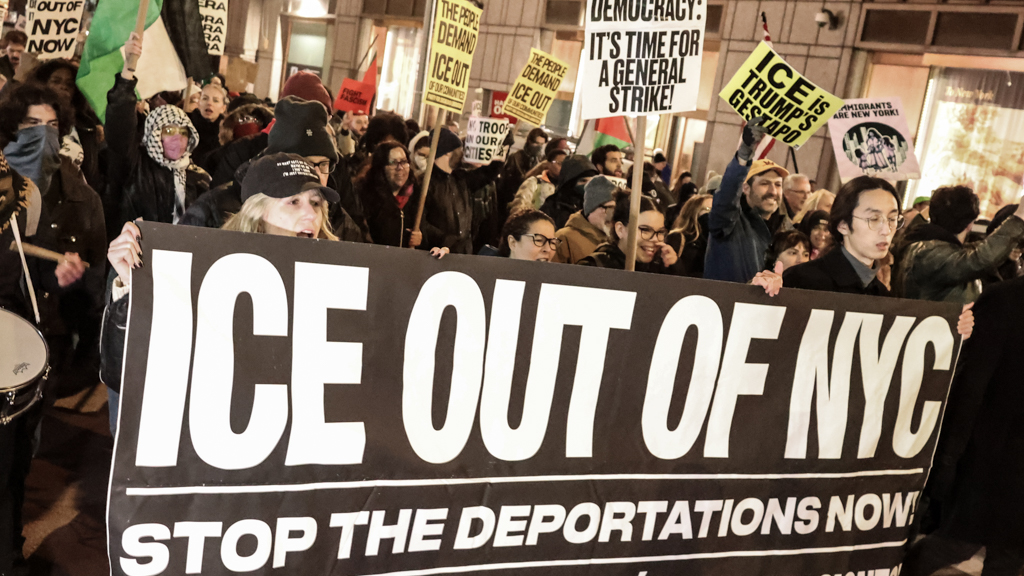
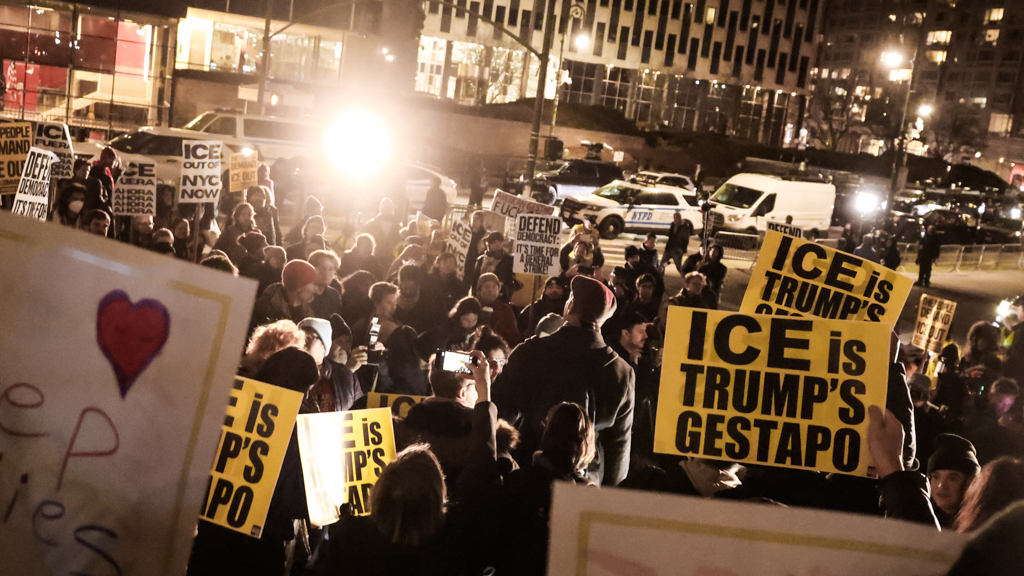
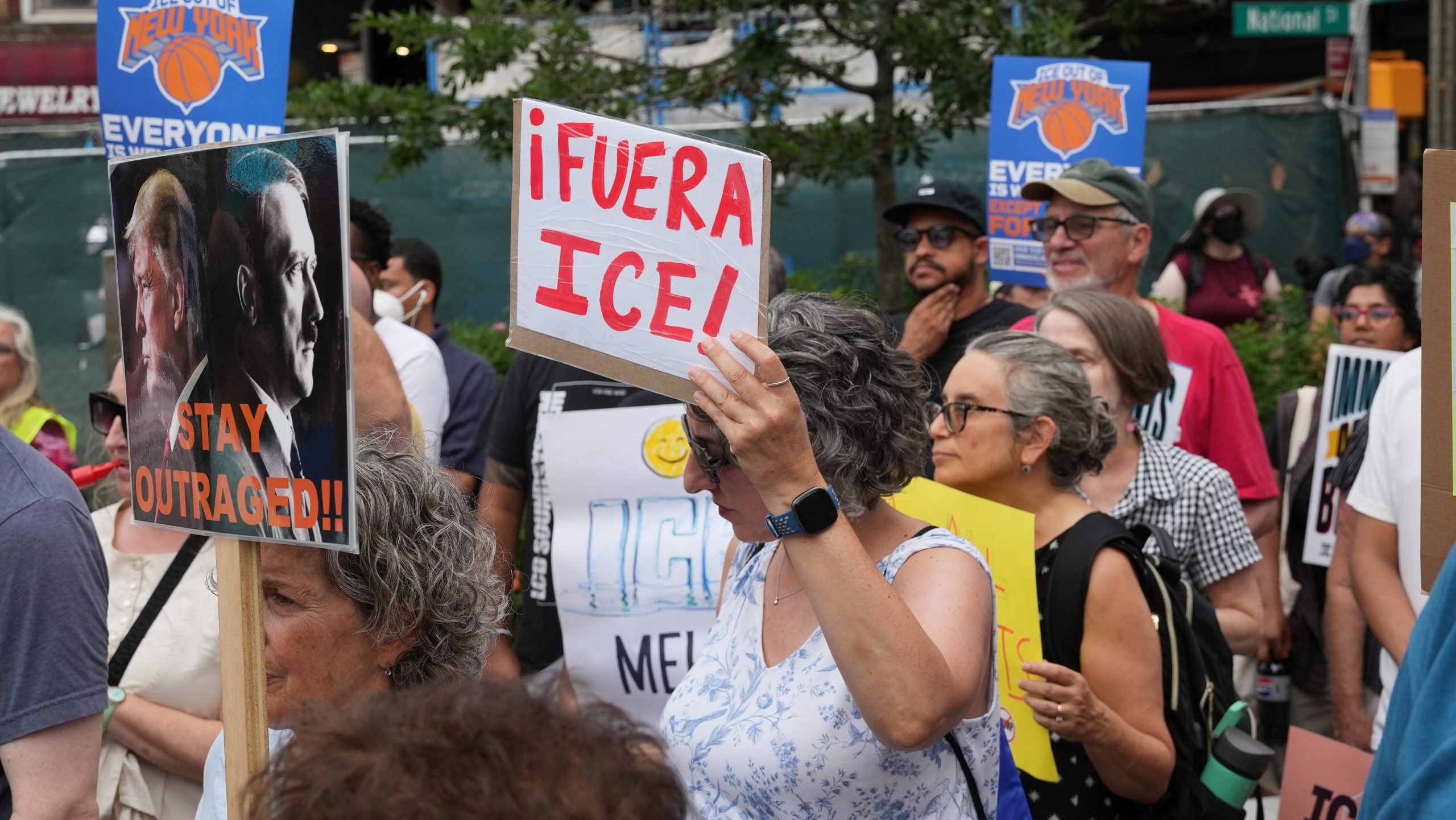
Reports about the hunger strike from local media and detainees’ families have sparked the fury of local residents, who have protested what they say is inhumane treatment of detainees, and triggered another round of calls to shut the facility down. Last week, residents convened at a public hearing with Clearfield County commissioners, urging officials to end their contracts with U.S. Immigration and Customs Enforcement (ICE) and the Florida-based GEO Group, which operates the Moshannon facility.
More than 1,600 immigrants are detained at Moshannon, according to public records obtained by the Transactional Records Access Clearinghouse. It is the largest ICE detention center in the Northeast.
The hunger strike began the morning of April 16 and lasted until at least the following morning, according to media reports. Multiple detainees had gotten sick from the center’s food, including one man who vomited and passed out and was initially neglected by the facility’s staff, according to the local Pennsylvania news outlet PennLive. Around 100 detainees participated in the protest, demanding better quality of food and medical care, according to the report.
GEO Group declined to comment and referred all questions to ICE. In a statement to Documented, a Department of Homeland Security spokesperson called claims of a hunger strike at the detention center “false.” “All detainees are provided with proper meals, water, medical treatment,” the spokesperson said, adding the medical care under ICE custody is better “than many aliens have received in their entire lives.”
In an April 20 statement, Clearfield County commissioners also denied that a hunger strike had taken place, and disputed characterizations of poor conditions at the Moshannon facility. According to the statement, one man was diagnosed with the flu, and others, who were worried the disease was foodborne, skipped one meal. “GEO has received no food complaints recently,” the statement said. Clearfield County commissioners did not respond to Documented’s inquiries.
‘Horrible Conditions’
Tensions around conditions at Moshannon boiled into public view during a public meeting with Clearfield County commissioners on April 28.
One recently released detainee was patched into the hearing from someone’s phone and said that he experienced substandard food and a lack of medical care while detained at Moshannon. “I didn’t get the kind of treatment that I would consider as human,” he said, according to a livestream of the meeting.
“I would like to personally tell you guys that the people in Moshannon Detention Center are facing horrible conditions,” said one woman whose husband is a detainee at the center. She said she drove three hours to the meeting.
Other local residents said they could no longer tolerate an immigrant detention center that they considered inhumane existing in their backyard. “I am ashamed that the reason the rest of the country is going to learn about Clearfield County, not because of our awe-inspiring natural beauty, but because of the allegations of human rights violations happening in our own backyard,” one longtime county resident said at the hearing while holding her baby.
Despite the public outcry, county officials stood by their assessment at the public meeting. “There was no hunger strike at the facility,” said commissioner Tim Winters. “We are in constant contact with facility management. Less than 10% of people missed one meal.” He said it was misinformation fed to people by some fearmongers’ personal agendas that created the false image.
People directly in contact with detainees at the facility told Documented otherwise. Craig Shagin, an immigration lawyer based in Harrisburg, Pennsylvania, said a client of his was placed in solitary confinement after the hunger strike and remained there for at least three more days, when Shagin went to the facility to see him. Facility officials suspected that he was the main organizer of the strike.
Shagin said his client confirmed there was a hunger strike, and that close to 40 inmates were taken to “the hole” after it was broken up.
He added that his client, a man from Honduras with no criminal record, has been detained for five months, has several health issues, and is not getting all the medicines he had been taking before being incarcerated. “That’s a complaint I’ve heard from five or six clients” who have been detained at the same facility at different times, he said.
Jasmine Rivera, executive director of the Pennsylvania Immigration Coalition, said the organization had confirmed the hunger strike from multiple sources. “This is so much bigger than just one hunger strike,” Rivera said. “The solution here is that we need to shut down the detention center.”
Years of Complaints
To many residents and activists, the news reports about the hunger strike are not a surprise. “The complaints that allegedly led to the hunger strike, they’re not new,” Bobbi Erickson, a local elementary school cook and community activist, told Documented. “They’ve been going on for years.”
Publicly available, government-sponsored inspections often found few issues in the performance of Moshannon, the largest immigration detention facility in the Northeast United States, with more than 1,800 beds. The DHS spokesperson said that the center has just passed a recent audit with zero deficiencies. But independent studies have painted a very different picture.
A complaint filed with DHS’s Office for Civil Rights and Civil Liberties by the ACLU, Legal Services of New Jersey and the University of Pennsylvania in 2024 asked for an investigation of the conditions at Moshannon. It presented the ordeals of eight detainees who faced such issues as insufficient medical services and discrimination, including one who didn’t get medical treatment for painful tumors.
Another report, released by Temple University and the immigrant rights organization Juntos in the same year, found the majority of more than 70 detainees interviewed had suffered or seen others suffering mistreatment, including unnecessary chokeholds and deprivation of food and sleep. Medical neglect was common, the report said. One person who had diabetes and chronic chest pain had to wait 11 months for a cardiologist appointment, according to the report.
A report released by Harvard University and Physicians for Human Rights last year found that 1,905 people were put in solitary confinement at Moshannon between April 2024 and May 2025, the highest number among immigration detention centers in the country.
In recent rallies, protesters have read testimonies from inmates. “We are not treated as people,” one testimony said. “This is a concentration camp.”
Additionally, three detainees have died over the past three years. Chaofeng Ge was found dead on August 5, 2025, hanging in a shower stall with his hands and feet tied behind him just days after his arrival. This was after Frankline Okpu, an immigrant from Cameroon, died in 2023 after he was believed to have swallowed something that may have contained the drug K2. A DHS review found prison staff hadn’t been watching him as closely as a doctor required. And at the end of last year, Fouad Abdulkadir, an imam from Eritrea who had a green card, died after complaining of chest pain. He had just filed a lawsuit concerning inadequate medical care in the facility.
“Three deaths. Three years. Zero accountability,” the Shut Down Detention Campaign, a group aiming to close immigrant detention centers in Pennsylvania and New Jersey, said in a statement. The organization called for the immediate release of the detainees participating in the hunger strike and the termination of the contracts that keep Moshannon running.
U.S. Rep. Summer Lee, whose congressional district includes parts of Pittsburgh and southwest Pennsylvania, was denied access when she went to Moshannon to exercise her rights of congressional oversight last year. In a statement issued after the news about the hunger strike, Lee said she would visit the site again, and called for its closure.
“Moshannon should be shut down, and we should be investing instead in systems that protect dignity, support families, and strengthen communities,” Lee said. Her district does not include Clearfield County.
Calls for Accountability
So far, the reverberating call has led to few changes inside Moshannon. Many advocates and residents say that the conditions are getting worse amid the Trump administration’s mass deportations. The average daily inmate population at Moshannon has jumped to 1,650 as of April, up from 1,225 a year ago, according to TRAC.
This doesn’t only mean an overcrowded living environment for the inmates, but also fatter coffers for the operator, GEO Group. Based on the contracts Clearfield County signed with ICE and GEO, ICE pays GEO Group close to $3 million each month, plus daily compensation based on headcount, to operate the facility, and the county deducts $200,000 for its own hold in the name of annual administrative fee.
“There’s no greater threat to your liberty than giving a financial incentive to a corporation to take it away,” Shagin, the immigration lawyer, said.
Advocates see some hope. The five-year contracts that support Moshannon will expire in September of this year, and county commissioners have yet to decide whether they’ll be renewed.
“We want everyone to understand that people are being basically tortured through the use of solitary confinement and poor conditions, and that no amount of ‘oversight’ has changed those facts,” Adrianna Torres-García, the co-coordinator of Shut Down Detention Campaign, told Documented. “That’s why we need the Commissioners to vote ‘no’ on the contract renewal.”
At the public hearing on April 28, commissioners defended the detention center as contributing to the local economy, saying it created jobs for 408 GEO employees and 24 ICE employees. Commissioners also said the county doesn’t have oversight authority over GEO, even if it can adjust the contract. “I do think the argument that it’ll close because we choose not to participate is highly unlikely,” said Commissioner Dave Glass, who added that the Trump administration may find a way to keep the center open even without the contract’s renewal. Glass is the only commissioner among the three who has publicly stated his opposition to the renewal of the contracts.
By dropping the contracts, the commissioners warned, the county would give up its “small seat at the table.”
Still, this is not the first time advocates and residents have worked to shut down detention centers in the region. In 2022, they finally got the Berks County Detention Center, another ICE detention center in the region, to shut down after eight years of organizing.
“They shut it down. Yay! And then they built Moshannon. Boo!” said Vivian Chang, executive director of Asian Americans United, an organization involved in advocating for the shutdown of the ICE detention centers. Chang said a big lesson she learned from this is, “it’s not enough to just do one at a time. It’s shutting down all detention.”
For Erickson, the elementary school cook, the existence of Monshannon is a giant pressure on her heart. “It weighs on me,” she said, adding that “treating foreigners to your land with dignity and respect is a basic tenet of Christianity.”
Moshannon is “an injustice not only for those that are detained, but for the people in this community,” Erickson said.