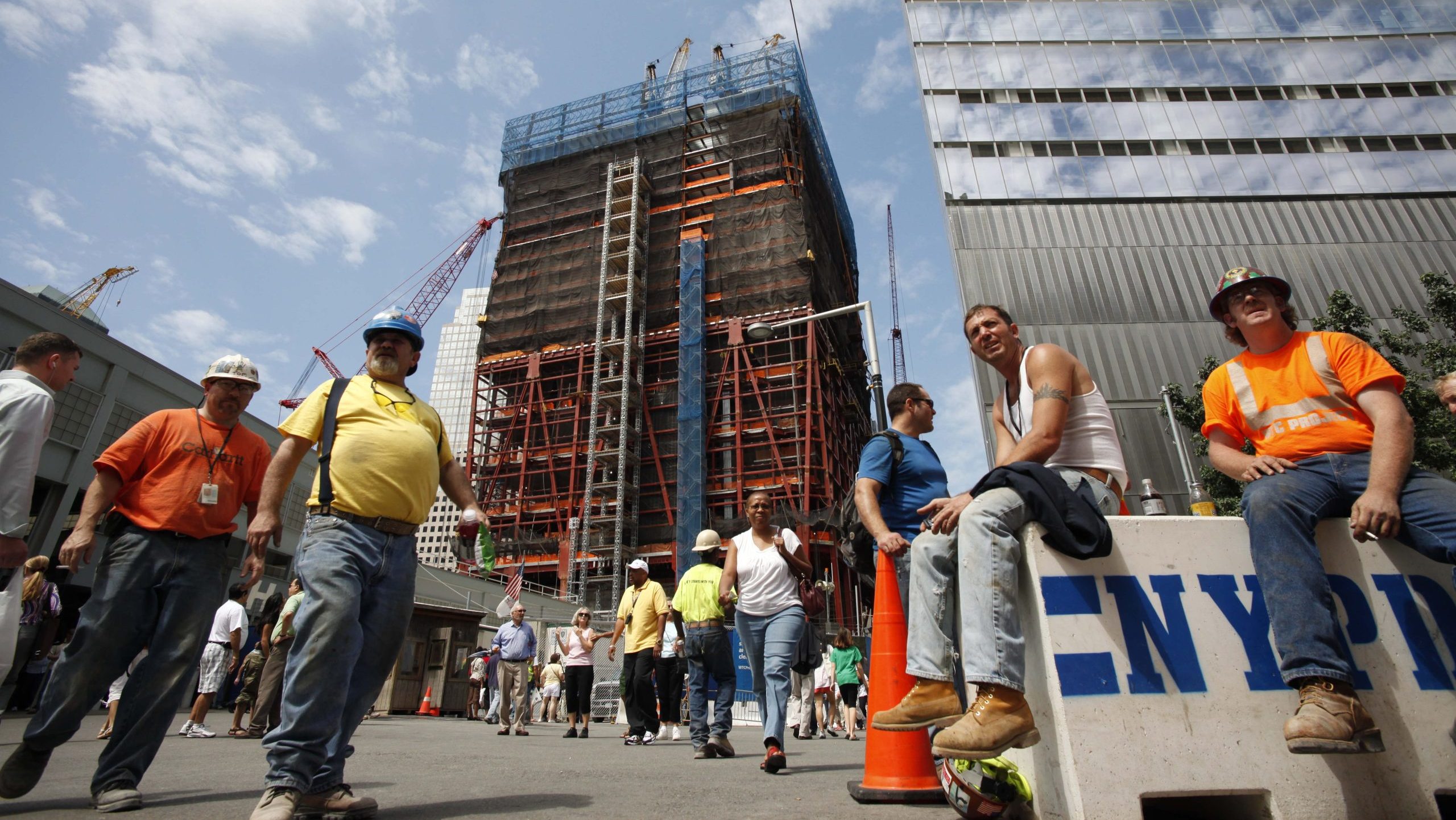


As New York’s skyline reaches record heights, rising global temperatures remain a deadly factor on New York’s construction sites, according to a new report released today.
Research conducted by the New York Committee for Occupational Safety and Health (NYCOSH) in its 2026 Deadly Skyline report found that in 2024, the hottest year in recorded history, at least four construction workers in the state died due to heat-related causes. This is the first year the organization has tallied such deaths.
Of the four deaths, two occurred in the five boroughs: a worker performing debris removal in 83˚F-degree heat in Manhattan in July 2024 and another worker who died in 86˚F-degree heat at a site in Long Island City in June 2024.

Data collected by the Bureau of Labor Statistics (BLS) found that between 2011 and 2021, over 400 workers nationwide died because of heat-related illness, and those numbers could be even higher.
As Documented previously reported, construction is the most dangerous industry in New York City. In 2024, there were 50 construction site deaths throughout New York State, with 20 fatal accidents occurring across the five boroughs. The Deadly Skyline report found that Latino workers, who make up less than 19% of the construction workforce, accounted for nearly 26% of construction worker fatalities.
These findings come as projections anticipate an increase in heat waves in New York City. Studies show that NYC could experience five to nine heat waves per year by the 2050s, up from two per year between 1981 and 2010.
But temperatures don’t have to be extreme to be deadly. According to NYCOSH, occupational heat stress begins at temperatures below what is considered extreme heat, which is defined by the U.S. Environmental Protection Agency (EPA) as a temperature equaling or exceeding 95˚F (35˚ C).
Because of the physicality of their jobs, construction workers are prone to overheating even in relatively moderate temperatures. While all four construction deaths in New York state occurred when temperatures met or exceeded 80°F (26.6°C), three of the workers’ deaths surveyed occurred when temperatures were below 87°F (30.5°C).
Advocates fear construction workers could be at further risk of heat-related stress under the Trump administration. In April, the Occupational Safety and Health Administration (OSHA) rolled back its previous directive that would have implemented a National Emphasis Program, established under the Biden administration, aimed at protecting workers from heat-related hazards.
Due to a lack of comprehensive federal heat protections, New York worker advocates and labor unions are pushing for the passage of the TEMP Act at the state level. First introduced by State Senator Jessica Ramos in 2023, the bill would create temperature protections for worksites across the state and mandate that employers provide workers with basic heat protections like water, shade, and air conditioning. The bill, which has faced opposition from the agricultural industry, has yet to come to the floor for a vote.
Also Read: Is Your Job Unsafe? Start a Workplace Safety Committee
Nationally, during the first nine months of the Trump Administration, researchers found that OSHA brought 35 % fewer cases than during the same period under previous administrations. In New York state, NYCOSH’s report found that OSHA inspections have fallen to nearly 30% from pre-pandemic levels, and the average OSHA fines in construction fatality cases have dropped to their lowest point since 2017. Despite the decline in federal workplace safety enforcement, New York City could step in to fill the gap.
However, the Skyline report found that as of March 2026, the total number of staff employed at the New York City Department of Buildings (DOB), which is tasked with inspecting workplace safety at construction sites, had a 13.6% vacancy rate, which is relatively high — the current citywide vacancy rate is 5.04%. Despite the DOB being authorized to hire a total of 1,853 employees, as of 2026, it only employs a staff of 1,601.
The agency is also facing budget cuts. In Mayor Zohran Mamdani’s Executive Budget for Fiscal Year 2027, the DOB is facing a budget cut of $8,194,132, from its previous 2026 budget of $233,071,981.
“The solutions to creating safer construction sites in New York State are within reach,” said Charlene Obernauer, executive director of NYCOSH, in a statement to Documented. “We must fully fund and hire staff within our state and City agencies to strengthen enforcement, ensure that public dollars never go to employers with records of safety violations and worker exploitation, and leverage local and state authority to protect workers from dangerous heat.”
In response to a request for comment, the DOB told Documented that they have worked hard over the past few years to make job sites safer. Overall, according to the DOB’s most recent construction safety report, the agency has made significant progress in reducing building construction-related injuries, with total injuries down by 33% in 2025, compared to 2024. Data referenced in the NYCOSH report was compiled from OSHA and BLS data, which includes fatalities outside of the DOB’s jurisdiction.
Also Read: Construction Work Remains the Deadliest Job in New York City, New Data Shows
According to the DOB, there were only seven building construction-related fatalities at work sites under the DOB’s jurisdiction in 2024. The latest data, from the DOB’s 2025 Construction Safety Report, shows that there were 10 building construction-related fatalities at work sites under DOB’s jurisdiction in 2025. So far this year, there has only been one building construction-related fatality in New York City.
“There is no acceptable number of injuries or fatalities in our industry. Every worker deserves to return home safely at the end of the day, and we must remain unwavering in our commitment to protecting the men and women who build New York City,” said Commissioner Ahmed Tigani. “While we are encouraged that building construction-related injuries have declined by 33% in 2025, we know there is still more work to do to strengthen safety across our construction sites.”
Tigani said the DOB is expanding enforcement and oversight efforts and working closely with industry leaders to increase accountability and worker protections. They also said that they were actively recruiting and hiring new inspector positions, with Tigani welcoming the newest batch of 34 DOB inspectors.
Obernauer, from NYCOSH, welcomes any effort to boost workplace safety.
“Federal protections are eroding, and fines against negligent employers are decreasing,” she said. “We need our elected officials and agencies to step up their commitment to protecting workers.”