

Immigration and Customs Enforcement (ICE) officers violated the constitutional rights of a Nigerian immigrant whose arrest outside of a Bushwick hospital last month sparked raging protests, his lawyers said in court on Monday.
Chidozie Okeke’s attorney made a motion asking his immigration judge to terminate his removal proceedings and suppress any evidence — including of his immigration status — obtained during the arrest. Okeke, a Brooklynite of Nigerian origin, alleged in court documents that he was driving to the bank when he was pulled over without probable cause, beaten and tased.
Okeke seemed calm on screen during his appearance at immigration court over a video call from the Metropolitan Detention Center in Brooklyn. But his lawyer’s motion, and attached statement from Okeke himself, spelled out the most detailed explanation of his arrest, as well as the pain he’s been through since the May 2 incident.

“I was in deep pain, crying out, and then the doctor came and asked me questions but I couldn’t understand what he was saying because I was in serious pain, all over my body,” said Okeke in an affidavit attached to the motion.
The court filing, reviewed by Documented, recalls Okeke’s harrowing account of the events of that day and alleges “egregious violations” of his constitutional rights. It also states that ICE has yet to file the standard form that answers why Okeke was apprehended, despite public declarations by ICE calling it a “targeted enforcement operation.”
Also Read: Clash Between ICE, Protesters Raises Questions Around NYPD Collaboration
According to the Department of Homeland Security (DHS), Okeke overstayed a tourist visa and has previous arrests for assault and drug possession. Lawyers for Okeke did not comment on his immigration and criminal history, and neither the NYPD nor DHS returned requests for documentation of such crimes. A spokesperson from DHS denied both Okeke’s claim and media reports that Okeke was tased during his arrest.
“He wants to be released from detention as soon as possible,” his attorney, Shari Astalos, told Documented.
On Monday, Okeke was seen sitting in a white, nondescript room with a table inside MDC Brooklyn. He wore a grey shirt and yellow lanyard, and sported a salt-and-pepper beard. Okeke’s eyes flitted around the room as he waited for other detained immigrant New Yorkers in Orange County Jail to finish their time in front of the judge.
“Good morning,” he said, finally addressing Judge Charles Conroy, before his attorney took over the quick, perfunctory hearing.
According to Okeke’s filing, he was driving under the speed limit on Gates Avenue when he was pulled over by a black SUV with its sirens on, and a white car also approached. Okeke said he first thought the officers were police, and immediately provided his license for them to check.
Then, he heard multiple agents running toward him who then tried to open the door, which was automatically locked because the key was in the ignition, said Okeke.
What followed, according to Okeke’s affidavit, was a series of brutal attacks over the course of the afternoon by immigration agents.
“I was trying to open the door but almost immediately, before I could, the officer near the passenger side smashed my window,” read the court document.
An officer reached in to unlock the door, and that was when Okeke saw he was wearing an ICE vest, the affidavit said. An officer hit him and sprayed him with pepper spray, the document read.
“I tried to move my face and then one of the two officers who’d been standing near the driver’s side door brought out a gun, pointed it at me, and said to me that he would shoot me now,” Okeke said, according to the document.
Okeke then described an officer breaking his car key and opening his door.
“And then all three officers came at me with both doors open and started hitting me and the one with the gun continued saying he was going to kill me,” Okeke said, according to the document. “They hit me on the front, my knees and hands and face. I think they hit me with a taser gun, they hit me with everything they had.”
DHS did not comment on Okeke’s allegation that his life was threatened at gunpoint.
Instead, the DHS spokesperson wrote that Okeke refused to comply with officers, became “physically combative,” and “weaponized his vehicle to attempt to hit ICE officers. “
“Our officers followed their training and used the minimum amount of force necessary to make the arrest,” said the statement sent to Documented.
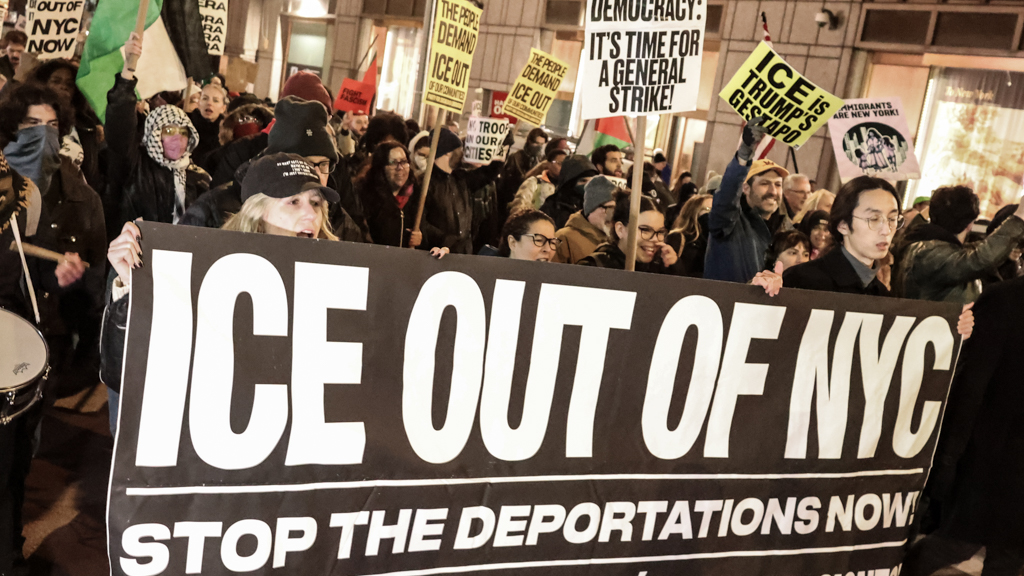
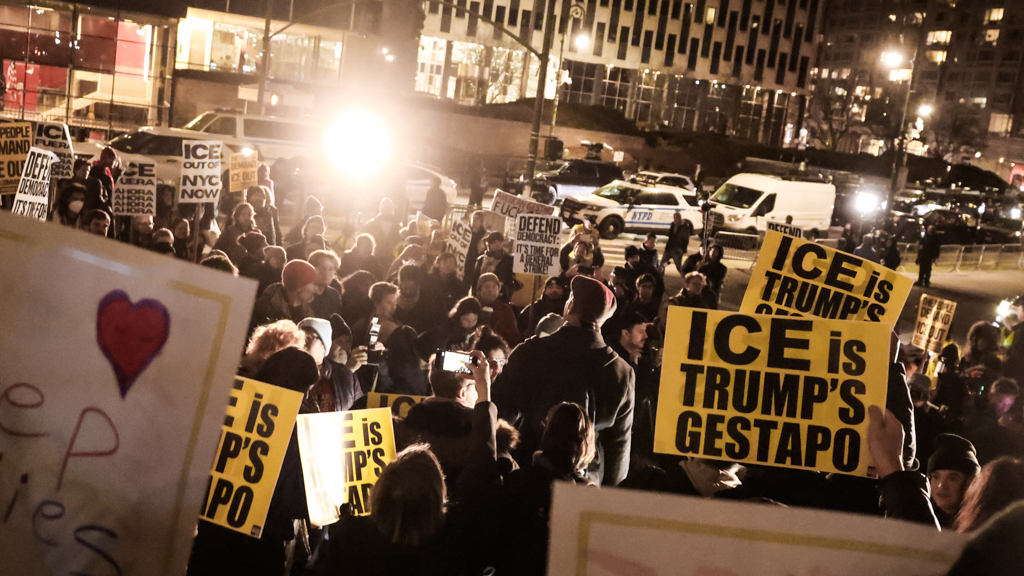
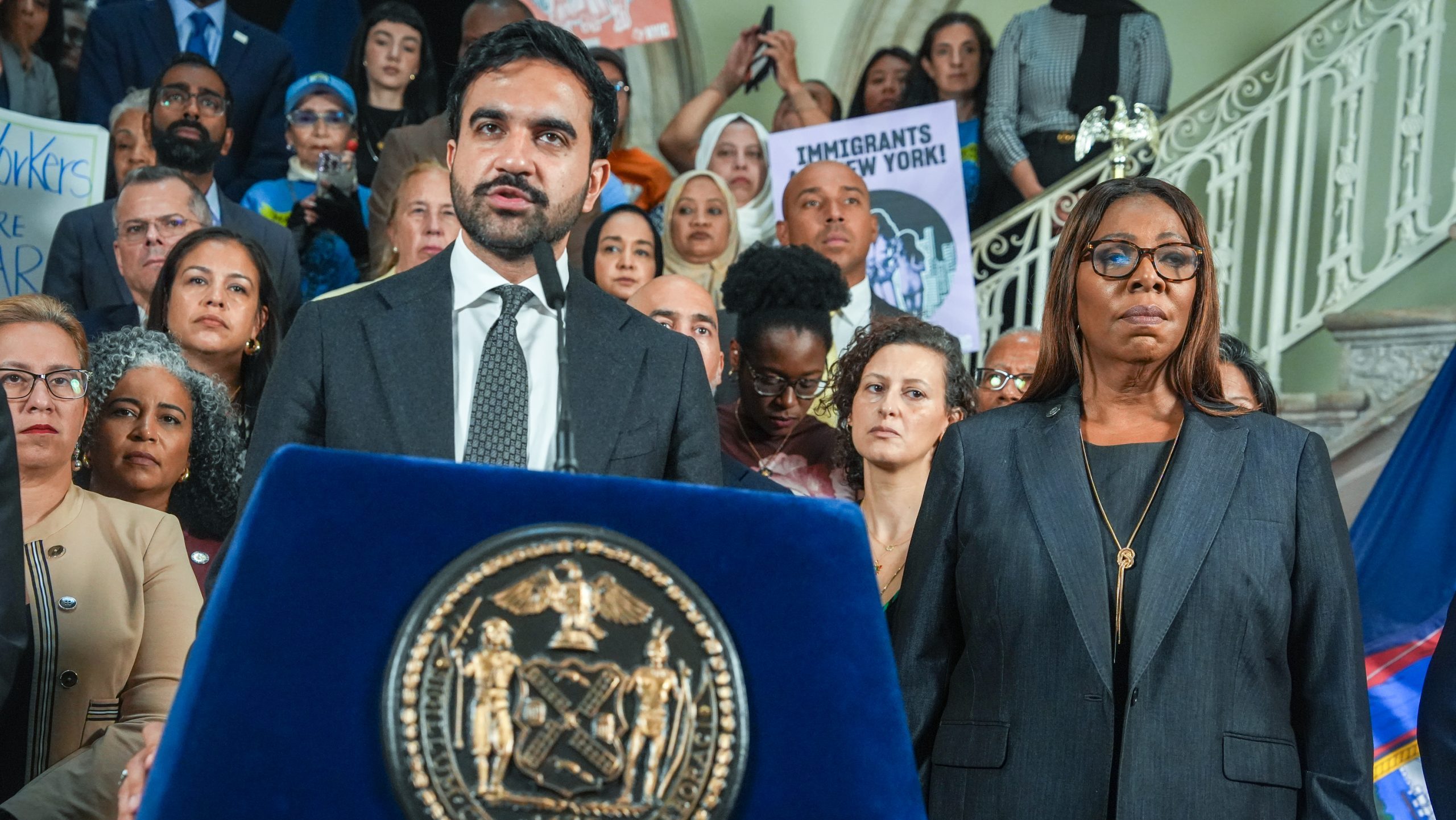
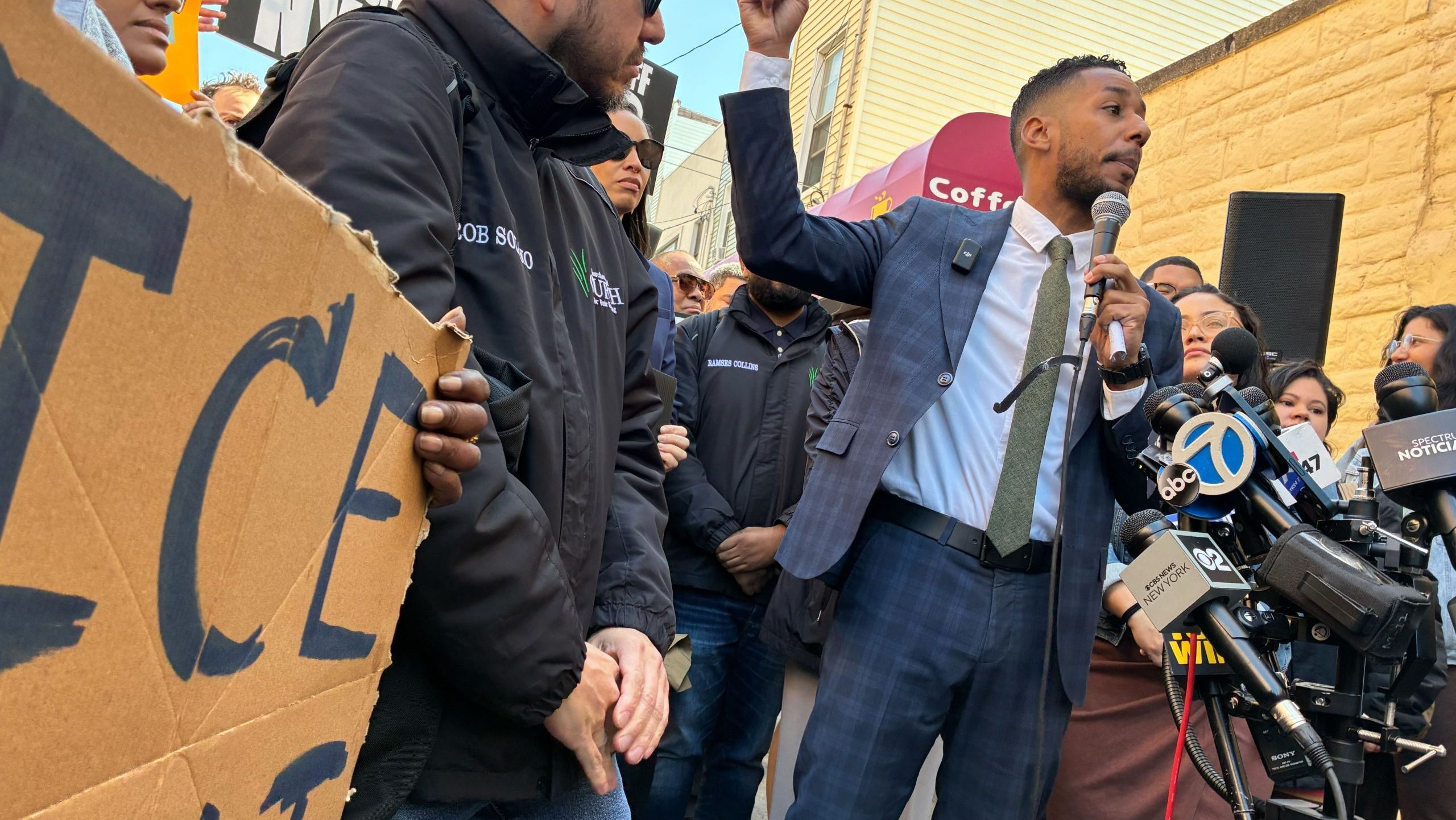
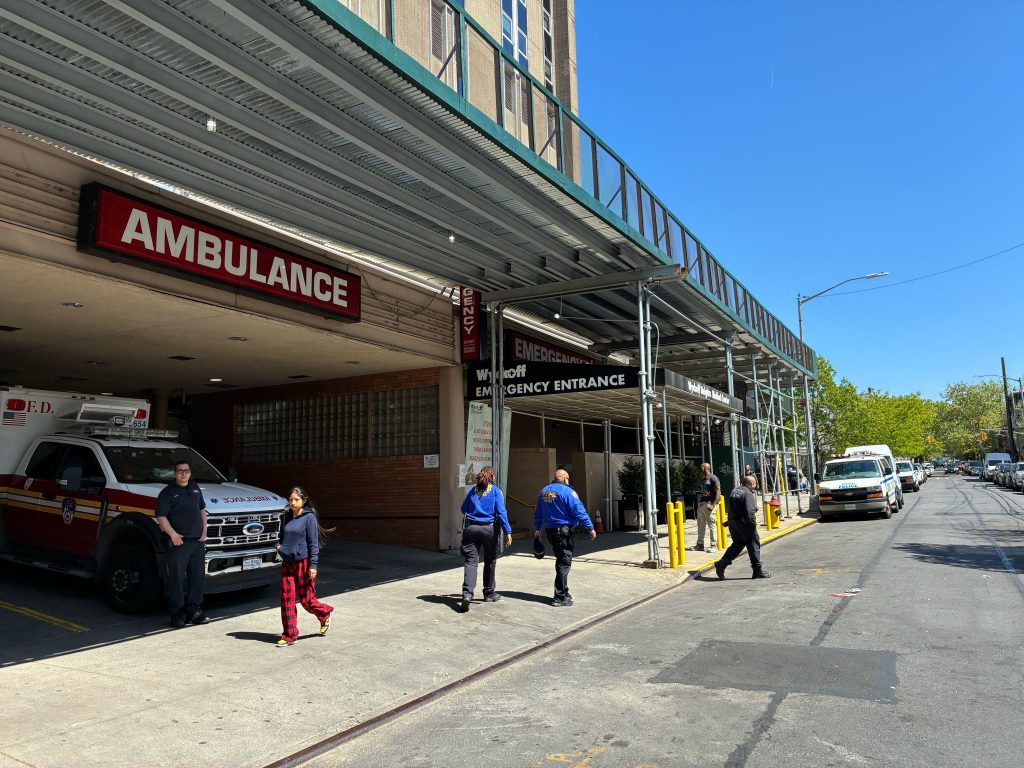
Okeke was then taken to Wyckoff Heights Medical Center, where his arrest touched off a violent clash in his defense between protesters, immigration agents and the New York Police Department that incensed both everyday New Yorkers and multiple prominent politicians. Many called on both ICE and NYPD Commissioner Jessica Tisch to explain officers’ conduct.
As Okeke sat inside, cuffed in a wheelchair and awaiting X-rays, a throng of rapid responders had grown into a protest of hundreds.
He had been denied care after taking X-rays, he said in court documents, because he lacked insurance. And Okeke said he “fell out of the wheelchair because I was tied up everywhere and one of the ICE officers came over and kicked me with his boot.”
“They pulled me up like garbage and put me back on the wheelchair,” read the affidavit.
As agents planned how to take him to a car to transport him to a detention center, Okeke said in his statement, he was still crying from pain and in need of treatment.
A spokesperson from Wyckoff Heights Medical Center did not respond to multiple requests for confirmation of Okeke’s injuries and his allegations of denial of care.
An unnamed DHS spokesperson said that Okeke “remained non-compliant” during his evaluation, “throwing himself to the floor and screaming.”
“The medical staff cleared him,” said DHS’s statement.
Okeke had a different recollection.
“When we came out, so many people were outside protesting that the officers went out to attack them and they dropped me on the floor of the hospital,” he said in the court documents. “I cried out that I was still in pain but none of them listened. Then they pulled me roughly from the floor, pushed me into the car and took me from the hospital to an office in 26 Federal Plaza in the middle of the night.”
There, he said in the documents, he only received painkillers after a nurse took his blood pressure.
NYPD officers arrested multiple protesters, and in the coming days, video of Okeke being dragged, bound, towards a car from the hospital, as police looked on, and of his detention and alleged tasing, flew across social media.
“Somebody help me,” screamed the man — purportedly Okeke — on video obtained by The City Reporter.
Among the many allegations in Okeke’s filing, lawyers also said that the stop indicated that Okeke was illegally racially profiled rather than targeted — and that they think the information obtained about his immigration status was because of the stop, hence their move to suppress the evidence.
At Monday’s immigration hearing, judge Charles Conroy stated that the filing submitted by Okeke’s lawyers “does appear to be egregious conduct.”
But he did not immediately terminate proceedings as requested by lawyers. Instead, he gave ICE the ability to submit a reply to the motion and scheduled another court date for later in June, prolonging Okeke’s detention and paving the way towards a hearing to decide the matter.
“You’re OK to leave,” Conroy told Okeke, watching him on the screen from his courtroom.
Okeke stood up and walked out of frame.