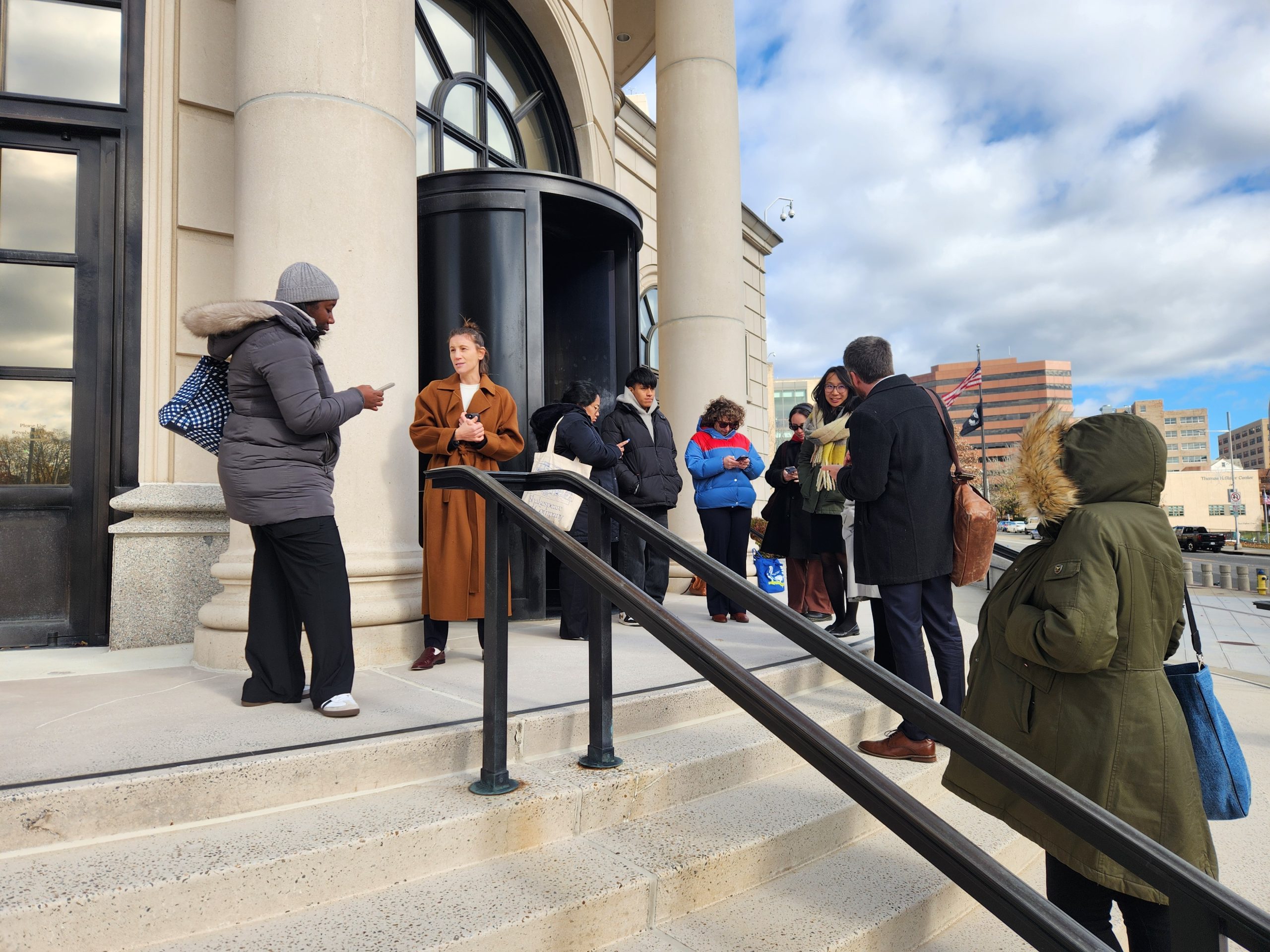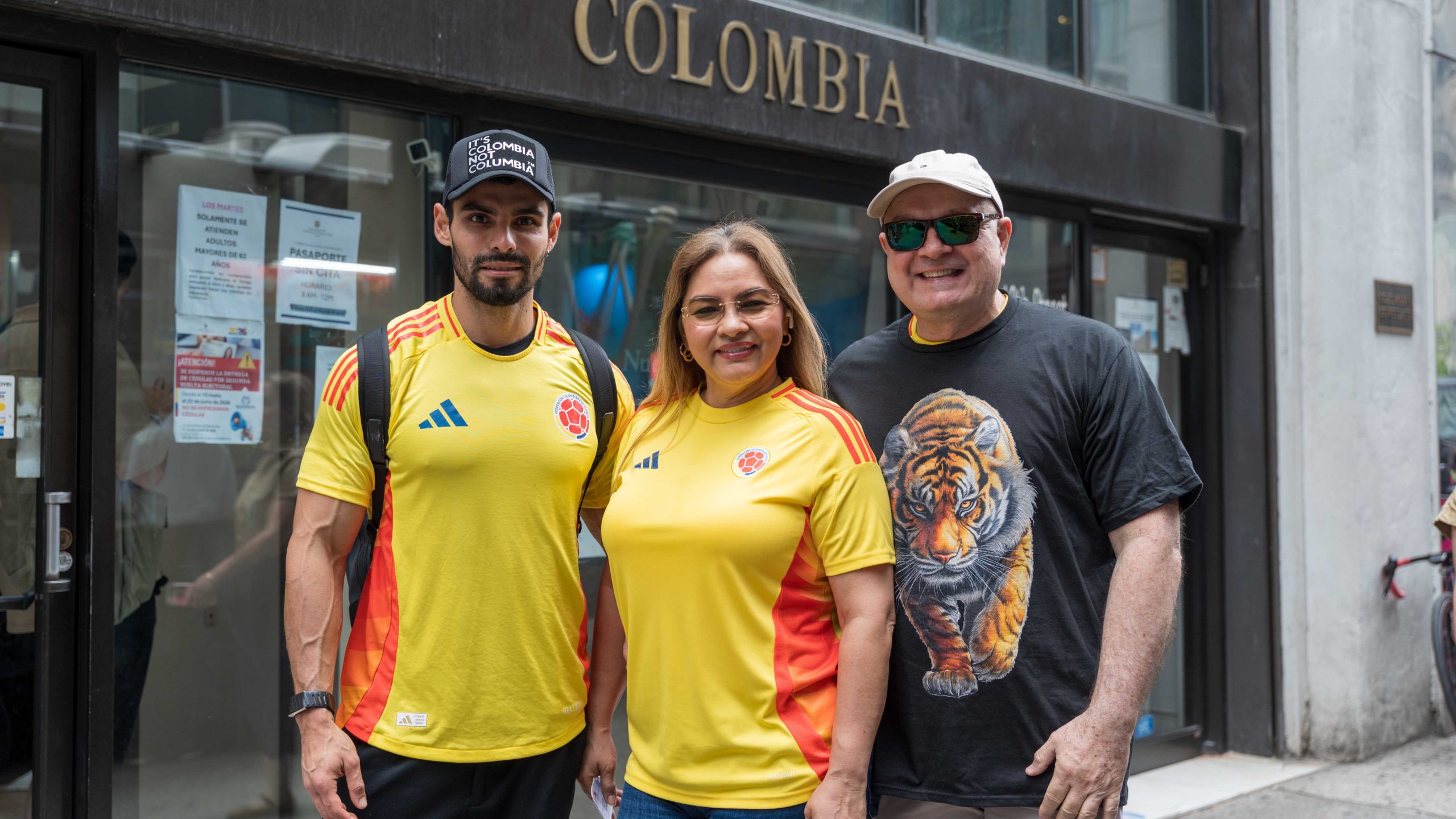


Inside the Colombian consulate in Manhattan, hundreds of immigrants from Colombia cast their vote for the upcoming presidential election over the past four days. Among them was Cesár Zuluaga, 62, who also rocked a black shirt with a tiger — a symbol that has become emblematic of the candidate he voted for, Abelardo de la Espriella.
“We will not allow others to choose leaders to lead the country on our behalf,” Zuluaga told Documented in Spanish. “This is an opportunity for us to come and look for a change in our government. And that change will come from someone who is truly qualified and who we want to represent us.”
Colombians will head to the polls on June 21 for a presidential runoff between right-wing candidate Abelardo de la Espriella and left-wing candidate Ivan Cepeda, who is backed by the current president, after both candidates failed to get over 50% of the votes in May.

Ahead of the election, Documented spoke with Colombians living in New York who cast ballots at their consulate in Manhattan to understand the issues driving them. Interviewees cited concerns ranging from public safety and security to economic opportunity.
There were an estimated 1.2 million immigrants from Colombia living in the United States in 2025, according to Pew Research. The population is concentrated primarily in Florida, New York and New Jersey, including roughly 112,000 residents in New York state. Over the decades, Colombian communities have established deep roots in places such as Miami-Dade County and Jackson Heights, Queens, where Colombian businesses, cultural institutions and landmarks reflect the country’s longstanding presence. For early voting, the Colombian consulate is the only place to vote in New York. More locations are available for voting on Election Day.
The election this week is the final face off between Trump-backed lawyer and businessman de la Espriella, who led the first round with 43.7%, and leftist Senator Cepeda, who came in second place with 40.9%. De la Espriella — who calls himself el Tigre (the Tiger) — ran on a socially conservative platform that pushes for security proposals, smaller government and economic reforms, topics that have resonated with many voters who see Cepeda as a continuation of Colombia’s President Gustavo Petro’s failed promise to deliver “Total Peace” through negotiations with armed rebels and criminal groups.
Zuluaga, who lives in Manhattan, came to vote with his wife and son — both of whom also cast their vote in favor of de la Espriella. All three said that their main priority was the violence that they say has increased under Petro’s leadership. According to independent Colombian think-tank, Fundación Ideas Para la Paz, illegal armed groups have grown during the Petro administration, gaining 5,000 new members, an increase of 23.5% in just one year.

“It has really taken off,” Zuluaga emphasized. “Four years ago, I did not vote. So I came to vote today, and during the first round too, because I don’t want the same thing to happen again.”
But Andres Peréz, who lives in Sincelejo, Colombia, and is visiting New York until the end of July, is skeptical that de la Espriella is concerned about the well being of Colombians.
Also Read: Victory for Little Colombia: New Yorkers Rejoice After Copa América Semi Finals Win
“The Tiger is for those who have money. He will govern for the rich who would once again exploit the minerals and the soil of our country. This brings a lot of contamination to our waters,” he said, adding that de la Espriella lived in the U.S. for more than a decade and is also a U.S. citizen — which has gotten backlash from constitutional experts and progressives who have asked de la Espriella to renounce his citizenship.
Peréz, 64, said he and his whole family support Cepeda, who is part of Petro’s political party. He said he supported Petro’s policy which lifted the minimum wage to 2 million pesos ($534 USD) monthly. “Under the [former Colombian President Álvaro ] Uribe government, they gave you 80,000 pesos, which doesn’t really cover much. It’s like $20 dollars.”
He also is concerned about de la Espriella’s background as a criminal defense lawyer who defended high-profile clients, including Uribe and Alex Saab, a close ally of ousted Venezuelan President Nicolás Maduro, who is facing drug-charges. “He defended a huge amount of bad people in Colombia. A lot of narcos,” he said. “He does not have the experience. He is not a politician. He is a lawyer.”
However, for Forest Hills resident Juan Felipe Suarez, a politician’s lack of experience doesn’t disqualify him or her from being a good leader. “For example, we have a president that has been in politics for 30 years and is an economic disaster,” the 34-year-old said, referring to Petro.
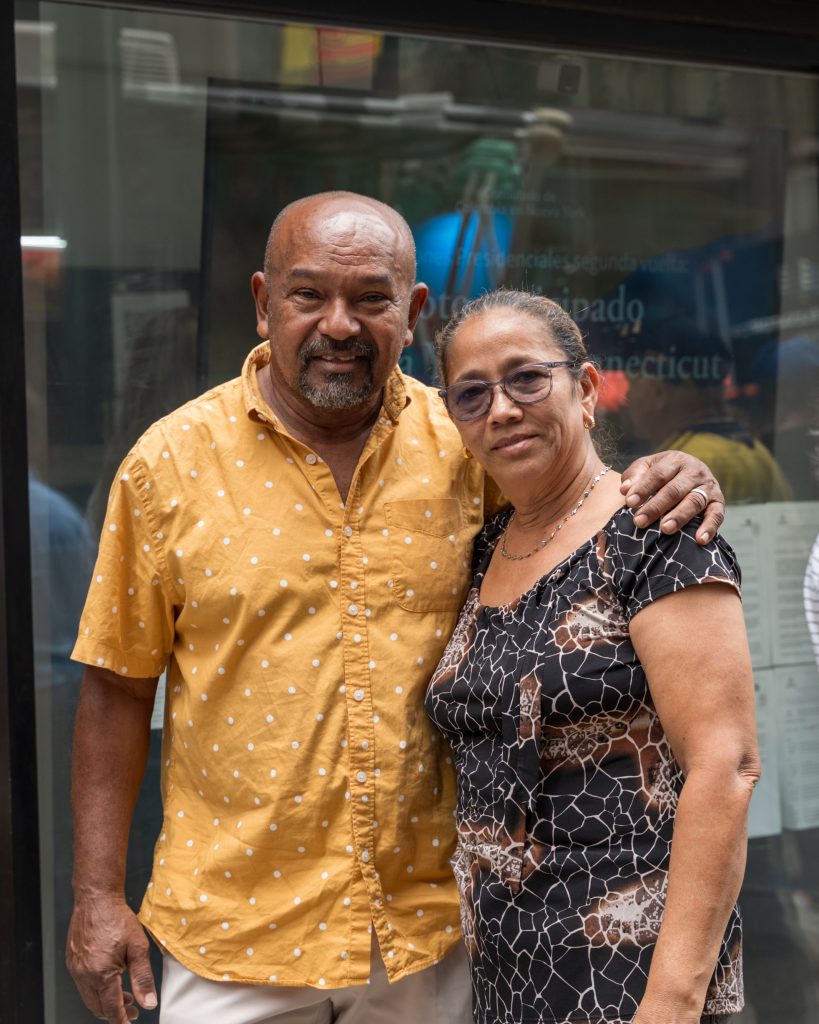
Suarez, who has been in New York for three years, said Petro’s minimum wage increase was a good thing but that it failed to also help small businesses by lowering their taxes. “For big companies, I don’t think it’s difficult to pay the 2 million pesos minimum wage, but for small businesses, like groceries and other stores, it will be very difficult to pay that price.”
He added that President Trump’s support for de la Espriella could also signal a good economic relationship with the U.S. “Colombia is a product exporting country. It is beneficial for it to maintain a good relationship with the United States — especially now, with Trump’s tariffs, since some countries face very high tariffs due to political differences with the president.”
Zuluaga also believes that having a good relationship with Trump is essential for Colombia to succeed. “First of all, he is a U.S. citizen. Secondly, without being president, he already has a good relationship with the U.S. So I think it will get better,” he said.
Following Colombia’s win against Uzbekistan yesterday in the World Cup, Zuluaga said he hopes to celebrate twice next week. “The Colombian team did a great job yesterday. […] I hope they continue the same way they started,” he said. “The other celebration is that Abelardo de la Espriella wins the election.”