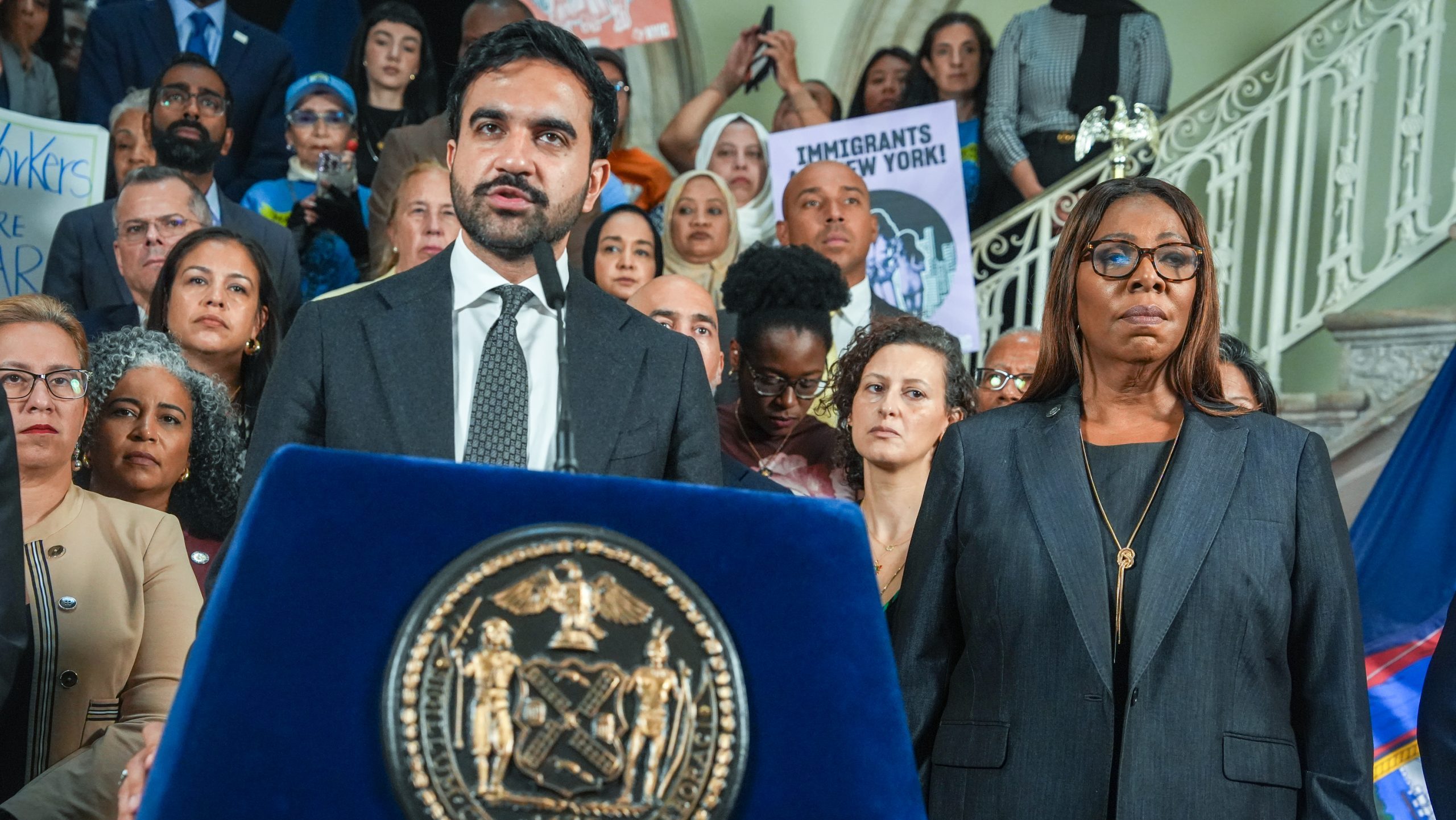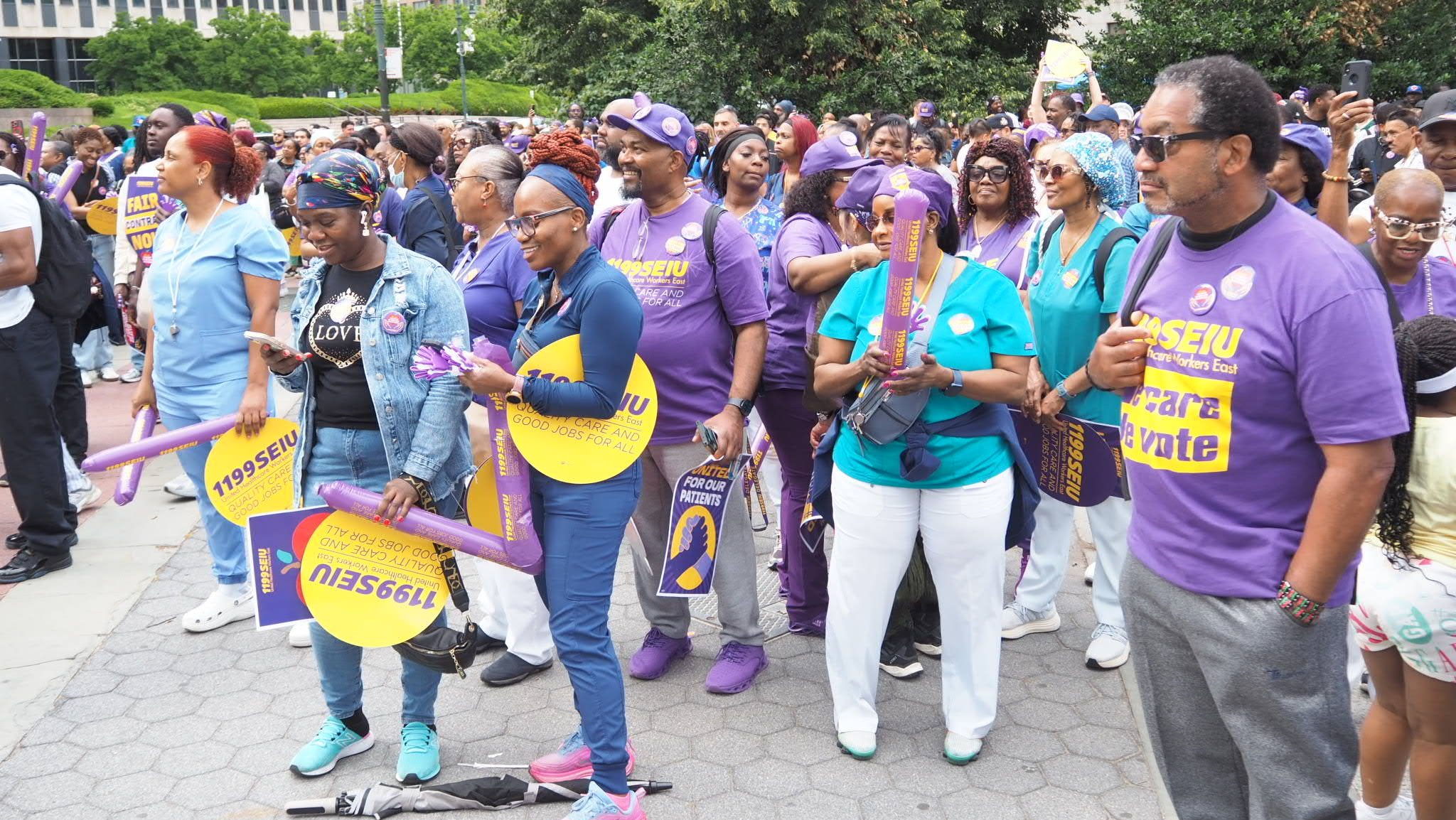


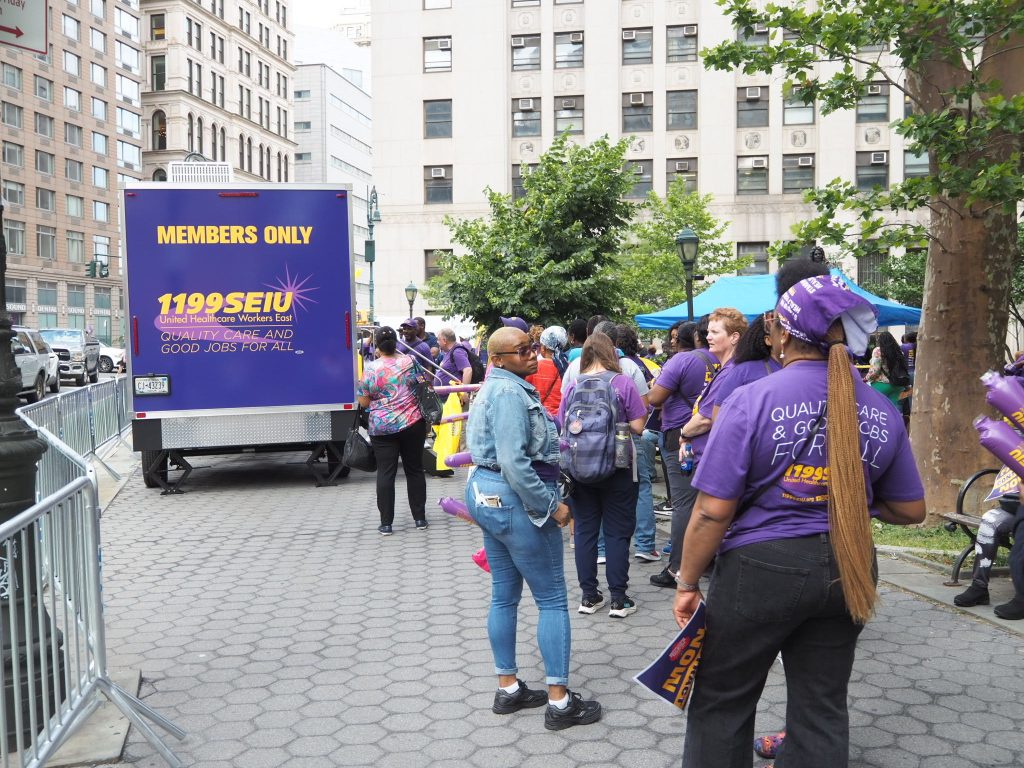
Just one day before droves of Knicks fans wearing orange and blue took to the city’s streets on Thursday, a wave of purple shirts swelled Manhattan’s Foley Square.
Dressed in purple were thousands of healthcare workers, members of the union 1199SEIU, who were rallying to win a new contract with pay increases, job security, and safeguards against workplace violence. Music blasted out of jumbo speakers on Wednesday afternoon, as the roar of pro-union chants like “Say it loud, say it proud, New York is a union town” reverberated for several blocks.
The union, which represents 34.3% of New York’s healthcare workforce, is made up of many immigrant workers, whose jobs span from registered nurses to home care workers and hospital cleaners.

The union’s current contract with the League of Voluntary Hospitals and Homes of New York (LVHH) is set to expire in September. If they are unable to reach a deal that satisfies the union’s members, 86,000 frontline healthcare workers who provide care at 90 hospitals and nursing homes in downstate New York could walk off the job. It would be the largest hospital strike in New York history since the hospital strike that occurred this January, when nearly 15,000 nurses walked the picket line.
The union has not yet authorized a strike, and negotiations are ongoing.
Founded in 1968, the LVHH represents 109 nonprofit hospitals, nursing homes, and medical centers across the New York City metropolitan area. It functions as the main bargaining agent on behalf of the management of medical facilities. Among their member institutions are Montefiore, Mount Sinai, and NewYork-Presbyterian, the three hospital systems involved in January’s landmark nurse strike. 1199SEIU also represents staff at those same hospitals, including nurses.
Negotiations began between the union and LVHH on May 28. According to the union, LVHH rejected every economic proposal put on the table by the over 400-person rank and file bargaining committee. The union is seeking an annual wage increase of 5% for each year of the new four-year contract.
The last contract was ratified in 2023 amidst the COVID-19 pandemic. The union hopes to win a new contract that reflects its members’ sacrifices during a global health emergency.
Yvonne Armstrong, 1199SEIU’s president and herself an immigrant from Jamaica, stressed the importance of paying healthcare workers fairly. Healthcare systems like Mount Sinai and NewYork-Presbyterian are among the wealthiest hospitals in the city, with the CEOs of Montefiore, Mount Sinai, and NewYork-Presbyterian having a combined salary of more than $42.7 million.
“We are here to remind New York’s healthcare industry that there is no healthcare without healthcare workers,” she said in a statement to Documented. “We demand real investments in the people who make healthcare possible. No excuses. Not tomorrow, right now. Because New York’s healthcare can’t wait.”
According to the union, they claim that LVHH counter-offered with only two 2.5% raises for the first two years of the contract and two 1.25% raises during the latter two years of the contract.
The union is also demanding that the hospitals maintain their health insurance and pension, along with stronger safe staffing enforcement, job security language that addresses safety and violence protection safeguards, as well as the impact of AI on healthcare worker staffing.
In a statement to Documented, the LVHH said it presented the union with its own proposal on June 15 that included $2.1 billion in new spending on union compensation, including wages and benefits over three years, and an offer to maintain the union’s current health and retirement benefits at no cost to employees.
“Our institutions have made clear we want a fair and reasonable contract that reflects the contributions of our incredible workforce and preserves quality, affordable healthcare for all New Yorkers,” Marc Kramer, president of LVHH, said in the statement.
However, the union said that LVHH’s offer falls short of the 5% annual raises they are seeking. As of June 18, the union and LVHH have reached a tentative agreement regarding workplace safety, but they were not able to come to an agreement regarding wage increases. Neither the union nor LVHH would speak in detail regarding the terms of the tentative agreement, as it has yet to be finalized. Negotiations resumed on Monday, and they are ongoing.
For many healthcare workers, they say the critical job they do often goes unnoticed by the wider public. Lois Innis, a Guyanese nurse, has been working at a Brooklyn nursing home since 2018. She told Documented that she’s had to frequently handle an increased workload and hours due to short staffing.
“Sometimes you’re short of staff, where you’ve got so many patients it could be a little hectic,” she said. “When you get your pay, you’ve got your children, you gotta pay bus fare, rent, gas bills, you gotta get clothes, food. By the next check, you’re just struggling.”
Subadai Panchen, also a nurse from Guyana, said that while she was working at a nursing home in Jamaica, Queens, during the pandemic, her mental health deteriorated as she struggled to cope with the death around her.
“It’s depressing, like I go home and I would just sit there,” she said. “You get connected to them, they are like your family, because you go there, you try to uplift their spirit, you talk to them all the time, you see that you give them care.”
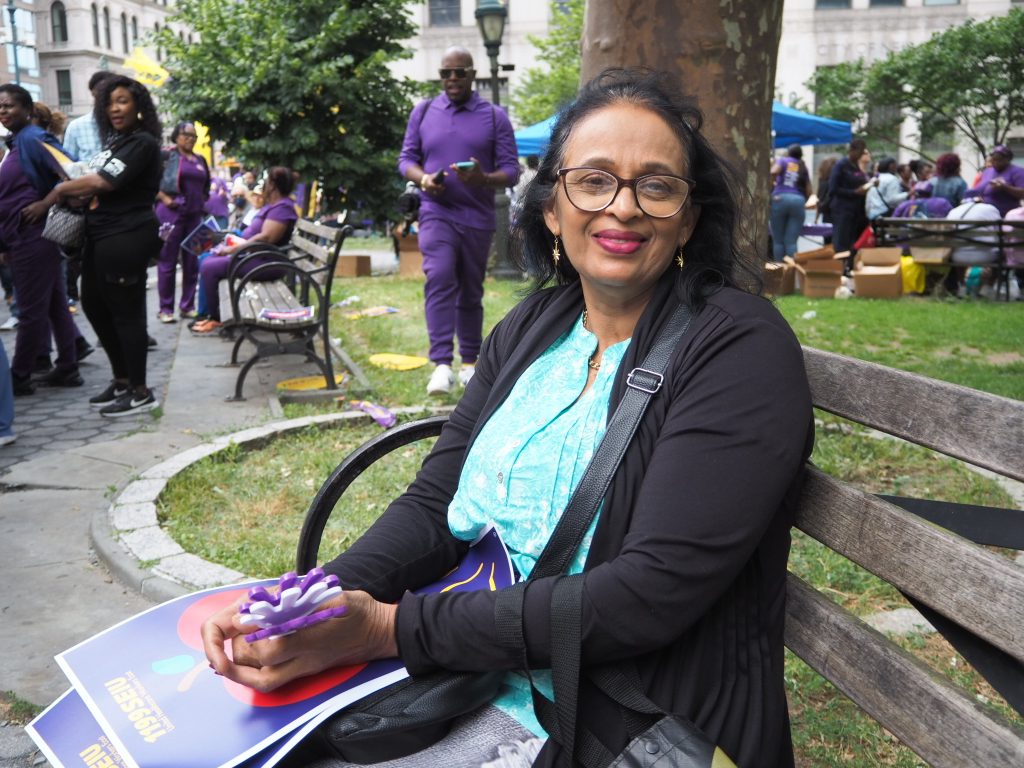
While working at the nursing home, Panchen said she feared for her own life. However, despite the risk, she felt nurses like her were never properly compensated.
“It was a risk for your life, because you can get infected,” she said. “So I think they should have paid us more.”
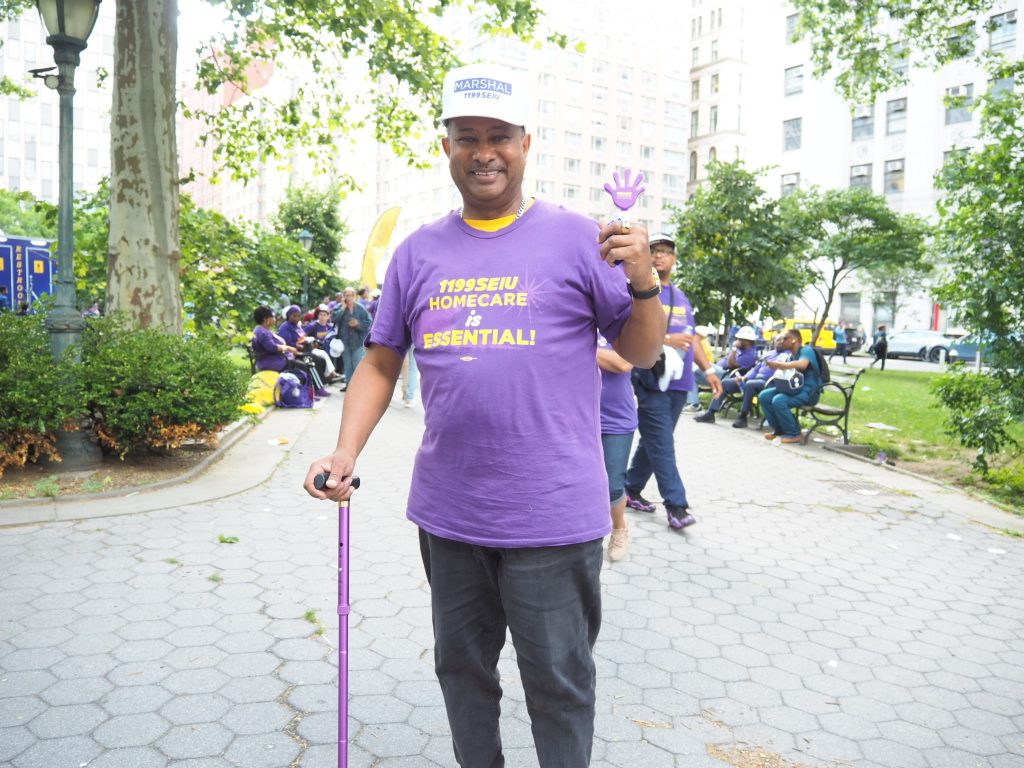
Henry Acedo, a 62-year-old Dominican home care worker, said he’s proud of the work he does, even though workers like him sacrificed their personal lives during the pandemic to care for their patients.
“Home care workers were going out on the line, leaving their families by themselves to take care of their clients, which also became like another family member to them,” he said.
Armstrong, the union president, said that her members have responded throughout the pandemic, and she believes they should be recognized for the vital work that they do.
“No matter what role we play in the field of healthcare, all of our jobs are essential, and we demand respect,” she said. “We keep this system running through crises. We put our lives and our bodies on the line every single day. We are not going backwards, and we are not backing down.”