

Editor’s Note: This story includes graphic imagery documenting an act of self-immolation.
On a humid July afternoon in Northern Boulevard in Woodside, Queens, Lobga Rangzen smiles into his phone’s camera and hits record. “Bhod Rangzen,” he says, meaning “Free Tibet” in Tibetan. He uploads the video to Facebook.
At 5:02 p.m., he posts a series of photos of himself outside the Cipriani Hotel in Midtown Manhattan. He follows that post with a 6-minute long video at 6:28 p.m.
“What I want to say is that Communist China’s policies and activities in Tibet are aimed at completely destroying the Tibetan people,” he says in Tibetan. Immediately after, he begins streaming live on Facebook.
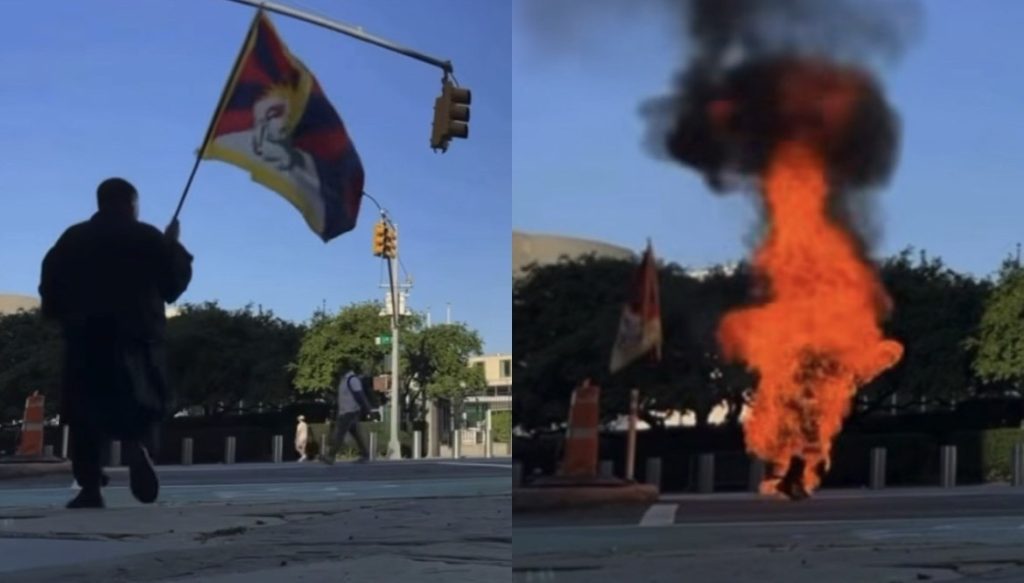
In this live stream, he is outside the United Nations headquarters on First Avenue in Manhattan and no longer wearing the sweat-stained blue shirt he wore earlier but a traditional Tibetan robe. He walks into the frame carrying his Tibetan flag mounted on a pole. He plants it firmly in the ground and stands beside it, opposite the United Nations. Pedestrians continue walking past. Traffic moves along First Avenue.
A few seconds into the livestream, flames engulf his body. He remains upright for a few seconds and then, his body gives in.
He collapses onto the pavement. U.N. security officers rush toward him with fire extinguishers as cars continue to pass through the intersection. Within moments, emergency responders arrive.
The livestream continues until an NYPD officer notices the phone, picks it up, and ends the broadcast.
Rangzen is taken to Bellevue Hospital, where he is pronounced dead at approximately 7:04 p.m. He was 52 years old. His death, on July 2, marks the first known Tibetan self-immolation on U.S. soil.
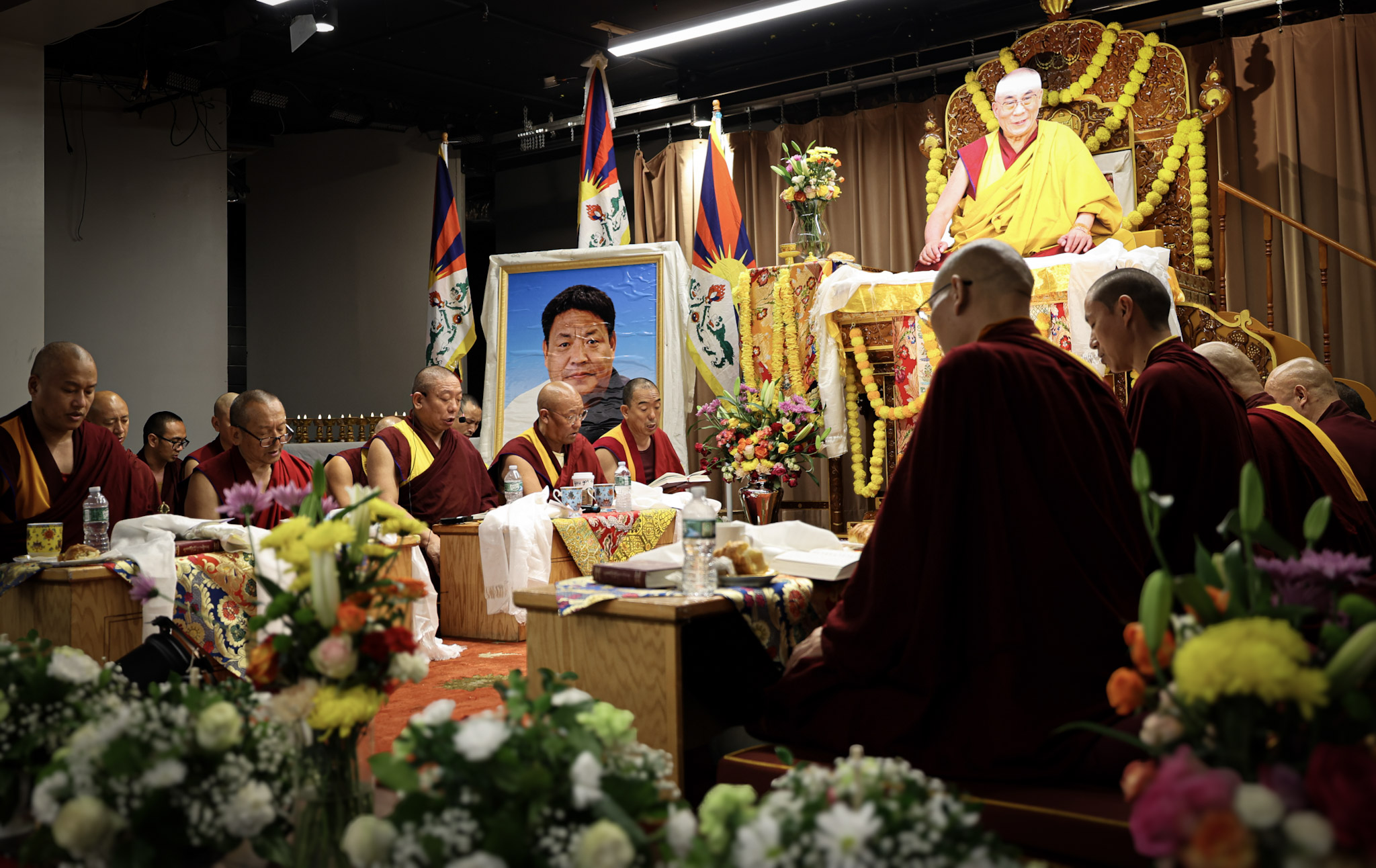
Every Wednesday since, more than 700 Tibetans have gathered at the Tibetan Community Center in Woodside, Queens, for a weekly prayer service held in Rangzen’s memory.

The gatherings will continue until August 19, marking the 49th day after his death.
Behind the fleeting news coverage, his friends, fellow activists, and family members told Documented about Rangzen’s years of activism and the convictions that led him to carry out one of the Tibetan movement’s most extraordinary acts of protest.
Understanding Tibetan self-immolation
By sunset on July 2, news of Rangzen’s death had spread across the Tibetan diaspora as well as various media outlets.
Tenzin Choekyi, one of his nieces, expressed disbelief over the act and said, “Even his family back in Tibet had no idea he was going to do it.”
Rangzen never married and had no immediate family in the United States. Instead, members of New York and New Jersey’s Tibetan community — many of whom had known him for years — assumed responsibility for his funeral.
Self-immolation has remained one of the Tibetan freedom movement’s most desperate forms of political protest. Since 2009, more than 170 Tibetans, aged 15 to 81, have lit themselves on fire in protest against Chinese occupation of Tibet. Most of those cases occurred inside Tibet, while a small number took place in diasporic communities in India, Nepal, and, most recently, the U.S.
Rangzen’s protest came one day after China implemented the Ethnic Unity Law, which aims to assimilate China’s 56 officially recognized ethnic minorities, including Tibetans, into a unified Chinese national identity.
The law sparked protests across the U.S., India and Europe, where Tibetans, Uyghurs, Hong Kongers, Chinese dissidents and allied groups called for its repeal. On July 1, a bipartisan group of U.S. senators also condemned the measure.
“From an outsider’s perspective,” Thupten, a close friend of Rangzen’s, said, “someone burning themselves can look like a lunatic. People think it’s simply suicide.” Thupten requested to only share his first name out of privacy concerns.
Rather than directing violence toward others, those within the Tibetan freedom movement see self immolation as a form of political protest and commitment to non-violence. Choosing self-immolation inflicts suffering only upon themselves in an attempt to draw international attention to Tibet.
The man behind the protest
Before immigrating to the U.S. in 2006, Rangzen lived in India, where he was a monk at a Tibetan monastery in South India. Born Lobsang Palden in eastern Tibet, he escaped to India in the 1990s.
In New York, he worked a series of jobs — including construction, food delivery, and driving for Uber. He lived in the Jackson Heights neighborhood in Queens, home to one of the largest Tibetan communities in the U.S.
Over the years, Rangzen served in several Tibetan activist organizations, including the Regional Tibetan Youth Congress of New York and New Jersey (RTYC NYNJ) and, since 2023, as president of the Tibetan National Congress.
Friends of his said that nearly every conversation with him eventually returned to Tibet.
“He would call me at odd hours and speak of Tibet all the time,” Jigme Ugen, a Tibetan activist, said during a speech at a protest outside the Chinese Consulate on July 5.
Ugen said that Rangzen had last year proposed what became the First North America Peace Rally for Tibet, a convoy of nearly 100 vehicles that traveled from Philadelphia to New York and stopped at the Chinese Consulate before arriving at the U.N. headquarters.
His activism stretched back years. In 2011, after Jigme Norbu — nephew of the 14th Dalai Lama — was killed after being struck by a car while distributing pamphlets during his “Walk for Tibet” peace march in Florida, board members of RTYC NYNJ searched for volunteers willing to continue the journey. Ngawang Tashi, then president of the organization, had inherited a list of volunteers from the previous board members. Rangzen’s name was the first on the list.
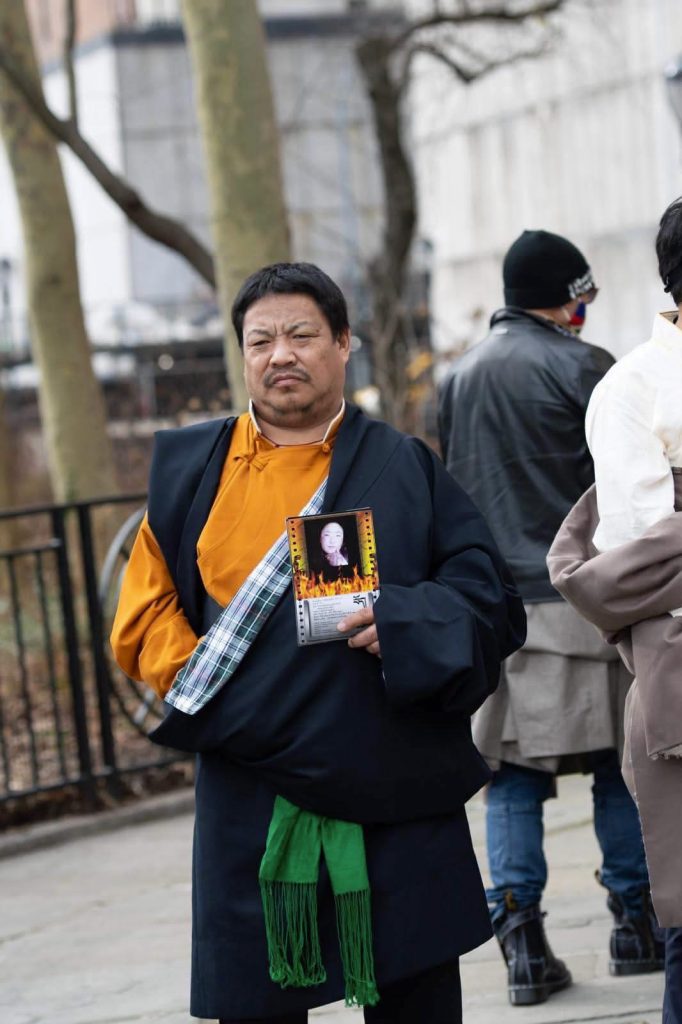
“I told him what had happened and said, ‘We need your help,’ ” Tashi told Documented. “I wasn’t expecting him to say yes right away. But without any hesitation, he asked, ‘Where am I supposed to come?’ I was surprised by his response.” Later, Rangzen joined the march from New York to Indiana.
Rangzen remained deeply involved in RTYC NYNJ’s campaigns. In 2011, he joined Tashi and four others on a 230-mile “Walk for Tibet” march from the U.N. headquarters in New York to the White House in Washington, D.C.
In 2019, he walked another 92 miles, this time from Philadelphia’s Independence Hall to the U.N. headquarters in New York alongside six other Tibetans.
Friends say those kinds of commitments were typical. “There was a saying among us that he’d quit about 20 jobs,” Thupten said. “If there was a protest and his employer wouldn’t give him leave, he would just quit.” Some friends occasionally gave him money while he searched for another job.
According to Thupten, Rangzen always tried to attend protests outside the Chinese Consulate in New York, made a point of traveling to Washington to lobby lawmakers on Tibet, regularly demonstrated outside the U.N. headquarters, and actively participated in cultural events.
“He always felt we had to do something big,” Tashi said, who recalled that even on camping and hiking trips to Bear Mountain, he kept a Tibetan flag in his backpack. He would stop to hang it from a tree or place it on a rock, hoping that it would inspire conversation about Tibet.
It was against this backdrop of devout protest that the idea of self-immolation was born. In 2012, Rangzen confided to Tashi that he considered carrying out a self-immolation, Tashi said. He had asked Tashi to help write his final words if he went through with it. Tashi refused.
“I told him, ‘We’re living in a free country,’” he recalled. “We can organize protests, raise our voices, and keep fighting for Tibet.’ ”
According to Thupten, Rangzen had lost members of his family to Chinese repression in Tibet before fleeing to India.
“That added fuel to his motivation,” Thupten said about his dedication to the Tibetan cause. “When he came to India and met thousands of Tibetans who had also escaped, leaving family behind under Chinese oppression, he dedicated his life to Tibet.”
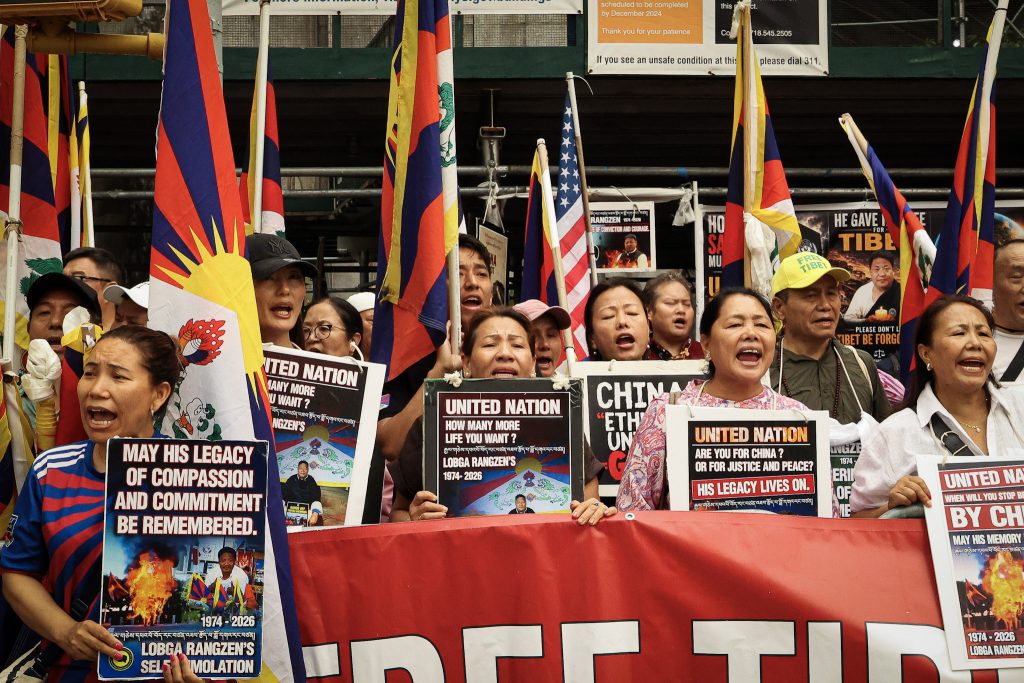
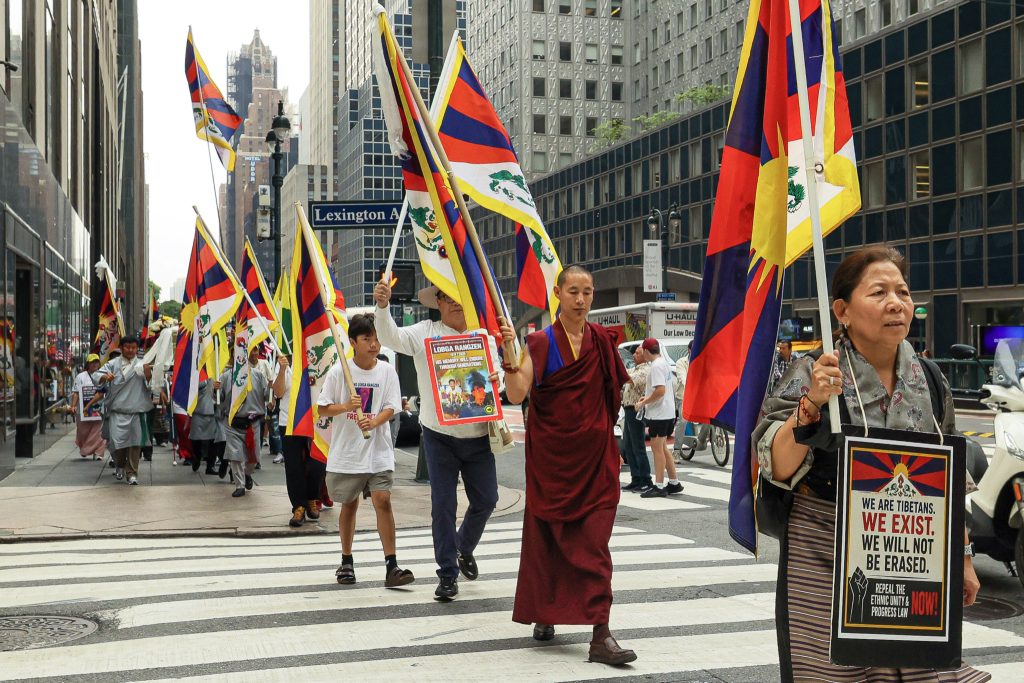
Outside his activist circles, friends remembered him as someone who was full of life and cherished by those around him.
Every Wednesday and Sunday evening, Rangzen joined more than 30 other Tibetans in Moore Hempstead Playground in Elmhurst for Gorshey, a traditional Tibetan circle dance organized by Drora Tramo, a group he co-founded.
“He loved to sing. He loved to dance,” Thupten said of his friend. His WhatsApp profile carried the name Dugnye Shesa, which roughly translates to “someone you can share your suffering with.”
“He was friendly,” Thupten said. “A fun person. Compassionate. Always kind.”
Remembering Lobga Rangzen
That same evening of Rangzen’s death, more than 100 supporters gathered outside the U.N. headquarters for a candlelight vigil at the spot where he had carried out the protest.
In the days that followed, Tibetan activist groups organized a series of demonstrations outside both the U.N. headquarters and the Chinese Consulate in Manhattan. Protesters carried placards reading “Justice for Rangzen” and “Tibet Belongs to Tibetans.”
When asked about the protest at a July 6 press briefing, U.N. spokesperson Stéphane Dujarric called the incident “absolutely tragic” and said, “It is hard to imagine what would propel a human being to do that to themselves.”
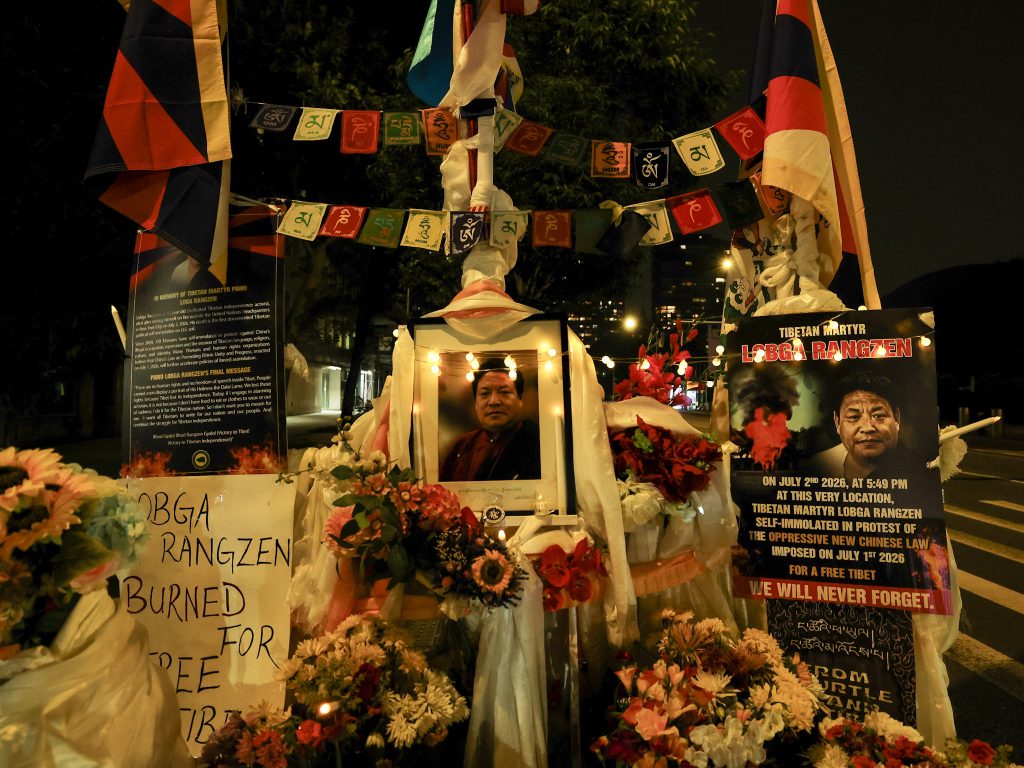
On July 8, Reuters reported that the U.S. State Department said it would continue to call on China to resume direct dialogue with the 14th Dalai Lama and his representatives following Rangzen’s self-immolation.
In response, Chinese Foreign Ministry spokesperson Mao Ning called for the U.S. to not “interfere in China’s internal affairs.”
“We urge the U.S. side to abide by its commitment of recognizing Xizang as a part of China and not supporting ‘Xizang independence,’ ” she said, using the Chinese Communist Party’s officially promoted name for Tibet as part of its sinicization efforts.
Tsela Zoksang, the 22-year-old Campaigns Director at Students for a Free Tibet, said Rangzen’s death has been a “wake-up call.”
“I’ve seen so many new young faces at the protests that I’ve never seen before. They’re asking, ‘What can we do?’ “
For many young Tibetan Americans like herself, Zoksang said Rangzen’s death transformed a struggle they had grown up hearing about into something deeply personal. “The most extreme act of protest, the greatest sacrifice someone can make, was brought directly to our doorstep,” she said.
Tenzin Dorjee, a researcher at the Tibet Action Institute and a professor of Politics at Columbia University believes the significance of Rangzen’s sacrifice will ultimately depend on what follows.
“When somebody lays down their life for the cause of national liberation,” he said, “the responsibility shifts to everyone else. If the movement simply returns to business as usual, then Rangzen’s sacrifice will have been wasted. The greatest injustice would not be what happened on July 2. It would be forgetting why he did it.”