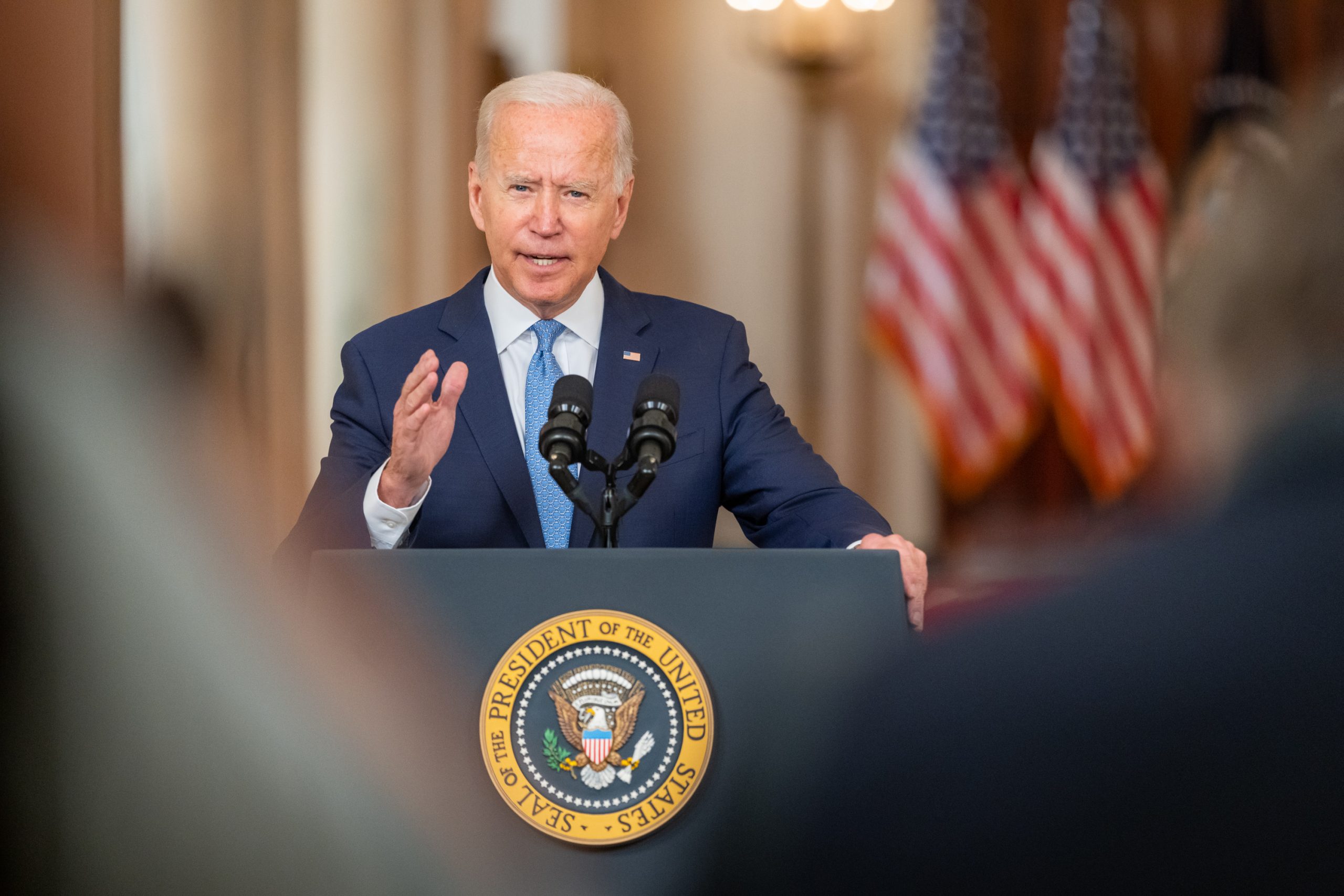


During his four-year tenure, President Joe Biden, living in the White House, would often walk by a painting of a Statue of Liberty upstairs. In 17 minutes on Wednesday night, Biden delivered his final most significant speech to date: his farewell address, centered on the painting.
The Statue of Liberty is “an enduring symbol of the soul of our nation… . A nation of immigrants who came to build a better life. A nation holding the torch of the most powerful idea ever in the history of the world: all of us are created equal,” Biden said. “All of us deserve to be treated with dignity, justice and fairness. Democracy must defend, be defined, and be imposed; moved in every way possible: Our rights, our freedoms, our dreams.”
His speech carried both latent and manifest connotations in regards to immigration and immigrants in the U.S. In the leadup to his speech, Biden extended the immigration status of nearly 1 million immigrants in the Temporary Protected Status program Trump has threatened to cut.

But even amid the excitement of a remarkable farewell, the Biden administration also leaves behind immigration policies and measures bound to have a profound and damaging impact after his departure from office.
Under the Biden administration, Immigration and Customs Enforcement performed a grand experiment, vastly increasing the number of immigrants it monitors during conditional release, mostly through the use of a smartphone-based application called SmartLINK.
In the past four years, ICE has vastly expanded use of the app from fewer than 6,000 people in 2019, to about 160,000 people being monitored on the app alone, as of Jan. 11, ICE data shows. That is about 85% of the nearly 189,000 people on monitored conditional release, which ICE calls the Alternatives to Detention program. Many of the others are on ankle monitors, wristworn devices, and other tech. SmartLINK began under President Donald Trump’s first administration, but the Biden administration expanded it, presenting it as a humane alternative to ankle monitors and detention centers.
But more than a dozen advocacy organizations who have been closely monitoring the Alternatives to Detention program say it creates “digital prisons” and saddles immigrants with heightened surveillance, data collection and human rights threats. As Documented reported back in 2022, several immigrants told us they were concerned about how the data was used and worried about privacy, particularly about how communication surveillance and location tracking could affect their undocumented family members.
In light of the second Trump administration’s looming threat of mass deportations, immigration advocates and data privacy experts have been apprehensive about how Trump will capitalize on SmartLINK’s information.
The Biden administration also has deported more migrants than any prior administration, overseeing nearly 2.5 million Title 42 expulsions — far surpassing Trump’s Remain in Mexico program. His administration also restarted deportation flights to Venezuela, pressured Mexico to accept migrants from several nations including Venezuelans, Cubans, Haitians, and Nicaraguans, conducted enforcement sweeps, tightened visa access, increased ICE detentions, and repatriated tens of thousands of Haitians by air.
In the thick of the election season last year, the Biden administration also issued a new policy to prevent migrants from entering the U.S., allowing for restrictions at the border when migrant crossings reach a certain point — a measure that immigrants’ rights groups, including the American Civil Liberties Union sued against. In implementing the executive order though, Biden followed in the footsteps of his predecessors — including former presidents Obama and Trump during his first administration — who used their authority in the same law to execute several significant restrictions on the entry of immigrants into the U.S.
All of these measures bring into question the manifest meaning in Biden’s analogy about the veteran son of an immigrant whom he highlighted at the conclusion of his speech. “A son of an immigrant, whose job was to climb that torch and polish the amber panes so rays of light could reach out as far as possible,” Biden said. “He was known as the keeper of the flame. He once said of the Statue of Liberty, ‘Speaks a silent, universal language, one of hope that anyone who seeks and speaks freedom can understand.’”
Biden indeed ended his message conveying hope and determination, encouraging people to persist through challenges and actively pursue a better future, saying “what I believe is the America of our dreams is always closer than we think.”
But for many undocumented immigrants and even immigrants with legal status, many of whom have lived in the U.S. for over a decade and are now grappling with the looming threat of Trump’s promise of the largest deportation operation in U.S. history, those dreams are farther.