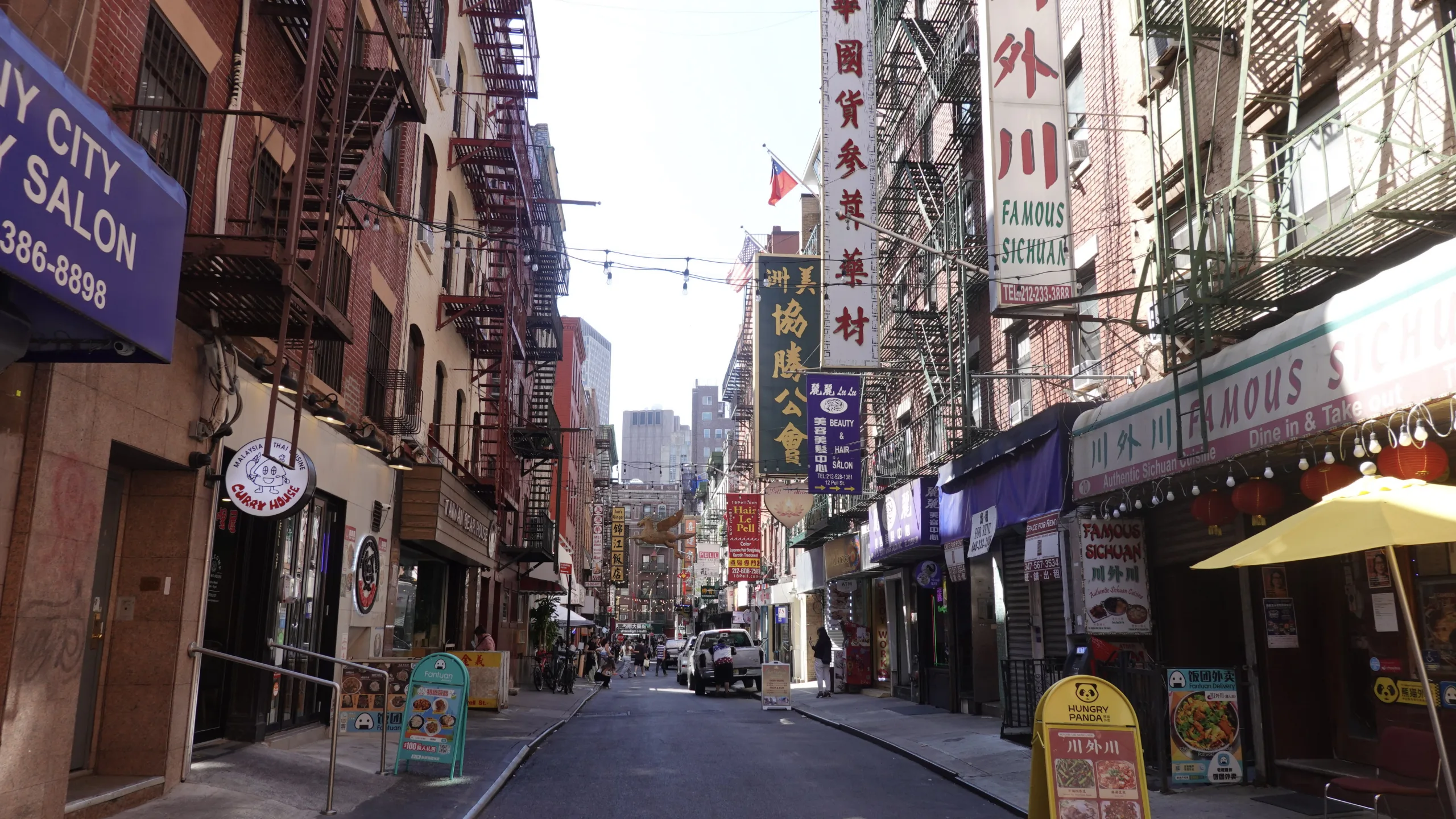


Ivy Yang, who has run Famous Sichuan in Chinatown for more than a decade, has a deep understanding of how difficult it is to operate a small business in New York City, especially in neighborhoods like Chinatown that have endured repeated shocks — from COVID-19 to U.S.-China trade tensions to the new congestion pricing system.
For Yang, fines and fees add financial pressure, but she said they are only a small part of the problem. “The bigger costs are the rising expenses of doing business in such an expensive city and the loss of customers due to congestion pricing and other policies,” she explained.
“If the impact from COVID was a natural disaster, now we are facing a disaster caused by policymakers,” Yang told Documented in Mandarin. She estimated that business at her restaurant has dropped by at least 30–40% since the policy began, and that neighboring stores on Pell Street have seen similar declines. Some customers, she added, have told her they now choose to dine in Brooklyn or Flushing to avoid the additional costs of driving into Chinatown.

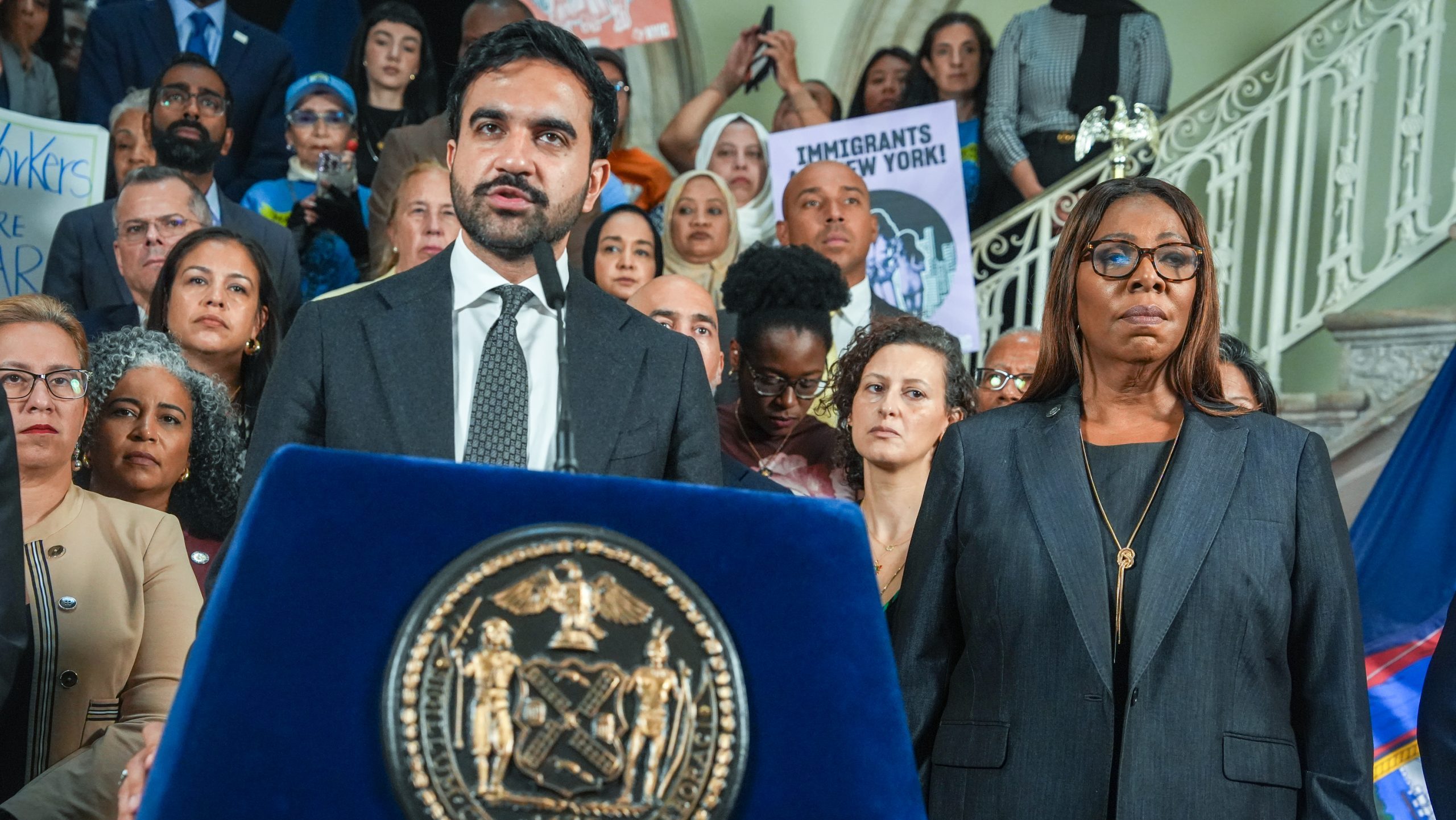
Immigrant small business owners like Yang make up 33.8% of all self-employed residents in the state, a figure that is even higher in New York City, where foreign-born workers account for nearly 49% of the self-employed population. Mayoral candidate and frontrunner Zohran Mamdani’s wide sweeping political platform, focused on affordability, which includes measures aimed at addressing the issues Yang and others face. However, experts and small business owners warn that with longstanding bureaucracy, an uncertain economy, and new threats from the Trump administration, some of his plans may be difficult to implement or beyond his control.
In a three-page proposal outlining his platform to support small businesses, Mamdani emphasized three key measures: cutting fines and fees for small businesses in half; streamlining online applications and permitting; and increasing funding for one-on-one small business support by 500%.
Eli Dvorkin, editorial and policy director of the Center for an Urban Future, noted that most small business owners feel their operating costs have risen far faster than their revenues, with city fines and fees contributing to that burden. He said the idea of cutting fines is a step many business owners would welcome, and one that the current Mayor Eric Adams also pursued in the wake of the pandemic. But he cautioned that whoever becomes mayor will inherit a tough fiscal environment.
“Any measures that reduce revenue for the city will be challenging, and that may be an obstacle to enacting,” Dvorkin said. With millions of dollars in federal cuts already on the horizon and a governor already slamming Mamdani’s tax plan, he added, “It is going to be tough for the next mayor, whoever they are, to do everything they may want to do in terms of new spending.”
The speed of interacting with the city is a major pain point for many small businesses, said Dvorkin. Mamdani, he added, is right to identify efficiencies as “low-hanging fruit opportunities” that could make the city work better for small businesses without requiring large expenditures. But he cautioned that “it’s a worthy goal, but it’s a tricky one.” The challenge, Dvorkin explained, isn’t the cost but the bureaucracy itself.
Mamdani’s proposal highlights the bureaucratic hurdles entrepreneurs face: opening a barbershop in New York City requires an estimated 24 forms, interactions with seven agencies, and attendance at 12 separate activities. Other types of businesses face similarly complicated processes, often involving four to 11 agencies.
“There are so many different agencies that have oversight over what small businesses need to do to comply with regulations in New York,” said Dvorkin. “Streamlining and harmonizing those processes across agencies has always been tough. Mayors have been trying for years, if not decades, with mixed results, and part of that is the complexity of the bureaucracy.”
He added that potential tech solutions remain another hurdle, as the city has struggled to implement them effectively. Contracts with vendors have been costly, and workable systems have yet to be figured out.
Vic Lee, co-founder of Welcome to Chinatown, a non-profit organization dedicated to supporting Manhattan’s vibrant Chinatown community, echoed that perspective. “I see a lot of opportunity in [Mamdani’s platform],” she said. “In theory, I think these are really great things to look at, but I want to see more in the execution and how these ideas will actually work to reduce bureaucracy and the burden on small businesses.”
Mamdani has pitched a “fix, don’t fine” approach to cutting fees, arguing that the city should work with local businesses to address the root causes of violations rather than handing out penalties “right off the bat.”
Lee agreed and said many regulations are created with good intentions but don’t always achieve their goals. She suggested reviewing existing rules to determine whether they effectively support small businesses and urged agencies to enhance communication to expedite permitting and simplify online applications.
Lee also questioned whether expanding city programs like the New York City’s Business Express Service Teams (BEST) would deliver results. She noted that Mamdani’s proposal mentioned only 3 percent of small businesses used services from the BEST program in the past three years. “If we’re going to invest an additional $20 million to expand capacity [of BEST], how are we going to spend that effectively to ensure quality one-on-one support?” she asked. She added that nonprofits and business improvement districts already play a role in providing that support and should be considered in the city’s plans.
On the other hand, some Chinatown small business owners view congestion pricing as a challenge that poses a more direct impact on their businesses in Manhattan. The state policy, which took effect on Jan. 5, charges vehicles entering at or below 60th Street. Many hope the next mayor will press the governor to roll it back.
“I understand congestion pricing is good for the environment, but it made it harder for us to do business,” Jian Sen Li, who took over Rainbow Pavilion Trading Inc., a six-decade-old Chinatown gift shop, two years ago, said in Mandarin. He hopes the next mayor will push to cancel the charge and engage more directly with immigrant small business owners to learn more about their needs. “It’s not necessary to have one-on-one services,” he said. “I just hope the mayor can host regular in-language community meetings in our neighborhood and get our input. That would be really helpful.”
Beyond congestion pricing, access to affordable commercial space looms as another major challenge. “Chinatown’s predominant industry now is food and beverage, and they operate on thin margins,” said Lee, citing a 2023 commercial district needs assessment by NYC Small Business Services, the Chinatown Business Improvement District, and Think!Chinatown. The report found that 83% of surveyed merchants rent their space, with full-service restaurants making up the largest business category.
Alice Liu, second-generation owner of Grand Tea & Imports, said rising commercial rents are the heaviest burden. “That’s the biggest overhead cost for all businesses in the city, especially mom-and-pop shops in communities of color,” she said. “With more development in the neighborhood, there’s more displacement.”
Liu said she isn’t sure what the best solution is but noted that during the pandemic there was discussion about freezing commercial rents. “I don’t know if that’s still on the table, or if it’s the right solution,” she said. “I just know small businesses need more help with commercial leases. But real estate is always in demand in New York, it’s like asking to take the fuel out of the beast.”
Both Lee and Dvorkin noted that language services for immigrant business owners and access to capital are missing from mayoral candidate Mamdani’s current small business proposal. “I hope that as he’s developing his policy platform, he’s really engaging groups and organizations that-like ours-have been on the ground and been working with small businesses,” said Lee.
Dvorkin pointed to research showing opportunities to strengthen immigrant-and-minority-owned small businesses by expanding the role of Community Development Financial Institutions (CDFIs), which are mission-driven financial institutions that deliver affordable credit, capital, development services, and financial services to residents and businesses in economically distressed communities.
Wellington Chen, executive director of the Chinatown Business Improvement District, added that challenges also stem from federal policies. He said crackdowns on migrants have made some customers wary of visiting local restaurants and shops, while immigrant workers are increasingly hesitant to take jobs. “Many restaurants and construction companies don’t have enough workers now, because migrant workers are afraid of coming to work sites,” Chen said. “These are challenges that one mayor or governor alone cannot solve […] Chinatown has a lot of places that could use help.”