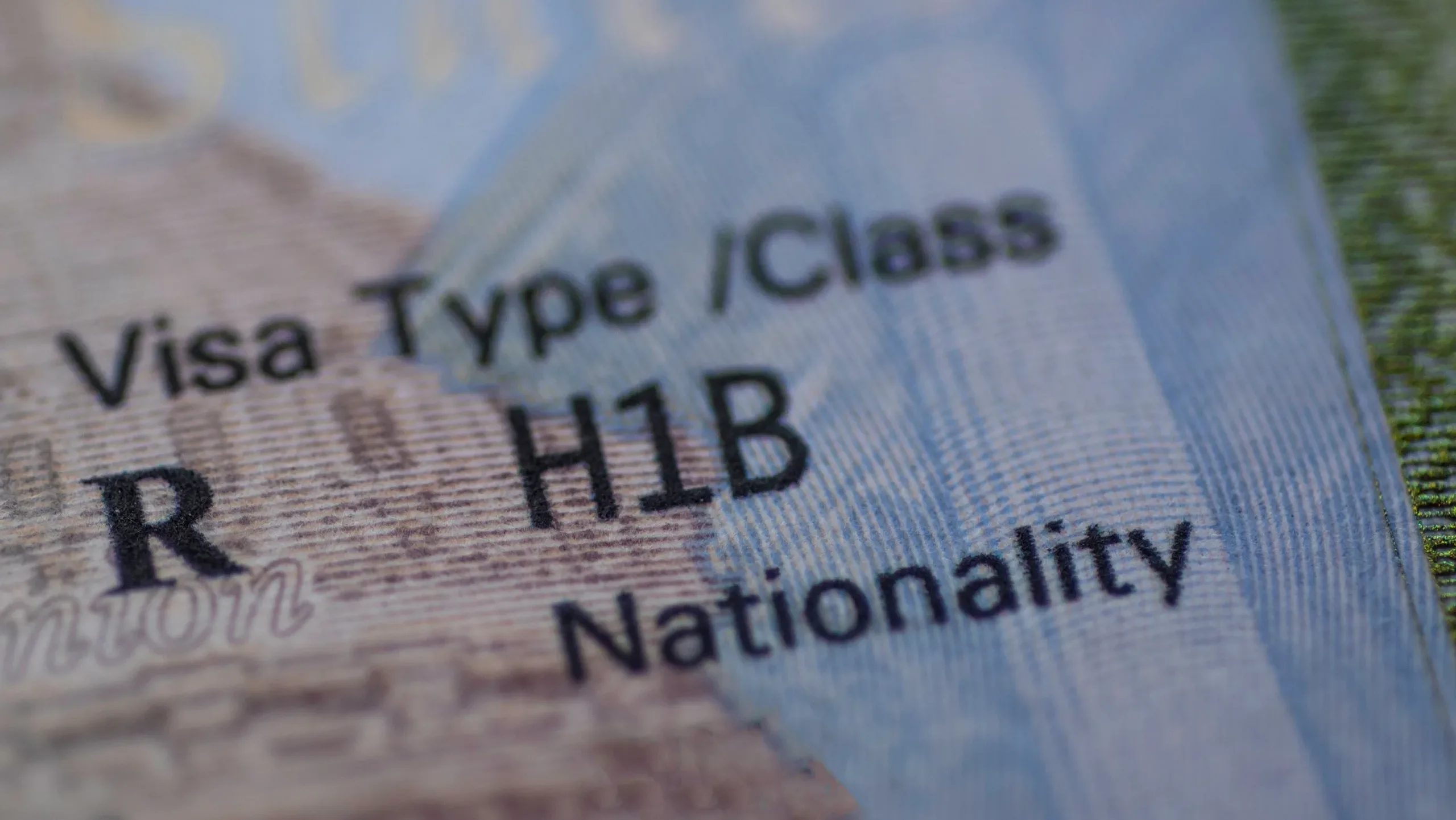


Apoorva arrived in New York in 2018 on an H-1B visa, fresh from one of India’s top graduate schools and brimming with hope of building a life in the United States. She soon joined an architecture firm, eager to contribute her skills and establish roots.
But her dreams were quickly dashed — because Apoorva, like many other immigrants on an H-1B, soon experienced some visa-related issues. She recalled being stuck at her minimum wage architecture job for over three years. Changing jobs on an H-1B visa is famously difficult, and often means enduring months of bureaucratic limbo and steep United States Citizenship and Immigration Services (USCIS) fees.
Apoorva eventually secured a second job with a higher starting salary but that had its own costs as well.
“My second employer froze my salary for three years citing immigration costs of around $8,000 to $9,000 annually, which ultimately they asked me to cover myself,” Apoorva, who shared only her first name, said.

Apoorva was not planning to go back to India but visa uncertainties made her question her future in the country.
“At every point of my seven-year H-1B journey, I have questioned whether it was worth spending decades waiting for a green card via this path and enduring all the mental battles, the career stagnation and the debilitating limbo that came with it — or if it was just better to move back to India,” she said.
Then on Sept. 19, President Donald Trump shook the country, and Apoorva’s resolve, by announcing a whopping fee hike for H-1B visas, raising the cost to $100,000, nearly 50 times the previous fee.
“If this fee hike applies to extensions, I’m out,” she said. “Smaller companies cannot accommodate these costs and may outsource or shift to remote work.” She added: “Salaries may stagnate or even drop, and young graduates will lose the chance for on-the-ground learning and cross-cultural experience.”
The H-1B visa is a temporary non-immigrant category that allows U.S. employers to hire highly educated foreign professionals in specialty occupations. Typically issued for three years and extendable to six, it requires employers to certify that hiring the foreign worker will not negatively affect the wages or working conditions of U.S. employees.
Also Read: New York Braces for Impact as H-1B Visa Fees Skyrocket
In New York, Apoorva’s case is far from unique, as the state is a major hub for H-1B workers.
Between fiscal years 2017 and 2022, more than 370,000 H-1B petitions were approved in the New York City metropolitan area alone, according to the American Immigration Council. That amounts to about 15% percent of all H-1B approvals nationwide.
Indians, who make up the majority of H-1B recipients nationwide, are especially vulnerable. In 2024, they received 71% of approved H-1B visas, followed by Chinese nationals at 11.7%, according to USCIS.
Though the White House clarified a day after the announcement that the hike would apply only to new applications as a one-time charge, the anxiety among visa holders remains. On the Chinese social media app Rednote, H-1B holders shared stories of rushing back to the U.S., sometimes mere hours after leaving.
Meanwhile, experts warn that the policy could destabilize critical sectors. Doug Rand, former USCIS advisor, described the announcement as “chaos-inducing.”
“This whole proclamation was rolled out in the most unprofessional, sloppy, chaos-inducing way, and the dust hasn’t even settled yet,” Rand told Documented. “Tying an entry ban to a massive filing fee is a stretch to think Congress authorized.”
He added: “When people hear the term H-1B, the administration wants us to think of a random person with limited skills who’s being imported to do low-value IT work…But the overwhelming majority came here for college or graduate school, stayed to work for a normal U.S. company — not a staffing or outsourcing firm — and they’re just waiting for their green card. They are not ‘foreign workers.’ They are potential Americans in waiting.”
United States Exit Plans
For some immigrants, President Trump’s latest announcement was the final straw in deciding to leave.
Hari Prasad Renganathan, a data scientist in Manhattan, came to the U.S. in 2021 for a master’s program at Columbia University. But after multiple failed attempts at the U.S.’s H1B lottery, he has made plans to exit.
“I can’t officially call this home, but it’s where I started my life. I went to grad school, started my career here. I have a lot of friends and colleagues here. I got into the mindset of, okay, this is my new home,” he said. “But I have no choice, I have decided to leave and move to London.”
P., a 32-year-old professional based in Manhattan, echoed similar frustrations. She graduated with an MBA from one of the top business schools in the country and now works for a consultancy firm. She was planning on applying for a dependent visa through her partner who is on the H-1B visa, but the new H1-B policy has them facing renewed uncertainties for job changes and green card sponsorship.
“You think you have five different paths — great degree, good job, willing sponsor — but the policies are written by people who don’t understand them,” said P., who shared only her last initial to protect her job. “My partner and I are seriously thinking about leaving the U.S. We both have six-figure jobs, pay taxes, Social Security, and Medicare, but we’re not citizens. It feels very dehumanizing and not a way to build goodwill for contributors.”
Bracing for the fallout
Along with many other groups, Jeff Joseph, president of the American Immigration Lawyers Association, is seeking to challenge the administration’s order.
“The tech industry, which uses the majority of H-1Bs, will be among the most affected — particularly Indian and Chinese workers. But many other sectors rely on H-1Bs too: hospitals, research organizations, non-profits, architecture, engineering, infrastructure, schools, and universities,” he told Documented, adding that small businesses may be hit hardest, as they’re less able to absorb the higher fees.
Also Read: What Can H1B Visa Holders Do After Being Laid Off?
He noted that without clearer guidance from the administration, many lawsuits would be filed. “The way the policy is written suggests DHS may collect the fees for petitions filed within the country,” he said, adding that the fee may only apply if you leave the U.S. but that can only be certain after further clarification.
Nidhi Bagri, a New York-based recruiter for tech firms, says the hiring of high-skilled workers will also become stagnant.
“It is not good news because the reason we used to bring H-1B professionals is because there is scarcity in those roles in any company,” Bagri said. “So there will be a bit of backlash. And people are scared since there is a lot of chaos and confusion right now following the fee-hike announcement.”
Looking ahead, Bagri predicts long-term talent shortages.
“A few years ago hiring started slowing down and I see that in the coming years it’ll be very difficult to fulfill those roles, because these H-1B especially are very skilled and they have certain specialties which we will be missing,” she said. “And it is unfortunate that we have to go through without filling those roles, or not having the right talent.”
The fee hike exacerbates longstanding systemic issues that had made employees vulnerable — employees like Apoorva and Renganathan. For them, and countless others, every job offer, lease renewal, or travel plan is weighed against the fragility of their legal status and a new hefty price tag.
“This isn’t just about visas,” Rand said. “It’s about sending a message to people who want to contribute, who want to stay, and who are already here: you’re not welcome. That’s the real tragedy.”