

Former Gov. Andrew Cuomo won much of the Bronx in the Democratic primary against Zohran Mamdani. In the interim though, the Mamdani campaign was able to win back almost all of the borough since June, according to election results.
“That was the power of having immigrants be part of this movement,” said AjiFanta Marenah, a Bronxite who co-founded Africans for Zohran and canvassed across the borough with her newborn daughter after the first round of voting.
Those Bronx neighborhoods were but one of a handful of New York’s heavily immigrant areas that changed sides in the General Election from South Brooklyn, to Flushing and even Staten Island, according to a new Documented analysis of Election Board and Census Bureau data. These neighborhoods speak to the complexity of either candidate’s electorate and the importance of voters seeing themselves in the candidates.

Marenah, originally from The Gambia, said immigration issues like the arrests at 26 Federal Plaza and the cost of housing and food were top of mind for those she spoke with across the borough. But Mamdani represents much more than just neighborhood issues to immigrant Bronxites, she said.
“They could resonate, they saw themselves in the campaign,” she said. “That’s why they believed in it.”
Marenah pointed out the advantages of having someone knocking on your door from the immigrant community, or who you may recognize from your mosque, or who speaks your language. That was key to their campaign amongst immigrants from the Bronx.
“Having someone who embodies all of the diversities, being an immigrant, being a Muslim, being a foreign born, African born, and then they become the mayor of New York City. It’s just an incredible showcase of representation,” she said. “And, you know, I hope young immigrants can see themselves in Mamdani and see that they can achieve whatever they put their mind to.”
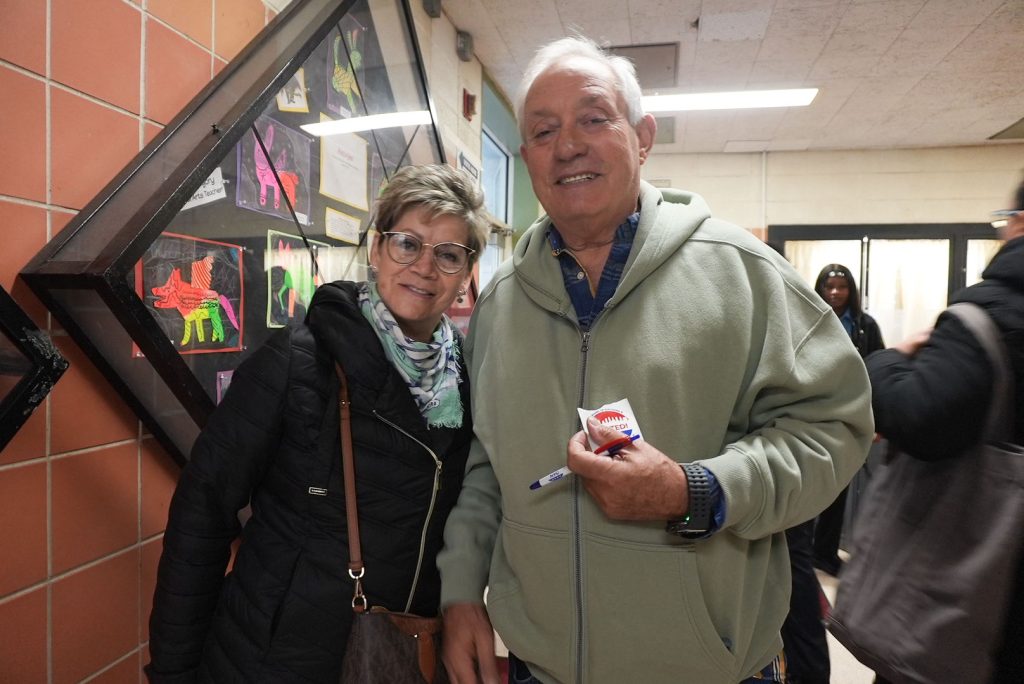
Overall, immigrant neighborhoods supported Mamdani in the mayoral general election, but Independent candidate Andrew Cuomo and Republican candidate Curtis Sliwa performed slightly better than amongst the general electorate.
Cuomo and Sliwa had a slightly higher share in immigrant neighborhoods than in the general election, with Cuomo dominating in the heavily Chinese neighborhood of Flushing, winning in some election districts by more than 20 percentage points. Areas in Bensonhurst, Brooklyn and even parts of Sunset Park moved their vote to Cuomo’s ticket as compared to the primary.
Mamdani beat out Cuomo with 48.97% of the vote in immigrant neighborhoods according to early results, with Cuomo bringing in 42.91% and Curtis raking in a mere 8.1%.
For this analysis, Documented defined immigrant neighborhoods as any areas where more than half of the population was born outside of the U.S.
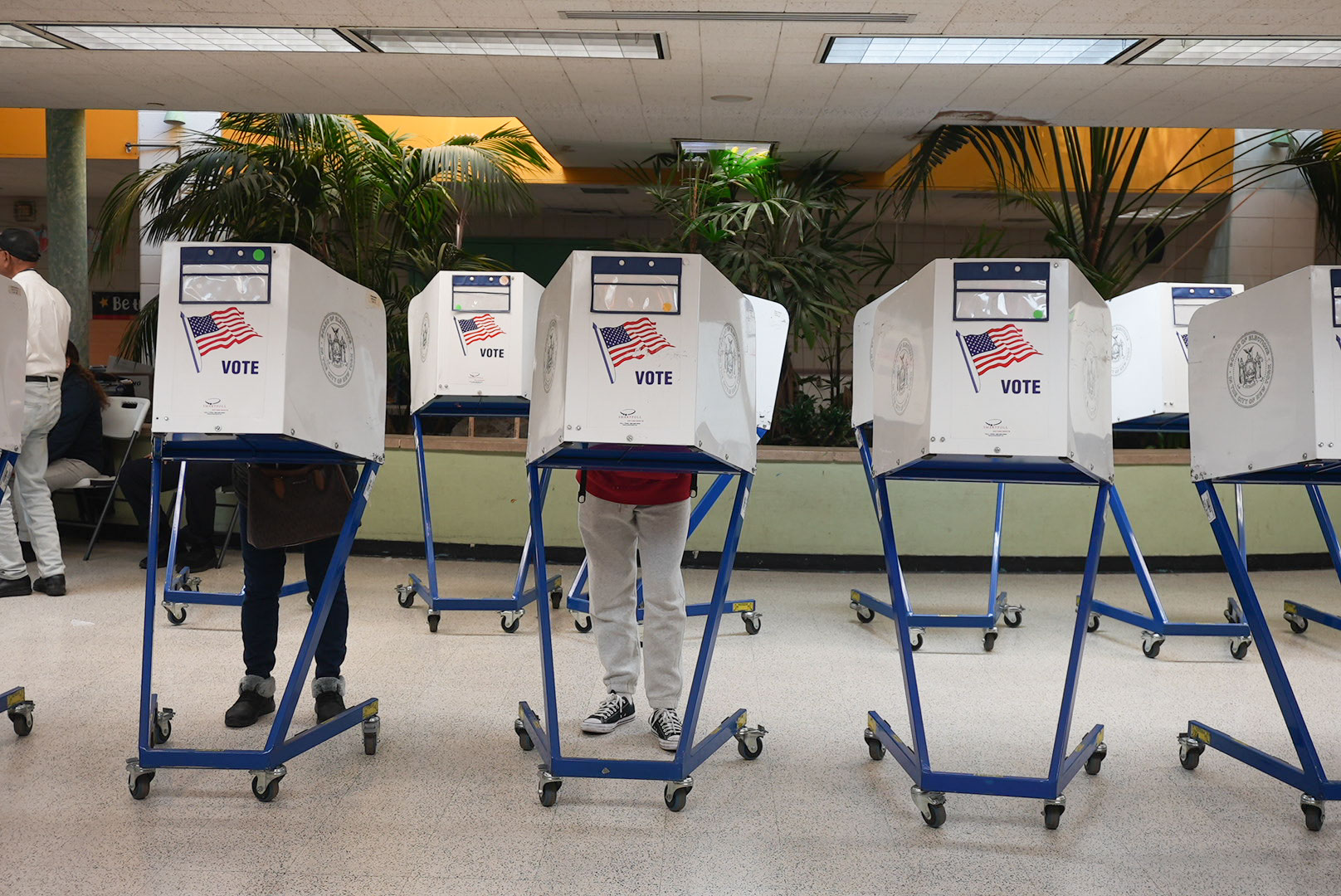
An estimated 303,230 people voted in those areas, 14.7% of the 2.05 million people who voted in the mayoral election. Overall voter turnout hit the 2 million mark for the first time in the city’s race for mayor since 1969.
Across all immigrant neighborhoods, Mamdani garnered 6% more votes than Cuomo — roughly 2 percentage points less than the share of votes he captured in the city overall.
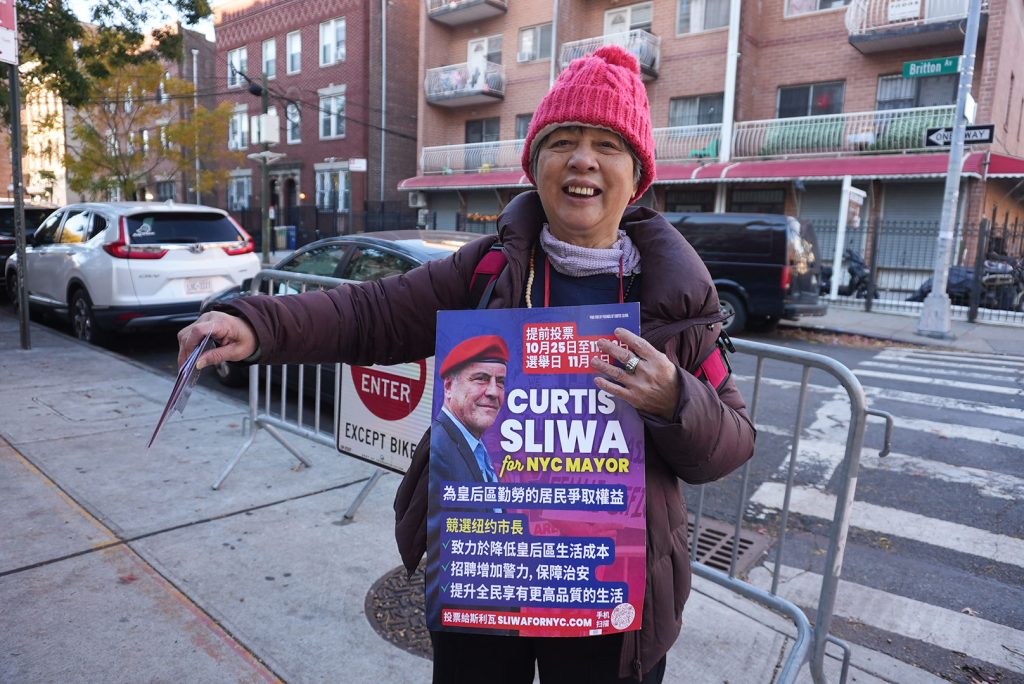
Luna Cheng, a resident of Flushing, Queens, for over 30 years, voted for the first time in yesterday’s general election as a Republican. The 68-year-old was handing out Sliwa flyers near a polling site in Elmhurst, Queens, on Tuesday.
She said she had supported Democrats for 28 years — with the exception of Rudy Giuliani — but was impressed by Sliwa’s plans to convert empty office buildings into housing and his boots-on-the-ground approach. Benefits for the elderly were also a high priority.
She also admired Sliwa’s strategy when he organized groups during the COVID-19 pandemic to protect residents. “Nobody wants to [go] outside,” she said.
As to the new mayor-elect, the vote for Mamdani stayed steadily strong within the city’s South Asian communities, such as those seen in Jackson Heights, Jamaica and Ozone Park, as seen in the Democratic primary.
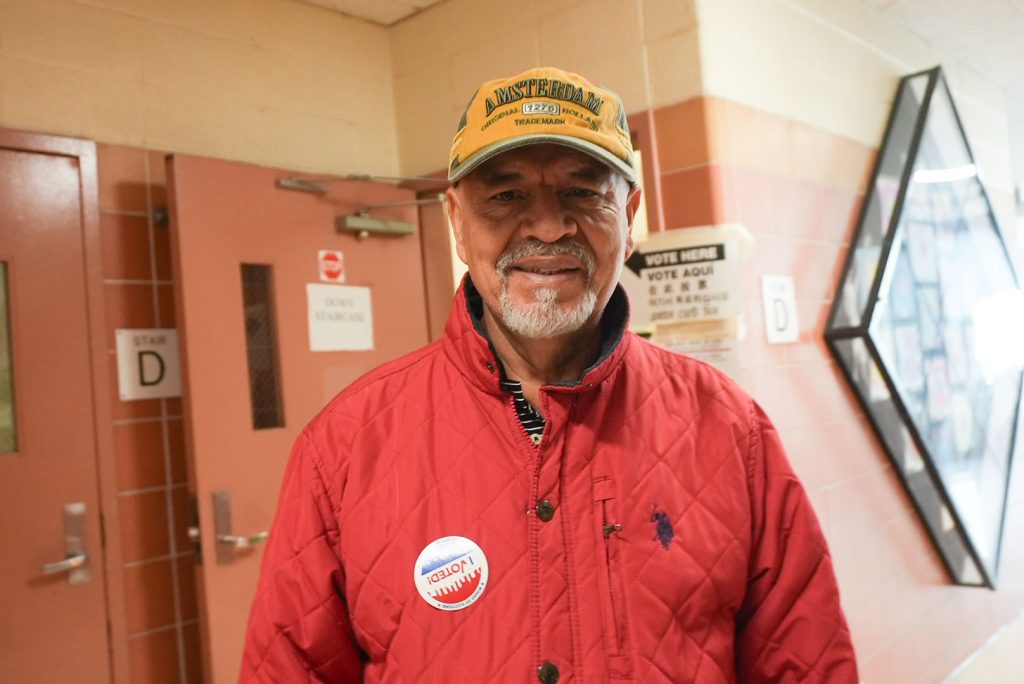
But there were some new additions: East Flatbush, home to many people of Caribbean origin, experienced a major Mamdani shift. The Clifton neighborhood on Staten Island, the only majority-immigrant census tract in the borough, flipped to support the next mayor.
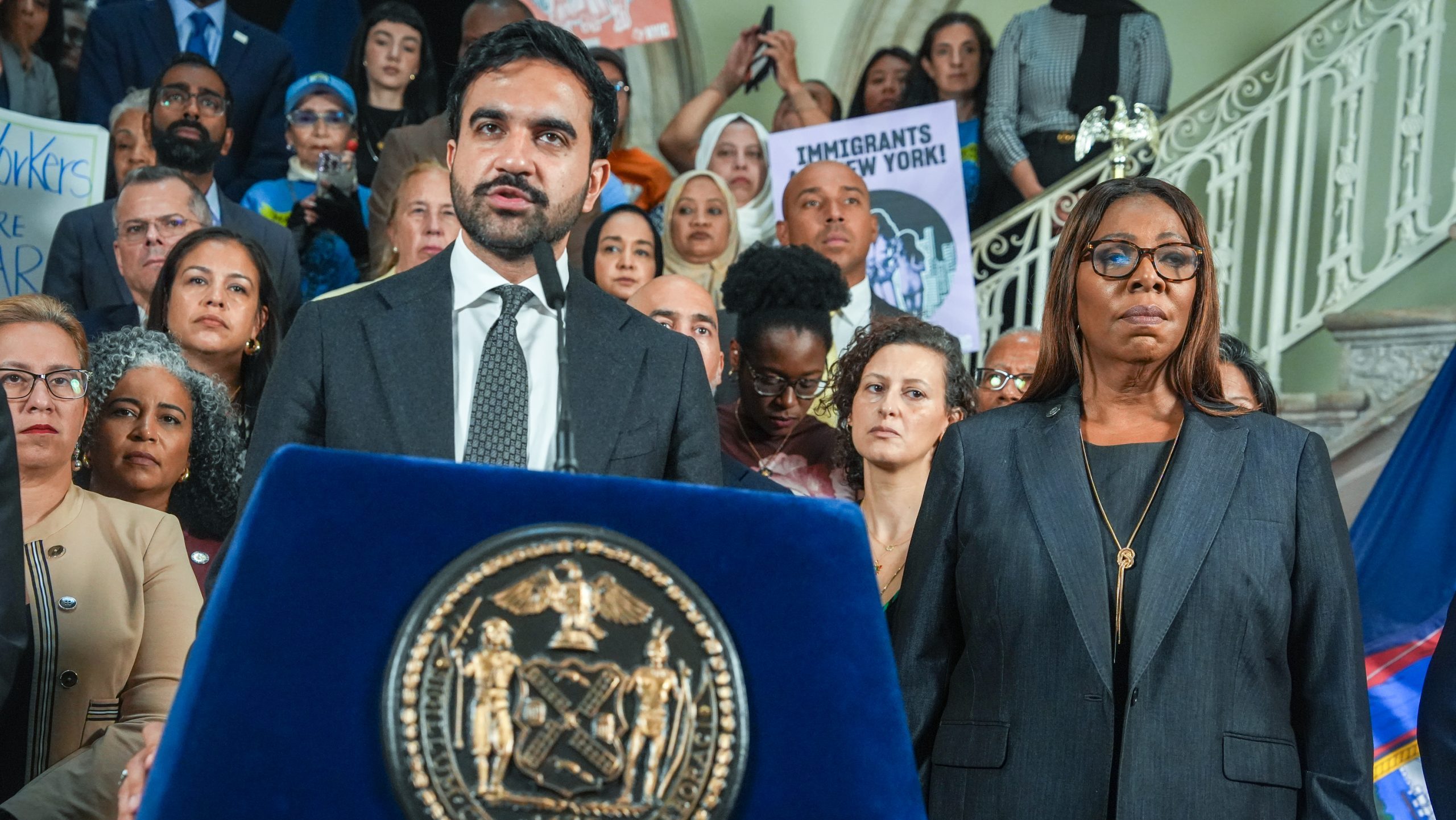
Mamdani shouted out such immigrant workers in his victory speech on Tuesday night.
“Thank you to those so often forgotten by the politics of our city, who made this movement their own,” he told the crowd at the Brooklyn Paramount. “I speak of Yemeni bodega owners and Mexican abuelas. Senegalese taxi drivers and Uzbek nurses. Trinidadian line cooks and Ethiopian aunties. Yes, aunties.”
About the Analysis
To compare election results with demographic patterns, we apportioned votes from election districts to census tracts using an “Area-Weighted Intersection Analysis”. Each election district’s total votes were distributed across the tracts it overlaps, in proportion to the share of the district’s area that falls within each tract. This method ensured that every vote counted once in our analysis, and that tracts partially covered by multiple districts received a fair share of votes based on geography.
Demographic statistics on foreign-born populations came from the American Community Survey’s 2018-2023 estimates, the most recent five-year demographic estimates available from the Census Bureau. Primary election votes by election district came from the NYC Board of Elections.
Sam Rabiyah contributed to this article.