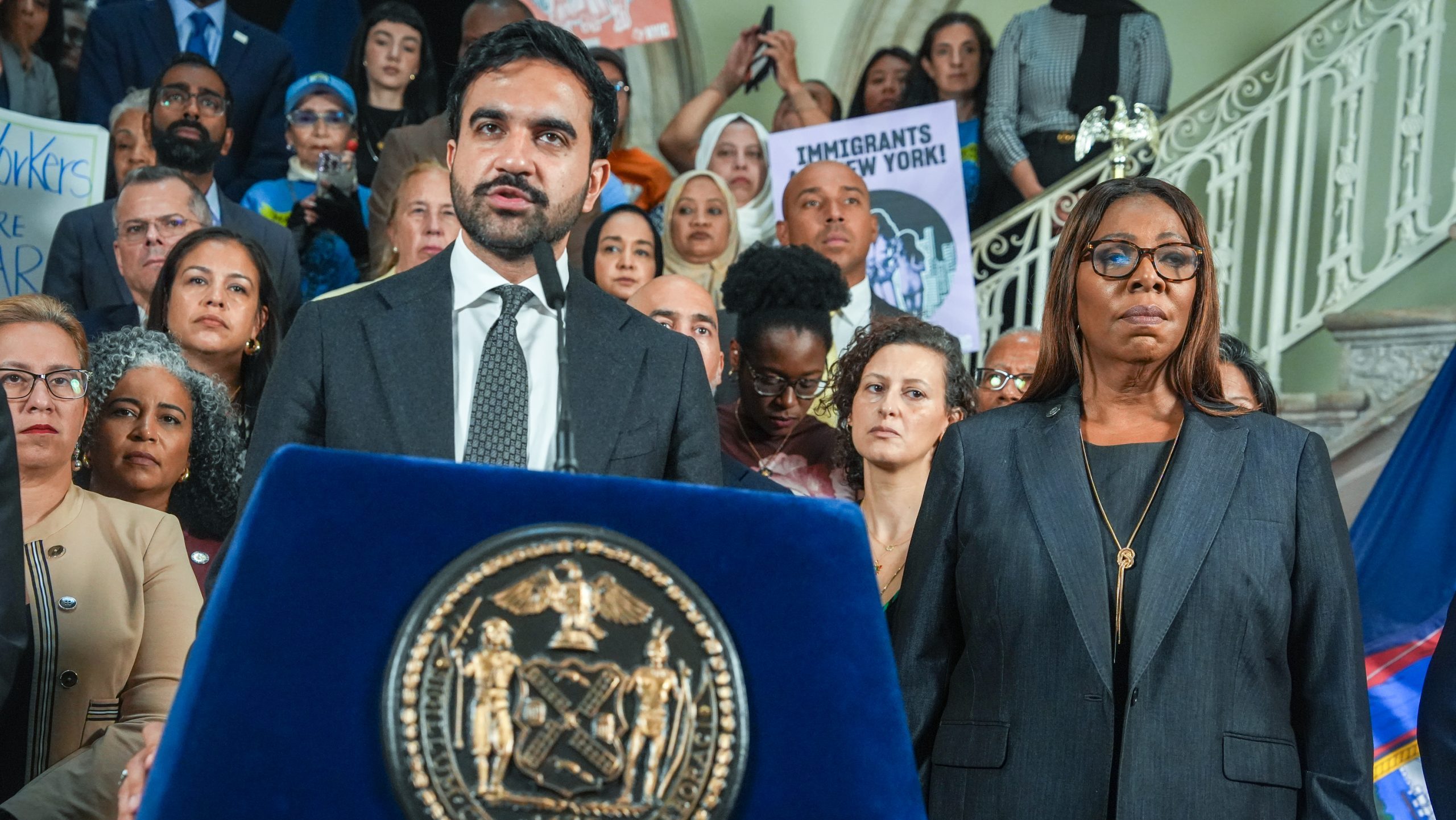
Last week, Mayor Zohran Mamdani balanced the city’s checkbook — and shored up his campaign commitment to worker protections.
On May 12, the mayor unveiled the $124.7 billion executive budget for the fiscal year 2027. Mamdani’s ability to avert a fiscal crisis by closing the city’s projected $12 billion deficit received much fanfare, but another victory flew under the radar: the Department of Consumer and Worker Protection (DCWP), the city’s top labor agency, received a budget increase.
As previously reported by Documented, when the mayor released his first preliminary budget on Feb. 17, only $74.7 million was allocated to DCWP, a far cry from the mayor’s campaign-trail pledge to double the agency’s budget to $135 million.

That preliminary budget was also a decrease from the previous mayor’s budget. Under former Mayor Eric Adams, DCWP’s adopted budget for fiscal year 2026 was $75 million. The agency’s budget was later modified to more than $85.5 million.
Now, under the mayor’s executive budget, the administration will invest an additional $4.3 million into DCWP, bringing the agency’s 2027 funding to $78.4 million. Mamdani also pledged to raise the agency’s budget to $96.6 million by fiscal year 2030.
DCWP is tasked with enforcing the city’s labor and consumer protection laws, and has been viewed as a cornerstone in fulfilling Mamdani’s affordability agenda. Since taking office in January, Mamdani’s DCWP has recovered $9.3 million in restitution for consumers, workers, and small business owners, the city said in April.
During his first month in office, Mamdani announced a $5.2 million settlement with three delivery app companies for allegedly violating the city’s delivery worker minimum wage law. In March, the agency took action against a Staten Island Dunkin’ franchise owner accused of violating the city’s Fair Workweek and Protected Time Off laws.
The mayor’s office told Documented that it pledges to increase the agency’s staff by 180 positions, to be phased in over three years. In 2024, DCWP, long suffering from chronic understaffing, juggled thousands of complaints and opened hundreds of investigations with a staff of only 40.
“We want to build a New York City where consumers can navigate the economy without being ripped off and scammed, where workers know their rights and wages are safeguarded, and where honest businesses can compete on a fair and open playing field,” Mamdani said in a statement shared with Documented. “DCWP has already returned more than $9M to workers and small businesses; expanding their capacity to enforce the law will bolster their ability to continue this great work.”
Samuel Levine, commissioner of DCWP, told Documented that the agency now has the resources to implement the mayor’s vision for a more just New York.
“This budget represents the single greatest investment in consumer rights and worker rights in the history of DCWP,” he said. “Additional resources will pay dividends toward ensuring we can implement the agency’s new mandates and deliver tangible economic relief for everyday people.”
Harvey Epstein, a City Council Member and chair of the Committee on Consumer and Worker Protection, has been one of the most vocal advocates for increasing DCWP’s funding.
“Mayor Mamdani’s Executive Budget represents an important step and reflects an administration that is willing to be collaborative with the other stakeholders in this process,” he told Documented in a statement. “After weeks of organizing alongside labor leaders and a coalition of advocates, I am particularly encouraged to see additional funding for the Department of Consumer and Worker Protection, which would allow the agency to increase staffing by over 70 people in this year alone.”
Elizabeth Saylor, citywide director of the Employment Law Unit at The Legal Aid Society, also celebrated the new budget, highlighting a package of recent labor laws that the agency now has increased funding to enforce.
“This additional funding will allow it to enforce new protections for delivery workers, rideshare drivers, security guards, street vendors, and hotel workers,” she said.
Mamadani’s budget, however, falls short of his campaign pledge to increase funding for the New York City Commission on Human Rights (CCHR) to the tune of $21 million. Last year, the adopted budget of the commission was nearly $15.4 million, later increased to $15.7 million in the modified budget. But under the new executive budget for 2027, its budget is reduced to roughly $13.4 million.
Advocates have long called for the city to fully fund CCHR, which is tasked with protecting New Yorkers from workplace and housing discrimination under the city’s Human Rights Law. New York City data shows that in 2024, NYCHRC took an average of 593 days to close a case — in part because of chronic underfunding.
“We are disappointed in the proposed budget cuts,” said Saylor, the Legal Aid Society director. “The severe underfunding of [CCHR] limits New Yorkers’ ability to seek justice for discrimination in employment, housing, and public accommodations.”
Saylor argued that increasing funding for the agency would essentially be a drop in the bucket, but could pay dividends in terms of generating revenue via fines.
“As the enforcer of one of the nation’s most comprehensive civil rights laws, [CCHR] should be funded at no less than $25 million — still less than 0.02 percent of the City’s budget,” she said. “New Yorkers, especially those from low-income communities of color, deserve a budget that reflects these priorities.”