



His funeral took place in the San Francisco de Asís Catholic church in Aldea El Pilar Dos, a small town located in the Municipality of San Juan Sacatepéquez, more than an hour away from Guatemala City, the capital in Guatemala. Hundreds of villagers lingered outside the church’s doors, their faces heavy with sorrow as the services began. Women dressed in traditional Mayan hand-woven huipil of bright reds and oranges. Others donned blue or purple shawls. Others wore black. There they stood, all waiting by the church’s arched entrance waiting for his coffin to pass by.
Moments later six men carried a silver coffin on their shoulders as they walked through the nave and past the throngs of churchgoers. His coffin was hoisted onto the wagon of a truck. His family draped two flags atop his coffin, smoothing out one from Guatemala and another from the United States. Before his procession to the cemetery began, they adorned his coffin with red, orange and yellow lilies.
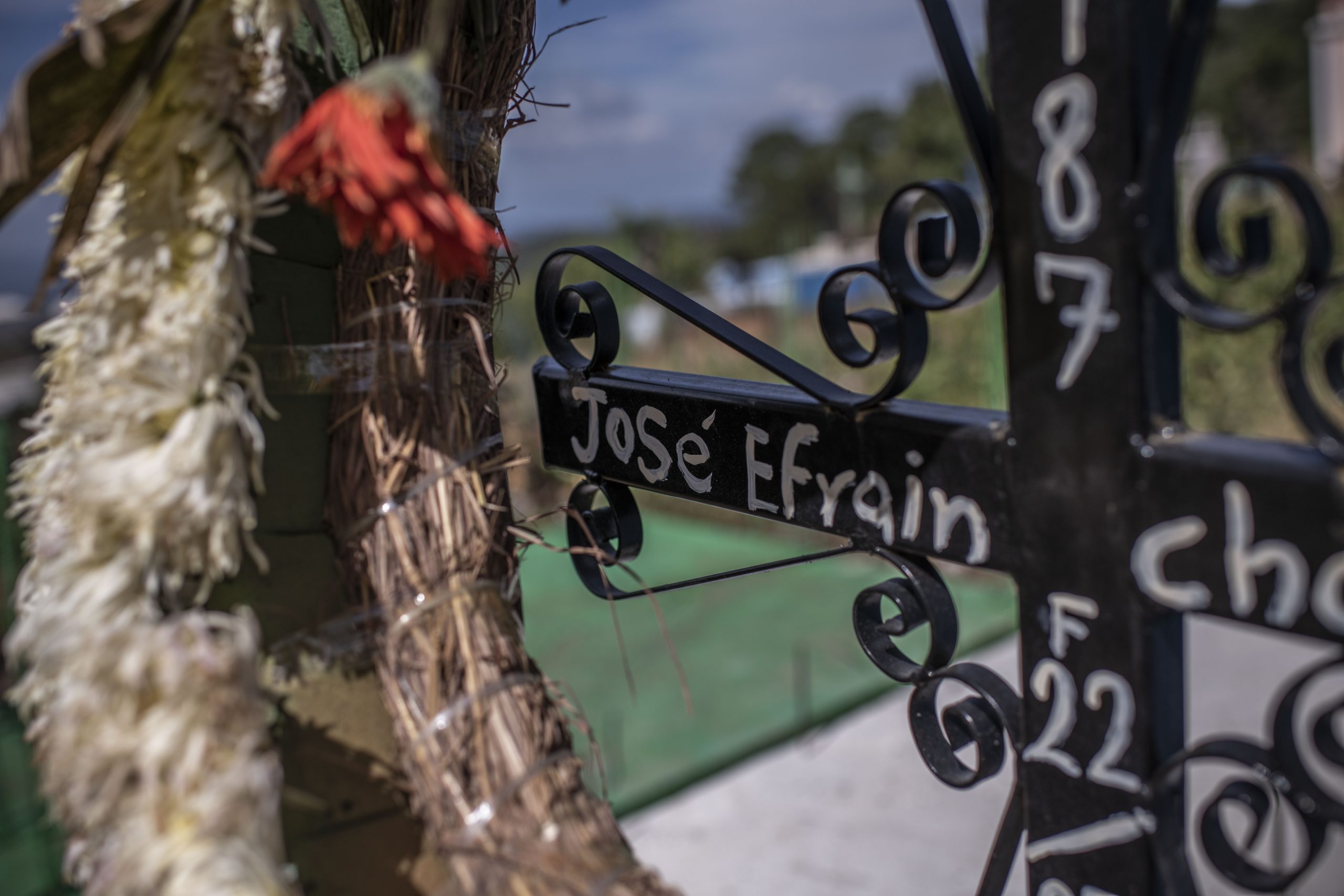
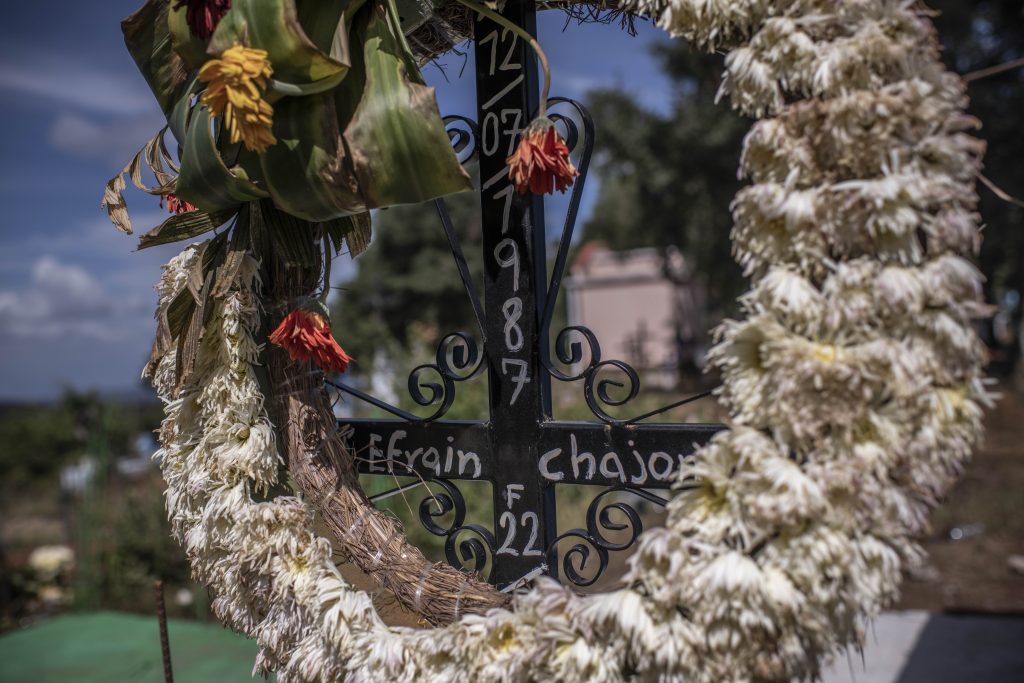
On Aug. 3, around 3 p.m., the body of José Efraín Chajón Raxón was buried in the local cemetery of the town that he left more than a decade ago. The burial and procession that Monday afternoon concluded a series of vigils, masses and wakes held in the honor of Chajón Raxón, whose body had arrived to his village two days before.
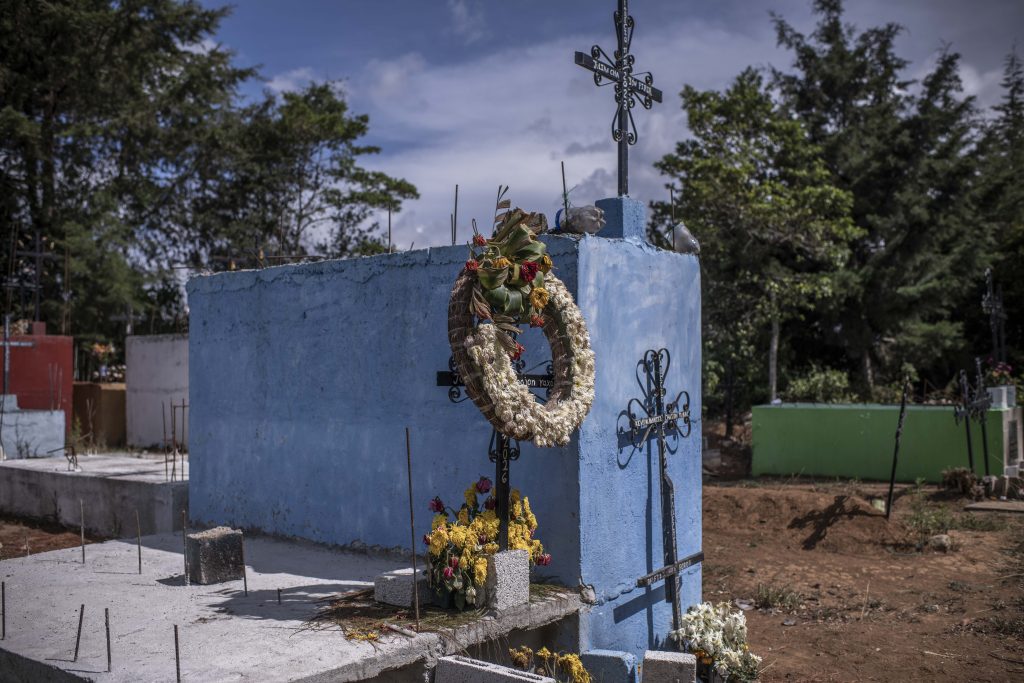
Chajón Raxón did not die in Guatemala, but at University Hospital in New Jersey where he was released from immigration detention a day and a half after experiencing convulsions at the nearby Delaney Hall immigration detention center in Newark.

At the time, the U.S. public still did not know he was gone, or his name. But thousands of miles away, in the mountains outside Guatemala City, his death rocked his tight-knit community, which through a flurry of online posts, began mourning and working to raise the thousands of dollars to bring him home.
In hours-long livestreams of his vigil and funeral, through interviews with family and a member of the church that he attended, members of his community described Chajón Raxón as a beloved “brother” who had migrated to escape poverty and who was in search of better opportunities for his children and family in Guatemala.
“Our dear brother José Efraín migrated in order to provide for his family and help them prosper. He left with such hope and joy,” an attendee said during the burial, communicating with the crowd in a mix of Kaqchikel Maya and Spanish. “But we do not know how he arrived, perhaps with great suffering,” he said, thanking those local and abroad for the donations made to repatriate the body.
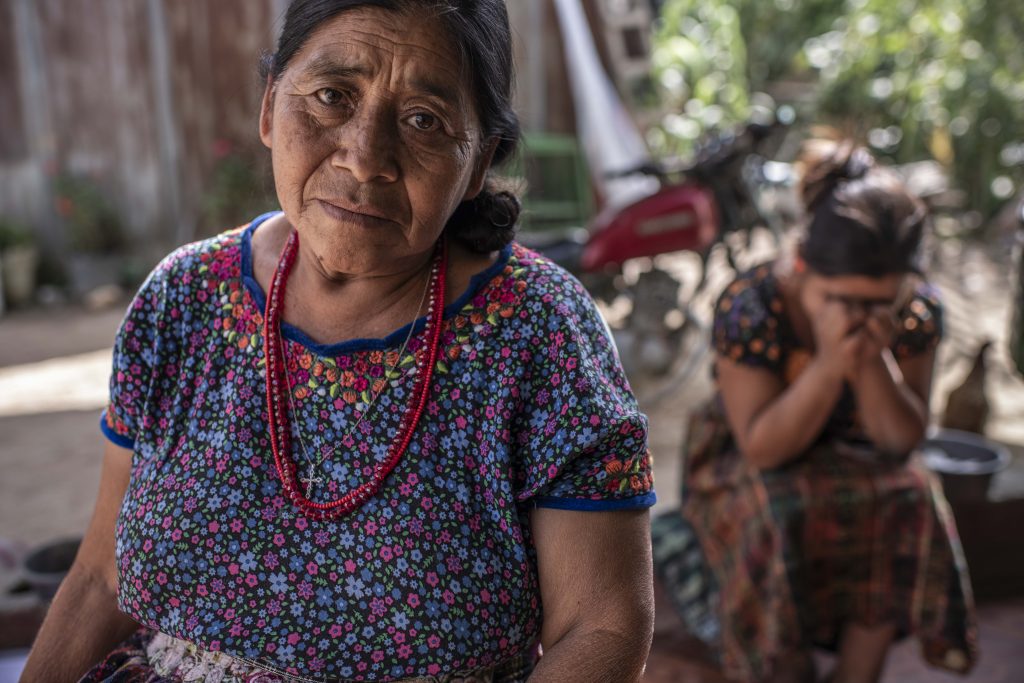
Chajón Raxón’s mother, Carmela Raxón Boror, 60, told Documented on Sunday that she remembered her son as a talkative child — similar to his other siblings.
She was sick, she said, and depended on the money her son sent from the U.S. When asked about whether she wanted justice for her son’s death, Raxón Boror noted that any kind of action would require money they didn’t have.
“If we don’t have any [money] what can we do?” she asked.
Francisco Armando, 33, Chajón Raxón’s younger brother, told Documented that his brother had suffered from seizures in the past. “The thing is that we had seen that he had suffered from convulsions [before],” he said in Spanish, explaining that Chajón Raxón had lived in the U.S. with an older brother who had notified the family of the condition.
He added that a cousin of Chajón Raxón — who had also been detained in Delany Hall the same day — saw when Chajón Raxón suffered a convulsion and fell on the floor. “He had a convulsion inside and then they took him out of there. But since then, we do not know anything about what happened after.”
The cousin, who now lives in Guatemala, told Francisco Armando and the family that Chajón Raxón had been put on a stretcher with his hands cuffed with chains. “As if he was a criminal,” Francisco Armando said. “They took him to the hospital with his hands, and the stretcher tied with chains.”
“As if he was a criminal…They took him to the hospital with his hands, and the stretcher tied with chains.”
– Francisco Armando, José Efraín Chajón Raxón’s brother.
Francisco Armando echoed that the family has been looking for answers ever since his brother’s death but have been unable to start an investigation because they could not afford it.
“If we start something [an investigation], then everything will start to move from there, but it is only if you have money,” the brother said. “And we don’t have any money.”
ICE custody before his death
According to the U.S. Department of Homeland Security (DHS), which oversees U.S. Immigration and Customs Enforcement (ICE), Chajón Raxón died after suffering from convulsions at Delaney Hall detention center in Newark, New Jersey. He was transferred to a nearby hospital, and then released from ICE custody before his death.
He was the latest loss to come to light after a year of record-high deaths in immigration detention, as President Donald Trump has revved up his campaign of mass deportations.
Chajón Raxon’s death was the first to be discovered after the Trump administration rescinded a Biden-era policy requiring ICE to tally deaths of people recently released from detention. But he was not the first to die after a medical emergency at the center.
Over the 15 months since its reopening last year, the Delaney Hall detention facility has been haunted by deaths and wracked by internal detainee strikes who have protested mistreatment including what dozens of people in the facility called medical neglect.
In December, Jean Wilson Brutus, a 41-year-old Haitian national, died from a pulmonary blood clot after ICE transferred him to a hospital. And on Aug. 1, Edwin Jovanny López Cornejo, a 39-year-old father from El Salvador, died in the same hospital after collapsing at the detention facility.
But the circumstances leading to Chajón Raxón’s death are still shrouded in mystery for advocates and lawmakers in the U.S.
“Per ICE policy, when an individual is no longer in ICE custody then ICE will no longer be responsible for monitoring or reviewing deaths that may occur,” an unnamed spokesperson at DHS told Documented.
DHS did not provide any further information about the cause of death.
Chajón Raxón was detained by immigration agents in New Jersey on July 18, according to the Guatemalan foreign ministry. On July 19, a nurse witnessed Chajón Raxón experiencing “seizure-like activity,” after which he was transported to a University Hospital, according to an Instagram post by New Jersey Congressman Rob Menendez and DHS.
As early as July 22, information circulated on local social media groups that Chajón Raxón had died in the U.S. By the next day, family members were asking the community through social media for donations to help cover the costs to repatriate his body. One Facebook post said it would cost over $13,000 USD to bring their loved one home.
At the time, Congressman Menendez had not been notified of his death, according to reporting by The City Reporter. It wouldn’t be until Aug. 3, a day after Chajón Raxón’s family kept vigil over his body in Guatemala, that Menendez publicly announced a third man had died after suffering from what medical staff thought was a seizure at Delaney Hall in a span of eight months.
Guatemalan officials said that they received notification of Chajón Raxón’s detention on the day of his arrest, and made an interview request on July 21 that did not receive a reply from ICE. Chajón Raxón’s name, and death, would only be officially confirmed by the DHS on Aug. 14, nearly a month after his death.
The Guatemalan government has pledged to follow the case, but the Guatemalan Foreign Ministry told Documented that it is currently “in the process of evaluating available information to determine the next action.”
The community answers the call
Crisitian Manuel Raxón, 25, has been a member of the Parish San Francisco de Asís in El Pilar 1, where Chajón Raxón lived before migrating to the U.S.
“When he left he was still very young and known in the church, because his family attended it,” Cristian Manuel Raxón said of Chajón Raxón. Raxón is not related to the family, but explained that many residents in the town share the last name Raxón.
The days after his passing, the town had heard rumors about Chajón Raxón’s death but that no one could confirm the details or when he had passed. “Slowly we began learning more that he had been detained in the U.S. and that it was the reason why he had died, because he could not handle being detained in the conditions that he was in.”
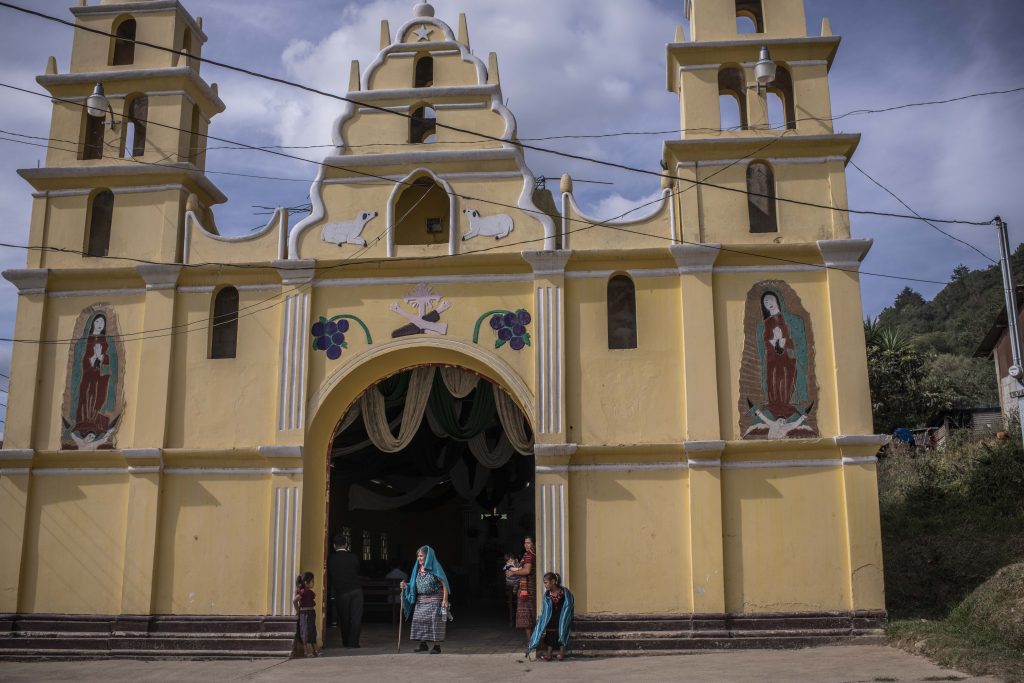
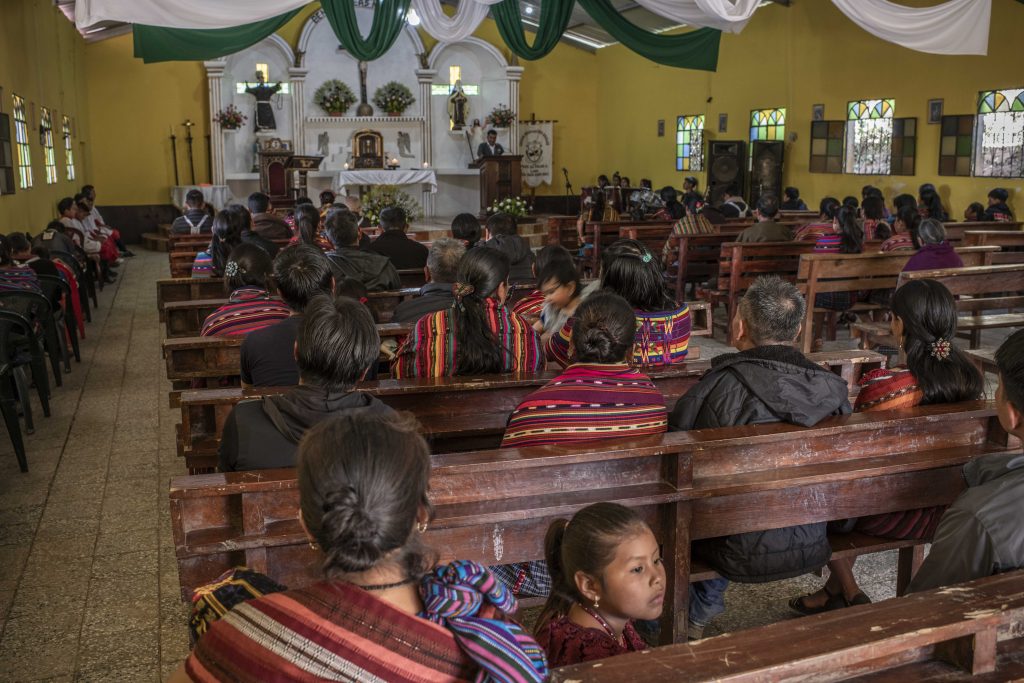
He added that the family, including Chajón Raxón’s mother, brother and son live in El Pilar 1, and quickly mobilized to gather answers from family abroad. He said more than 10 days passed before they heard that they would need to gather money for the repatriation of Chajón Raxón’s body.
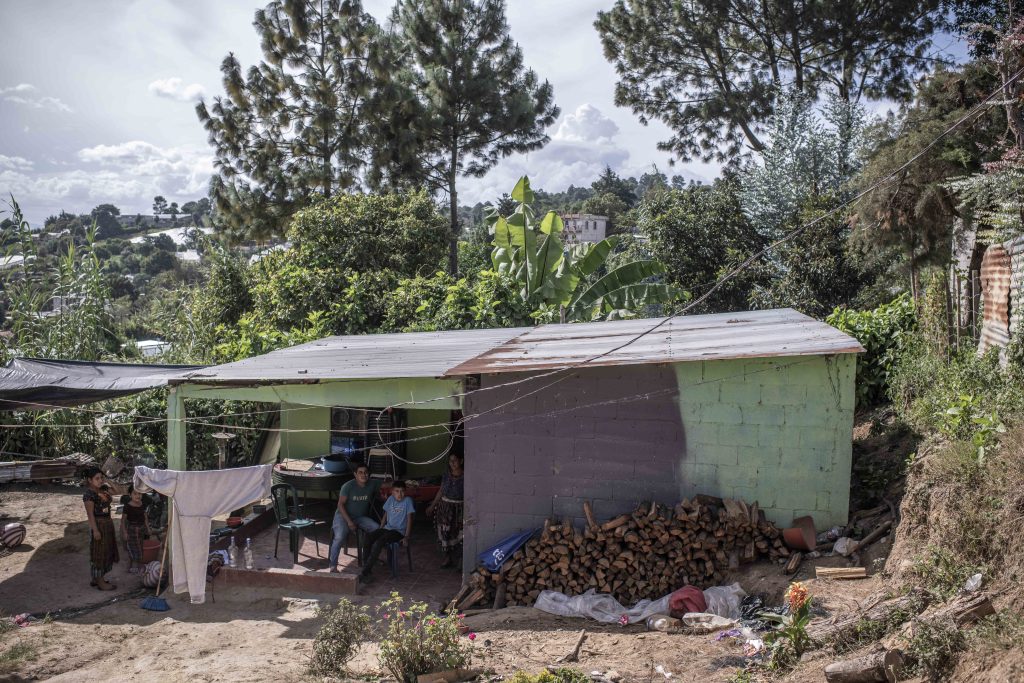
Many people in the town live in houses made of mud or wood, and that it is nearly impossible to cover the cost of repatriation alone, he said. “The community agreed to collect donations in all the neighboring towns. They helped with whatever they could, be it cash donations or provisions,” Crisitian Manuel remembers. “The church also did a collection to help with the efforts.”
During a live stream, one of the attendees said that they had collected 6,500 Guatemalan Quetzales on Saturday Aug. 1, and 3,505 on Sunday, totalling approximately $1,311 dollars.
The church remains a lifeline for the village and is always there to help its residents, he said, including that of the Chajón Raxón family. When the town learned of the date that the body would arrive at El Pilar 1, Crisitian Manuel Raxón said that the church informed attendees during masses. “That’s how people started to organize and to visit the home of his mom, as Mr. Efrain lived in his mom’s house.”
At the mother’s house, he said, the people prayed daily until the local church announced that his body would arrive at the church, where a ceremony and mass would take place to remember him.
Crisitian Manuel explained that for 40 days after the burial of Chajón Raxón on Aug 3., the church and family will hold activities, like prayers and memorial masses to remember him. He said it is a local religious tradition in the village, where it is believed that it takes a loved one 40 days to transition to the afterlife. It reflects biblical texts, where Jesus spent 40 days on earth after resurrection before ascending to heaven.
In Facebook groups of the town, hundreds of comments were left under videos of his vigil and burial, including from some people who said they were in New York.
Crisitian Manuel Raxón explained that people from other municipalities also joined the burial of Chajón Raxón that Sunday afternoon. “We never had a case like this,” he said. “It was the first time that someone returned in a coffin.”