

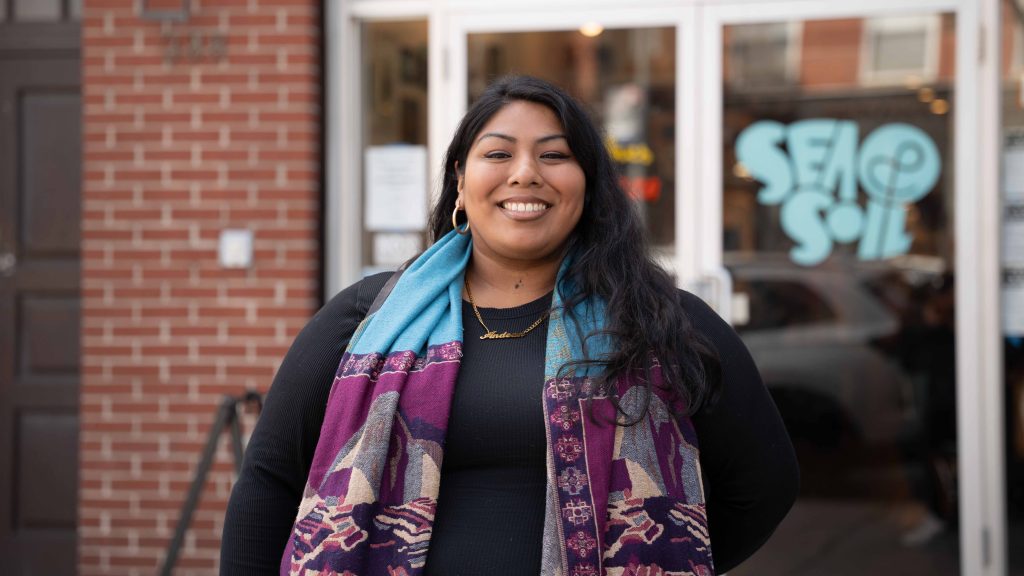
Elena Soledad, artist and owner of Brooklyn Warmi, says she creates jewelry to tell the stories of her Andean roots. Her K’intu gold earrings depict three coca leaves layered on top of one another, a symbol honoring Pachamama, which means Mother Earth in Quechua, her indigenous language. Her Amaru earrings, two gold-plated snakes, draw on an Andean figure that is associated with Ukhu Pacha. Soledad says the snake represents rebirth through transition and transformation.
Brooklyn Warmi, which means Brooklyn woman in Quechua, reflects an identity that Soledad does not believe can be contained by a single word, like Latino or Hispanic. She understands why immigrants and their descendants embrace those terms to find belonging. But, through her jewelry, she hopes others will look beyond those labels and learn about the regional, national and indigenous cultures that shaped them.
“I want it [the brand] to be known as a story and a journey of loving yourself, loving your community, your culture and the things that you are relearning,” Soledad, who identifies as Quechua from the Andes, told Documented. “It was really like a love letter to all of us.”

Her perspective highlights a tension within Hispanic Heritage Month, which goes from September 15 to October 15. The monthlong celebration is meant to honor the contributions of Hispanic and Latino communities in the country, but it also encompasses people with vastly different histories, traditions and relationships under a single umbrella. Some immigrants told Documented that labels such as Hispanic or Latino do not represent the experiences and cultures of people from Central and South America who have indigenous roots.
Across New York, artists, cooks and performers are showing what exists beneath those umbrella terms — through Colombian flavors, Cañari dance, Andean art and Mexican mariachi — while making space for their cultures in the city they call home.
Soledad was born in 1990 in Puno, Peru, and adopted as an infant by a family in the U.S. She grew up around Caribbean and Black communities in Brooklyn, where she said she struggled with feeling disconnected from her own roots. “I had so much anger in me, and I didn’t know where it was coming from,” Soledad said of her teenage years. “I wanted to belong somewhere.”
In 2005 she traveled to Peru to meet with her birth mother. There, she learned that she was one of six siblings, including a brother who had been adopted a year before her. She marveled at how much love her family showed her and the familiarity that she felt to the indigenous culture of the town where her family lived.
“I’ve always been drawn to like textiles. I’ve always been drawn to mountains, the sun, the moon, and things that look native, things that look indigenous, but I could never understand why,” Soledad said.
It was after the first trip back to Peru that she began to explore more about the stories of the indigenous populations around the Andean region. She also began learning to speak Quechua and in 2019 she founded BrooklynWarmi with the intention of creating apparel and jewelry for other people who wanted to embrace their roots. She printed shirts with the phrase “Quechua Warmi” that sold out really fast, she said. She added that beyond people buying her art, the stories she hears from people have been rewarding.
“There was this high school girl who hit me up saying, ‘Oh my gosh, you inspired me to be exactly who I am. I’m not ashamed of any of my roots,’ ” Soledad remembers.
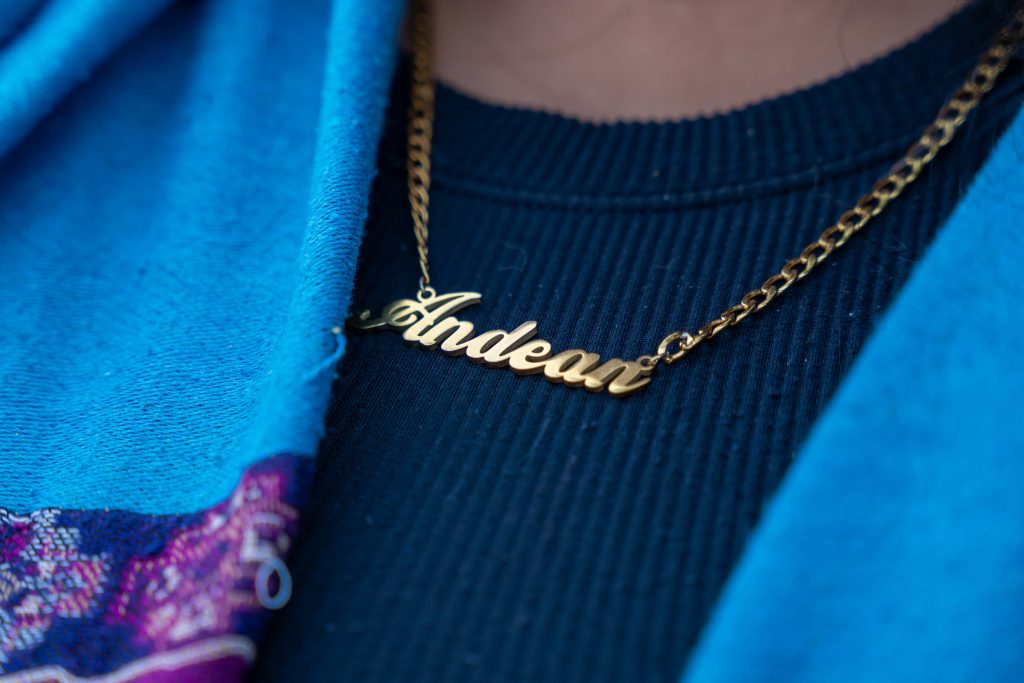
Over time she has built a community of other artists who also identify as Andean and indigenous. Sometimes she gets stopped in the middle of the street and is asked about the necklace she wears, she said.
For the diaspora away from home who would like to embrace their roots, she encourages them to be curious about their culture and take one step at a time. “Essentially the only way we survive is by telling our stories,” she said. “We have always been people that survive by our stories.”
Cañari Movements in New York City
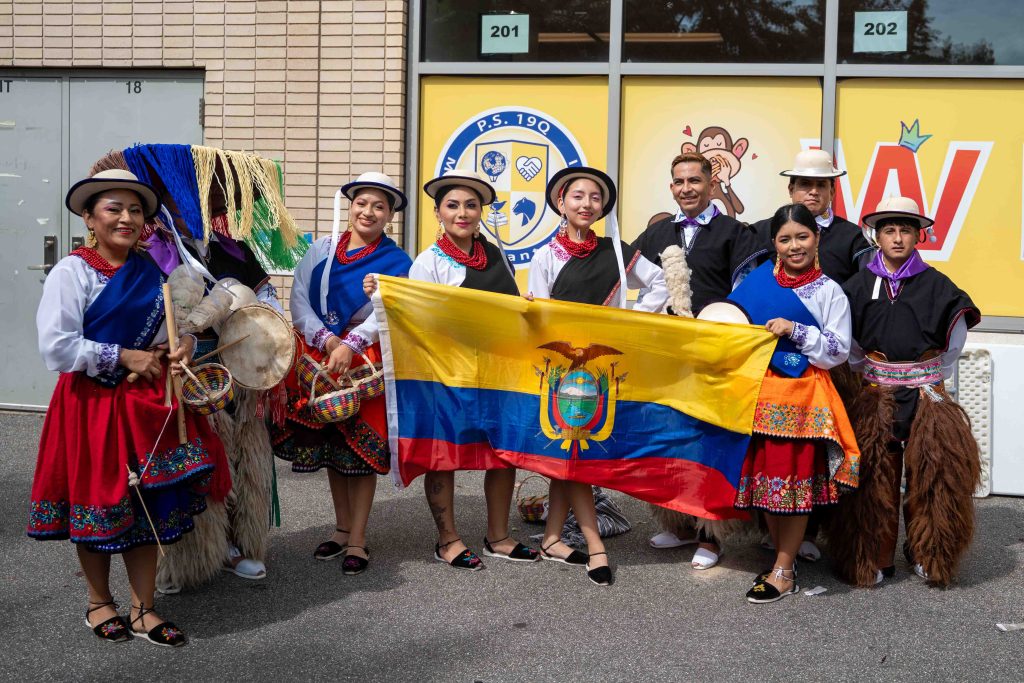
Telling stories about their culture is something that Mónica Aviles, 48, has been doing for the past 15 years since founding the group Ñukanchik Llakta Wawakuna in 2012, and looks to continue with her new group Runa Kay, which was founded in July of this year.
She said that the dance and cultural group Ñukanchik Llakta Wawakuna, Quechua words translated to children of our towns, functions like a long-term project that focuses beyond dance and art workshops. She said it educates its members about Andean culture, while also offering support and resources for immigrant families to thrive in New York City. She said that parents bring their children as young as five years old and stay with them throughout their teenage years.
With Runa Kay, which means dancing spirit, she says, she hopes to create a space for longtime and recently arrived migrants of all ages and genres who want to reconnect and learn of their culture. She said one of the goals is to provide support to Ecuadorian immigrants who had arrived in New York City in the past two years.
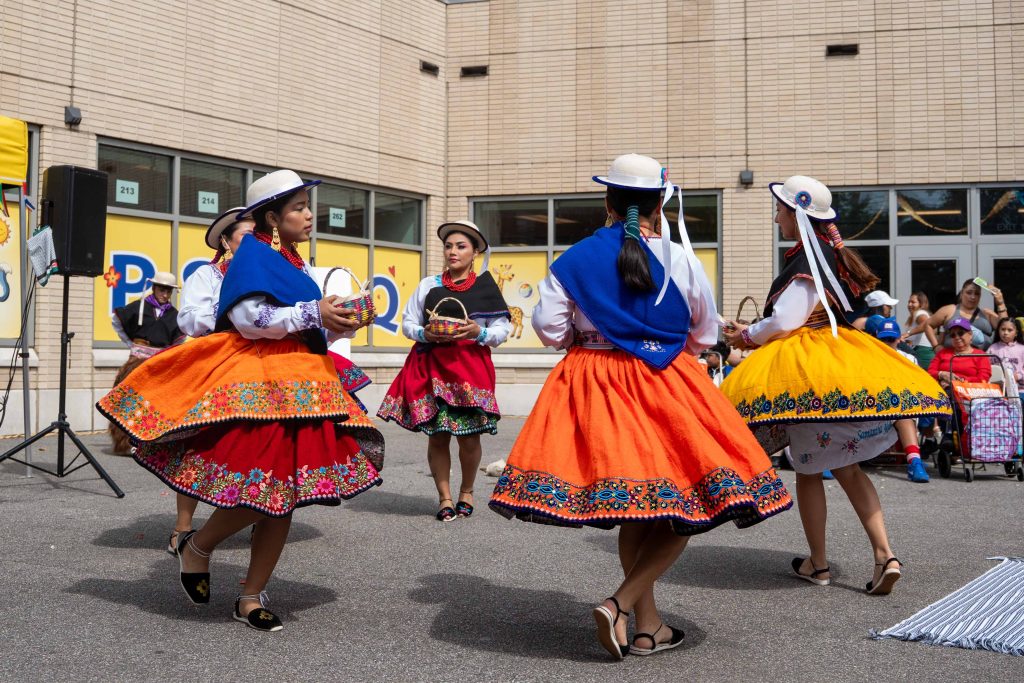
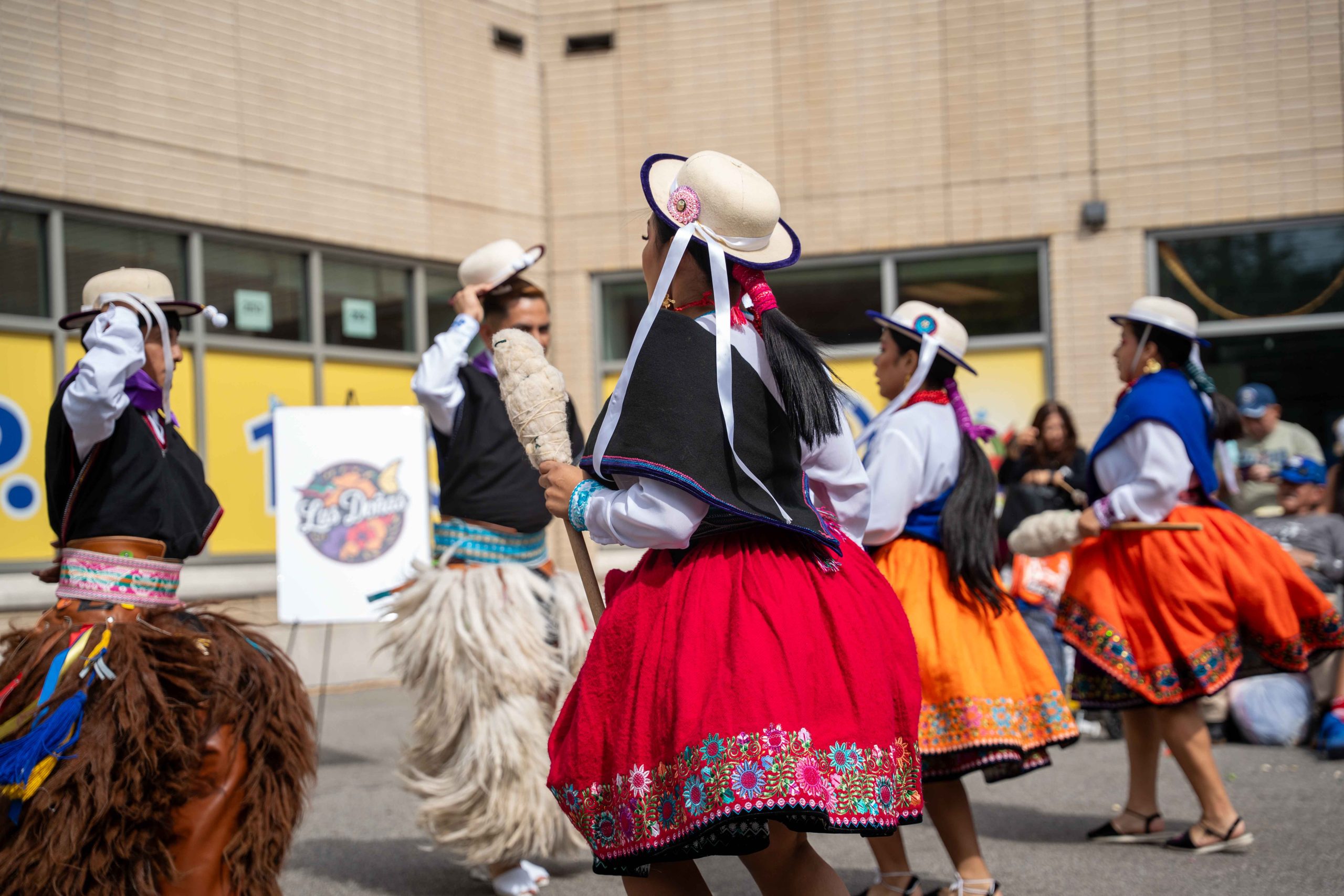
At a recent performance at the Herencia Que Nos Une festival (heritage that brings us together), the women of Runa Kay, wearing traditional polleras in bright orange, red and yellow, skipped around in a circle as they held a small basket in front of them, their dresses flowing with their every movement. They laid a blanket on the floor, placing the baskets on top, as they kneeled around it. The men, wearing Zamarros, stomped the ground in unison around them with one hand behind their back, and the other holding their hats.
They received applause from the hundreds in attendance. But for Aviles the performance told something deeper than just a beautifully choreographed dance, it told the story of Pampa Mesa, the communal meal and celebration she shared with her grandparents who are cañari indigenous peoples. She explained that in the town where she grew up until the age of 15, Cañar, Ecuador, her grandparents would host three-day parties and invite all of their neighbors to share a feast of potatoes, corn and other traditional dishes.
The blanket with the baskets of food on top represented those celebrations, she said. “It is a tradition that still lives in our indigenous quechua communities,” said Aviles, who migrated to New York in 1997 and settled in Williamsburg, Brooklyn. Growing up in New York, learning a new language, and assimilating was very difficult, she said.
She also said that both of the groups are also an answer to the lack of community she felt growing up in the United States, and a response to what she now observes as missing in her children’s schools. She remembers that in fourth grade her son took a wooden flute-like instrument to school, known as zampoña in indigenous communities, and his teacher told him that the instrument did not represent what they considered to be music.
She said that moment felt telling of why she could not find a community when she had arrived in the U.S. “I realized that the children were losing their identity because the schools did not teach them about Ecuadorian culture, or Latin America in general,” Aviles said. “That is how the need to create these types of spaces, where children born in the U.S. can use dancing as a way to learn and speak about their cultures.”
Aviles said that Runa Kay promotes the inclusion of different communities who have diverse experiences, generations and identities. “It is interesting how something beautiful can be born from obstacles we face,” she said. “It is important to know where you come from so that you know where you want to go,” she said.
The Taste of Colombian Arepas in New York
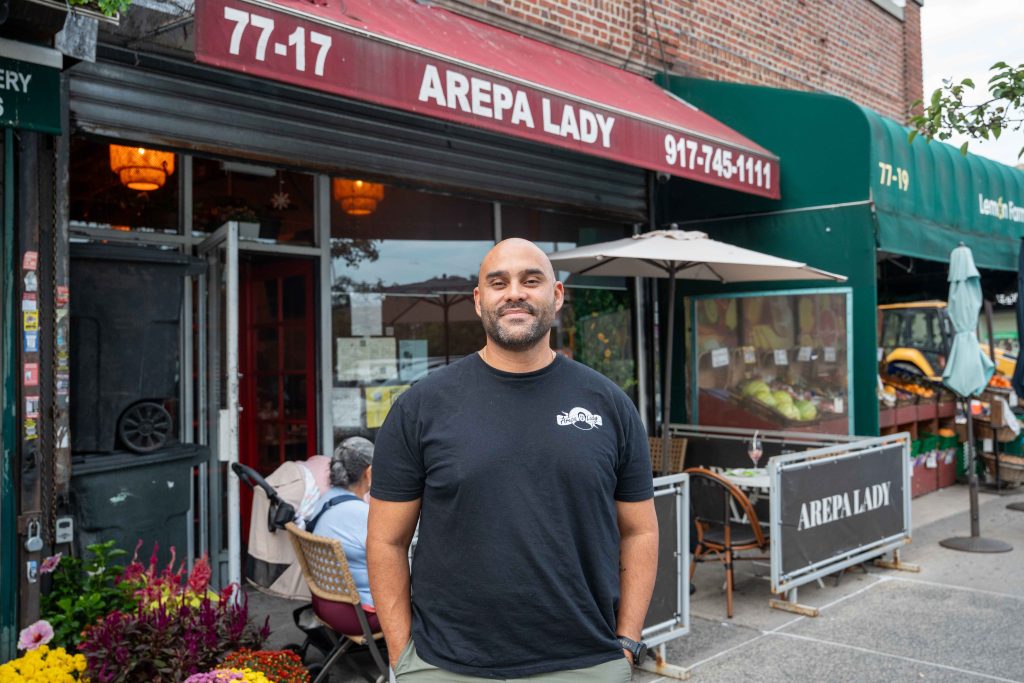
Maintaining the flavors he grew up with is important for Alejandro Osorio, the owner of Arepa Lady — a restaurant that has become synonymous with Colombian cuisine in New York City.
Osorio, 47, migrated at the age of 4 with his mom, Maria Piedad Cano, and settled in Jackson Heights, which is today known as Little Colombia. Growing up, he said his mom made a priority for Osorio to continue speaking Spanish and also learn about the culture and cuisine from back home.
To make a living, he explained that his mother, who was a former judge and lawyer in Medellín, began selling arepas from a cart near the corner of Roosevelt Avenue and 79th Street. She was operating without a permit and worked at night to avoid inspectors.
“She used to work from March through October, and sometimes would stay out until November,” Osorio remembers. “We used to be without arepas all winter so I would always go eat [at the foodcart] when she was out there.”
He said that she became known for her arepas de queso, which blends corn flour with mozzarella cheese and folded in half a circle shape and then grilled, and the arepas de choclo, which are made with a sweet corn dough.
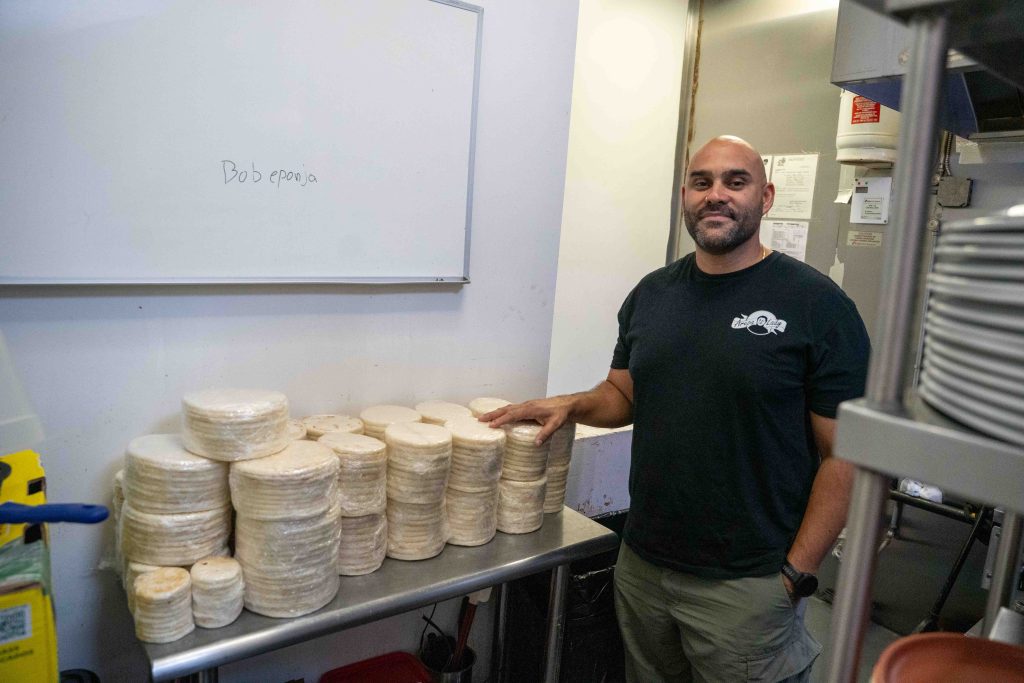
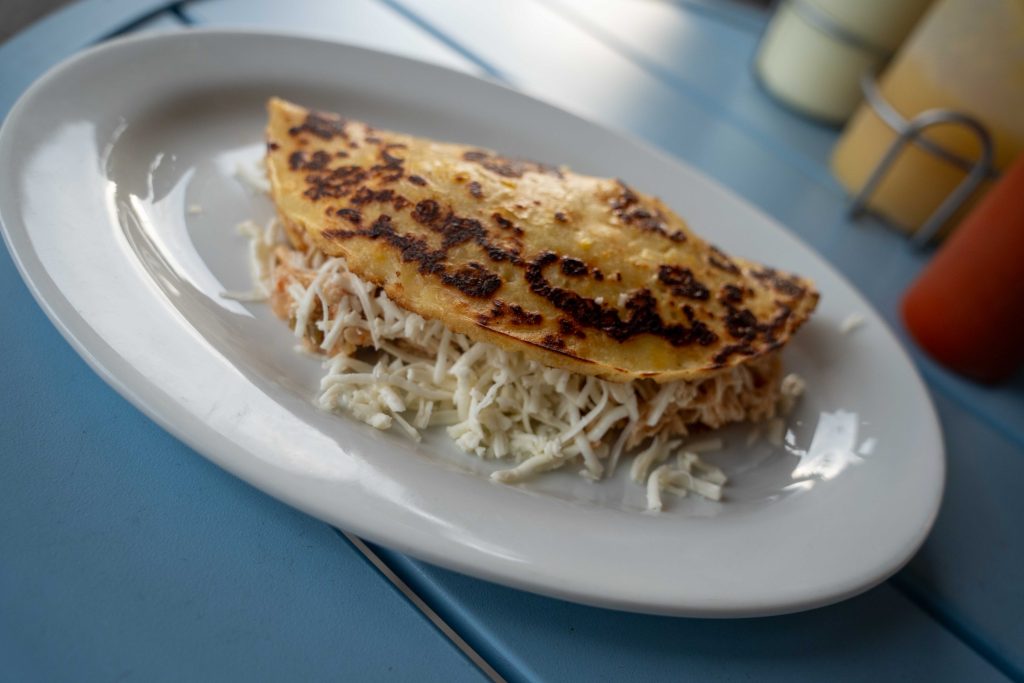
In 2014, they opened the first restaurant together and three years later she retired. Since then, Osorio says he has been working to continue the flavors his mom became known for and also create a restaurant where people can feel at home.
“It fills me with so much pride but it is also a little difficult because it is named after my mom,” he said. “But everything is the same. We use the same vendors, the same ingredients and we even use the same pot that my mom used for measuring.”
Throughout the years the restaurant has garnered attention from locals and also from abroad, including Bayern Munich, one of the top teams in Germany’s soccer league..
Osorio says that sometimes he still cannot believe when he is referred to as a “staple” of Colombian cuisine in New York. “It’s funny because people that have lived in the neighborhood sometimes encounter me and say they did not know we were here,” he said. He retold the story about how he received an influx of patrons overnight, after an article had been published about the restaurant.
He said that he has gotten clients from other parts of the city and even the world. He recalls that someone from Belgium contacted him and placed an order for 100 arepas. She told him she couldn’t eat the arepas sold at the supermarkets because of the preservatives, he said, laughing. “Over here [at the restaurant] we do not add any preservatives, nothing. They are completely fresh,” he said.
Osorio says he hopes to see more people buying and investing in local businesses. “If you spend in one of these businesses, they are people who then go to eat in other places, or do groceries here,” he said, adding that sometimes he goes to eat at Birria-Landia after closing hours.
“That helps the community as a whole. Instead of buying from big companies, where you spend money that leaves the community and never comes back.”
Mariachi Music
At the runway of Con Tiempo Fashion Show in New York, Santiago Reyes stands tall in the middle of the runway. He is wearing black mariachi attire, adorned with silver crowns as he holds a brass trumpet on his left arm. His baritone voice reverberates across the room singing “Perfidia,” a bolero written by Alberto Domínguez Borrás in 1939. Behind him, his group Mariachi Reyes — which also include his son, Albert, and daughter, Jazmin — accompany him with the sounds of strummed vihuelas and acoustic guitars.
For Reyes, 53, performing with a group is not only personal but also important for keeping the tradition alive. “You always have to hold that tradition high,” he said. “It’s something our ancestors left us many years ago. It’s this beautiful tradition that you carry in your blood.”
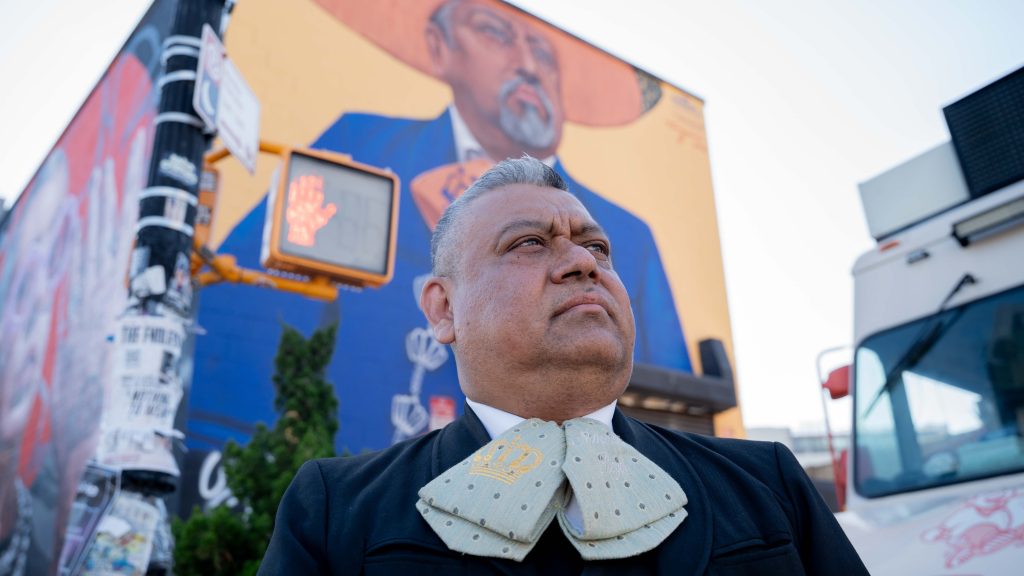
He said that he is one of fourteen siblings who began training to be a mariachi at an early age growing up in Mexico. He learned to sing at the age of 8 and picked up the vihuela two years later. “I remember my dad taught me how to play the G chord. It’s a tone that is very easy to play in the vihuela,” Reyes said. “I used to strum it over and over again. Sometimes I would even sleep with it.”
He recalls playing his vihuela alongside songs from Pedro Fernandez and Vicente Fernandez, both influential Mexican mariachi singers. And at the age of 17, he said, he had already gained the skills to tour across North America with Mariachi 2000 de Cutberto Pérez, a group with over forty years of history. In 1995 he migrated to New York after receiving a job opportunity with a mariachi band. That’s where he met his wife, Guadalupe.
When his son, Albert, was three years old, Reyes taught him how to play the violin. In middle school, Albert said he picked up the vihuela and then joined the Mariachi Reyes group at the age of 14. Having grown up around his father and his mom, who practices ballet folklorico, Albert said he didn’t realize how rich in culture his upbringing was until people started to ask him about it.
“I realize it’s actually not that normal for immigrant children to be so in touch with their roots,” Albert, 27, said. “They ask me questions about mariachi or music and stuff like that. I guess it’s cool that I am now a source of information for them.”
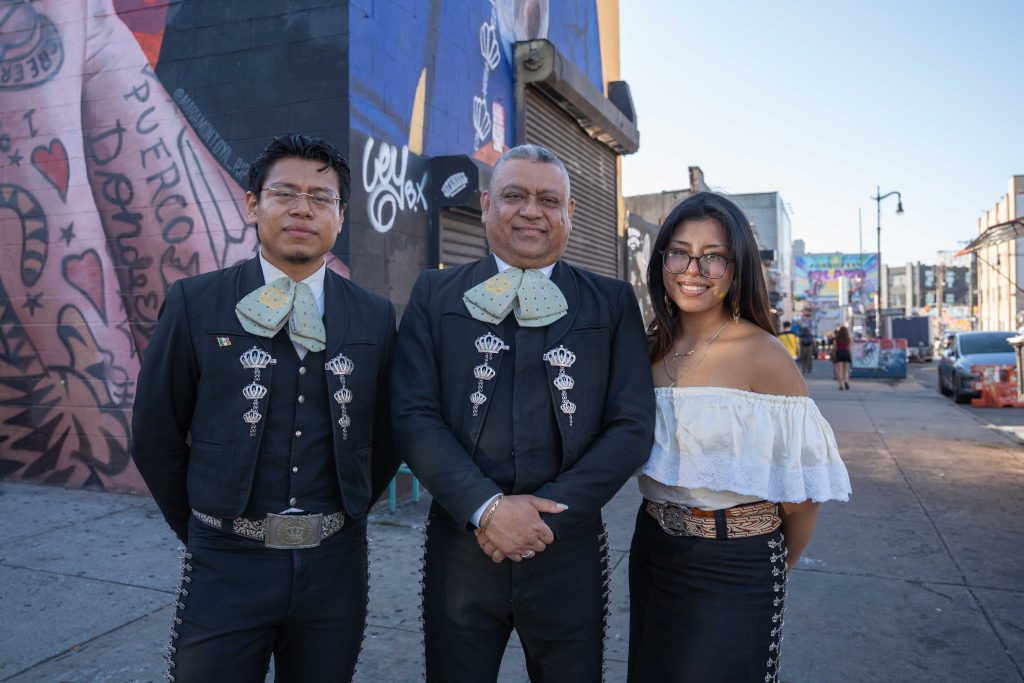
Albert added that when he and his sister, Jazmin, walk into the stage it feels like a moment of Mexican pride.
“To me it’s so personal because all our aunts, our uncles, our cousins, my dad, my grandpa, from generations are all mariachis. So that’s all I know,” Jazmin, 19, said. “There is so much beauty in it.”
Mariachi Reyes has become one of the most recognizable and influential groups in New York City, having performed with institutions like the Mexican Consulate, and with New York City Mayor Zohran Mamdani during this year’s World Cup.
She added that she has also been inspired by a new wave of mariachi artists, many of whom are much younger than her. “This little girl, she was 13 years old… she was on a guitarron, and the guitarron is a giant instrument,” Jazmin said, recalling a recent concert they attended at Carnegie Hall. “We are very inspired by people younger than us, and it pushes us to do better for them.”
Reyes said he is proud of his children that have continued his family tradition, and inspired by the up and coming artists who have centered mariachi culture in their craft. “There are five-year-old children who are playing mariachi really well,” he said. “It’s all coming together beautifully. You have young people who are well prepared, who speak English, who play all kinds of instruments, and who represent Mexico very well.”