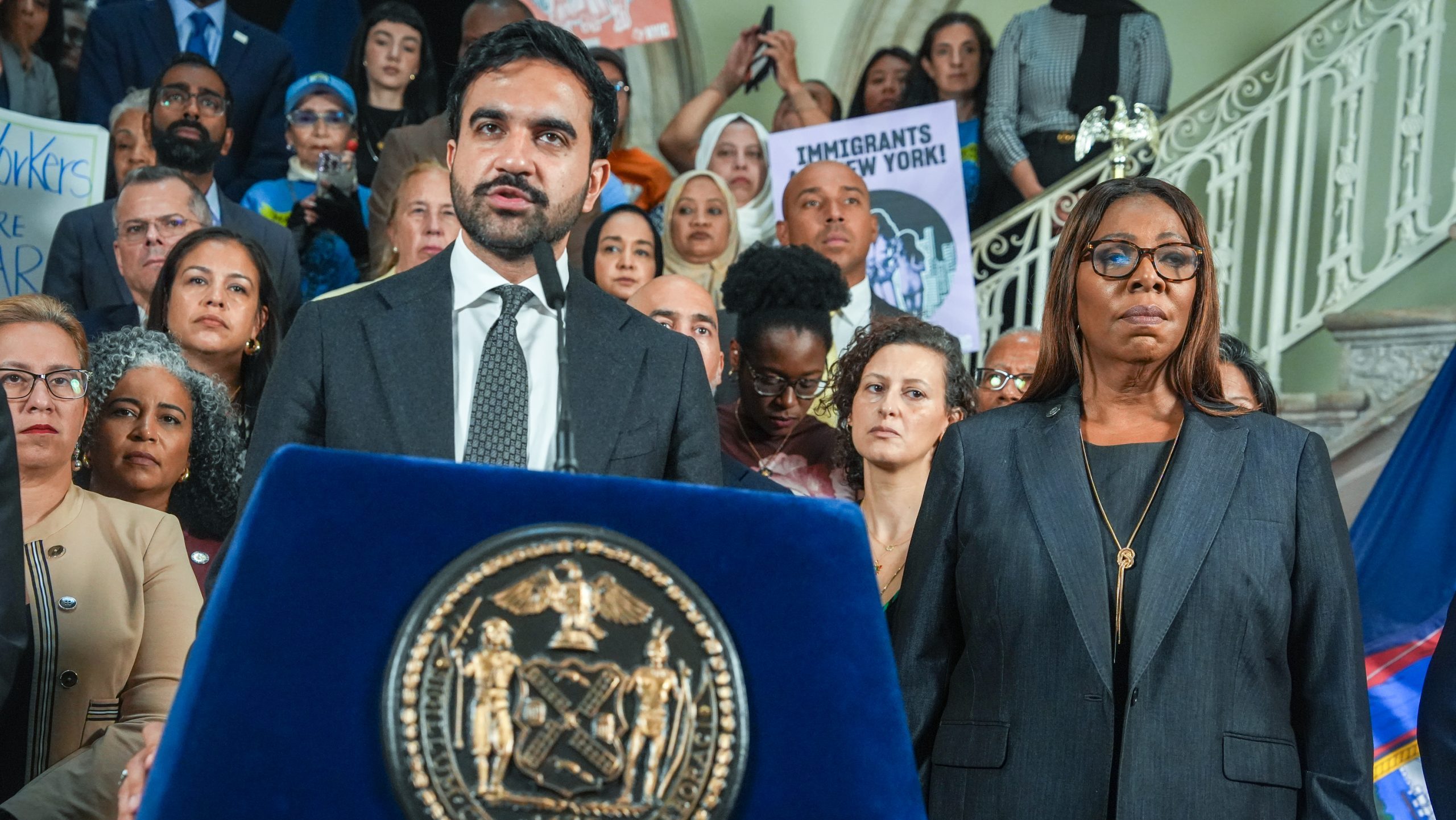


Mayor Zohran Mamdani announced on Monday that a coalition of cities, including New York, has filed a lawsuit challenging the Trump administration’s new public charge rule, which would allow the federal government to more easily deny green cards and visas to immigrants based on their use of public benefits. This suit comes a mere four days before the new rule is set to take effect.
Standing alongside Mamdani was New York State Attorney General Letitia James — who is also suing the federal government as part of a companion lawsuit on behalf of 22 states — as well as other local advocates and politicians.
Mamdani denounced the public charge rule as a form of punishment on immigrants who use public benefits as simple as school lunches or public health clinics, adding that immigrant New Yorkers may be forced to choose between the possibility of permanent residence in the United States and the health of their families.

“None of this is abstract. People could die as a result of these changes,” Mamdani said at a press conference on Monday. “The rate of premature mortality in immigrant communities in New York City could increase by up to 10.6 percent within just the next five years.”
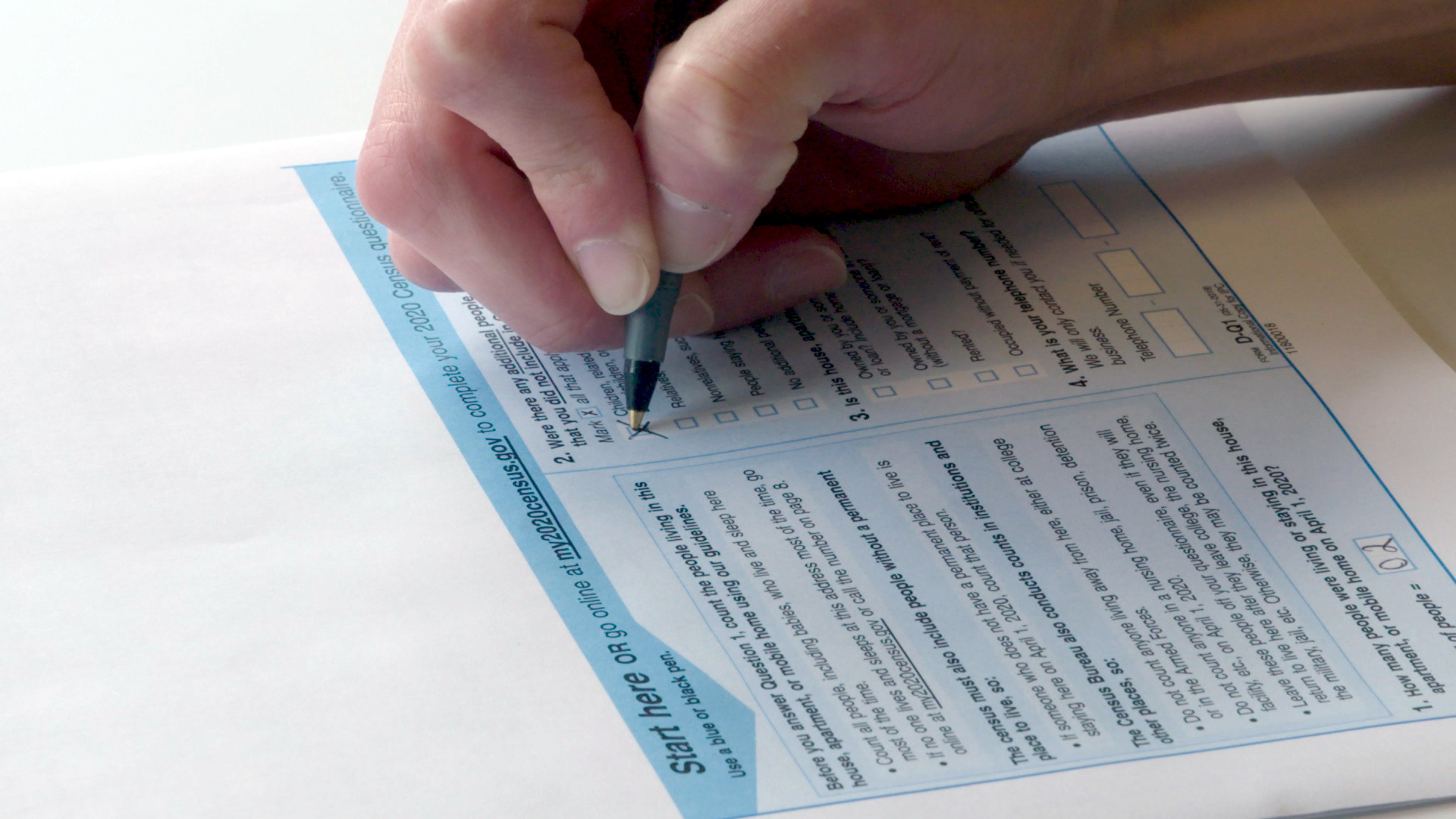
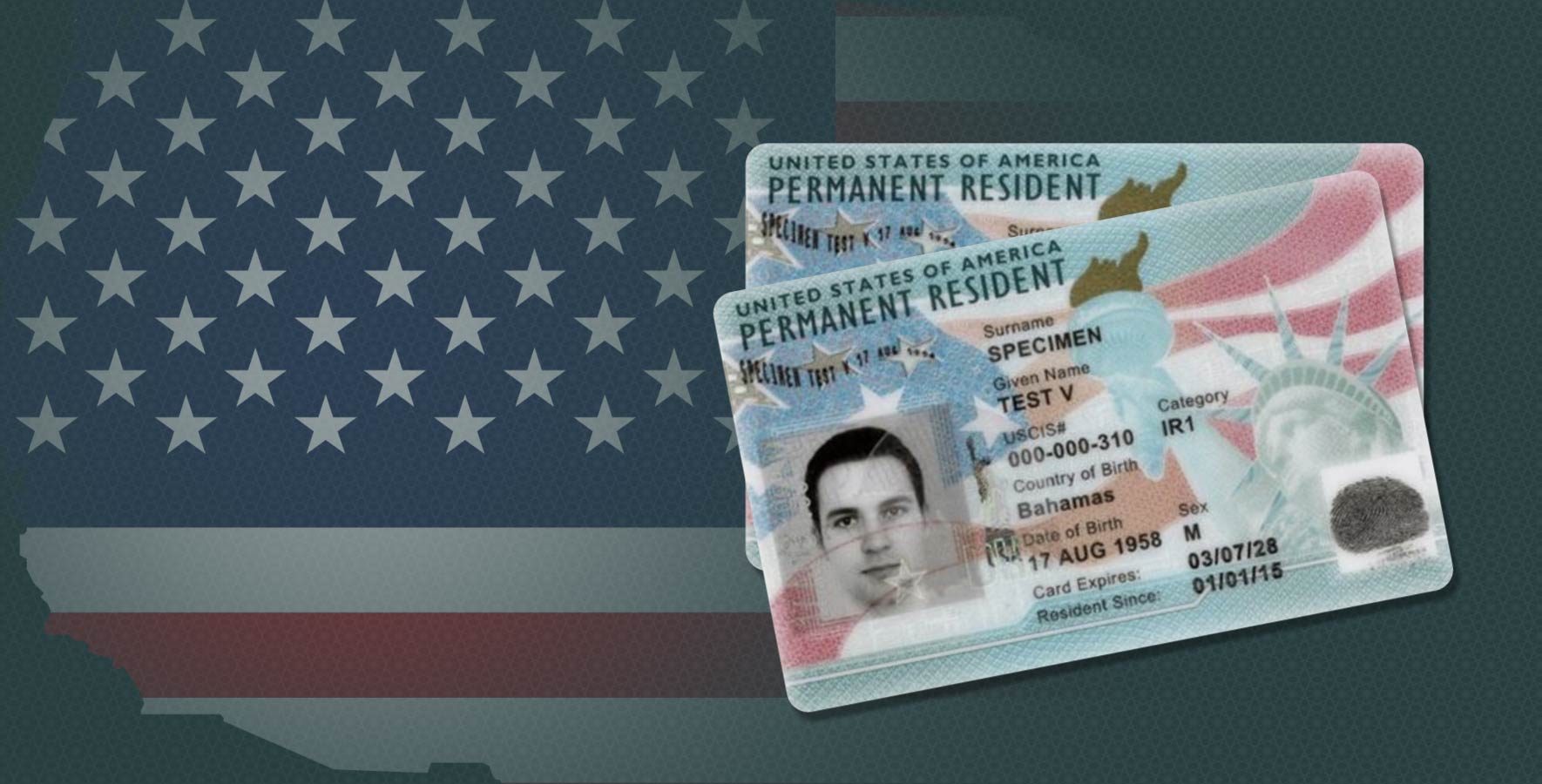
The latest version of the public charge rule, scheduled to take effect on Sept. 18, is a revised immigration assessment used to determine whether a noncitizen is likely to become dependent on government assistance in the future. If the government does classify an applicant as a public charge, it can deny their green card or visa application.
Scrutinized forms of government assistance could include Medicaid, SNAP, children’s health benefits, or subsidized school lunches, elected officials said on Monday. A chilling effect could cause up to four million people to disenroll from health care alone, including 1.8 million children, Mamdani said.
Such actions would generate a “greater cost to our system that will be placed on the backs of working people for years to come,” Mamdani said, adding that the law is a “vehicle of cruelty.”
Another Obstacle for Immigrants
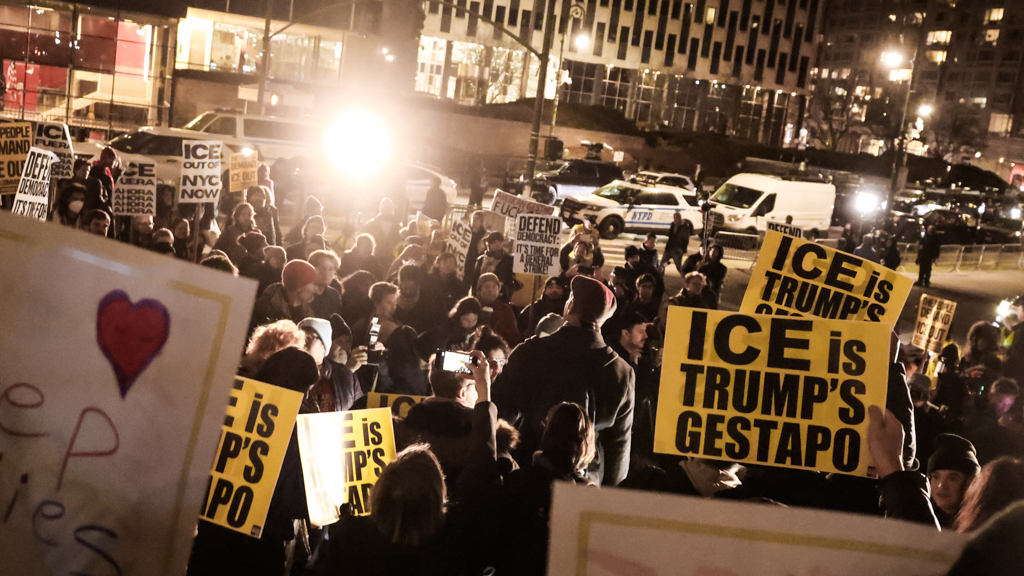
The expansion of the public charge rule is just the latest in a barrage of efforts by the Trump administration meant to encumber immigrants and discourage their participation in public life. Delays in immigration status renewals, fear of arrests at immigration courts, and the stripping of long-standing protections against deportation have all led to increased obstacles impeding immigrants’ daily lives as street arrests by immigration enforcement agents continue to reach all-time highs.
The new public charge rule allows the U.S. government to consider the use of any public benefit based on income — including benefits sought for dependents, regardless of their immigration status — as a mark against the applicant. Previously under the Biden administration,the public charge rule was applied only if the applicant had used cash programs like Supplemental Security Income (SSI) and long-term institutional care.
“Increasingly, parents of U.S. citizens are asking whether it’s safe to participate in programs such as free school meals,” said Arline Cruz Escobar, director of health programs at immigrant nonprofit Make the Road NY.
While the city does not yet have official data on whether immigrants have been withdrawing from public assistance, Faiza Ali, commissioner of the Mayor’s Office of Immigrant Affairs (MOIA), said that local organizations have already started to see a change.
“I visited a community food pantry in Queens … Normally, their food pantry would have a line around the corner, but they’re seeing just folks trickling in and out,” Ali told Documented. “In fact, they’ve had folks ask the question: ‘If I seek this service and this support, is that going to impact my case?’”
A Public Health Warning
The lawsuit attacks the new public charge rule as an attempt to “radically and unilaterally change the meaning of the statutory term ‘public charge’,” upending “more than a century of case law and administrative practice.”
In addition to calling the new public charge rule a violation of federal law, the lawsuit also argues that the use of public benefits does not adequately demonstrate dependency. Furthermore, the suit argues that the expanded public charge rule would result in “increased food insecurity, which will result in negative health impacts,” and would harm cities economically. In addition, the city alleges that the rule would compromise their ability to fight disease outbreaks due to New Yorkers’ inability to seek healthcare.
“It’s a 100-page complaint, and it required 100 pages because there’s so much illegality in the rule that that’s what was required,” Steve Banks, New York City’s head attorney, said at Monday’s press conference. “This is not just a repeat of 2019 when the city and state went to court and beat back a similar public charge effort. It’s even more harmful and more extreme.”
In 2019, the city took part in a lawsuit that temporarily stopped the Trump administration’s first attempt at changing the public rule policy. While they were successful in temporarily stopping the change from going forward, it was eventually allowed to briefly take effect before newly elected President Joe Biden reversed it.
“We are going to exhaust every tool to fight this rule,” Mamdani said. However, he also conceded, ”there is no city in this country that can make up, dollar-for-dollar, what the federal government is looking to cut in terms of services to those who need it.”
Mamdani urged New Yorkers concerned about accessing benefits to reach out to the Mayor’s Office of Immigrant Affairs hotline.