

Ordering food on a mobile app is designed to be simple. A person chooses a restaurant, makes their order, and then that order is picked up by a delivery worker and dropped off at the customer’s doorstep.
All parts of the process — including adding a tip and paying for other delivery fees — are usually handled in the app, and the digital transaction means no physical cash is required.
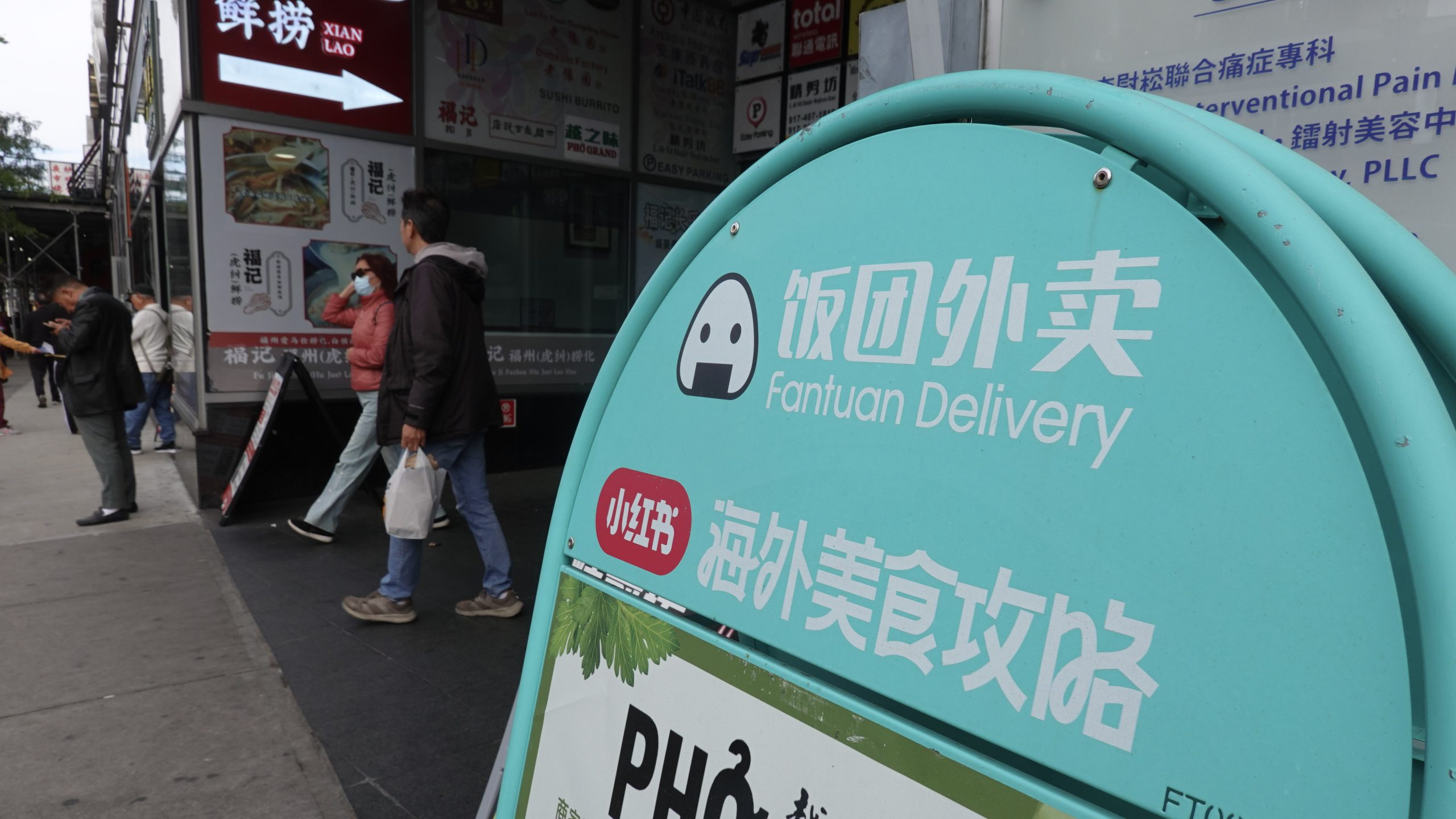
This isn’t always the case for Fantuan, a popular delivery app that specializes in Asian cuisine.

Delivery workers and restaurants told Documented that Fantuan requires workers to pay for some customers’ orders themselves with cash out of their own pocket — essentially a no-interest loan they must give Fantuan in order to work for the delivery company.
In some cases, the workers say that the amount they pay out of pocket is as much or more than their daily take-home pay. Workers who spoke with Documented say that this system is putting financial strain on them and forcing them to carry large wads of cash, which exposes them to potential robberies.
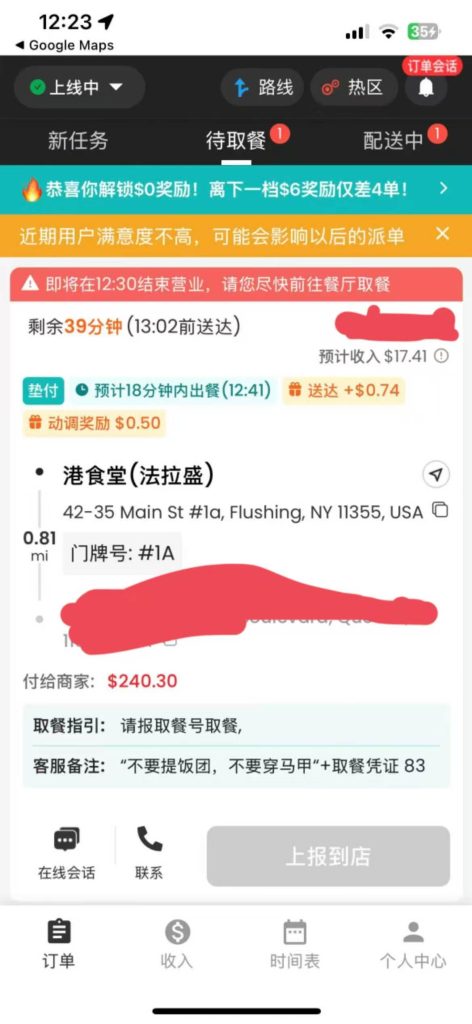
Fantuan workers say that they have to pay for the order in cash because some restaurants only accept cash or because the restaurants do not partner with Fantuan. In some instances, Fantuan has told workers to remove any clothing that identifies them as delivery workers for Fantuan and to pretend to be a customer, according to screenshots of delivery orders reviewed by Documented.
Fantuan did not respond to multiple requests for comment.
Although workers said the company later reimburses them the amount they paid by including it with their earnings at the end of the week, several workers told Documented that this system creates headaches, including making it harder to file their taxes. Because the reimbursement shows up as income, delivery workers told Documented that it’s made them pay more in taxes.
“The reimbursements are mixed together with your wages,” one worker, G., told Documented. “When you file your taxes, it’s hard to tell from your bank statements which deposits are actual income and which are just money being paid back to you.”
G., like other workers interviewed for this article, asked to be identified only by the initial of his last name for fear of being deactivated from the platform.
On an average day, G. said that about 10% of his orders require him to pay restaurants out of his own pocket. Some days, that figure reaches as high as 60%, equaling hundreds of dollars that he will have to spend on customers’ orders on behalf of Fantuan.
Another worker, C.B., said that he makes about $160 each day delivering for Fantuan. Those out-of-pocket expenses are sometimes as much or more than the amount he is making on a given day, with cash amounts per order ranging from about $30 to as much as $240. Like G., C.B. also struggled during tax season.
“You have to pay taxes on the money Fantuan reimbursed you for because it shows up as income on your tax documents,” he said.
Screenshots of orders obtained by Documented from multiple Fantuan delivery workers show that the company often instructed workers to pay restaurants upfront for orders from multiple Chinese restaurants in Flushing, Queens. Because some restaurants only accepted cash, workers said they carried hundreds of dollars to cover these payments, another safety liability, they said. As Documented has reported, theft and robberies targeting delivery workers are not uncommon. The NYPD reported 11,157 thefts of bikes worth $1,000 or more from 2018 to 2023, peaking at nearly 3,000 in 2020.
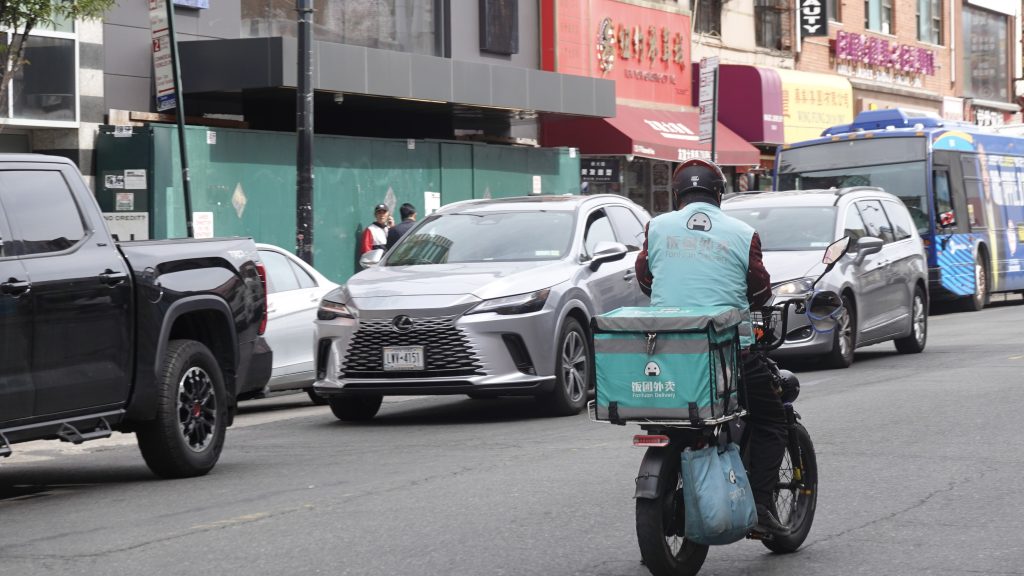
C.B., who delivered for Fantuan for two months from January to March, said requests for delivery workers to pay upfront were “very common.” He said he typically completed 10 to 20 deliveries a day, with about a quarter of them requiring out-of-pocket payments.
“The average order is around $30,” he said. “That means you have to carry a few hundred dollars in cash every day.”
Workers also told Documented that Fantuan’s dispatch system discourages them from refusing these orders that require them to pay upfront in cash.
“If you reject orders, they basically shadow-ban your account,” C.B. said. “Your account still appears to be online, but they stop sending you orders. It’s retaliation without officially suspending you.”
In January, the City Council enacted Local Law 34, which would ban apps from deactivating delivery workers without just cause. However, until the law takes effect early next year, delivery workers remain at the mercy of the apps.
‘Don’t Mention Fantuan’
In addition to paying cash upfront, delivery workers shared screenshots with Documented that showed unusual pickup instructions attached to Fantuan orders. Some notes read: “Don’t mention Fantuan. Don’t wear your delivery vest.” Others instructed delivery workers to “remove your vest before entering the restaurant” and to pick up orders using a phone number instead of mentioning a delivery service. One order instructed delivery workers in Chinese to “remove the receipt and make sure it is not inside the food packaging.”
Another pickup instruction warned: “If you wear Fantuan gear or tell the restaurant this is a Fantuan order, the restaurant may refuse to provide the food.”
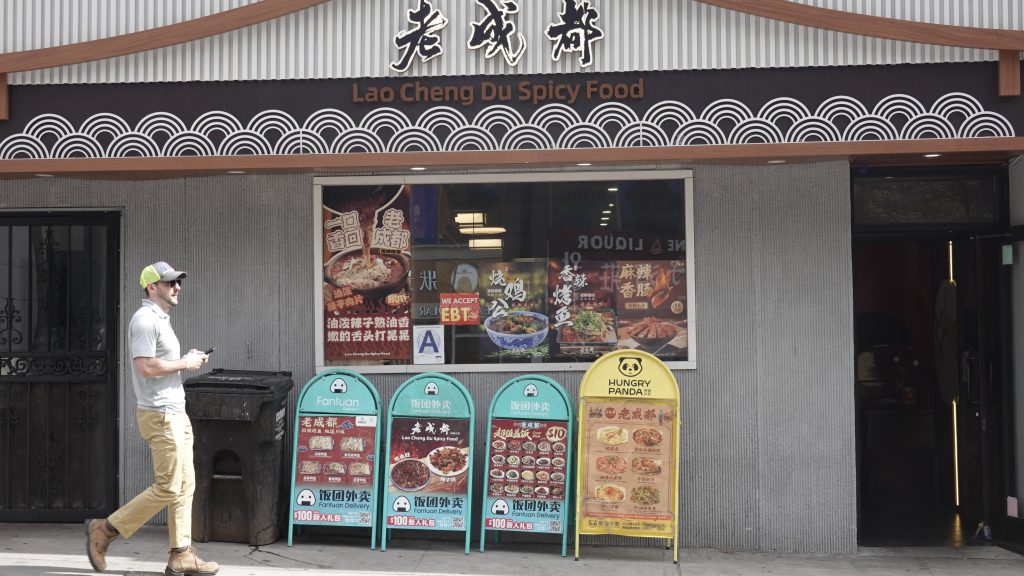
Indeed, Documented found three cases where restaurants that were not listed on Fantuan were sending delivery workers to pose as customers. Documented spoke with three Chinese restaurants in Flushing that were identified by Fantuan delivery workers as places where the app instructed them to remove their uniforms or otherwise conceal their affiliation with Fantuan when picking up orders.
Two of those restaurants, Kong Sihk Tong and Mala Siblings, were listed on Fantuan’s app but said they do not work with Fantuan and instead partner with HungryPanda, another major Asian food-delivery platform and a competitor of Fantuan. Employees at both said they were surprised by Fantuan’s instructions to drivers. A third restaurant, Hunan Cafe in Flushing, said it now accepts orders from Fantuan.
This type of practice is not new. Grubhub, Seamless, DoorDash, and Postmates have all been previously criticized for listing restaurants and accepting orders without the restaurants’ permission. Many of the apps have stopped this practice after a suite of lawsuits from restaurants.
“They’re making delivery workers pretend to be regular customers so they can still fulfill orders placed through the app from those restaurants,” C.B. said. “I guess it’s a way of forcing their way into the market and expanding their reach.”
Regulatory Pressure
A spokesperson for the New York City Department of Consumer and Worker Protection (DCWP) said the agency has received a number of complaints from workers about Fantuan’s pre-paying practices but did not specify the number of complaints received.
Although workers have sounded the alarm about this practice, DCWP told Documented that the practice is not in itself illegal unless the company fails to reimburse a worker within seven days after the end of the pay period, or is otherwise withholding payment from workers. The agency said it is keeping a close eye on Fantuan.
“DCWP will not stand by while corporations break the law and take advantage of working New Yorkers,” DCWP Commissioner Samuel Levine said in a statement to Documented. “We will continue using every tool at our disposal to monitor Fantuan and other apps for compliance with the minimum pay rate, and ensure that workers are paid what they deserve.”
The DCWP has previously scrutinized Fantuan’s business practices. In January, the agency found that the delivery app owed 285 workers more than $468,000 in back pay for failing to pay workers the minimum pay rate. Fantuan was also forced to pay an additional $52,000 in civil penalties and fees.
The company, which has 5 million users across four countries, has also faced several lawsuits nationally. In 2022, the city of Seattle found that Fantuan repeatedly violated the city’s paid sick and safe time off laws. The company settled, agreeing to pay $180,590 in back wages and civil penalties to 168 workers. That same year, the California Supreme Court found that Fantuan misclassified its delivery workers as independent contractors and that they should have received the minimum and overtime wages. The company was ordered to pay $725,000 to those who worked for the company in California between 2019 and 2021.
Some worker advocates have publicly called on Fantuan to change its pre-paying delivery practices. In April, grassroots group Chinese Delivery Workers Solidarity launched a petition urging Fantuan to immediately “stop requiring workers to front their own money to complete orders.” Since its founding in 2024, the group has grown to more than two dozen volunteers and has been contacted by more than 400 Chinese delivery workers. Its WeChat group has more than 200 members.
F.Y., a member of Chinese Delivery Workers Solidarity, said the group encouraged customers, rather than delivery workers, to sign the petition after some workers expressed concerns about potential retaliation from the company. F.Y. asked to be identified by initials for privacy reasons. F.Y. said more than 50 customers have signed the petition so far to show their support for delivery workers. However, Fantuan has not changed its practice of requiring drivers to pay upfront in cash for certain orders.
“We hope Fantuan will recognize that this is an exploitative practice. Neither customers nor delivery workers want to see this happen. As a large company, Fantuan should not shift its own financial burden onto delivery workers,” F.Y. said.
An Interest-Free Loan
Even with their complaints, many couriers see other platforms as equally bad or worse. G. said that delivery workers are generally treated poorly across the industry, and changing to other Asian food delivery platforms would not make much of a difference.
G. said he continues to work for Fantuan despite the challenges, citing limited job opportunities for new immigrants like him who are not fluent in English. “Switching to other platforms is difficult because competition is fierce, and some people even use bots to grab orders,” he said.
Still, according to C.B., Fantuan’s payment system makes him feel like the company is relying on its delivery drivers as a source of interest-free loans.
“It feels like they’re forcing you to lend them money without paying any interest,” C.B. said.