

When Congress passed President Donald Trump’s “Big Beautiful Bill” on July 3, Nancy Ng immediately began to worry.
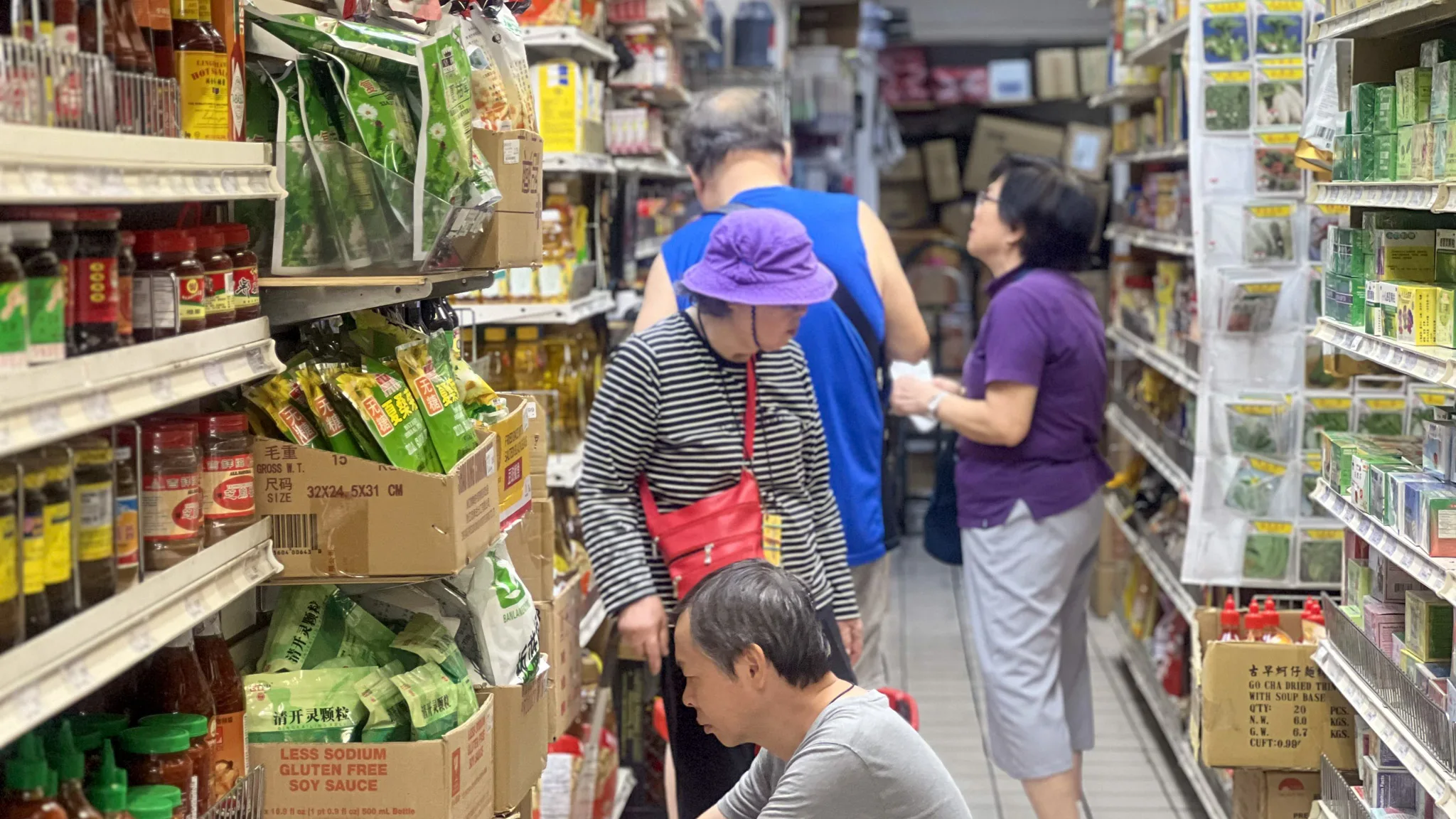
As the owner of Po Wing Hong Food Market, a Chinatown staple for more than 50 years, she sees hundreds of shoppers daily at her Elizabeth Street store in Manhattan’s Chinatown. Ng, 73, estimates that about 60% of her Chinese customers rely on the Supplemental Nutrition Assistance Program (SNAP) to buy Asian-oriented staples like goji berries, rice, soy sauce, and oyster sauce.
The bill includes the largest cut to the program in its history: $186 billion over the next decade. Gov. Kathy Hochul’s office estimates that at least 300,000 New Yorkers — or about 10% of the SNAP recipients in the state — could lose part or all of their SNAP benefits under the bill’s expanded work requirements.

If the new bill strips many low-income immigrant families of the essential SNAP benefits they depend on to put food on the table, that change would hurt local stores like Ng — by reducing sales and foot traffic.
Also Read: Chinatown and Other Immigrant Communities Could Be Hit Hard by Trump’s SNAP Cuts
More than a quarter (26.2%) of households in the Lower East Side/Chinatown area received SNAP benefits in the latest data by the Hunter College New York City Food Policy Center. According to research by the NYU Furman Center, the poverty rate in the Lower East Side/Chinatown area reached 24.8% in 2023, significantly higher than the citywide rate of 18.2%.
The new bill also cuts $29 million in funding for SNAP-Ed, an educational program that has helped more than 2.2 million low-income residents last year combat food insecurity and improve their health by providing nutrition education, obesity prevention training, healthy cooking guidance, and better access to fresh produce, Gothamist reported.
Even though the timeline for when the new requirements related to SNAP will take effect remains unclear, Chinatown business owners like Ng are already voicing concerns about the potential economic fallout, especially since many local businesses are still grappling with the impact of the U.S.–China tariff war.
Earlier this year, Trump raised tariffs on Chinese goods multiple times before temporarily lowering the rates during negotiations. Currently, the U.S. maintains a tariff structure on Chinese imports that includes a blanket 30% rate and an additional 25% on specific products.
Ng said prices for imported goods have already risen significantly by at least 20% on average after Trump’s tariffs were levied against China. Some items have surged even higher. Pointing to glass bottles of oyster sauce, she explained how shipping heavy glass bottles incurs a higher cost of shipping. “A bottle of Lee Kum Kee oyster sauce used to be $1.99,” she said. “Now it’s $3.25.” As a result, Po Wing Hong has to scale back the volume of goods it imports from China.
Also Read: Nearly 9,000 SNAP Thefts Reported in NYC After Replacement Program Ends
On the other hand, the rising cost of living has already forced many Chinatown residents to cut back, said Ng. “They only buy the most basic necessities.”
On top of the damage caused by the tariff war, the looming SNAP cuts could deal another serious blow to the neighborhood economy, Ng said, especially for Chinese businesses that heavily depend on customers using food assistance. “If people lose their benefits, we’ll have fewer customers, and even regular customers will buy less,” she said in Mandarin. “It will be hard for us to survive.”
M. L., who runs Run Feng Trading, a grocery store on Mott Street, echoed the concern. “Almost all my customers use SNAP,” she said in Mandarin. “With the current economy and high unemployment, how will people survive without food benefits?” L. requested to be identified by her initials. “This will only worsen the economy in Chinatown,” she added.
“Beyond worsening food insecurity and malnutrition, cuts to the program would hurt local businesses and weaken SNAP’s ability to boost local economies in every state,” Gov. Hochul’s office wrote in a recent report. “Slashing families’ grocery budgets would reduce revenue for thousands of businesses, with ripple effects throughout the food supply chain.”
According to the office, the new bill will have a critical impact on more than 18,000 SNAP-authorized retailers across New York State, leading to lost sales and reduced SNAP matching dollars. The report also warned of a cascading impact of the new bill: job losses, small business closures, and lost revenue for retailers of all sizes, from independent grocers to national chains.
Fanny Gong, owner of Wing Tak NY Inc. Grocery on Mott Street, said more than half of her customers rely on SNAP benefits. “Our clients and my shop will definitely be affected,” she said in Mandarin. Still, Gong felt there was little she could do. “It’s a decision by the government. I’m just a small business owner.”
Not everyone in Chinatown, however, is equally concerned. Leo Lin, manager of the Chinatown Supermarket of Manhattan on East Broadway, said he believes the local government will step in to help vulnerable residents. He estimated that about a third of the store’s customers use SNAP to purchase groceries.
“New York City always takes care of low-income people. There might be other programs to support them financially,” Lin said in Mandarin. “And maybe the policies will change again in the future when Democrats take back Congress.”
Assemblymember Grace Lee, who represents Chinatown, criticized the new bill. “The impact of the tariffs by the Trump administration has a lot of pressure and stress on Chinatown businesses,” she said to Documented. “Now they are making it much harder for customers even to go and spend money and support these local stores.”