

“Boondoggle” is the word some are using to describe the state’s controversial overhaul of the Consumer-Directed Personal Assistance Program, also known as CDPAP.
“I think it’s absolutely a boondoggle from many perspectives,” said Michael Kinnucan, senior health policy advisor at the Fiscal Policy Institute, who said the state’s CDPAP reform has been completely mismanaged. “The transition has been a real disaster for consumers and workers.”
Established by the state in 1995, CDPAP gave family members of disabled individuals on Medicaid the opportunity to get paid to care for their homebound loved ones. The program serves 280,000 New Yorkers and employs as many as 400,000 workers, many of whom are immigrants.

But Kinnucan is not the only one critical of the program.
With the Aug. 1 transition deadline passing this week, immigrant home care workers employed by the CDPAP program told Documented that they are struggling to untangle a bureaucratic online setup by the program’s new administrator, Public Partnerships LLC (PPL).
Home health care workers, many of whom are immigrants, are instead feeling defrauded by the state for reforms that have led to widespread missed payments during the transition to PPL.
Documented was among the first to report on instances of wage theft and mismanagement at PPL and has now recently uncovered that since the CDPAP transition to PPL began in April, immigrant workers — who rely on the program to earn a living and care for their families’ home health care needs — are still facing missed payments, forcing them to leave the program and potentially costing the state millions in lost labor.
A class action lawsuit filed in April by workers claims that PPL is engaging in widespread wage theft. The lawsuit also accuses the company of defrauding workers of their wages, with possible state and federal investigations looming.
Also Read: Immigrant Caregivers Say State-Backed Home Care Agency Stole Their Wages
Farshad Pinchasi, 55, says he’s owed 21 hours in back wages since registering with PPL on March 7. An immigrant from Iran, Pinchasi has been part of the CDPAP program, serving as the primary caregiver for his 93-year-old father and 84-year-old mother, since enrolling in 2019.
Working an average of 50 hours a week, Pinchasi earns $19.50 per hour for each parent. Being the only caregiver for his aging parents has taken its toll.
“I can’t exercise or have friends,” he said. “I have no life.”
But since enrolling with PPL, Pinchasi says he has not been receiving all payments that were owed to him. When he tried to resolve the issue over the phone with PPL, Pinchasi found it difficult to reach anyone. The few times he was able to speak to a representative, he felt like he was getting the run-around.
“When you want to talk to someone for help, they make it impossible.”
CDPAP privatizes to save money
After years of being run by the state, in 2012, CDPAP was privatized by the state in an attempt to cut Medicaid costs. A few years later, in 2015, the state loosened the eligibility rules for CDPAP, allowing extended family, neighbors and friends to care for home care recipients.
A CDPAP industry followed, with over 600 middleman home care agencies flooding the new market, and program participation expanded from 20,000 to 250,000. But instead of the state administering the program directly, the state paid the middleman agencies, who then administered the funds to the workers after taking a fee off the top.
Despite hopes that CDPAP privatization would save the state money, in fact the program has only grown more expensive. Since privatization, CDPAP’s budget increased from $2.5 billion in 2019 to over $9 billion in 2024. With the program costing the state billions and accusations of fraud ringing alarm bells in Albany, in 2024, Gov. Kathy Hochul announced her plan to reform CDPAP.
On April 1, the state cut out the middleman home care agencies and consolidated CDPAP under a single statewide fiscal intermediary, PPL. The company, which is owned by two private equity firms, DW Healthcare Partners and Linden Capital Partners, would be responsible for managing over 30 regional home care agencies that would work under PPL’s umbrella. Most of the 600 agencies not part of the transition would be required to cease operations.
Also Read: Workers Demand Answers as Hochul Backs Agency Accused of Wage Theft
The governor’s goal of reforming CDPAP was to save the state hundreds of millions of dollars and curb fraud. As reported by City & State, the New York State Department of Health and PPL found that since beginning the transition in April, there were over 30 instances of home care workers billing patients who were dead or hospitalized. They also found seven instances of workers logging time they didn’t work.
Yet evidence of widespread fraud is scant. A 2022 Medicaid Inspector General audit of over $37 million in CDPAP payments found only about $46,000 in overpayments, or only 0.13%. And, just seven out of nearly 350,000 CDPAPA workers referred to the AG Medicaid Fraud Control Unit were found to have overbilled the state, or .002%. Another 2018 Department of Health and Human Services report found that only 6% of CDPAP claims were reported for improper documentation, with many of the issues being attributed to documentation errors, not fraud.
According to a survey conducted by Caring Majority Rising, an advocacy group representing caregivers, home care workers, and people with disabilities, found that 71 of 214 home care workers surveyed between June 2 and 6 reported not being paid for all shifts since the start of the CDPAP transition to PPL in April. Many of the payment issues were found to be related to workers struggling to navigate PPL’s home care app system, particularly if they speak a language other than English.
A previous survey of 477 home care workers in April found that 70% of CDPAP home care workers were left unpaid on their first pay cycle with PPL.
A class action lawsuit against CDPAP ensues
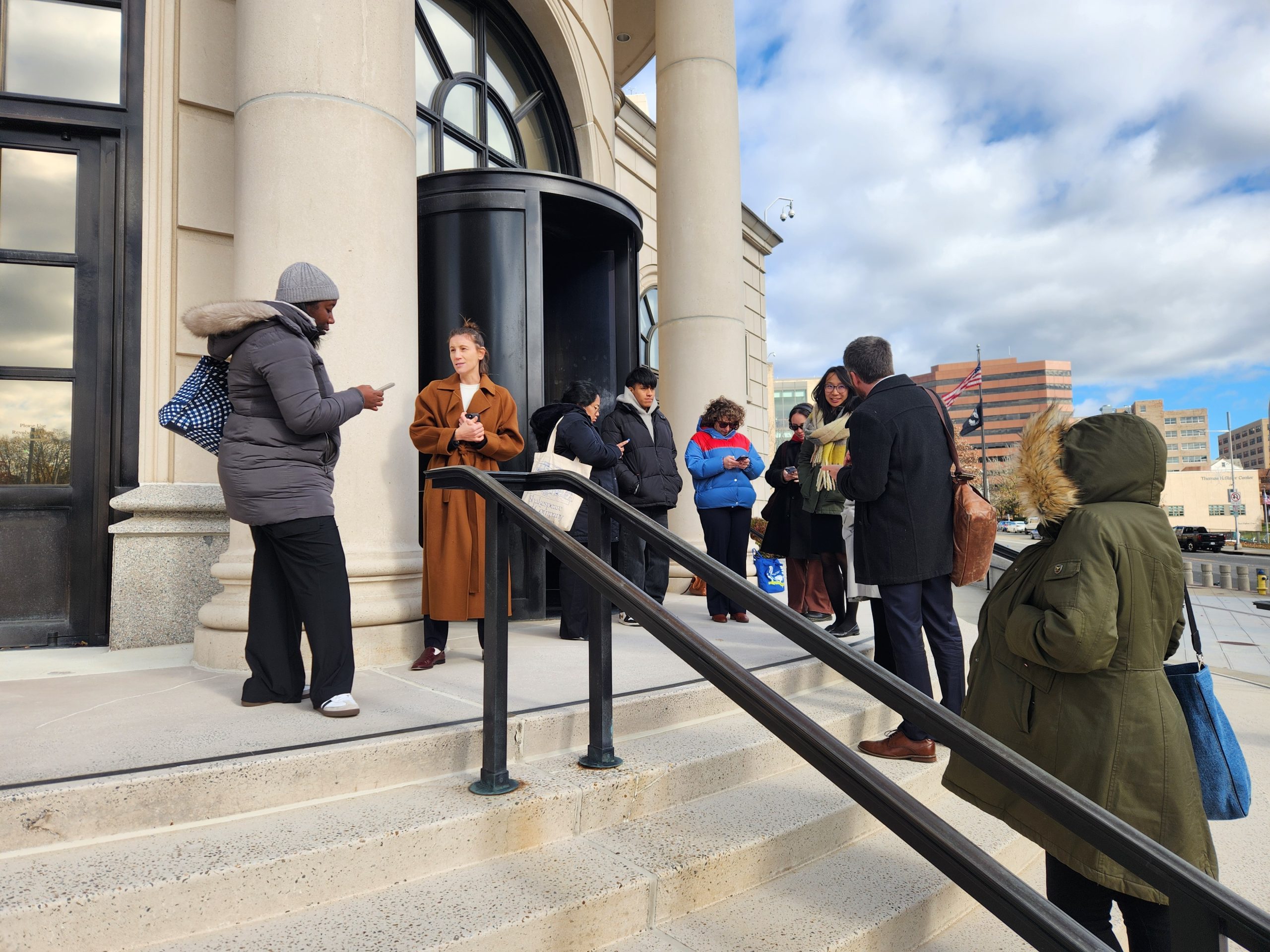
With so many other similar reported cases of missing payments, on April 25, attorneys with the Legal Aid Society and Katz Banks Kumin LLP filed a class action lawsuit in the Eastern District of New York. The lawsuit alleges that PPL has failed to pay “thousands of Personal Assistants across New York on time, for all time worked, or at the correct rate,” a violation of federal and state wage laws.”
The suit also alleges that PPL lost or deleted timesheets, automatically clocked out workers during overnight shifts, and had an ineffective customer support system.
“PPL must be held fully accountable for leaving tens of thousands of hardworking caregivers, who provide critical support for family members and neighbors, without pay for weeks, violating state and federal wage laws,” said Michael Diller, staff attorney with the Employment Law Unit at The Legal Aid Society, in a statement.
Legal Aid Society’s lawsuit was filed two days after another similar lawsuit was filed upstate on April 23.
When asked about missed payments, PPL disputed the Caring Majority Rising’s survey and its relatively small sample size of 214 individuals. Instead, they claimed to have conducted their own internal survey of more than 52,000 workers and consumers, which they report shows high satisfaction with PPL’s performance.
“A recent survey of more than 52,000 personal assistants and consumers shows high satisfaction, confirming that the transition was successful,” said Madeleine Rosen, a PPL spokesperson. “We’re reducing taxpayer costs, cutting waste, and laying the foundation for sustainable careers as trusted caregivers. PPL is proud to help protect the future of consumer-directed care in New York.”
According to PPL, to date, 99.7 % of registered workers have been paid for all hours worked. They also claim that they have developed infrastructure to support any workers who believe they have not been paid properly and continue to educate workers enrolled in CDPAP on proper processes to ensure they receive their paychecks on time and in full.
Also Read: How to Get Free Home Health Care Services in New York
“Before this transition, New York’s CDPAP system was on the brink of collapse, buckling under the weight of hundreds of fiscal intermediaries with no oversight and no accountability,” said Rosen. “Today, with PPL serving as the single fiscal intermediary, the program is more transparent, accountable, and sustainable, without compromising quality of care.”
Still, the New York lawsuits are only the latest to have followed the PPL company, which has faced multiple allegations of wage theft and mismanagement in the past.
After a similar takeover by PPL over home care payroll services for Pennsylvania state in 2013, an auditor general report found that the company’s chronic mismanagement cost the state an extra $7 million a year. In 2017, direct care workers in Pennsylvania filed a class action lawsuit against PPL, alleging that the company violated federal law and Pennsylvania state law by failing to pay or underpaying overtime wages. The case is currently under appeal.
CDPAP leadership and consumers exit
Since PPL has taken over the CDPAP program, the company’s entire senior leadership team has quit. PPL’s CEO and CFO left in late June, both under unclear circumstances. The company’s president, Maria Perrin, resigned in mid-July. Vicente Armendariz, PPL’s executive vice president of operations, resigned in June.
Armendariz’s resignation came in the wake of news surfacing that a PPL employee was recently terminated for allegedly stealing paychecks from up to 10,000 CDPAP participants by redirecting direct deposits to a fraudulent overseas bank account. Hundreds of thousands of dollars in workers’ wages were allegedly stolen, and the FBI is reportedly investigating.
Last week, an investigation by the news outlet New York Focus revealed that PPL and its insurance provider, Leading Edge, have engaged in a scheme to pocket nearly $100 million legally owed to home care workers by providing workers bogus health insurance.
All this has led to a mass exodus from the program. According to the New York State Department of Health, over 75,000 consumers have left CDPAP and have moved over to agency-based home care known as Personal Care Services (PCS), a separate Medicaid-funded program that employs professional home health care aides, not family members. Despite hopes that CDPAP reform could save the state money, it’s far cheaper than PCS, which costs the state $12 billion per year.
“Tens of thousands of people have already left CDPAP for more expensive home care options because PPL’s systems simply don’t work,” said Ilana Berger, political director of Caring Majority Rising, in a statement to Documented. “When workers can’t get paid and enrollment is a nightmare, people have no choice but to flee to other options like agency care and nursing homes that cost significantly more for the state.” ”
Amid all the turmoil, the Department of Justice has initiated an investigation into how Gov. Hochul awarded the lucrative CDPAP contract to PPL, as reported by The New York Post last June. The Post’s source claims the bidding process is suspected to have been rigged in PPL’s favor. The investigation came a year after Rep. Ritchie Torres called on federal and state Inspector General offices to investigate.
Torres accused the governor of pre-selecting PPL to run the CDPAP program before initiating a competitive bidding process. He also claimed that the Hochul administration had exempted the award of the contract to PPL from being reviewed by the New York State Comptroller, calling the issue a “boondoggle” like Kinnucan.
“Governor Hochul’s multi-billion dollar boondoggle merits an independent investigation,” he stated in an open letter. “The Inspector General may be the only hope for bringing transparency and accountability to a high-stakes process that has neither but needs both.”
Several state senators are also calling for the New York State Senate Investigations and Government Operations Committee to investigate the Hochul administration for its role in awarding PPL the CDPAP contract.
In another blow to the governor, Lt. Gov. Antonio Delgado publicly broke with her administration in his call for the state to terminate its contract with PPL.
“This has been a travesty, this entire rollout, since the very beginning,” said Delgado in a rally outside PPL’s headquarters last week. “It’s been a failure of leadership from the very beginning.”
Documented reached out to the Governor’s Office for a response to the allegations made in the story. Cadence Acquaviva, senior public information officer for the New York State Department of Health, responding on the governor’s behalf, did not address the many issues under the CDPAP transition, instead saying how terrible the old system was.
“New York State prevented a fiscal crisis by cutting out hundreds of wasteful middlemen,” she said. “Under the previous CDPAP structure, administrative inefficiencies among hundreds of fiscal intermediaries created an unsustainable model that was vulnerable to waste, fraud, and abuse, putting home care access at risk.”