

Ahmed Gharib loved learning how to fly Black Hawk helicopters for the Army. Not just for the thrill of flying such a powerful piece of machinery, but because of the meaningful missions he would be able to carry out: saving the injured, evacuating people from natural disasters, fighting forest fires, as well as carrying out search and rescue missions.
But since the Oct. 7 Hamas attack on Israel, which ignited Israel’s ensuing destruction of Gaza and its killing of over 66,000 Palestinians, according to the latest estimates, he couldn’t stop his mind from racing dangerously mid-flight.
“Flying itself is a dangerous job,” Gharib, 30 said. “You’ve got a lot of stuff going on, especially if you’re flying at night, or under goggles or [on] complicated missions. So you want to be focused — you really do — and to be thinking about something else like this, at the extent that I was, [it’s] just not really safe.”

The son of immigrant parents from Egypt and Ecuador who met in New York City, Gharib had worked hard for nearly ten years to make it from being an 18-year-old New Jersey Army National Guard recruit to training for complicated and meaningful missions as a helicopter pilot.
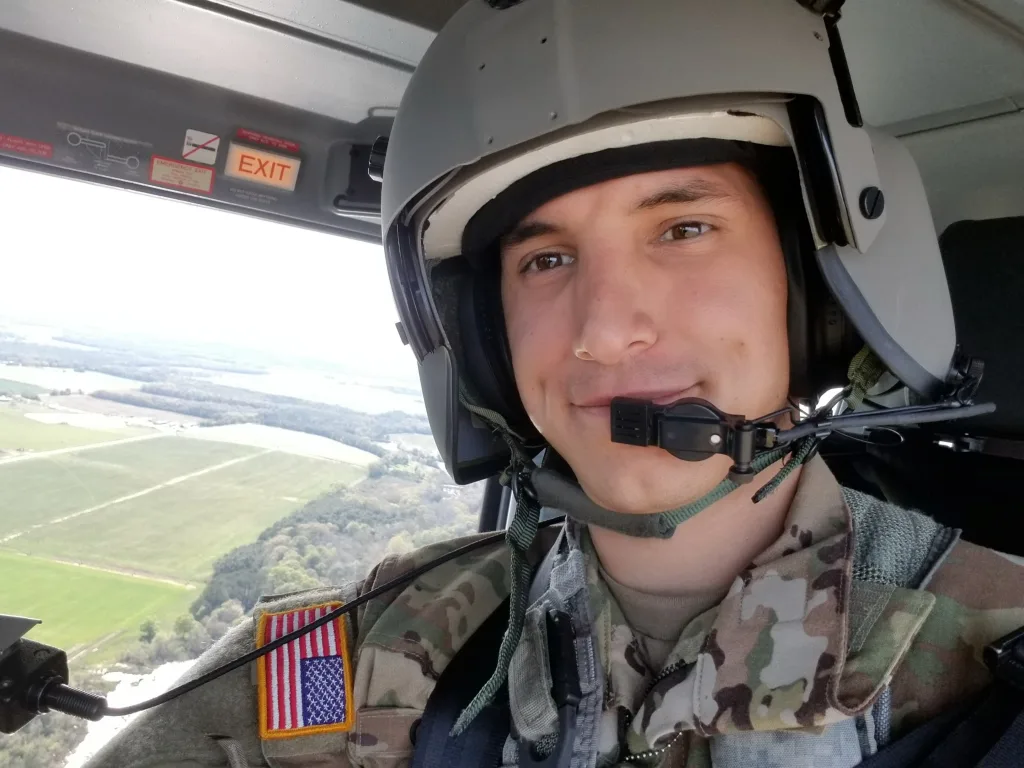
But just two months after Oct. 7, 2023, he began to feel overwhelmingly distressed about the war on Gaza — and what Gharib says he considers the United States’ complicity with the mass murder of civilians. Every morning and night he would see pictures of violence and starvation in Gaza on social media. His concerns were only intensified, as he felt unable to discuss the “taboo” topic with his fellow service members, nor could he speak openly about the crisis and his feelings without pushback from his commanders.
“It was the culmination of a lot of nights,” he told Documented. “This was something that bothered me deeply.”
First, Gharib asked to step back from flying, beginning a process that would ultimately lead to him resigning from the military altogether in February 2024.
“I realized that if I had to stay in, I had to not be vocal about it, and that wasn’t something that I felt like I could do,” he said.
Gharib is one of an untold number of soldiers and officials reported to be leaving their post over the war, which has now killed 67,160 Palestinians, and injured at least 169,679 people, according to the data from the Palestinian Ministry of Health in Gaza. At a time when a growing number of Americans say Israel has gone too far, and a United Nations commission has declared the Israeli offensive a genocide against the Palestinian people, veterans are raising their voices in opposition to the U.S. government’s support of the conflict.
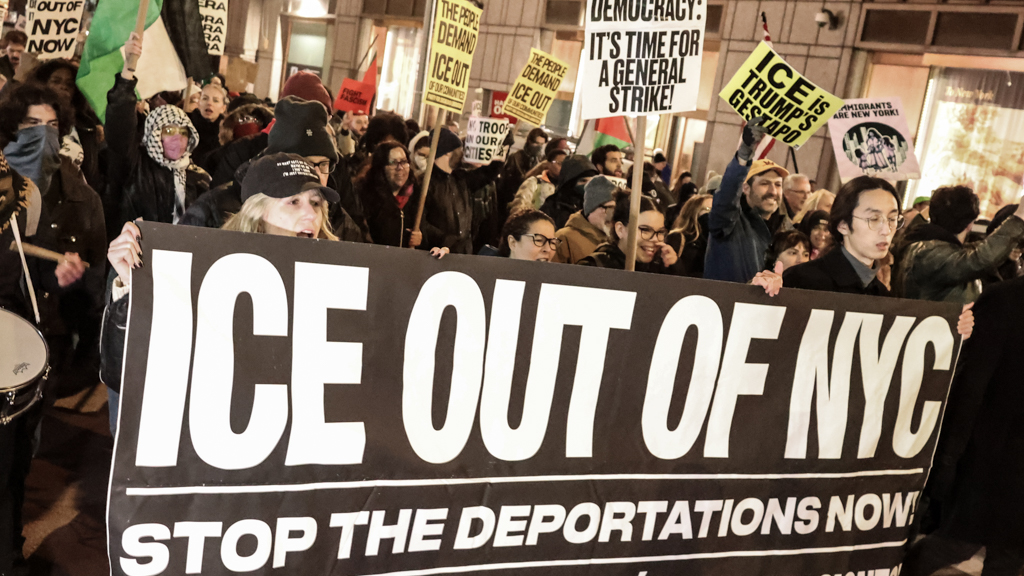
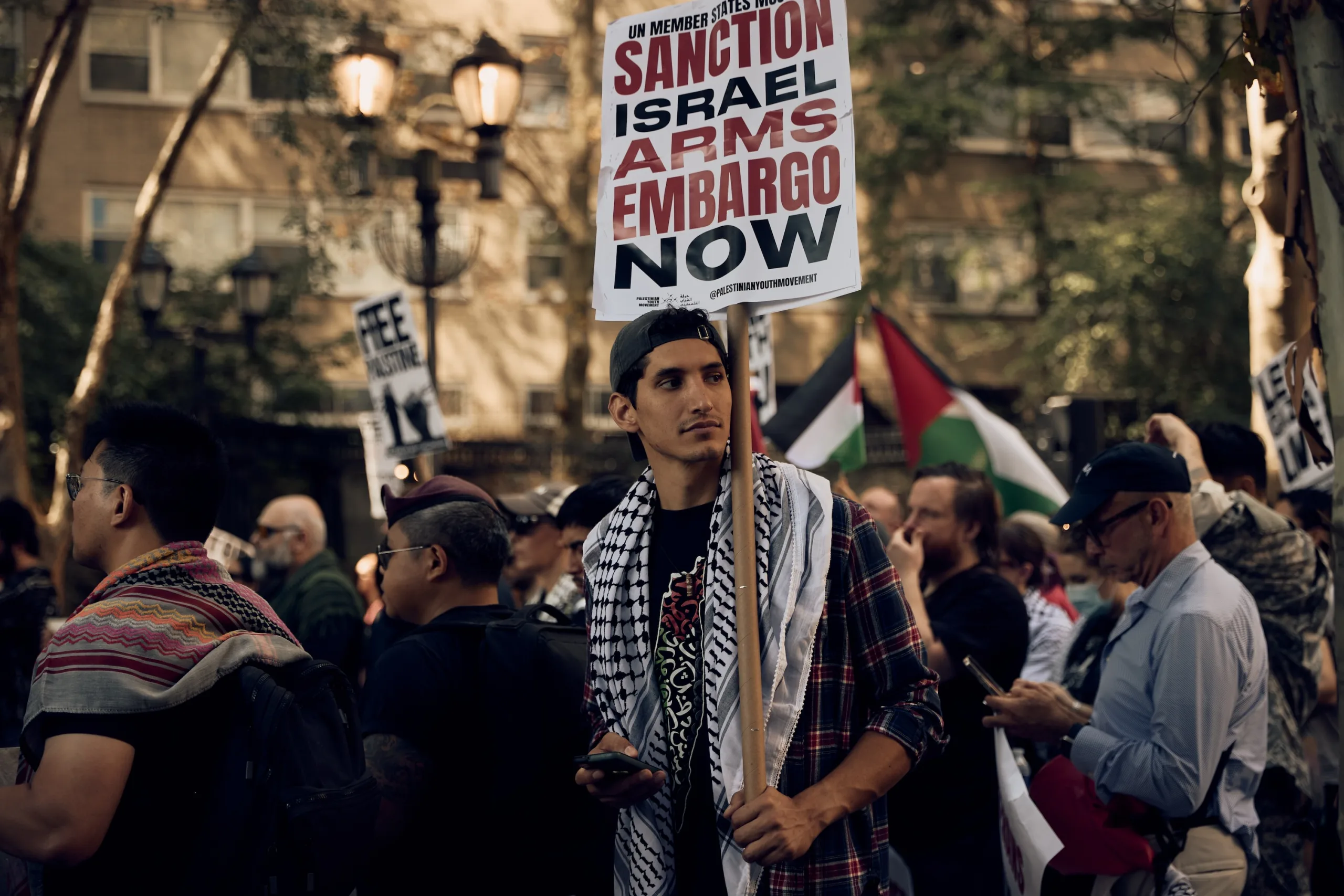
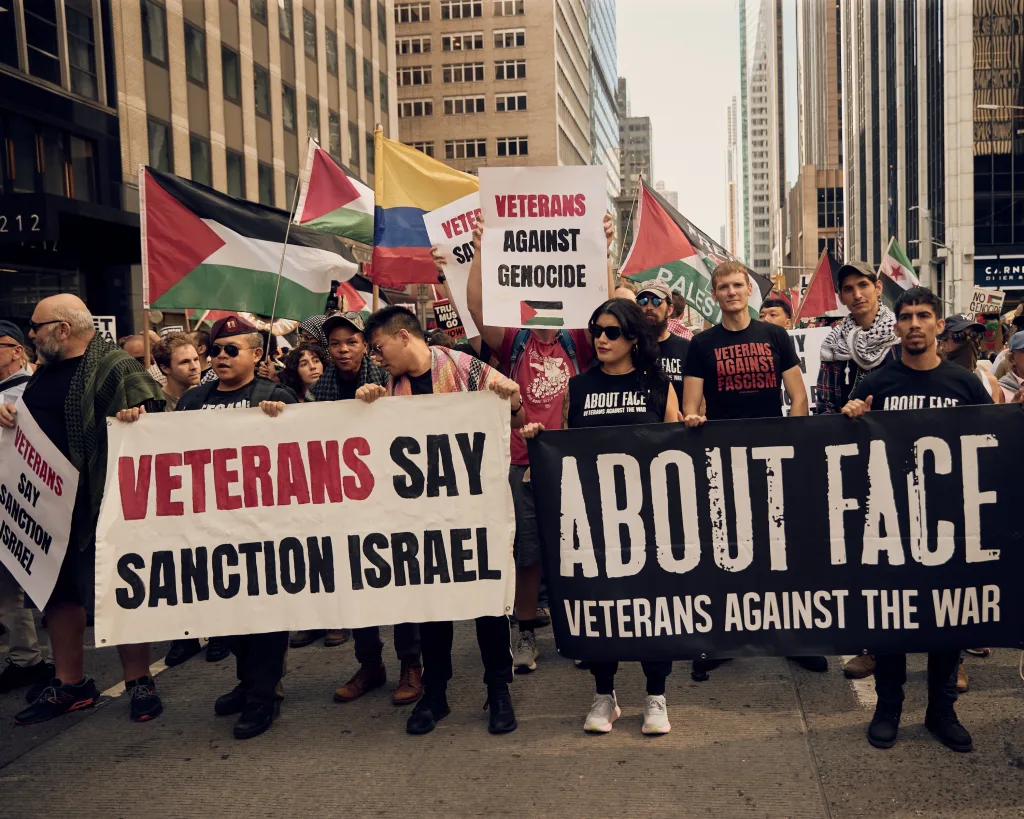
Since his resignation last year, Gharib has spoken out more forcefully. In late September, he took to the streets of New York City as one of thousands who were protesting the war during a speech by Israeli Prime Minister Benjamin Netanyahu at the U.N General Assembly. There, he discovered he wasn’t alone.
Being a first-generation American has helped Gharib see the conflict in a different light, he said. Gharib’s father, who is Egyptian, often watched international news on channels like Al Jazeera — which has won multiple awards for its coverage of the war — something he said few other soldiers were also exposed to.
The same went for Rebecca Roberts, who Gharib was connected to through fellow protesters.
Roberts’ mother is formerly an undocumented immigrant from Canada, and her father is Cuban-American. She said that her mother’s immigration status and her father’s inability to provide steady income made it so she grew up in poverty — joining the military at 17 was her path to a dependable paycheck and college.
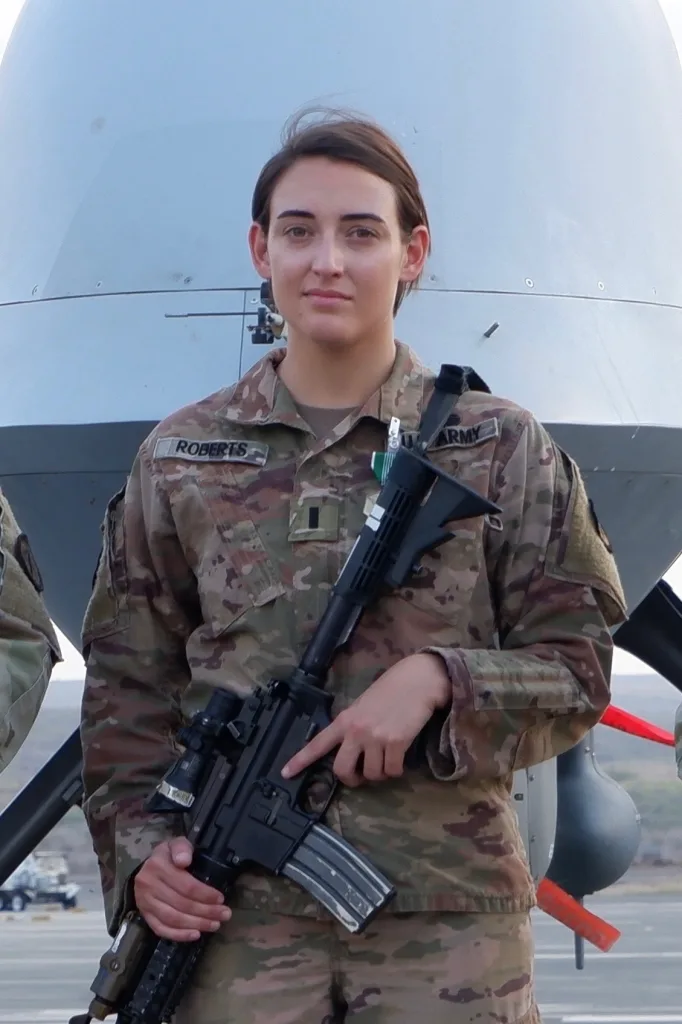
Roberts said she joined the military through New Jersey’s National Guard, becoming only the second female infantry officer in the state and, later, an officer in the state’s recruiting program.
Roberts deployed to Djibouti as a platoon leader in 2019, she said, her first time leaving North America. There, she began to draw lines between drone violence she saw on the ground and the U.S. government’s relationship with impoverished people both abroad and domestically. She recalls later having trouble facing her recruits and telling them they should be proud of their decision to serve.
“I ended up resigning because Palestine pushed me, on top of everything else,” she told Documented.
Roberts discussed her uneasiness with how the U.S. is providing weapons to the Israeli Defense Forces (IDF), joint training, and what she called the “pipeline” of veterans being recruited to join U.S.-run aid contractors involved in the deaths of Palestinians who were seeking food aid.
“I can’t separate myself from that,” she said. ”I had to look myself in the mirror and accept that I had been complicit in some way, but also lied to about what it means to serve. I think Palestine just put that into perspective for me.”
Since resigning from the National Guard in November of 2023, Roberts has become an organizing manager for About Face, a nonprofit organization made up of post-9/11 service members and veterans who organize against wars overseas. Most recently, she served as ground support for a boat in the flotilla captured by Israel while carrying veteran activists and humanitarian cargo.
“I always say that Palestine freed me, and so now it’s my job to help free Palestine,” she said.
Today’s veterans who are voicing concerns over the U.S. support of Israel’s war on Gaza join a long history of veteran protest movements against foreign military actions, from the Vietnam War to the war in Afghanistan. Under the second Trump administration, a growing bloc of veterans and active military members has continued to question their country’s choices
Recent reports of former generals questioning domestic deployments, hints of low national guard morale, and the resignation of multiple U.S. officials have recently racked the military’s polished image.
Last week, President Trump urged an unprecedented gathering of American generals to use U.S. cities as training grounds for the National Guard, following a series of troop deployments to Democratic-led U.S. cities. At the same event, Defense Secretary Pete Hegseth urged brass that didn’t agree with Trump’s grievance-laden speech to “do the honorable thing and resign.”
About Face offers support for active service members with questions and concerns about such policies. Roberts said that the organization has heard a growing number of personal stories of moral discomfort: over Palestine, domestic deployments in cities like Los Angeles and Washington, D.C., and trans military members being forced out of the services.

“People are having this moral crisis of seeing the role of what the military is being asked to do and what it’s used for going against their values, and that’s really difficult,” she said. “A lot of them have family, and this is their source of income and housing and health care, and so they’re like, ‘What can I do?’”
Military members are governed by contracts and law that make it difficult to say no to an assignment or immediately quit serving. While Roberts was able to resign due to her status as an officer, others like Gharib faced a longer process. Some can also choose to file for conscientious objector status, a long and costly process. According to reporting by The Guardian, Gaza has been top of mind for those invoking the policy.
Ahmed Gharib was able to eventually step away fully after working as a civilian engineer in the Department of the Army. He told Documented he wanted to “be the change you want to see in the world.”
The decision wasn’t without cost. Gharib’s resignation abruptly halted his training, and his goal to work for an NGO doing humanitarian aid. He lost his GI Bill benefits, and even some friends. .
But he says that his experience marching with other veterans through New York City in late September, however, was a “morale booster” — one that gave him a renewed sense of community with ex-service members .
This month, he took an even greater leap, deciding to move to Egypt for six months to find volunteer work, preferably with Gazan refugees. He also has dreams of working at a bakery.
“I think with the power of even just the United States Army…you could really do a lot of positive things,” Gharib said. “You have people stationed all over the world and some of them are doing good things. You don’t always get to choose, though, and a lot of them are put in situations where they have to do bad things. Until that picture changes, I don’t think I would return to service.”