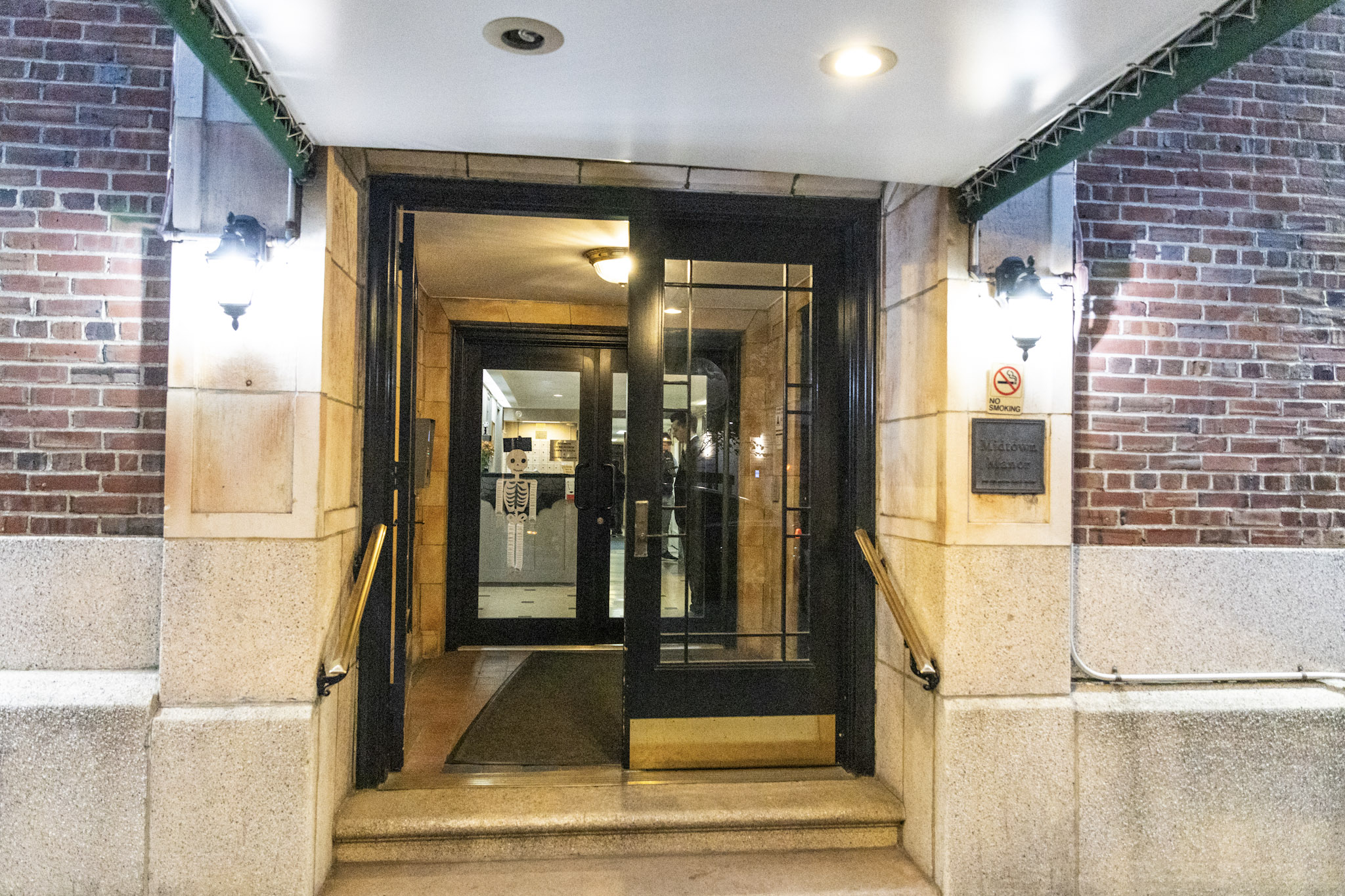


It was a warm Spring morning when Donna Lamb first sensed something was wrong. A longtime tenant of the 10-story Murray Hill building, she had passed the narrow front desk in the lobby many times where the 58-year-old doorman, Eduardo, used to be stationed. At the small wooden podium that serves as his desk near the entrance, he would greet tenants with a warm nod and a large smile every day. He moved with patience, holding doors for residents juggling groceries, bending down to offer a kind word to a child or pausing to ask how someone was really doing.
But one day she came down to the lobby and saw a flyer that read “Funds for Eduardo.”
Lamb had known Eduardo Ernesto Pardave Dulanto since he began working as a doorman at the Murray Hill building in 2022. At that time, New York’s residential buildings were struggling to maintain staff through pandemic closures and labor shortages.

During the pandemic, Eduardo lost his job as a jewelry polisher, and his wife lost her job as a cleaner. They were unemployed for almost a year and a half. They did not receive any government assistance and had to rely on their savings, sending some of it to help their family back in Peru. They eventually found work again, his wife through cleaning jobs and Eduardo by working in a building as a janitor, until he became the doorman in Murray Hill.
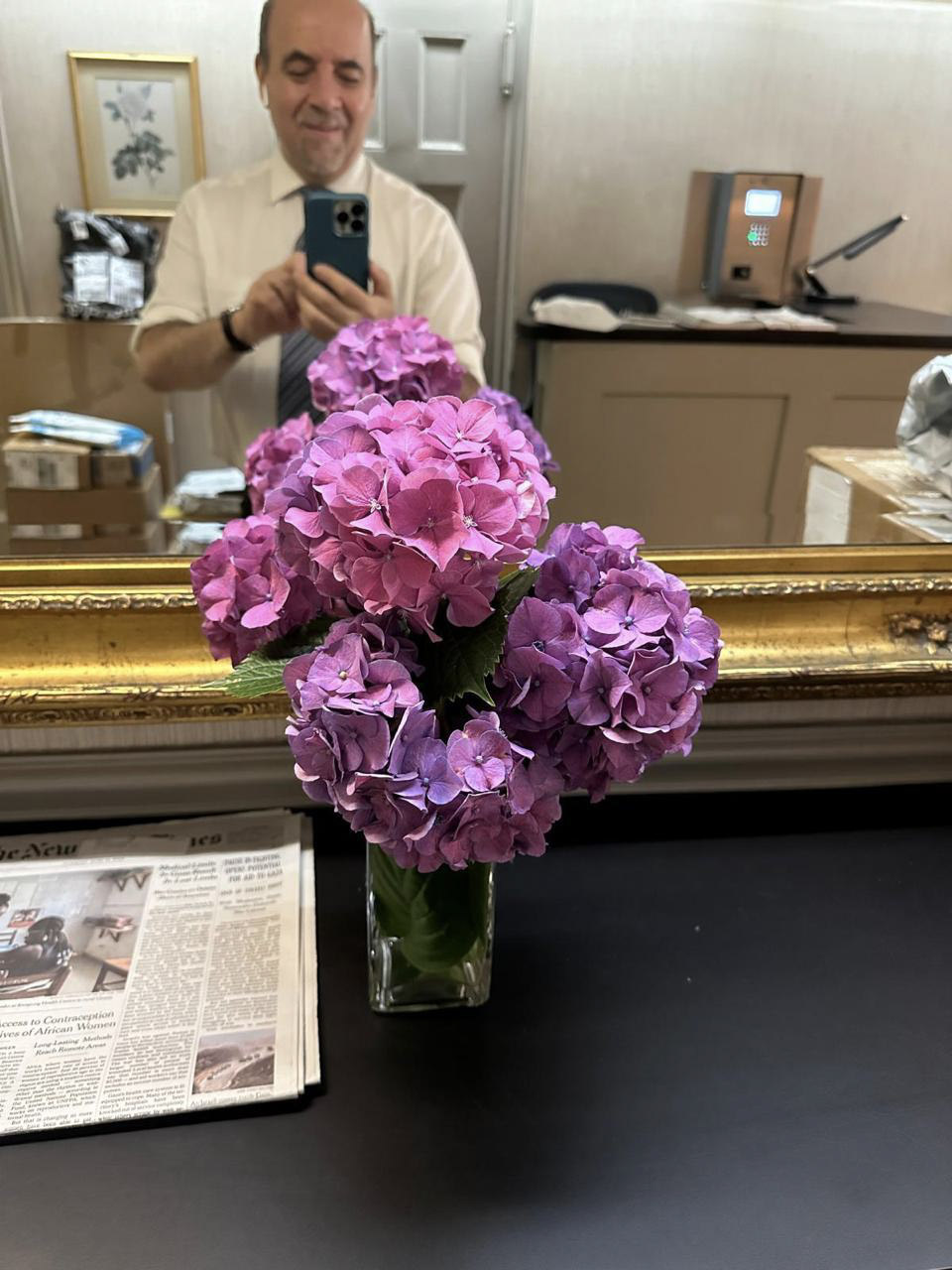
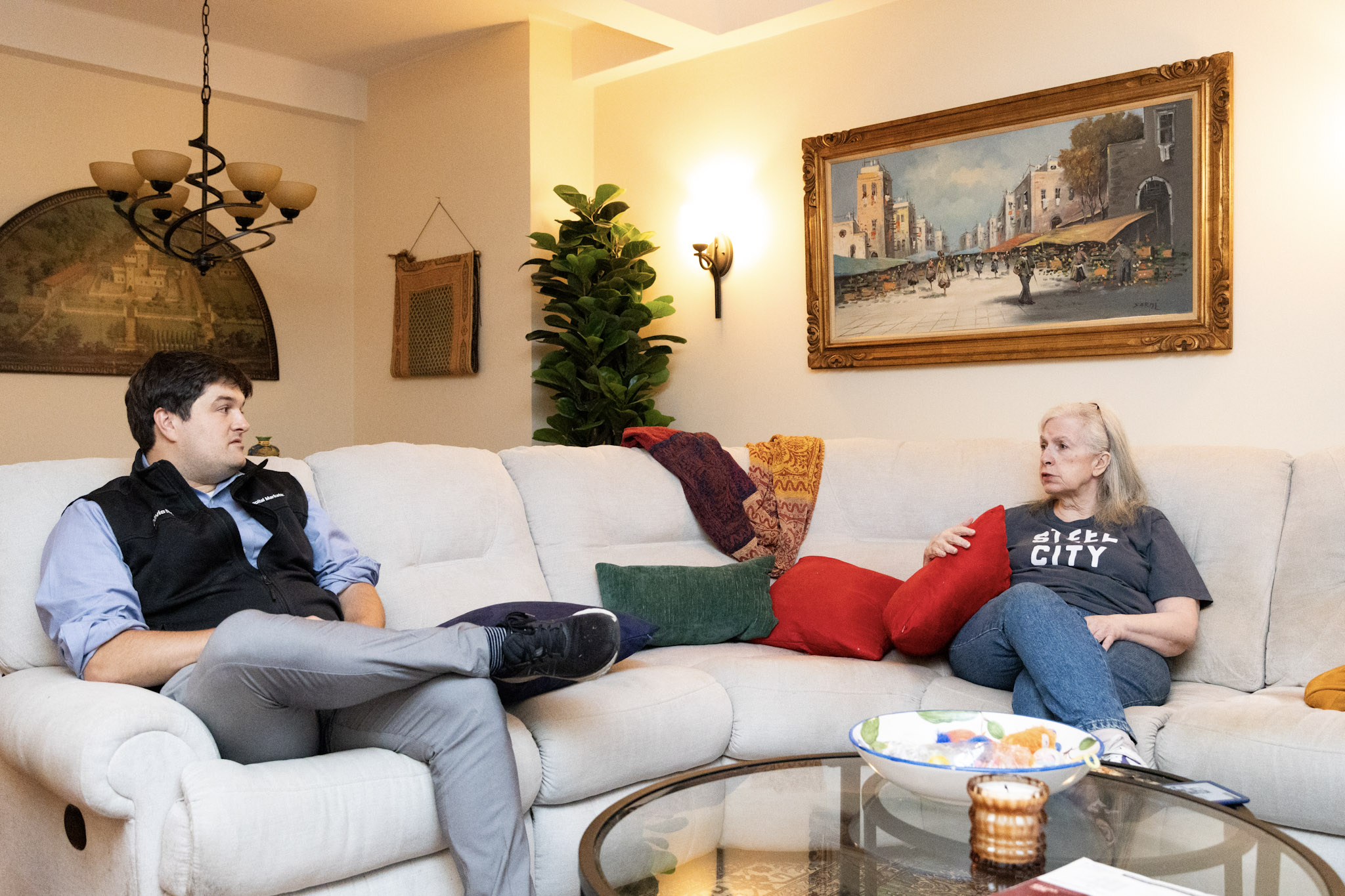
“He was one of those people who made you feel seen,” Lamb said. “You came home and there he was, smiling, asking how your day was. He cared about everyone in the building.”
Stockton Bullitt, another tenant and co-op board member, recalled how Eduardo would cover extra shifts, fill in for coworkers and remember the small details of residents’ lives.
“Eduardo was incredibly professional,” Bullitt said. “He made everyone’s life around him better. He was always giving to those around him.”
A couple of months earlier in February, Eduardo had left New York. After more than 30 years in the United States, not once seeing his family in Peru during that time, he made the difficult decision to return to Lima, Peru, for a visit. His mother had fallen critically ill and needed him by her side in the hospital.
The moment forced him to confront a decision he had long avoided. He struggled with the decision, as leaving the U.S. was not so simple for him. His undocumented status had made daily life increasingly difficult as he was constantly in fear of being deported.
Eduardo said he never legalized his status because he was concerned about contacting any official agency and believed he had no pathway to regularize his immigration papers. Instead, he and his wife waited and hoped for a broad legalization or amnesty program, like the one enacted under President Reagan in 1986. Over the years, they hoped for a similar action from other presidents, but it never came.
Eduardo’s wife also required medical care, which was unaffordable for them in the U.S. without insurance. And so she too decided to return to Peru.
Despite his long-held hope for a more secure future in the U.S., Eduardo left New York after 33 years to see his mother in Peru. The last time he saw her was in 1992.
Bullitt recalled Eduardo framing the trip as ‘temporary,’ and that he asked the building for assurances that he could take several weeks off without risking his job. Bullitt even gave Eduardo some money for travel, believing he would return in a month.
It was weeks later when Eduardo sent an email saying he was “having trouble getting back into the country.”
The building mobilizes
At the Murray Hill building, news of Pardave’s situation spread quickly among tenants after Bullitt posted a flyer. Lamb remembers that it said Eduardo had left to care for his sick mother, who later died, and now could not return to the United States because of immigration rules. The flyer also asked neighbors to help, noting that Eduardo had no job and was facing both his mother’s medical bills and his own.
“The first thing we tried to do was figure out his legal situation,” Bullitt said. “We talked to immigration lawyers in Houston and Baltimore, but they all said the same thing: there wasn’t a viable path forward.”
Lamb contacted the Augustinian order of the Catholic Church after recalling that her cousin had attended Villanova University and that the university’s president had ties to the clergy in Peru. She wrote to the president directly, hoping someone could help Eduardo find work abroad.
“He sent me a handwritten note,” she said. “He said he’d reach out to friars he knew who had contacts in Peru.”
She never learned whether anything came of it. “Eduardo wished me a Happy Thanksgiving the other day,” she added. “He’s still having trouble finding work, so I don’t think anything actually panned out.”
Tenants also started raising money. Bullitt estimated that contributions sent directly to Eduardo likely totaled “between $1,500 and $3,000” across two rounds of donations. Seven residents took part, he remarked.
“We’re a small building,” Bullitt said. “There’s no big campaign, just people trying to help someone who gave so much of himself to this place.”
Lamb called it a “quiet act of neighborly decency.”
“He wasn’t just a doorman,” she said. “He was part of our daily lives. You don’t forget someone like that.”
An uncertain future
When Documented spoke with Pardave for the first time, he described his life in Lima as extremely difficult.
Pardave said he has struggled to adjust and faces serious challenges finding work because of his age. He lives with his wife, 61, and their two children in a small apartment with no local support network.
“You don’t have that kind of thing here like you have in New York,” he said. “I went to some places to share my story, but mentally it helps only a little. Nothing happens.”
When he arrived, he would spend most of his days caring for his mother and looking for odd jobs. He said he would have started a small grocery stand or drive for a taxi service if he could afford to buy a car. “Without money, you do nothing,” he said. “Here, my age is a problem. Nobody hires you.”
Pardave’s health has also declined. “Recently, I was having cardiac arrhythmia,” he said. “I went to the hospital for three days. Now I’m on medication. My health is not good.”
Despite the complications to his health, he said he still hopes to return to the U.S.
“I keep looking for a way to get back,” he said. “Because the situation here is very difficult.”
Because Pardave remained in the United States for decades without legal status, leaving the country automatically triggered a 10-year reentry ban under U.S. immigration law. Without an approved waiver, which is extremely difficult to obtain, he cannot legally return to the U.S. once he departs.
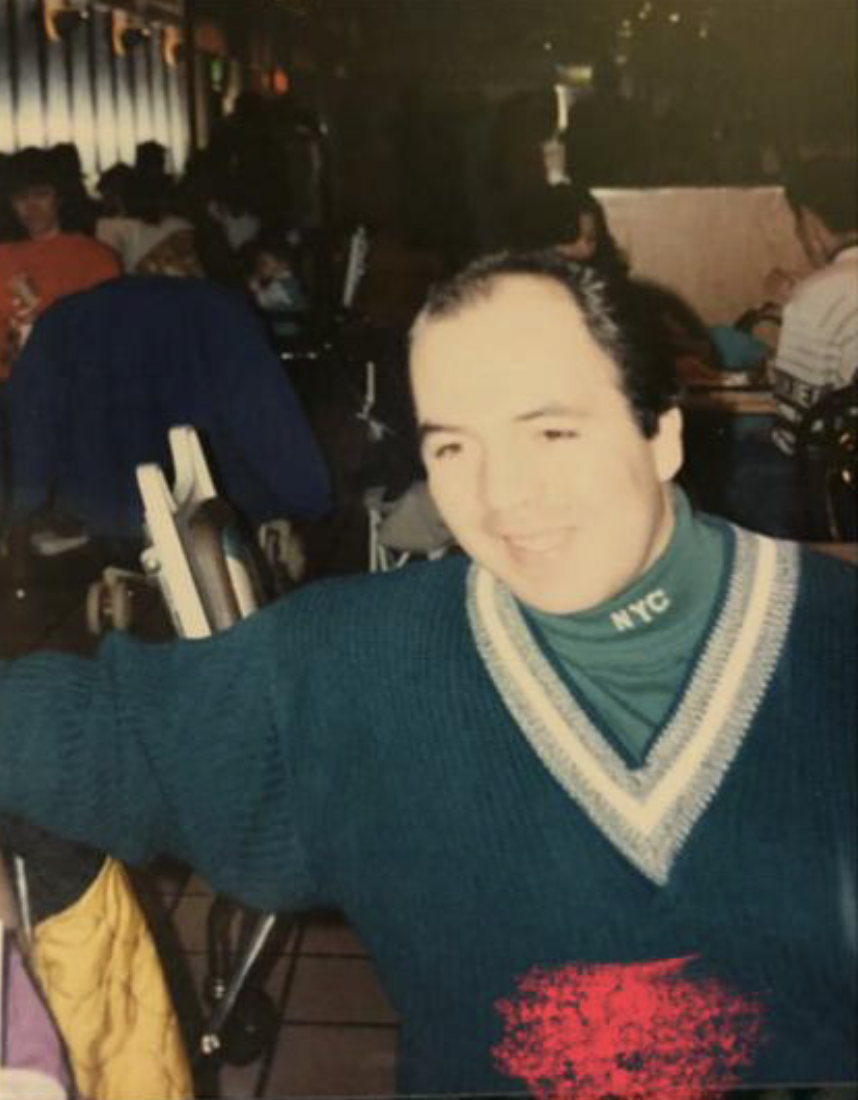
Eduardo Pardave arrived in the United States in 1993 when he was only 28 years old. He first entered the country on a short-term transit visa that allowed him only a brief stay. He decided to remain, beginning what would become more than three decades of living without legal status.
Pardave left Peru with the hope of finding steady work and a way to support his family, seeing no path to economic stability at home. In New York, he worked various low-wage jobs in restaurants, jewelry workshops and cleaning services as he worked to pay off the debt from his trip.
His wife joined him about 18 months later. Together, they built a life in the city, moving frequently, avoiding authorities’ attention, and relying on informal jobs as they tried to gain a foothold. Eduardo believed the United States could offer the stability and opportunity he could not find in Peru — he also thought it could help him create a better future for his family.
In New York, Pardave and his wife built a life in the margins. They lived in Queens, Jamaica, Flushing and Long Island City — moving every year or two to avoid attention from immigration authorities.
He worked wherever he could, as a dishwasher, salad maker, jewelry polisher and janitor before finding steady work as a doorman.
“We were living in the shadows,” Pardave said. “We never felt secure. Because we knew we were breaking the law, we moved almost every year. People like me, we are never at peace.”
He said they worked all the time. “Working, home, working, home,” he said. “My wife got tired. She said our kids don’t have much life here. It’s better to go back.”
Across the United States, millions of people live in circumstances similar to Eduardo’s, working in informal jobs on the margins of the formal economy. Recent estimates from the Pew Research Center show that about 14 million people were living in the United States without full legal status in 2023, including roughly 825,000 in New York. These immigrants often lack stable legal protections and access to many public benefits.
It was in 2023, after the pandemic had taken their savings and his mother’s health began to fail, that Pardave’s wife returned to Lima with their two children.
Pardave stayed in New York for another year, saving what he could and sending money home.
In January, Pardave learned that his mother’s health had worsened. She was hospitalized and medical bills were piling up.
By that time, his wife, who self-deported from New York to Lima a year before, also needed surgery. The decision to return to Peru was not easy, but he said he felt he had no choice.
“I didn’t want to go,” he said. “But my mother was very sick. I didn’t have the chance to see her before. So I went back. I thought everything was going to be different. But when I got here, I saw that it was worse.”
Also Read: Dancing Through Fear: A Haitian Performer Faces Deportation in New York
Once in Lima, Pardave found himself without work and burdened with hospital debt. “Here, you have to pay for everything, doctors, tests, medication,” he said. “If you don’t pay, you die.”
He applied for dozens of jobs but was repeatedly turned away because of his age. “People say, ‘You are old. What can you do?’” he said. “I’ve been applying for eight months and nobody calls me.”
His savings ran out. He sold what little he could and relied on money wired by friends and tenants from New York. “Thank God I have really good people like Mr. Stockton and Mrs. Lamb,” he said. “They were sending me some help. I was able to pay for my wife’s surgery but I still have bills to pay.”
Eventually, in the midst of all the stress, his mother died.
Lamb said the group first sent emergency funds after learning of the death of Pardave’s mother. “He was left with her medical bills, his own medical bills, and no work,” she said. “We knew we couldn’t get him back here, but we couldn’t just do nothing.”
The family’s return to Peru marked a shift in Eduardo’s life, from stability in New York to a daily struggle in Lima, with no local support and limited opportunities.
An absence that lingers
When Eduardo left for months, the lobby he once brought to life had sat empty. Although he had left in February, the building did not hire a new doorman until October. During that time, other staff took on extra shifts. Residents felt his absence right away.
“I got a lot of questions about where he is,” Bullitt said. “People were worried about him. He was really missed by pretty much everyone.”
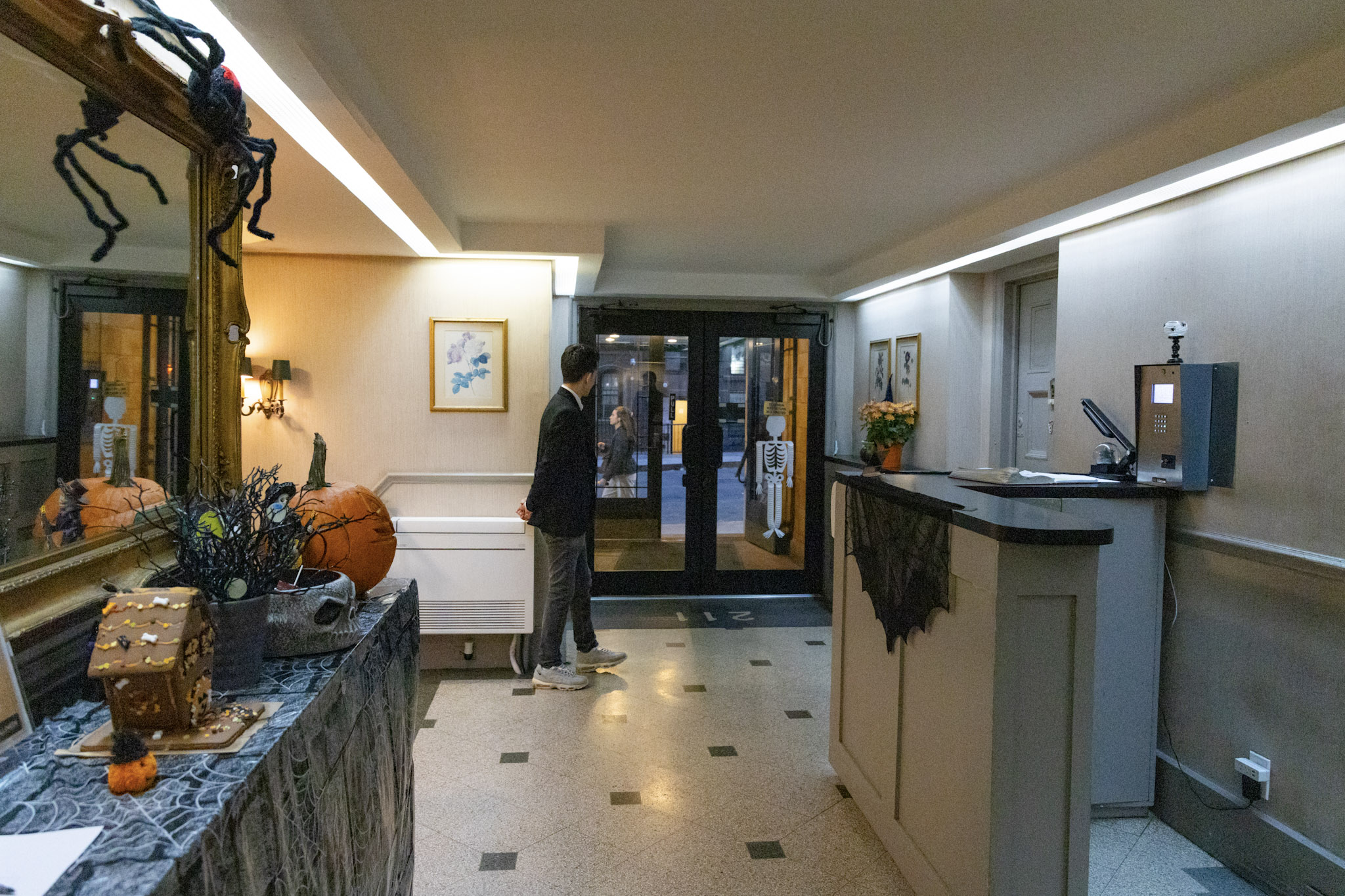
The building eventually hired a younger doorman who tenants say is capable and polite. But they say the space feels different.
“It felt like missing a captain. He set a lot of the good culture,” Bullitt said.
Eduardo now has deep regret about his decision to leave the United States. He said he made “a big, big mistake” and believes he might still be working in New York if he had stayed.
“I’m so desperate to find a way to get back to New York,” he said. “It’s impossible to raise my family here. Every day, every week, every month is so difficult for me to provide food.”
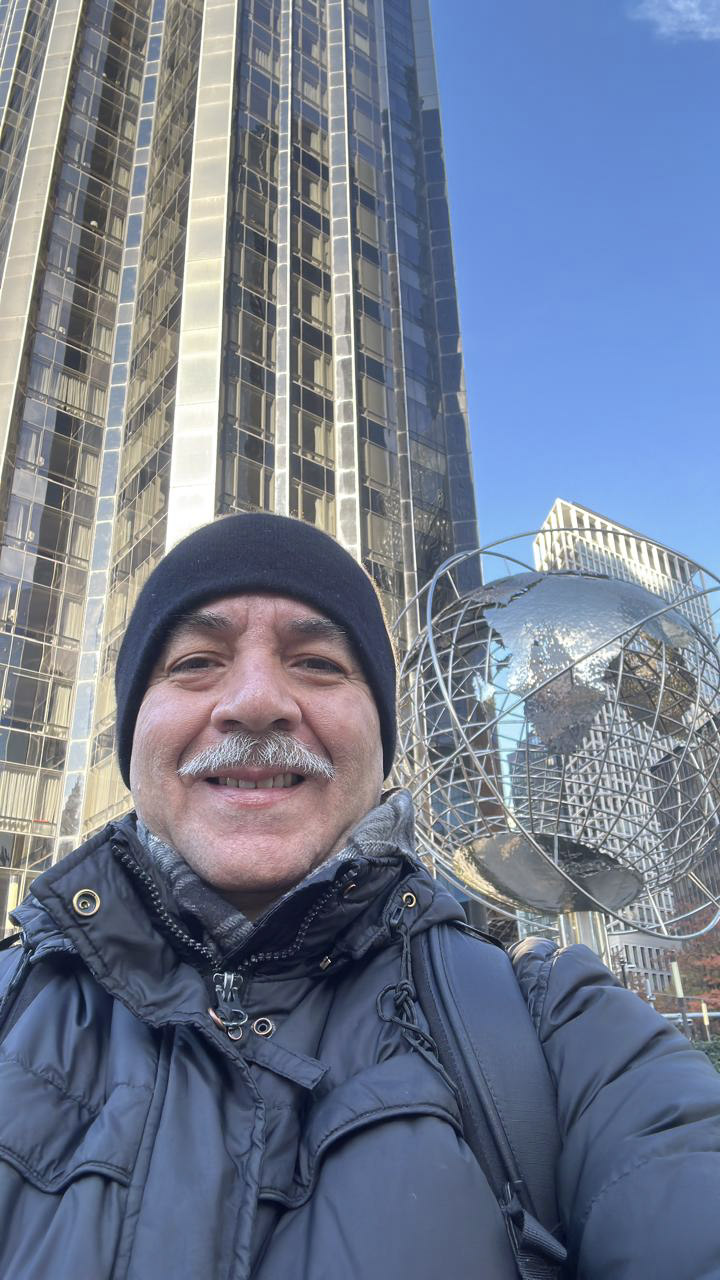
He remembers the fear and stress of living in the states without legal status but says he left because he could not bear the thought of never seeing his mother again. In Peru, he feels trapped by the consequences of that impossible choice.
From Lima, Pardave said he still speaks with Bullitt and other residents. He tries to stay optimistic, though his circumstances leave little room for hope.
“Sometimes I think I don’t know if I made the right decision or the wrong one,” he said. “If I had stayed in New York, maybe I could have kept helping my family. But I needed to see my mother. Now, I just think about how to survive. I still feel strong,” says Eduardo. I just need a chance.”