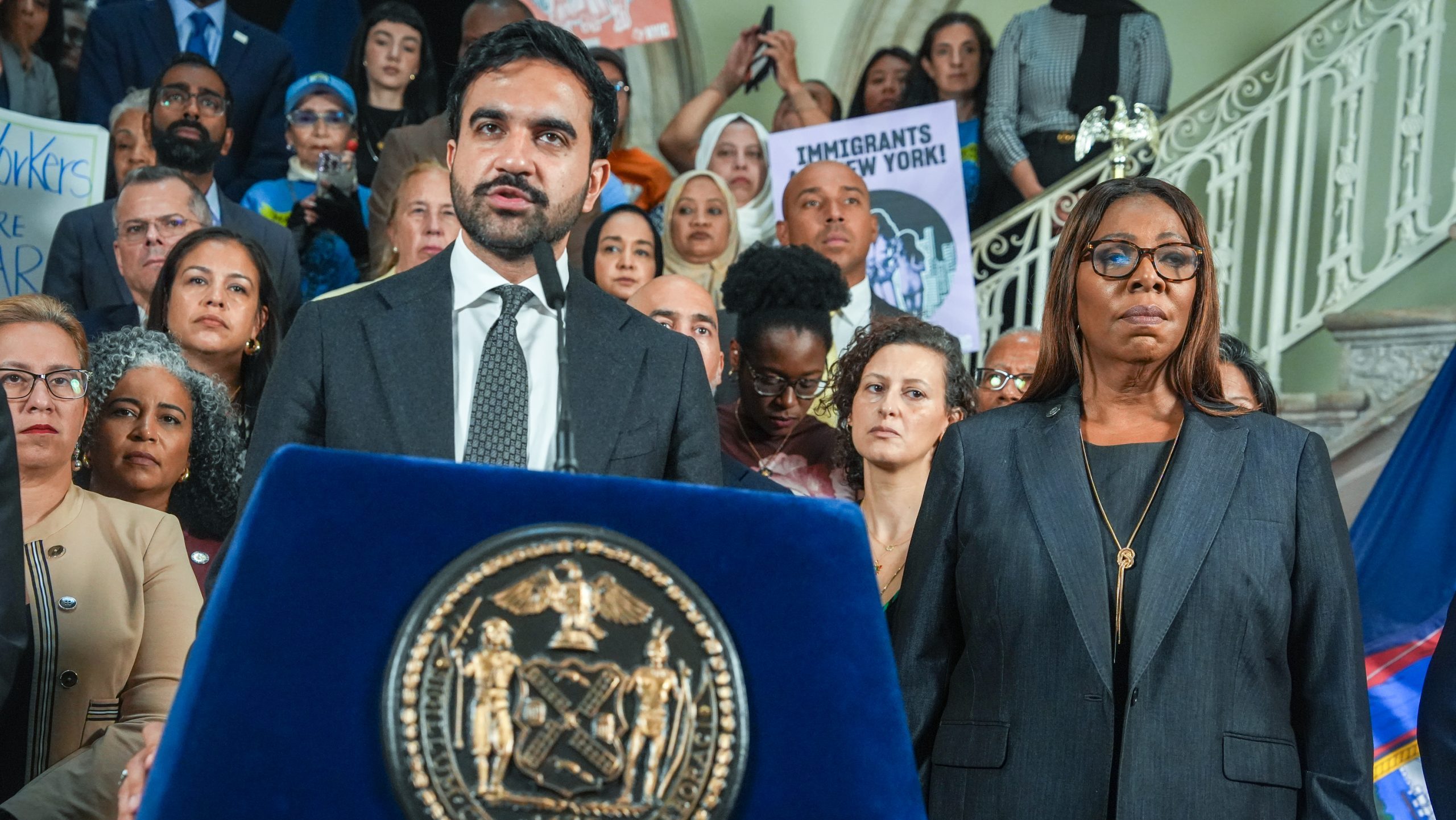


In today’s Democratic primary, the specter of a planned casino near Citi Field in Queens looms large over the contentious race for Queens’ 13th State Senatorial District.
The proposal for the casino at Flushing Meadows Park, which has already been approved by the state, has divided the district that includes the primarily immigrant neighborhoods of Jackson Heights, Corona, East Elmhurst, and Elmhurst.
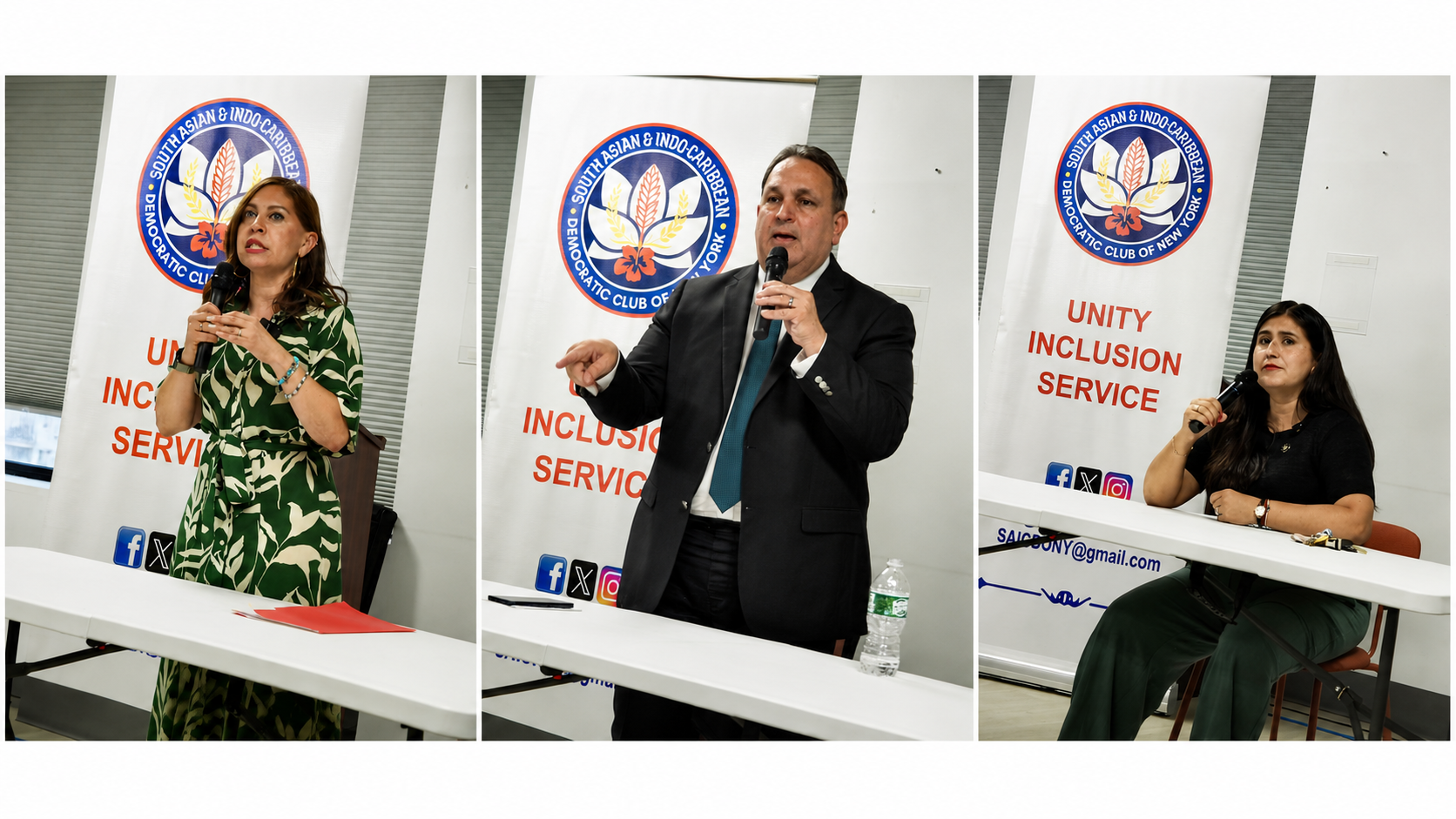
In the middle of the casino debate are those vying for the Queens Senate seat: incumbent State Sen. Jessica Ramos, State Assemblymember Jessica González-Rojas, and perennial candidate Hiram Monserrate, who was expelled from the New York State Senate in 2010 after being charged with assaulting his girlfriend and later convicted of federal corruption charges.
Ramos — who made headlines for her endorsement of disgraced former Gov. Andrew Cuomo for mayor after her own failed campaign — is fighting against the casino in a bid for political survival and her fourth term in office. She has made her steadfast opposition to the casino central to her reelection campaign.

Her challengers are State Assemblymember Jessica González-Rojas and Monserrate. González-Rojas previously voted to allocate the parkland for the casino, slated to be built in Citi Field’s parking lot, but has tried to focus her campaign on other issues, she told Documented. Monserrate said the casino is here to stay.
As senator, Ramos refused to introduce a bill that would allow the casino development on the parking lot, which, under state law, is designated parkland. Circumventing Ramos, State Sen. John Liu introduced his own bill to develop the site, which Ramos voted against. The bill passed in a 54-5 vote.
Dubbed Metropolitan Park, the $8 billion project has been spearheaded by Steve Cohen, the billionaire owner of the Mets, who are ranked dead last in the National League East division.
To ensure his casino dream becomes a reality, Cohen spent over $2 million of his own money to influence public opinion in support of the project despite community opposition. In 2024, Cohen’s Queens Future LLC spent over a $1 million dollars hiring 13 lobbying firms to gain political support.
Although the state granted Cohen a gaming license, the fight to stop the casino is not over. On March 20, community groups filed a lawsuit in the New York State Supreme Court against the NYS Gaming Commission for approving Cohen’s casino despite his hedge fund company pleading guilty to fraud in 2013. The case is ongoing. However, pending a last-minute intervention from the courts, the casino project is almost certain to happen.
Since Ramos endorsed Cuomo, despite her past criticisms of him, she has alienated herself from her fellow lawmakers. But Ramos believes that standing against the casino puts a target on her back.
“Certainly, the opposition to me started when I voted against the bill,” she told Documented. “Actually, it goes back to when I refused to introduce the bill to alienate the parkland.”
“All of my colleagues in the area became a casino clique,” she added, “and I don’t want to be part of the casino clique.”
In contrast, González-Rojas, who voted in favor of a similar land use bill in the state assembly, has framed her campaign around other local issues.
“When we’re knocking doors, for every 100 doors, we might get one person that says I don’t like the casino project,” she told Documented. “So in our day-to-day in the community, we’re not hearing about it.”
González-Rojas, a member of the Democratic Socialists of America, has gained a slew of heavy-hitting endorsements from the likes of Sen. Bernie Sanders, Rep. Alexandria Ocasio-Cortez, Attorney General Letitia James, as well as nearly a dozen labor unions. Yet despite her progressive bona fides, she says her vote for the casino is being used against her.
“It’s all been elevated now because she’s trying to weaponize that against me, but the reality is that there was only support; I would not have voted for that, even that land use bill, if I didn’t hear from my constituents,” she told Documented. “And as I go into the part of her district, this Senate district, East Elmhurst, parts of Corona that are closer to the project, people thanked me for taking that vote.”
In the past few weeks, González-Rojas’s campaign has received a boost when a mysterious Super PAC with suspected ties to Cohen spent $850,000 to independently fund anti-Ramos ads. For her part, González-Rojas insists that campaign donations did not influence her, nor her vote in support of the casino.This campaign is about so much more, she says.
“I would say housing is the number one thing that comes up, but immigration is a close second,” she said. “Particularly with even those who are U.S. citizens, they feel fearful for their neighbors or their family members.”
Apart from the two Jessicas stands Monserrate, who has attempted to position himself as a tough-on-crime candidate despite his past legal troubles. Vowing to clean up alleged drug and sex trafficking rings on Roosevelt Avenue, Monserrate views the casino like opening a Pandora’s box of vices.
“They are linked to the extent that the casino will impact Roosevelt Avenue,” he said. “The only issue here will be, does it impact it positively or negatively, and that’s what the next senator is going to make sure that it’s positive.”
Monserrate now views the casino as a done deal, but wants to ensure that the community can shape what public benefit agreements they can get from the casino before it opens.
“Irrespective of what you feel, the casino is coming,” he said. “So, the next state senator will be dealing with the casino, but what the public has a right to do now is to decide if the person who’s running for senator who voted to take away the parkland should get promoted.”
When asked why voters should trust him given his criminal past, Monserrate says his record of community service speaks for itself.
“I understand the questions and the concerns, but the people in this community voted me in 2008 and reelected me for a time, so that decision by a significant portion of the community is already done,” he said. “So the issue today is not what happened in Hiram’s life 18 years ago. But, what’s happening in this community now, and what I have been doing in contrast to what they haven’t been doing, and that’s where we’re at. So, I might not be a perfect human being, but clearly I’m going to be a better and more effective representative for this community.”
During her seven years in office, Ramos introduced 523 bills, of which 50 have been signed into law. As the chair of the Senate Labor Committee, Ramos spearheaded worker-protection laws such as the Retail Worker Safety Act and the Warehouse Protection Act.
When asked if she regrets the Cuomo endorsement, Ramos said she doesn’t care to dwell on the subject.
“Hindsight is always 2020, but when I made the decision to make that endorsement, it was at that point a race between two men, and I decided to go with the person with the most experience without apologizing for all of the things that I have criticized him for,” she said.
What’s not as certain is whether Ramos will continue to serve as State Senator. No matter what the results are on election night, Ramos says she stands firm on her principles.
“We need more health clinics in this community, we need more schools, and we certainly need more low-income housing,” she said. “How about that? We need economic development that the state subsidizes, and that the state prioritizes.”