

Delivery drivers named Mamadou may seem like an unlikely muse.
But over the past year, New Yorkers who frequently ordered takeout meals became obsessed with deliveristas who share that name — penning original ballads and filming countless TikTok odes about them.
The fascination stemmed from a myth that a single Mamadou was somehow ferrying food across the five boroughs and beyond — all at the same time.

“He delivered to me in Jersey City,” an Instagram user commented. “Mamadou delivered my baby,” another user joked under the same post.
In reality, the name — a West African adaptation of Muhammad — is wildly popular in countries like Guinea and Senegal and therefore a frequent moniker for deliveristas who are new to the U.S.
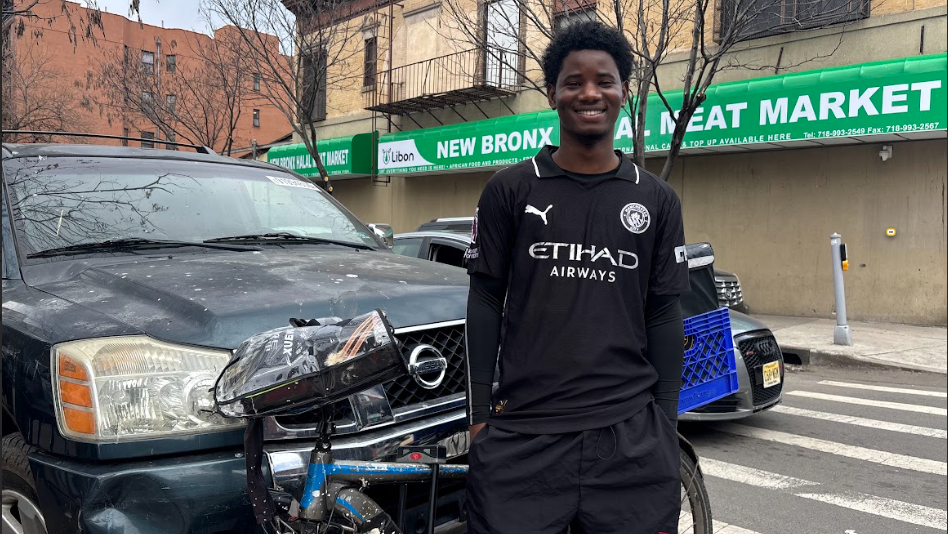
But behind the meme are countless real delivery workers who share an occupation and name but vastly different life experiences — and one of them, Mamadou Aliou Barry, has found modest fame by leaning into the phenomenon.
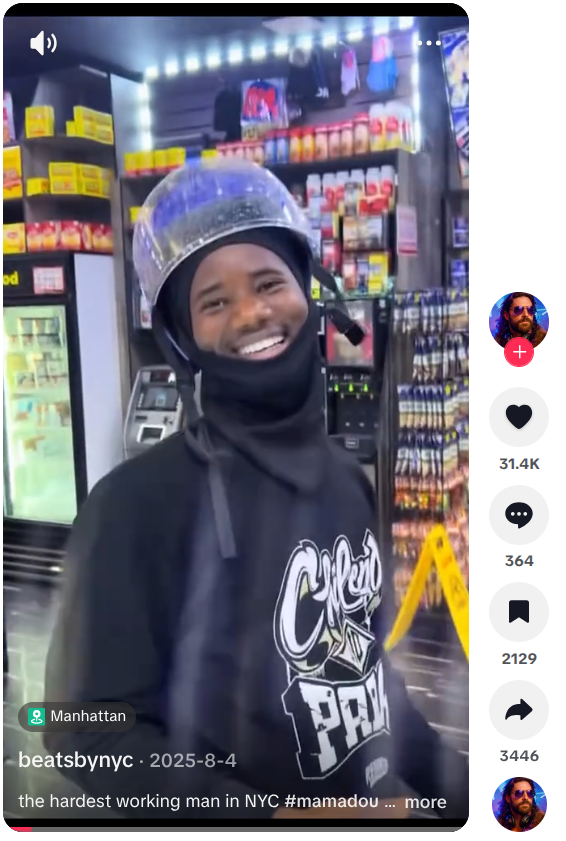
Barry, 19, an UberEats delivery driver originally from The Republic of Guinea, was living in a Times Square homeless shelter last July when a bodega owner made a viral TikTok interviewing him about how many orders he makes a night and declaring him the “Famous Mamadou.”
Shortly after, more people started recognizing him across the city, and making videos as if they’d stumbled upon a major celebrity. “It felt really good. Everyone loved me,” Barry said.
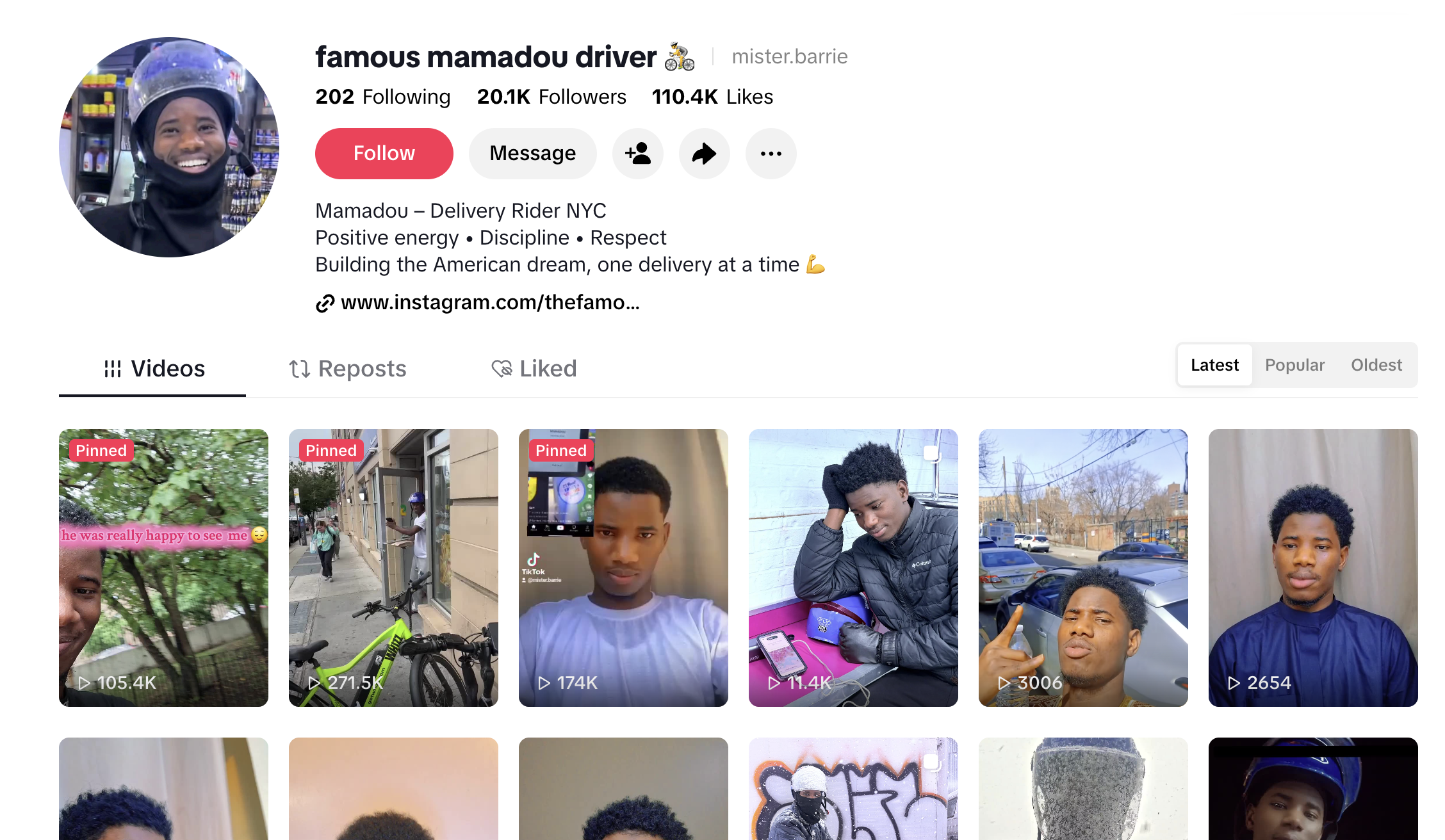
His social media fame led him to become a content creator, with over 20,000 followers on Tiktok. Now that he has a stable home, Barry uses his page to post videos with his fans and also document issues he experiences while delivering for UberEats — like customers lying about not receiving an order so they can get a refund.
Just a few years before social media knew him as a smiling delivery rider, Mamadou was a teenager dreaming of visiting the United States he had seen in movies back in Guinea. Now stateside, he often looks at the goings-on in his home country through a different kind of screen; social media posts showing the violence and instability affecting communities in the region, including Fulani people like him.
During a recent interview, he quietly scrolled through one video on his phone showing a young child killed amid the conflict, a reminder of the reality many Fulani families continue to face back home.
Barry fled his homeland at age 17 and traveled across 10 countries, a journey that lasted him about three weeks, he and his lawyer said. He finally arrived in the U.S. in late 2023, where he landed in a shelter for minors in Arizona.
His goal back then was simple: to learn English and find work.
But days after his eighteenth birthday, the shelter informed him he had aged out of the institution, therefore he had to leave, he said. Barry then called a friend who lived in New York and who could purchase him a plane ticket. Barry arrived and settled into the homeless shelter near Times Square. His lawyer says he now has a pending asylum case and is seeking Special Immigrant Juvenile status.
“New York is so diverse, it feels like the city welcomes you,” said Barry.
This bright, frenetic part of the city was immediately special for Barry, who had only seen it portrayed through film. Suddenly, he could see the iconic billboards, tourists and performers from the window of the shelter.
During this time, Barry began to work as a delivery driver, learning the streets of New York and its people. Unbeknownst to him, he was just months away from becoming part of the city’s cultural zeitgeist, as social media users increasingly became his biggest fans.
By the time people started recognizing him on the street, Barry was still bouncing from shelter to shelter, he said. Many times, he would spend the night in churches or mosques that required him to leave early in the morning and return at night, while migrant shelters enforced 30 to 60 day transfer rules, making stability difficult.
Slowly, what began as brief and surprising interactions — people guessing his name, recording videos, and asking for photos — turned into viral moments online, eventually earning him the nickname “The Famous Mamadou.”
By the summer of 2025, after almost a year of living in several homeless shelters, Barry was finally able to move into a friend’s apartment in the Bronx, where he rents a room with his now legal guardian.
“America is not free, that’s why we’re working hard everyday so we can pay bills and buy clothes,” he said. “Things are not as easy as they look in movies.”
Barry uses his social media accounts to give his fans a glimpse into the real-life hardships faced by delivery drivers. They face the affordability issues of living in the city. They face rudeness or outright discrimination because of language barriers. They work long shifts and risk their safety during bad weather — while also having to purchase their own safety gear. And on top of it all, they are denied access to bathrooms from most of the restaurants they deliver from.
“It’s very dangerous to ride in the city. Drivers are mean to us, and I know people who have had accidents and broken bones,” Barry said.
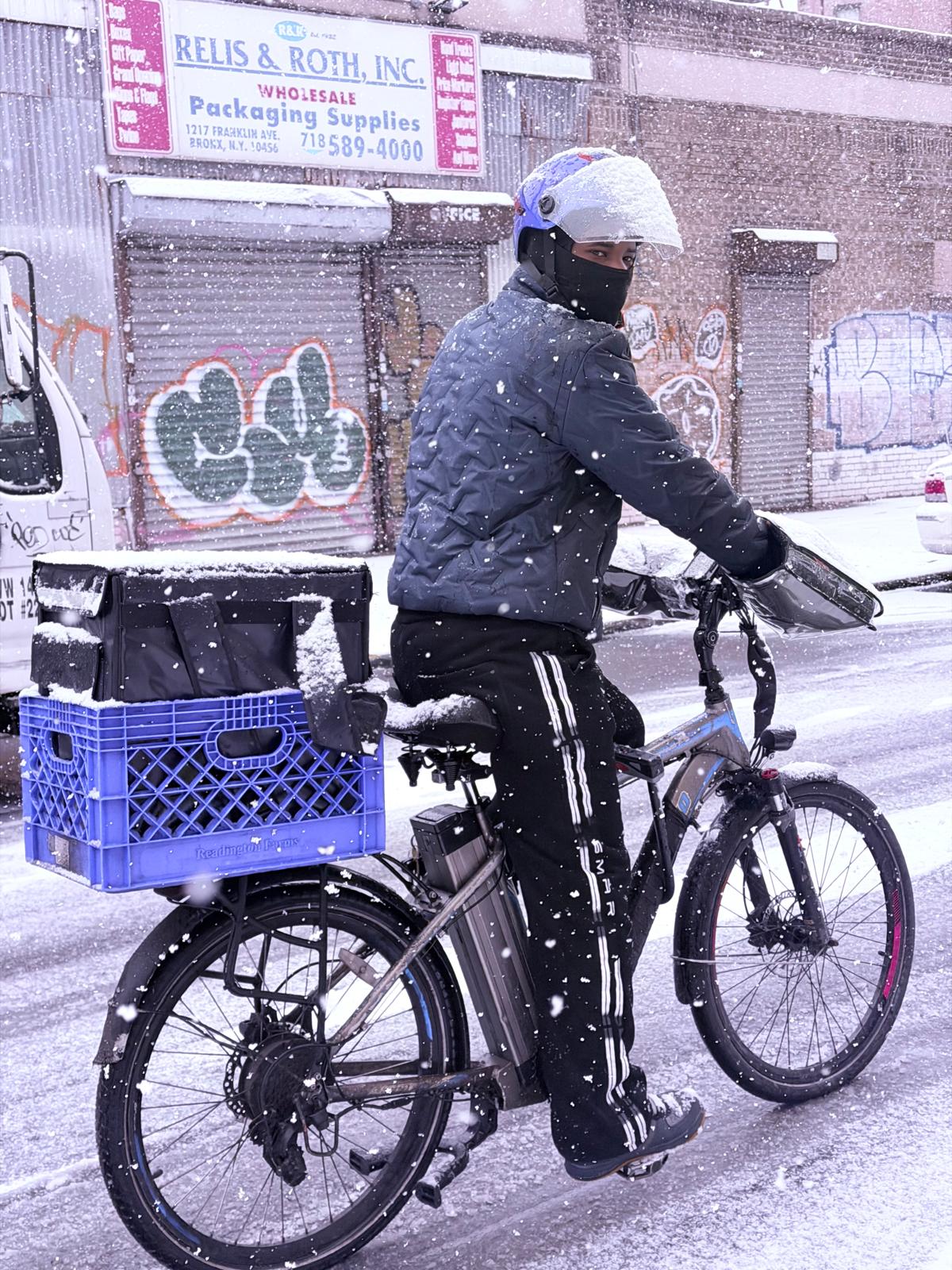
Barry said has had his bicycle stolen twice near his former homeless shelter. And last summer, a group of men in the Bronx stole the food he was on his way to deliver.
Despite all of this, Barry has kept his characteristic smile — the one that originally captured the hearts of his fans on TikTok. For Barry, smiling even when situations are hard is a devotion to his faith, a testament to his ability to face challenges that rise daily. “Smiling is a Sunnah,” he said, referring to practices of the prophet Muhammad that are a model for Muslims to follow.
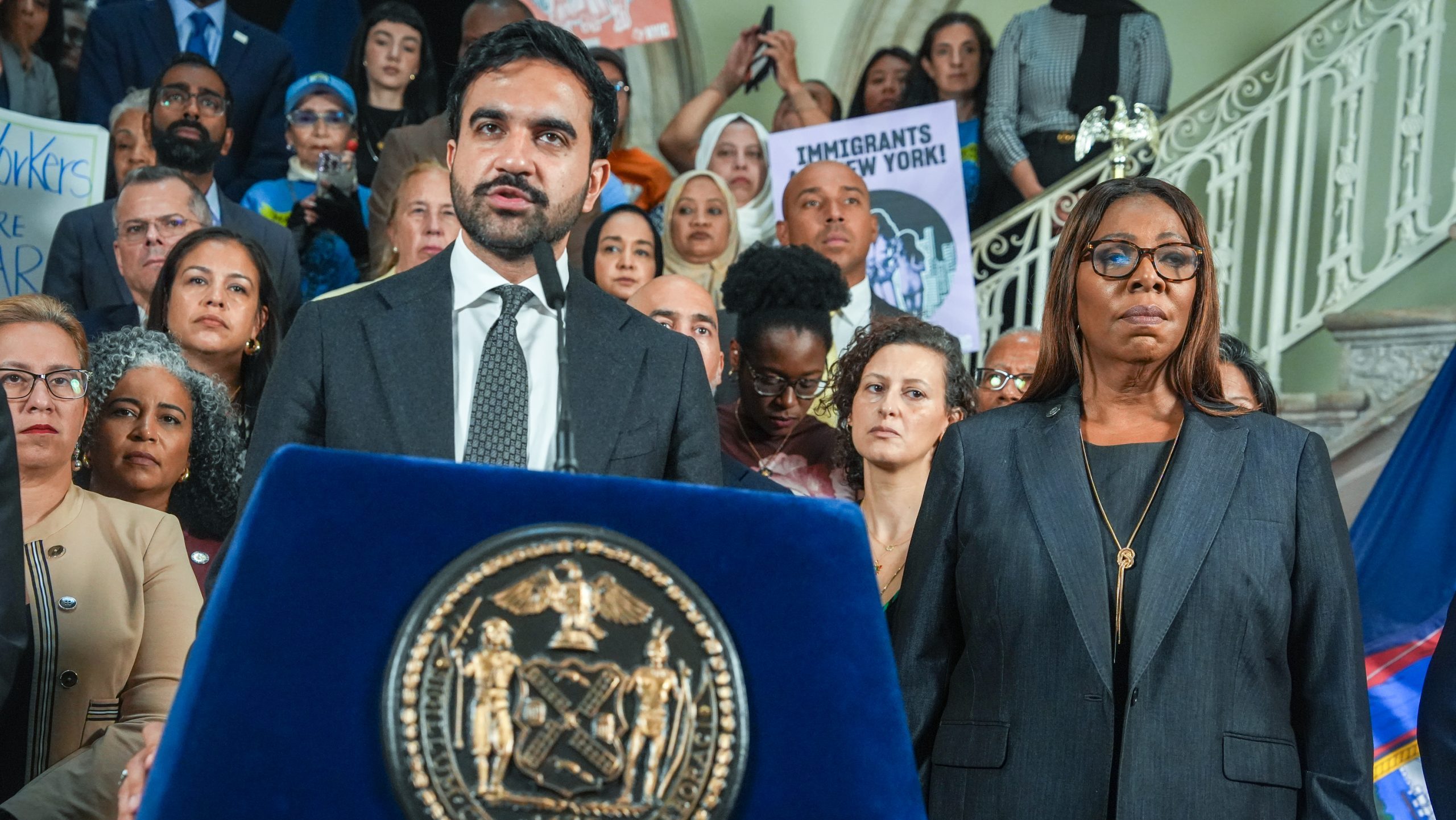
Still, Barry said he had been feeling depressed since last fall after a friend from his homeless shelter was deported. But then he was buoyed by the election of Zohran Mamdani as mayor, saying it gave him hope that a naturalized U.S. citizen could ascend to the city’s highest office.
“Before he [Mamdani] won, I felt really scared,” said Barry. “But seeing the videos of an immigrant Mayor, welcoming immigrants in his speech made me feel safe and comfortable.”
As 9-to-5 New Yorkers return home from work and settle in for dinner, work begins for Barry and the other Mamadous across the city. When he heads out, he often thinks back to the first time he saw Times Square from the windows of his shelter, when the New York he saw in the movies became reality for him.
“If you are here, you’re already a New Yorker,” he said. “This is a place where you can come from anywhere, and through hard work you can accomplish anything.”