




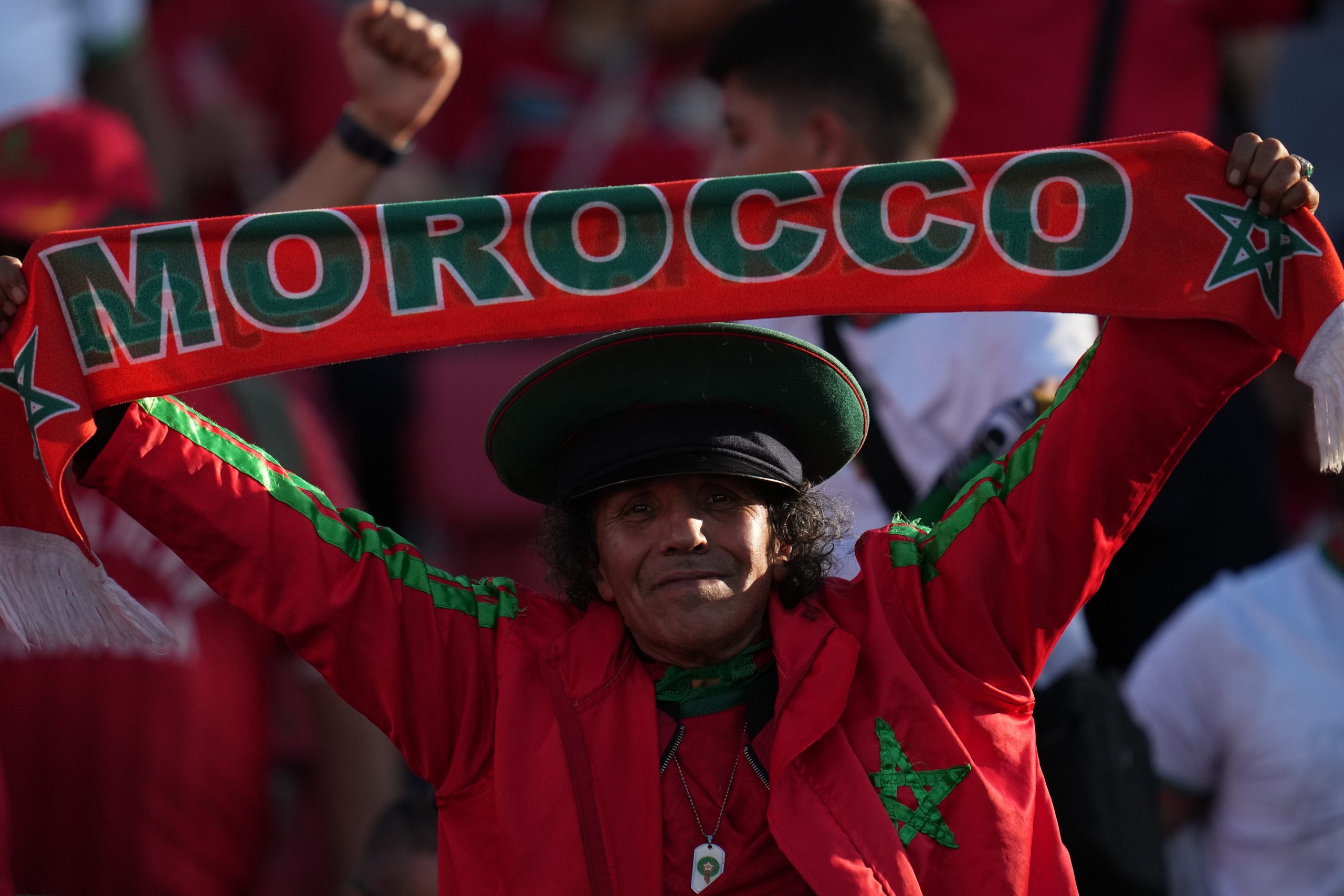
As soccer stars from across the globe compete in the 2026 World Cup starting this week, many of New York City’s immigrant communities will be cheering on teams from their native countries. For some, this means indulging in restaurants that offer a taste of home, good vibes and also contribute to the city’s deliciously multicultural fabric.
If watching the games has you hankering to explore teams’ native cuisine, Documented has selected eight countries and tracked down neighborhood institutions that have been feeding their communities here. These restaurants feature dishes that delve way deeper than the mainstream hits, and hone in on traditional, centuries-old recipes.
Colombia
The 7 train rumbles over Little Colombia — spanning 79th to 84th Streets along Roosevelt Avenue — in Jackson Heights. The community was formed by waves of Colombian immigrants who fled to the United States during the 1960s recession and the 1980s drug wars.


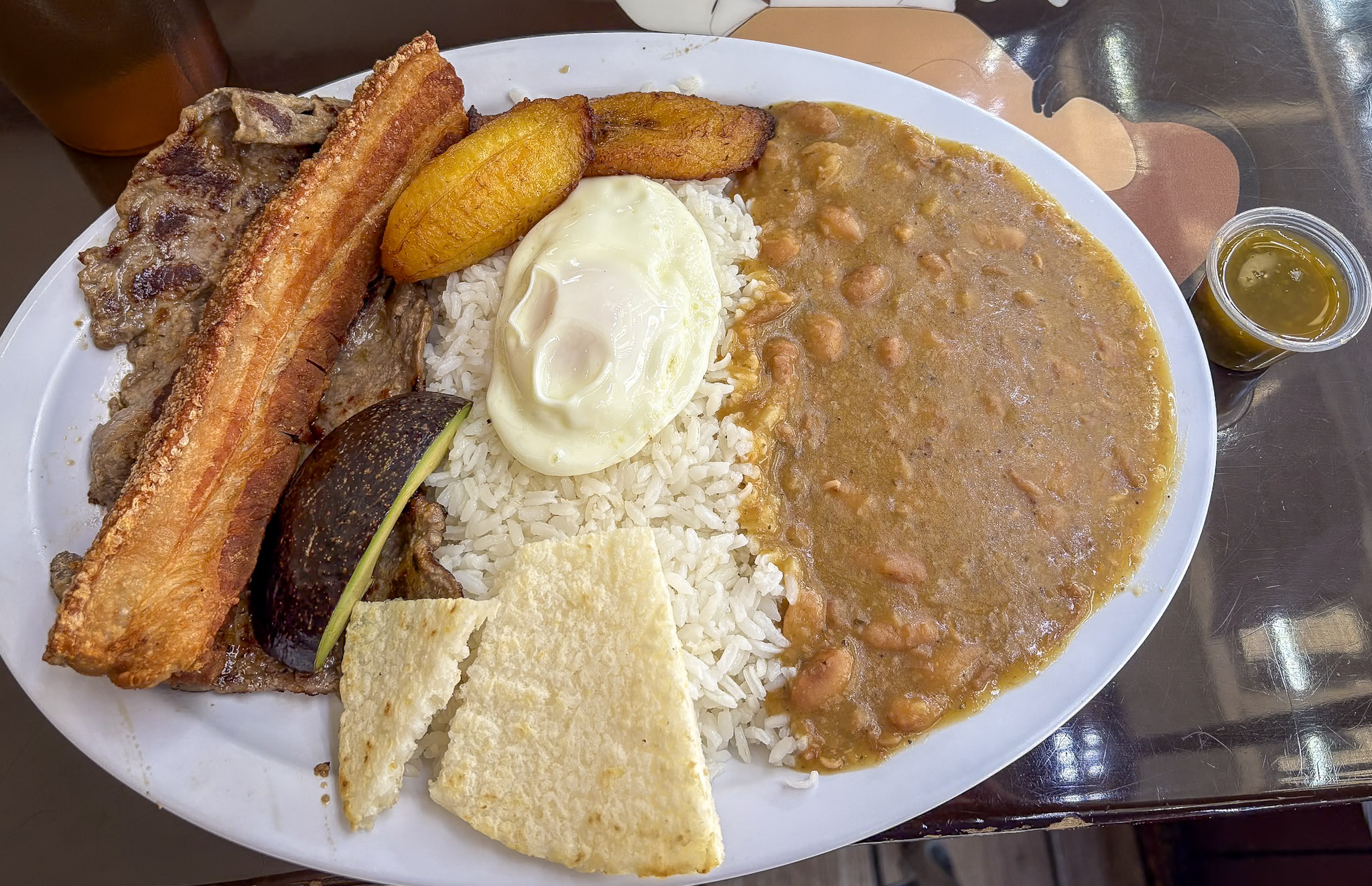
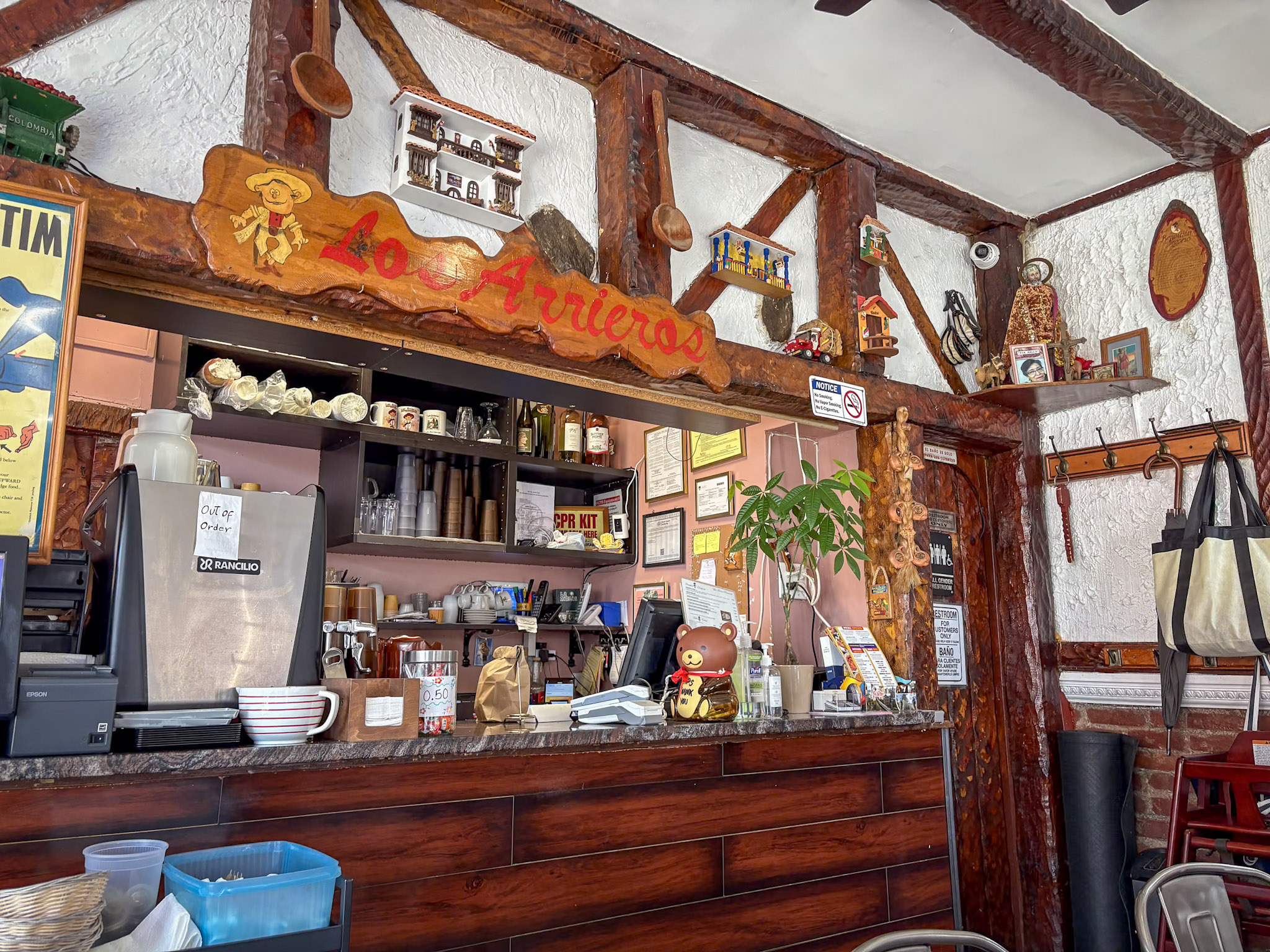
On a recent afternoon, all nine tables at the cozy corner spot, Los Arrieros (76-02 Roosevelt Ave.) were occupied with customers swooping in for the lunch soup specials of the day. On Wednesdays, it’s ajiaco: shredded chicken, potatoes, and the slightly bitter, earthy guascas herb. On Fridays, it’s the coveted sancocho de pescado: light white flaky fish in a thick broth with peas, plantain, and potato served with rice and red beans on the side. For those immune to food coma, the bandeja paisa presents a humongous platter of Colombian chorizo, chicharron (crunchy pork skin), beef, avocado, fried egg, sweet plantain, stewed beans, and white rice. A green aji sauce — tangy with vinegar, herbal with cilantro, and spicy with habanero — happily accompanies everything.
Many credit Arepa Lady (77-17 37th Ave. and 34-39 31st St.) with taking Colombian arepas mainstream. Founder Maria Cano, a former lawyer and judge in Medellin, moved to New York in 1984, and built a generational family business and blossoming customer following to match — all from a single arepa cart under the subway station. Cano’s corn cakes are stuffed to the brim with assorted proteins like shredded chicken, avocado, and cheese. They’re so good they’ll have you screaming gooooooooooal with each savory bite.
If you’re in need of a carb and caffeine fix, check out the always bustling Pecoshitas bakery (80-03 Roosevelt Ave.). It’s a go-to for Colombian pastries and coffee, for good reason.
Don’t miss Colombia’s first match
Colombia vs. Uzbekistan
Wednesday June 17 at 10 p.m.
Mexico City
Morocco
Nestled among the Egyptian seafood grills, Levantine spots, and Yemeni cafes on Steinway Street in Astoria’s Little Egypt are a handful of Moroccan restaurants. While Moroccan immigrants make up only 0.1% of New Yorkers, two Moroccan-American women chef-owners are leaving their mark, and have recently jazzed up the Moroccan restaurant scene with delicate executions of traditional dishes.
A few months ago, Siham Bourhane upgraded her tiny counter spot, Moroccan Bites by Siham (28-44 Steinway St.), to a sunny, spacious spot replete with classics. A chicken tagine is punched up with salty olives, and bitter-sour preserved lemons. A lesser-seen whitefish meatball tagine in a light and savory tomato sauce. A beloved and perhaps best known tender lamb shank sweetened with prunes and apricots lives up to its reputation. Following traditional customs, a round, warm bread called khobz is served with everything.
For more fantastic Moroccan classics, head to Touria Lamtahaf’s Dar Lbahja (47-12 30th Ave.). The royal couscous with merguez, beef, and chicken with seasonal vegetables will not disappoint. The chicken bastilla — a flaky, sweet and savory pastry filled with ground chicken and dusted with powdered sugar — is not to be missed. And the hearty harira — an aromatic soup with tomato, chickpeas, lentils, and meat — is served every day, and is the perfect dish to sustain football fans through the ups and downs of World Cup matches.
Don’t miss Morocco’s first match
Morocco vs. Brazil
Saturday June 13 at 6 p.m.
New York City/East Rutherford New Jersey
Senegal
World Cup flags crisscross over the sidewalk of Adam Clayton Powell Jr. Boulevard in central Harlem’s Little Senegal. The micro neighborhood — around West 116th Street between Lenox Avenue on the east and Frederick Douglass Boulevard on the west — was carved out by Senegalese immigrants escaping the severe drought and economic crises of the 1970s and 1980s.
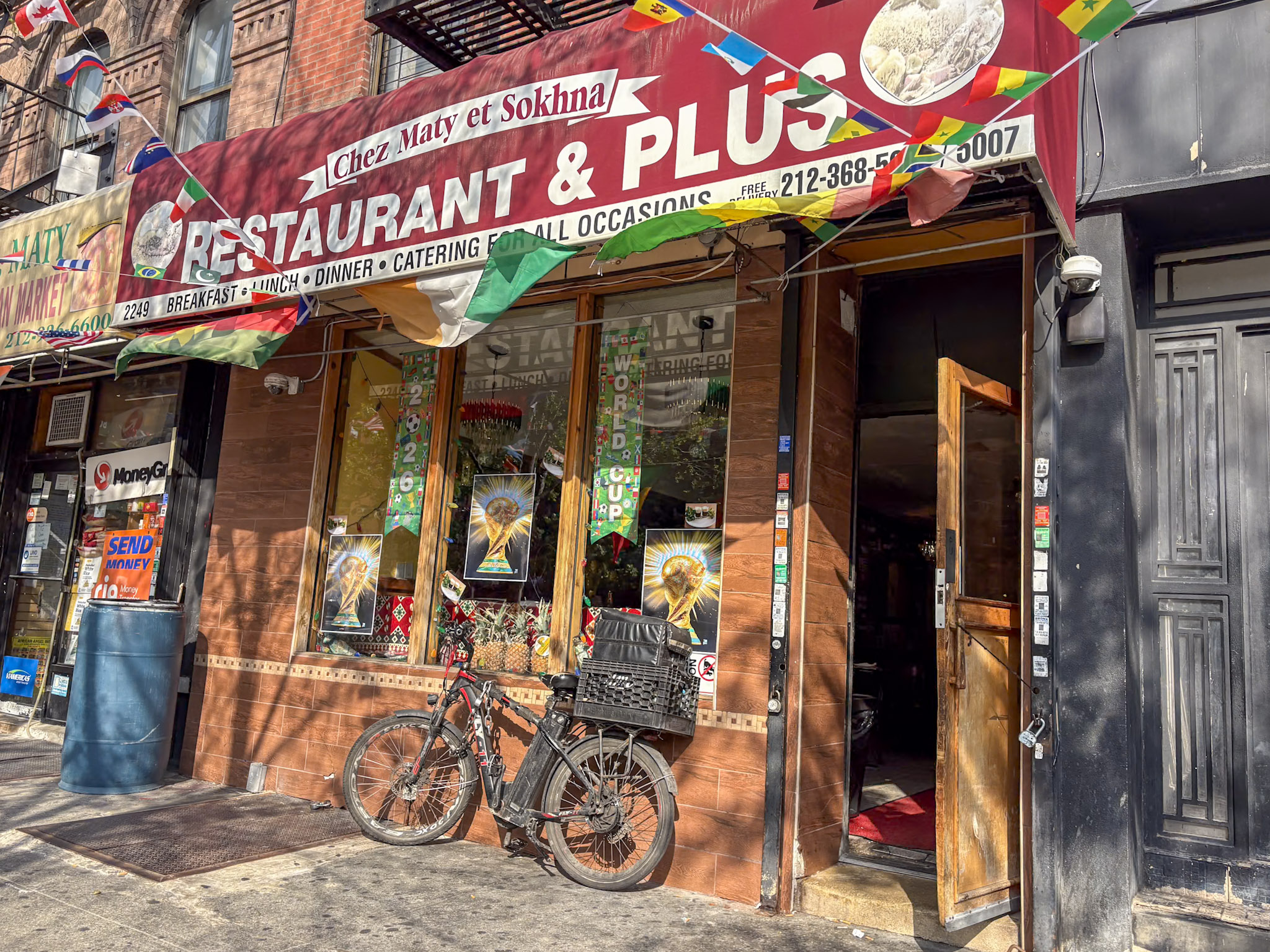
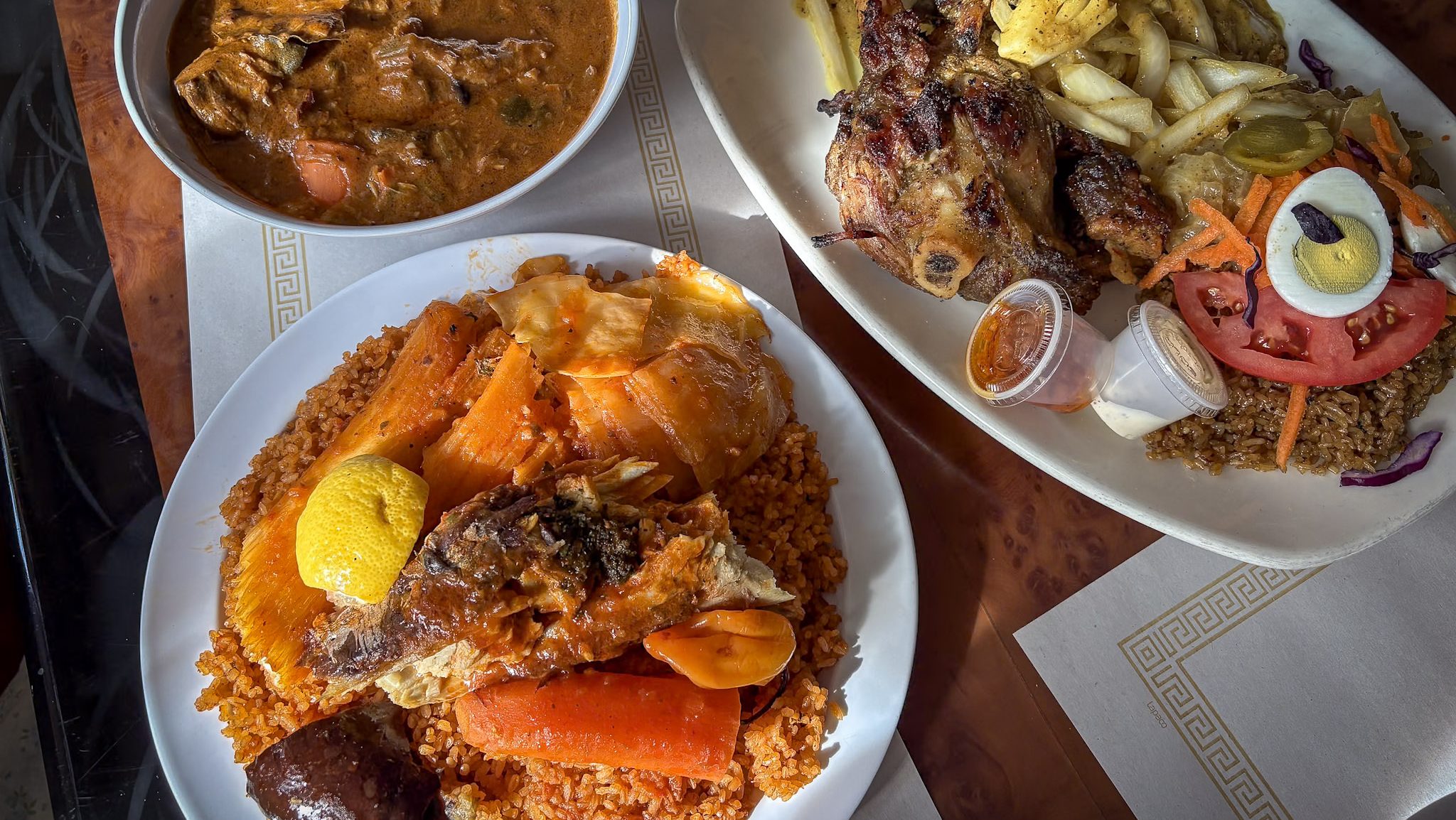
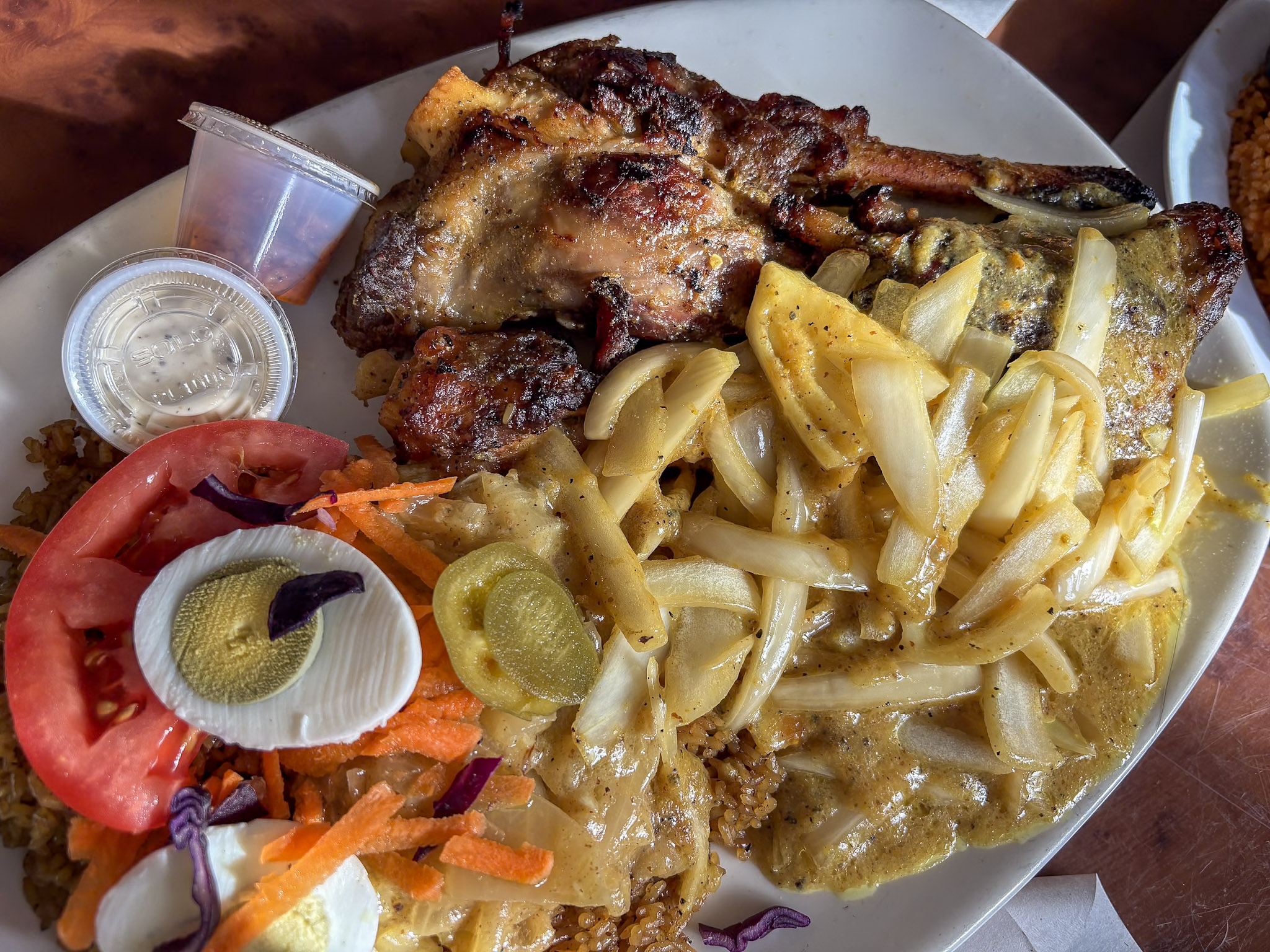
Chez Maty Et Sokhna (2249 Adam Clayton Powell Jr. Blvd.) which has been a neighborhood staple for 20 years, is currently emblazoned with World Cup paraphernalia: a string of soccer balls hanging against the wall; a huge Senegal flag surrounded by other flags; and a shrine with various World Cup trophies in front of a blown-up photo of the chef. The classic thieboudienne — the national dish of Senegal — features tender stalks of carrot and cassava, layers of cabbage, and thick fish fillets on a mound of rice reddened with tomato sauce and spiced with Scotch bonnet. The methoui is stellar. The savoriness of two browned lamb shanks perfectly complements the tangy onions bathed in mustard-lemon yassa sauce. On the side, brown jollof rice is soft and almost sticky. Wash it all down with either the house-made bissap (sorrel) or ginger juices.
At nearby Chez Alain (2046 Adam Clayton Powell Jr. Blvd.), hits include nems (golden-fried spring rolls brought over by Vietnamese wives of Senegalese soldiers during the Vietnam War); mafe yapp (lamb, carrots and potatoes in a rich peanut butter stew); and grilled chicken or lamb dibi served with tomatoes, string beans, and Scotch bonnet over rice.
And don’t sleep on Africa Kine (2267 Adam Clayton Powell Jr. Blvd.) a community gem since 1994, it offers abundant stews like suppa kandja: lamb and fish in a golden palm oil sauce thickened with chopped okra.
Don’t miss Senegal’s first match
Senegal vs. France
Tuesday June 16 at 3 p.m.
New York City/East Rutherford New Jersey
Iran
In the absence of something like Little Iran, Persian restaurants are generously sprinkled throughout the city.
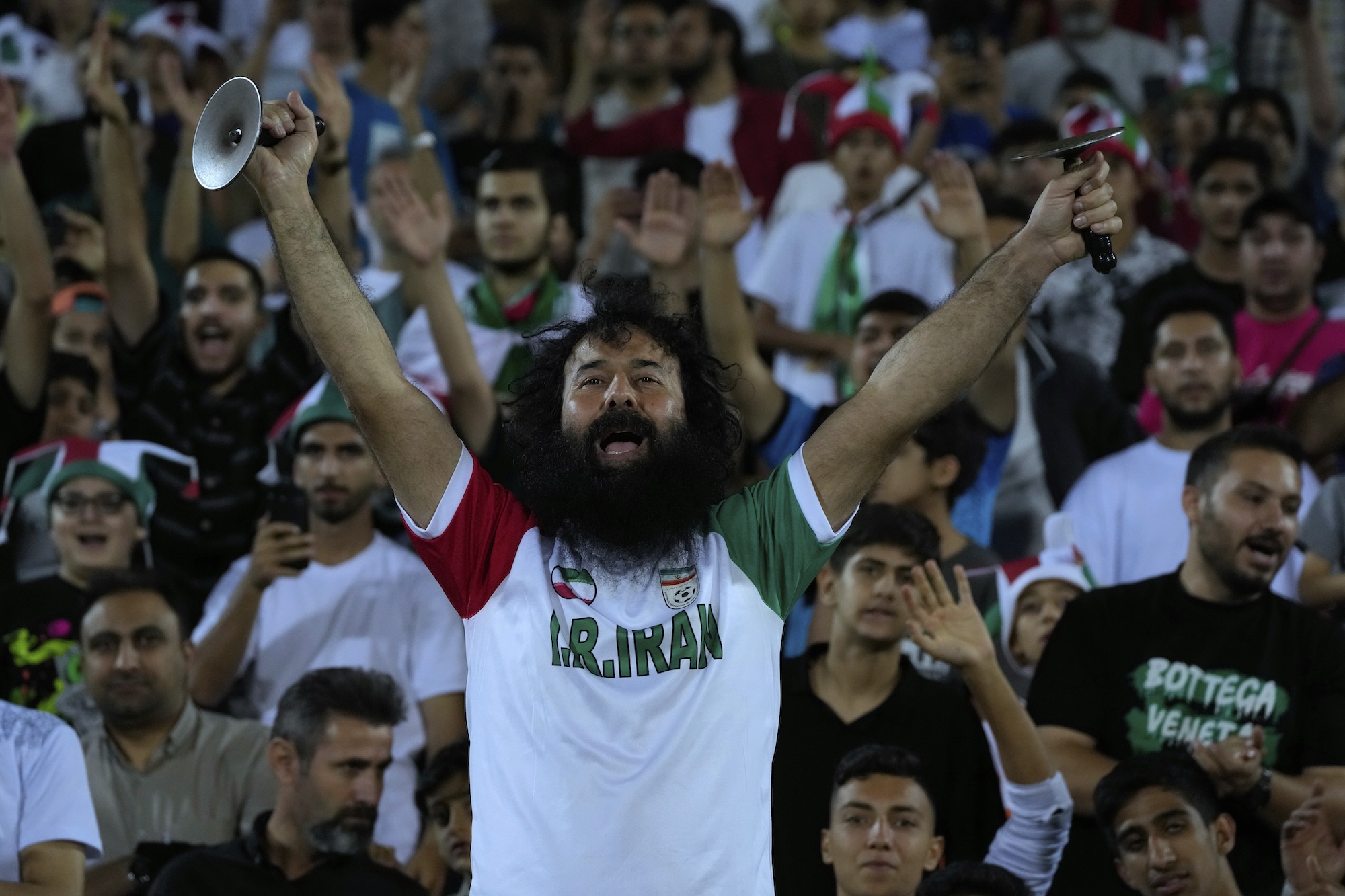
Ravagh Persian Grill (173 Madison Ave., and three other locations in Upper East Side and Long Island) has been doling out generous platters of traditional fare since 1998. Start with bademjan (eggplant sautéed with kashk, Persian whey) or mast o musir (labne with pickled shallots). A whopping 14 chargrilled kabobs include different cuts and seasonings of chicken, Cornish hen, beef, lamb, and salmon. They’re all served with a choice of rice — like cherry rice (albaloo polo) and barberry-saffron (zereshk polo), each as delicious as the last. Don’t skip out on the stews like khoresh fesenjan (chicken cooked in pomegranate sauce with crushed walnuts).
In Prospect Heights, Sofreh (75 St. Marks Ave.) is a neighborhood favorite that specializes in modern twists on classic dishes. From black seabass in tamarind stew to beef and dill meatballs with foamed yogurt, Sofreh’s fresh offerings will keep even the most seasoned diners on their toes.
Don’t miss Iran’s first match
Iran vs. New Zealand
Monday June 15 at 9 p.m.
Los Angeles
Brazil
If you’re in search of some savory Brazilian barbeque, or churrasco, head to Astoria and Long Island City in Queens, which is home to a proud and significant Brazilian population. Back in the mid 1980s a surge of Brazilian immigrants fleeing severe hyperinflation came to the U.S. — today their slow-cooked stews and savory street snacks are culinary staples in New York.
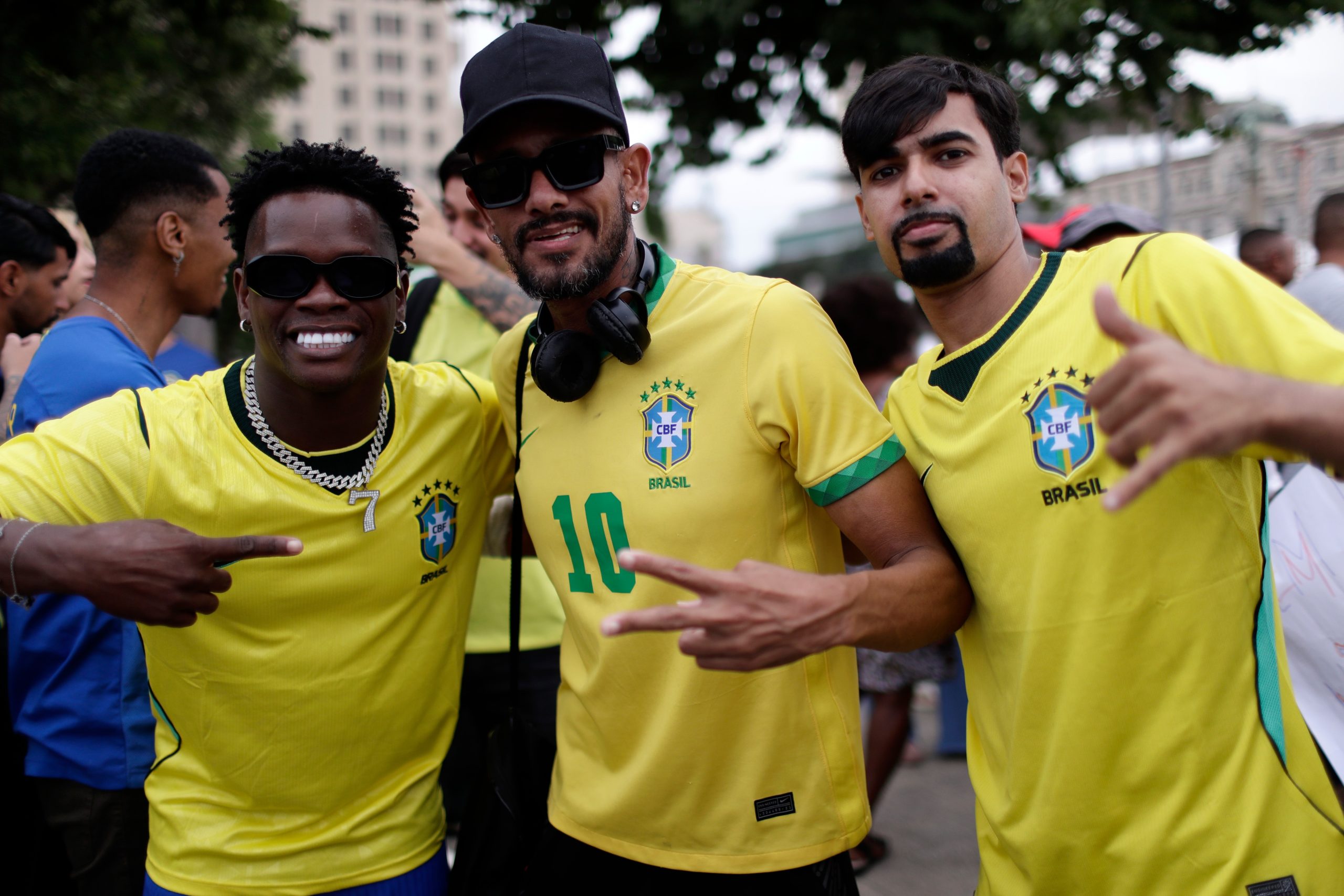
Villa Brazil (43-16 34th Ave.) is a typical “kilo” (by-the-pound) spot which boasts mouthwatering daily specials on steaming-hot buffet counters. The beef stroganoff features tender beef chunks in creamy tomato sauce topped with crispy potato sticks. The feijoada, a hearty bean stew typically reserved for weekends, is enriched with various meats like sausage, bacon, and pig trotters. Order barbecue at the window in the back corner.
Rio Grande (37-02 Broadway) is an all-you-can-eat churrascaria featuring Brazilian beef butchery like picanha cut straight off the skewer at your table among an endless flow of meat grilled to your preference.
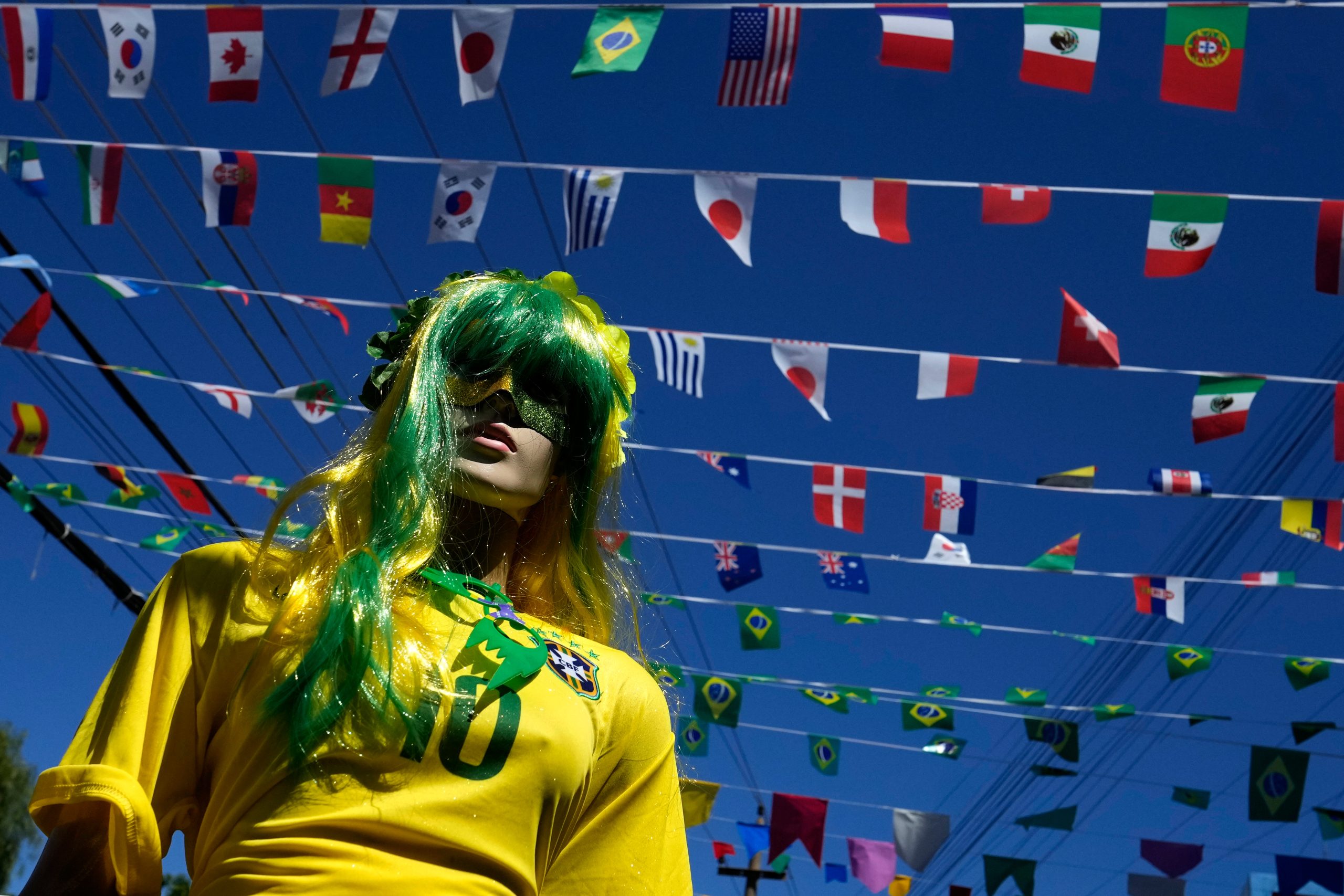
For quick, on-the-go snacks, head to Pao de Queijio (31-90 30th St.) for juices made from spectacular Brazilian fruits like acerola; acai bowls, and snacks like coxinha (golden-fried droplets stuffed with ground meat).
Don’t miss Brazil’s first match
Brazil vs. Morocco
Saturday June 13 at 6 p.m.
New York City/East Rutherford New Jersey
Haiti
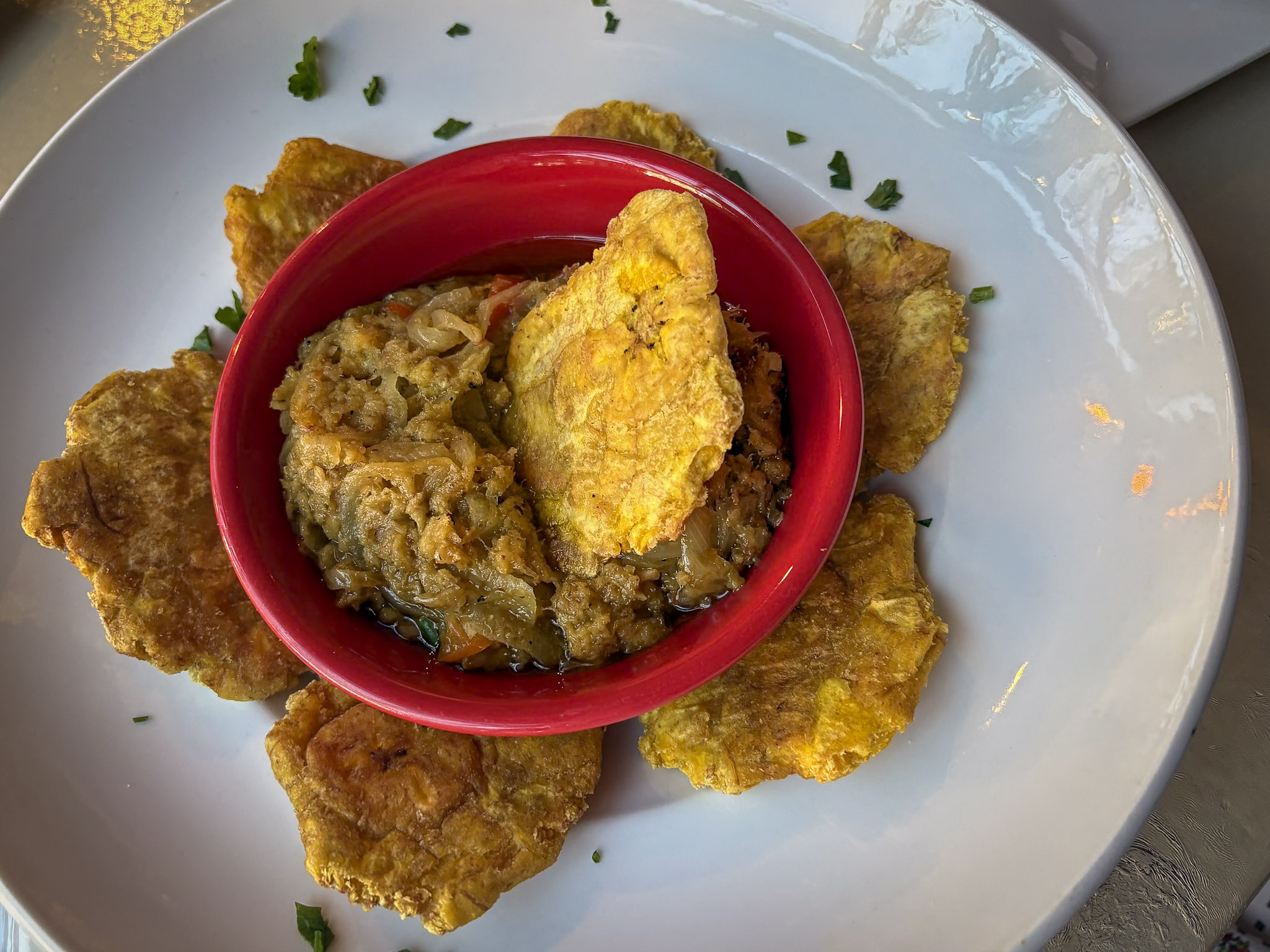
In Flatbush, Brooklyn, Little Haiti is bound by East 16th Street to the west, Church Avenue to the north, Avenue H and Parkside Avenue to the south, and Brooklyn Avenue to the east. Since the 1950s, Haitian immigrants have arrived in the United States after fleeing various hardships: political instability, economic crises, natural disasters including a devastating 2010 earthquake, and gang violence following the 2021 assassination of President Jovenel Moïse. With them, they brought a soulful fusion of flavors that have now become an indelible part of NYC’s culture and food scene.
After 52 years, Haiti is finally back in the World Cup — and what better way to celebrate than grabbing a bite at your favorite local Haitian eateries. Immaculee Bakery (1411 Nostrand Ave.) is a no-frills, neighborhood institution whose Haitian patties have cultivated a loyal following. Warm, flaky, fried puff pastry surrounds mashed protein (fish, beef, chicken). Take it to-go on your way to a watch party.
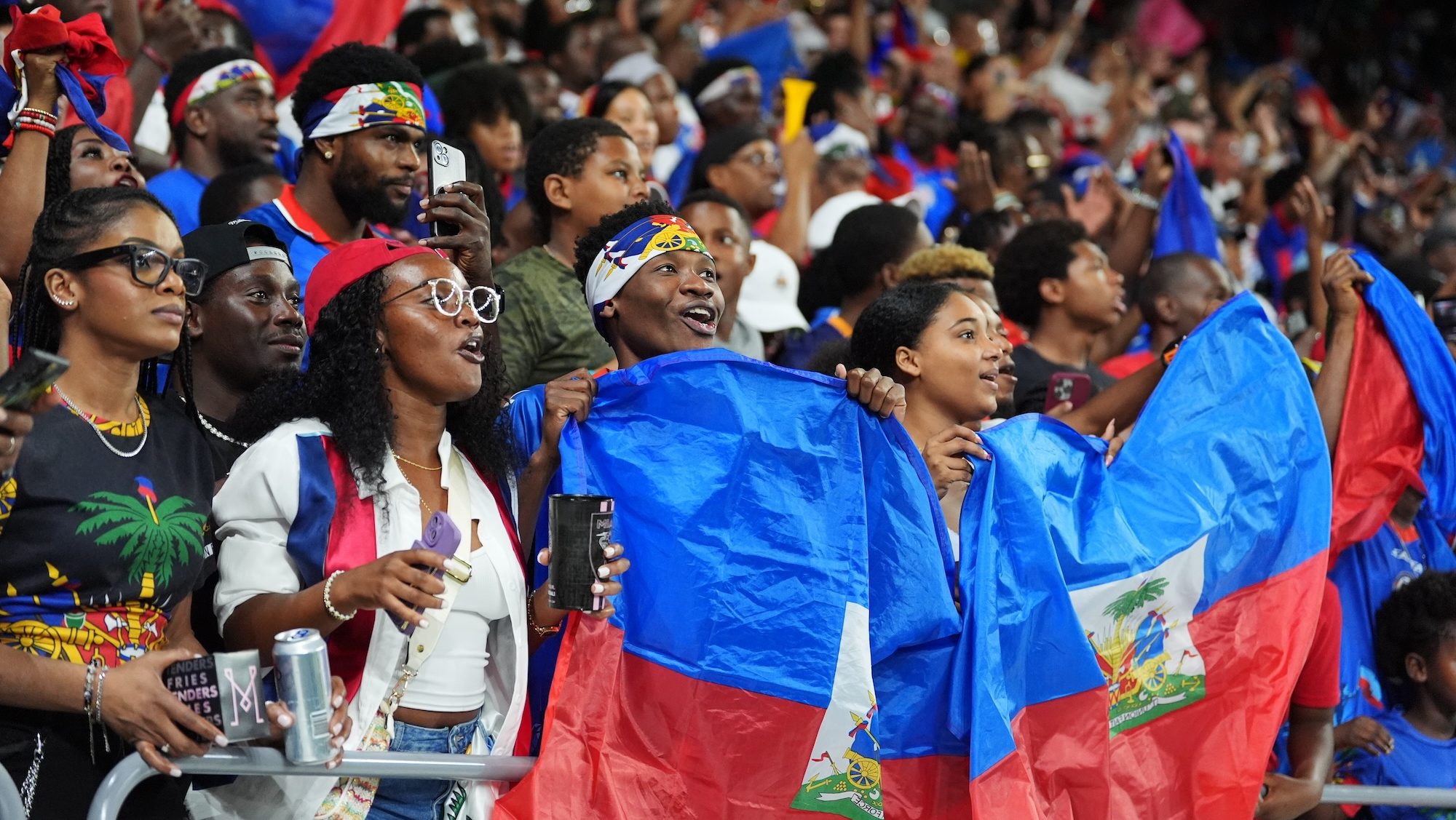
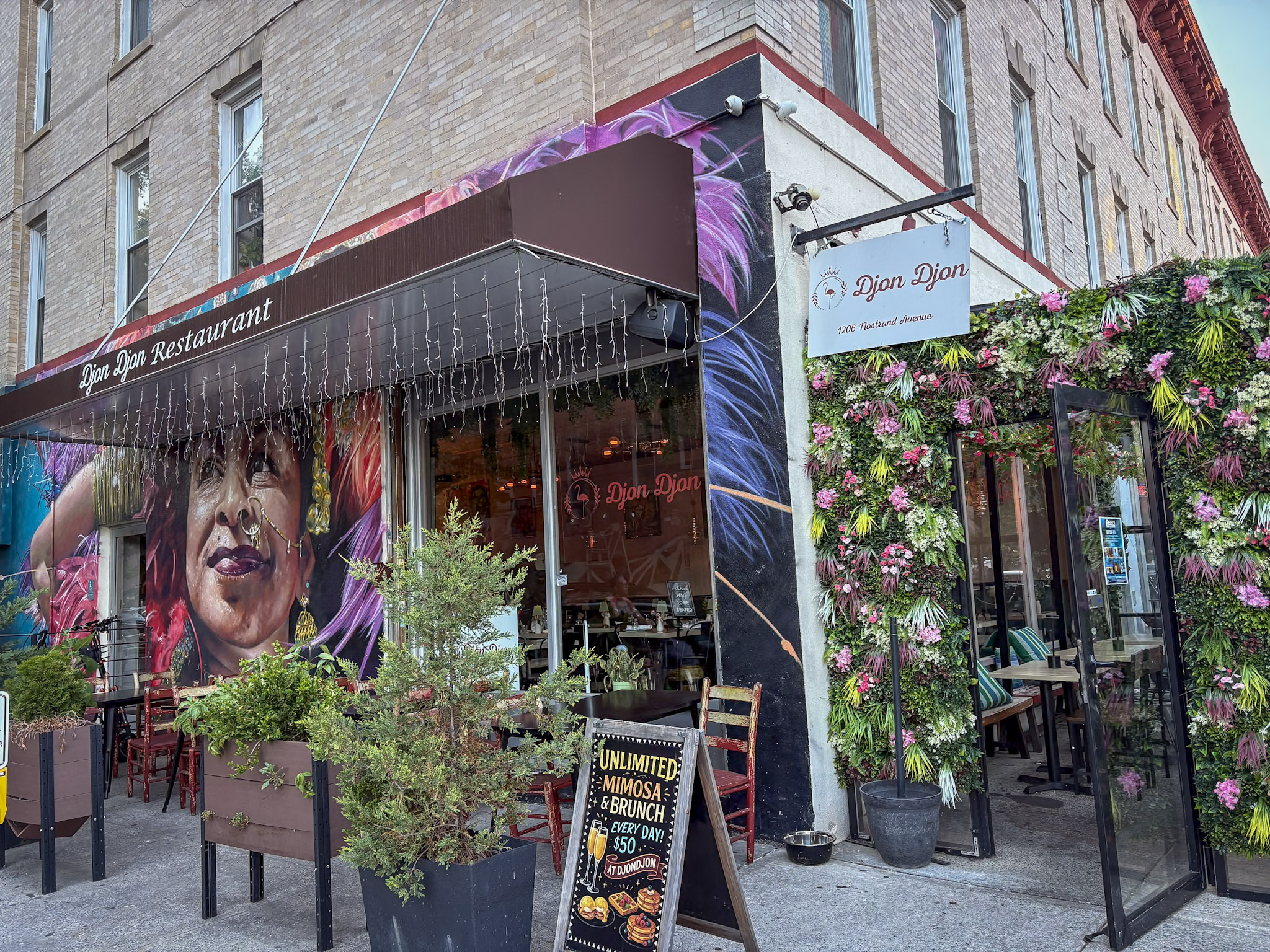
A few blocks up along Nostrand Avenue, Djon Djon (1206 Nostrand Ave.) offers a more upscale take on traditional dishes. The chiktay is phenomenal: shredded codfish (it’s typically smoked herring) sautéed with green and red bell peppers, and onions, all slicked with oil. Place a mound of it on a fried smashed disc of plantain, and delight in the flavors and texture. Order the soup joumou, a symbolic dish comprised of vegetables, meat, and a squash base broth, that was famously eaten in 1804, on the first day of Haitian independence from French colonists who’d banned enslaved Africans from consuming giraumon (West Indian squash) while forcing them to cook it for the French. Do yourself a favor and get a side of savory black rice flavored with black djon djon mushroom.
Hit up Kreyol Flavor for some delicious, authentic bites. This local takeout chain (1738 Flatbush Ave. and two other locations in Brooklyn) serves up home-style dishes like griot (chunks of pork marinated in spices with orange and lemon juices then fried crispy) with pikliz (spicy, pickled slaw).
Don’t miss Haiti’s first match
Haiti vs. Scotland
Saturday June 13 at 9 p.m.
Boston, Foxborough Stadium
Uzbekistan
Many of New York’s Uzbek immigrants — comprised of an interesting mix of Muslims and Bukharian Jews — came to the states in the post-Soviet era. The former have mostly made their home in Brighton Beach, Brooklyn, opening up halal restaurants, while the latter resides and operates kosher businesses in Rego Park, Queens.
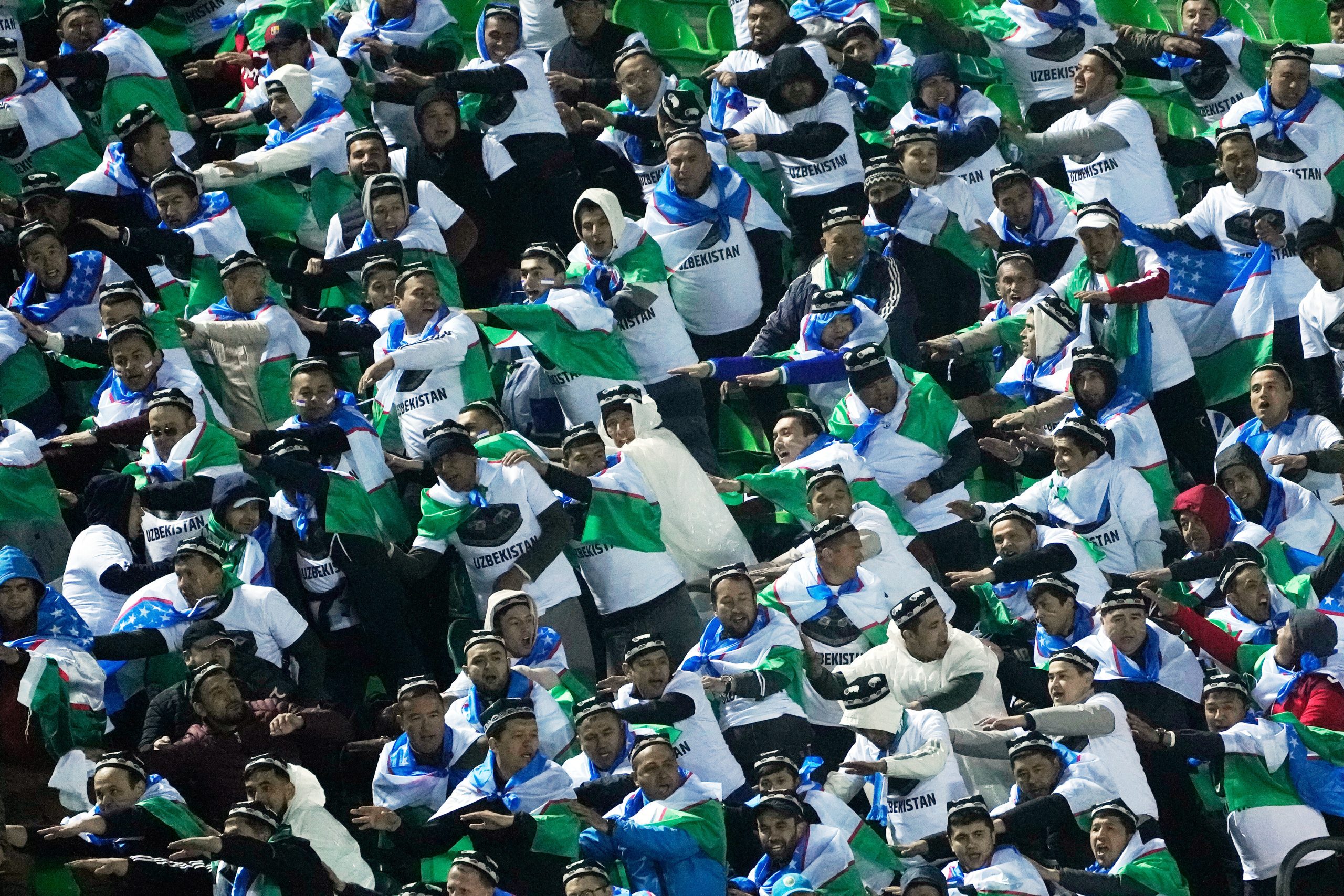
In Brighton Beach, Tashkent Supermarket (713 Brighton Beach Ave.) is a dizzying wonderland of Uzbeki food in endless rows of steam tables. Nearby, The specialty at Shashlik House Uz is grilled meat skewers like lula (ground beef kebabs), lamb ribs, and lamb chops.
In Rego Park, Cheburechnaya (92-09 63rd Dr.), one of the oldest Uzbeki restaurants in the area, launched from a home-based chebureki (stuffed and fried turnovers) business and expanded to a full restaurant with excellent classics. In the plov, vegetables and grilled meats lay on a mountain of savory rice. In the lagman soup, noodles, beef and vegetables get tangled in a rich tomato broth.
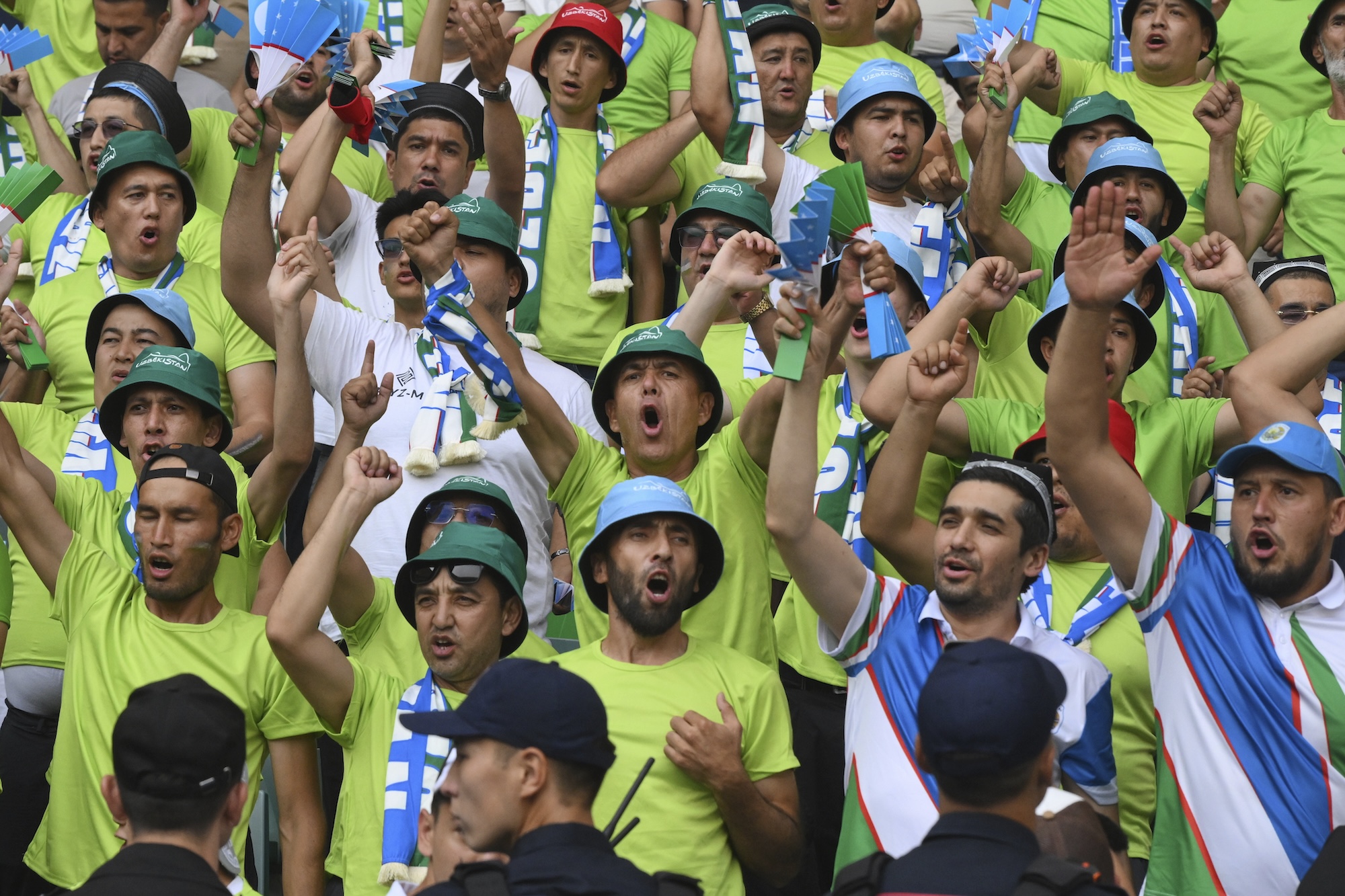
Whether you end up in Brooklyn or up in Queens, know that you’ll be able to cheer on the White Wolves with a belly full of delicious Uzbeki favorites.
Don’t miss Uzbekistan’s first match
Uzbekistan vs. Colombia
Wednesday June 17 at 10 p.m.
Mexico City
South Korea
The Korean food scene has come a long way in NYC. In the 1980s, Manhattan’s Koreatown was built up by Korean immigrant wholesalers and importers. Wealthier Korean immigrants like Jungsik Yim launched the modern Korean fine dining scene in 2011 out of Tribeca. But almost half of Korean New Yorkers live in Queens, which has been home to several waves of Korean immigrants. And so, it should come as no surprise that the food in Queens’ Koreatown — along Northern Boulevard from Flushing to Long Island — goes far beyond the mainstream hits like beef barbecue and viral trends like Korean corn dogs.

In Queens’ Murray Hill, is a five-block hub of Korean restaurants known as Mokja Golmok (which translates to Food Alley). In the mornings, seniors start their day with breakfast specials like soy bean soup at Hahmjibach (40-11 149th Pl.). Ttukbaegi (149-14 41st Ave.) specializes in traditional soups, which are eaten year-round as a full meal — like gomtang (long simmered beef soup).
At Sommunan (149-21 41st Ave,) a teeny counter joint, the owner couple splits up the business tasks: he takes orders while she fills kimbap (rice and assorted cooked fillings rolled into seaweed). While you can get your terrific and traditional beef barbecue at Mapo BBQ (149-24 41st Ave.), the pro tip would be to expand your Korean barbecue intel at Yukjun Gui (41-05 150th St.), which specializes in the regional Busan delicacy of charcoal-grilled eel, or Kum Sung (40-07 149th Pl.), which is known for grilled duck; they’re all served with seemingly endless lettuce wraps and condiments like ssamjang (a blend of fermented chile pepper and soy bean pastes).
Don’t miss South Korea’s first match
South Korea vs. Czechia
Thursday June 11 at 10 p.m.
Guadalajara Stadium, Mexico