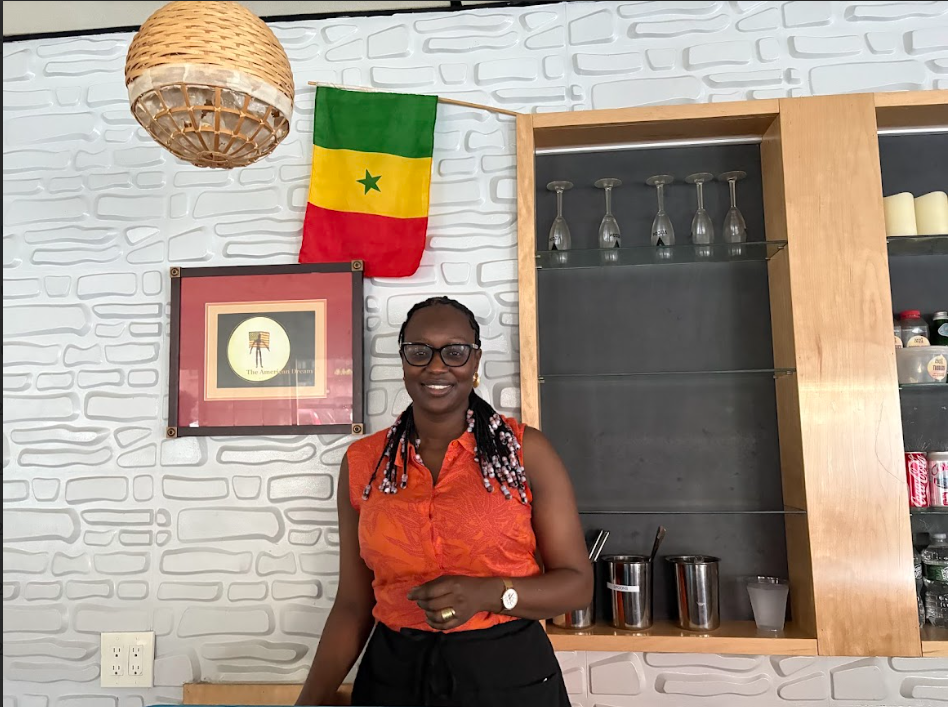


Mamy Ousmane Diouf-Diop does not follow soccer closely, but she’s making an exception for the World Cup — especially Tuesday’s France-Senegal game.
A manager at Saint Louis Restaurant, a Senegalese eatery in Harlem, Diouf-Diop is preparing for an influx of diners for the game. For Diouf-Diop, who immigrated from Senegal in 2008 and worked in finance before joining her family’s restaurant, a win for Senegal against its former colonizer would be almost as meaningful as winning the World Cup itself.
“I’m not saying it in any mean way, but they think they are the boss,” she said of the French team. “So now, if we win that game, it means that the student has outgrown their teacher.”

Tuesday’s game will be the first time Senegal and France face off in more than two decades, stirring up complicated emotions among some fans.
For centuries, France led conquests of West Africa and ruled swathes of what is now modern-day Senegal as a colony — conquering indigenous kingdoms, forcing Senegalese to build railroads and work on mines and plantations, and suppressing resistance until Senegal gained its independence in 1960.
The last time Senegal faced France, then the defending FIFA champions, was their World Cup debut in 2002. Senegal won 1-0 and made it to the quarter-finals.
The Senegalese team’s base camp in Piscataway, New Jersey, is just miles away from New York, which is home to by far the most Senegalese Americans in the country — many of whom live in the growing Little Senegal enclave of Harlem.
Across 116th Street, bright green and white jerseys, patterned with roaring lions hang in the windows of hair salons, electronics, and wholesale goods stores. The team is often referred to as the “Lions of Teranga” — the Wolof word that roughly translates to the Senegalese concept of hospitality. West African restaurants were preparing to host watch parties during the game. And since the start of June, cultural groups have been hosting traditional sabar drum lessons across Harlem, preparing to support the team outside and, for a lucky few, inside MetLife stadium.
“I think all Senegalese are preparing for this match with a real desire and determination to beat France,” said Malick, a fan sporting a green Senegal jersey who moved to the U.S. from Senegal three years ago. Malick, who declined to give his last name for privacy reasons, is predicting a 2-1 win.
This year, he said, felt different from the previous three times Senegal has played in the World Cup. “There is a bit of a difference,” he said, in reference to the many Senegalese fans who couldn’t come to New York because of visa restrictions.
In late December, the Trump administration announced sweeping restrictions on visitors and immigrants from 75 countries, primarily in Africa and Asia. The restrictions range from full bans on entry, for countries including Iran, Haiti, and Republic of the Congo, to “partial suspension” as was the case with Senegal.
While ticket holders from FIFA teams Senegal, Algeria, Cape Verde, Ivory Coast, and Tunisia no longer have to pay a $5,000 bond to secure their visas, many still report being denied in their visa applications. To make up for the empty seats during matches, the Senegalese government is reportedly distributing 400 tickets per match to Senegalese fans already living in the U.S. and Canada.
African players have faced particular scrutiny as they enter the states. Senegal’s team itself underwent exhaustive, hours-long security searches on the tarmac at San Antonio’s airport. On June 6, Omar Artan, a referee from Somalia who was voted Africa’s “best male referee” in 2025 and was scheduled to officiate at the FIFA tournament, was denied entry to the U.S. because, according to a Trump official, he had been “talking to some very bad people.”
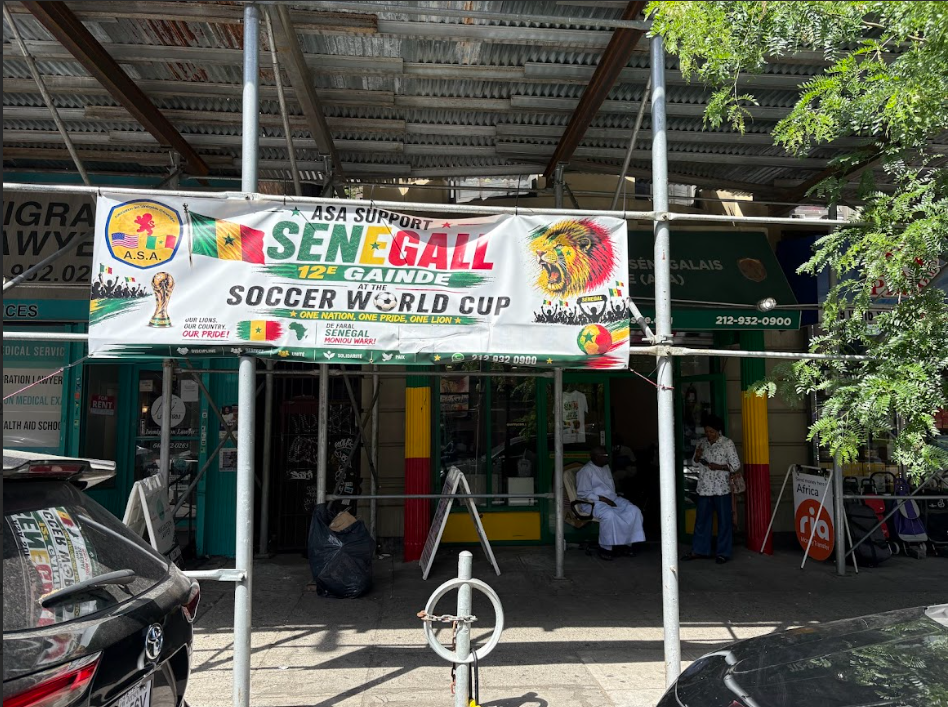
Still, pride for the team abounds in Harlem. Outside the Senegalese Association of America’s office in Harlem, a banner hangs with a roaring lion and the words “One nation, one pride, one lion.”
For Malick Yate, 30, who works at the Association, the game will be a “grudge match.” Yates expects many of his fellow African immigrants in Harlem to be cheering alongside him. “Just yesterday I met some Ivorians,” Yate said. “They support Senegal because, first and foremost, we’re African — so Africans support each other.”
That sentiment was shared by Kane Lo, a bike delivery worker who has lived in New York for almost three years. Lo was resting outside a shop on West 116th Street. After Senegal, Lo said he would support any African team, even Morocco — the team that defeated Senegal in a controversial loss at the Africa Cup of Nations in January. “An African team has never won the World Cup, and we are Africans ourselves,” he said. “We are African brothers. We share the same continent.”
Sitting on a chair outside the Association’s office, Abdullahye Thiem, 80, was less interested. “Nothing excites me,” he said. Thiem, who said he is an elder at the Association, has lived in the U.S. for 45 years. “I’m an old man,” he added. “I don’t have the energy.”
On Sunday, a group of men, some decked out in lion-patterned green Senegal soccer jerseys — and one Knicks shirt — filled a van outside of Amy’s African Hair Braiding salon in East Harlem. These fans refer to themselves as “the twelfth gaindé,” Wolof for “lion” — an extension of the eleven lions who play on the soccer pitch.
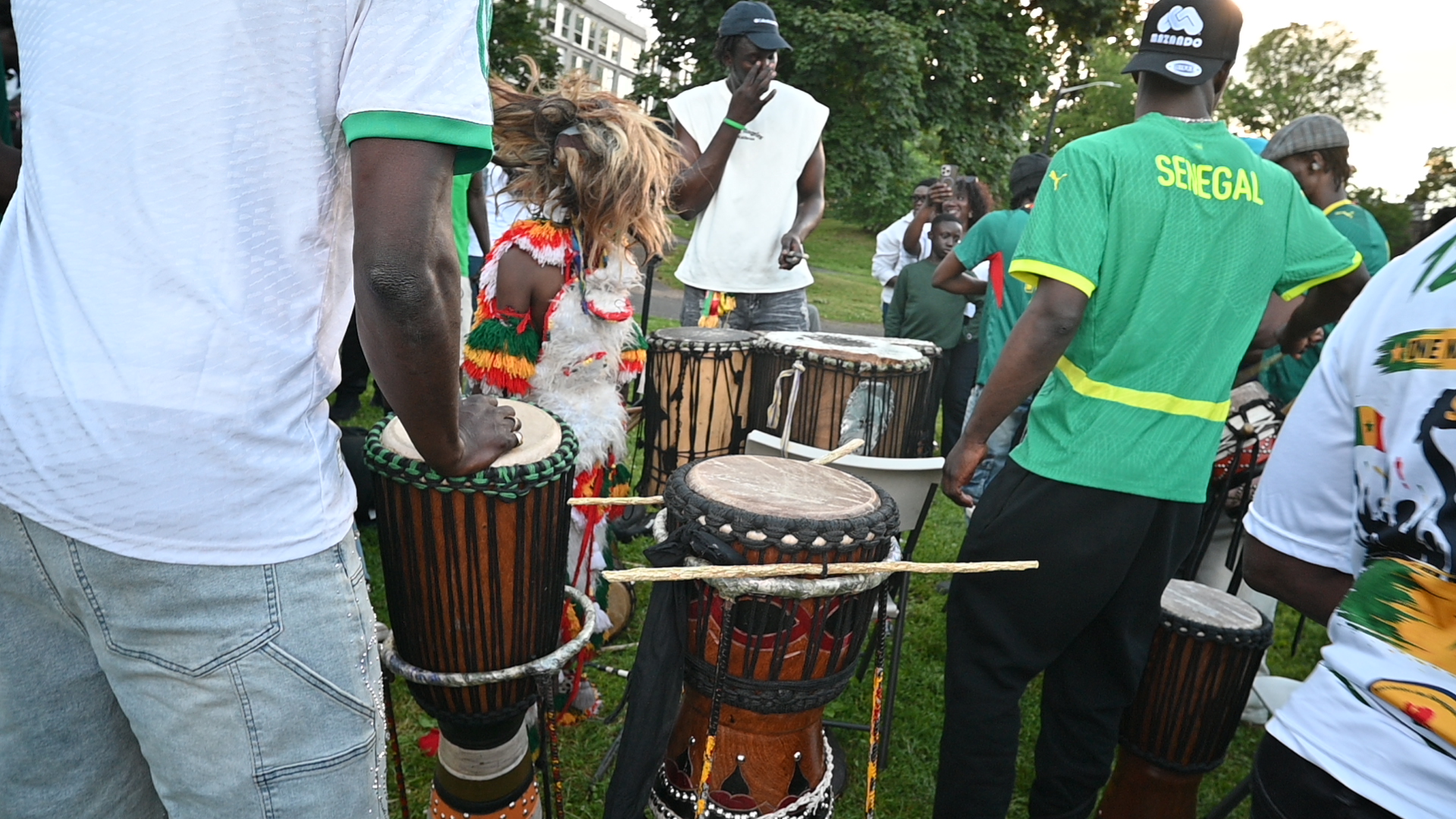
During a game, Senegal ultra-fans like these paint themselves in the national colors of green, yellow, and red. They wear cowry shell necklaces and dance in coordinated choreography to beating drums, cheering for the national team
In anticipation of the team’s games, the Senegalese Association of America has set up its own “twelfth lion” group, organizing buses to cheer during the team’s games. “We’re going to have fun if Senegal plays,” said Yate. “If they win, we’ll go out and celebrate.”
The group outside the hair salon was on its way to New Jersey, where they have been gathering every week to practice for Senegal’s first game of the World Cup. They were perfecting a new dance move that they planned to perform at the game.
“Just like the players, the fans train too,” said a man named Serine, who declined to give his last name.
“We’re going to win this World Cup,” he added. “Trust me. We’re going to be the first African team to win the World Cup.”
Nathaniel Oakes contributed reporting.