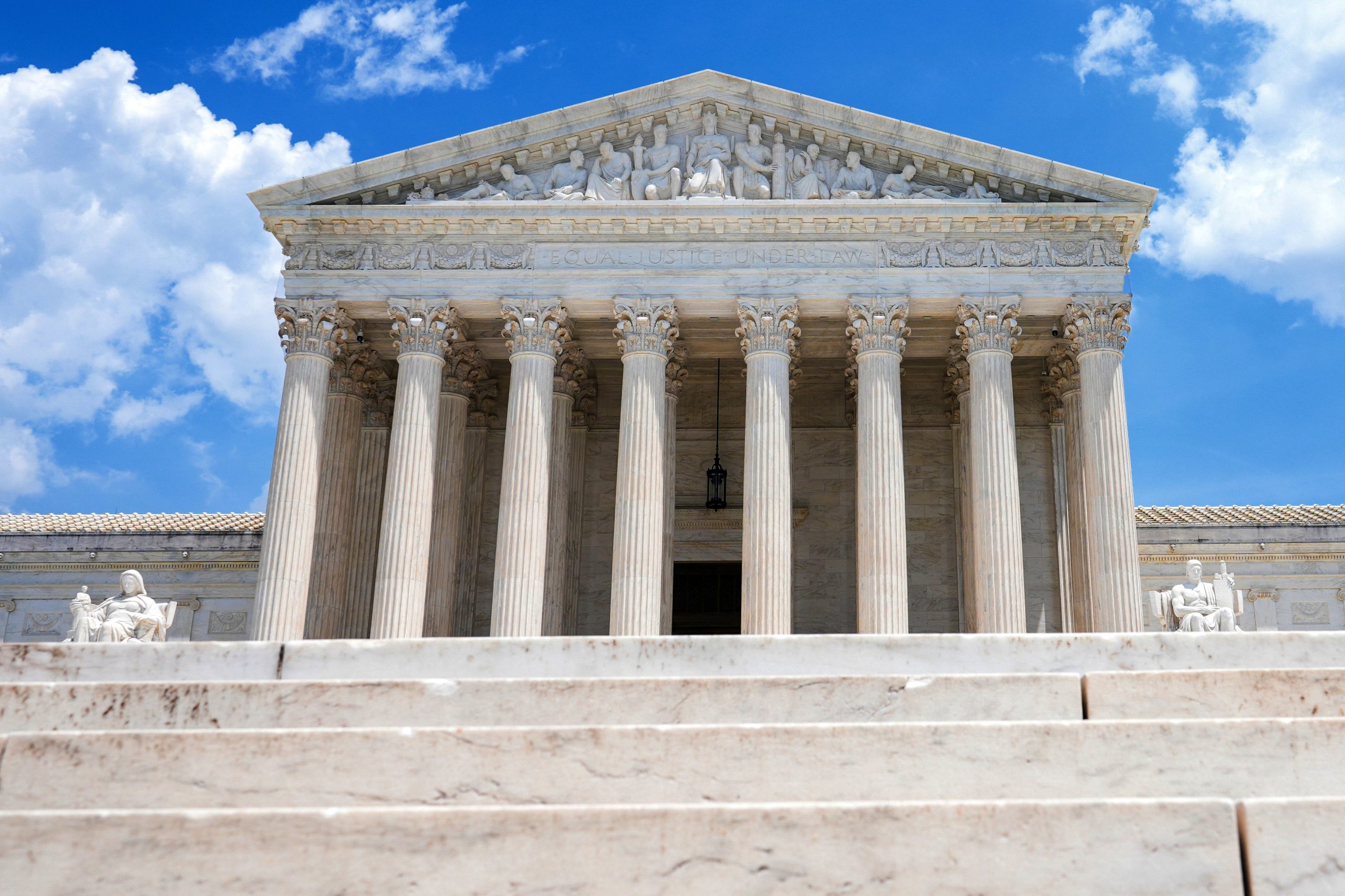


The Supreme Court handed down two rulings with wide-ranging implications for immigrants on Thursday: one ending deportation protections for hundreds of thousands of Haitian and Syrian immigrants, and a second allowing the president to turn back asylum seekers at the border.
The 6-to-3 rulings – which fell along ideological lines – were decisive victories for the Trump administration’s aggressive immigration crackdown.
The ruling on Temporary Protected Status (TPS) immediately impacts the lives of thousands of Haitians and Syrians who have lived in the United States for years, and in some cases, decades. Roughly 350,000 Haitians live in the U.S., including at least 5,400 in New York City and around 56,000 in New York State. More than 6,000 Syrians with TPS also live in the U.S.

The ruling has additional implications for the other 1.3 million TPS-holders nationwide from other countries fighting termination of their protections in the courts or who may lose their status in the future.
TPS was created by Congress in 1990 to allow nationals from designated countries who are already in the U.S. to remain temporarily because of armed conflicts, environmental disasters or other extraordinary conditions in their home nations. Since then, the U.S. has granted protection to nationals from dozens of countries under the policy.
While the status was never a path to residency or citizenship, many TPS recipients have lived and worked legally in the U.S. for decades. Many have also given birth to children in the U.S., owned businesses and become homeowners.
“The situation in my country doesn’t allow me to go back now,” said Michelle Bonhomme, a Haitian clothing designer who works part-time as a home health aide in Brooklyn. She came to New York in 2021 and was among the costume designers for parade-goers at this year’s Haiti Cultural Day Parade in Brooklyn.
“I thought they would give us one last chance, they would give us two years to prepare to leave,” she said in response to the ruling. “Today, we have been left behind with no support, and we no longer know who to turn to for help. For now, I have no options as I [hoped] the decision to be positive. I’m panicking.”
In a searing 14-page dissent to the TPS decision, Justice Elena Kagan slammed the court’s decision to dismiss concerns of racism by the administration and danger to immigrants. The president and other officials in his administration have disparaged Haiti by falsely accusing Black-majority immigrants from the country of eating dogs and asking why the U.S. can’t accept more people from Norway or Sweden.
“The evidence [plaintiffs] have offered includes statements by the President so repellent and racially inflected that the majority declines to put them in print,” she wrote.
Kagan also noted that while the State Department lists both nations as too dangerous for travel, the court’s decision doesn’t take into account that the danger may be even worse for those who live there.
Since 2010, TPS for Haitian nationals had been continuously extended to protect immigrants who had fled their country after years of natural disaster, violence and political crisis that had wracked the Caribbean nation.
“At this juncture, both sets of plaintiffs ask for only one thing: that they may stay in this country while they continue to litigate their claims,” she wrote. “For all the reasons given, they are entitled to that relief, and should not instead be consigned to devastating, and indeed life-threatening, injury.”
Many states and advocacy organizations filed amicus briefs arguing that ending TPS would harm communities and local economies. According to FWD.us, an immigration and justice policy organization, TPS holders contribute about $29 billion annually to the U.S. economy.
“This decision is a tragedy for millions of families across the country,” Murad Awawdeh, the president of the New York Immigration Coalition, told Documented, noting that the decision not only impacts Haitian and Syrian New Yorkers, but “weakens protections for 1.3 million additional TPS holders from all countries nationally.”
“Parents are going to be separated from their children,” he said. “Longtime residents are going to lose their livelihoods they spent years building, and people who contributed to this country, to our state, and to our city for decades, will be forced back to dangerous, unstable conditions.”
New York City has been the epicenter of a nationwide movement to save TPS for Haiti since the Department of Homeland Security formally announced it would terminate the program in 2025.
In the case of TPS, advocacy groups had sued to stop the cancellation of the policy for Haitian and Syrian recipients, arguing that Haiti and Syria are still dangerously unstable and may have been motivated by racism.

But according to the opinion, read by Justice Samuel Alito, the court held that courts cannot question a decision by the president to terminate such programs.
“The text is clear, and its plain meaning very broad,” wrote Alito.
Courts can review constitutional violations, he said, but in the case of the suits attempting to halt the end of protections for Haiti and Syria they will “likely fail.” He noted that “none of the cited statements by either the President or the [DHS] Secretary was overtly racial, and in substance all expressed policy views that could rest on race-neutral justifications.”
Now, Haitian and Syrian families and more must prepare for an uncertain future.
Awawdeh told Documented that his phone ran out of battery from the number of calls he received from immigrant New Yorkers on Thursday morning who were bracing for the worst.
Siomara Umaña, a supervising immigration attorney at the organization, said a Venezuelan New Yorker had contacted Make the Road New York to ask what the ruling meant as back-to-back earthquakes rocked Venezuela the day before.
“Basically their home countries are not in a place to receive them either, even though they’re stating that they can safely return, but that’s not the reality on the ground,” said Umaña.
Awawdeh said that TPS-holders should study their rights, seek out an immigration organization or lawyer to assess alternative pathways to staying in the U.S., and also make sure they have completed a family preparedness plan in the case of arrest and deportation.
Meanwhile, allies should put more pressure on their representatives in government to seek quick relief for the hundreds of thousands of New Yorkers facing potential deportation after living here for many years, he said.
After returning to office, Trump moved to end TPS as part of his campaign promise to carry out the largest deportation in U.S. history. His multiple attempts were halted by different federal court litigation that culminated in Thursday’s Supreme Court decision. In a separate case, the Supreme Court ruled that the administration can turn away asylum-seekers along the Mexico-U.S. border by physically barring them from crossing into the country.
Aline Gue, the executive director of the Haitian Women for Haitian Refugees, said while the decision is devastating, they aren’t giving up on a happy ending for Haitian New Yorkers.
“We’re going to keep fighting,” she said. “We’re going to make sure that we can protect ourselves, our communities are mobilized to protect themselves and each other, and our neighbors, and our loved ones, and that we will try every avenue possible to ensure that our communities are protected.”
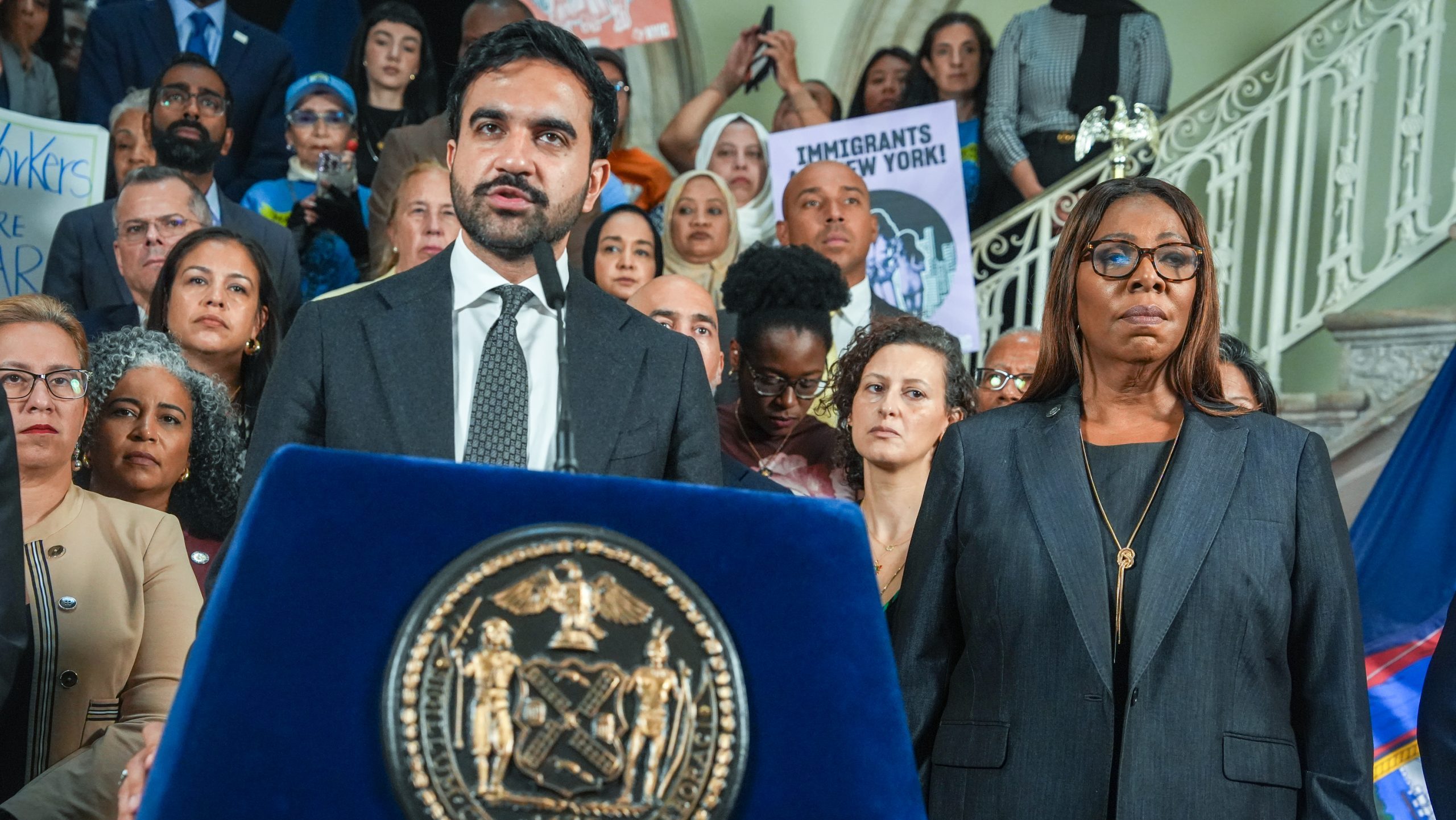
In a presser following the SCOTUS ruling, New York City Mayor expressed solidarity with New York’s Haitian community, reminding them that New York City was still their home.,
“[Haiti] is a nation that taught the world about freedom,” he said. “For descendants of that nation to now have to worry that their own freedom will be stripped away from them in a country that we are so proud to belong to precisely because of our commitment to freedom. It’s unacceptable.”
Bonhomme learned of the Supreme Court’s decision while on her way to a Brooklyn clinic to accompany a patient she has worked with for the past three years. If she loses her work permit, she may no longer be able to provide the care her patient depends on. Although she longs to return to Haiti, she says the country’s widespread insecurity makes that impossible.
“I’m terrified about what comes next,” she said.