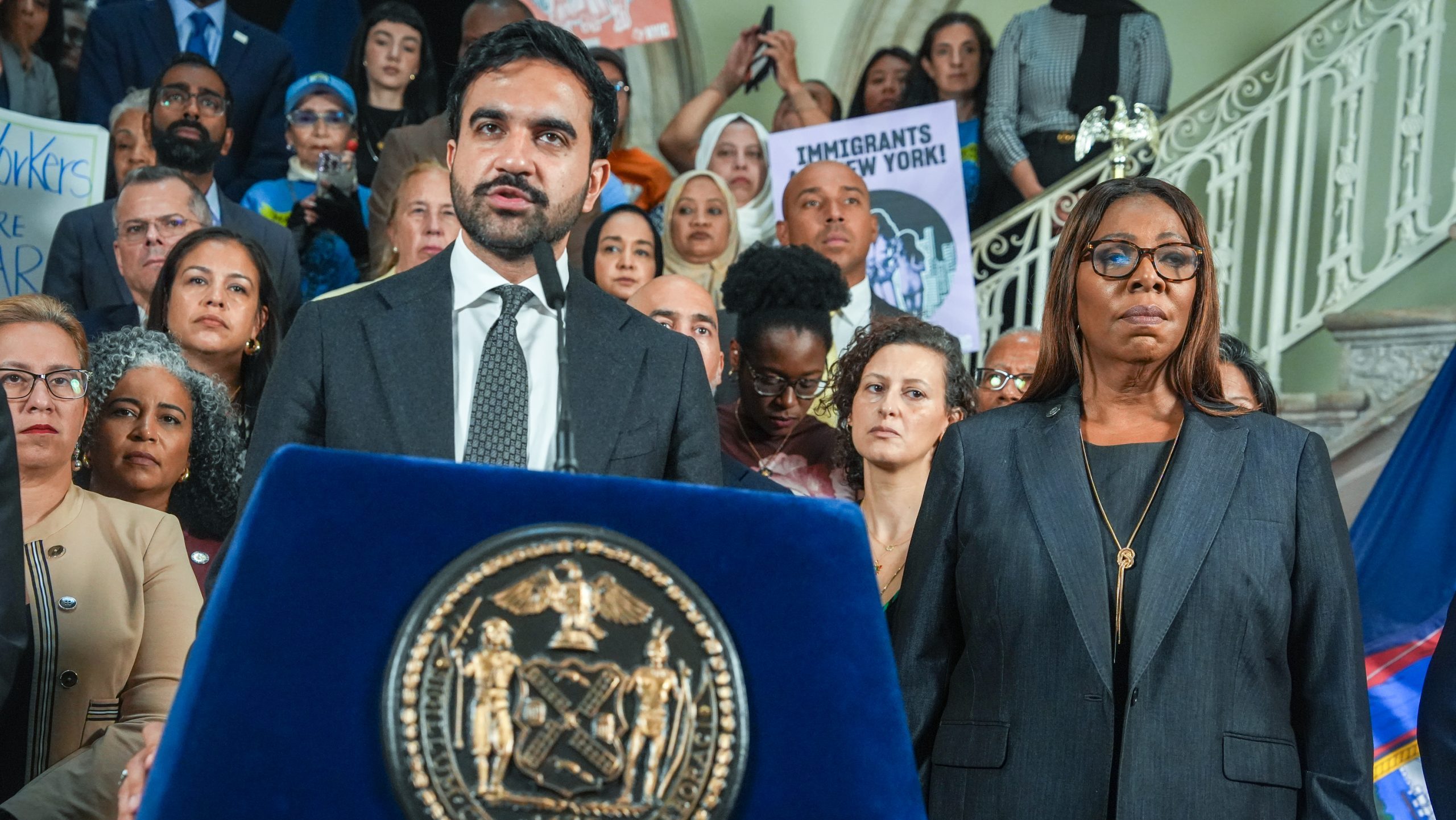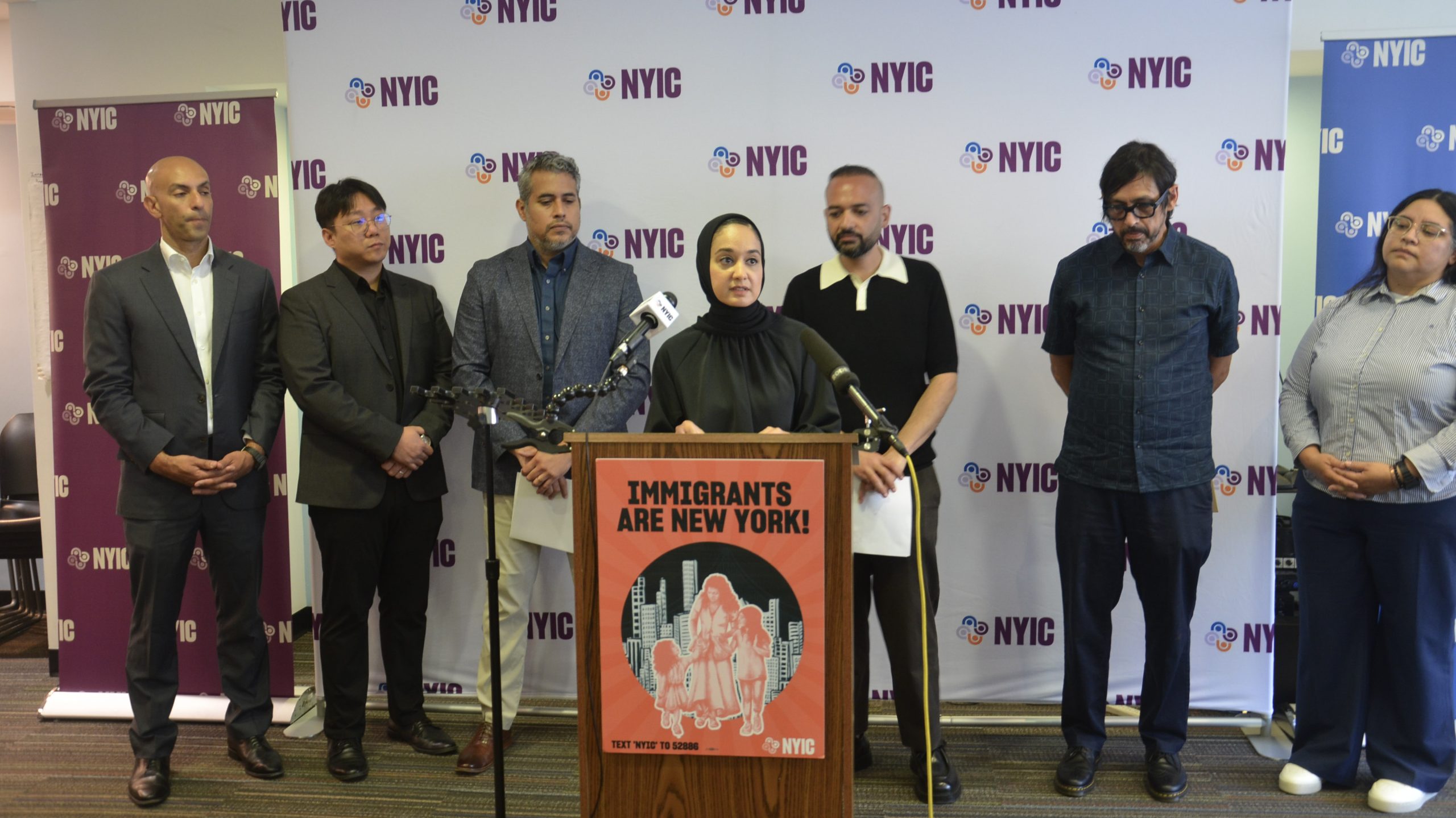


Immigrant advocates on Monday condemned the Trump administration’s newly announced public charge rule, warning it could discourage families from seeking assistance.
Announced last Thursday, the new public charge rules could make it harder for many immigrants to become a lawful permanent resident through obtaining a green card if officials determine they are likely to rely on public benefits.
But advocates are warning that the rules could stoke fear among thousands of immigrant families, discouraging eligible immigrants from accessing health care and other essential services, and contributing to food insecurity and homelessness.
The new rule, scheduled to take effect on Sept. 18, is a revised immigration assessment to determine whether a noncitizen is likely to become primarily dependent on government assistance in the future. If government officials determine that the applicant is likely to become a public charge, they can deny their application.
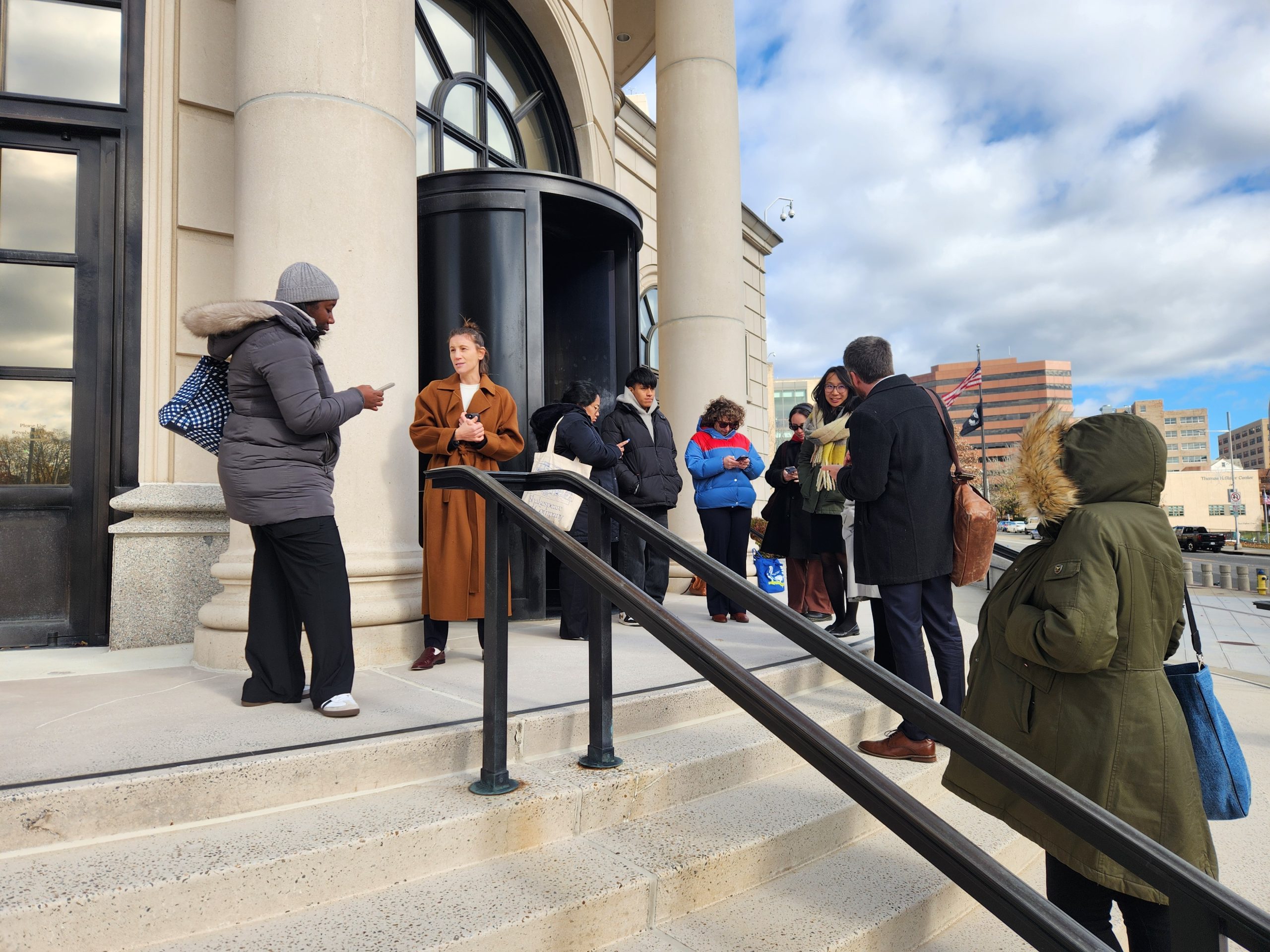
Speaking at a Monday press conference, advocates from the New York Immigration Coalition, Arab American Family Support Center, the Asian American Federation, Cabrini Immigrant Services of NYC, the Latino Commission on AIDS, and other organizations argued that the policy is a significant step backward that will harm immigrant New Yorkers.
“This public charge rule is simply cruel, cold-hearted, and short-sighted,” said Murad Awawdeh, president and CEO of the New York Immigration Coalition, during the Monday press conference.

In a statement, U.S. Citizenship and Immigration Services (USCIS) spokesperson Zach Kahler defended the administration’s policy.
“The Trump administration is upholding the rule of law and protecting American taxpayers from subsidizing aliens who may become dependent on public benefits,” the statement said. “USCIS is committed to safeguarding the safety, security, and financial well-being of Americans.”
Here’s what immigrants need to know.
What’s changed?
The policy — which revives rules that Trump attempted under his first term that were later rescinded under the Biden administration — replaces a defined list of public benefits that immigrants will be judged on with a broader “totality of circumstances” standard. Under the Biden-era policy, immigration officers generally considered only two categories of public benefits:
- Cash assistance programs, such as Temporary Assistance for Needy Families (TANF) and Supplemental Security Income (SSI)
- Government-funded long-term institutional care, such as a nursing home or mental health facility
However, the new rule does not provide a specific list of public benefits that may be considered, according to Carlos Arnao, director of Healthy Communities at the New York Immigration Coalition.
Based on advocates’ interpretation of the new rule, a broader range of means-tested benefits could now be considered as part of a public charge determination. This includes the Supplemental Nutrition Assistance Program (SNAP), Medicaid, the Children’s Health Insurance Program (CHIP), and Section 8 housing assistance.
Arnao said the change broadens the discretion of immigration officers, potentially introducing personal biases. “They are opening the door to all means-tested public benefits, essentially making people choose between their status and their basic needs,” he said.
According to USCIS, officers will evaluate information submitted with an applicant’s permanent residence application (Form I-485), immigration medical examination form (Form I-693), and other relevant evidence, including the applicant’s receipt of means-tested public benefits, when determining whether someone is likely to become a public charge. If required, officers may also review the affidavit of support (Form I-864) submitted by the applicant’s sponsor.
USCIS said it will use all information available from other government agencies to verify the information provided by applicants.
USCIS will also release a revised version of Form I-485, and applications submitted on or after the effective date using older versions of the form will not be accepted.
When does the rule take effect?
The Department of Homeland Security issued the final rule on July 16. It is scheduled to take effect on Sept. 18. However, advocates said legal challenges could delay or block implementation.
According to Arnao, the rule is not retroactive. If someone receives public benefits before the rule takes effect and then stopped receiving them before Sept. 18, immigration officers generally should not consider those past benefits in a public charge determination. However, if the individual is still receiving benefits when they apply for a green card on or after Sept. 18, immigration officials may consider the applicant’s current use of benefits — as well as the benefits received by certain family members they are legally required to support — as part of the public charge assessment.
Who will be affected?
In general, the rule applies to certain immigrants seeking to adjust their status to lawful permanent resident or be admitted to the United States. It does not apply to U.S. citizens, current lawful permanent residents, or many other categories of noncitizens.
The new rule is expected to affect hundreds of thousands of immigrants and their families. DHS estimates that about 950,000 people may choose to disenroll from or not enroll in six means-tested public benefit programs, including Medicaid, SNAP, CHIP, and federal rental assistance, because of the rule.
Under the Biden administration, Congress exempted certain groups from the public charge rule, and under the Trump administration, those exemptions remain unchanged. According to USCIS, exempt groups include refugees, asylees, U visa holders, and T visa holders, among others. These exemptions will continue to be listed on Form I-485 and in updated USCIS policy guidance before the rule takes effect.
However, Carlos Arnao, director of Healthy Communities at the New York Immigration Coalition, cautioned that some immigrants who are currently exempt from the public charge rule may still become subject to the changes if they apply to adjust their status to lawful permanent resident. In those cases, he said, immigration officers could consider their use of public benefits when making a public charge determination, he said.
Can my family member’s benefits affect my green card application?
Possibly. Arnao said the new rule allows immigration officers to consider benefits received by family members whom the applicant is legally required to support. That could include children, parents, grandparents and other dependents for whom the applicant “is legally obligated to take care of.”
Under the previous rule, benefits received on behalf of family members generally were not considered.
What could happen to me if I am determined as someone who is likely to become a public charge?
Under longstanding immigration policy, federal officials can deny entry to the U.S. or adjustment to lawful permanent resident status.
What should I do if I’m worried?
New York City officials urged immigrants to speak with a qualified immigration attorney before stopping any benefits.
“I know that many immigrant New Yorkers are feeling anxious and wondering what could this mean for them and for their families. So let me begin with this message: Nothing has changed yet,” said Faiza N. Ali, commissioner of the Mayor’s Office of Immigrant Affairs.
Ali noted that the rule is not scheduled to take effect until Sept. 18 and could still be delayed by the courts.
People with questions can call the city’s free, confidential immigration legal hotline at 1-800-354-0365, where trained staff can connect callers with legal service providers in their preferred language. More information is also available at nyc.gov/publiccharge.
“Today and every day, we say to our immigrant communities that you belong here,” Ali said, “and we will continue to fight for your right to live with dignity and safety in the city that we all call home.”