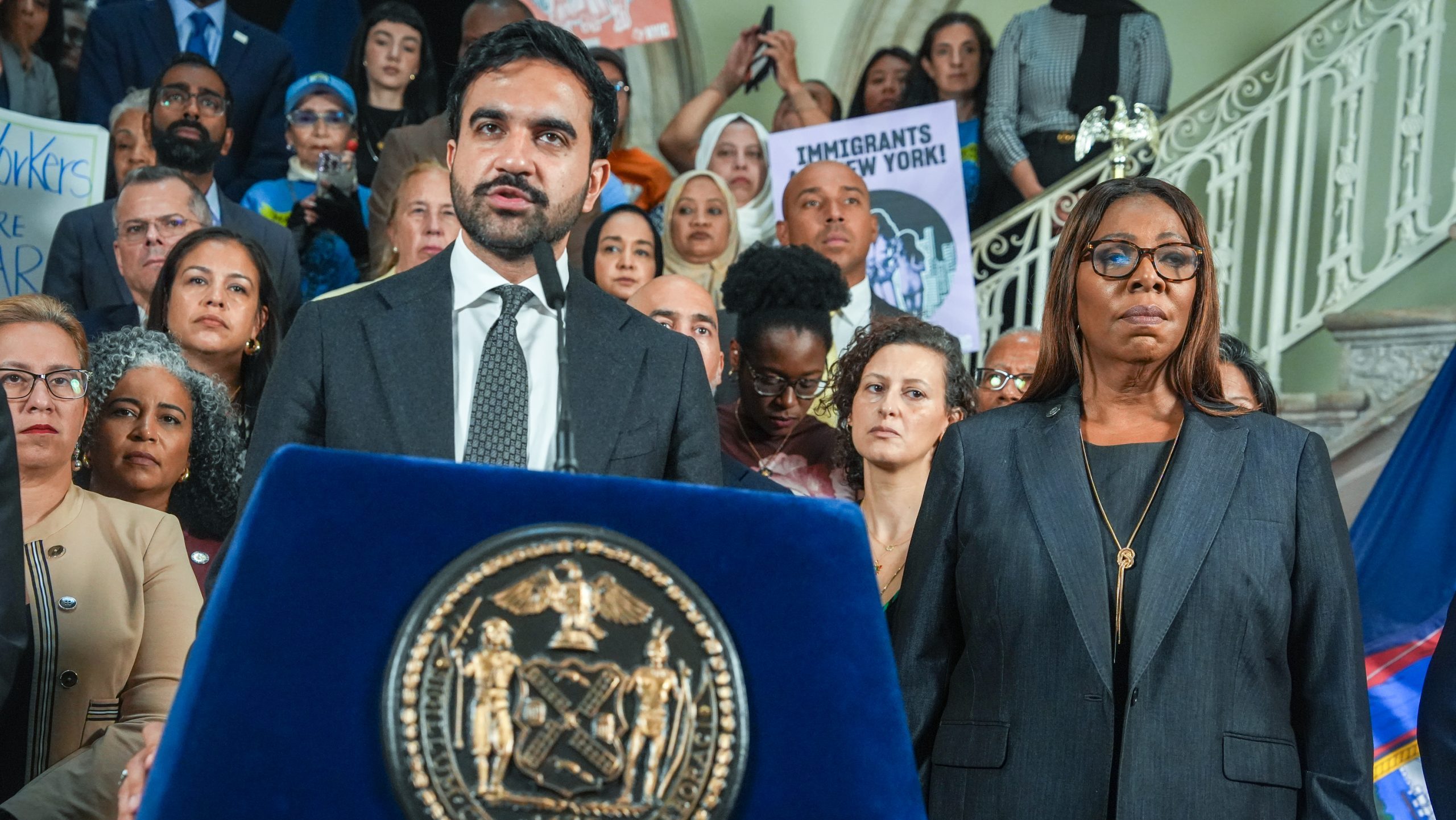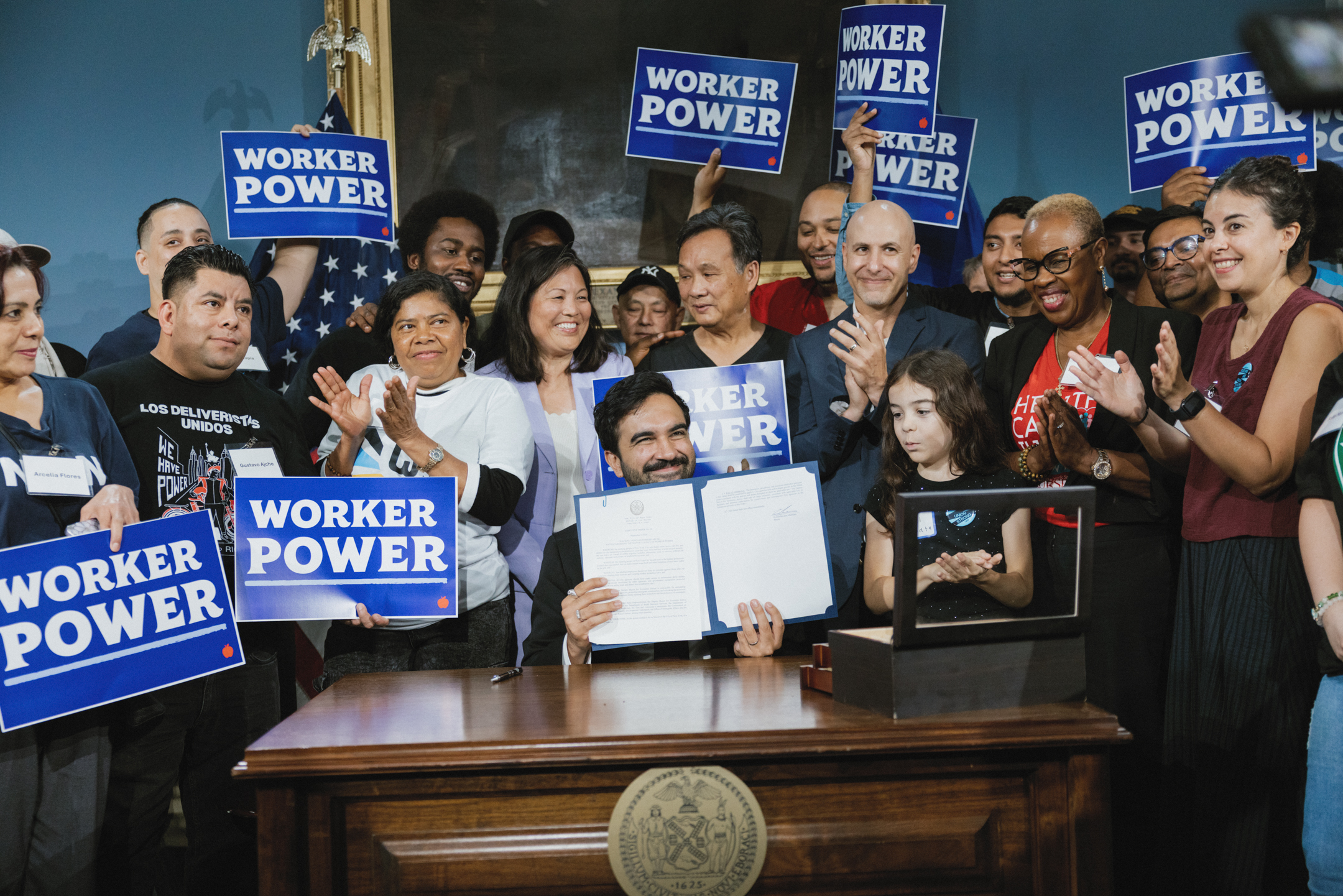


New York City hosted the country’s first Labor Day celebrations 144 years ago. Today, Mayor Zohran Mamdani is announcing another milestone for labor: the establishment of the city’s first office dedicated to educating and organizing workers.
Mamdani’s executive order, signed Thursday, plans to create the Mayor’s Office of Worker Power (MOWP), which will channel City Hall resources to support workers’ organizing efforts.
“The Mayor’s Office of Worker Power will make sure workers have a seat at the table before exploitation becomes a crisis and violations become routine,” the mayor said in a statement shared with Documented. “We’re connecting workers to their rights, to each other and to the organizations ready to stand with them.”
The new office will seek to build collaborations across municipal agencies to conduct outreach, develop educational materials and policies, as well as build strategic partnerships with labor organizations. The announcement of MOWP is the latest in a series of mostly pro-worker policies Mamdani has introduced since becoming mayor, including securing $104 million in additional tips for delivery workers and establishing workplace heat protections.

The mayor has appointed veteran labor leader Tony Perlstein as MOWP’s first executive director. Perlstein, a former longshore worker, has decades of experience as a union and community organizer. In his most recent post, Perlstein served as a director in the United Auto Workers organizing department.
Julie Su, the deputy mayor for Economic Justice, will supervise the new office and help it collaborate with rank-and-file workers, union leaders, worker centers, immigrant workers, gig workers, and platform workers to develop policies guided by workers’ experiences. According to Su, immigration-based exploitation and climate-related worker safety issues will be among the office’s top priorities to address.
“Whether it’s construction workers or hotel workers, caregivers, bakers, baristas, and delivery drivers, their work will be in very important partnership with the work of this office,” Su told Documented. “Again, the goal is to support workers who want to organize for more power in the workplace, and we know that there are organizations across New York City who have been doing that for decades. Our work here is to support and amplify and coordinate with them, not to take their place.”
Immigrants have consistently been among the most exploited workers in New York City and beyond as employers take advantage of their precarious immigration statuses, leaving them open to workplace abuses, including wage theft and unsafe working conditions. These issues have only worsened in the last few years. A recent Documented investigation found that since President Trump returned to office, employment discrimination based on citizenship or immigration status more than doubled. Still, in spite of this exploitation, sometimes for years, many immigrant workers have never spoken out for fear of being deported.
“This office is really going to focus on vulnerable workers in New York City,” Su said. “There are many workers who are working in places where they would like their conditions to improve, but they don’t know what they can do to make that happen. We want to provide outreach and education to help make that happen.”
One major aspect of the new office will be its ability to launch investigations into companies with histories of labor violations. In conjunction with the Department of Consumer and Worker Protection (DCWP), the Taxi and Limousine Commission (TLC), and the NYC Commission on Human Rights (CCHR), MOWP plans to develop new protocols for investigating workplaces that will sidestep the need for a complaint to be filed before an investigation is triggered. Investigative priority will be given to employers with a history of labor violations and companies with a large percentage of low-wage workers.
Although MOWP will continue to encourage workers to come forward with complaints, Perlstein explained that MOWP cannot solely rely on complaints to identify unscrupulous employers.
“We have to be proactive in identifying where violations are currently taking place, mostly underground, and exposing those violations,” Perlstein said.
Su, who was the former acting United States Secretary of Labor under the Biden administration, says that MOWP is being established in part in response to the current federal government’s lax attitude towards worker rights, which includes their continued dismantling of federal labor regulations, staffing cuts, and the rolling back of workplace protections.
In response, Su, who acknowledges the city can’t replace the federal government’s role, hopes MOWP can at least support workers by trying to fight for better conditions.
“There are workers who want to and are trying to organize in the city and are facing many, many challenges,” Su said. “Some of those challenges are issues that are supposed to be addressed at the federal level, and those federal agencies have largely been decimated.”
Labor unions such as 32BJ SEIU, which represents 185,000 workers across the five boroughs, commended the mayor for founding MOWP.
“As the labor movement faces attack at the federal level, we need state and city solutions to ensure that workers have a voice in their workplace and that the labor movement grows,” said Manny Pastreich, 32BJ SEIU’s president, in a statement to Documented. “We proudly applaud Mayor Mamdani’s creation of the Office of Worker Power, which will help educate workers of their rights and will be a key resource in ambitious organizing efforts.”
President and co-founder of the 21,000-member New York Taxi Workers Alliance (TWA), Bhairavi Desai, told Documented that she’s hopeful that MOWP will finally prioritize the labor issues many of her mostly immigrant members face every day, such as app-based deactivations.
“Historically, people like us have not had our issues front and center,” Desai said. “So I think this is another point of entry at which our fundamental issues of bread and butter can be addressed.”