

After an ICE agent shot Oscar Belgal in Manhattan’s Marble Hill neighborhood last Thursday, officials, advocates and New Yorkers swiftly rallied behind a renewed call to remove U.S. Immigration and Customs Enforcement from the city.
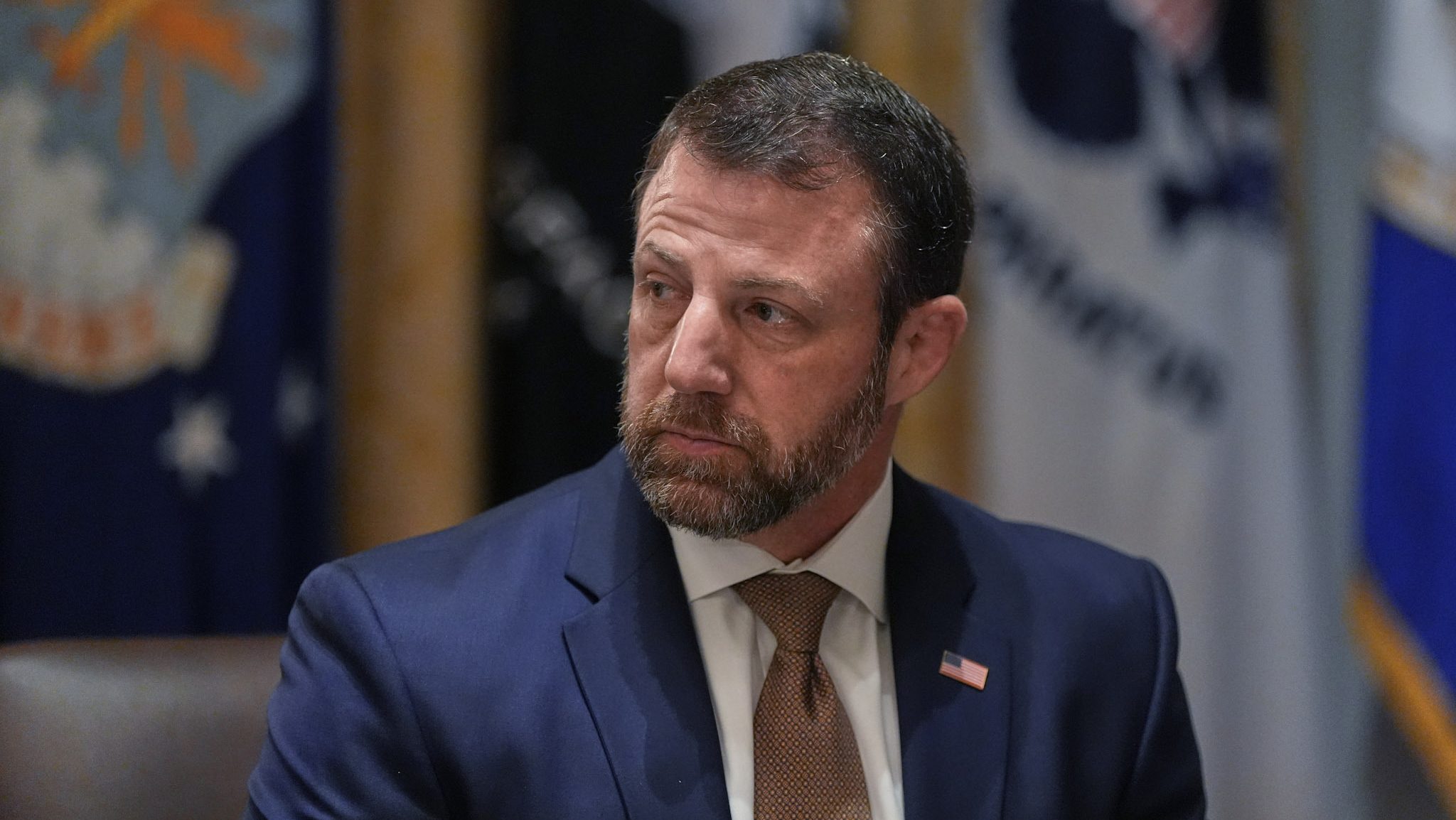
The federal government, meanwhile, has doubled down, with Department of Homeland Security Secretary Markwayne Mullin vowing that ICE enforcement in New York will continue.
In the week since, state and city officials have clashed with the Trump administration over the presence of ICE agents in New York and whether the state must — or actively does — collaborate with ICE. Mullin himself made several claims about New York’s collaboration with the federal immigration authorities.

Here is what’s true and what’s false about the ways in which the state and city work with ICE.
Mullin: 100 criminals or 100 crimes?
When Mullin took the podium last Friday to comment on the ICE shooting in Marble Hill, he claimed that Gov. Kathy Hochul agreed in a phone call to collaborate on targeting “over 100 different criminals — or crimes.”
Mullin himself apparently couldn’t figure out if it was 100 criminals or 100 crimes.
A few minutes earlier he also claimed: “The governor said that they would help us with over 100 different criminals that are in the state illegally, if we would just give them notice.”
Alexia Nizhny, a spokesperson from the governor’s office, told Documented that Mullin’s recounting of his conversation with Hochul was “inaccurate.”
“The Governor did not agree to cooperate with ICE on a list of 100 individuals or on any individual cases,” she said in a statement, adding: “This administration will work with the federal government to go after dangerous criminals but we will not support their aggressive attacks on New Yorkers.”
Gov. Hochul herself has not publicly issued a statement refuting Mullin’s claims that she “would assist” federal immigration authorities. In a post on X, she said she expressed “outrage” while on call with President Trump and Mullin, called for a halt to ICE enforcement in New York and asked for the release of body camera footage of the shooting.
What does “work with” the federal government mean?
Mullin may have misunderstood or misrepresented what “work with” means for the Governor’s office to assist feral immigration authorities.
There are circumstances where New York State authorities are legally required to share information with federal authorities about immigrants in the State carceral system.
“By law, New York State always notifies federal immigration enforcement of any non-citizen serving a State prison sentence,” Nizhny said.
That’s a reference to section 147 of New York Correction Law, which requires the Commissioner of the New York State Department of Corrections and Community Supervision (DOCCS) to investigate and write up a report on any noncitizen incarcerated in the State’s correctional facilities and deliver that information to federal immigration authorities.
That rule, however, only applies to individuals sentenced to time in a prison operated by DOCCS.
Meanwhile, this year New York State has taken more aggressive steps to bar local authorities from working with federal immigration authorities. The Local Cops, Local Crimes Act, which was passed in the FY2027 state budget, bans 287(g) agreements between local law enforcement agencies and ICE.
Mullin may have misunderstood or misrepresented NYC law on ICE detainers
Mullin’s repetition of the number “100” may well have been a mix-up with another number related to New York City’s regulations on ICE detainers — written requests that federal authorities can send to local law enforcement, jails or prisons asking that they be notified when an individual is to be released from custody, or held for a couple days longer, so that they can be transferred to ICE custody.
Following a law passed in 2014 under former Mayor Bill De Blasio, New York City — and not the State, as Mullin may have muddled — carved out 170 felonies where the municipal government is permitted to honor ICE detainers. Seven more felonies to that list were added in a 2019 municipal law — bringing the total number to 177.
It’s a figure on ICE detainers that New York City officials, including Mayor Zohran Mamdani and Public Advocate Jumaane Williams, have repeatedly cited over the past year.
“Our sanctuary laws do not ‘shield criminals,’ as many claim; in fact, the city is allowed to honor detainer requests for individuals convicted of more than 170 different crimes, including rape and murder,” Williams said in a City Council immigration hearing in March.
The mayor, meanwhile, made a similar refrain in his meeting with President Trump in November last year, and has repeated it in other media appearances.
“I’ve said this directly both to the president, but as well as in public. Our sanctuary city policies allow the city to work with the federal administration if anyone has been convicted of more than 170 serious crimes,” he said in an interview with ABC News in January.
Mullin claimed on Friday October 9th that his agency filed 14,766 detainers in New York State between January 20, 2025 and September 2026 — implying, with some chagrin, that they were being ignored.
“If they would just honor the detainers that we put out, you’d see less and less of ICE. If they’d work with us, we would love to,” he said.
The word “honor” here is key. In both New York City and New York State, ICE detainers are merely requests — a judicial warrant is required for compliance.
“These are not mandatory,” Hasan Shafiqullah, a immigration supervising attorney at The Legal Aid Society, told Documented in an interview earlier this year. “New York City in 2014 said, ‘Thanks, but no thanks, we’re no longer honoring these.’ However, there was an exception for folks who have certain criminal convictions. But for the most part, we do not honor ICE detainers.”