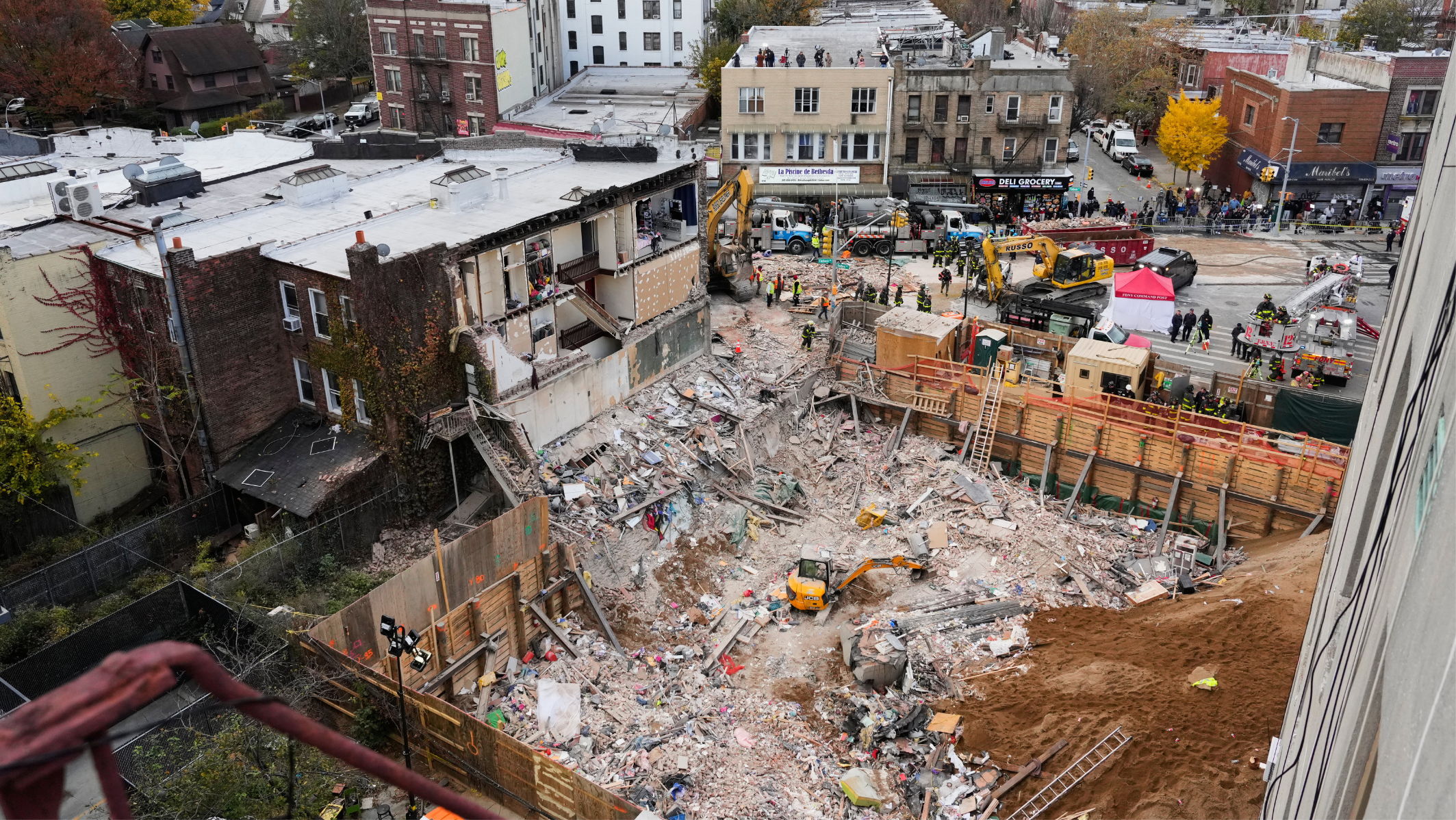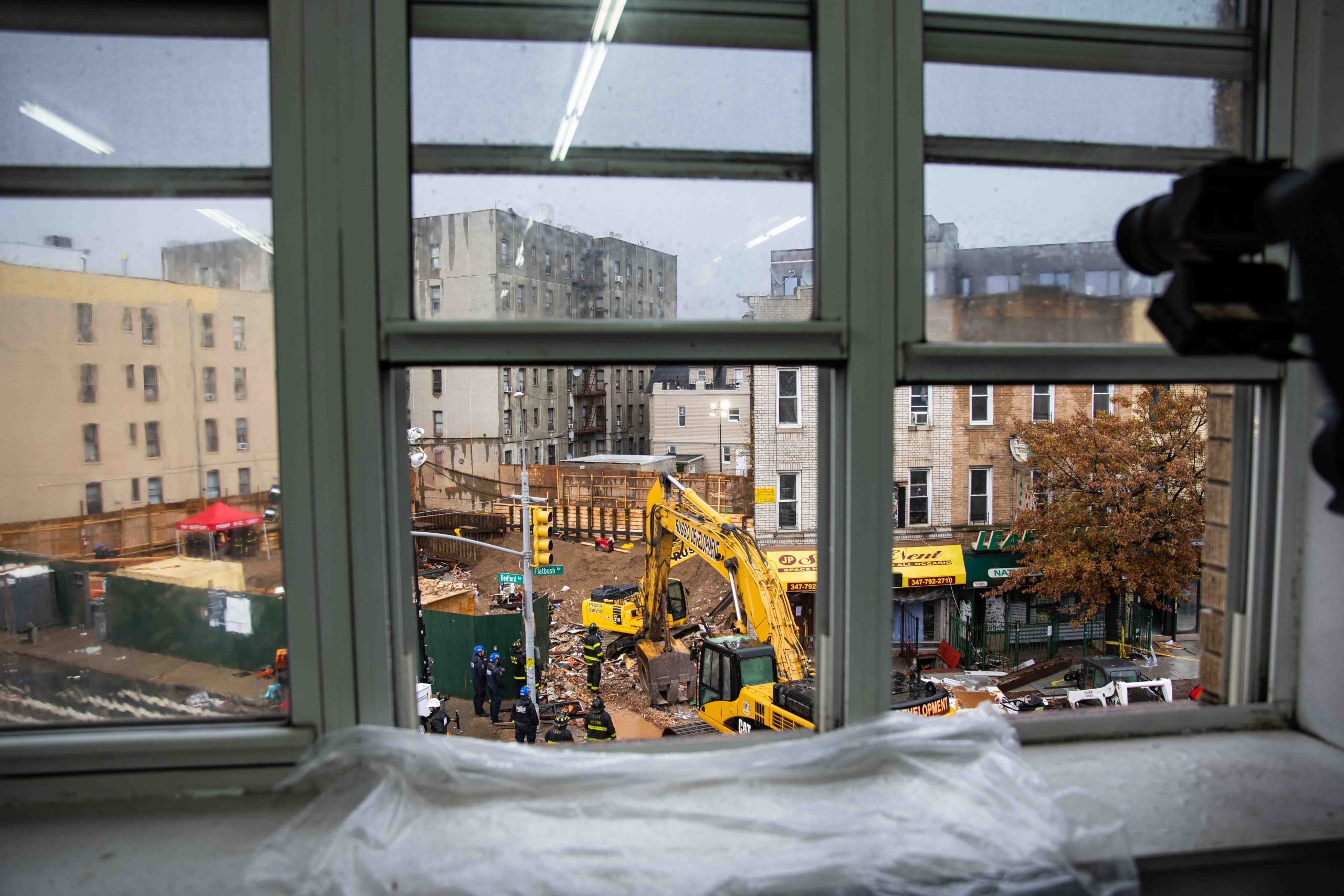


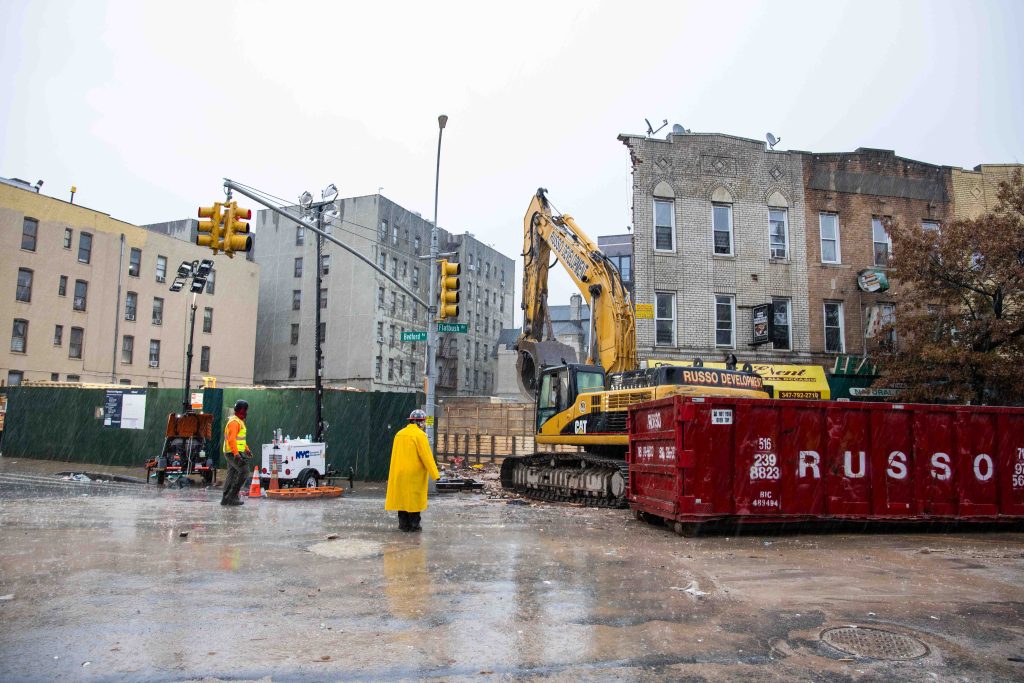
As workers in Brooklyn continued to clear debris Thursday from the three-story building that had collapsed the previous day, killing eight people, the church across the street has become an informal relief hub for volunteers, survivors, and first responders.
Since the previous afternoon, Bethesda Church of God in Christ in Flatbush, Brooklyn, had opened its doors to displaced residents, families searching for their loved ones, volunteers and first responders. People came looking for water, a place to rest, information or someone who could help.
Inside, the third floor had taken an unusual role as a makeshift control center for journalists and first responders and a resting place for those working through the aftermath. Outside, heavy rain continued to fall as crews dug through the mountains of debris. Among the dead were two children. Eighteen others were injured in the collapse.
For Pastor Alfred Justin Joseph, seeing the tragedy unfolding in his neighborhood evoked an immediate response to open his church’s doors.

Joseph came to the United States in 1985 after serving as a pastor in Haiti for eleven years. He has led the church at 1280 Flatbush Avenue since 1997.
He learned about the collapse shortly after 4 p.m. on Wednesday, Nov. 11, when a church deacon sent him video of the disaster. Joseph, who knows many of the people who live and work in the neighborhood, rushed from his home in Canarsie to Flatbush. A trip that usually took 20 minutes turned into an hour because emergency vehicles and police had flooded the area.
The three-story residential building at 1321 Flatbush Avenue had collapsed into an excavation site next door, where construction workers had been digging to prepare the ground and foundation for a new development.
The collapse has raised serious questions about construction safety and the protection of residents in Flatbush, a neighborhood where immigrants and working-class families live alongside major development projects. On the building’s ground floor were Haitian workers and Haitian-owned businesses, including remittance services and a store selling medical scrubs, Joseph said.
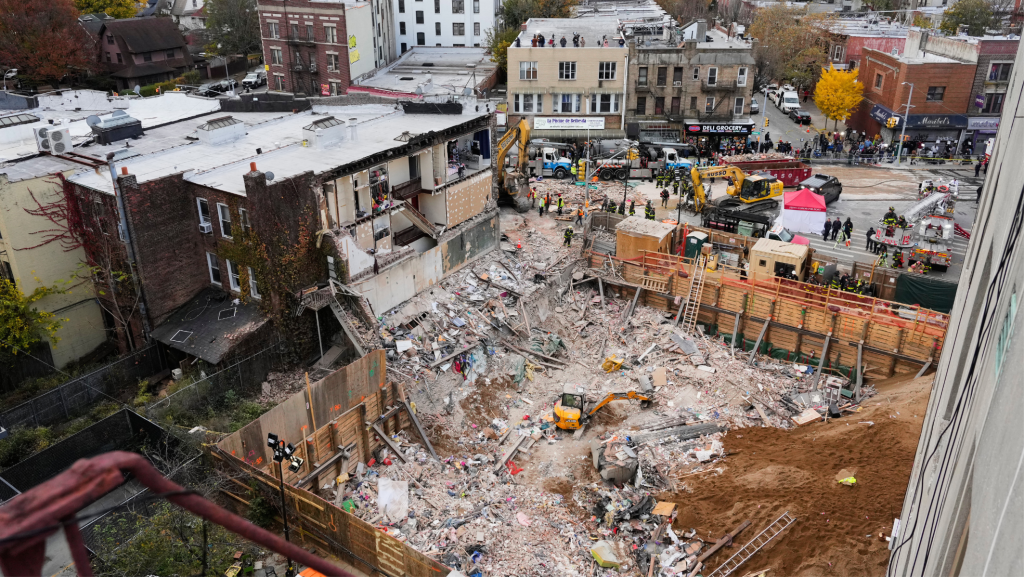
As soon as Joseph arrived, the church began receiving people displaced by the collapse. One group of about a dozen Spanish-speaking residents was taken by the NYPD to a YMCA in Flatbush. Another group of five people, whom Joseph believed were immigrants from Africa, also came to the church.
Among the first group was a woman who believed her husband was trapped beneath the rubble. She stayed at the church through the night, waiting for news. At around 3 a.m., she learned that rescuers had found his body.
“Separation is the most cruel of all the words, so there is no word to describe the situation the way they feel,” Joseph said, recalling the woman’s reaction.
Bethesda remained open to anyone who needed help. People came to use the bathrooms, get water, ask questions or find shelter from the rain. Firefighters, police officers and construction workers also stopped there. Journalists set up cameras on the third floor, which overlooks the collapse site.
“If people want to use the bathroom, if they want water, they want to ask questions, whatever they need, I open doors for them,” Joseph said.
Immediate relief to community response
The church’s response expanded beyond providing immediate shelter. Members and community leaders began organizing to address the emotional toll of the disaster and the longer-term needs of affected families.
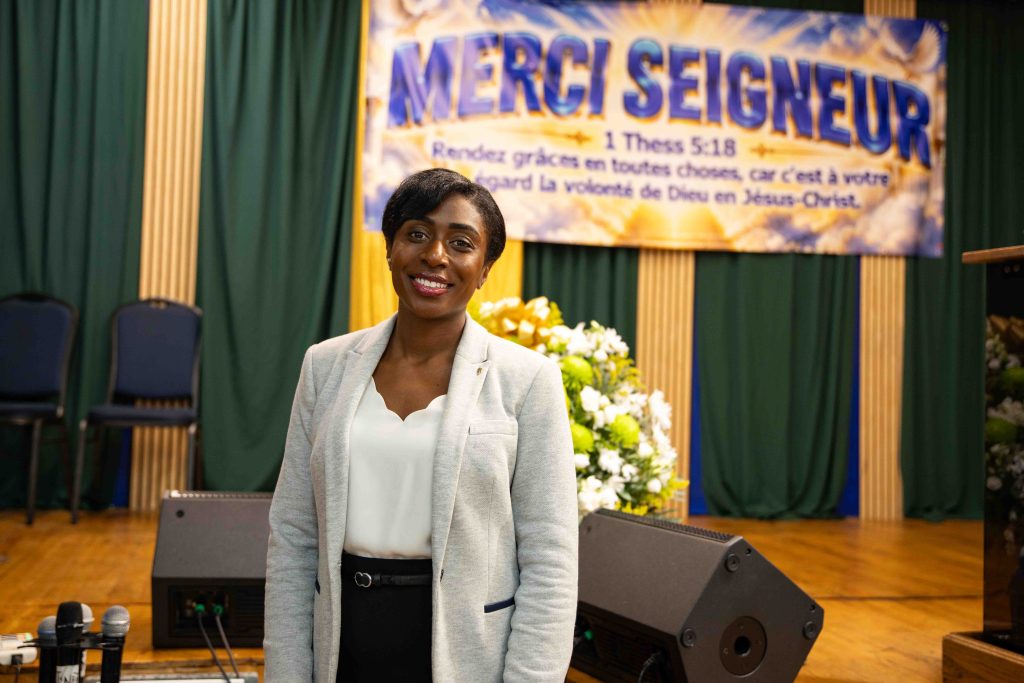
Among those helping coordinate the response was Dr. Florence Saint-Jean, director of Global Trauma Research and a longtime member of Bethesda.
After learning the extent of the collapse, she began contacting church members, community leaders and elected officials to organize assistance.
Inside the church, Saint-Jean distributed masks to people, saying that volunteers and first responders needed protection from dust and other potential hazards as they worked around the wreckage.
But Saint-Jean, who specializes in behavioral health and works with minority and immigrant communities, was also concerned with the psychological impact on the neighborhood. She said some residents were already showing signs of trauma.
“People are having anxious thoughts. They’re worried. Their heart is beating fast,” she said. “Those are all very visible trauma responses when people have an immediate shock to something that has happened.”
Her clinic is available to provide crisis support to those who need it, she said. Saint-Jean said she is particularly concerned about the long-term effects on families who lost loved ones, residents who were displaced and people who witnessed the collapse.
The church also became a meeting point for religious leaders looking to coordinate a broader community response.
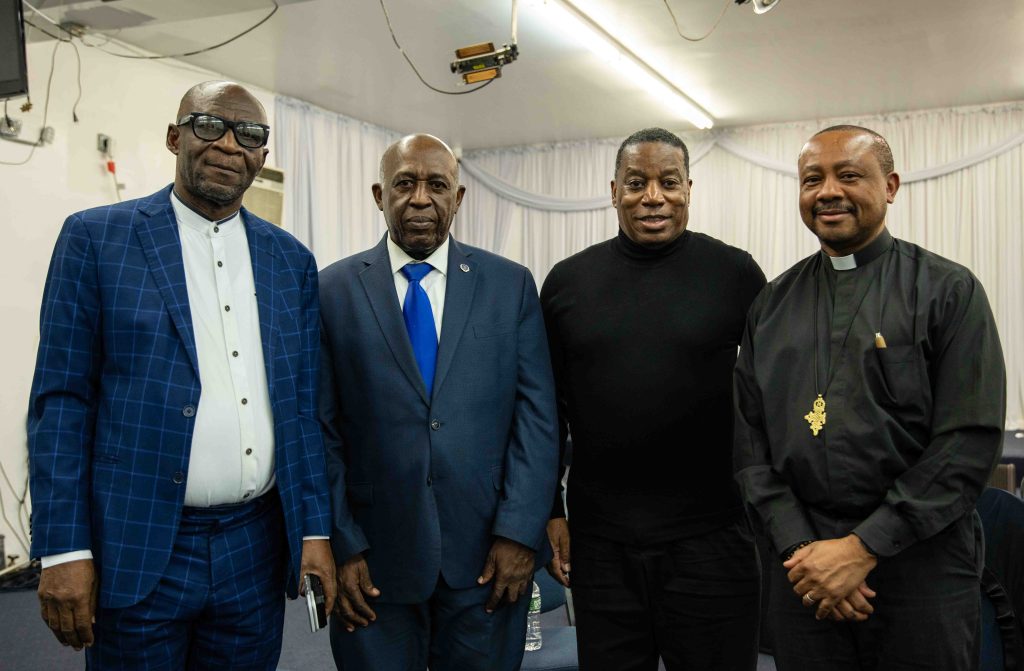
Three members of the 70th Precinct Interfaith Clergy Council visited Bethesda to speak with Joseph and understand what assistance was needed. The coalition brings together religious leaders from different faiths in central Brooklyn.
Among them were James Thornton, president of the council and pastor of Salem Missionary Baptist Church; Reverend Sheldon N. Hamblin, rector of St. Paul’s Church in Flatbush; and Pastor Jerome Herold, senior pastor of Bethel Christian Church.
Thornton is African American and married to a Jamaican woman. Hamblin is Barbadian, and Herold is Haitian. They wanted to identify where displaced residents had been taken and determine how local congregations could help them.
“We are concerned about the people that were affected in this tragic situation, and we wanted to know where they are at this time, and in a tangible way, how we might be able to be of assistance,” Thornton said.
Calls for accountability and support
City records show that the construction site had a history of safety violations. On March 20, 2026, Department of Buildings inspectors found demolition work taking place without adequate overhead protection for neighboring properties. The agency issued a violation and a stop-work order.
When inspectors returned on April 23, they found that demolition had continued despite the order, according to the New York City Department of Buildings. The contractor received another violation. According to the city, the violations were subsequently corrected, and the stop-work order was lifted on May 8.
The collapsed residential property also had 98 open housing-code violations, according to the Department of Housing Preservation and Development. They included problems involving leaks, pests, electrical conditions and fire safety.
For Thornton, the disaster reflects broader concerns about how development affects communities like Flatbush. He said language barriers can make it harder for immigrants to understand construction projects, raise concerns or make their voices heard.
“Why does it always happen in our neighborhood, where immigrants and people of color are?” he said.
Saint-Jean said residents had previously complained about infrastructure, noise and instability in the area. She worries that their concerns were not taken seriously. Residents should not have to wait for a disaster before their complaints receive attention, she said.
Meanwhile, the community response has expanded beyond the church. Elected officials and community organizations have begun coordinating assistance for families who lost loved ones, residents who were displaced and those recovering from the disaster.
City Council Member Farah N. Louis, whose district includes the affected area, said her office was contacting families to connect them with assistance. State Assemblymember Rodneyse Bichotte Hermelyn also called on residents to donate gift cards and unopened toiletries.
U.S. Rep. Yvette D. Clarke said her office was coordinating with local officials and community organizations. The office of Public Advocate Jumaane Williams also joined efforts to help residents access emergency services.
Williams’ office was working with Brooklyn Borough President Antonio Reynoso, Clarke, Bichotte Hermelyn, Louis and Brooklyn District Attorney Eric Gonzalez on a donation drive.
For Saint-Jean, bringing together the different people and institutions responding to the disaster will be essential to meeting the community’s needs. She wants elected officials, health professionals, first responders, religious leaders and community organizations to work together rather than operate separately.
Joseph, meanwhile, wants the construction company held responsible for what happened. Hamblin also called for justice, saying the community should focus on establishing the facts and ensuring accountability.
“We’re not here to blame,” Hamblin said, “but what we know based on the information fed to us, there must be justice without a doubt.”