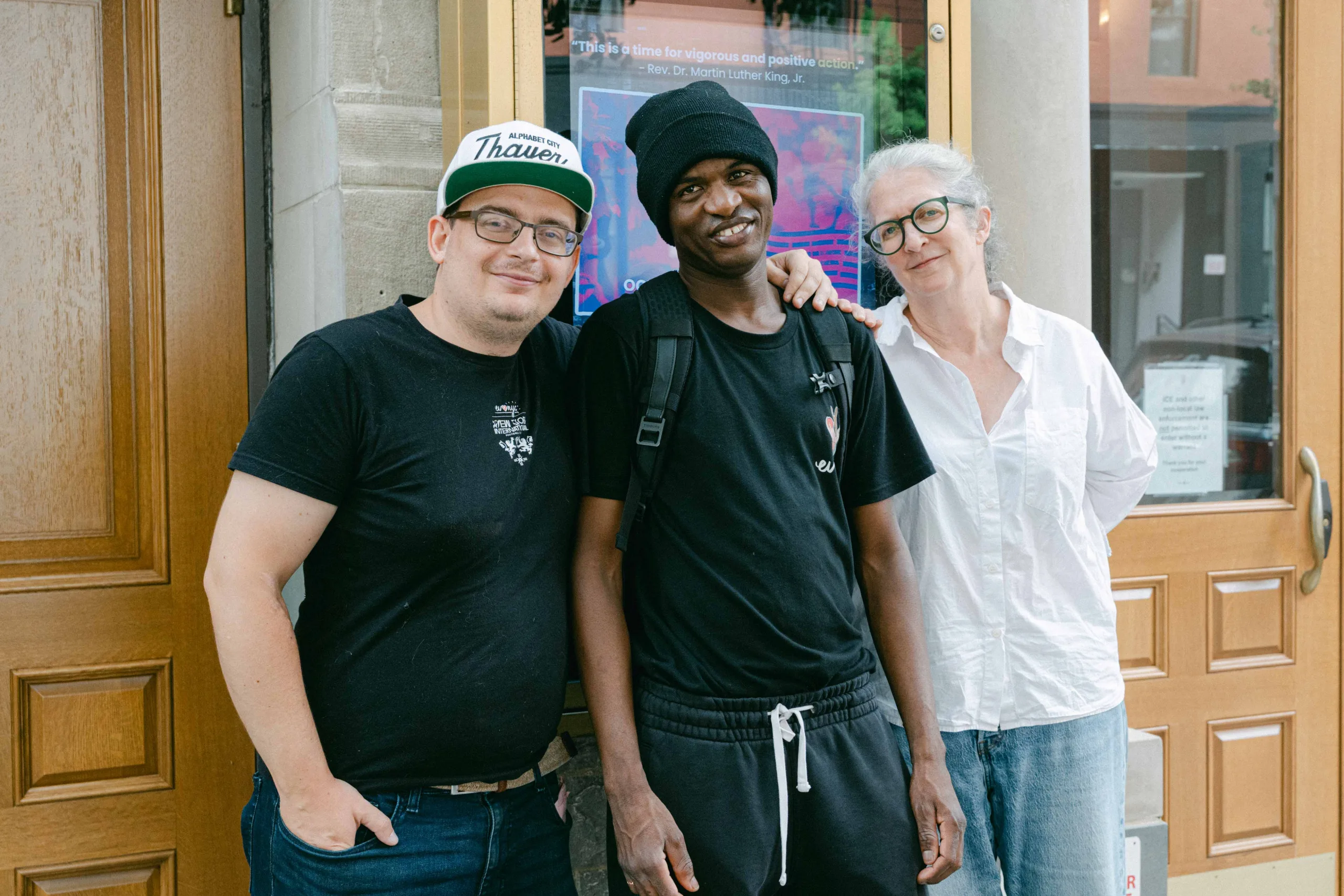


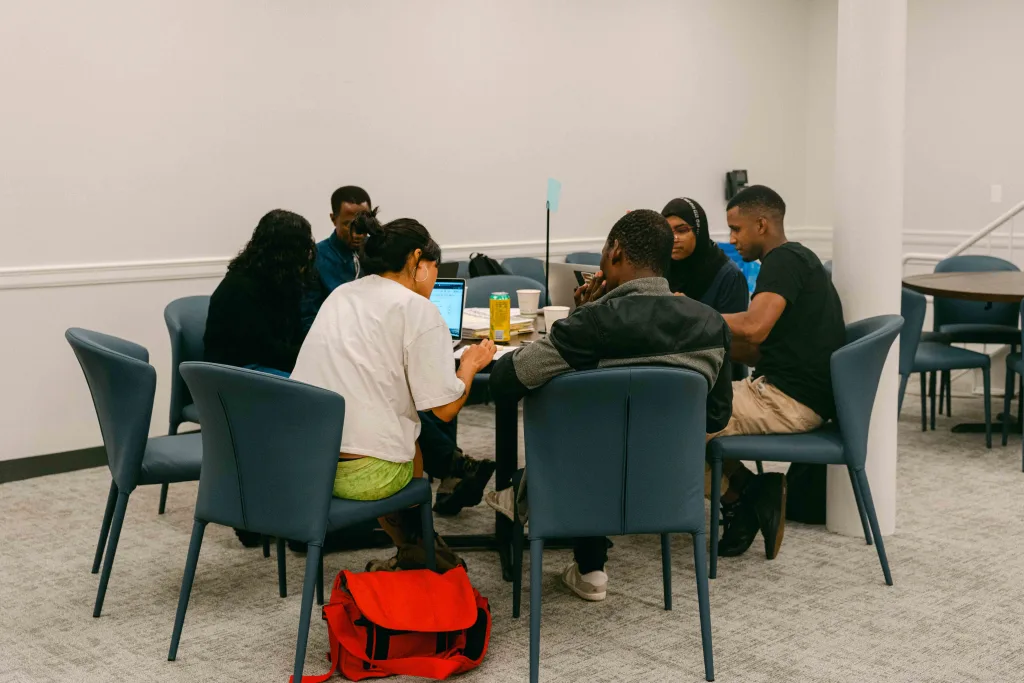
Every day more than 50 migrants visit Cafewal, a volunteer-run daily kitchen and resource center in the East Village. The “ticket lady” there helps them with their e-bike tickets or court summons. Others go to Cafewal to pick up their mail from two boxes full of envelopes: one for those who share the last name “Diallo,” a common West African last name among the Fula people, and another box for everyone else. Some people also arrive to take English classes, get help signing up for Medicaid or get help with legal service providers.
But beyond the services offered by Cafewal, migrants told Documented that many arrive looking for community and a place that helps them feel at home. The volunteer-run kitchen and resource center — now housed at a church in the East Village — has become a lifeline for asylum-seekers and neighbors in need. Asylum seekers using their services told Documented that Cafewal has become their home away from their country, and has provided a sense of community at a time when detention of immigrants across the country has increased.
Cafewal, which means cafeteria in Fulani, has served more than 36,000 free meals, taught English classes to 320 students, and assisted more than 3,000 migrants with legal resources, city programs applications and medical care. The center began in October 2024 when volunteers from local mutual aid groups EV Loves NYC, East Village Neighbors Who Care (ENVC), and recently arrived migrants formed the center. EV Loves NYC, a volunteer-run food pantry operating since 2020, often delivered food to ENVC, which had been running a warming center since January 2024 to support migrants waiting for shelter placements.

Diamy, a 35 year old migrant from Guinea, found EV Loves and EVNC in January of 2024, after he had been evicted from a city-run shelter. Diamy, who requested Documented to withhold his last name and immigration status due to privacy concerns, had been sleeping in the L train during that cold winter, often riding it until the last stop. “It’s how I know every stop of the L train,” he said, laughing.
He told Documented that he had been looking for warm food at Tompkins Square Park — which is located near the St. Brigid’s church for new shelter placements — when he met the mutual aid volunteers, who provided him food. He said he felt inspired by the work they did.
Also Read: NYC Relief Organizations Thrive on Volunteers and Donations to Help Newly Arrived Migrants
“I did not have anything to pay them back with. So I said, okay, why not help them?” He began taking food from the EV Loves NYC Kitchen to the park, cleaning the carpet, bathrooms and also taking coffee with bread and peanut butter and jelly for other migrants. “That continued until Cafewal,” he said, adding that he was hired as Cafewal’s first full-time paid employee.
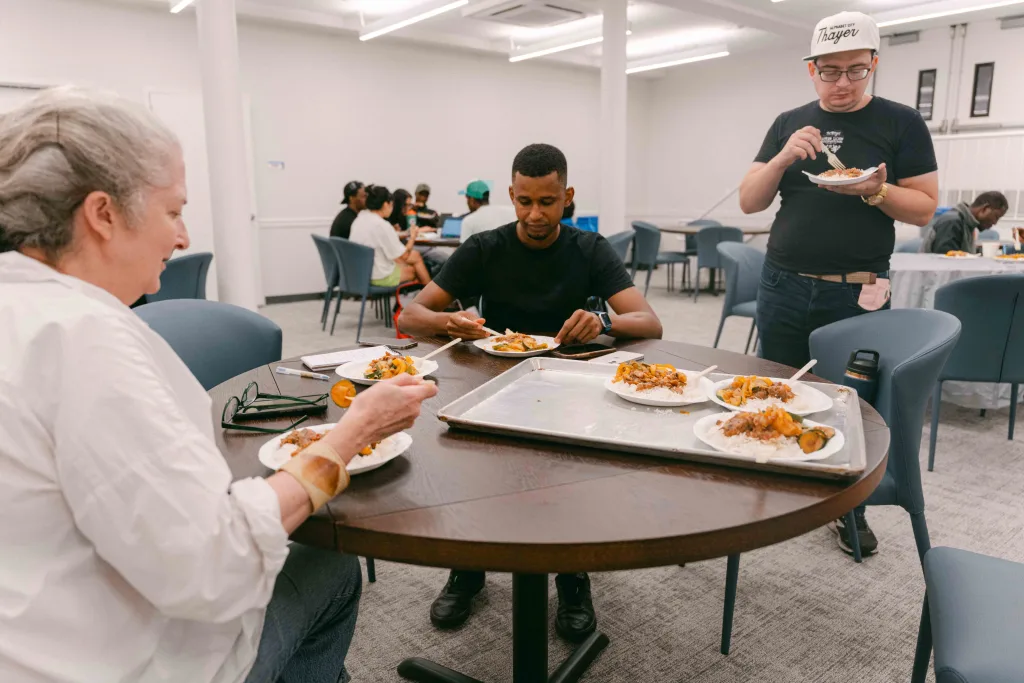
The warming center served as an early model for Cafewal, and offered English classes run by volunteer teachers, workshops and other community events for newly arrived migrants, many of whom were asylum seekers waiting for their work permits to arrive. For seven months, until the lease expired at ENVC, migrants came in looking for resources and food, and stayed as volunteers, often assisting in the kitchen by cooking meals for other asylum seekers.
Tyler Hefferon, executive director at EV Loves NYC, said there was a high demand for volunteering in the kitchen because of the English and cooking skills the center provided for migrant workers looking to enter the restaurant industry when their work permits arrived. The asylum seekers would often volunteer and cater for other migrant workers, gaining experience that Hefferon saw is needed in the restaurant industry.
The demand led to the creation of a training program for future restaurant workers. “Generally, they will get a job within three months,” Hefferon said. He has more than ten years of experience working in the restaurant industry and oversees the training curriculum which emphasizes learning English terminology that is used in the kitchen. “It’s been this sort of organic pipeline for the first crew,” he said. “We haven’t really had a formal application process per se, because people have generally been finding us.”
While they do not keep track of who has gotten employment after being trained, Hefferon estimates more than 100 migrants, who have gotten their services (including the kitchen training) have been employed in restaurants and other businesses around the city.
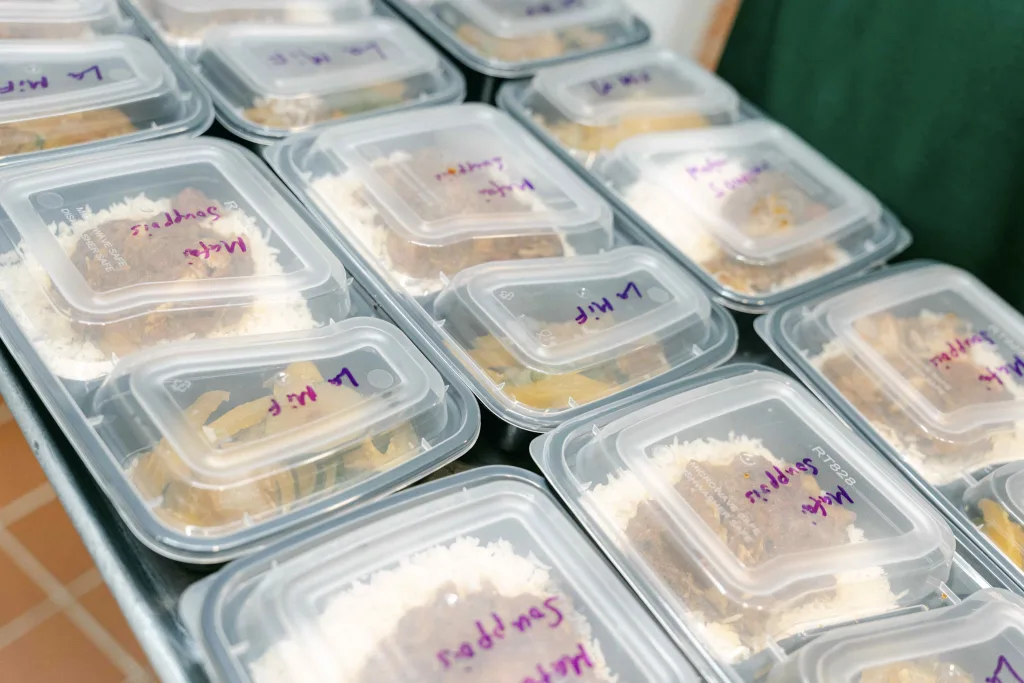
Cafewal does not receive any governmental grants and has heavily relied on crowdfunding, and private foundations. Ingredients used in the kitchen, like coffee, bread and meat, are donated by local businesses, Hefferon said.
Ann Shields, communications director at EV Loves NYC, told Documented that more than 3,000 migrants have received assistance with city applications, applying for jobs, translation services, DMV paperwork, and legal matters.
“It’s all about meeting their needs, like right now, as you know, with the criminal summons being given and everything. Everyone is scared, so we have to have someone that can take care of that,” Shields added, pointing at a table where a migrant huddled over a computer and a volunteer checked the ticket information.
But beyond the services offered, what made a big impression in Diamy is also how the facility is tailored to celebrate and encourage West African culture. He explained that migrants had the opportunity to cook meals during Ramandan, for example. “It helped remind us of our country and to not miss the food from our country, and the community.”
Also Read: Donations and Volunteers Needed to Help Migrants in NYC
He said that many migrants, even those that have moved out of New York, still keep in touch with Cafewal. Some of them continue to receive their mail here, he said, to ensure that it gets delivered — a service that has been crucial for individuals living in shelters that were closed down, or those who were constantly moved from shelter to shelter.
Now, even though he works as the operations manager at Cafewal, he said he still has the mindset of being a volunteer. “It’s a good feeling,” he said, explaining that one of the favorite parts of working for Cafewal is meeting new people who come to the site. He signaled toward two men who entered the site. “I went to say hi to them,” he said. “Because they are new faces. They came because we posted yesterday in the Brooklyn [Mutual Aid] chat.”
The minister for justice and community organizing of the church where Cafewal is housed told Documented that the goal of the center aligns with Cafewal’s mission of serving the community, regardless of immigration status or where they are from. They added that the church community has been supportive of Cafewal’s move.
The location — which Cafewal requested Documented not to use its exact address — has a protocol set in place in case of ICE presence, Hefferon said.
Regarding the recent policies that have targeted the number of detentions in the country, Diamy said that it has made it difficult to focus. “You come to another country to ask for safety and then you are faced with this situation and it’s like two problems in your head.”
But Diamy said he tried to focus on the positive aspect of being in community, especially because many migrants from African Countries do not have families in New York City.
“Some of them, we know each other from Guinea,” he said. “But since we met here, we are like a family.”