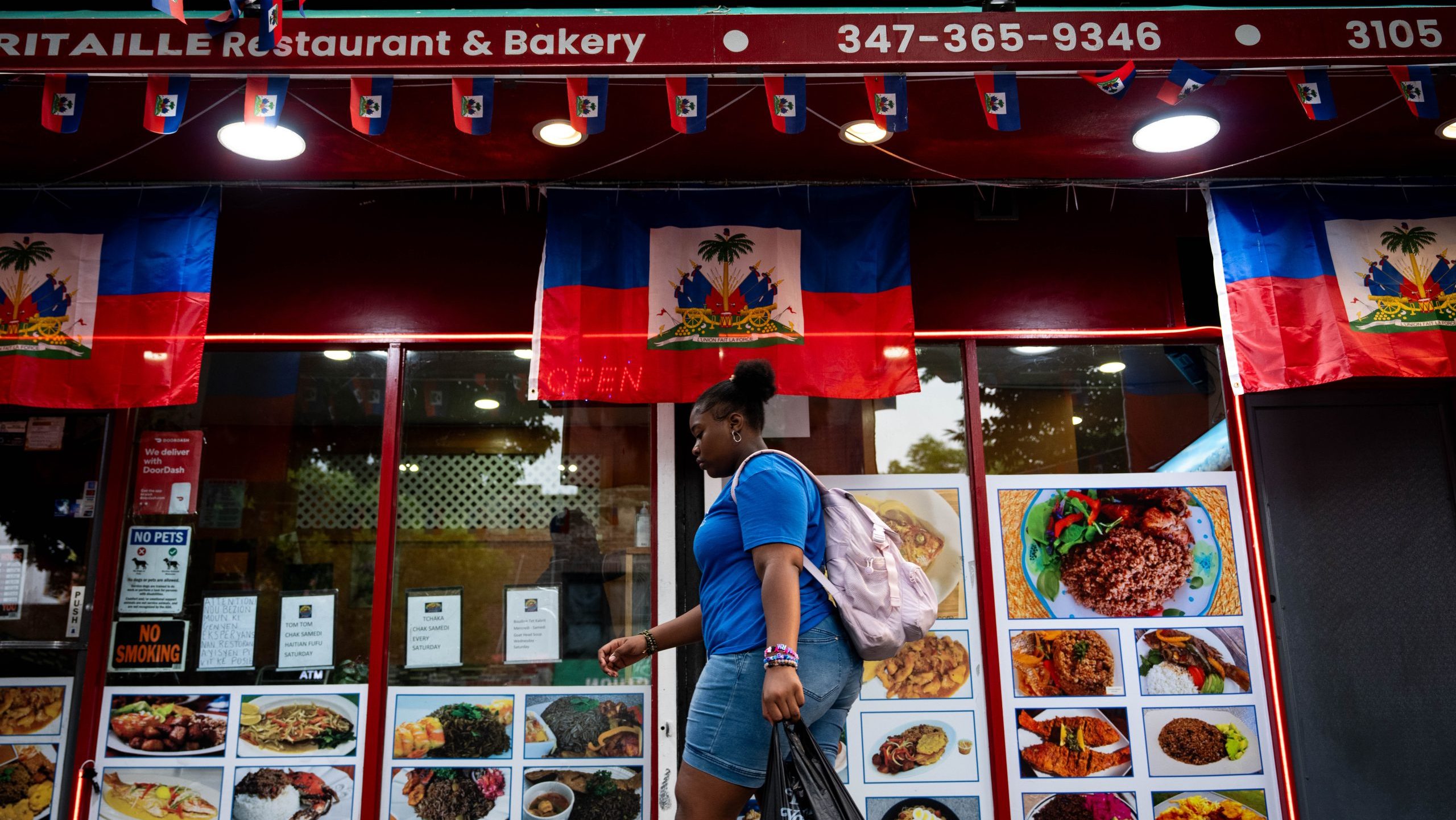


When Wesly Simon walked into his Brooklyn restaurant on Monday, July 27, he immediately checked the U.S. Citizenship and Immigration Services website. An alert said Temporary Protected Status for Haiti had been terminated, effective that day. As a result, the employment authorizations for nine of his employees were no longer valid. He could no longer employ them.
Simon owns Djon Djon restaurant in Brooklyn’s Little Caribbean neighborhood, one of the areas with the highest concentration of Black Caribbeans in New York. For years, he employed Haitian immigrants with Temporary Protected Status (TPS). They cooked, cleaned dishes and served customers. Now, Simon, a long-time naturalized citizen, works double shifts every day to keep the doors open.
“I can only help so much until I start hurting business to a point,” Simon said. “If ICE walks in, we won’t be able to pay all this fine because those guys starting the fines are from $800 to $28,000. It’s a very high fine to pay.”

About a month ago, a Supreme Court ruling allowed the Trump administration to end TPS for approximately 350,000 Haitians. The ruling determined that courts do not have authority to review the administration’s decision to terminate the humanitarian protections.
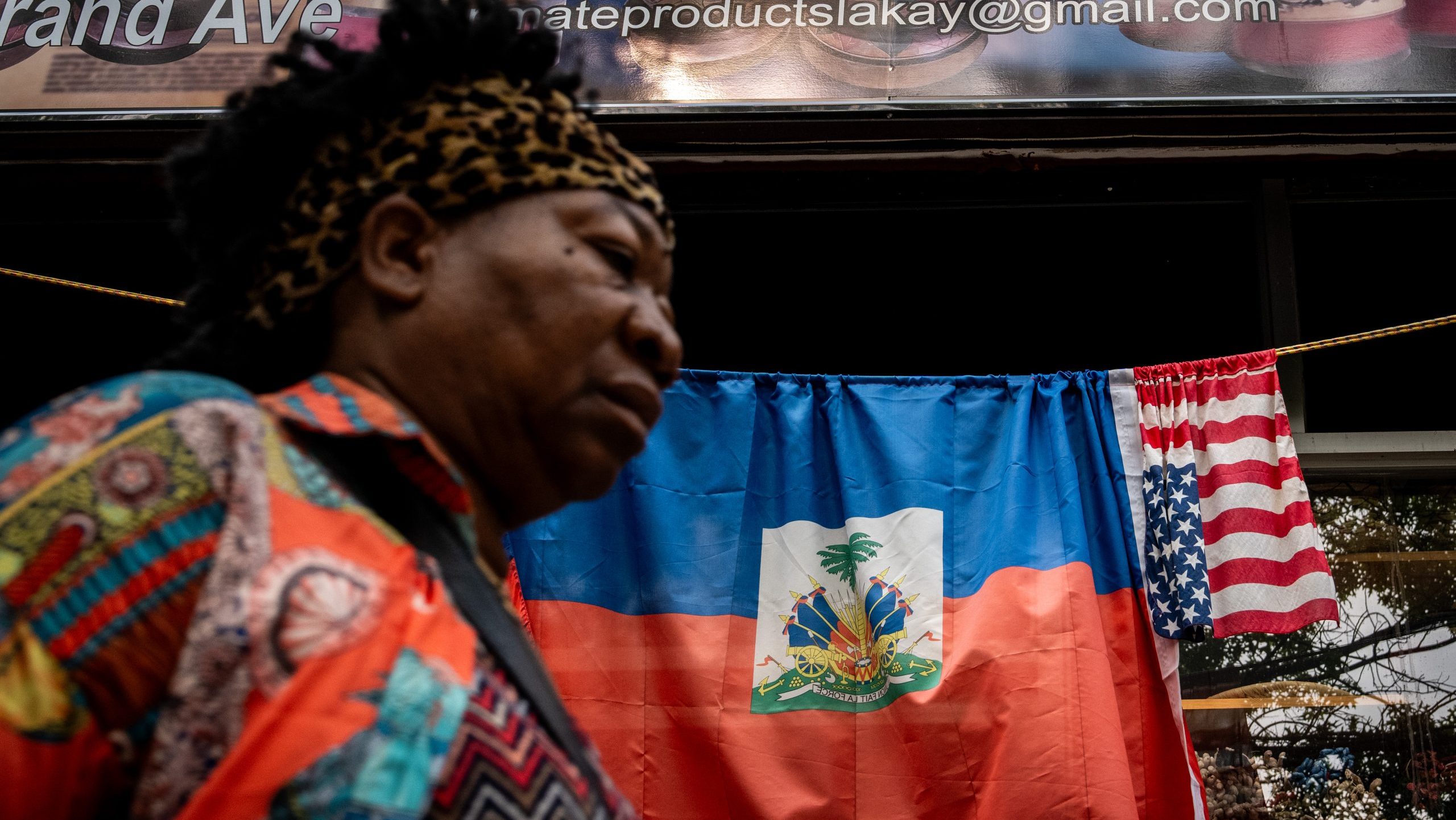
Haiti was first designated for TPS in 2010 after a devastating magnitude 7.0 earthquake killed about 300,000 people and displaced an estimated 1.3 million. Since then, the country has endured a series of natural disasters, a deep economic crisis and prolonged political instability.
Conditions have worsened, especially since the assassination of President Jovenel Moïse in 2021, when heavily armed gangs took control of large swaths of territory in Port-au-Prince, causing about 1.5 million people within the country to flee and forcing thousands more to escape abroad.
All in, the Supreme Court’s decision will impact roughly 1.3 million TPS holders in the United States — but for Haitians, that impact has been immediate. In New York there are more than 40,000 Haitian TPS holders who contribute more than $140 million annually in state and local taxes. And while the termination affects workers, it also affects the businesses that employ them and the communities that depend on those businesses.
A business in free fall
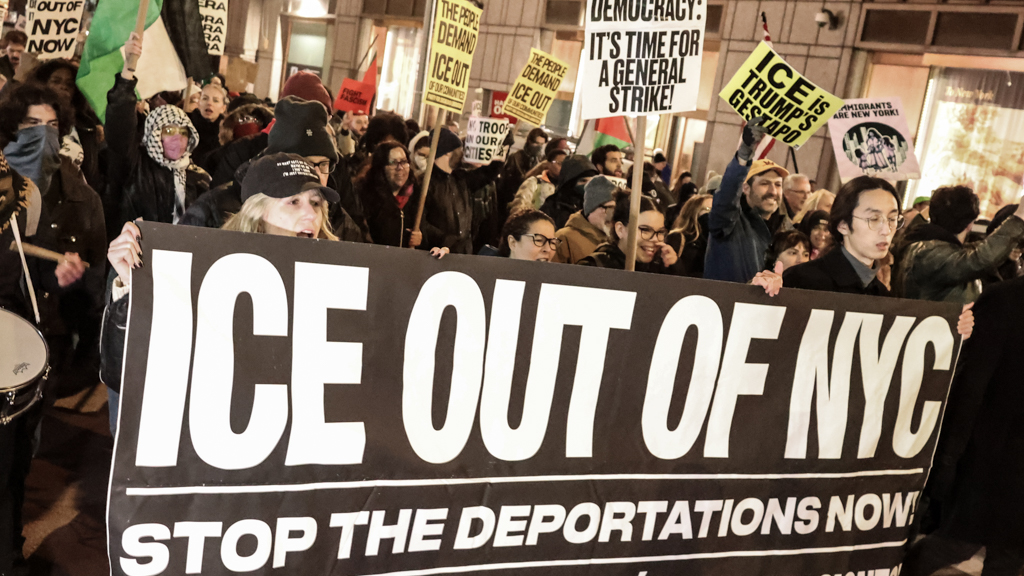
With the end of TPS for Haiti, Simon has lost half his staff. Sales have dropped 40 to 60%, he said, and the decline is accelerating. ICE’s constant presence in the area has also discouraged many people from going out.
“Everybody that frequently comes to the restaurant, they’re all migrants,” Simon said. “So I’m running an immigrant business in an immigrant neighborhood. Basically, they grow my business, and we don’t know what we’re gonna be doing in the next week or two.”
Simon described his former workers as skilled and hardworking people who often juggled two jobs and paid taxes. His employees knew they would lose their legal status following the Supreme Court’s ruling.
“They understand there’s nothing they can do and they have to go home,” Simon said. “Some of them aren’t even able to leave their house because they’re so scared.”
A chef’s departure
Fred Raphael, owner of Rebel Restaurant & Bar, a Haitian eatery in Manhattan, has also watched his business unravel. He said he has lost two kitchen workers. One self-deported to Brazil. Another stopped coming to work, too afraid to take the bus from Brooklyn to Manhattan.
“My reservations are extremely low,” Raphael said. “I’m not doing half of what I used to do, so I don’t know how long I can keep up that kind of pressure financially to be able to have that location stay open.”
This year he will celebrate six years in business — but he fears it may be his last.
“It would be a shame to have to close my doors, not because the public didn’t want to support, but because of everything that’s happening with this community,” he said.
His staff of five in the kitchen has been reduced to two or three on any given shift. His prep worker from Brooklyn has not reported to work in days. Those who remain are picking up extra hours, but Raphael said it is not sustainable.
“No, they can’t,” Raphael said when asked whether American workers would fill the gaps. “This is the work that we do. Haitian food, as you know. I’m not saying that someone else can’t do the work, but the seasoning, the intricacies, the way we prepare our food, it will take a long time for me to train somebody to do it. By that time, financially, I’ll close.”
He has posted job listings for servers and bartenders. No one has applied.
The human cost
For workers, the situation is also desperate.
David, a 25-year-old Haitian immigrant, received an email on June 26 telling him that his nonprofit organization could no longer employ him because his work permit had expired. David asked that his full name not be used because he has a pending asylum case and needs to be very careful with information that could publicly identify him.
He had been working in the United States under TPS since 2021. Croix des Bouquets, the neighborhood where he grew up in Port-au-Prince, is controlled by one of Haiti’s most notorious gangs, sanctioned by the United Nations and is actively being investigated by the FBI for kidnapping U.S. citizens. Now, David is living in Brooklyn on his meager savings that he says will only sustain him for the next two months.
His options outside of New York appear just as slim: He thought about moving to Florida to stay with relatives, but reports of ICE arrests at airports have scared him into staying put. On social media, he has seen posts showing Haitian immigrants in Springfield, Ohio, being fitted with ankle monitors after DHS ordered them to report to ICE.
When David first arrived in the U.S., he had wanted to continue his education, but his circumstances couldn’t accommodate those plans. He needed to pay his bills and support his mother and siblings who were still living in Haiti. Getting a full-time job became his family’s lifeline.
David is one of about 200,000 Haitian TPS holders who held jobs in the U.S. in 2025. They work across industries like health care, food service, warehousing, retail and long-term caregiving. And in New York state alone, they contribute more than $1.1 billion to the economy each year.
‘Where are they going?’
Raphael has employed Haitian TPS holders since 2010, when Haiti was first designated for Temporary Protected Status. Many began working for him at First Republic Lounge & Restaurant, his other restaurant in New Jersey. They have established lives in the U.S.. They own cars, pay rent and file taxes, he said.

“You have to vacate all of that, and now they don’t know where they’re gonna be the next day,” Raphael said. “I’m very saddened by it, to say the least. But I hope we can find a permanent resolution because they are the movers of the economy.”
Simon said he believes the problem is not just American policy but also the instability that forces people to leave Haiti in the first place.
For now, Simon continues to work double shifts. Raphael, for his part, says he is trying to keep his kitchen running with a reduced staff. Neither knows what the future may hold.