




To read a summary of this story, click here.
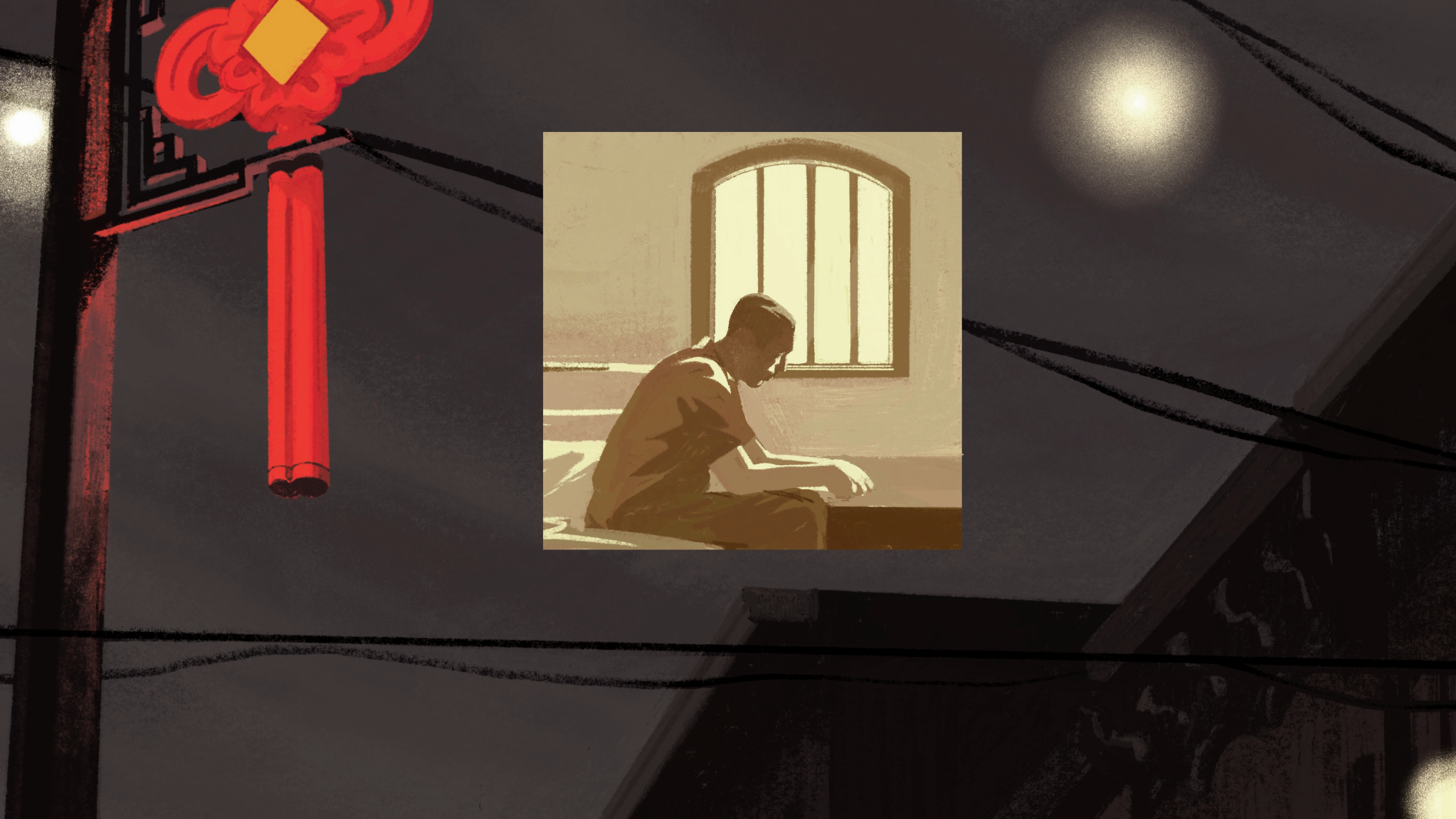
Haiguang Zheng rose from his cot at 6 a.m. at Sing Sing Correctional Facility, in Ossining, New York, listening to the sounds of guards making their morning rounds. It is a routine he has known for the 30 years he has lived in New York State prisons.
In prison, time often blurs together. But Oct. 4, 2025, was a special day for Zheng. He carefully tucked his white short-sleeved T-shirt into his green pants, making sure he looked neat. He was excited. Volunteers from the New York Chinese Prison Ministry were coming to visit him that morning. The faith-based group has regularly visited him and other Chinese inmates for nearly three decades, witnessing their transformations over the years, and has been advocating for leniency for long-incarcerated undocumented Chinese inmates like him.

“Some inmates laughed at me before they were about to be released,” Zheng, 59, told Polly Wong, a volunteer with the ministry, that day as they sat across from each other in the visiting room. He leaned forward over the table, his voice trembling as he spoke in Mandarin. “They said I’m a fool, they said if I had just pleaded guilty back then, I would’ve been out long ago.” He fell silent, his gaze falling to his feet as if weighing the years behind him. Then he looked up again. “But I didn’t rape those people.”
At the end of the visit, Zheng nodded to the facility photographer and asked in English if he could take a group photo with Wong. He had been learning the language slowly over his three decades behind bars. It was a skill he barely possessed when he was smuggled into the United States from China in 1993, and one he struggled with when he stood before 12 jurors to defend himself in a kidnapping trial three years later.
Since his first day in prison, Zheng has devoted himself to a single task: clearing his name and pleading for his release. In 1995, less than two years after arriving, he became entangled with a gang and accused of abetting a kidnapping — a serious criminal charge he says he was unknowingly implicated in by smugglers whom he owed money. Convicted of multiple charges, including kidnapping, rape, and sexual abuse, he was sentenced to 84 and two-thirds years to life in prison. He has repeatedly appealed his conviction since 1997, questioning the effectiveness of trial counsel’s assistance and seeking DNA testing of trial evidence that he believes will prove his innocence. In 2013, he published a nearly 50,000-word memoir recounting his life story, his version of the events, and asking for freedom.
Zheng is not alone.
The New York Chinese Prison Ministry estimates that at least 20 Chinese men remain similarly incarcerated in New York state prisons, many serving sentences of up to 80 years for crimes tied to the turbulent years of migration and organized crime that reshaped Chinatown in the 1990s. Many of them were swept into schemes as minor players but received disproportionately harsh sentences, spurred by tough-on-crime policies that targeted gang-related offenses. Some of the men insist they were never kingpins or masterminds. They describe themselves instead as poor newcomers — smuggled in, indebted, and vulnerable — who were coerced, manipulated or tricked into criminal exploits. Several maintain they were convicted of charges they did not commit and handed punishments far harsher than their roles warranted.
Their sentences, advocates argue, were also compounded by barriers that rarely show up in court transcripts: limited English proficiency, cultural misunderstandings, and a fragile grasp of how the American legal system works — gaps that, in the high-stakes theater of a criminal trial, can shape the course of a life.
“It is a crisis of undocumented Chinese immigrants having been rushed through the criminal legal system with limited understanding of the process, a process which is impossible to understand for just about anyone, and ending up with massively long and unjustifiable sentences,” said Steven Zeidman, a professor at CUNY School of Law and the founder and co-director of the Second Look Project, which provides legal assistance for inmates serving exceptionally long sentences.
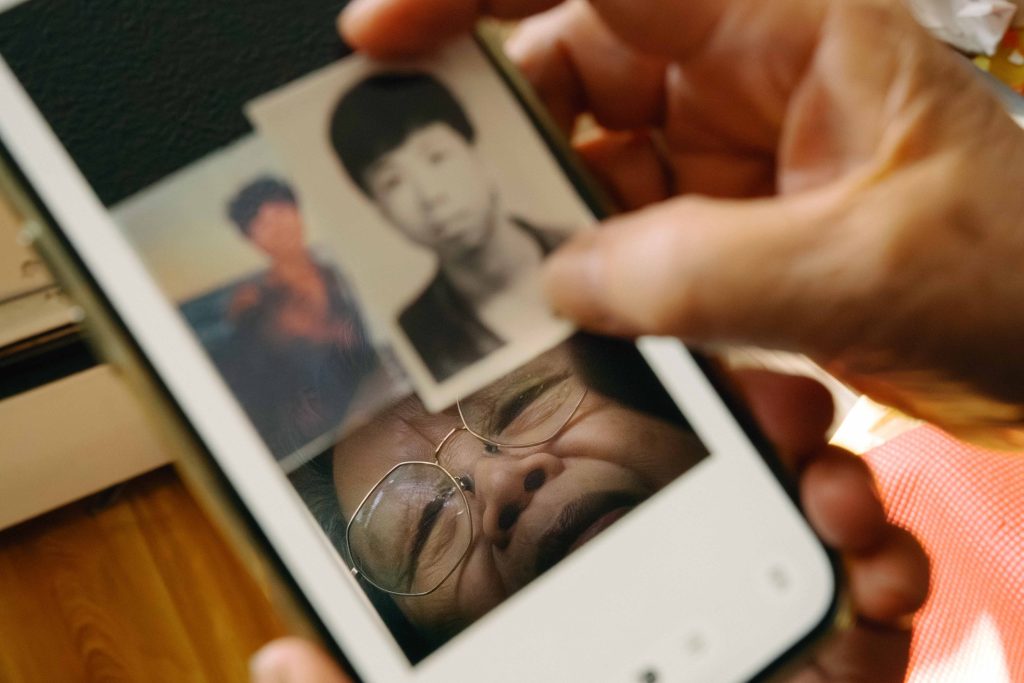
These men were prosecuted during a politically charged era defined by heightened scrutiny of Chinese smuggling networks. At the time, violent gangs operated extensive kidnapping rings, often recruiting newly arrived migrants as low-level enforcers or lookouts. Advocates argue that some of the men who remain behind bars were pawns in that underground economy — expendable foot soldiers in far larger criminal enterprises — and who are now, about 30 years later, almost forgotten by society.
While some higher-ranking figures connected to the 1990s gangs have since been released, these men remain incarcerated. After spending decades in prison, they are now asking for a simple request: permission to return to China and the opportunity for a second chance.
They are calling on Governor Kathy Hochul to commute their sentences, arguing that after decades behind bars, they simply want to go home.
Leaving home behind
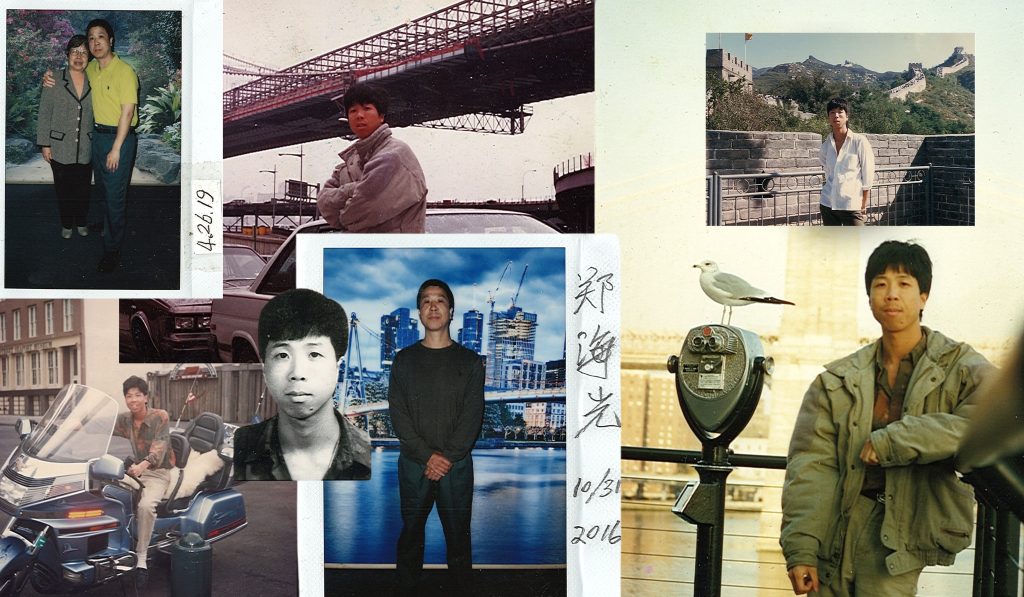
An old photograph of Haiguang Zheng taken at the Great Wall in Beijing before his arrival in the United States. Courtesy of Yuexian Chen. Photo: Shuran Huang for Documented.
China’s economic reforms in the 1980s began transforming cities such as Fuzhou, the capital city of Fujian Province, where new industries and foreign investment fueled rapid growth. But many of the surrounding countryside townships struggled to keep pace. Farmers and people with limited education often found themselves economically displaced.
Zheng’s father, a farmer, earned roughly five or six hundred yuan a year, approximately equal to $110 at that time — barely enough to sustain the family, according to Zheng. Meanwhile, stories circulated back from villagers who had already made it to the United States: in New York’s Chinese restaurants, one month’s wages, about $700, could easily bring six or seven times what a farmer earned in a year. Migration increasingly appeared to offer a path out of hardship, made tangible through remittance receipts mailed home, newly purchased appliances, or concrete houses rising above otherwise poor village streets. Migration began to symbolize not just survival, but status — a visible measure of upward mobility.
“My hometown was extremely poor two or three decades ago, and everyone longed for life in America,” Zheng wrote in his Chinese-language memoir “Give Me Back My Freedom,” which was published in 2013. “In the villages around Tingjiang and Wantou, more than 90 percent of young men, almost all of them, saw getting to the United States, even through illegal means, as a lifelong goal. It became a prevailing trend.” Families without relatives overseas, he recalled, “often felt looked down upon.”
Scholars of migration often describe this phenomenon as relative deprivation — the idea that people are driven to migrate less by absolute poverty than by perceived inequality and the awareness of opportunity elsewhere. Patrick Radden Keefe documents this dynamic in “The Snakehead: An Epic Tale of the Chinatown Underworld and the American Dream,” a nonfiction account of Chinese human smuggling networks in the 1980s and 1990s, when migration was fueled as much by aspiration and social comparison as by economic necessity.
By the early 1990s, unauthorized migration from China to the United States had risen sharply, with Fujian province at the center of the flow. Data from the U.S. Census Bureau’s Center for International Research indicate that arrivals peaked at roughly 8,000 in June 1992, with an estimated 2,500 migrants arriving monthly in the latter half of that year. Zheng was among that wave of Fujian migrants, chasing the promise of a different life and the American dream.
Alongside the surge of migrants entering the United States in the late twentieth century came the rapid expansion of the human smuggling trade, known colloquially as the “snakehead” business. The origin of the term remains somewhat unclear, but it generally refers to brokers who organize and finance unauthorized migration to the United States, often working in coordination with gangs.
Zheng arrived in the United States with the help of such snakeheads, agreeing to pay a $30,000 smuggling fee, he told Documented. Over the course of more than a year, he moved through multiple countries — including Myanmar, Thailand, and the Philippines — encountering robbery, extortion, and serious illness, he told Documented. Two fellow travelers died along the way from sudden, unexplained illnesses, one in Myanmar and another in Thailand. “He was lying in my arms, his face turning purple,” Zheng recalled, his eyes welling with tears as he described one of the deaths.
More than a year after leaving China, Zheng finally reached the United States. After being detained and later released on bail from an immigration detention center in San Diego, he boarded a flight to New York. At the time, it was common for migrants to pay smugglers a small deposit before departure; once in the United States, associates would meet them at the airport and hold them until the remaining debt was repaid, according to Zheng’s book.
But when Zheng landed at LaGuardia Airport, no one was there. The smuggler, he later learned, had instead gone to John F. Kennedy International Airport. Knowing almost nothing about New York and speaking very limited English, Zheng hailed a taxi and uttered a single word: “Chinatown.” There, he encountered fellow villagers who helped him secure a job delivering takeout for Chinese restaurants in the Bronx. After borrowing money from relatives and friends to pay $18,000 toward his smuggling debt, he planned to work off the remaining $12,000.

The delivery job was grueling, but Zheng said those early months in the U.S. still felt full of promise. At the restaurant he met Yun, the woman he would come to regard as the love of his life. They imagined working hard together and someday opening a restaurant of their own. Yet the optimism proved fragile. Within a few months, Zheng was violently robbed twice while making deliveries. Concerned for his safety, and at Yun’s urging, he left the job and began searching through a Chinatown employment agency for work in what he hoped would be safer neighborhoods.
“I made a quiet vow to work even harder,” he wrote in his memoir. “In this democratic, law-abiding country, Yun and I would raise children and build a warm home. Once I obtained legal status, I could openly sponsor my aging parents and sister to immigrate, so they wouldn’t have to risk their lives the way I did.”
As he left the employment agency in Chinatown one day, Zheng said he was surrounded by gang members. He said he was abducted and taken to a basement in Queens, where he was beaten and threatened. They told him that if he did not repay the balance of his smuggling debt within two days, he would be stuffed into a garbage bag and thrown into the East River.
Zheng called several fellow villagers for help. Through their intervention, the debt was transferred to a gang leader known as “Ah Guang” (also known as “Ah Guan” in court documents). Zheng was then instructed to work at a used-car dealership in Queens, performing odd jobs to pay down what he still owed, Zheng told Documented.
It was there his American dream began to vanish.
‘Chinatown is much quieter now’
The Chinatown Zheng encountered upon arriving in New York bore little resemblance to today’s neighborhood. The Doyers Street he knew as the “Death Triangle” where Chinatown gangsters ambushed rivals from behind the alley’s sharp bend, is now filled with tourists from all over the world and reimagined as the neighborhood’s most iconic corridor – painted in vibrant colors and lined with trendy speakeasy cocktail bars, bubble tea, and coffee shops. Yet, as the shadow of gang violence recedes, the community faces a new, invisible pressure: creeping displacement from gentrification. In the past decade, Chinatown lost over 20 percent of its Asian population. Non-Asian residents now comprise a majority of Chinatown.
For Ko-lin Chin, a professor at Rutgers School of Criminal Justice who has spent decades studying Chinese organized crime and human smuggling, Chinatown has changed a lot in the past decades. “In the late ’80s and early ’90s, shootings could break out almost anywhere in Chinatown, violence was constant,” Chin recalled.
He still remembers showing his father around the neighborhood after he arrived from Vancouver in the early 1990s. At the corner of East Broadway and Market Street, gunshots suddenly rang out in broad daylight. “Someone just collapsed right there on the street,” he said. The next day, Chin learned from Chinese-language newspapers that the shooting was tied to gambling operations run by Chinese gangs. “Back then you’d see gang members standing on the street staring people down. You don’t see that anymore. Chinatown is much quieter now.”
Archival photos of New York’s Chinatown during the 1980s and 1990s. Photos: Corky Lee / www.corkylee.org
By the early 1990s, however, several high-profile crimes and shifting political attitudes toward immigration prompted a more aggressive law-enforcement response. In 1993, the Golden Venture, a cargo ship carrying 286 undocumented Chinese migrants, ran aground off Queens, leaving 10 dead after passengers jumped into frigid waters. This intensified national scrutiny of Chinese migration. Combined with rising asylum claims, terrorism, and sensational criminal cases, public sentiment toward immigrants hardened. Immigration officials warned that fraudulent asylum seekers were undermining border control.
Meanwhile, kidnapping tied to smuggling debts was evolving. In the mid-1980s, smugglers typically released migrants upon arrival, trusting that families would repay the bulk of smuggling fees later. But as migration surged in the early 1990s, smugglers increasingly detained arrivals in safe houses until debts were paid, guarded by enforcers. As immigration crackdowns intensified and some migrants resisted paying, kidnappings expanded beyond safe houses to the streets, targeting undocumented migrants and, at times, even Chinese legal residents who were mistakenly identified as migrants owing smuggling debts.
By 1995, the year Zheng became entangled in a kidnapping case, the issue had reached a peak. That August, 38-year-old Chinese garment worker Liqin Gao was abducted in Queens by members of the Fujianese Flying Dragons gang seeking ransom from her family in China. Fearing police intervention, her captors murdered her in a particularly brutal killing that became a major federal case and one of the first Brooklyn prosecutions under New York State’s new death penalty law, which took effect in 1995. Statistics from the period reflected the climate. In 1994, there were 60 kidnappings citywide; more than half involved Asians.
Chin noted that the prevalence of ransom kidnappings left many Chinese immigrants — even those with legal status — anxious upon arrival in the U.S. “Sometimes smugglers would fight over clients, even abducting people who were already citizens,” he said. Against this backdrop, severe sentences for kidnapping were unsurprising. “It was an era when several shocking cases made the public extremely concerned. Once someone was arrested, whether a minor participant or not, courts often imposed heavy penalties.”
Federal prosecutors at the time also increasingly relied on the Racketeer Influenced and Corrupt Organizations (RICO) Act — the same legal framework used against the Italian Mafia — allowing authorities to pursue sweeping gang conspiracy charges and impose long sentences on individuals connected to organized criminal networks, according to Chin. In 1996, President Bill Clinton signed the Illegal Immigration Reform and Immigrant Responsibility Act, which also harshened penalties for immigrants and set the groundwork for today’s system of immigration enforcement and deportations.
Chin, who has interviewed more than 300 Chinese migrants who entered the U.S. through smuggling networks, cautions against broad generalizations. Most undocumented migrants, he said, were cautious, law-abiding and intent on working: “They paid enormous sums, often borrowed money, to get here. The last thing they wanted was trouble.” While some young newcomers drifted into gangs, Chin believes participants who were newly arrived immigrants were low-level figures rather than hardened criminals. “It’s not that easy to become the boss of a gang,” he said. “It takes time.”
He also pointed to structural disadvantages: unfamiliarity with the U.S. legal system, language barriers, poverty, and reliance on overburdened public defenders. Many immigrants did not realize they could negotiate plea deals and instead insisted on their innocence through trial, often resulting in far harsher sentences after conviction. “It’s not simply about race,” Chin said. “Often it comes down to resources. With enough money for strong legal representation, outcomes can be very different, even in serious cases.”
A disputed case
From the very beginning of the trial, Zheng’s account of events diverged from the prosecution’s.
On the evening of March 31, 1995, just as he was preparing to finish work, he said he received a call from Ah Guang, the gang leader. Ah Guang told him his car had broken down and asked for help picking up a friend at John F. Kennedy International Airport. Zheng said he arrived around 9 p.m., expecting nothing more than a small favor.
According to court records, prosecutors said Zheng drove Ah Guang to the airport, and on their way back, they cut off a limousine service vehicle outside the airport at gunpoint and abducted three Chinese immigrants: one male, his sister, and his wife.
Zheng said that he did not know a kidnapping was about to occur and was tricked and later forced to participate. He said that after he arrived at the airport, Ah Guang, who was waiting there, got into his car and instructed him to follow a limousine ahead. Ah Guang then stepped out, returned with a man and two women, and ordered Zheng to drive.
Prosecutors said the kidnappers soon realized they had seized the wrong targets. The male victim was released while the car was passing through Brooklyn. The two female victims were taken to the basement of a residence in Flushing that prosecutors claimed was Zheng’s, which he denied. Zheng told Documented that although he sensed something was wrong while driving to Flushing, he tried not to ask questions, focusing on the road and hoping to avoid trouble. When they arrived at the house, Ah Guang told him they had picked the wrong people but ordered him to call the women’s family to demand ransom anyway. That was when Zheng fully realized he was involved in a kidnapping.
In his memoir and court testimony, Zheng said he hesitated and questioned what was happening. He claimed Ah Guang then threatened him with a gun, warning that if he refused to cooperate, his family in China could be harmed, also reminding him that he still owed smuggling debt. Another associate was allegedly assigned to watch him and ensure he followed instructions.
Prosecutors said the two women were held until around midnight on April 2. Their relatives received ransom calls — intercepted by the NYPD and identified by prosecutors as made by Zheng — that began at $20,000 and later dropped to $15,000. At one point, prosecutors said Zheng stated, “Time is up. You better hurry or else I will sell or bury them.” Zheng also warned, “Now you must be a little wiser. Don’t let any police appear. If police appear, I will let you see what bad things can happen to you,” according to the court documents.
In another call, prosecutors said Zheng instructed the family to take a taxi to Chinatown to drop off the money. Zheng testified that he suggested a taxi to caution them about the risk of being robbed while carrying cash. He also said he had been threatened and instructed by Ah Guang and another accomplice to make those statements. When prosecutors played the recordings in court, Zheng said parts of the voice on the tape did not sound like his.
The two female hostages testified that during their captivity, they were sexually assaulted and raped by Zheng and his accomplice. One of the women, however, did not identify Zheng in court as her assailant when he was present.
Zheng has consistently denied the rape allegations since his arrest. In interviews with Documented, he argued that key defense witnesses were never called, and that prosecutors never conducted DNA testing.
Zheng was arrested in the early morning of April 2, 1995, while transporting the women back home. To prosecutors, Zheng played an active role in the kidnapping case. During the trial, Queens Assistant District Attorney Scott Kessler told jurors the evidence was overwhelming: Zheng was “caught at the scene red-handed” — heard on the phone demanding money and seen walking out of the house with the two hostages when police moved in.
While Zheng testified he had told investigators he had acted under Ah Guang’s direction and denied any sexual assault after he was arrested, those statements were not recorded. He said he was presented with an English-language statement he could not read and was asked to sign it. The detective who took Zheng’s statement said he had verbally translated the English statement into Chinese and read it to Zheng before he signed it. Zheng also alleged he was beaten during processing and insulted during questioning — claims that did not change the outcome of the case.
The trial lasted less than two weeks. The jury convicted Zheng on multiple counts, including kidnapping and rape. In 2000, one first-degree sexual abuse conviction was vacated in a modified judgment, but the overall sentence remained largely intact: 84 and two-thirds years to life.

Meanwhile, the co-defendant in Zheng’s case pleaded guilty to two counts of first-degree rape and was sentenced to concurrent indeterminate prison terms of eight and one-third to 25 years for each of the rape counts and from 15 years to life on each of the kidnapping counts. He was released in July 2018 after serving 22 years behind bars.
For prosecutors, the case was straightforward — a violent kidnapping and rape case supported by overwhelming evidence. For Zheng, it was the night that reshaped his life, what he says began as a favor for Ah Guang but ended with a sentence that could keep him in prison for the rest of his days.
“Hearing that verdict felt like a bolt out of the blue,” Zheng wrote in his memoir. “I had no criminal record. I was forced into debt repayment after smuggling into the country and made a few phone calls under threat at gunpoint. Yet I received such a heavy sentence, while others more directly involved were released on bail. I could not accept that judgment.”
That conviction also shaped a brief exchange before sentencing that Zheng believes worked against him. After the verdict, he asked the judge whether jurors could explain the basis for their decision.
“The jury does not have to give an explanation,” Judge Stanley B. Katz replied, according to the court records.
Zheng then expressed regret that he had withheld certain statements during testimony on the judge’s advice, saying he felt he had not fully told his story. The judge thanked him and proceeded with sentencing.
In imposing consecutive maximum sentences on most counts, Judge Katz, according to the court records, described the crime as “a horrendous situation,” emphasizing Zheng’s admitted participation in the kidnapping and what the court interpreted as a lack of remorse. “He continues, even by his own testimony, to maintain he should not be found guilty,” the judge said. “This is very pervasive, and we have to put a stop to this.”
Zeidman, the Second Look Project co-director, has described the situation as “a true crisis” requiring broader systemic review. “The crisis of so many Chinese nationals serving death by incarceration sentences. It cries out for somebody to take a macro look at this,” he said.
Zeidman noted that at Green Haven Correctional Facility, a maximum security prison about 38 miles north of Sing Sing, there are about 20 Chinese male prisoners facing sentences ranging from 40 to 75 years. “And it’s just that’s just in one prison. I’m sure there are more.”
He said that with better understanding and legal representation, some individuals might not have been convicted, or might have faced less serious charges. He argued that many sentences imposed were disproportionate. “They’re wildly excessive, and for many people, they foreclose any possibility of recognizing remorse and redemption and change.”
Zeidman said many of the men faced trials steeped in bias and prejudice from the outset. He questioned whether they ever truly understood the proceedings or received fair treatment from judges, prosecutors or at sentencing.
“They were arrested and charged in such a climate of bias, it is really the word I keep coming back to because I don’t know how else to explain these massive sentences,” Zeidman said.
Last May, the Chinese Prison Ministry volunteer team launched a campaign called “Let Them Go Home,” urging the public to sign a petition that allows long-incarcerated Chinese prisoners to voluntarily return to China. The group also sent a letter to New York Governor Kathy Hochul, who has expressed interest in expanding opportunities for incarcerated New Yorkers to reduce their sentences as part of broader prison reform efforts.
In the letter, the team asked the governor to exercise a special executive order to deport Chinese prisoners who have served lengthy sentences, such as 25 years or more, and who voluntarily wish to be repatriated to China.
“These Chinese prisoners eagerly desire to take every effort to make their ways home hoping to see their aged parents in China before their parents pass away,” the letter states. “All of their elderly parents have passed 80 years old, some are 85, 90, or even 95. Their lives can’t wait any longer to see their sons whom they haven’t seen for at least three decades.”
Against the backdrop of President Trump’s claims on deporting undocumented immigrants with criminal backgrounds, and alongside Democrats in New York pushing criminal justice reforms aimed at reducing the incarcerated population, the group argues that allowing voluntary repatriation would be both a reasonable and humanitarian step.
In a statement to Documented, a spokesperson for Governor Hochul said the office does not comment on pending clemency applications. “Governor Hochul is committed to a fair and thorough clemency process, and each application is considered on a case-by-case basis,” the spokesperson said, adding that clemency requests are evaluated based on individual circumstances.
Devoted visitors
Among the many prisoners serving lengthy sentences at Green Haven Correctional Facility is Yanghao Lu, 52, who is serving 75 years to life for his role in a 1995 kidnapping case. Like Zheng, Lu says he did not commit some of the crimes he was convicted of. He is receiving legal assistance through the Second Look Project.
Shortly after he was sentenced, Lu sent a letter to Honghongxiang Yang of the Boon Christian Broadcasting Center, describing his situation and urgently seeking support from outside the prison, hoping to prove his innocence and find guidance in his despair. The letter made Yang realize that Chinese inmates in U.S. prisons were a largely overlooked population, often isolated by language, immigration status, and distance from family. In 1999, she founded the New York Chinese Prison Ministry.
For nearly three decades, the ministry’s Chinese Christian volunteers have visited eight correctional facilities across New York State, including Sing Sing and Green Haven, providing pastoral visits, correspondence, and support to more than 100 Chinese incarcerated individuals, among them Lu and Zheng.
Two years ago, Chaplain Gary Chin of Long Island Abundant Life Church assumed leadership of the New York Chinese Prison Ministry, continuing the work of Yang, affectionately known as “Mama Yang” among volunteers, who died in 2022. Each week, Chin visits four prisons, delivering five English-language services, three in Spanish, and leading a Chinese Bible study session.
As a registered volunteer chaplain within the New York State prison system, conflict-of-interest rules prevent Chaplain Chin from conducting one-on-one visits with inmates. Instead, he serves as the New York Chinese Prison Ministry’s driver, transporting ministry members to correctional facilities across the state, while fellow volunteer Polly Wong typically leads the visitation work.
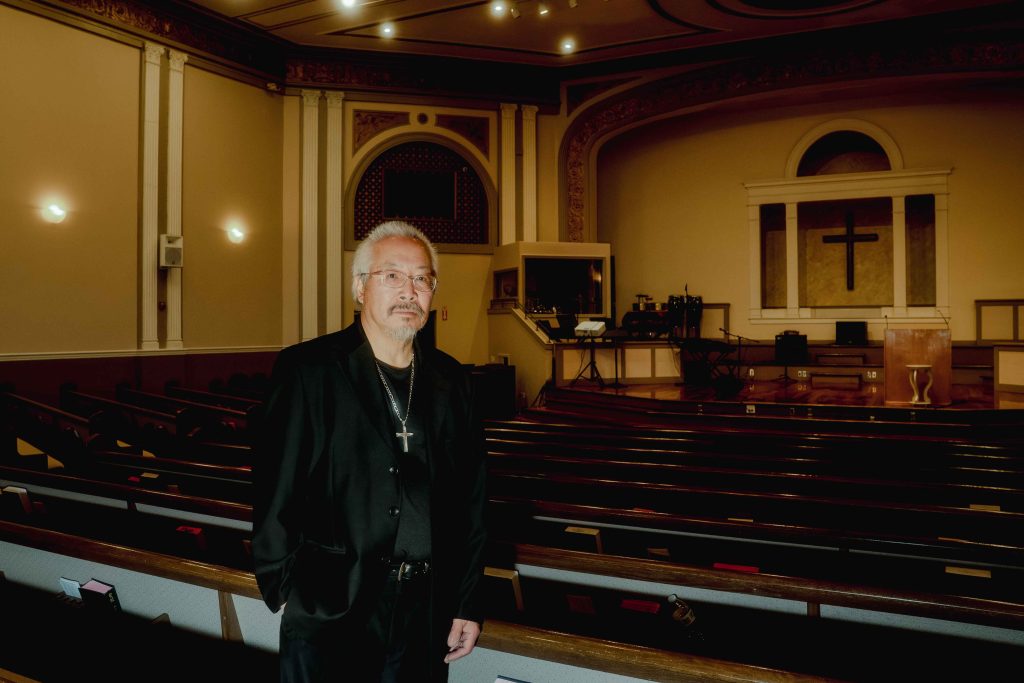
As dawn broke on a morning in June 2025, Chaplain Chin steered a white van out of Flushing. Four other volunteers sat in the van as they headed on the roughly two-hour drive to Green Haven Correctional Facility, where they planned to visit three Chinese incarcerated men, including Lu.
Visits to maximum-security correctional facilities, such as Green Haven or Sing Sing, follow a strict and often slow process. To avoid long lines that could cut into visiting hours, the group aims to arrive early — some volunteers from Brooklyn said they woke as early as 4 a.m. Not long before visiting hours began at 8 a.m., Chaplain Chin’s van pulled into the prison parking lot. More than twenty visitors were already lined up outside.
“Not bad! We’re actually pretty early,” volunteer Christy Yeung said in Chinese, jogging with the others to the end of the line. The queue moved slowly: paperwork, identification checks, lockers for phones and personal items, and security screening. By the time Yeung finally sat down with Lu inside the visiting room at Green Haven, nearly three hours had passed.
Lu, wearing glasses and speaking softly, appeared more like a studious clerk than someone convicted in a violent kidnapping case. He smiled as he explained that he only began wearing glasses in prison due to hard study. During his nearly three decades behind bars, he taught himself traditional Chinese writing and basic English vocabulary using bilingual dictionaries while researching his case and relevant laws.
For someone with no immediate family in the United States, the New York Chinese Prison Ministry has become both a bridge to the outside world and a source of emotional support for Chinese inmates. Yang, the ministry’s founder, had exchanged hundreds of letters with Lu during her lifetime, encouraging him to reflect on his past and become a new person.
After about two hours, Yeung’s visit ended. Lu asked if they could take a Polaroid photo together to commemorate the meeting. Standing before a printed backdrop of the Manhattan skyline, dressed in a dark brown T-shirt, he smiled shyly. As they parted, he raised his hand in a small wave. “Thank you for coming to see me,” he said.
Back in the parking lot, Chaplain Chin’s van was already waiting. Chin, 67, brings a perspective about Chinese immigrant inmates, as he sees his own past reflected in their experiences. As a teenager, he had associated with youths connected to Chinatown’s Chinese Freemasons, commonly known as the Hung Mun, groups that at times overlapped with organized gangs, he told Documented.
The chaplain immigrated from Macau to the United States in 1967. Because his father could not initially leave China, his mother raised four children largely on her own in New York City. As the eldest, Chin began working at age 12 as a dishwasher in a Queens restaurant during the summer, laboring long hours through his teenage years. While other classmates enjoyed summer vacations, he spent up to 15 hours a day in a hot kitchen — work he came to resent.
When his father finally joined the family in New York in 1975, Chin quit his job at the restaurant, searching for a sense of belonging elsewhere. He found it, briefly, among Chinatown street groups.
“I was just partying and hanging out with a bunch of guys. I knew they were Chinese mafia, that they were in gangs,” Chin recalled in an earlier interview. “They asked me to join the gangs, and I told them, no, but it didn’t matter. When I was with them, when the other gangs were shooting at them, I was going to be shot at, too. And I joined the Chinatown gang.”
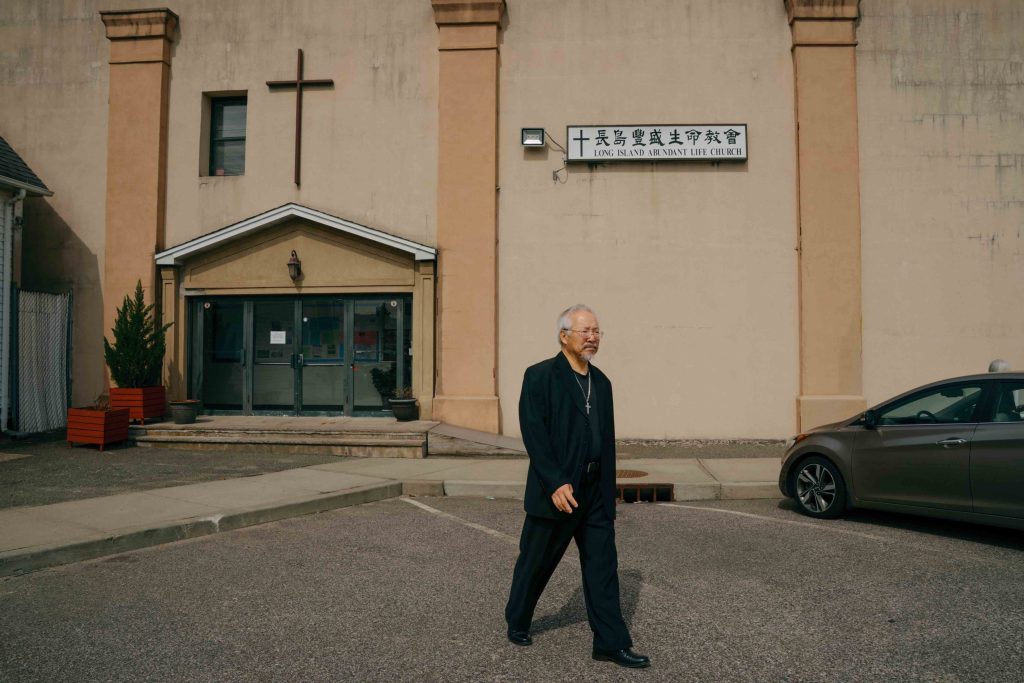
Chin said he was never involved in drug trafficking or street violence. When several of his associates were arrested in 1989, Chin chose not to flee. By then, he was married with two children.
“Nobody ran on me. I survived through it. So I believe that was a warning from God,” he recalled, sitting in a van parked outside Green Haven Correctional Facility. From that point on, he said, he began to turn his life around. “I felt that God’s calling me to help to get involved in prison, helping the guys who were arrested, in prison. I think I could connect with the people, because I’ve been in the gangs, being a mafia before.”
Similar patterns
Lu’s path to prison in some ways parallels Zheng’s. Born into a poor farming family in Changle, Fujian province, Lu was just 15 when, in 1988, he left China with the help of human smugglers, carrying his parents’ hopes for a better future abroad, he told Documented.
The journey was grueling. He trekked for months through mountainous terrain, at times surviving on wild plants and fruit while crossing civil-war-torn areas of Myanmar before reaching Thailand. Because his family could not find someone in the United States to guarantee repayment of the more than $30,000 smuggling fee, Lu said he was held for nine months in a small house in Thailand by smugglers. During that period, he suffered repeated sexual abuse and physical violence from his guards, Lu told Documented.
When he finally arrived in New York in 1990, he believed the worst was behind him. “I didn’t expect another nightmare,” he recalled. Unable to pay his smuggling debt, he said he was sold to a Chinese restaurant on Long Island, where he was supposed to work without pay for five years to settle what he owed. He described working 14-hour days year-round, enduring verbal and physical abuse from his employer; he recalled one incident in which hot cooking oil was thrown at him.
After two and a half years, unable to tolerate the conditions, Lu fled the restaurant. With nowhere to go and fearful of retaliation, he said he joined local Chinese gangs, including the groups known as Ghost Shadows and Flying Dragons, after being introduced through a fellow villager, seeking protection and a sense of belonging.
Instead, he encountered new forms of coercion. Lu recalled that when he refused to participate in a robbery shortly after joining, a gang leader stabbed the back of his hand with a knife tip. “He asked me whether I wanted my life or obedience,” Lu said, showing the faded scar on the back of his left hand. “After that, I didn’t dare refuse orders.”
In 1997, prosecutors charged Lu in connection with a 1995 kidnapping in Sunset Park, Brooklyn. According to court documents, Lu and three other armed men forced their way into an apartment, stole valuables, and abducted a man and a pregnant woman. The hostages were allegedly held for ransom for two weeks, handcuffed together in a closet. Prosecutors said the woman was stabbed and repeatedly sexually assaulted by two of the kidnappers, including Lu.
Lu disputes parts of that account. He has said his role was limited to helping gain entry to the apartment and later transporting the hostages to another location, denying any sexual assault. After a jury trial, even though the sexual assault and rape charges were dropped, he was convicted of three counts of first-degree kidnapping and sentenced to 75 years to life in prison.
Like Zheng, Lu chose not to plead guilty at trial — a decision he now attributes to ignorance, limited legal knowledge, language barriers, and poor advice. “I was very naive at the time,” he said. Lu was 24 years old then, and recalled believing the crime was financially motivated rather than life-threatening and not fully understanding how seriously U.S. law treats kidnapping charges. He also said his parents consulted a fortune teller in China who advised against a guilty plea, suggesting he would eventually be released. To Lu and his family, who possessed little knowledge of the American legal system, the fortune teller’s insight seemed divine. “He even predicted that 11 out of 12 jurors would find me not guilty,” Lu recalled. Convinced by such specific details, Lu followed the advice, only to receive a far harsher sentence than he expected.
“We may not have been sentenced to death, but it feels close to it. It’s not technically life imprisonment, but in reality, there’s little difference,” Lu said. For nearly 30 years, he has longed to see the outside world again. He has filed appeals and written numerous letters seeking help, but none have changed his situation.
Another Chinese prisoner who had been in contact with Boon Christian Broadcasting Center, Tongfeng Lu, shared a different — and in some ways even more startling — account in a testimony letter sent to the organization.
Originally from a poor farming family in Changle, Fujian, Tongfeng Lu left his roots behind to seek a life in the U.S. as an undocumented immigrant. According to news reports, Tongfeng Lu had been charged with kidnapping, rape, and illegal weapons possession in connection with a 1995 case in which two Chinese immigrants were held captive for 13 days in a basement closet in Brooklyn. Tongfeng Lu described a very different version of events in his letter. He wrote that in the early hours of Aug. 8, 1995, he was asleep in a rented Manhattan apartment when police suddenly came in and arrested him. “Suddenly four police officers came to arrest me. There was no Chinese interpreter, no arrest warrant, only a photocopy of a car rental receipt. The name and address on it matched the credit card and driver’s license I had on me, but the signature on the rental slip wasn’t mine. I had never rented a car. Yet that was how I was arrested by Manhattan police in New York City,” he wrote in Chinese.
Tongfeng Lu said he was convicted of two counts of first-degree kidnapping and ultimately sentenced to 15 years to life on each count, to run consecutively. “They accused me of kidnapping two hostages. In fact, I did nothing,” he wrote. He also said he had never met the victims before the trial of his case and the victims neither identified him in court.
In August 2025, after 28 years behind bars, he was released after serving his time — only to be taken into ICE custody shortly afterward and deported at the age of 67.
Everyone deserves a second chance
Having known Yanghao Lu for years, Chaplain Chin said he has witnessed a gradual transformation. “People have to understand that many of them made mistakes when they were very young. They didn’t have parents guiding them,” he said. “They’re not bad people. Like Lu, he didn’t kill anybody. If people understood what they’ve been through, they’d give them a second chance. I’m an ex-gang member, ex-mafia. I changed, not just for myself, but to help others change too.”
The Chinese Prison Ministry volunteer team said their volunteers have witnessed significant personal transformation among many of the prisoners over the years. “Not only did they deeply regret their wrong decisions that led them to commit crimes and hurt innocent people, but they also worked hard to grow during these long years in prisons and have now become mature, decent and responsible men. Some of them had even pursued academic excellence and have outstanding performance in community service,” the ministry said in its letter to Governor Hochul.
According to disciplinary records obtained by Documented, Zheng has had no violations since 2014, and Lu has maintained a clean record since 2005. In 2010, Zheng donated one month of his prison wages, $30, to support victims of the Sichuan earthquake. According to Michael Lau, a retired NYPD officer who reviewed their records, the disciplinary history for Zheng and Lu, which included a few Tier 2 and Tier 3 infractions, seemed relatively minor for inmates who have been incarcerated for nearly three decades.
“I was feeling kind of lost when I was first put into jail,” Zheng recalled.
Zheng’s early days behind bars were filled with despair, anger, confusion and loneliness, he said. With limited English and no immediate family in the United States at the time, he struggled to communicate with non-Chinese inmates or correctional officers. Isolated and visibly different, he was easily singled out as a target.
Nights were often sleepless. He replayed the trial in his mind, wrestling with what he believed was an unfair sentence and trying to make sense of everything that had happened since his arrival in the U.S. The frustration deepened with each failed appeal. “Back then, I was kind of giving up on myself,” he said. “If someone wanted to pick a fight with me, I fought with them.”
The turning point, he said, came when his mother and sister were able to visit him after coming to the United States. Around the same time, volunteers from a Chinese prison ministry began meeting with him and sharing Bible stories. One volunteer, whom he remembers as Sister Duoduo, offered advice that stayed with him: if he responded to conflict with violence, he would be no different from those he resented. “How you react and communicate with people is very important,” Zheng recalled her telling him, “Your tone and attitude can lead to very different outcomes.” After that, he said, he stopped fighting or even arguing with people.
In time, Zheng began helping newly arrived Chinese inmates adjust to prison life, explaining the unwritten rules and warning them about pitfalls he had endured during his early days, he said, hoping that they would not repeat his mistakes. “I feel grateful that God and other people still care about and love inmates like me,” said Zheng.
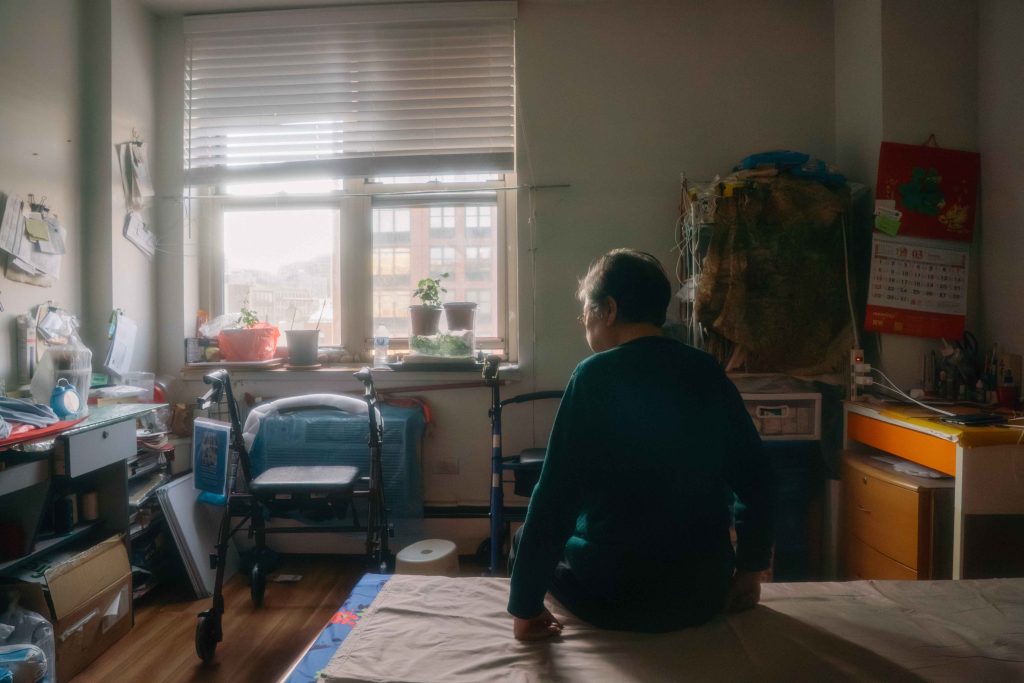
Zeidman, who is assisting Lu as part of the Second Look Project, explained that inmates with deportation orders may seek Early Conditional Parole for Deportation Only after serving half their sentence, but many are excluded because of the severity of their convictions, including A-I felonies such as first-degree kidnapping. For sentences longer than 75 years, this can mean waiting more than 37 years before even applying.
He said the Second Look Project has filed clemency applications for several years. “From my perspective, the governor has this power, but it has been used far too sparingly,” Zeidman said, noting that only about 60 sentence commutations have been granted in the past 15 years.
Zeidman said he often hears people comment that criminals “deserve punishment” when he advocates for clemency. “And my response back is, do we allow any space for the possibility of redemption to reconsider the sentence, or do we just close the book and say you’re done? …To me that we’re a better society, a better community, if we allow for the possibility of change and growth at some point in time and revisit a sentence,” he added.
State Senator Julia Salazar, who represents parts of Brooklyn and Queens and chairs the senate’s Crime Victims, Crime and Corrections Committee, said thousands of New Yorkers are serving unnecessarily long sentences that do little to improve public safety. Salazar has criticized past sentencing laws that disproportionately impacted people of color and called for reforms such as the Second Look Act, which would allow judges to reassess lengthy or unjust punishments. “It’s not a guarantee of release. It’s a second look at unjust circumstances,” she said in a statement shared with Documented. “Every eligible incarcerated individual in New York, including undocumented Chinese immigrants, deserves a second look.”
Looking back, Zheng said he feels sorry for those affected by the kidnapping case in which he participated. “I want to apologize to them, even though it was not my intention to kidnap them, but if I didn’t drive the car to transfer them, they would not have experienced what happened afterwards.”
‘Let them go home’
One afternoon last October, Chaplain Chin drove his white van back toward Flushing with four volunteers after visiting Zheng and several other Chinese prisoners at Sing Sing Correctional Facility.
Around 4:30 p.m., the van paused at an intersection at Roosevelt Ave and College Point Blvd — just a few blocks from the newly built Tangram Mall, a sleek complex filled with trendy Asian brands like Pop Mart and Miniso. Young Chinese couples leaned into each other as they lingered before carefully arranged shop windows. Upstairs, the food court buzzed with conversation, the air thick with the mingled aromas of milk tea and fried chicken.
Few of these newer immigrants likely realize what New York’s Chinese communities lived through three decades ago. Among the middle-aged passersby brushing past them, there may well be people who once carried weight — even notoriety — in Chinatown’s underworld. After the gangs largely faded from the streets, some former leaders, after serving prison time, reinvented themselves as online influencers, launching YouTube channels recounting Chinatown’s gang history and warning younger generations not to repeat their mistakes. Others quietly walked away. Some joined the NYPD. Still others, like Chaplain Chin, experienced a personal reckoning and now devote themselves to guiding those still entangled in the system.
And then there are figures like Ah Guang, the gang leader tied to Zheng’s kidnapping case, who was never captured and whose whereabouts remain unknown. As for Zheng and Lu — men swept up by that turbulent era and sentenced to decades behind bars — their stories have largely slipped from public memory, known to few beyond prison walls.
“They’ve already paid their price,” Chaplain Chin said. “They shouldn’t have to die in prison. At the very least, they deserve the chance to return to their families and loved ones.”
Lu is now seeking relief under the Survivors of Trafficking Attaining Relief Together (START) Act, a New York law that allows survivors of sex or labor trafficking to seek sentencing relief if their participation in a criminal offense was a direct result of being trafficked, as defined under state or federal law. Through this motion, he hopes to be granted relief that would allow him to return to China and reunite with his family.
The New York Chinese Prison Ministry has also launched a petition urging Brooklyn Judge Matthew D’Emic and the Brooklyn District Attorney’s Office to consider Lu’s START Act application and is seeking public support for his case.
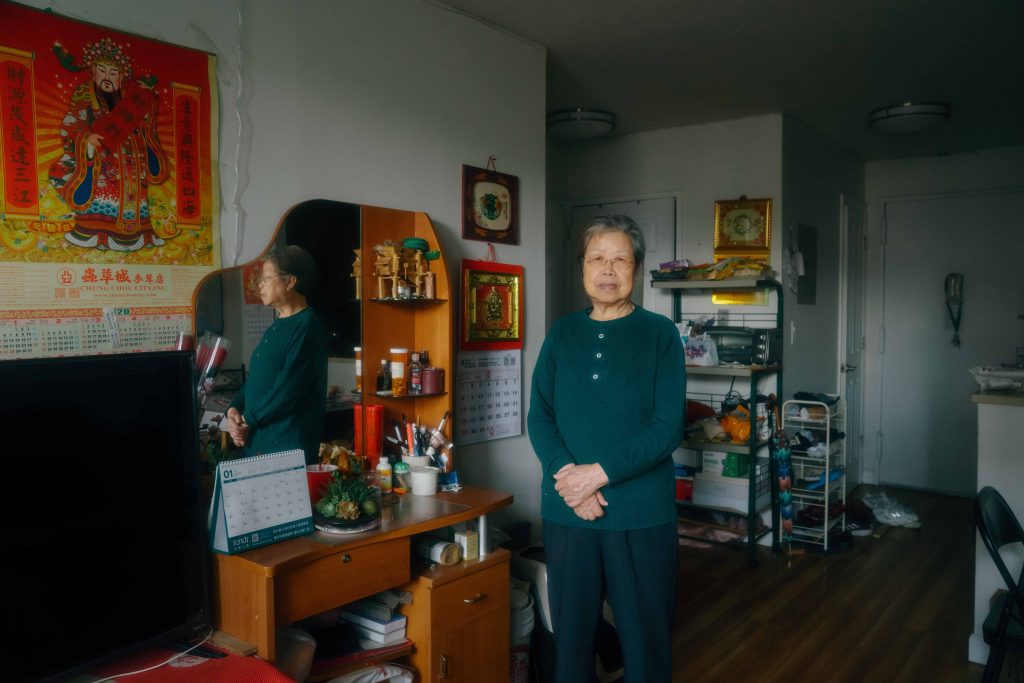
Meanwhile, Zheng’s 82-year-old mother, Yuexian Chen, and his sister, Fengping Zheng, continue to push for his early release. “As a mother, I feel a deep sense of guilt,” Chen said through tears. “If our family hadn’t been so poor, we wouldn’t have sent him to the United States, and maybe he wouldn’t have become entangled in the kidnapping case. But I believe my son didn’t rape the victims. My only wish, while I’m still alive, is to see him walk out of prison.”
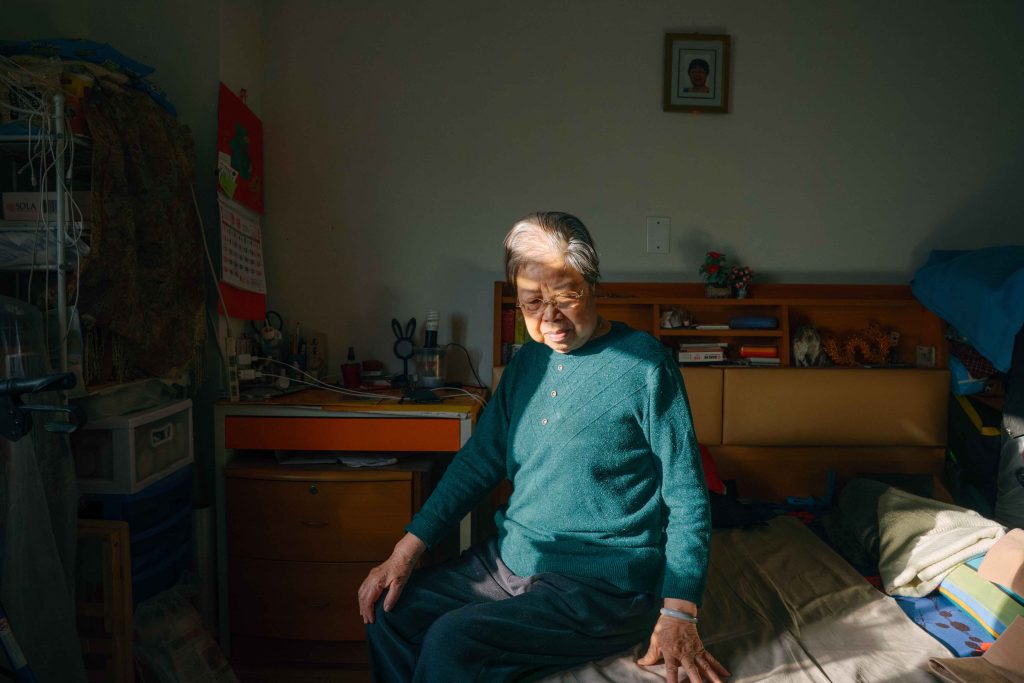
Lu’s mother, however, will never see that day. During the COVID-19 pandemic in 2020, prison restrictions cut off Lu’s ability to make international calls. Months later, he learned that his mother had died by suicide. According to Lu, she had come to believe he was dead after losing contact with him, and she blamed herself for encouraging her eldest son to migrate to the United States, and for following a fortune teller’s advice that he should not plead guilty.
After nearly 30 years behind bars, Lu says he deeply regrets his actions but believes they were shaped by youth, limited education, and the absence of family support or guidance after arriving in the United States as a teenager. Now, he hopes to return to China to care for his father, who is in his 80s with declining health, and take over the farming work his family once hoped he would escape by coming to America.
“He called me the other day,” Lu said quietly. “He just said, ‘Come home, son. Come home.’”