


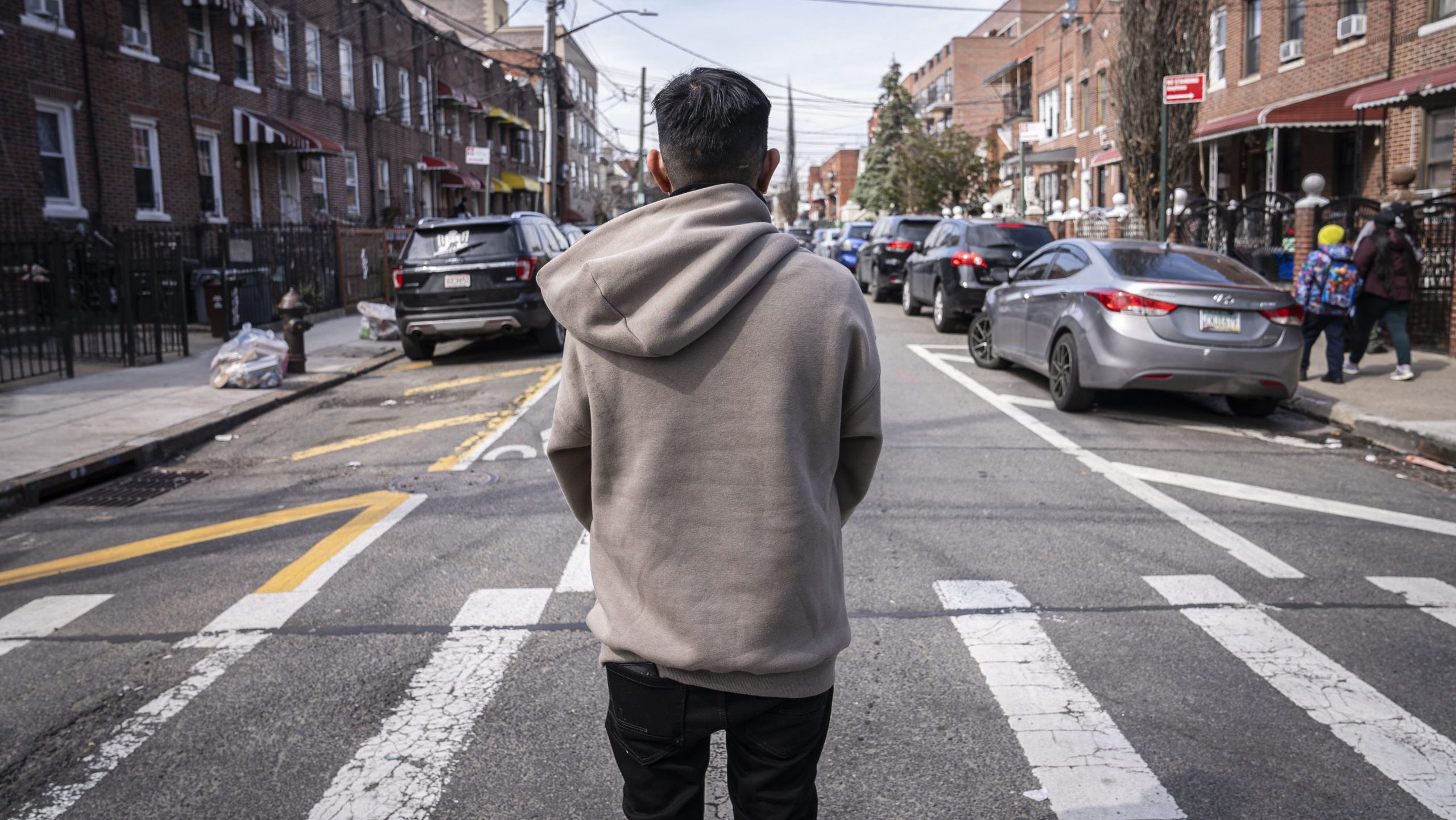


This story is part of Holding the Line in Queens, an ongoing series examining issues important to members of New York City’s immigrant communities. Lea esta historia en español.
Tomás had just delivered an order of pancita, a Mexican tripe soup, last Nov. 1 when he realized his phone was missing.
The 26-year-old retraced his steps along the street in Corona, Queens, and saw his phone behind the tires of a car. As he leaned down to grab it, another car pulled up. A man in a vest stepped out. Another woman joined him.

They were U.S. Immigration and Customs Enforcement (ICE) agents.
Then things began happening quickly. The woman told Tomás in Spanish that she was looking for someone. She searched his pockets without asking, pulling out his wallet and ID. He was asked if he had papers. His photo was taken and helmet removed.
Tomás was told, “You’re under arrest.”
More agents arrived, handcuffing him behind his back, shackling his feet and putting him in the back of a black SUV, where he sat for about two hours. He stayed quiet and calm, he told Documented.
“I’ve seen on the news, if you run, they will hurt you and hit you more,” he said. “I was afraid,” he added.
“I’ve seen on the news, if you run, they will hurt you and hit you more.”
—Tomás
Tomás’ delivery bike remained on the street for the rest of the day.
Over the next two hours, six more men were arrested on that same street corner, just 10 minutes north of the bustling commercial strip of Roosevelt Avenue.
There was the man who walked down the street in a black puffer jacket and white sneakers, his hands tucked into his pockets. An agent exited a car and directed the man to lean against a fence so he could search him.
There was the man donning a white and orange sports jersey; a man in a hoodie wearing a gray baseball cap; a man who had just left his house carrying a backpack; a man in a black windbreaker and jeans. They even tore a husband away from his wife.
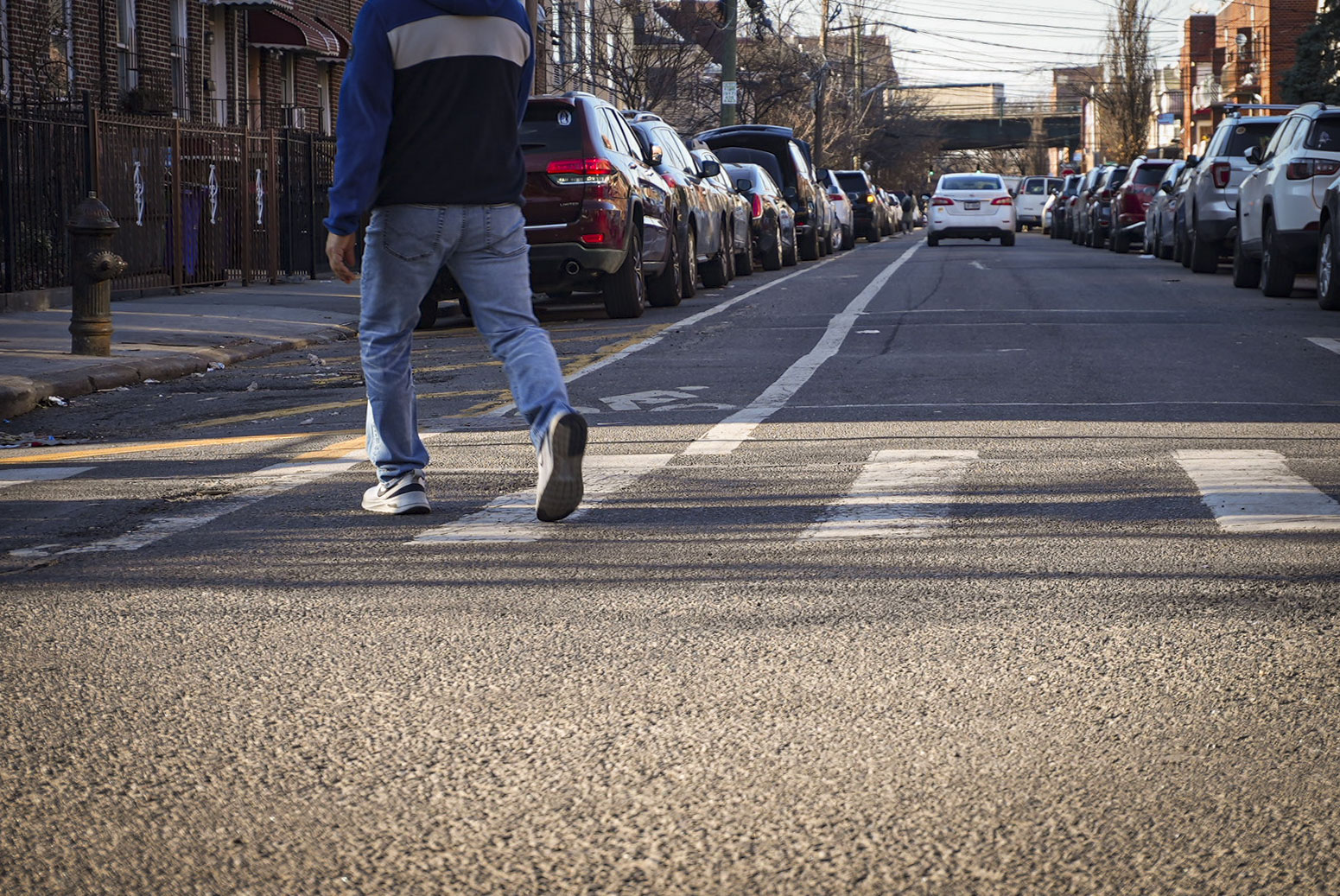
As the nation focused on large-scale ICE operations like those in Los Angeles or Minneapolis and as the arrests at courthouses in downtown Manhattan shocked the city, a less visible crisis has been taking place in neighborhoods across New York — the rising daily arrests of immigrant New Yorkers from the streets they call home.
The November day when Tomás was detained marked the beginning of a spate of ICE arrests in Elmhurst, Corona and North Corona, Queens, some of the most immigrant-dense neighborhoods in the country and an epicenter of ICE enforcement in New York City since Donald Trump began his second term.
That month, 20 Latino men were arrested in the area, according to documentation by local rapid response groups. There were more than 50 ICE sightings in Queens between the day Tomás was arrested and the end of this January, according to unofficial reports by NYC Ice Breaker, a volunteer group that collects and visualizes ICE sighting data.
Documented spent two months reviewing video of the arrests and interviewing witnesses, neighbors and Tomás, one of the seven men whose lives were upended by the arrests that day. What emerged was a picture of how Trump’s deportation campaign has reached deep into New York City streets, causing irreversible damage to the community and cascading impacts upon families across Queens and beyond.
A journey to New York
Tomás grew up with five siblings in the mountains of Central America. A native speaker of K’iche’, an indigenous language spoken by Mayan people, the 26-year-old worked in the fields with his father before he fled north and towards New York City five years ago in search of a better life. He also speaks Spanish. (Documented is not naming Tomás’ exact country of origin due to concerns about his legal case.)
The young man loved electronica music and cheering on his favorite soccer team: FC Barcelona. He dreamed of living in New York after watching the Marvel movie “Spider-Man.”
Tomás traveled for two weeks by land to arrive in New York in 2021. Once here, he found work as a chef for a Peruvian restaurant in Manhattan working for $150 a week. They gave him too few work hours, so he left.
Later that autumn, he walked by a taco shop with a help wanted sign. Inside, he met a Guatemalan wait staff who welcomed him with open arms.
“I liked it because the bosses are good to me,” said Tomás. “They’re friendly to everyone. I have a lot of friends [there].”
He worked double shifts to pay off his $35,000 in debts from his journey to the United States.
In the weeks before he was arrested, Tomás had rejoiced in finally saving up enough to be able to buy his parents land and building materials for a house back home. At the end of the month, he had planned to celebrate his birthday at a restaurant with a friend from work.
Instead, he was pulled off the street in the middle of his shift and thrown into immigration detention.
A ‘surge in the shadows’
Across the country, immigrant advocates and legal groups have challenged ICE arrest tactics as unconstitutional, with groups filing lawsuits in New York City, Washington, Ohio, North Carolina and Minnesota. Many argue that warrantless arrests and arrests without probable cause are unlawful and a form of racial profiling. In New York City, one in four ICE arrests were not targeted and instead swept up people at the wrong place at the wrong time, according to the City.
A recent filing in federal court alleged that ICE has waged a “surge in the shadows” in New York City which “specifically targeted Latino neighborhoods like Corona, Queens, where agents set up checkpoints and stop Latino men.”
Documented showed footage of five of the arrests to several policing experts to solicit their opinion on the nature of the arrests: multiple Hispanic men stopped at the same location and, in at least one case, detained without a warrant.
Kalfani Turé, senior fellow at the Urban Ethnography Project at Yale University, said he would describe the series of arrests as racial profiling. But Ed Obayashi, a deputy sheriff and legal advisor to a number of California policing agencies, said it was common practice in policing to strike up a conversation with someone on the street and to then ask questions that would lead the person to incriminate themselves.
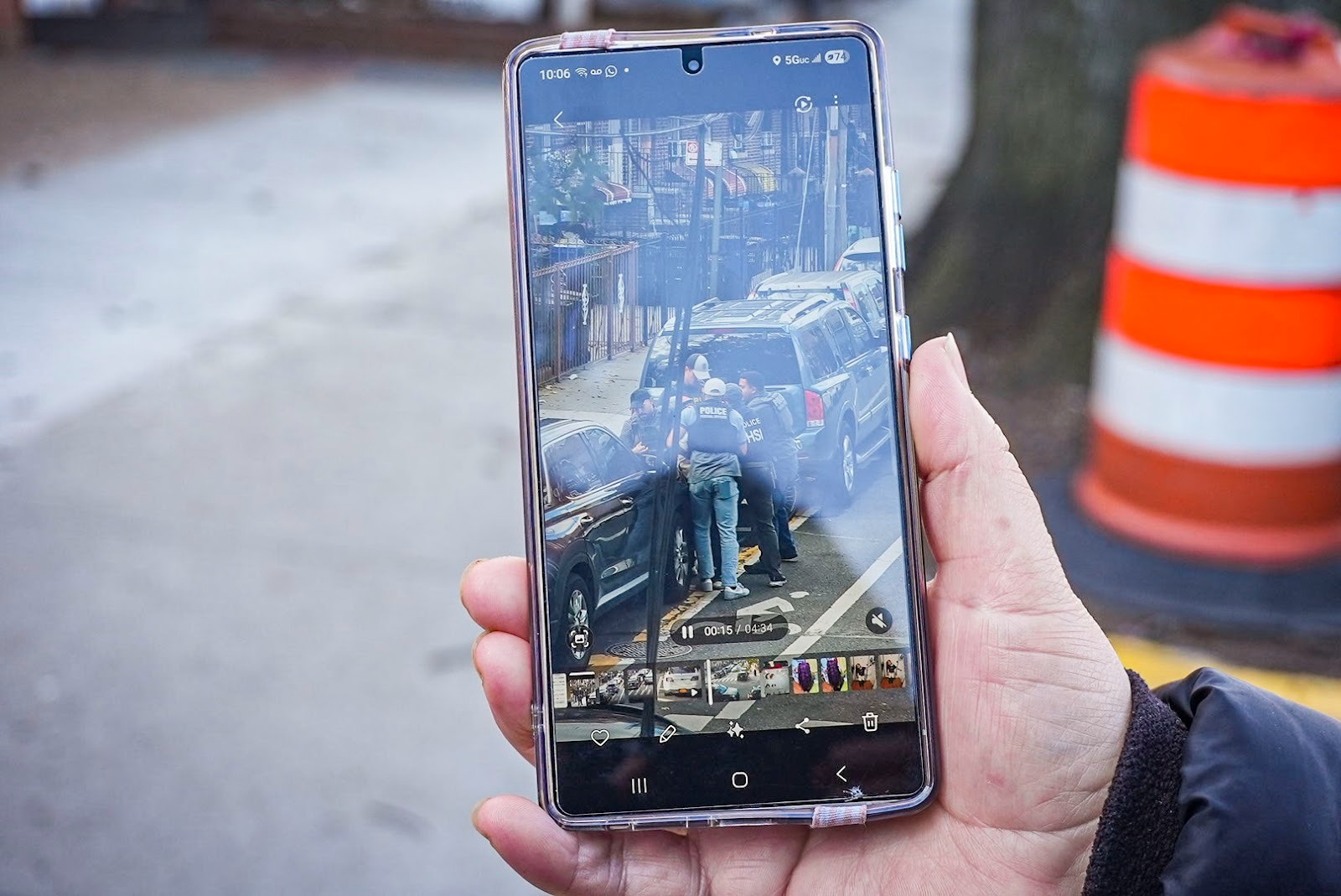
“These ICE officers were stopping an individual and probably trying to ascertain, ‘Hey, you mind if we talk to you? Do you have any documentation as to who you are?’ and then it goes from there,“ said Obayashi. “Again, that’s just the nature of police work.”
The Nov. 1 arrests are typical of what legal service providers and community members have seen in recent months.
Daniel Espinoza, an immigration attorney, who represents multiple people in the area, said clients and other lawyers told them that many immigration-related arrests seemed like a setup: ICE agents would strike up conversations with Latino people in Spanish, and then quickly turn the conversation into an interrogation about the person’s immigration status.
Recently, ICE scaled back on arresting immigrants through street sweeps and have instead switched to doing more targeted arrests, according to the New York Times. But it remains to be seen if the shift in tactic will be long term.
In response to Documented’s questions about the Queens arrests, a spokesperson for U.S. Immigration and Customs Enforcement called allegations of racial profiling “FALSE” and said the federal Immigration and Nationality Act gives the agency authority to make arrests.
“Law enforcement officers use ‘reasonable suspicion’ to investigate immigration status and probable cause to make arrests consistent with the Fourth Amendment to the U.S. Constitution,” the spokesperson said. “The Supreme Court has already vindicated us on these practices.”
‘Other’s screams don’t let you sleep’
The beginning of Tomás’ time behind bars was bleak. Tomás described inedible and scarce food, being denied water, and extreme temperatures and isolation so intense that he nearly committed suicide.
There was one period of confinement at Orange County Jail that was particularly difficult.
“The first day there, a Tuesday evening, they shut me in,” said Tomás, who described going stretches without water and only eating a meal a day, a five-minute shower every other day, and no access to phone calls. He said for the first week or so of his time there that he survived on the liquid of a single small carton of milk a day, which he said was sometimes spoiled. During that time, officials pressured him to sign a deportation order, he said.
“Four days in I became depressed, because it’s hard there. It’s cold, without speaking to family, with friends, nothing. They don’t give you water — and we were thirsty,” he said. “Other’s screams don’t let you sleep.”

Representatives from Orange County Sheriff’s Office, which runs Orange County Jail, did not respond to a request for comment. An unnamed spokesperson from ICE wrote that “claims about Orange County Jail are categorically FALSE” and added that ICE is “firmly committed to the health, safety, and welfare of all those in its custody“ in an email to Documented.
Staff at Orange County Jail and ICE have been repeatedly accused of abusive practices. The jail was the site of a 2023 hunger strike by ICE detainees in protest of poor conditions.
Eventually, Tomás made friends, and the light of hope creeped in.
At Orange County Jail, a new friend from the Dominican Republic reassured him that his stay there would end — that he would get out, because he wasn’t a criminal. Later, he was transferred to the Metropolitan Detention Center in Brooklyn, where a fellow detainee he called “Coach” would keep him busy with workouts and reassured him that he’d leave detention a stronger person. He would see policy changes like the return of bond hearings that were setting some prisoners free. And he received encouraging letters from his friends at the taco shop in Queens.
“Sometimes I would laugh and [the other detainees] would say ‘What is it? What is it?’,” said Tomás.
“It’s because I have lady friends that send me cards,” he replied with a shy smile.
A neighborhood united
That November morning, a neighbor named Sonia was sitting shoeless inside an SUV with her teenage son, parked outside their Corona home while her partner cleaned his car.
Suddenly, he froze.
Just a few feet away, multiple ICE agents were wrestling a young delivery driver to the ground. It was Tomás.
“ICE is here, ICE is here, go inside!” her 15-year-old shouted.
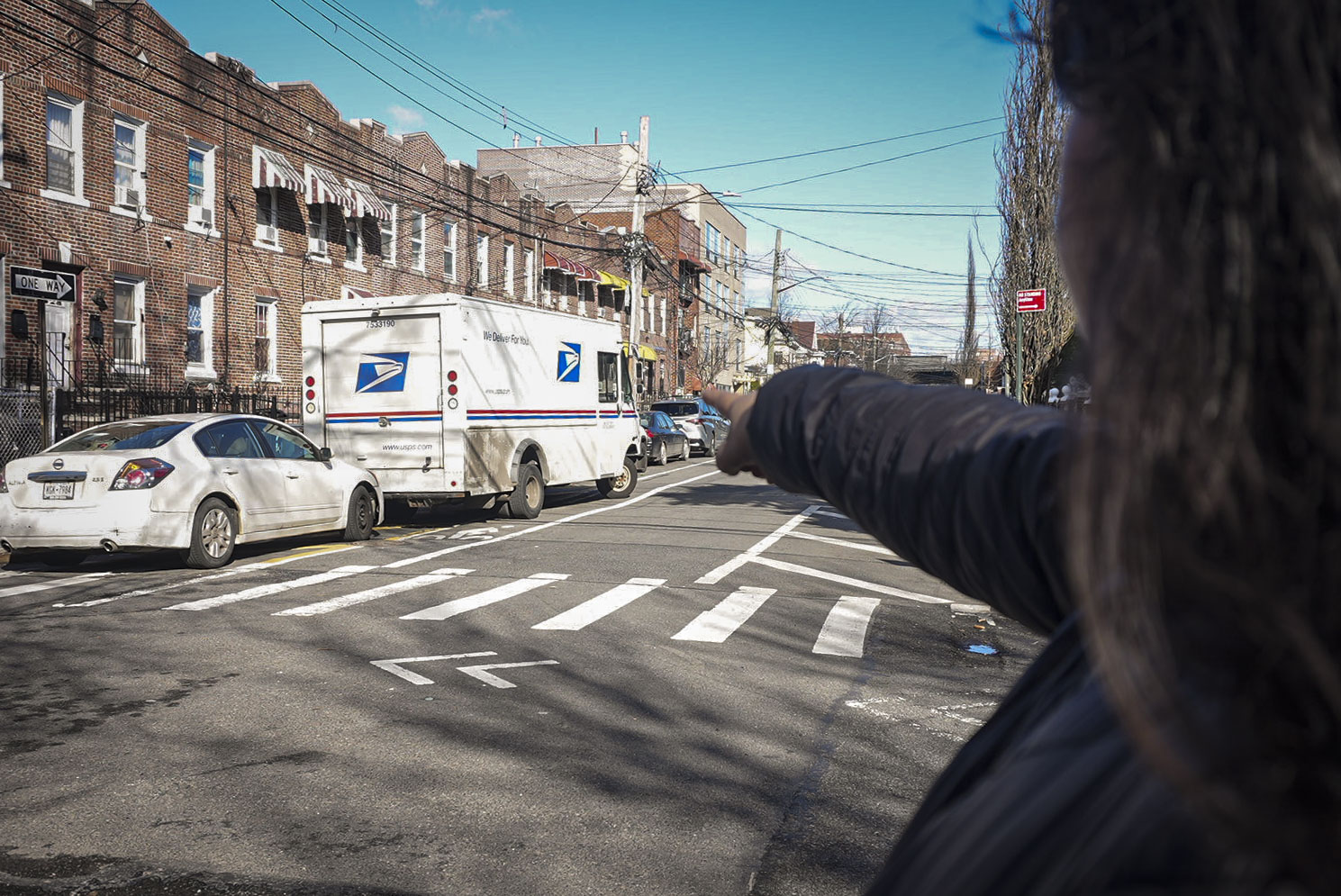
They ran into her sister’s apartment, leaving the car doors open and Sonia’s shoes on the street. For the next two hours, the family, paralyzed with fear, looked out the window and watched as ICE agents arrested one young man after another.
“We had seen [arrests] on the television, online, on social media, but when it’s live, it’s shocking,” said Sonia. “You don’t know what to do, how to act. We were shaking, we were nervous. I wanted to help, because I don’t like seeing those injustices.”
“We had seen [arrests] on the television, online, on social media, but when it’s live, it’s shocking.”
—Sonia, Queens resident
When ICE agents arrest community members, they leave behind a vacuum. Businesses lose workers. Households lose income, with one fewer person to pay rent and other bills. Communities lose dear friends. Some, in response, are called to action.
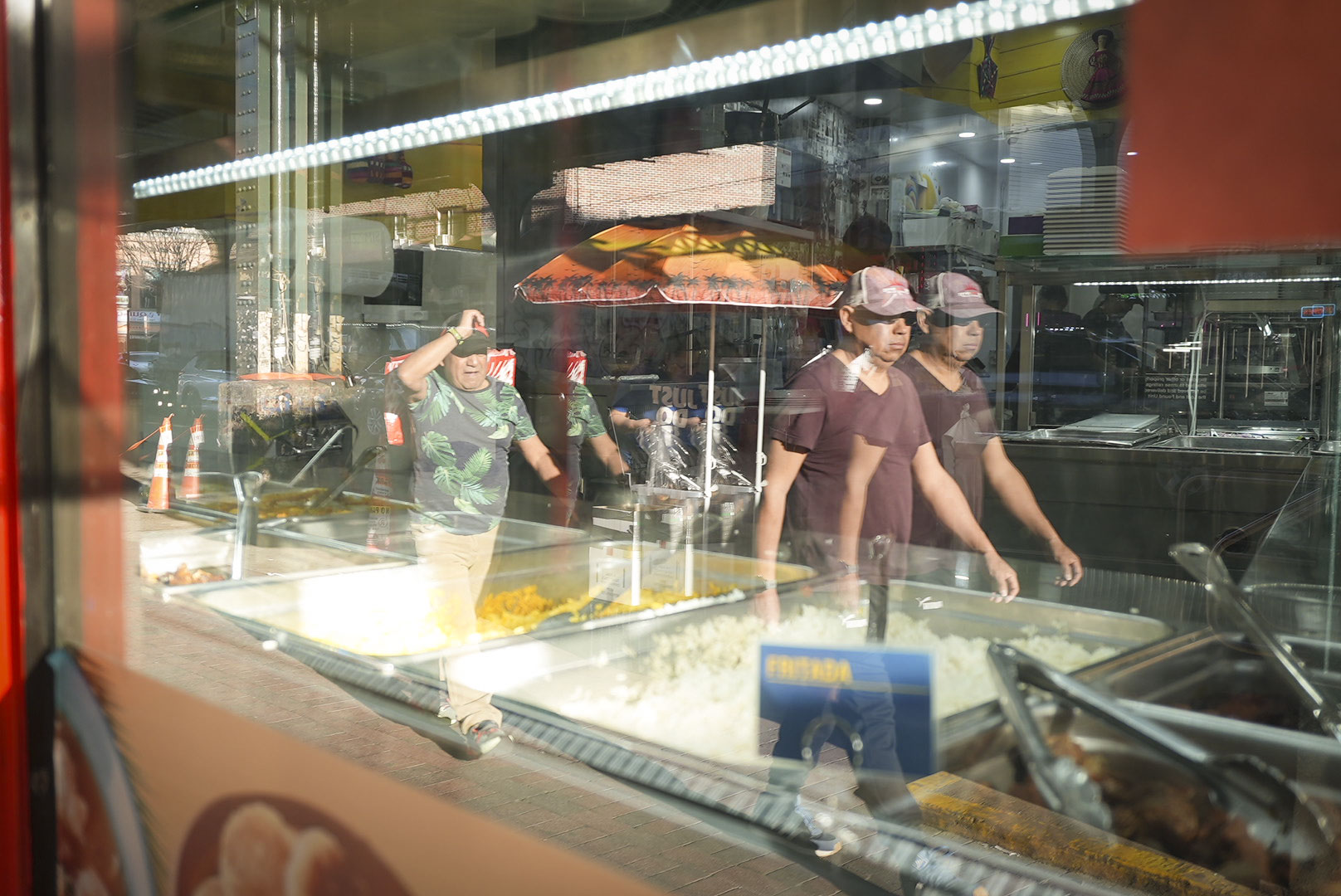
Many don’t realize what is happening in their own community until it touches their lives, explained Sandra, the owner of the taco shop in Corona where Tomás worked.
To Sandra, losing Tomás felt akin to losing a family member.
Tomás was a young man when he began working at the shop. He was beloved at work, and immediately struck her as responsible, service-oriented, and humble — so his absence impacted them even more. He had come to the United States alone, and work had felt like family.
On Nov. 1, Sandra was only 15 minutes away from work when she received a phone call from one of her waitresses.
“Ms. Sandra, Ms. Sandra, Tomás is missing,” said the panicked voice of the woman. She tried to calmly reassure the staff member, insisting that maybe he got into an accident, that they should look for him or an ambulance.
“No, Ms. Sandra, he’s disappeared and they’re saying ICE is here,” the woman replied.
After his detention, the restaurant became his primary contact and support. They sent him letters and money. When he called them from detention, they held the cell phone up to another phone that had called his mother back home in Central America, so the two could speak.
“It really hurt us all, because I feel like he was one of the people that had valued coming to this country to work and work hard,” she said.
The event instilled in Sandra a deep sense of injustice. Since then, she has become involved with community advocacy — helping unite her neighbors, spread verified information on ICE activity, and pass out “know your rights” brochures. She tells neighbors not to go out drinking because it makes them more vulnerable to arrest and attention from immigration officers.
After the arrest, she met members of a local mutual aid group and has connected neighbors with lawyers for detained loved ones.
“It makes me very proud that we can help,” she said.
Sonia has also become more proactive in her neighborhood since watching the arrests that day. She’s created a WhatsApp chat with seven of her neighbors. She said that ICE agents returned to the same street corner a week after the initial arrest but the second time around she no longer felt afraid.
She stepped outside with her other neighbors, and whistles, in tow and they started peppering the agents with questions.
“Aren’t you ashamed of yourself?”
“What are you doing here?”
They lowered their heads, she said, and left.
Tomás’ return
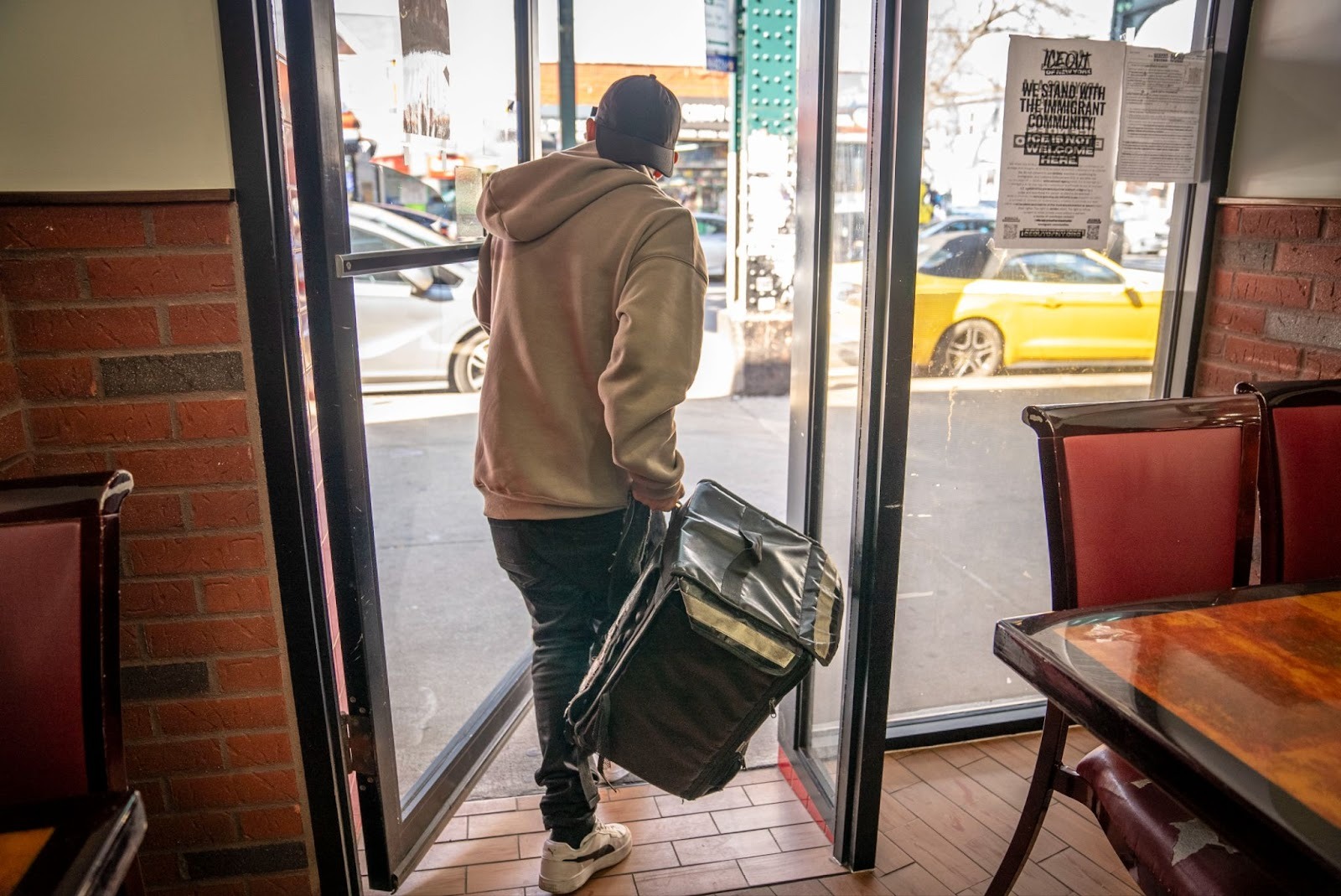
On a Tuesday in March, Tomás was chatting with other detainees in his cell when a guard called out his name.
He had allowed himself to feel optimistic about his release, even scheduling a hair cut from Coach that afternoon. “You’re going to leave because you had all these calls and visits,” one of his friends had told him.
Still, he was surprised when the guard told him to take all of his things. “We’re going somewhere else,” she said.
Tomás gave his remaining belongings — his lotion, his shampoo, his clothes and a small cup for beverages — to Coach. He said goodbye to his friends who had helped him survive detention.
“Some of them were crying,” he said.
After four-and-a-half months behind bars, he would be released. His lawyer had successfully filed for habeas corpus petition, which challenges the legality of a person’s detention
Before he was ushered out of the MDC in Brooklyn, Tomás changed from his uniform into a big sweatshirt and pants that a guard handed him. Then the guard took Tomás outside and said: “Let’s go. Go now.”
When he stepped out in the early afternoon, Tomás said he couldn’t believe that he was free. It was like a dream because it was the first time he had seen the sky and the sun in months.
The first place he wanted to go was where he had started his delivery route that November morning: Sandra’s restaurant. But he was deep in South Brooklyn without a phone and without any money. A woman selling flowers gave him $10 and pointed him towards the subway. Another stranger let him use her phone to call his friend.
With his belongings tucked into a gray backpack, he made the hour-long journey from the MDC to the restaurant in Corona, Queens.
When he arrived at the restaurant, a friend welcomed him, surprised and overwhelmed. She hugged him and then brought him a platter of rice, beans, lettuce and a chicken quesadilla, as other employees of the restaurant gathered around him, beaming with joy.
Sandra came to the restaurant a little after Tomás arrived. She asked him if he was well and he responded, softly, that he was happy. A woman hugged him, holding him tight for maybe 30 seconds, tears streaming down her face.
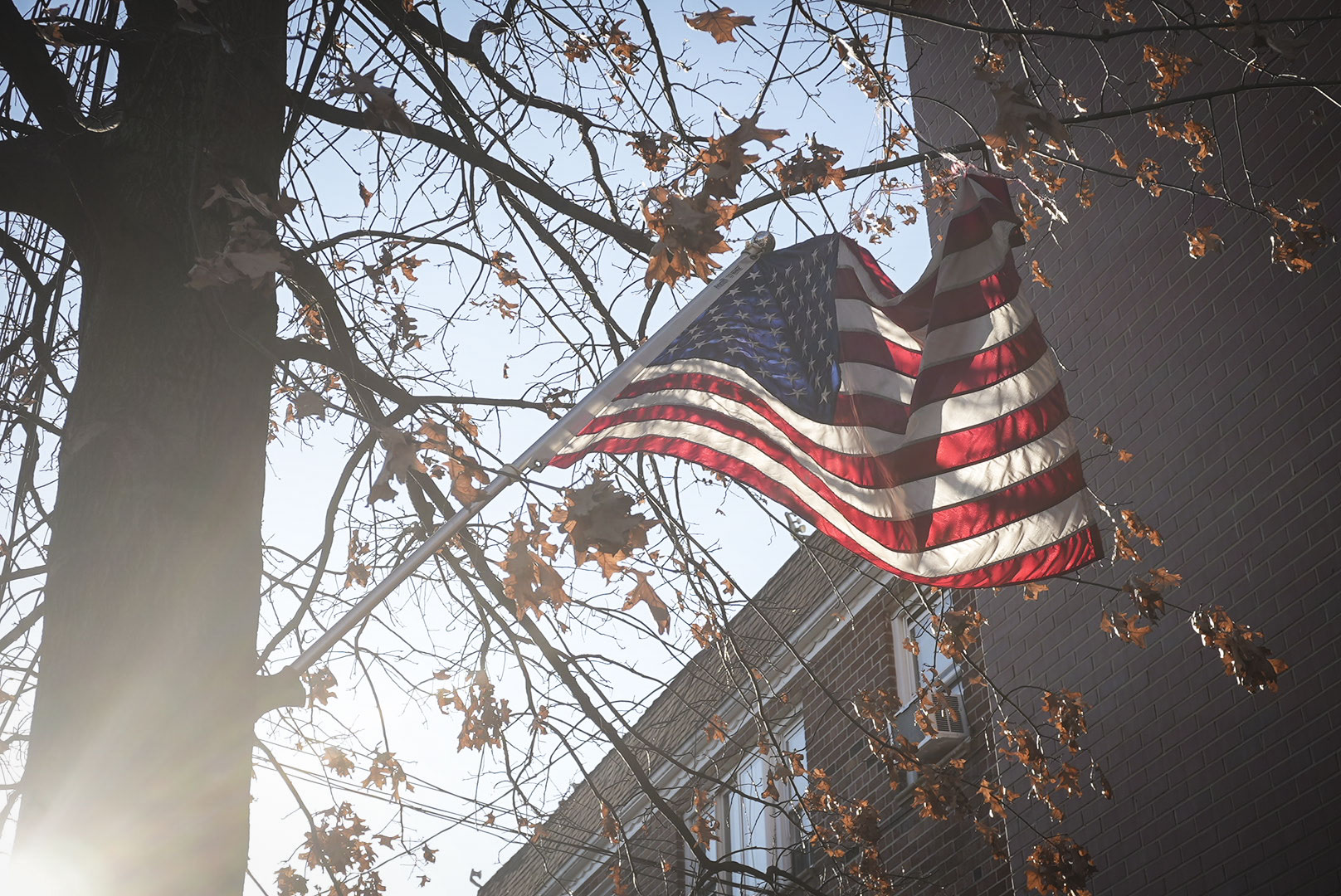
Tomás still has to fight a deportation order — while he was in detention, his application for asylum was pretermitted, a process where DHS lawyers can have an asylum case dismissed by a judge without a hearing.
But in that moment at the restaurant, he was back with his friends. In the coming weeks, he wanted to make space outside of work to do more joyful things. He recently went to Times Square and plans to see the Statue of Liberty.
“I want to do more things to relax,” he said.